×

Guinea🇬🇳 | townsKouroussariver port, Manding culture, artisanal gold panning | things to do and best time to go

Explore DalabaExplore Beyla

Backpacking in Kouroussa
👍 Recommendedtown ranked #13
By Johan Kruseman 🇳🇱 | Updated June 9, 2026

Kouroussa, once a crossroads where traders and storytellers swapped news under the mango trees, now greets travelers with a quieter, dustier rhythm. You’ll find it in central Guinea, where the savanna flattens and the Niger River curls nearby. For backpackers, Kouroussa is less a destination than a hinge—practical for breaking up the long haul between Kankan and the Fouta Djallon highlands. The old market still hums with the scent of smoked fish and kola nuts, but nightlife is limited to slow evenings and the occasional local bar. Don’t expect hostels or a backpacker scene; this is a town for those who value real, unvarnished West African daily life over curated attractions. Transport is straightforward: bush taxis and battered minibuses, with most of the town walkable once you arrive. Compared to Kankan, Kouroussa is sleepier, less chaotic, and more affordable, but also more isolating—ideal if you want to see Guinea’s heartland without the crowds, but not if you crave company or comfort.

Discover everything you want to know in the 📖 Guinea Travel Guide.


Get your Guinea guide
67 ranked highlights, routes & tips, works offline (282 pages)
Loading the map 🌍
CLICK TO FILTER
cities
towns
landmarks
national parks
hikes
beaches
attractions
festivals
regions
SHOW COUNTRY’S BESTSHOW ALL

✨ Why go?
Ranked #13 town in Guinea
Why visitors keep coming back

Kouroussa serves as a gateway for backpackers exploring Guinea’s rich landscapes. Its walkable streets and small-scale guesthouses create a cozy atmosphere, perfect for solo travelers or small groups looking to connect. The local food scene is vibrant, with street vendors offering everything from spicy grilled meats to fresh fruit, inviting you to savor the flavors of the region.

Many travelers use Kouroussa as a base for nearby hikes in the lush hills or to visit cultural sites that showcase the area’s heritage. While some pass through quickly, others linger for a few days, drawn by the friendly locals and the chance to immerse themselves in the rhythm of daily life. This town is ideal for those who appreciate a slower pace and the beauty of genuine interactions.
Want to include Kouroussa in your Guinea route?
Create a personalized Guinea itinerary that includes Kouroussa and the places that fit your trip — based on your travel style, budget, and available time. Get your route in seconds.

Generate my trip

💡 HighlightsThe experiences that define the visit

  • Kouroussa Central Market (Grand Marché) — The beating heart of the town: rows of stalls selling fresh produce, spices, cloth, and household gear. Visiting in the morning is the best way to see everyday life, barter with traders, and try local street food like grilled fish from the Niger.
  • Kouroussa Railway Station (Dakar-Niger line) — An old, working station on the historic Dakar-Niger railway. It’s atmospheric, great for photography, and watching the slow rhythm of regional freight and passenger movements tells you a lot about the town’s past and present.
  • Niger River quay and ferry crossing — The riverfront is where people, goods and small boats meet; a stroll along the quay gives open views, boat traffic, and an easy way to see riverside life. You can watch fishermen, loading activity,
read more 👉
  • Kouroussa Central Market (Grand Marché) — The beating heart of the town: rows of stalls selling fresh produce, spices, cloth, and household gear. Visiting in the morning is the best way to see everyday life, barter with traders, and try local street food like grilled fish from the Niger.
  • Kouroussa Railway Station (Dakar-Niger line) — An old, working station on the historic Dakar-Niger railway. It’s atmospheric, great for photography, and watching the slow rhythm of regional freight and passenger movements tells you a lot about the town’s past and present.
  • Niger River quay and ferry crossing — The riverfront is where people, goods and small boats meet; a stroll along the quay gives open views, boat traffic, and an easy way to see riverside life. You can watch fishermen, loading activity, and sometimes hop on a short river ride.
  • Grand Mosque of Kouroussa — The central mosque is both a spiritual and social anchor. Even if you don’t go inside during prayers, the courtyard and surrounding streets offer a window onto religious practice and community rhythms.
  • Artisan and woodcarving quarter — Kouroussa’s craftsmen work locally on wooden masks, stools and household items for surrounding villages. Visiting workshops is a hands-on cultural experience: see tools, chat with makers, and collect authentic souvenirs — with bargaining kept fair.
  • Griot compounds and live-music spots — The town has living griot families and informal venues where traditional Mandingue music, balafon and kora are performed. Catching an evening set (ask locally where the griots gather) is one of the most memorable ways to learn local history and stories.
  • Colonial-era streets and buildings — Walk the main roads to spot old French-era administrative buildings, shuttered facades and street layouts that tell the colonial-era story. It’s low-key, but useful context for how Kouroussa developed as a transport and trade hub.
  • Prefecture square and municipal area — The civic center is where public life collects: markets spill over here, announcements are posted, and local governance happens. It’s a practical stop to get a feel for daily civic life and to ask directions or tips from locals.
  • Local football matches at the Stade Municipal — If you can time it, a local match is lively, cheap, and full of local pride; it’s a great way to meet people and join in the town’s social pulse. Bring small change for snacks and to cheer with the crowd.
  • Weekly livestock and rural market — Outside the regular daily market there’s usually a livestock day where cattle, goats and poultry change hands — a noisy, colorful event that’s both economic and cultural. It’s good for photography and to observe regional trade links up close.
For day trips nearby, most travelers head to Kankan (regional capital) for its larger markets and cultural sites, to Siguiri for its riverfront and gold-mining atmosphere, or to the small Niger-River villages upriver for boat trips and village visits.
Spotted a mistake or missing something? Contact us.

🏘️ NeighborhoodsWhere things are and how it's laid out

Kouroussa is a vibrant hub in Guinea, offering a mix of local culture and practical amenities for backpackers. Here’s how to navigate its neighborhoods:

Centre Ville: This is the heart of Kouroussa. Expect a lively atmosphere with bustling markets and street vendors. It’s walkable, making it easy to explore on foot. Prices are reasonable, and you’ll find plenty of budget-friendly eateries. Nightlife is low-key, perfect for winding down after a day of exploration. Ideal for short stays.

Quartier Kouroussa: A bit quieter, this neighborhood offers a more laid-back vibe. It’s less touristy, giving you a genuine feel of local life. Transport options are good, with easy access to public transport. Accommodations here are affordable, making it suitable for longer stays if you want to immerse yourself … read more 👉
Kouroussa is a vibrant hub in Guinea, offering a mix of local culture and practical amenities for backpackers. Here’s how to navigate its neighborhoods:

Centre Ville: This is the heart of Kouroussa. Expect a lively atmosphere with bustling markets and street vendors. It’s walkable, making it easy to explore on foot. Prices are reasonable, and you’ll find plenty of budget-friendly eateries. Nightlife is low-key, perfect for winding down after a day of exploration. Ideal for short stays.

Quartier Kouroussa: A bit quieter, this neighborhood offers a more laid-back vibe. It’s less touristy, giving you a genuine feel of local life. Transport options are good, with easy access to public transport. Accommodations here are affordable, making it suitable for longer stays if you want to immerse yourself in the community.

Zone Industrielle: This area is more utilitarian, with a focus on local industry. While it lacks the charm of other neighborhoods, it’s practical for those needing quick access to transport links. Not much nightlife, but it’s a good base for day trips. Best for those on a tight schedule.

⌛️ 1 day1-day itinerary for Kouroussa

Kouroussa, a lively town in Guinea, pulses with the rhythm of daily life. It’s a place where the air is thick with the scent of grilled fish and spices, and the sounds of laughter and conversation fill the streets. This isn’t just a stopover; it’s a chance to dive into the local culture.

Start your morning at the bustling market in the heart of town. The vibrant colors of fresh produce and handmade crafts will draw you in. Engage with the vendors; their stories are as rich as the spices they sell. Grab a breakfast of *foutou*, a starchy dish often served with a spicy sauce, and savor the flavors while soaking in the morning sun.

In the afternoon, head to the nearby Kouroussa River. It’s not on every tourist’s radar, but the tranquility here is a breath of fresh air. Take a leisurely walk … read more 👉
Kouroussa, a lively town in Guinea, pulses with the rhythm of daily life. It’s a place where the air is thick with the scent of grilled fish and spices, and the sounds of laughter and conversation fill the streets. This isn’t just a stopover; it’s a chance to dive into the local culture.

Start your morning at the bustling market in the heart of town. The vibrant colors of fresh produce and handmade crafts will draw you in. Engage with the vendors; their stories are as rich as the spices they sell. Grab a breakfast of *foutou*, a starchy dish often served with a spicy sauce, and savor the flavors while soaking in the morning sun.

In the afternoon, head to the nearby Kouroussa River. It’s not on every tourist’s radar, but the tranquility here is a breath of fresh air. Take a leisurely walk along the banks, where you might spot local fishermen casting their nets. The light filtering through the trees creates a serene atmosphere, perfect for reflection.

As evening approaches, make your way to the vibrant neighborhood of Kouroussa Centre. Here, the streets come alive with music and dance. Join the locals in a small bar for a taste of *sorghum beer* and enjoy the infectious energy. The laughter and rhythm of drums will wrap around you, making you feel like part of the community.

This day in Kouroussa isn’t just about sights; it’s about connection, flavor, and the joy of being present in a place that feels authentically alive.
Turn your Kouroussa visit into an Guinea adventure
Build a complete Guinea route with Kouroussa, hidden gems, must-see destinations, and realistic travel times included.

Generate my trip

🌤️ When to go?Weather, crowds, and seasonal trade-offs


  • Topic: Weather – Kouroussa’s climate swings between a hot, humid rainy season from June to October and a dry, dusty harmattan period from November to February. The dry season is your best bet for clear skies and manageable humidity.

  • Topic: Temperature – Expect highs around 30-35°C (86-95°F) in the dry season, with cooler nights dropping to 20°C (68°F). The rainy season cranks humidity, making 28-32°C (82-90°F) feel sticky and oppressive.

  • Topic: Daylight Hours – Daylight is steady year-round, roughly 12 hours daily, but the dry season’s clearer skies mean you’ll get more usable light for trekking and exploring.

  • Topic: Crowds – Kouroussa stays low-key year-round, but the dry season sees a slight uptick in local activity and visitors, making it lively without feeling crowded.

  • Topic:
read more 👉

  • Topic: Weather – Kouroussa’s climate swings between a hot, humid rainy season from June to October and a dry, dusty harmattan period from November to February. The dry season is your best bet for clear skies and manageable humidity.

  • Topic: Temperature – Expect highs around 30-35°C (86-95°F) in the dry season, with cooler nights dropping to 20°C (68°F). The rainy season cranks humidity, making 28-32°C (82-90°F) feel sticky and oppressive.

  • Topic: Daylight Hours – Daylight is steady year-round, roughly 12 hours daily, but the dry season’s clearer skies mean you’ll get more usable light for trekking and exploring.

  • Topic: Crowds – Kouroussa stays low-key year-round, but the dry season sees a slight uptick in local activity and visitors, making it lively without feeling crowded.

  • Topic: Seasonal Activities – The dry season is prime for river excursions and village visits, while the rainy season’s lush greenery is tempting but often inaccessible due to muddy roads.

  • Topic: Price Fluctuations – Prices for lodging and transport rise modestly in the dry season, reflecting demand, but the trade-off is worth it for comfort and access.


Pro-tip: Aim for late November to February—when the harmattan wind clears the air and the landscape feels alive without the mud slog, you’ll experience Kouroussa at its most welcoming and walkable.


source: climatestotravel.comJANJanuary: excellent for travelingFEBFebruary: excellent for travelingMARMarch: highly recommended for travelingAPRApril: good for travelingMAYMay: fair for travelingJUNJune: fair for travelingJULJuly: below average for travelingAUGAugust: below average for travelingSEPSeptember: fair for travelingOCTOctober: good for travelingNOVNovember: highly recommended for travelingDECDecember: excellent for traveling
when-to-go

✈️ The backpacker research shortcutGuinea Travel Guide

An offline-friendly backpacking guide with optimized travel routes, ranked highlights, transport advice, and the best areas to stay.
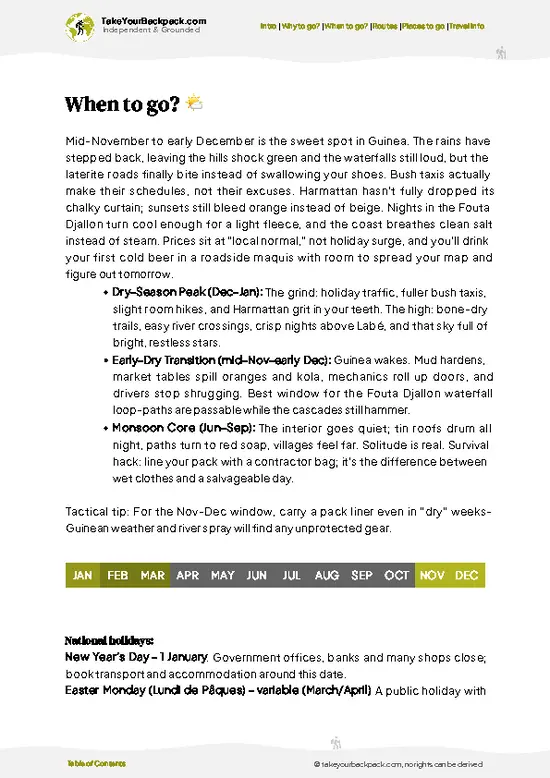
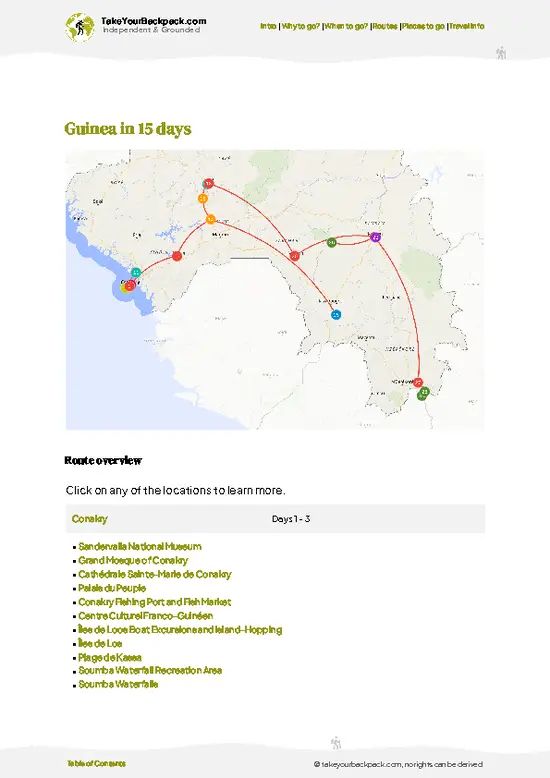
example page 0 from our offline Travel Guide for Guinea
example page 1 from our offline Travel Guide for Guinea
example page 2 from our offline Travel Guide for Guinea
example page 3 from our offline Travel Guide for Guinea
example page 4 from our offline Travel Guide for Guinea
example page 5 from our offline Travel Guide for Guinea
example page 6 from our offline Travel Guide for Guinea
example page 7 from our offline Travel Guide for Guinea
The digital guide (282 pages) contains:
67 highlights, ranked by travel appeal
Optimized 5, 10 & 15-day travel routes
Cities, national parks, landmarks, beaches
How to get around
Offline-friendly for travel without Wi-Fi
👉 Click to see all 30+ guide features

📅 Plan smarter in minutes, not weeks
Month by month travel advice
Festivals & national holidays
Budget expectations

🗺️ Go to the right places, skip the overrated ones
Honest pros & cons of destinations
Top hikes, parks & viewpoints
Lesser-known places most travelers miss
Clear “worth it vs skip it” guidance

🛏️ Travel smoothly without rookie mistakes
Best areas to stay
Transport systems explained simply
Common scams & safety advice
SIM cards, money & practical tips

🌍 Understand the country, not just visit it
Culture & traditions
52 Essential phrases & customs
Festivals worth planning around
Traveler-friendly historical context
Insights that make places more meaningful

📱 Built for real travel conditions
Fully downloadable PDF
Works completely offline
Optimized for phone use
Useful in remote areas & buses
Everything in one place
Save weeks of stressful planning
Get instant access to your full guide. 30‑day money-back guarantee.


By proceeding you agree to our terms.
Sent to your inbox immediately after payment • 100% Secure Checkout
Best Backpacking Travel Advisor 2025 tourism awardBest Backpacking
Travel Advisor
2025
What others say about Take Your Backpack Guides:
⭐⭐⭐⭐⭐
Fantastic, amazing amount of information!
⭐⭐⭐⭐⭐
My goodness this is amazing, it's what I've been looking for hats off too you!
⭐⭐⭐⭐⭐
I think this is absolutely BRILLIANT
⭐⭐⭐⭐
Very complete and informative. It's still missing places, but I gotta to commend you
⭐⭐⭐⭐⭐
This is truly amazing, thank you, can't wait to explore it with my kids!
⭐⭐⭐⭐⭐
Awesome resource, thank you!
⭐⭐⭐⭐⭐
This is amazing! Can't wait to explore the ones I haven't seen
⭐⭐⭐⭐
I love this! Well done, great idea.
⭐⭐⭐⭐⭐
Thanks for taking the time to make this gem!
⭐⭐⭐⭐⭐
This might be the best website I've ever seen.
⭐⭐⭐⭐⭐
Congratulations, and thank you so much for your work; it's incredibly valuable.
⭐⭐⭐⭐
In all seriousness I think you did a great job pointing out the important spots
⭐⭐⭐⭐⭐
10/10 very good
⭐⭐⭐⭐⭐
As someone who's only just starting to visit regularly this is awesome, thank you.
⭐⭐⭐⭐
Thank you very much! I'm going to visit my dad, it's going to be very useful!
⭐⭐⭐⭐⭐
This is really cool! We'll be travelling for the first time and this definitely come in handy.
⭐⭐⭐⭐⭐
You are now our minister of culture, congratulations 👨‍💼
⭐⭐⭐⭐⭐
Just wanted to tell you that this is a pearl! Going to follow your recommendations.
⭐⭐⭐⭐⭐
This is so cool. I'll definitely be using the resource for my travels soon.
⭐⭐⭐⭐⭐
This is very impressive! Good work.
⭐⭐⭐⭐⭐
This is an amazing and informative site. Very well done!

🛏️ Where to stay?Where staying makes the most sense

In Kouroussa, the best spot for backpackers is the central market area. It’s where the town’s pulse is strongest—dusty streets lined with vendors selling fresh produce, spices, and handmade crafts. This neighborhood hums with life from dawn till dusk, making it easy to strike up conversations with locals and fellow travelers alike. Safety here leans on the side of community; the constant flow of people means you’re never truly alone, and petty crime is less common than in quieter parts of town.

Hostels are sparse but tend to cluster near this hub, offering basic but clean accommodations that … read more 👉
In Kouroussa, the best spot for backpackers is the central market area. It’s where the town’s pulse is strongest—dusty streets lined with vendors selling fresh produce, spices, and handmade crafts. This neighborhood hums with life from dawn till dusk, making it easy to strike up conversations with locals and fellow travelers alike. Safety here leans on the side of community; the constant flow of people means you’re never truly alone, and petty crime is less common than in quieter parts of town.

Hostels are sparse but tend to cluster near this hub, offering basic but clean accommodations that encourage socializing over shared meals or evening chats. Compared to the quieter, more residential outskirts, staying near the market means you’re immersed in the authentic rhythm of Kouroussa. The scent of grilled street food mingles with the earthy smell of the Niger River nearby, grounding you in a place that’s both raw and welcoming.

🚌 Getting aroundHow to get around Kouroussa

Kouroussa moves at its own rhythm—less a clockwork town and more a place where the sun’s position and the chatter of locals set the pace. The air carries the scent of earth and distant river, and the streets pulse with a mix of purposeful steps and spontaneous stops. It’s not about rigid schedules here; it’s about reading the flow, catching the right moment to move or linger. For a budget traveler, mastering this flow means blending patience with a readiness to jump on whatever ride appears, all while soaking in the raw, unfiltered life of the town.


  • Walking: The heart of Kouroussa is compact enough to explore on foot. Walking lets you absorb the textures—the cracked earth underfoot, the calls of street vendors, the sudden breeze from the Niger River. It’s free, flexible, and the best way
read more 👉
Kouroussa moves at its own rhythm—less a clockwork town and more a place where the sun’s position and the chatter of locals set the pace. The air carries the scent of earth and distant river, and the streets pulse with a mix of purposeful steps and spontaneous stops. It’s not about rigid schedules here; it’s about reading the flow, catching the right moment to move or linger. For a budget traveler, mastering this flow means blending patience with a readiness to jump on whatever ride appears, all while soaking in the raw, unfiltered life of the town.


  • Walking: The heart of Kouroussa is compact enough to explore on foot. Walking lets you absorb the textures—the cracked earth underfoot, the calls of street vendors, the sudden breeze from the Niger River. It’s free, flexible, and the best way to catch the town’s pulse.

  • Shared Taxis: These are the lifeblood of local transit, leaving when full rather than on a strict timetable. Expect to pay around 500-1000 GNF for short hops. They’re fast and direct but can be cramped and noisy, so pack light and keep your wits about you.

  • Motorcycle Taxis (Moto-taxis): For quick, nimble rides through narrow or unpaved streets, moto-taxis are unbeatable. Prices start low, but always negotiate before hopping on. They’re a thrilling way to feel the town’s energy up close, with the wind and dust as constant companions.

  • Minibuses: These run on main routes connecting Kouroussa to nearby villages and towns. They operate mostly during daylight hours, roughly 7 a.m. to 6 p.m., with fares around 2000-3000 GNF depending on distance. They’re slower but offer a window into regional life beyond the town center.

👛 Costs (as of 23 April 2026)Travel costs and budget guide for Kouroussa

Backpacking in Kouroussa, Guinea, means embracing a pace where every dollar stretches and every experience feels earned. Here’s what your daily costs will likely look like, grounded in the reality of this West African town.
  • Dorm Accommodation: Options are limited and basic, often in guesthouses rather than formal hostels. Expect to pay around €5 to €10 per night for a simple shared room. The rooms are no-frills—think thin mattresses, mosquito nets, and a fan if you’re lucky. Cleanliness varies, so bring your own essentials.
  • Meals: Street food and local eateries dominate. A filling meal of rice, sauce, and grilled meat or fish will cost about €1 to €3. Breakfast might be a simple bread roll with coffee for under €1. Fresh fruit and snacks are cheap but seasonal, so prices fluctuate slightly.
read more 👉
Backpacking in Kouroussa, Guinea, means embracing a pace where every dollar stretches and every experience feels earned. Here’s what your daily costs will likely look like, grounded in the reality of this West African town.
  • Dorm Accommodation: Options are limited and basic, often in guesthouses rather than formal hostels. Expect to pay around €5 to €10 per night for a simple shared room. The rooms are no-frills—think thin mattresses, mosquito nets, and a fan if you’re lucky. Cleanliness varies, so bring your own essentials.
  • Meals: Street food and local eateries dominate. A filling meal of rice, sauce, and grilled meat or fish will cost about €1 to €3. Breakfast might be a simple bread roll with coffee for under €1. Fresh fruit and snacks are cheap but seasonal, so prices fluctuate slightly.
  • Local Transport: Getting around means shared taxis or bush taxis. Short rides within town cost roughly €0.30 to €0.50. For longer trips to nearby villages, budget around €2 to €5. Walking is often the best way to soak in the atmosphere and save money.
  • Basic Activities/Entry Fees: Kouroussa’s draw is its authentic local life rather than formal tourist sites. Entry fees are rare, but if you visit a local market or cultural event, expect to pay a small donation or fee around €1 to €3. Guided tours are uncommon and usually arranged informally, often costing €5 to €10 if available.
  • Miscellaneous Expenses: Bottled water is essential and costs about €0.50 per liter. Mobile data and SIM cards are affordable, with daily data packages around €1 to €2. Small tips or purchases of local crafts might add a few euros here and there.

All told, a realistic daily budget for backpacking in Kouroussa falls between €10 and €20. This range covers the essentials without cutting corners, letting you move through the town with enough comfort to appreciate its raw, unfiltered character.


source: guineaembassyusa.org
⚠️ Prices can change and everyone travels differently, so take this as a rough guide. Hope it helps you plan your adventure!

🚌 Day tripsEasy escapes and nearby places

Kouroussa is a fantastic base for exploring the rich landscapes and cultures of Guinea. Each day trip offers a unique glimpse into the heart of this vibrant region, making the effort worthwhile.

Mount Nimba
Just a couple of hours from Kouroussa, Mount Nimba is a must-see for nature lovers. The hike up is challenging but rewarding, with lush greenery and the chance to spot rare wildlife. Bring plenty of water and snacks; the ascent can take around 4-5 hours. The best time to visit is during the dry season, from November to April, when the trails are less muddy. A common mistake is underestimating the weather; pack layers, as it can get chilly at higher altitudes. Expect to spend about $10 for transport and park fees.


Fouta Djallon
Head to Fouta Djallon for stunning waterfalls and breathtaking … read more 👉
Kouroussa is a fantastic base for exploring the rich landscapes and cultures of Guinea. Each day trip offers a unique glimpse into the heart of this vibrant region, making the effort worthwhile.

Mount Nimba
Just a couple of hours from Kouroussa, Mount Nimba is a must-see for nature lovers. The hike up is challenging but rewarding, with lush greenery and the chance to spot rare wildlife. Bring plenty of water and snacks; the ascent can take around 4-5 hours. The best time to visit is during the dry season, from November to April, when the trails are less muddy. A common mistake is underestimating the weather; pack layers, as it can get chilly at higher altitudes. Expect to spend about $10 for transport and park fees.


Fouta Djallon
Head to Fouta Djallon for stunning waterfalls and breathtaking views. It’s about a 3-hour drive, and you’ll find yourself surrounded by terraced hills and vibrant local markets. The area is perfect for a day of hiking and photography. Aim for the early morning to catch the soft light and avoid the midday heat. Budget around $15 for transport and snacks. Many first-timers miss the local guides who can enhance your experience with stories and insights, so consider hiring one.
👉 Explore Fouta Djallon

Kankan
Just an hour away, Kankan is a lively town that pulses with energy. Explore the bustling markets, where the scent of spices fills the air, and sample local dishes like fufu. The town is rich in history, with colonial architecture and vibrant street life. Spend a few hours wandering and soaking it all in. Transport costs about $5, making it an easy and affordable trip. A common mistake is sticking to the main roads; venture into side streets for a more authentic experience.
👉 Explore Kankan
Want to know what more Guinea offers?
The Guinea Travel Guide describes 67 highlights, from cities to national parks, from beaches to hikes

Get the Travel Guide -

🛡️ SafetyTraveler Safety Guide

Kouroussa is generally safe, but staying aware enhances your experience. Stick to well-lit areas at night, especially if you’re solo. The local market buzzes with energy, but keep an eye on your belongings; pickpockets can blend in with the crowd.

When haggling for goods, be friendly but firm. Some vendors might inflate prices for newcomers, so know a fair price beforehand. If someone offers unsolicited help, politely decline; it often leads to a request for payment.

Trust your instincts. If a situation feels off, move on. Carry yourself confidently, and you’ll blend in with the locals, making your adventure smoother and more enjoyable.

Other Guinean towns near Kouroussa

Explore more nearby:

  • Dinguiraye—historic mosque, religious pilgrimage, Sahel edge| 115 km away
  • Mandiana—gold mining, savanna plains, rural settlements| 130 km away
  • Beyla—Malinke heritage, rural crossroads, agricultural hub| 257 km away

💡 Not sure where to go next?
Create a personalized itinerary for Guinea including Kouroussa and the places that fit your trip.

Generate my itinerary

👉 Discover all towns

Or checkout all Guinea has to offer (think cities, towns, villages, national parks, hikes, beaches, festivals)
Country photo of Guinea

We 💚 feedbackSumming up the experience

Kouroussa pulses with life, a blend of laughter and the scent of street food wafting through the air. The best surprise? The warmth of the locals; they’ll invite you into their world. Just be ready for the heat—stay hydrated and pace yourself. Embrace the chaos; it’s where the real magic happens.

✍️ Help improve this page!
The information on this page is based on in-depth research, insights shared by experienced travelers, and feedback from the local travel community in Guinea. While every effort is made to keep the information accurate and current, conditions can change — so if you spot anything incorrect or outdated, please get in touch.


🙋‍♂️ Give feedback

👋 Meet the founderWho’s Behind Take Your Backpack?

Johan, backpacker and founder of TakeYourBackpackHi, I’m Johan (Netherlands 🇳🇱), the creator of TakeYourBackpack. Over the past decade, I’ve backpacked through 80+ countries across six continents, gaining extensive experience with independent travel, long-term trips, and overland routes.

This site is built on a combination of firsthand travel experience and carefully curated insights from other backpackers. Many guides are based on places I’ve personally visited, while others bring together tips, observations, and practical advice shared by trusted travelers I’ve met along the way.

The goal is to provide realistic, experience-driven guidance — not generic itineraries — so you can explore destinations with better context, clearer expectations, and more confidence.

Get full Guinea guide •
Instant download • 67 highlights • Full Offline guide