×

Guinea🇬🇳 | townsBeylaMalinke heritage, rural crossroads, agricultural hub | things to do and best time to go

Explore KouroussaExplore Pita

Backpacking in Beyla
🌟 Highlighttown ranked #11
By Johan Kruseman 🇳🇱 | Updated May 25, 2026

Everyone talks about Beyla as the “gateway to the Nimba Mountains,” but that’s just the surface. What actually matters is how Beyla feels when you step off the bus: the red dust settling on your boots, the slow rhythm of the market, the way dusk brings out the scent of woodsmoke and mango. Tucked in southeastern Guinea, Beyla isn’t a showstopper, but it’s a real working town—less polished than Nzérékoré, more grounded than Kankan. For backpackers, it’s a practical launchpad for trekking or venturing deeper into the forested highlands, not a destination for nightlife or urban thrills. You’ll find basic guesthouses, a few hearty street food stalls, and plenty of curious locals, but don’t expect a backpacker scene—solitude is the default here. Transport is slow, mostly bush taxis, and you’ll need patience for connections. Costs are low, safety is decent if you keep your wits, and the payoff is a sense of being far from the tourist loop, where every interaction feels earned.

Discover everything you want to know in the 📖 Guinea Travel Guide.
Loading the map 🌍
CLICK TO FILTER
city
town
unique site
national park
hike
beach
attraction
festival
region
SHOW COUNTRY’S BESTSHOW ALL

✨ Why go?
Ranked #11 town in Guinea
What sets this place apart

Beyla serves as a gateway for backpackers seeking the wild beauty of Guinea. Its walkable streets make it easy to navigate, while small-scale guesthouses offer a cozy place to rest. The town is a launchpad for nearby hikes, with trails that lead to stunning vistas and lush landscapes. Local food stalls serve up authentic dishes, filling the air with enticing aromas. Travelers often linger here for a few days, soaking in the friendly atmosphere and connecting with fellow adventurers. It’s ideal for slow travelers and solo explorers looking for a genuine experience, rather than a quick stopover.
Get the complete Travel Guide for Guinea
Everything organized for offline planning — routes, highlights, costs & tips

See what’s inside 👉

Get the Travel Guide -

💡 HighlightsThe experiences that define the visit

  • Marché Central (Beyla Central Market) — The town’s beating heart: rows of produce, live spice stalls, coffee beans piled in sacks and the best place to watch daily life, bargain, and try local snacks like fried plantain and grilled fish.
  • The Main Mosque (Grande Mosquée) — A focal point for daily prayer and community gatherings; visiting around prayer times gives a real sense of local rhythms and respectful architecture rather than a tourist spectacle.
  • Catholic Parish / Local Church — The town’s main Christian worship space where Sunday services, choir singing and community programs reflect Beyla’s religious diversity and civic life.
  • Prefecture Building & Town Square — The administrative quarter and public square are where colonial-era architecture meets current-day local politics; good
read more 👉
  • Marché Central (Beyla Central Market) — The town’s beating heart: rows of produce, live spice stalls, coffee beans piled in sacks and the best place to watch daily life, bargain, and try local snacks like fried plantain and grilled fish.
  • The Main Mosque (Grande Mosquée) — A focal point for daily prayer and community gatherings; visiting around prayer times gives a real sense of local rhythms and respectful architecture rather than a tourist spectacle.
  • Catholic Parish / Local Church — The town’s main Christian worship space where Sunday services, choir singing and community programs reflect Beyla’s religious diversity and civic life.
  • Prefecture Building & Town Square — The administrative quarter and public square are where colonial-era architecture meets current-day local politics; good for people-watching and seeing how the town organizes markets and festivals.
  • Gare Routière (Transport Hub) — Chaotic, noisy and utterly essential: minibuses, bush taxis and long-distance coaches pass through here. Visiting gives insight into regional travel, logistics and the improvisational side of life in Guinea.
  • Local Coffee & Rice Traders’ Quarter — Beyla is a trading center for coffee and rice; wandering the traders’ warehouses and talking to cooperatives or brokers reveals the town’s economy and often lets you sample fresh local coffee.
  • Artisan Streets (tailors, woodworkers, metalworkers) — Small workshops where craftsmen mend, carve and build everyday life — great for seeing traditional skills, commissioning a simple item, or learning how local goods are made.
  • Weekly Livestock & Goods Market (Market Day) — If your timing is right, market day is an event: livestock pens, seasonal produce, secondhand clothes and itinerant sellers. It’s one of the best windows into rural-urban connections around Beyla.
  • Riverside / Local Waterways — The small rivers and streams on Beyla’s edges are where people wash, fish, and gather water; a quiet spot to observe rural practices within town limits and to see local kids at play.
  • Stade Municipal (Local Football Ground) — Catch a local match if you can — football is huge here, and a lively stadium crowd is one of the most entertaining ways to connect with locals and feel the town’s energy.
A few real, visitable highlights outside Beyla that make easy day trips: the Simandou foothills for hikes and to see mining-country landscapes, nearby coffee- and rice-producing villages to visit cooperatives and plantations, and the larger regional hub of N’Zérékoré for markets and museums if you want a longer day out.
Spotted a mistake or missing something? Contact us.

🏘️ NeighborhoodsUnderstanding the local layout

Beyla is a vibrant town that offers a rich tapestry of culture and experience for backpackers. Here’s how to navigate its neighborhoods:

Centre Ville: The heart of Beyla, this area buzzes with local markets and street vendors. It’s walkable and affordable, perfect for short stays. The nightlife is lively, with small bars where you can mingle with locals.

Quartier Koni: A quieter residential area, ideal for longer stays. You’ll find cozy guesthouses and a slower pace. It’s less touristy, giving you a genuine feel of daily life. Transport options are limited, but it’s a short walk to the centre.

Quartier Kankou Moussa: This neighborhood offers a mix of local eateries and shops. It’s budget-friendly and has decent transport links. The vibe is relaxed, making it suitable for both short and extended visits.

⌛️ 1 dayHow to make the most of one day

Beyla, a vibrant town in Guinea, pulses with the rhythm of daily life, where the scent of fresh cassava mingles with the earthy aroma of the surrounding hills. Start your morning at the bustling market in the heart of the town. Here, the colors of fruits and vegetables pop against the backdrop of lively chatter. Grab a warm baguette from a local vendor and savor it while watching the locals barter.

In the afternoon, head to the nearby Mount Nimba. The hike may challenge your legs, but the panoramic views at the summit are a well-earned reward. The air is crisp, and the landscape stretches endlessly, dotted with patches of green and the occasional village below.

As evening falls, stroll through the vibrant neighborhoods, where the sounds of laughter and music fill the air. Stop by a small … read more 👉
Beyla, a vibrant town in Guinea, pulses with the rhythm of daily life, where the scent of fresh cassava mingles with the earthy aroma of the surrounding hills. Start your morning at the bustling market in the heart of the town. Here, the colors of fruits and vegetables pop against the backdrop of lively chatter. Grab a warm baguette from a local vendor and savor it while watching the locals barter.

In the afternoon, head to the nearby Mount Nimba. The hike may challenge your legs, but the panoramic views at the summit are a well-earned reward. The air is crisp, and the landscape stretches endlessly, dotted with patches of green and the occasional village below.

As evening falls, stroll through the vibrant neighborhoods, where the sounds of laughter and music fill the air. Stop by a small eatery for a taste of local dishes like fufu and grilled fish. This isn’t just a meal; it’s a connection to the culture. Your day in Beyla will leave you with a deeper appreciation for the heart of Guinea, far beyond the usual tourist paths.
Build the Right Itinerary
Use the Guinea Travel Guide’s 5, 10 & 15-day routes as a starting point to plan a trip that actually works on the ground.

Get the Travel Guide -

🌤️ When to go?Best time to visit Beyla


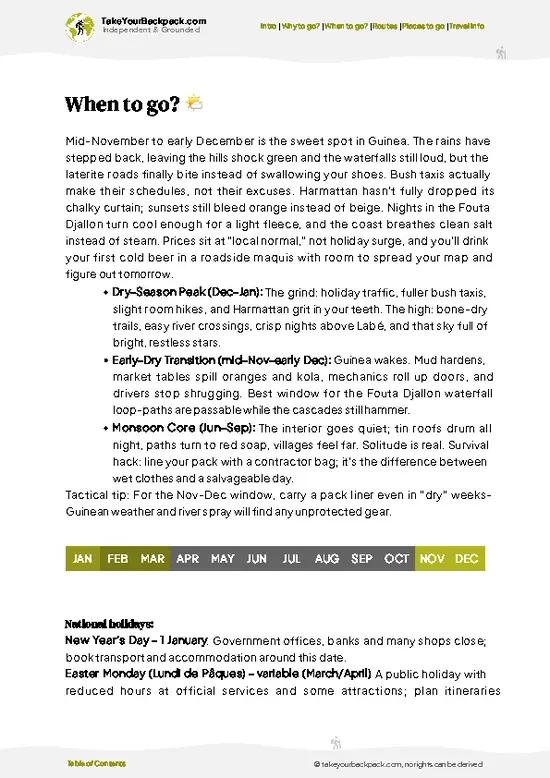
  • Topic: Weather – The dry season from November to April is your best bet. Expect less humidity and almost no rain, which means trails stay firm and the air feels lighter. The wet season, May to October, brings heavy rains that can turn paths into mud baths and swell rivers, making travel tricky.

  • Topic: Temperature – Daytime highs hover around 28-32°C (82-90°F) during the dry months, cooling off to a comfortable 20-24°C (68-75°F) at night. The wet season feels hotter and stickier, often pushing 33°C (91°F) with oppressive humidity that saps energy fast.

  • Topic: Daylight Hours – Near the equator, daylight is steady year-round, roughly 12 hours. This consistency means you can plan hikes and explorations without worrying about early sunsets cutting your day short.

  • Topic: Crowds – Beyla
read more 👉

  • Topic: Weather – The dry season from November to April is your best bet. Expect less humidity and almost no rain, which means trails stay firm and the air feels lighter. The wet season, May to October, brings heavy rains that can turn paths into mud baths and swell rivers, making travel tricky.

  • Topic: Temperature – Daytime highs hover around 28-32°C (82-90°F) during the dry months, cooling off to a comfortable 20-24°C (68-75°F) at night. The wet season feels hotter and stickier, often pushing 33°C (91°F) with oppressive humidity that saps energy fast.

  • Topic: Daylight Hours – Near the equator, daylight is steady year-round, roughly 12 hours. This consistency means you can plan hikes and explorations without worrying about early sunsets cutting your day short.

  • Topic: Crowds – Beyla isn’t a tourist hotspot, so you’ll rarely face crowds. However, local festivals during the dry season can bring lively gatherings, offering a chance to experience authentic culture without overwhelming numbers.

  • Topic: Seasonal Activities – Dry months open up opportunities for trekking and village visits, while the wet season is better for birdwatching as migratory species arrive, though access is tougher.

  • Topic: Price Fluctuations – Expect slightly higher prices during the dry season when travel is easier and demand peaks. The wet season offers better deals but comes with the trade-off of challenging conditions.


Pro-tip: Aim for late November or early December—when the air is crisp, trails are dry, and the town buzzes quietly with local life before the peak season rush.


source: climatestotravel.comJANJanuary: excellent for travelingFEBFebruary: excellent for travelingMARMarch: excellent for travelingAPRApril: highly recommended for travelingMAYMay: fair for travelingJUNJune: fair for travelingJULJuly: below average for travelingAUGAugust: below average for travelingSEPSeptember: fair for travelingOCTOctober: fair for travelingNOVNovember: highly recommended for travelingDECDecember: excellent for traveling
when-to-go

✈️ The backpacker research shortcutGuinea Travel Guide

An offline-friendly backpacking guide with optimized travel routes, ranked highlights, transport advice, and the best areas to stay.
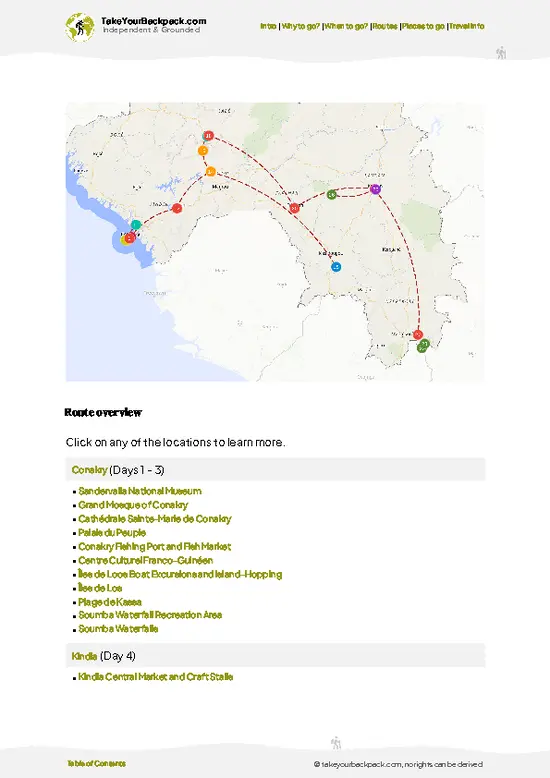
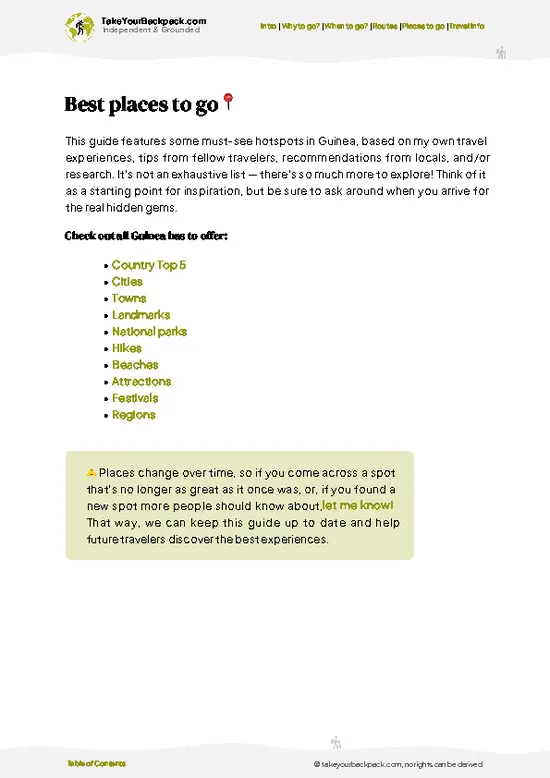
example page 0 from our offline Travel Guide for Guineaexample page 1 from our offline Travel Guide for Guineaexample page 2 from our offline Travel Guide for Guineaexample page 3 from our offline Travel Guide for Guineaexample page 4 from our offline Travel Guide for Guineaexample page 5 from our offline Travel Guide for Guineaexample page 6 from our offline Travel Guide for Guineaexample page 7 from our offline Travel Guide for Guinea
The digital guide (282 pages) contains:
67 highlights, ranked by travel appeal
Optimized 5, 10 & 15-day travel routes
Cities, national parks, beaches, historical sites, ...
How to get around
Offline-friendly for travel without Wi-Fi
👉 Click to see all 30+ guide features

📅 Plan smarter in minutes, not weeks
Month by month travel advice
Festivals & national holidays
Budget expectations

🗺️ Go to the right places, skip the overrated ones
Honest pros & cons of destinations
Top hikes, parks & viewpoints
Lesser-known places most travelers miss
Clear “worth it vs skip it” guidance

🛏️ Travel smoothly without rookie mistakes
Best areas to stay
Transport systems explained simply
Common scams & safety advice
SIM cards, money & practical tips

🌍 Understand the country, not just visit it
Culture & traditions
52 Essential phrases & customs
Festivals worth planning around
Traveler-friendly historical context
Insights that make places more meaningful

📱 Built for real travel conditions
Fully downloadable PDF
Works completely offline
Optimized for phone use
Useful in remote areas & buses
Everything in one place
Save weeks of stressful planning
Get instant access to the full guide directly. 30-day money-back guarantee.


Sent to your inbox immediately after payment • 100% Secure Checkout
Best Backpacking Travel Advisor 2025 tourism awardBest Backpacking
Travel Advisor
2025
What others say about Take Your Backpack Guides:
⭐⭐⭐⭐⭐
Fantastic, amazing amount of information!
⭐⭐⭐⭐⭐
My goodness this is amazing, it's what I've been looking for hats off too you!
⭐⭐⭐⭐⭐
I think this is absolutely BRILLIANT
⭐⭐⭐⭐
Very complete and informative. It's still missing places, but I gotta to commend you
⭐⭐⭐⭐⭐
This is truly amazing, thank you, can't wait to explore it with my kids!
⭐⭐⭐⭐⭐
Awesome resource, thank you!
⭐⭐⭐⭐⭐
This is amazing! Can't wait to explore the ones I haven't seen
⭐⭐⭐⭐
I love this! Well done, great idea.
⭐⭐⭐⭐⭐
Thanks for taking the time to make this gem!
⭐⭐⭐⭐⭐
This might be the best website I've ever seen.
⭐⭐⭐⭐⭐
Congratulations, and thank you so much for your work; it's incredibly valuable.
⭐⭐⭐⭐
In all seriousness I think you did a great job pointing out the important spots
⭐⭐⭐⭐⭐
10/10 very good
⭐⭐⭐⭐⭐
As someone who's only just starting to visit regularly this is awesome, thank you.
⭐⭐⭐⭐
Thank you very much! I'm going to visit my dad, it's going to be very useful!
⭐⭐⭐⭐⭐
This is really cool! We'll be travelling for the first time and this definitely come in handy.
⭐⭐⭐⭐⭐
You are now our minister of culture, congratulations 👨‍💼
⭐⭐⭐⭐⭐
Just wanted to tell you that this is a pearl! Going to follow your recommendations.
⭐⭐⭐⭐⭐
This is so cool. I'll definitely be using the resource for my travels soon.
⭐⭐⭐⭐⭐
This is very impressive! Good work.
⭐⭐⭐⭐⭐
This is an amazing and informative site. Very well done!

🛏️ Where to stay?Where staying makes the most sense

In Beyla, the heart of backpacker life pulses strongest around the central market district. This area hums with activity from dawn, the air thick with the scent of fresh spices and grilled street food, making it a natural magnet for solo travelers seeking both safety and social buzz. Staying here means you’re steps away from local vendors and communal spaces where conversations flow easily, and the rhythm of daily life feels immediate and authentic.

Compared to the quieter, more residential outskirts, the market district offers a practical advantage: a handful of budget guesthouses and informal … read more 👉
In Beyla, the heart of backpacker life pulses strongest around the central market district. This area hums with activity from dawn, the air thick with the scent of fresh spices and grilled street food, making it a natural magnet for solo travelers seeking both safety and social buzz. Staying here means you’re steps away from local vendors and communal spaces where conversations flow easily, and the rhythm of daily life feels immediate and authentic.

Compared to the quieter, more residential outskirts, the market district offers a practical advantage: a handful of budget guesthouses and informal hostels cluster here, providing simple but reliable beds and a chance to meet fellow travelers. The streets are lively but well-trodden, so the risk of isolation or feeling out of place drops sharply. For backpackers, this neighborhood isn’t just a place to crash—it’s where the city’s pulse syncs with your own, turning logistical convenience into a richer, more connected experience.

🚌 Getting aroundMoving around without the hassle

Beyla moves at its own rhythm—less a clockwork town and more a pulse you feel in the dusty air and the chatter spilling from market stalls. It’s not about strict timetables but about catching the right moment, the right ride, and reading the subtle cues of a place where schedules bend to the sun and the mood of the day. The heat softens the edges of urgency, and the scent of earth and spices hangs heavy, reminding you that here, patience isn’t just a virtue; it’s part of the journey.


  • Walking: Beyla’s compact center is best explored on foot. The streets are uneven, often dusty, but walking lets you soak in the vibrant street life—vendors calling out, children darting between stalls, and the occasional waft of grilled fish. It’s free, flexible, and the best way to catch the town’s texture
read more 👉
Beyla moves at its own rhythm—less a clockwork town and more a pulse you feel in the dusty air and the chatter spilling from market stalls. It’s not about strict timetables but about catching the right moment, the right ride, and reading the subtle cues of a place where schedules bend to the sun and the mood of the day. The heat softens the edges of urgency, and the scent of earth and spices hangs heavy, reminding you that here, patience isn’t just a virtue; it’s part of the journey.


  • Walking: Beyla’s compact center is best explored on foot. The streets are uneven, often dusty, but walking lets you soak in the vibrant street life—vendors calling out, children darting between stalls, and the occasional waft of grilled fish. It’s free, flexible, and the best way to catch the town’s texture up close.


  • Shared Taxis: These are the backbone of local transit. They don’t run on a strict schedule but leave when full, so timing is a game of patience mixed with luck. Fares are low, usually a few hundred Guinean francs, and the rides are bumpy but direct. Perfect if you want to cover longer distances without breaking the bank.


  • Motorcycle Taxis (Moto): When time is tight or the sun is relentless, motos are your go-to. They weave through traffic and dirt paths alike, cutting travel time in half compared to walking. Expect to negotiate fares upfront—usually around 1,000 to 2,000 GNF—and hold on tight as the wind and dust whip past.


  • Minibuses: These run on main routes connecting Beyla to nearby villages and towns. They’re cheap and relatively frequent during daylight hours but can get crowded and slow. They start early, around 6 a.m., and wind down by late afternoon, so plan accordingly if you’re aiming for a day trip.

👛 Costs (as of 27 April 2026)What things cost and how to budget

Backpacking in Beyla, Guinea, means embracing simplicity and local rhythms, where every dollar stretches further than you might expect in more tourist-heavy spots.
  • Dorm Accommodation: Expect basic guesthouses or small hostels with shared rooms. Prices hover around €5 to €10 per night. These places are no-frills but clean enough, often with a fan and mosquito net—essential in the humid air.
  • Meals: Street food and local eateries dominate. A hearty meal of rice, sauce, and grilled fish or chicken will cost about €1.50 to €3. Fresh fruit and snacks are even cheaper. Avoid imported goods; they spike the price and rarely match local flavors.
  • Local Transport: Transport is mostly by bush taxis or motorbike taxis. Short rides within town typically cost around €0.50 to €1.50. For longer trips, like
read more 👉
Backpacking in Beyla, Guinea, means embracing simplicity and local rhythms, where every dollar stretches further than you might expect in more tourist-heavy spots.
  • Dorm Accommodation: Expect basic guesthouses or small hostels with shared rooms. Prices hover around €5 to €10 per night. These places are no-frills but clean enough, often with a fan and mosquito net—essential in the humid air.
  • Meals: Street food and local eateries dominate. A hearty meal of rice, sauce, and grilled fish or chicken will cost about €1.50 to €3. Fresh fruit and snacks are even cheaper. Avoid imported goods; they spike the price and rarely match local flavors.
  • Local Transport: Transport is mostly by bush taxis or motorbike taxis. Short rides within town typically cost around €0.50 to €1.50. For longer trips, like to nearby villages, budget up to €3 to €5. The roads are rough, so travel can be slow but offers a raw, authentic view of the landscape.
  • Basic Activities/Entry Fees: Organized tours are rare, so most activities involve exploring markets, local villages, or natural surroundings independently. Entry fees to any local sites or parks are minimal, usually under €2. Guided experiences, if available, might cost around €5 to €10.
  • Miscellaneous Expenses: This includes bottled water (important for health), snacks, and occasional phone credit. Expect to spend about €1 to €2 daily. Internet access is patchy and often requires buying data bundles from local providers.

A realistic daily budget in Beyla ranges from about €10 to €20. This covers basic comfort without luxury, letting you dive into the local pace and flavors without breaking the bank. The modest costs reflect the town’s off-the-beaten-path status, where the real reward is the unfiltered experience rather than polished tourist infrastructure.


source: guineaembassyusa.org
⚠️ Prices can change and everyone travels differently, so take this as a rough guide. Hope it helps you plan your adventure!

🚌 Day tripsShort trips worth adding

Beyla is a fantastic launchpad for exploring the rich landscapes and cultures of Guinea. Here are some day trips that will elevate your experience.

Mount Nimba
A trek to Mount Nimba is a must. The journey takes about two hours by shared taxi, and the views from the summit are a reward for the effort. Expect to pay around $10 for transport and a small fee for park entry. The best time to go is during the dry season, from November to April, when the trails are less muddy. Many first-timers underestimate the need for sturdy footwear; the rocky paths can be tricky. The scent of wildflowers and the sound of rustling leaves make this hike unforgettable.


Kankan Market
Dive into the vibrant Kankan Market, just an hour away by bus. For about $5, you can soak in the local culture, sampling … read more 👉
Beyla is a fantastic launchpad for exploring the rich landscapes and cultures of Guinea. Here are some day trips that will elevate your experience.

Mount Nimba
A trek to Mount Nimba is a must. The journey takes about two hours by shared taxi, and the views from the summit are a reward for the effort. Expect to pay around $10 for transport and a small fee for park entry. The best time to go is during the dry season, from November to April, when the trails are less muddy. Many first-timers underestimate the need for sturdy footwear; the rocky paths can be tricky. The scent of wildflowers and the sound of rustling leaves make this hike unforgettable.


Kankan Market
Dive into the vibrant Kankan Market, just an hour away by bus. For about $5, you can soak in the local culture, sampling street food and browsing handmade crafts. Weekends are bustling, so aim for a Saturday visit. A common mistake is sticking to the main stalls; venture into the side alleys for unique finds and local interactions. The air is filled with spices, and the chatter of vendors creates an electric atmosphere.


Lola Waterfalls
A trip to Lola Waterfalls is a refreshing escape. It’s roughly a 90-minute ride from Beyla, costing around $7. The best months to visit are during the rainy season, when the falls are at their most powerful. Many backpackers miss the trail leading to the upper falls, which offers a stunning view and a chance to swim in natural pools. The sound of cascading water and the cool mist will rejuvenate your spirit.


Siguiri
Explore Siguiri, a town rich in gold mining history, just two hours away. For about $8, you can take a shared taxi and wander through the local mines. The dry season is ideal for visiting, as the roads are more accessible. A common mistake is not engaging with the miners; their stories add depth to the experience. The earthy smell of the soil and the sight of miners at work create a vivid picture of local life.
👉 Explore Siguiri
Want to know what more Guinea offers?
The Guinea Travel Guide describes 67 highlights, from cities to national parks, from beaches to hikes

Get the Travel Guide -

🛡️ SafetyStaying Safe: What Travelers Should Know

Beyla is generally safe, but a few practical tips can enhance your experience. Stay aware in crowded markets; pickpockets can lurk where the hustle is thick. If you’re solo, avoid wandering too far after dark—stick to well-lit areas and move with purpose.

Common scams are rare, but be cautious of overly friendly locals offering unsolicited help; they might expect a tip. Carry yourself confidently, and don’t flash valuables. Trust your instincts; they’re your best guide in navigating the town’s rhythm.

Other Guinean towns near Beyla

Explore more nearby:

  • Mandiana—gold mining, savanna plains, rural settlements| 215 km away
  • Kouroussa—river port, Manding culture, artisanal gold panning| 257 km away
  • Dinguiraye—historic mosque, religious pilgrimage, Sahel edge| 368 km away

👉 Discover all towns

Or checkout all Guinea has to offer (think cities, towns, villages, national parks, hikes, beaches, festivals)
Country photo of Guinea

We 💚 feedbackSumming up the experience

Beyla hums with life. The scent of grilled fish mingles with the chatter of locals, creating a warm embrace. Don’t miss the market—it’s chaotic but vibrant. Just watch your belongings; the energy can sweep you away. Embrace the rhythm, and you’ll find magic.

✍️ Help improve this page!
The information on this page is based on in-depth research, insights shared by experienced travelers, and feedback from the local travel community in Guinea. While every effort is made to keep the information accurate and current, conditions can change — so if you spot anything incorrect or outdated, please get in touch.


🙋‍♂️ Give feedback

👋 Meet the founderWho’s Behind Take Your Backpack?

Johan, backpacker and founder of TakeYourBackpackHi, I’m Johan (Netherlands 🇳🇱), the creator of TakeYourBackpack. Over the past decade, I’ve backpacked through 80+ countries across six continents, gaining extensive experience with independent travel, long-term trips, and overland routes.

This site is built on a combination of firsthand travel experience and carefully curated insights from other backpackers. Many guides are based on places I’ve personally visited, while others bring together tips, observations, and practical advice shared by trusted travelers I’ve met along the way.

The goal is to provide realistic, experience-driven guidance — not generic itineraries — so you can explore destinations with better context, clearer expectations, and more confidence.

Get full Guinea guide •
Instant download • 67 highlights • Full Offline guide