×

Guyana🇬🇾 | townsLethemborder town, Rupununi rodeo, Brazil crossing | things to do and best time to go

Explore Bina HillExplore Linden

Backpacking in Lethem
🏆 Top picktown ranked #1
By Johan Kruseman 🇳🇱 | Updated June 9, 2026

Years ago, Lethem felt like a dusty frontier outpost where the road from Brazil simply… stopped. One main strip, a few wooden shops, red mud everywhere after rain, and almost no traveler infrastructure. Today it’s still rough-edged, but the bridge, better roads, and more 4x4 traffic have turned it into a small, busy border town rather than a forgotten end-of-the-line. You’re in far southwestern Guyana, right on the edge of the Rupununi savannah, with Brazil’s Bonfim just across the river.

For backpackers, Lethem is more launchpad than destination. It’s where you swap long-distance buses and sweaty border formalities for access to ranches, savannah tours, and interior villages. The town itself is low-rise and spread out, walkable in the cooler hours, but you’ll feel the heat bouncing off the asphalt by midday. A few simple guesthouses, bars, and Brazilian-style eateries make evenings social enough, especially with overlanders and workers passing through, but it’s not a party town. Compared with Georgetown, Lethem is calmer, dustier, and more practical than pretty; compared with tiny Rupununi villages, it feels like “the big city” where you stock up, grab cash, and organize onward transport. Costs are moderate, safety is generally fine with basic street sense, and the real payoff lies just beyond town, out where the savannah opens and the sky feels huge.

Discover everything you want to know in the 📖 Guyana Travel Guide.


Get your Guyana guide
46 ranked highlights, routes & tips, works offline (206 pages)
Loading the map 🌍
CLICK TO FILTER
cities
towns
villages
landmarks
national parks
hikes
beaches
attractions
festivals
regions
SHOW COUNTRY’S BESTSHOW ALL

✨ Why go?
Ranked #1 town in Guyana
Reasons people choose to visit here

Backpackers flock to Lethem not just for its charm but for its strategic position as a gateway to adventure. This town serves as a launchpad for nearby hikes in the Kanuku Mountains, where trails weave through lush greenery and the air is thick with the scent of damp earth and wildflowers. The walkable streets invite exploration, lined with small-scale hostels and guesthouses that offer a cozy, communal vibe. You’ll find friendly locals eager to share stories over a plate of pepperpot or a bowl of cassava stew, making every meal a cultural experience.

Travelers often linger here for a few days, soaking in the laid-back atmosphere that’s perfect for slow travelers and solo adventurers alike. The social scene is warm but not overwhelming; you can easily strike up a conversation or find a quiet … read more 👉
Backpackers flock to Lethem not just for its charm but for its strategic position as a gateway to adventure. This town serves as a launchpad for nearby hikes in the Kanuku Mountains, where trails weave through lush greenery and the air is thick with the scent of damp earth and wildflowers. The walkable streets invite exploration, lined with small-scale hostels and guesthouses that offer a cozy, communal vibe. You’ll find friendly locals eager to share stories over a plate of pepperpot or a bowl of cassava stew, making every meal a cultural experience.

Travelers often linger here for a few days, soaking in the laid-back atmosphere that’s perfect for slow travelers and solo adventurers alike. The social scene is warm but not overwhelming; you can easily strike up a conversation or find a quiet corner to recharge. While Lethem isn’t a nightlife hub, its charm lies in the authentic connections you make and the easy access to natural wonders. If you’re looking for a place to catch your breath before diving deeper into Guyana’s wild heart, Lethem is your spot.
Want to include Lethem in your Guyana route?
Create a personalized Guyana itinerary that includes Lethem and the places that fit your trip — based on your travel style, budget, and available time. Get your route in seconds.

Generate my trip

💡 HighlightsDon't-miss highlights and experiences

  • Takutu River Bridge — The literal gateway to Brazil; walking out onto the bridge gives you a front-row view of border life, truck convoys, and the odd Portuguese phrasebook moment. Great for photos and watching the push-and-pull of cross-border trade.
  • Lethem Market (Central Market) — Weekend chaos in the best way: fresh produce, smoked meats, spices, and stalls run by local and Brazilian traders. It’s the easiest place to sense Lethem’s daily rhythm and pick up handmade beads, bush medicines, or a cheap snack.
  • Rupununi Rodeo Grounds — The town’s event hub where the big annual rodeo happens and smaller community events, markets or matches take place. Even when there’s no rodeo, you’ll see cowboys, cattle infrastructure and a true slice of Rupununi frontier life.
  • Lethem Airstrip / Lethem
read more 👉
  • Takutu River Bridge — The literal gateway to Brazil; walking out onto the bridge gives you a front-row view of border life, truck convoys, and the odd Portuguese phrasebook moment. Great for photos and watching the push-and-pull of cross-border trade.
  • Lethem Market (Central Market) — Weekend chaos in the best way: fresh produce, smoked meats, spices, and stalls run by local and Brazilian traders. It’s the easiest place to sense Lethem’s daily rhythm and pick up handmade beads, bush medicines, or a cheap snack.
  • Rupununi Rodeo Grounds — The town’s event hub where the big annual rodeo happens and smaller community events, markets or matches take place. Even when there’s no rodeo, you’ll see cowboys, cattle infrastructure and a true slice of Rupununi frontier life.
  • Lethem Airstrip / Lethem Airport — A small, lively regional airstrip where bush planes land and depart; hanging around here is a good way to meet guides, catch flights into the savannah, and watch the practical side of remote Guyanese travel.
  • Main Street / Brazilian Quarter — The commercial spine of Lethem where Portuguese signage, hardware shops, electronics and clothing stalls mix with local businesses. Walking it feels like two countries rubbing shoulders — useful for cheap imports and people-watching.
  • Livestock/Cattle Market — Cattle trading is the backbone of the Rupununi economy; visiting the market (or auction days) shows you how ranching shapes the town’s culture and landscape — noisy, smelly, and entirely fascinating.
  • Indigenous Artisan Stalls and Workshops — Small clusters of vendors and makers near the market who sell Wapichan and Macushi beadwork, baskets, and leatherwork. You can often chat with artisans, learn about materials, and buy directly from the maker.
  • Takutu Riverfront and Riverside Walks — The river edge in town is where locals launch boats, wash, and socialize; it’s a calm place for a sunset stroll, to see small rivercraft, and to get a different perspective on Lethem away from Main Street.
  • Local Eateries and Bakeries (street food scene) — Low-key cafes and bake-shops serve Guyanese staples plus Brazilian influences — think fresh bread, grilled meats, and simple stews. Eating where locals eat is one of the best ways to understand Lethem’s mixed identity.
  • Town Sports Field / Community Event Ground — More than just a patch of grass: this is where football gets rowdy, regional meetings happen, and festivals spill over. Drop in during a match or community event to connect with residents and feel the town’s pulse.
A few nearby, visitable day-trip highlights: the wide Rupununi savannahs and guest ranches, the Kanuku Mountains for birds and hiking, and the Brazilian town of Bonfim across the Takutu Bridge.
Spotted a mistake or missing something? Contact us.

Things to do around Lethem

Ratings based on Tripadvisor reviews. When you book through this link, you support our work at no extra cost to you.

🏘️ NeighborhoodsHow different areas shape the experience

Lethem, a lively border town in Guyana, serves as a gateway to the Rupununi savannah and Brazil. Each neighborhood offers a unique flavor, making it essential for backpackers to know where to land.

Central Lethem
This is the heart of the action. Vibrant markets buzz with locals selling fresh produce and crafts. The atmosphere is lively, perfect for those who thrive on energy. Accommodations range from budget hostels to mid-range lodges. Walkability is high, with most amenities within a short stroll. Nightlife is modest but enjoyable; local bars offer a taste of Guyanese rum and music. Ideal for short stays, you can soak in the local culture quickly.

Tabatinga
Just across the border, Tabatinga has a more laid-back vibe. It’s quieter, with a mix of Brazilian and Guyanese influences. Here, … read more 👉
Lethem, a lively border town in Guyana, serves as a gateway to the Rupununi savannah and Brazil. Each neighborhood offers a unique flavor, making it essential for backpackers to know where to land.

Central Lethem
This is the heart of the action. Vibrant markets buzz with locals selling fresh produce and crafts. The atmosphere is lively, perfect for those who thrive on energy. Accommodations range from budget hostels to mid-range lodges. Walkability is high, with most amenities within a short stroll. Nightlife is modest but enjoyable; local bars offer a taste of Guyanese rum and music. Ideal for short stays, you can soak in the local culture quickly.

Tabatinga
Just across the border, Tabatinga has a more laid-back vibe. It’s quieter, with a mix of Brazilian and Guyanese influences. Here, you’ll find cozy guesthouses that are slightly pricier but offer a more relaxed atmosphere. The area is walkable, but transport options are limited, making it less ideal for longer stays unless you’re looking for peace. Perfect for those wanting to recharge before heading into the wild.

Rupununi Road
This area is a bit off the beaten path but worth the trek. It’s where you’ll find eco-lodges and adventure tour operators. The vibe is rustic, surrounded by nature, and the cost can vary widely depending on your choice of accommodation. While not as walkable, transport options are available for those seeking excursions. Best suited for longer stays, this is where you can truly immerse yourself in the beauty of the savannah.

⌛️ 1 day1-day itinerary for Lethem

Lethem, a lively town in southern Guyana, pulses with a unique blend of cultures and a palpable sense of community. It’s a gateway to the Rupununi savannahs and the Brazilian border, making it a melting pot of influences. The air is thick with the scent of fresh cassava and the sounds of local vendors calling out their wares.

Start your morning at the Lethem Market. The sun rises early here, casting a warm glow over stalls brimming with vibrant fruits, spices, and handmade crafts. Engage with the vendors; their stories are as rich as the produce they sell. Grab a breakfast of fried plantains and a cup of strong, local coffee. The energy is infectious, and you’ll feel the town waking up around you.

In the afternoon, head to the nearby Rupununi River. It’s not on every tourist’s radar, but … read more 👉
Lethem, a lively town in southern Guyana, pulses with a unique blend of cultures and a palpable sense of community. It’s a gateway to the Rupununi savannahs and the Brazilian border, making it a melting pot of influences. The air is thick with the scent of fresh cassava and the sounds of local vendors calling out their wares.

Start your morning at the Lethem Market. The sun rises early here, casting a warm glow over stalls brimming with vibrant fruits, spices, and handmade crafts. Engage with the vendors; their stories are as rich as the produce they sell. Grab a breakfast of fried plantains and a cup of strong, local coffee. The energy is infectious, and you’ll feel the town waking up around you.

In the afternoon, head to the nearby Rupununi River. It’s not on every tourist’s radar, but the tranquility here is worth the detour. Rent a canoe or simply stroll along the banks, where the gentle lapping of water against the shore creates a soothing soundtrack. Keep an eye out for capybaras lounging in the sun or colorful birds flitting through the trees. This is where you can truly soak in the natural beauty of the region.

As evening approaches, make your way to the town center. The atmosphere shifts; locals gather, sharing stories and laughter. Stop by a small eatery for dinner—try the pepperpot, a traditional dish that’s both spicy and comforting. The flavors will linger long after the meal, just like the warmth of the community.

Lethem isn’t just a stopover; it’s a place that invites you to slow down and connect. Each moment here, from the market buzz to the river’s calm, reveals the heart of Guyana. Embrace the rhythm of the town, and you’ll leave with more than just memories—you’ll carry a piece of its spirit with you.
Turn your Lethem visit into an Guyana adventure
Build a complete Guyana route with Lethem, hidden gems, must-see destinations, and realistic travel times included.

Generate my trip

🌤️ When to go?Weather, crowds, and seasonal trade-offs


  • Topic: Weather — Lethem’s climate swings between a wet season from May to August and a dry season from September to April. The dry months offer clearer skies and less mud, making trails and river crossings easier to navigate.

  • Topic: Temperature — Temperatures hover around 25-32°C (77-90°F) year-round, but the dry season feels less oppressive with lower humidity, which means you’ll sweat less and enjoy your hikes more.

  • Topic: Daylight Hours — Near the equator, daylight stays steady at about 12 hours daily, so you can plan your days without worrying about early sunsets cutting your adventures short.

  • Topic: Crowds — Lethem is off the beaten path, so crowds are minimal year-round. However, the dry season attracts more regional travelers, so expect a livelier atmosphere and better social
read more 👉

  • Topic: Weather — Lethem’s climate swings between a wet season from May to August and a dry season from September to April. The dry months offer clearer skies and less mud, making trails and river crossings easier to navigate.

  • Topic: Temperature — Temperatures hover around 25-32°C (77-90°F) year-round, but the dry season feels less oppressive with lower humidity, which means you’ll sweat less and enjoy your hikes more.

  • Topic: Daylight Hours — Near the equator, daylight stays steady at about 12 hours daily, so you can plan your days without worrying about early sunsets cutting your adventures short.

  • Topic: Crowds — Lethem is off the beaten path, so crowds are minimal year-round. However, the dry season attracts more regional travelers, so expect a livelier atmosphere and better social opportunities then.

  • Topic: Seasonal Activities — The Rupununi Rodeo in August is a cultural highlight, but it coincides with the tail end of the wet season, meaning muddy roads and occasional travel delays.

  • Topic: Price Fluctuations — Accommodation and transport costs dip during the wet season due to lower demand, but the trade-off is rougher travel conditions and fewer open services.


Pro-tip: Aim for late dry season (March-April) to catch optimal weather, manageable crowds, and a full range of activities without the mud slog.


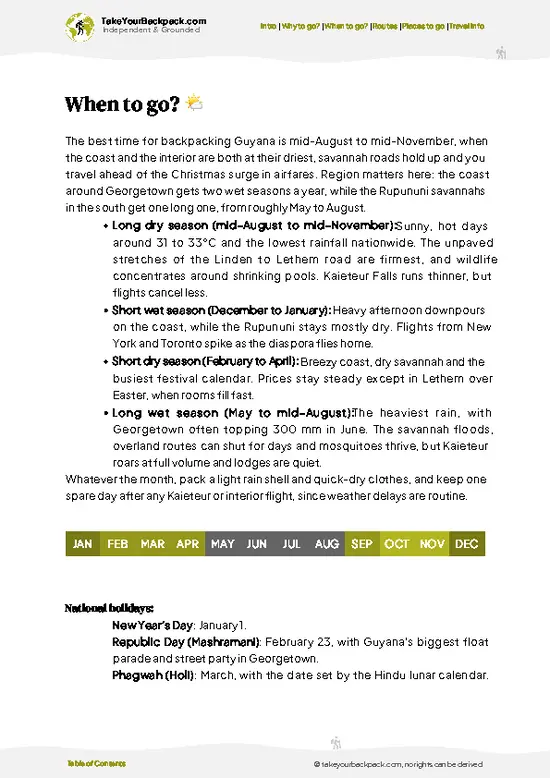
source: climatestotravel.comJANJanuary: excellent for travelingFEBFebruary: excellent for travelingMARMarch: excellent for travelingAPRApril: excellent for travelingMAYMay: good for travelingJUNJune: fair for travelingJULJuly: fair for travelingAUGAugust: good for travelingSEPSeptember: highly recommended for travelingOCTOctober: highly recommended for travelingNOVNovember: highly recommended for travelingDECDecember: excellent for traveling
when-to-go

✈️ The backpacker research shortcutGuyana Travel Guide

An offline-friendly backpacking guide with optimized travel routes, ranked highlights, transport advice, and the best areas to stay.
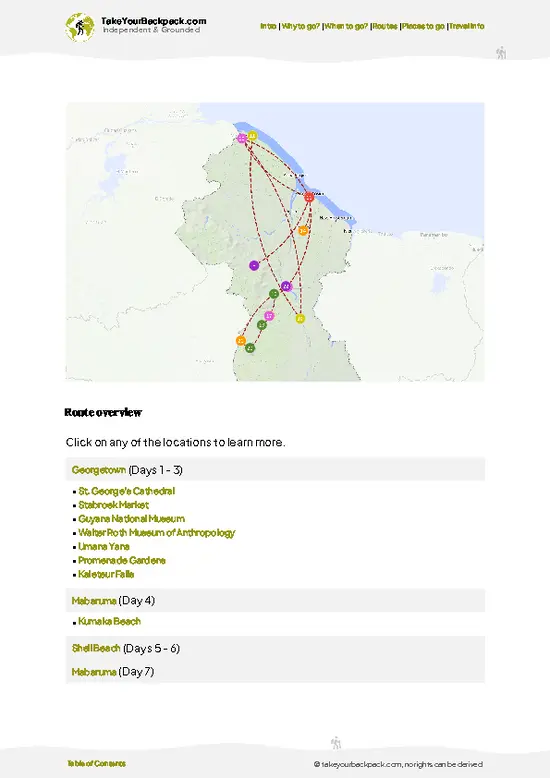
example page 0 from our offline Travel Guide for Guyana
example page 1 from our offline Travel Guide for Guyana
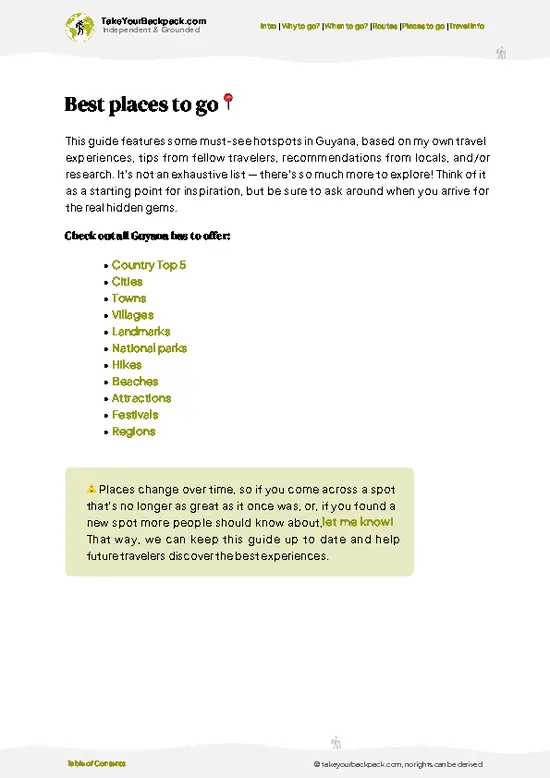
example page 2 from our offline Travel Guide for Guyana
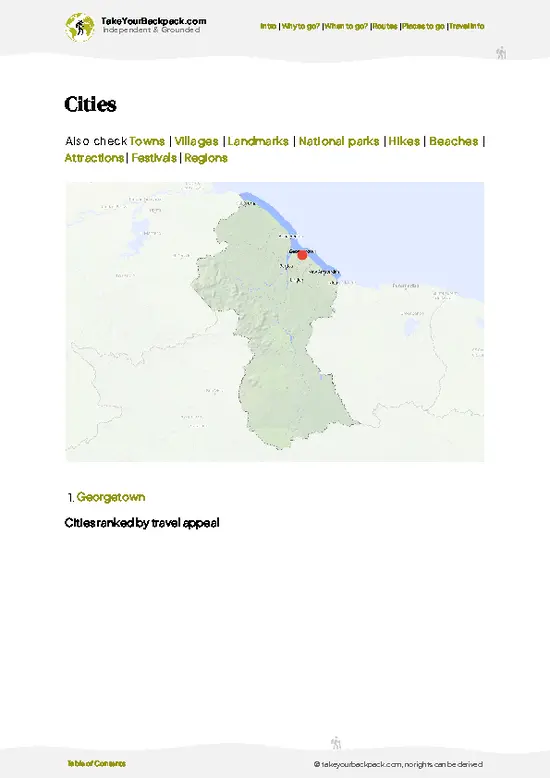
example page 3 from our offline Travel Guide for Guyana
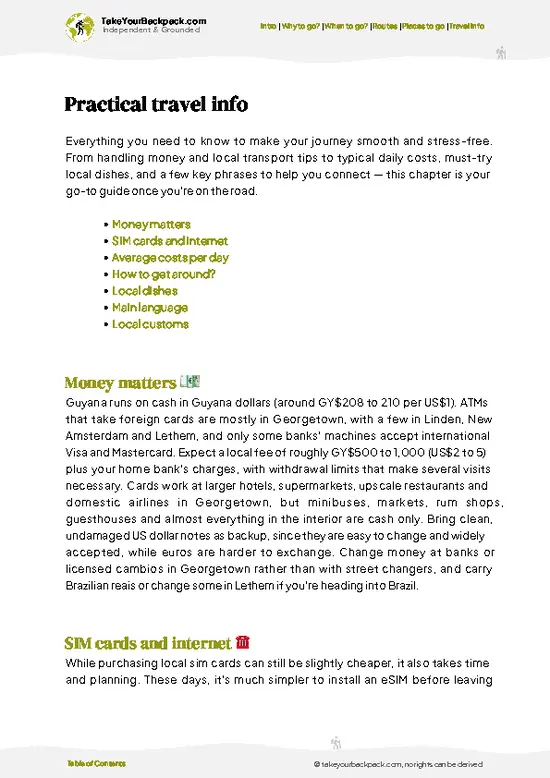
example page 4 from our offline Travel Guide for Guyana
example page 5 from our offline Travel Guide for Guyana
example page 6 from our offline Travel Guide for Guyana
example page 7 from our offline Travel Guide for Guyana
The digital guide (206 pages) contains:
46 highlights, ranked by travel appeal
Optimized 5, 10 & 15-day travel routes
Cities, national parks, landmarks, beaches
How to get around
Offline-friendly for travel without Wi-Fi
👉 Click to see all 30+ guide features

📅 Plan smarter in minutes, not weeks
Month by month travel advice
Festivals & national holidays
Budget expectations

🗺️ Go to the right places, skip the overrated ones
Honest pros & cons of destinations
Top hikes, parks & viewpoints
Lesser-known places most travelers miss
Clear “worth it vs skip it” guidance

🛏️ Travel smoothly without rookie mistakes
Best areas to stay
Transport systems explained simply
Common scams & safety advice
SIM cards, money & practical tips

🌍 Understand the country, not just visit it
Culture & traditions
Local customs
Festivals worth planning around
Traveler-friendly historical context
Insights that make places more meaningful

📱 Built for real travel conditions
Fully downloadable PDF
Works completely offline
Optimized for phone use
Useful in remote areas & buses
Everything in one place
Save weeks of stressful planning
Get instant access to your full guide. 30‑day money-back guarantee.


By proceeding you agree to our terms.
Sent to your inbox immediately after payment • 100% Secure Checkout
Best Backpacking Travel Advisor 2025 tourism awardBest Backpacking
Travel Advisor
2025
What others say about Take Your Backpack Guides:
⭐⭐⭐⭐⭐
Fantastic, amazing amount of information!
⭐⭐⭐⭐⭐
My goodness this is amazing, it's what I've been looking for hats off too you!
⭐⭐⭐⭐⭐
I think this is absolutely BRILLIANT
⭐⭐⭐⭐
Very complete and informative. It's still missing places, but I gotta to commend you
⭐⭐⭐⭐⭐
This is truly amazing, thank you, can't wait to explore it with my kids!
⭐⭐⭐⭐⭐
Awesome resource, thank you!
⭐⭐⭐⭐⭐
This is amazing! Can't wait to explore the ones I haven't seen
⭐⭐⭐⭐
I love this! Well done, great idea.
⭐⭐⭐⭐⭐
Thanks for taking the time to make this gem!
⭐⭐⭐⭐⭐
This might be the best website I've ever seen.
⭐⭐⭐⭐⭐
Congratulations, and thank you so much for your work; it's incredibly valuable.
⭐⭐⭐⭐
In all seriousness I think you did a great job pointing out the important spots
⭐⭐⭐⭐⭐
10/10 very good
⭐⭐⭐⭐⭐
As someone who's only just starting to visit regularly this is awesome, thank you.
⭐⭐⭐⭐
Thank you very much! I'm going to visit my dad, it's going to be very useful!
⭐⭐⭐⭐⭐
This is really cool! We'll be travelling for the first time and this definitely come in handy.
⭐⭐⭐⭐⭐
You are now our minister of culture, congratulations 👨‍💼
⭐⭐⭐⭐⭐
Just wanted to tell you that this is a pearl! Going to follow your recommendations.
⭐⭐⭐⭐⭐
This is so cool. I'll definitely be using the resource for my travels soon.
⭐⭐⭐⭐⭐
This is very impressive! Good work.
⭐⭐⭐⭐⭐
This is an amazing and informative site. Very well done!

🛏️ Where to stay?Best areas to stay in Guyana

Lethem’s heart for backpackers pulses strongest near the town center, where the streets hum with a mix of local chatter, market scents, and the occasional rumble of a passing truck. This area is your best bet for safety and social energy. It’s where you’ll find the few hostels that cater to budget travelers and solo adventurers—places that feel more like community hubs than just a bed for the night. Staying here means you’re never far from the pulse of daily life: vendors selling fresh cassava and tropical fruits, the smell of grilled fish wafting through the air, and the easy camaraderie of fellow … read more 👉
Lethem’s heart for backpackers pulses strongest near the town center, where the streets hum with a mix of local chatter, market scents, and the occasional rumble of a passing truck. This area is your best bet for safety and social energy. It’s where you’ll find the few hostels that cater to budget travelers and solo adventurers—places that feel more like community hubs than just a bed for the night. Staying here means you’re never far from the pulse of daily life: vendors selling fresh cassava and tropical fruits, the smell of grilled fish wafting through the air, and the easy camaraderie of fellow travelers swapping stories over a cold drink.

Venture too far out, and the vibe shifts. Neighborhoods beyond the center tend to be quieter, less connected to the backpacker circuit, and sometimes sketchier after dark. The streets lose their buzz, and you’ll miss the spontaneous meetups that make solo travel feel less lonely. Plus, transport options thin out, making it harder to catch a ride to the Rupununi or cross into Brazil without a hassle.

So, anchor yourself in the central zone. It’s compact enough to explore on foot, safe enough to relax after sunset, and lively enough to keep your spirits high. This is where the real Lethem experience unfolds—raw, approachable, and ready to welcome you in.

🚌 Getting aroundHow to get from A to B

Lethem moves at its own rhythm—less a clock-driven town and more a place where the sun’s position and the hum of the market set the pace. The air carries the scent of fresh rain on red earth, mingled with the distant smoke of cooking fires. Streets are dusty, often unpaved, and the flow of people feels organic, not regimented. You won’t find rigid timetables here; instead, transit operates on a blend of local intuition and necessity. This means your best bet is to embrace flexibility, read the mood of the day, and lean into the town’s laid-back pulse. The payoff? A raw, authentic experience where every trip feels like a small adventure rather than a chore.


  • Walking: The heart of Lethem is compact enough to explore on foot, especially the central market and main streets. Walking costs nothing,
read more 👉
Lethem moves at its own rhythm—less a clock-driven town and more a place where the sun’s position and the hum of the market set the pace. The air carries the scent of fresh rain on red earth, mingled with the distant smoke of cooking fires. Streets are dusty, often unpaved, and the flow of people feels organic, not regimented. You won’t find rigid timetables here; instead, transit operates on a blend of local intuition and necessity. This means your best bet is to embrace flexibility, read the mood of the day, and lean into the town’s laid-back pulse. The payoff? A raw, authentic experience where every trip feels like a small adventure rather than a chore.


  • Walking: The heart of Lethem is compact enough to explore on foot, especially the central market and main streets. Walking costs nothing, lets you soak in the vibrant street life, and reveals unexpected details—like the way sunlight filters through mango trees or the chatter of vendors selling cassava. It’s the slowest but richest way to move.


  • Shared Minibuses: These are the backbone of local transit, running between Lethem and nearby villages or border points. They don’t run on strict schedules; instead, they leave when full, which can mean waiting up to an hour during slow times or hopping on immediately during busy periods. Fares are low, usually a few Guyanese dollars, but expect cramped seating and a bumpy ride over uneven roads.


  • Motorcycle Taxis (Boda-Bodas): The quickest way to cover short distances within town or reach spots off the main roads. Prices are negotiable but generally affordable, and drivers know every shortcut and pothole. The downside is exposure to dust and sun, so bring a bandana or scarf. They operate from dawn until dusk, disappearing after dark for safety reasons.


  • Private Taxis: More comfortable and faster than minibuses or motorcycles, private taxis offer door-to-door service but at a higher cost. They’re ideal if you’re carrying heavy gear or traveling in a group. Unlike minibuses, they run on demand, so you can call one anytime, but expect to pay several times the minibus fare.


  • Bicycle Rentals: A budget-friendly, flexible option for those wanting to cover more ground than walking but avoid the dust and noise of motorized transport. Bikes can be rented from local shops for a day or longer. The terrain is mostly flat but rough, so a sturdy bike is essential. Early mornings and late afternoons are the best times to ride, avoiding the midday heat.

👛 Costs (as of 25 April 2026)Travel costs and budget guide for Lethem

Backpacking in Lethem, Guyana, means stepping into a place where the pace slows and the air carries the scent of tropical earth and distant river water. Here’s what your daily costs will look like, broken down so you can plan smart and travel smooth.
  • Dorm Accommodation: Options are limited but affordable. Expect to pay around $10 to $15 USD per night for a basic dorm bed in guesthouses or small hostels. These places are simple, often with shared bathrooms and a fan, but they put you right in the heart of town.
  • Meals: Food is straightforward and filling. Local eateries serve up hearty plates of rice, beans, and grilled meats for about $3 to $6 USD per meal. If you stick to street food or small local spots, you can keep daily food costs around $10 to $15 USD.
  • Local Transport: Lethem is compact,
read more 👉
Backpacking in Lethem, Guyana, means stepping into a place where the pace slows and the air carries the scent of tropical earth and distant river water. Here’s what your daily costs will look like, broken down so you can plan smart and travel smooth.
  • Dorm Accommodation: Options are limited but affordable. Expect to pay around $10 to $15 USD per night for a basic dorm bed in guesthouses or small hostels. These places are simple, often with shared bathrooms and a fan, but they put you right in the heart of town.
  • Meals: Food is straightforward and filling. Local eateries serve up hearty plates of rice, beans, and grilled meats for about $3 to $6 USD per meal. If you stick to street food or small local spots, you can keep daily food costs around $10 to $15 USD.
  • Local Transport: Lethem is compact, so walking is your best bet to soak in the atmosphere. For longer trips or to reach nearby villages, shared minibuses or taxis run around $1 to $3 USD per ride. Budget about $3 to $6 USD daily if you plan to move around a bit.
  • Basic Activities/Entry Fees: Most activities here are nature-focused and low-cost. Visiting local markets or cultural sites is often free or costs a couple of dollars. Guided tours or river excursions might run $10 to $20 USD, but casual travelers can keep this minimal by exploring independently.
  • Miscellaneous Expenses: This covers essentials like water, snacks, or occasional internet access. Expect to spend around $2 to $5 USD daily, depending on your needs.

All told, you’re looking at roughly $28 to $47 USD per day to cover the essentials in Lethem. This range gives you the freedom to enjoy the town’s unique vibe without stretching your budget, balancing comfort and local flavor in a way that feels both practical and rewarding.


source: guyanatourism.com
⚠️ Prices can change and everyone travels differently, so take this as a rough guide. Hope it helps you plan your adventure!

🚌 Day tripsBest day trips from Lethem

Lethem, Guyana, is your gateway to adventure, with day trips that reveal the wild heart of the region. Each journey offers a unique blend of culture, nature, and the thrill of exploration.

Trip to the Rupununi Savanna
This expansive grassland is a feast for the senses. Picture yourself surrounded by rolling hills and the distant calls of howler monkeys. The drive takes about an hour, and you’ll want to budget around $10 for transport. Bring a packed lunch to enjoy under the vast sky. The best time to visit is during the dry season, from May to September, when the wildlife is more active. A common mistake? Many travelers rush through without taking the time to soak in the sights and sounds. Slow down, breathe in the earthy scent of the savanna, and keep your eyes peeled for capybaras and … read more 👉
Lethem, Guyana, is your gateway to adventure, with day trips that reveal the wild heart of the region. Each journey offers a unique blend of culture, nature, and the thrill of exploration.

Trip to the Rupununi Savanna
This expansive grassland is a feast for the senses. Picture yourself surrounded by rolling hills and the distant calls of howler monkeys. The drive takes about an hour, and you’ll want to budget around $10 for transport. Bring a packed lunch to enjoy under the vast sky. The best time to visit is during the dry season, from May to September, when the wildlife is more active. A common mistake? Many travelers rush through without taking the time to soak in the sights and sounds. Slow down, breathe in the earthy scent of the savanna, and keep your eyes peeled for capybaras and caimans.


Trip to the Kanuku Mountains
Just a short drive from Lethem, the Kanuku Mountains offer a rugged escape. The journey takes about 90 minutes, and you can expect to spend around $15 on transport. The mountains are best explored in the early morning when the mist clings to the peaks, creating an ethereal atmosphere. Hiking trails vary in difficulty, so choose one that matches your energy level. Many first-timers underestimate the terrain; sturdy shoes are a must. The reward? Stunning views and the chance to spot rare birds like the Guiana cock-of-the-rock.
👉 Explore Kanuku Mountains

Trip to the Takutu River
The Takutu River is a tranquil spot for a day of relaxation and exploration. It’s only about 30 minutes from Lethem, making it an easy escape. Expect to spend around $5 on transport. Bring your swimsuit; the river is perfect for a refreshing dip. The best time to visit is during the dry season when the water levels are lower, revealing sandy banks ideal for lounging. A common oversight is forgetting to pack snacks; there are few amenities nearby. Enjoy the gentle flow of the river and the vibrant sounds of nature.


Trip to the Brazil Border
Crossing into Brazil is a unique experience that adds an international twist to your trip. It’s a quick 15-minute drive to the border, with minimal costs involved. Make sure to bring your passport and check visa requirements ahead of time. The best time to visit is early morning, when the border is less crowded. Many travelers miss the chance to interact with locals on the Brazilian side; take a moment to chat and enjoy a cup of local coffee. The cultural exchange is worth the effort.
Want to know what more Guyana offers?
The Guyana Travel Guide describes 46 highlights, from cities to national parks, from beaches to hikes

Get the Travel Guide -

🛡️ SafetyStaying Safe: What Travelers Should Know

Lethem, Guyana, is generally safe, but like any place, it has its quirks. The atmosphere is laid-back, but that doesn’t mean you can let your guard down completely. Stick to well-lit areas at night, especially if you’re solo. The streets can feel deserted after dark, so plan your movements wisely.

Be aware of your surroundings, particularly in crowded markets or bus stations. That’s where pickpockets might lurk, looking for distracted travelers. Keep your valuables close and your wits sharper.

Scams are rare, but some locals might try to overcharge for goods or services. Always negotiate prices upfront, especially for taxis or souvenirs. A friendly smile and a firm stance can go a long way in these situations.

Overall, Lethem offers a warm welcome, but staying alert and engaged will … read more 👉
Lethem, Guyana, is generally safe, but like any place, it has its quirks. The atmosphere is laid-back, but that doesn’t mean you can let your guard down completely. Stick to well-lit areas at night, especially if you’re solo. The streets can feel deserted after dark, so plan your movements wisely.

Be aware of your surroundings, particularly in crowded markets or bus stations. That’s where pickpockets might lurk, looking for distracted travelers. Keep your valuables close and your wits sharper.

Scams are rare, but some locals might try to overcharge for goods or services. Always negotiate prices upfront, especially for taxis or souvenirs. A friendly smile and a firm stance can go a long way in these situations.

Overall, Lethem offers a warm welcome, but staying alert and engaged will help you unlock its true charm without unnecessary bumps along the way.

Other Guyanese towns near Lethem

Explore more nearby:

  • Linden—bauxite mining, Demerara River, industrial heritage| 337 km away
  • Bartica—river confluence, regional market, mining crossroads| 361 km away
  • Mahdia—gold mining hub, rugged hills, river crossings

💡 Not sure where to go next?
Create a personalized itinerary for Guyana including Lethem and the places that fit your trip.

Generate my itinerary

👉 Discover all towns

Or checkout all Guyana has to offer (think cities, towns, villages, national parks, hikes, beaches, festivals)
Country photo of Guyana

We 💚 feedbackWhat to keep in mind

Lethem feels like the wild frontier, where the air is thick with the scent of earth after rain and the sounds of life pulse around you. The best surprise? The warmth of the locals; they’ll share stories that make you feel like family. Just a heads-up: the roads can be rough, so don’t rush. Embrace the journey. Every bump in the road leads to a moment that’s worth it. Take your time, soak it all in, and let the place work its magic.

✍️ Help improve this page!
The information on this page is based on in-depth research, insights shared by experienced travelers, and feedback from the local travel community in Guyana. While every effort is made to keep the information accurate and current, conditions can change — so if you spot anything incorrect or outdated, please get in touch.


🙋‍♂️ Give feedback

👋 Meet the founderWho’s Behind Take Your Backpack?

Johan, backpacker and founder of TakeYourBackpackHi, I’m Johan (Netherlands 🇳🇱), the creator of TakeYourBackpack. Over the past decade, I’ve backpacked through 80+ countries across six continents, gaining extensive experience with independent travel, long-term trips, and overland routes.

This site is built on a combination of firsthand travel experience and carefully curated insights from other backpackers. Many guides are based on places I’ve personally visited, while others bring together tips, observations, and practical advice shared by trusted travelers I’ve met along the way.

The goal is to provide realistic, experience-driven guidance — not generic itineraries — so you can explore destinations with better context, clearer expectations, and more confidence.

Get full Guyana guide •
Instant download • 46 highlights • Full Offline guide