×

Guyana🇬🇾 | national parksKanuku MountainsTwin ranges split by river, Makushi and Wapishana villages, guided savannah-to-forest walks, hammock camping | things to do and best time to go

Explore Kaieteur National ParkExplore Kanashen Community Owned Conservation Area

Backpacking in Kanuku Mountains
👍 Recommendednational park ranked #3
By Johan Kruseman 🇳🇱 | Updated October 19, 2026

The decision that shapes a Kanuku trip is whether to go in with a community-run lodge and guide or to try it alone, and the lack of any public trail network settles it: go with a guide. The range sits in the south of Guyana, east of Lethem, split by the Rupununi River into an eastern and a western range. Flights into Lethem or the long overland haul from Georgetown eat time, so book the return leg early, because seats on small planes sell out and a missed flight means a costly wait. Pay guides and community fees in cash, and carry more than you expect since there are no ATMs out here. Bring a solid rain jacket, insect repellent and boots that grip wet granite. You get dry savanna heat, red dust on your shins, screaming macaws overhead and the smell of woodsmoke from village kitchens. Giant otters work the creeks at the foot of the slopes.

Discover everything you want to know in the 📖 Guyana Travel Guide.


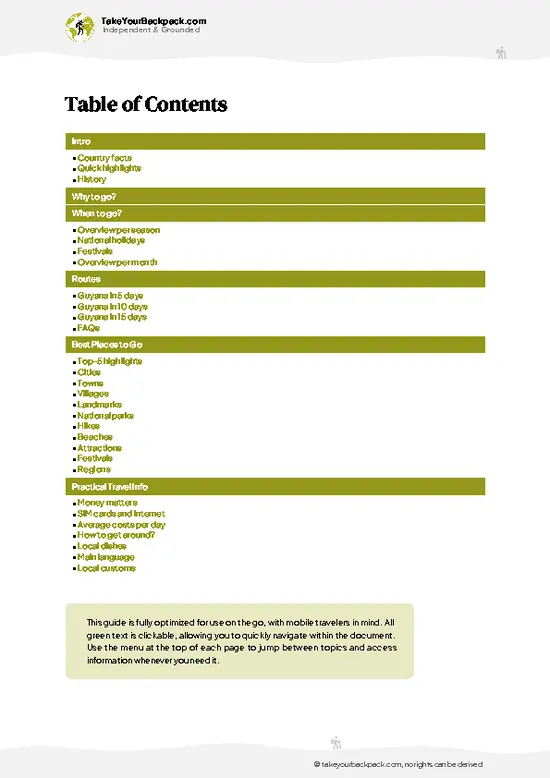
example page 0 from our offline Travel Guide for Guyana
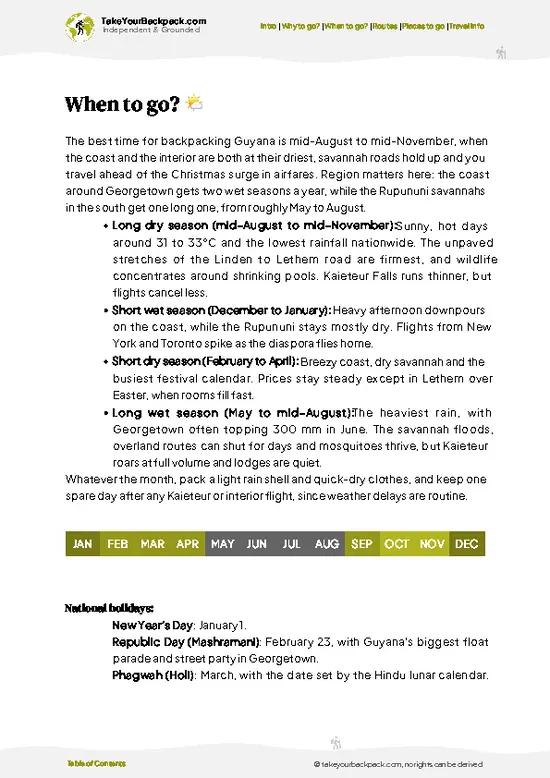
example page 1 from our offline Travel Guide for Guyana
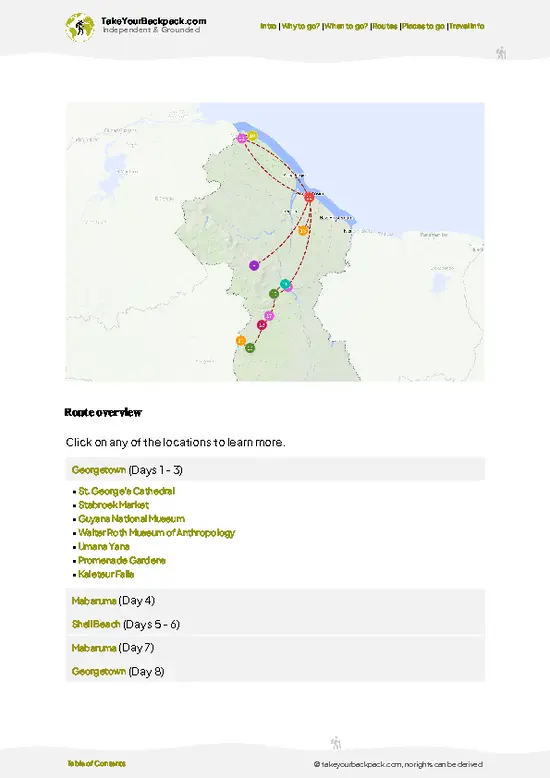
example page 2 from our offline Travel Guide for Guyana
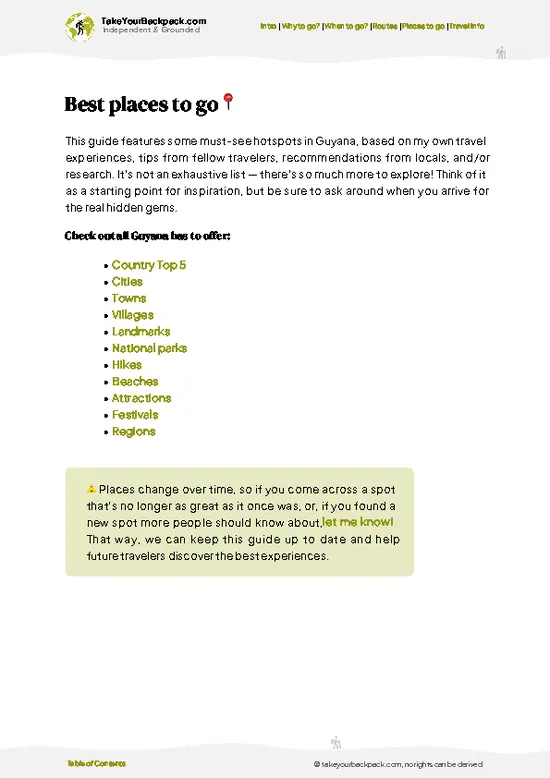
example page 3 from our offline Travel Guide for Guyana
example page 4 from our offline Travel Guide for Guyana
example page 5 from our offline Travel Guide for Guyana
example page 6 from our offline Travel Guide for Guyana
example page 7 from our offline Travel Guide for Guyana
Loading the map 🌍
CLICK TO FILTER
cities
towns
villages
landmarks
national parks
hikes
beaches
attractions
festivals
regions
SHOW COUNTRY’S BESTSHOW ALL

✨ Why go?
Ranked #3 national park in Guyana
The unique appeal for travelers

Kanuku Mountains draws backpackers who want to get far from the Guyana coast without joining a package tour. The protected area covers 6,110 km² and the Rupununi River cuts it into eastern and western ranges, with peaks reaching 1,067 m. Around it sit about 21 Makushi and Wapishana communities, and that is the real draw: you arrange guides, boats and meals through villages rather than a booking desk, and the money lands in local hands.

The terrain suits self-reliant travelers. Savannah, gallery forest and rocky ridges sit close together, so a single area gives you open-country birding at dawn and shaded forest walking by midday. Guides are essential here because trails are lightly marked and the forest is dense, but you set the pace, the length and the camp spot with them directly.

If you … read more 👉
Kanuku Mountains draws backpackers who want to get far from the Guyana coast without joining a package tour. The protected area covers 6,110 km² and the Rupununi River cuts it into eastern and western ranges, with peaks reaching 1,067 m. Around it sit about 21 Makushi and Wapishana communities, and that is the real draw: you arrange guides, boats and meals through villages rather than a booking desk, and the money lands in local hands.

The terrain suits self-reliant travelers. Savannah, gallery forest and rocky ridges sit close together, so a single area gives you open-country birding at dawn and shaded forest walking by midday. Guides are essential here because trails are lightly marked and the forest is dense, but you set the pace, the length and the camp spot with them directly.

If you have hung hammocks in other countries, you will feel at home. Expect community-run lodges and hammock camps instead of resorts, and the Rupununi River as your main road, swimming hole and wildlife corridor in one.

💡 HighlightsDon't-miss highlights and experiences

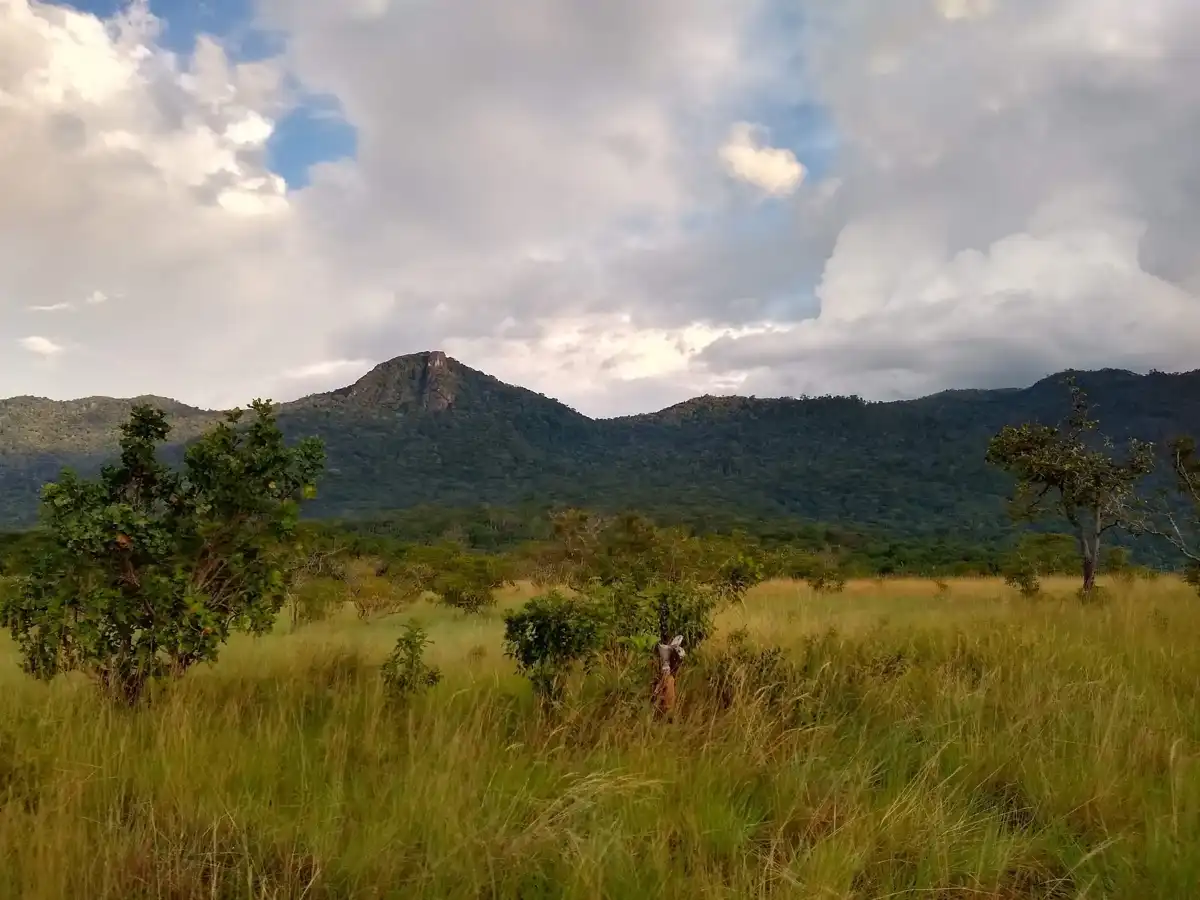
  1. Kanuku Mountains Protected Area ridgelines: The two ranges, split by the Rupununi River, rise to about 1,067 m above flat savannah. From the open ground they read as a long dark wall, and the forest on their slopes is among the least disturbed in Guyana.
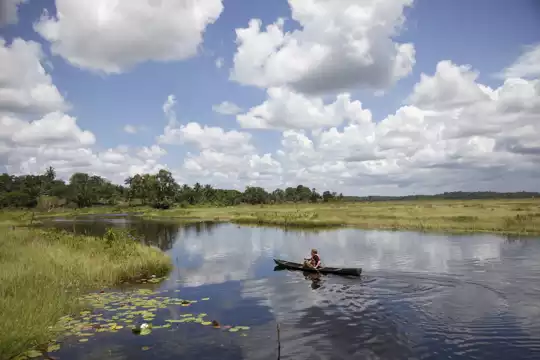
  2. Rupununi River: The river separating the eastern and western ranges is the natural highway of the area. Paddling or drifting by boat gives you caiman eyes at dusk, giant river otter possibilities and kingfishers working the banks.
  3. Makushi and Wapishana communities: About 21 villages ring the protected area. Visiting one means cassava bread, farine and local fish, plus a guide who grew up reading these forests.
  4. Birdwatching in the foothills: The mix of savannah, gallery forest and rock draws macaws, toucans, cotingas and raptors. Dawn walks along
… read more 👉
  1. Kanuku Mountains Protected Area ridgelines: The two ranges, split by the Rupununi River, rise to about 1,067 m above flat savannah. From the open ground they read as a long dark wall, and the forest on their slopes is among the least disturbed in Guyana.
  2. Rupununi River: The river separating the eastern and western ranges is the natural highway of the area. Paddling or drifting by boat gives you caiman eyes at dusk, giant river otter possibilities and kingfishers working the banks.
  3. Makushi and Wapishana communities: About 21 villages ring the protected area. Visiting one means cassava bread, farine and local fish, plus a guide who grew up reading these forests.
  4. Birdwatching in the foothills: The mix of savannah, gallery forest and rock draws macaws, toucans, cotingas and raptors. Dawn walks along forest edges are the most productive.
  5. Jaguar and giant otter country: The protected forest holds jaguar, tapir, giant anteater and giant river otter. Sightings are never guaranteed, but tracks on sandy riverbanks are common and tell their own story.
  6. Savannah-to-forest walks: A guided walk from open grassland into shaded forest crosses several habitats in a couple of hours, with termite mounds, palms and sudden temperature drops.
  7. Night spotlighting on the river: After dark, a boat with a headlamp picks out caiman eyeshine, nightjars and sometimes capybara along the banks.
  8. Overnight hammock camping: Sleeping under a tarp in the foothills, with howler monkeys at dawn and a sky free of light pollution, is the most complete way to experience the range.
Kanuku Mountains pairs a dawn birding walk in the foothills with an evening spotlighting trip on the Rupununi River, which gives you both ends of the day in one stay.
Spotted a mistake or missing something? Contact us.

Things to do near Kanuku Mountains

Ratings based on Tripadvisor reviews. When you book through this link, you support our work at no extra cost to you.

🌤️ When to go?Weather, crowds, and seasonal trade-offs

  • Main Dry Season (September to November): Rivers drop, trails firm up and Rupununi savanna tracks are passable. Days reach 32 to 36°C (90 to 97°F), nights 22 to 24°C (72 to 75°F). Daylight runs about 12 hours. Lodges fill with birders and researchers, and prices are at their highest.
  • Short Dry Spell (February to March): Similar heat and good access, with fewer visitors. Rates are often negotiable.
  • Long Wet Season (May to August): Heavy downpours, 26 to 31°C (79 to 88°F), flooded savanna roads and swollen creeks. Boat travel is easier, but hiking and camping turn muddy and slow. Few visitors, and some community tours simply stop running.
  • Short Wet Spell (December to January): Showers come in bursts with warm, humid days. Access is workable but unpredictable.
I would book for late September to November, … read more 👉
  • Main Dry Season (September to November): Rivers drop, trails firm up and Rupununi savanna tracks are passable. Days reach 32 to 36°C (90 to 97°F), nights 22 to 24°C (72 to 75°F). Daylight runs about 12 hours. Lodges fill with birders and researchers, and prices are at their highest.
  • Short Dry Spell (February to March): Similar heat and good access, with fewer visitors. Rates are often negotiable.
  • Long Wet Season (May to August): Heavy downpours, 26 to 31°C (79 to 88°F), flooded savanna roads and swollen creeks. Boat travel is easier, but hiking and camping turn muddy and slow. Few visitors, and some community tours simply stop running.
  • Short Wet Spell (December to January): Showers come in bursts with warm, humid days. Access is workable but unpredictable.
I would book for late September to November, and confirm your guide and transport with the community weeks ahead.


source: climatestotravel.comJANJanuary: fair for travelingFEBFebruary: fair for travelingMARMarch: fair for travelingAPRApril: good for travelingMAYMay: below average for travelingJUNJune: below average for travelingJULJuly: below average for travelingAUGAugust: excellent for travelingSEPSeptember: excellent for travelingOCTOctober: excellent for travelingNOVNovember: highly recommended for travelingDECDecember: good for traveling
guyana-national-park-kanuku-mountains
© Google | Silvanus Bactowar

✈️ The backpacker research shortcutGuyana Travel Guide

An offline-friendly backpacking guide with optimized travel routes, ranked highlights, transport advice, and the best areas to stay.
example page 0 from our offline Travel Guide for Guyana
example page 1 from our offline Travel Guide for Guyana
example page 2 from our offline Travel Guide for Guyana
example page 3 from our offline Travel Guide for Guyana
example page 4 from our offline Travel Guide for Guyana
example page 5 from our offline Travel Guide for Guyana
example page 6 from our offline Travel Guide for Guyana
example page 7 from our offline Travel Guide for Guyana
The digital guide (161 pages) contains:
✅ 43 highlights, ranked by travel appeal
✅ Optimized 5, 10 & 15-day travel routes
✅ Cities, national parks, landmarks, beaches
✅ How to get around
✅ Offline-friendly for travel without Wi-Fi
👉 Click to see all 30+ guide features

📅 Plan smarter in minutes, not weeks
✅ Month by month travel advice
✅ Festivals & national holidays
✅ Budget expectations

🗺️ Go to the right places, skip the overrated ones
✅ Honest pros & cons of destinations
✅ Top hikes, parks & viewpoints
✅ Lesser-known places most travelers miss
✅ Clear “worth it vs skip it” guidance

🛏️ Travel smoothly without rookie mistakes
✅ Best areas to stay
✅ Transport systems explained simply
✅ Common scams & safety advice
✅ SIM cards, money & practical tips

🌍 Understand the country, not just visit it
✅ Culture & traditions
✅ Local customs
✅ Festivals worth planning around
✅ Traveler-friendly historical context
✅ Insights that make places more meaningful

📱 Built for real travel conditions
✅ Fully downloadable PDF
✅ Works completely offline
✅ Optimized for phone use
✅ Useful in remote areas & buses
✅ Everything in one place
Stop searching, start planning
Get instant access to your full guide. 30‑day money-back guarantee.
+ Add another guide for just

By proceeding you agree to our terms.
Sent to your inbox immediately after payment • 100% Secure Checkout
Best Backpacking Travel Advisor 2025 tourism awardBest Backpacking
Travel Advisor
2025
What others say about Take Your Backpack Guides:
⭐⭐⭐⭐⭐
Fantastic, amazing amount of information!
⭐⭐⭐⭐⭐
My goodness this is amazing, it's what I've been looking for hats off too you!
⭐⭐⭐⭐⭐
I think this is absolutely BRILLIANT
⭐⭐⭐⭐
Very complete and informative. It's still missing places, but I gotta to commend you
⭐⭐⭐⭐⭐
This is truly amazing, thank you, can't wait to explore it with my kids!
⭐⭐⭐⭐⭐
Awesome resource, thank you!
⭐⭐⭐⭐⭐
This is amazing! Can't wait to explore the ones I haven't seen
⭐⭐⭐⭐
I love this! Well done, great idea.
⭐⭐⭐⭐⭐
Thanks for taking the time to make this gem!
⭐⭐⭐⭐⭐
This might be the best website I've ever seen.
⭐⭐⭐⭐⭐
Congratulations, and thank you so much for your work; it's incredibly valuable.
⭐⭐⭐⭐
In all seriousness I think you did a great job pointing out the important spots
⭐⭐⭐⭐⭐
10/10 very good
⭐⭐⭐⭐⭐
As someone who's only just starting to visit regularly this is awesome, thank you.
⭐⭐⭐⭐
Thank you very much! I'm going to visit my dad, it's going to be very useful!
⭐⭐⭐⭐⭐
This is really cool! We'll be travelling for the first time and this definitely come in handy.
⭐⭐⭐⭐⭐
You are now our minister of culture, congratulations 👨‍💼
⭐⭐⭐⭐⭐
Just wanted to tell you that this is a pearl! Going to follow your recommendations.
⭐⭐⭐⭐⭐
This is so cool. I'll definitely be using the resource for my travels soon.
⭐⭐⭐⭐⭐
This is very impressive! Good work.
⭐⭐⭐⭐⭐
This is an amazing and informative site. Very well done!

🛏️ Where to stay?Best areas to stay in Guyana

Lethem and Annai are the two practical bases for the Kanuku Mountains, and nothing inside the protected area itself is set up for independent backpackers. Staying in a community around the range is how you actually get onto the trails.
Lethem: The regional town on the Brazilian border has the most beds, along with shops, ATMs and the airstrip. Simple guesthouses and small hotels run about US$25 to 70 a night for a double, and a few have kitchens or a cheap restaurant on site. Operators here arrange guides and vehicles into the southern foothills.
Annai: Along the Georgetown to Lethem road, the Annai … read more 👉
Lethem and Annai are the two practical bases for the Kanuku Mountains, and nothing inside the protected area itself is set up for independent backpackers. Staying in a community around the range is how you actually get onto the trails.
Lethem: The regional town on the Brazilian border has the most beds, along with shops, ATMs and the airstrip. Simple guesthouses and small hotels run about US$25 to 70 a night for a double, and a few have kitchens or a cheap restaurant on site. Operators here arrange guides and vehicles into the southern foothills.
Annai: Along the Georgetown to Lethem road, the Annai area sits on the northern side of the range. Rock View Lodge is the long-standing option, with rooms from roughly US$80 to 120 including breakfast, and Surama and Rewa-side eco-lodges cost more but include meals.
Community stays: Makushi and Wapishana villages such as Nappi, at the foot of the western range, offer hammock space or basic benab rooms for about US$15 to 35 a night, with meals often an extra US$8 to 15. Book through the village council or a Lethem operator, since these places have no walk-in desk.
Camping: Camp with a village guide, carrying your own hammock and net. Bring cash, as card machines are rare.

👛 Costs (as of 19 October 2026)Typical daily expenses

Expect to spend about US$115 a day for a guided trip to the Kanuku Mountains in high season, with most of that going to guides and transport.
CategoryBudget RangeLocal Reality
Entrance and community feesUS$5 to 15Paid to the community or ranger post, often bundled into guide packages
GuideUS$30 to 60Local guides are required for most routes and know the trails and wildlife
Accommodation (high season)US$25 to 50Hammock space or a village guesthouse; Lethem lodges cost more, up to US$60
Accommodation (low season)US$20 to 40Rates soften, though some sites close with flooding
Local transportUS$15 to 30Shared minibus or pickup to villages; private 4x4 hire costs far more per day
Food and suppliesUS$10 to 20Village meals with cassava, fish and rice; stock up on snacks and water in Lethem
Total Daily BudgetUS$115Per
… read more 👉
Expect to spend about US$115 a day for a guided trip to the Kanuku Mountains in high season, with most of that going to guides and transport.
CategoryBudget RangeLocal Reality
Entrance and community feesUS$5 to 15Paid to the community or ranger post, often bundled into guide packages
GuideUS$30 to 60Local guides are required for most routes and know the trails and wildlife
Accommodation (high season)US$25 to 50Hammock space or a village guesthouse; Lethem lodges cost more, up to US$60
Accommodation (low season)US$20 to 40Rates soften, though some sites close with flooding
Local transportUS$15 to 30Shared minibus or pickup to villages; private 4x4 hire costs far more per day
Food and suppliesUS$10 to 20Village meals with cassava, fish and rice; stock up on snacks and water in Lethem
Total Daily BudgetUS$115Per person, per day, in high season.
Cash is the norm, and travelers pay in Guyanese dollars, though US dollars are often accepted in Lethem. Splitting guide and vehicle costs among a group cuts the total sharply.
⚠️ Prices can change and everyone travels differently, so take this as a rough guide. Hope it helps you plan your adventure!

🥾 TrailsBest hikes in Kanuku Mountains national park

Kanuku Mountains offers guided walking rather than a network of signed, numbered trails, so the walks below are the ones people actually do, arranged through the surrounding Makushi and Wapishana communities.
  • Savannah edge and gallery forest walks: Start from a village on the savannah and walk into the forest fringe. Expect 2 to 4 hours on flat to gently rolling ground, easy to moderate, with termite mounds, palm stands and good bird activity at first light.
  • Foothill climbs: Guided routes rise onto the lower slopes of the ranges through dense forest. Allow half a day to a full day, moderate to hard,
… read more 👉
Kanuku Mountains offers guided walking rather than a network of signed, numbered trails, so the walks below are the ones people actually do, arranged through the surrounding Makushi and Wapishana communities.
  • Savannah edge and gallery forest walks: Start from a village on the savannah and walk into the forest fringe. Expect 2 to 4 hours on flat to gently rolling ground, easy to moderate, with termite mounds, palm stands and good bird activity at first light.
  • Foothill climbs: Guided routes rise onto the lower slopes of the ranges through dense forest. Allow half a day to a full day, moderate to hard, with slippery roots, rock steps and heavy humidity.
  • Multi-day hammock treks: Experienced groups with community guides camp inside the protected area, walking between streams and ridges. These are hard, remote and carry all food and water treatment, and the highest peaks of around 1,067 m are rarely visited.
  • River trips: Boat travel along the Rupununi River links walks and wildlife viewing. Giant river otter, caiman, kingfishers and herons are the usual sightings, with jaguar and tapir tracks on sandy banks.
  • Wildlife: Macaws, toucans, howler monkeys and agoutis are regular. Jaguar, giant anteater and tapir live here but are seen far less often.
Kanuku Mountains is remote. Most visitors arrive by road or small plane into the Rupununi savannah, then continue with a community or lodge by vehicle or boat. Public transport is limited, so arranging pickup in advance saves time. The area is quiet, with very few other visitors even in the dry season, and the dry months are easiest for walking. Access to the protected area is through local communities, and guides and community permission are normally required, with fees paid directly to them. Bring sturdy boots, long sleeves for insects, a hammock with a mosquito net and plenty of water.
⚠️ Hiking info can sometimes be outdated or inaccurate. Before you hit the trail, check the latest conditions with locals. If you do spot anything that's off, I'd love to hear from you, so I can update it for fellow travelers.

🛡️ SafetyTraveler Safety Guide

The Kanuku Mountains are straightforward if you go with a local guide, which is effectively required for most routes. Heat is the main hazard. Savanna and foothill trails reach 35°C (95°F) by midday, so start at dawn, carry three to four liters of water and rest in shade. Rain turns trails to mud and swells creeks, and cuts road access, so build in spare days. Navigation inside the forest is hard because paths are faint and unmarked.
Wildlife includes jaguars, giant anteaters, caimans, snakes and large numbers of insects. Encounters with big cats are rare. Watch your footing, wear long pants and boots, keep distance from any animal and keep food sealed at camp. Biting flies and mosquitoes are constant, and malaria occurs in the interior, so talk to a travel clinic about prophylaxis.
First-timers … read more 👉
The Kanuku Mountains are straightforward if you go with a local guide, which is effectively required for most routes. Heat is the main hazard. Savanna and foothill trails reach 35°C (95°F) by midday, so start at dawn, carry three to four liters of water and rest in shade. Rain turns trails to mud and swells creeks, and cuts road access, so build in spare days. Navigation inside the forest is hard because paths are faint and unmarked.
Wildlife includes jaguars, giant anteaters, caimans, snakes and large numbers of insects. Encounters with big cats are rare. Watch your footing, wear long pants and boots, keep distance from any animal and keep food sealed at camp. Biting flies and mosquitoes are constant, and malaria occurs in the interior, so talk to a travel clinic about prophylaxis.
First-timers often arrive without enough cash, since there are no ATMs near the park. Bring small bills, a first aid kit and a backup plan for transport.

FAQFrequently asked questions about Kanuku Mountains

Plan three to four days for the Kanuku Mountains if you want a night in a community lodge and at least one guided hike or river trip. A day trip from Lethem is possible but covers little, since road transfers eat three to five hours. Birders and wildlife watchers often stay five days to reach the interior.
Reaching the Kanuku Mountains without your own car is possible but needs planning. Fly from Georgetown to Lethem, a flight of about 1.5 hours, or take the long overland road, then arrange a community pickup or hire a 4x4 for US$100 to 200 a day. Shared minibuses run along the Lethem to Annai road, but villages near the mountains require a guide-arranged transfer.
Yes, visitors to the Kanuku Mountains should expect to pay community and conservation fees, generally US$5 to 15 per person, and a local guide is effectively required. Arrange this through the village toshao or a Georgetown tour operator. Check requirements with the Protected Areas Commission before traveling, and carry cash since there are no card machines at sites.
⚠️ Things can change over time, so always validate details locally before you go.

Other Guyanese national parks near Kanuku Mountains

Explore more nearby:


💡 Not sure where to go next?
Create a personalized itinerary for Guyana including Kanuku Mountains and the places that fit your trip.

Generate my itinerary

👉 Discover all national parks

Or checkout all Guyana has to offer (think cities, towns, villages, national parks, hikes, beaches, festivals)
Country photo of Guyana

We 💚 feedbackParting advice and final tips

Aim for early mornings in the dry months, when the savanna is dusty, the river is calm and giant otters are most active. Leave camp before sunrise, with a thermos of coffee, and you will hear macaws long before you see them. Pack more insect repellent than you think necessary, and keep the afternoons for hammock time.

✍️ Help improve this page!
The information on this page is based on in-depth research, insights shared by experienced travelers, and feedback from the local travel community in Guyana. While every effort is made to keep the information accurate and current, conditions can change — so if you spot anything incorrect or outdated, please get in touch.


🙋‍♂️ Give feedback

👋 Meet the founderWho’s Behind Take Your Backpack?

Johan, backpacker and founder of TakeYourBackpackHi, I’m Johan (Netherlands 🇳🇱), the creator of TakeYourBackpack. Over the past 3 decades, I’ve backpacked through 90+ countries across six continents, gaining extensive experience with independent travel, long-term trips, and overland routes.

This site is built on a combination of firsthand travel experience and carefully curated insights from other backpackers. Many guides are based on places I’ve personally visited, while others bring together tips, observations, and practical advice shared by trusted travelers I’ve met along the way.

The goal is to provide realistic, experience-driven guidance — not generic itineraries — so you can explore destinations with better context, clearer expectations, and more confidence.