×

Guyana🇬🇾 | best national parksExplore the 7 Best national parks in Guyana

In Guyana, national parks are gateways to untamed landscapes, where the pulse of the rainforest meets the rhythm of the savanna. Each park offers a distinct experience shaped by its geography and wildlife. For backpackers, the choice of park can dictate the pace of exploration and the type of adventure. Some parks, like Kaieteur National Park, are known for their dramatic waterfalls and accessible trails, while others, like Iwokrama, invite deeper immersion into the wild, often requiring more planning and resilience. Seasonal nuances affect accessibility and wildlife sightings, making timing crucial. Selecting the right park influences your vibe, budget, safety, and cultural encounters, ensuring that every trek is a meaningful journey into Guyana’s heart.

By Johan Kruseman 🇳🇱 | Updated September 5, 2026
Explore the best hikes in Guyana

Why go?What Makes Them Special

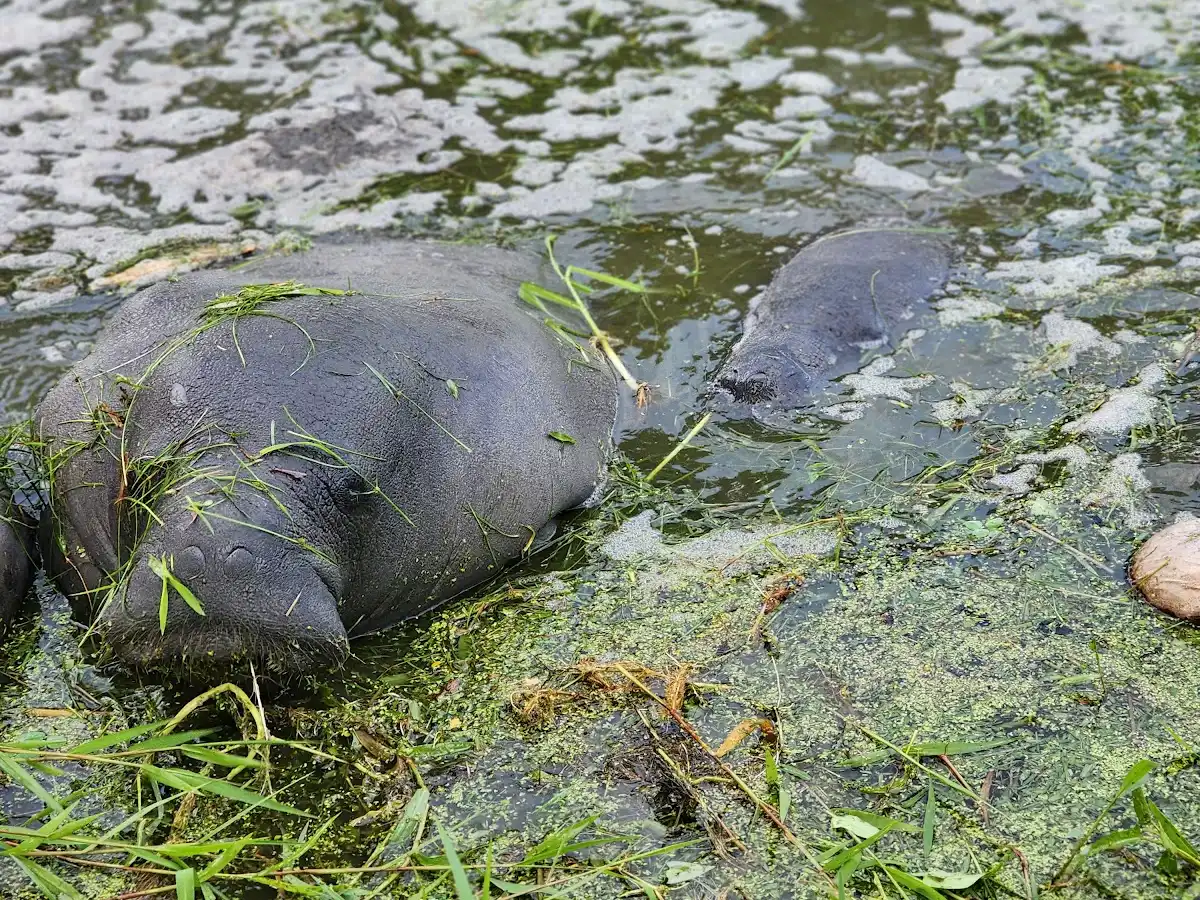
Guyana’s national parks stand out in the world of conservation and adventure. The landscapes are a mosaic of dense rainforests, savannas, and towering waterfalls, each offering a unique backdrop for exploration. This biodiversity hotspot is home to countless species, many of which are endemic, making it a living laboratory for ecologists and nature lovers alike.

However, accessing these parks often requires a commitment. The infrastructure can be basic, with long travel times on rugged roads or waterways. This means that while the journey may be arduous, it often leads to a deeper connection with the environment. The trade-off here is clear: the more remote the park, the richer the experience, but also the more challenging the access.

Guyana’s climate plays a role too. The wet season can … read more 👉
Guyana’s national parks stand out in the world of conservation and adventure. The landscapes are a mosaic of dense rainforests, savannas, and towering waterfalls, each offering a unique backdrop for exploration. This biodiversity hotspot is home to countless species, many of which are endemic, making it a living laboratory for ecologists and nature lovers alike.

However, accessing these parks often requires a commitment. The infrastructure can be basic, with long travel times on rugged roads or waterways. This means that while the journey may be arduous, it often leads to a deeper connection with the environment. The trade-off here is clear: the more remote the park, the richer the experience, but also the more challenging the access.

Guyana’s climate plays a role too. The wet season can transform trails into muddy challenges, while the dry season offers clearer paths but can bring sweltering heat. Travelers must weigh their timing carefully.

Culturally, the parks reflect the country’s diverse heritage, from Indigenous communities to colonial histories, enriching the experience beyond mere scenery. Understanding these factors is crucial for anyone looking to immerse themselves in Guyana’s wild heart. The rewards are immense, but they come with the grit of the journey.
Why These Made the Cut
The list of best national parks in Guyana is created based on landscapes, wildlife, adventure opportunities, facilities, and overall experience. If you feel a national park is missing in this list, please let us know.

When to go?Optimal Periods for Travel

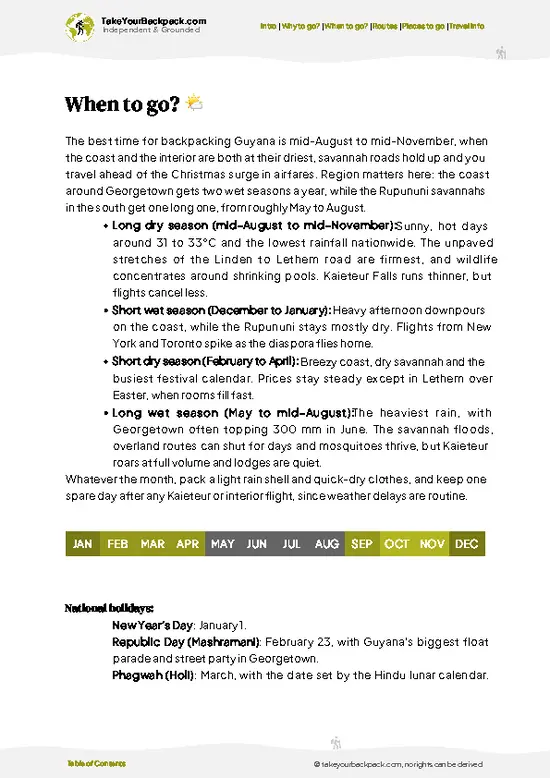
Guyana’s national parks offer a rich tapestry of wildlife and landscapes, but timing your visit is crucial. The country experiences a tropical climate, characterized by two main seasons: the dry and the wet. The dry season typically runs from late August to early December, providing the best conditions for wildlife visibility. Trails are less muddy, and the chances of spotting animals increase as they gather around water sources.

Rainfall peaks from December to July, particularly from April to July, transforming trails into slippery challenges. This period can deter some travelers due to the heavy downpours, but it also brings lush greenery and vibrant ecosystems. The wet season can be a double-edged sword; while the scenery is breathtaking, the trails may be less accessible, and wildlife … read more 👉
Guyana’s national parks offer a rich tapestry of wildlife and landscapes, but timing your visit is crucial. The country experiences a tropical climate, characterized by two main seasons: the dry and the wet. The dry season typically runs from late August to early December, providing the best conditions for wildlife visibility. Trails are less muddy, and the chances of spotting animals increase as they gather around water sources.

Rainfall peaks from December to July, particularly from April to July, transforming trails into slippery challenges. This period can deter some travelers due to the heavy downpours, but it also brings lush greenery and vibrant ecosystems. The wet season can be a double-edged sword; while the scenery is breathtaking, the trails may be less accessible, and wildlife can be harder to spot.

Shoulder seasons exist between these extremes, offering a balance. Visiting in late July or early August can mean fewer crowds and lower costs, but expect unpredictable weather. The trade-off here is the potential for muddy trails and limited wildlife sightings.

Peak periods coincide with holidays and school vacations, leading to busier trails and higher prices. Planning around these times can enhance the experience, allowing for quieter exploration and more intimate encounters with nature.

national park hoppingHow to Combine national parks Into One Trip

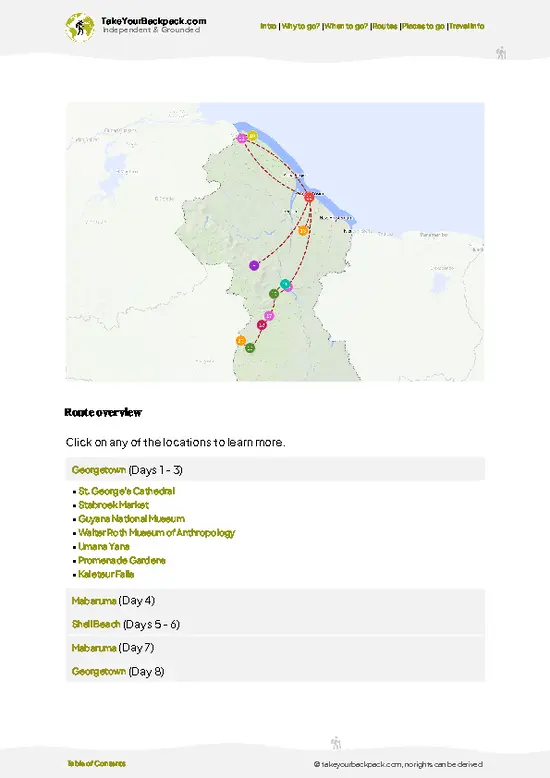
Traveling through Guyana’s national parks requires a strategic approach to maximize the experience. Start by clustering parks regionally. The northern parks, like Kaieteur National Park, are accessible from Georgetown, while the southern parks, such as Iwokrama and Rupununi, require more travel time. Prioritize your route based on your interests—waterfalls, wildlife, or indigenous culture.

Plan for at least two to three days in each major park. This allows for ample exploration without feeling rushed. Kaieteur, with its breathtaking falls, deserves a full day to soak in the views and hike the surrounding trails. Iwokrama offers canopy walks and river tours, so allocate time for both. The Rupununi savannah, rich in wildlife, can be explored over several days, especially if birdwatching is read more 👉
Traveling through Guyana’s national parks requires a strategic approach to maximize the experience. Start by clustering parks regionally. The northern parks, like Kaieteur National Park, are accessible from Georgetown, while the southern parks, such as Iwokrama and Rupununi, require more travel time. Prioritize your route based on your interests—waterfalls, wildlife, or indigenous culture.

Plan for at least two to three days in each major park. This allows for ample exploration without feeling rushed. Kaieteur, with its breathtaking falls, deserves a full day to soak in the views and hike the surrounding trails. Iwokrama offers canopy walks and river tours, so allocate time for both. The Rupununi savannah, rich in wildlife, can be explored over several days, especially if birdwatching is a priority.

Common pitfalls include underestimating travel times and over-scheduling. The roads can be rough, and distances are deceptive. Flexibility is key; allow for spontaneous detours or extended stays if a park captivates. Balancing speed with depth of experience is crucial. A rushed trip may lead to missed moments, while lingering too long can strain budgets and schedules.

Ultimately, the reward lies in the immersive experiences—each park offers unique sights and sounds that make the effort worthwhile. Prioritize what resonates most, and let the journey unfold naturally.

The ListThe Best national parks of Guyana

1 Kaieteur National Park

Kaieteur Falls, sandstone plateau, endemic frogs

Stand at the edge of a powerful waterfall, explore misty highlands, and spot unique wildlife adapted to the park’s isolated environment.

guyana-national-park-kaieteur-national-park
© Google | Jun Yokoyama

2 Iwokrama Forest Reserve

canopy walkway, dense rainforest, scientific research

Walk above the forest floor on suspended bridges, observe diverse flora and fauna, and learn about ongoing conservation and ecological studies.

3 Kanuku Mountains

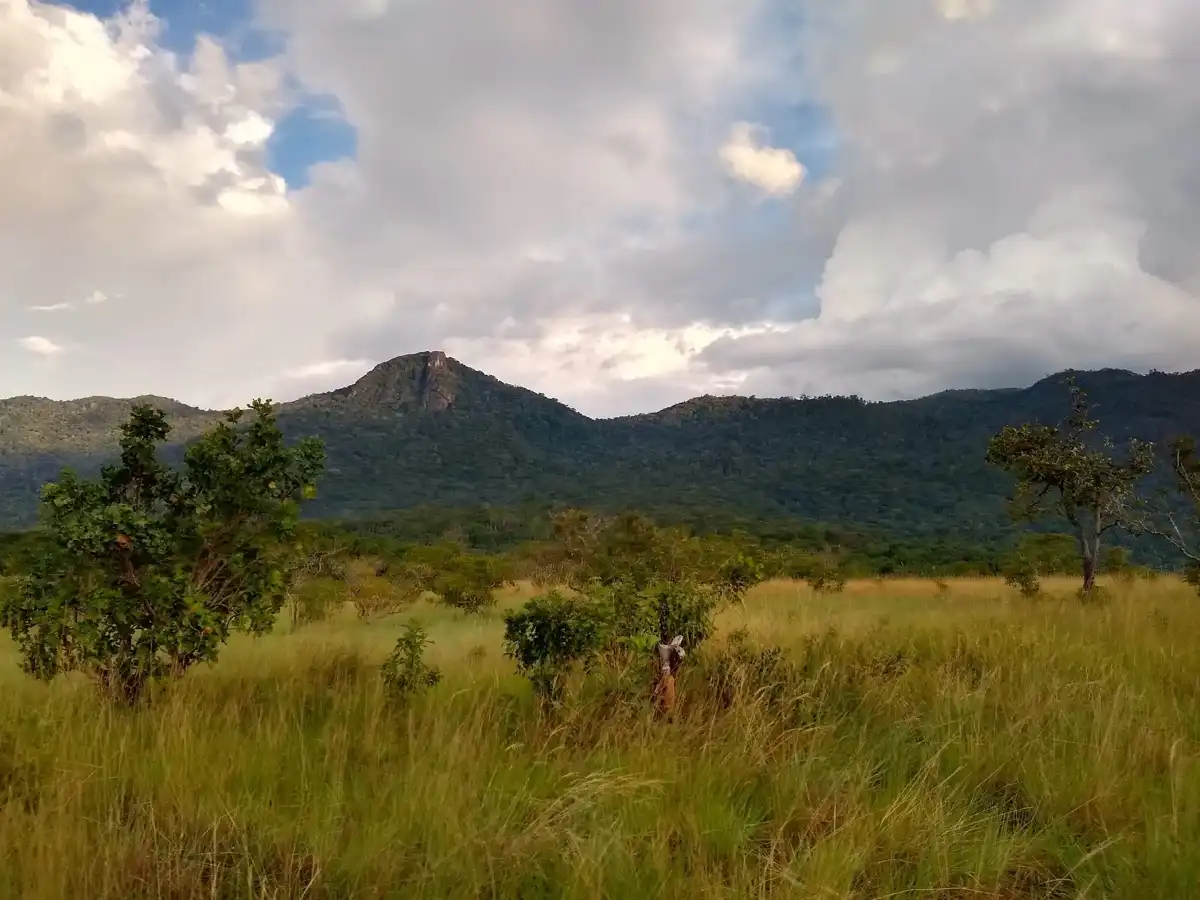
forest-clad peaks, river valleys, birdwatching

Hike through rugged terrain where rivers cut deep gorges, search for rare birds, and experience the transition between savannah and rainforest.

guyana-national-park-kanuku-mountains
© Google | Silvanus Bactowar

4 Kanashen Community Owned Conservation Area

remote rainforest, indigenous stewardship, rare wildlife

Experience a vast protected area managed by the Wai Wai, where dense forests shelter elusive species and cultural traditions remain deeply rooted.

guyana-national-park-kanashen-community-owned-conservation-area
© Google |

5 Rupununi Savannah

open grasslands, scattered Amerindian villages, seasonal wetlands

Traverse wide plains where wildlife roams freely, encounter traditional communities, and witness dramatic changes as the wet and dry seasons shape the landscape.

6 Karanambu Ranch

giant river otters, savannah lodge, wildlife rehabilitation

Stay at a working ranch known for its conservation efforts, observe rescued animals up close, and explore the surrounding grasslands on guided outings.

7 Dadanawa Ranch

cattle station, Rupununi River, horseback expeditions

Join ranch life in a remote setting, ride across open country, and navigate winding waterways that support both livestock and native species.

Loading the map 🌍

Expert viewInsights from Locals and Experts

Terrain
Guyana’s national parks are a patchwork of ecosystems, each with its own character. The dense rainforests of Iwokrama are a stark contrast to the savannahs of Kanuku Mountains. Expect muddy trails that can turn into slippery slopes after rain, so sturdy boots are non-negotiable. The humidity can be stifling, wrapping around you like a wet blanket, but the reward is a cacophony of wildlife. Listen for the howler monkeys echoing through the trees, their calls a reminder that you’re deep in the wild.

Park Infrastructure
Infrastructure varies widely. Some parks, like Kaieteur National Park, have well-maintained paths leading to breathtaking waterfalls, while others require a bit of grit and determination to navigate. Expect basic facilities—think rustic campsites rather than luxury … read more 👉
Terrain
Guyana’s national parks are a patchwork of ecosystems, each with its own character. The dense rainforests of Iwokrama are a stark contrast to the savannahs of Kanuku Mountains. Expect muddy trails that can turn into slippery slopes after rain, so sturdy boots are non-negotiable. The humidity can be stifling, wrapping around you like a wet blanket, but the reward is a cacophony of wildlife. Listen for the howler monkeys echoing through the trees, their calls a reminder that you’re deep in the wild.

Park Infrastructure
Infrastructure varies widely. Some parks, like Kaieteur National Park, have well-maintained paths leading to breathtaking waterfalls, while others require a bit of grit and determination to navigate. Expect basic facilities—think rustic campsites rather than luxury lodges. This means you’ll need to be self-sufficient. Bring your own food and gear, and be prepared for limited access to clean water. The trade-off? You’ll experience the raw beauty of nature without the distractions of modern life.

Wildlife Activity
Wildlife spotting is a game of patience. Early mornings and late afternoons are prime times for activity. In Iwokrama, you might catch a glimpse of jaguars if you’re lucky, but don’t count on it. Instead, enjoy the smaller wonders: colorful birds flitting through the canopy, the rustle of a capybara in the underbrush. Each moment spent waiting is a chance to immerse yourself in the rhythm of the forest. The trade-off here is time; the more you linger, the more you’ll see, but it requires a commitment to slow down and be present.

Time and Budget
Visiting two to three parks is a realistic goal for most travelers. Each park deserves at least two to three days to truly appreciate its unique offerings. Factor in travel time between parks, which can be lengthy due to rough roads and limited transport options. Budget-wise, expect to spend more on guided tours, which can enhance your experience but also add up quickly. The trade-off? You’ll gain invaluable insights from local guides, enriching your understanding of the ecosystems and cultures you encounter.

Planning and Prioritizing
Prioritize parks based on your interests. If you’re keen on birdwatching, choose parks known for their avian diversity. For those interested in indigenous cultures, look for areas where local communities engage with visitors. Research is crucial; some parks may require permits or have specific visiting hours. Be flexible in your plans, as weather can change rapidly, affecting trail conditions and accessibility.

Safety and Cultural Considerations
Safety is paramount. Always travel in groups, especially in remote areas. Be aware of your surroundings and respect local customs. Engaging with indigenous communities can be rewarding, but approach with sensitivity. Learn a few phrases in the local language; it goes a long way in building rapport. The trade-off here is the balance between adventure and respect for the land and its people.

Guyana’s national parks offer a rugged beauty that demands effort but rewards you with experiences that linger long after you leave. Embrace the grit, and you’ll find the heart of this wild land waiting for you.

✈️ The backpacker research shortcutGuyana Travel Guide

An offline-friendly backpacking guide with optimized travel routes, ranked highlights, transport advice, and the best areas to stay.
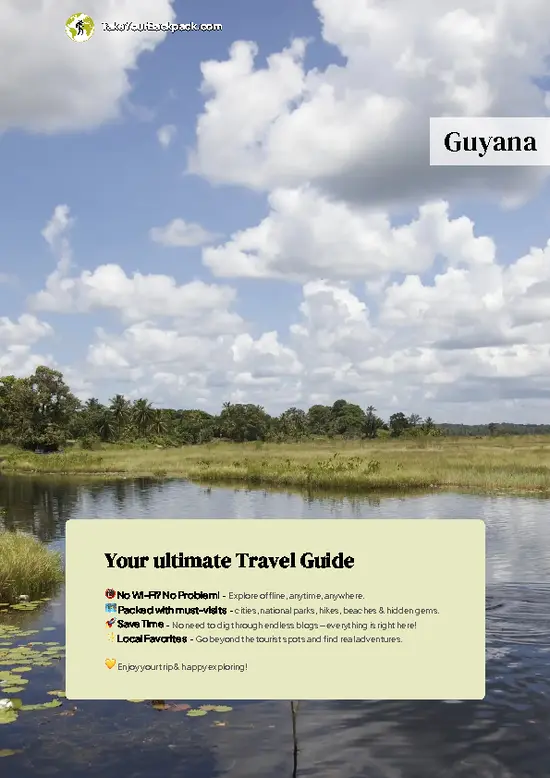
example page 0 from our offline Travel Guide for Guyana
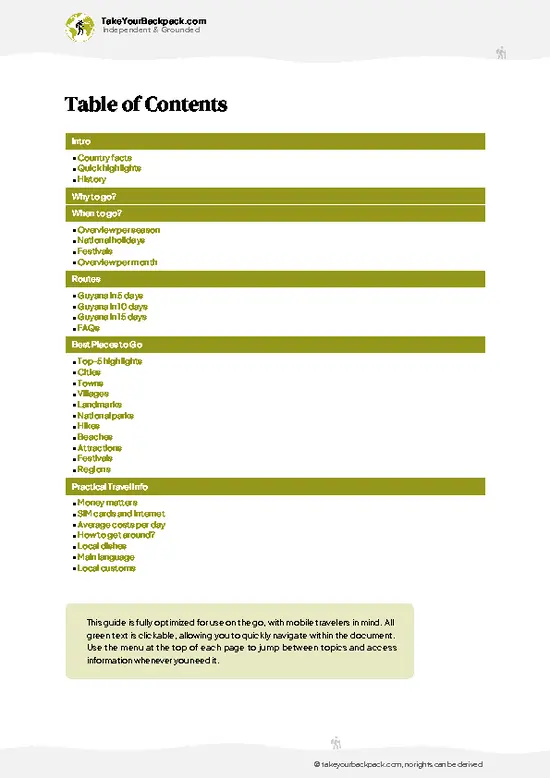
example page 1 from our offline Travel Guide for Guyana
example page 2 from our offline Travel Guide for Guyana
example page 3 from our offline Travel Guide for Guyana
example page 4 from our offline Travel Guide for Guyana
example page 5 from our offline Travel Guide for Guyana
example page 6 from our offline Travel Guide for Guyana
example page 7 from our offline Travel Guide for Guyana
The digital guide (205 pages) contains:
46 highlights, ranked by travel appeal
Optimized 5, 10 & 15-day travel routes
Cities, national parks, landmarks, beaches
How to get around
Offline-friendly for travel without Wi-Fi
👉 Click to see all 30+ guide features

📅 Plan smarter in minutes, not weeks
Month by month travel advice
Festivals & national holidays
Budget expectations

🗺️ Go to the right places, skip the overrated ones
Honest pros & cons of destinations
Top hikes, parks & viewpoints
Lesser-known places most travelers miss
Clear “worth it vs skip it” guidance

🛏️ Travel smoothly without rookie mistakes
Best areas to stay
Transport systems explained simply
Common scams & safety advice
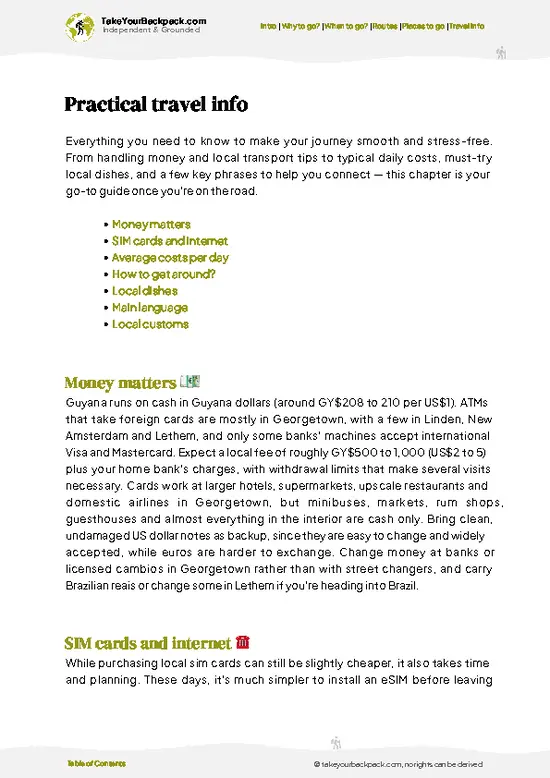
SIM cards, money & practical tips

🌍 Understand the country, not just visit it
Culture & traditions
Local customs
Festivals worth planning around
Traveler-friendly historical context
Insights that make places more meaningful

📱 Built for real travel conditions
Fully downloadable PDF
Works completely offline
Optimized for phone use
Useful in remote areas & buses
Everything in one place
Save weeks of stressful planning
Get instant access to your full guide. 30‑day money-back guarantee.
+ Add another guide for just US$7.80

By proceeding you agree to our terms.
Sent to your inbox immediately after payment • 100% Secure Checkout
Best Backpacking Travel Advisor 2025 tourism awardBest Backpacking
Travel Advisor
2025
What others say about Take Your Backpack Guides:
⭐⭐⭐⭐⭐
Fantastic, amazing amount of information!
⭐⭐⭐⭐⭐
My goodness this is amazing, it's what I've been looking for hats off too you!
⭐⭐⭐⭐⭐
I think this is absolutely BRILLIANT
⭐⭐⭐⭐
Very complete and informative. It's still missing places, but I gotta to commend you
⭐⭐⭐⭐⭐
This is truly amazing, thank you, can't wait to explore it with my kids!
⭐⭐⭐⭐⭐
Awesome resource, thank you!
⭐⭐⭐⭐⭐
This is amazing! Can't wait to explore the ones I haven't seen
⭐⭐⭐⭐
I love this! Well done, great idea.
⭐⭐⭐⭐⭐
Thanks for taking the time to make this gem!
⭐⭐⭐⭐⭐
This might be the best website I've ever seen.
⭐⭐⭐⭐⭐
Congratulations, and thank you so much for your work; it's incredibly valuable.
⭐⭐⭐⭐
In all seriousness I think you did a great job pointing out the important spots
⭐⭐⭐⭐⭐
10/10 very good
⭐⭐⭐⭐⭐
As someone who's only just starting to visit regularly this is awesome, thank you.
⭐⭐⭐⭐
Thank you very much! I'm going to visit my dad, it's going to be very useful!
⭐⭐⭐⭐⭐
This is really cool! We'll be travelling for the first time and this definitely come in handy.
⭐⭐⭐⭐⭐
You are now our minister of culture, congratulations 👨‍💼
⭐⭐⭐⭐⭐
Just wanted to tell you that this is a pearl! Going to follow your recommendations.
⭐⭐⭐⭐⭐
This is so cool. I'll definitely be using the resource for my travels soon.
⭐⭐⭐⭐⭐
This is very impressive! Good work.
⭐⭐⭐⭐⭐
This is an amazing and informative site. Very well done!

🛏️ Where to stay?Where to Stay: Guyana Edition

Yes, budget hostels and guesthouses exist in Guyana, but they are concentrated in a few towns rather than spread across the country.
Most options are in Georgetown—especially the city center (Stabroek) and nearby residential pockets (Queenstown/Bourda): Stabroek puts you by markets, transport and the limited nightlife but is noisy and less safe after dark; Queenstown/Bourda are quieter and closer to Botanic Gardens and museums, though they have fewer beds and higher demand.
Regional hubs like Lethem (Rupununi), Bartica and New Amsterdam offer simple guesthouses and ranch-style stays—Lethem is the practical base for savannah trips with rustic amenities and scarce services, Bartica is the … read more 👉
Yes, budget hostels and guesthouses exist in Guyana, but they are concentrated in a few towns rather than spread across the country.
Most options are in Georgetown—especially the city center (Stabroek) and nearby residential pockets (Queenstown/Bourda): Stabroek puts you by markets, transport and the limited nightlife but is noisy and less safe after dark; Queenstown/Bourda are quieter and closer to Botanic Gardens and museums, though they have fewer beds and higher demand.
Regional hubs like Lethem (Rupununi), Bartica and New Amsterdam offer simple guesthouses and ranch-style stays—Lethem is the practical base for savannah trips with rustic amenities and scarce services, Bartica is the river/boat gateway with quiet nights and seasonal supply constraints, and New Amsterdam provides a few budget options near ferry links but overall limited choice.

If you enjoy meeting fellow travelers, consider choosing hostels with high ratings for atmosphere. On the other hand, if you prefer having your own space, a hotel might be a better option.

GuyanaExplore Beyond This Category

👋 Meet the founderWho’s Behind Take Your Backpack?

Johan, backpacker and founder of TakeYourBackpackHi, I’m Johan (Netherlands 🇳🇱), the creator of TakeYourBackpack. Over the past decade, I’ve backpacked through 80+ countries across six continents, gaining extensive experience with independent travel, long-term trips, and overland routes.

This site is built on a combination of firsthand travel experience and carefully curated insights from other backpackers. Many guides are based on places I’ve personally visited, while others bring together tips, observations, and practical advice shared by trusted travelers I’ve met along the way.

The goal is to provide realistic, experience-driven guidance — not generic itineraries — so you can explore destinations with better context, clearer expectations, and more confidence.

Get full Guyana guide •
Instant download • 46 highlights • Full Offline guide