
×

Guyana🇬🇾 | villagesKurupukariEssequibo crossing, ferry point, forest research station | things to do and best time to go

Explore ParamakatoiExplore Kamarang

Backpacking in Kurupukari
👍 Recommendedvillage ranked #5
By Johan Kruseman 🇳🇱 | Updated September 4, 2026

Most online blurbs sell Kurupukari as “just a ferry crossing,” but for a backpacker it’s actually one of the few places where you can step straight off the Georgetown–Lethem road into real rainforest and river life without a big tour budget. Kurupukari sits roughly halfway along that interior highway, on the Essequibo River in central Guyana, and feels more like a roadside outpost than a town. It works best as a practical pause between destinations or a simple base for river views, birdlife, and short forest walks, not as a standalone attraction. Everything is walkable, but services are sparse, nights are quiet, and you’ll meet more truck drivers and local families than fellow backpackers. Compared with Lethem or Iwokrama River Lodge, Kurupukari is cheaper and more low-key, but also rougher around the edges, with basic accommodation, limited food options, and safety that’s fine if you use common sense and don’t wander drunk along the dark riverbank.

Discover everything you want to know in the 📖 Guyana Travel Guide.


Get your Guyana guide
46 ranked highlights, routes & tips, works offline (205 pages)
Loading the map 🌍
CLICK TO FILTER
cities
towns
villages
landmarks
national parks
hikes
beaches
attractions
festivals
regions
SHOW COUNTRY’S BESTSHOW ALL

✨ Why go?
Ranked #5 village in Guyana
Reasons people choose to visit here

Kurupukari is a gateway for backpackers seeking the wild heart of Guyana. It’s not just a stopover; it’s a launchpad for nearby hikes and cultural sites. The walkable streets are lined with small-scale hostels and guesthouses, offering a cozy atmosphere where you can swap stories with fellow travelers. The local food scene is a treat—think hearty meals that reflect the region’s flavors, all served with a side of genuine smiles.

Most travelers linger a few days, soaking in the friendly vibe and planning their next adventure. It’s perfect for slow travelers and hikers who appreciate a slower pace. While nightlife isn’t the main draw, the social atmosphere makes it easy to connect. If you’re looking for a place that feels like home before diving into the jungle, Kurupukari is your spot.
Want to include Kurupukari in your Guyana route?
Create a personalized Guyana itinerary that includes Kurupukari and the places that fit your trip — based on your travel style, budget, and available time. Get your route in seconds.

Generate my trip

💡 HighlightsThe experiences that define the visit

  • Kurupukari boat landing / river crossing — The village’s riverside hub where boats come and go; great for watching river traffic, spotting kingfishers and herons, and catching a boat upriver to explore side creeks.
  • Community council house — Where villagers gather for meetings, ceremonies and festivals; pop in when there’s an event to get an honest feel for local governance and social life.
  • Cassava processing site (cassava bread kitchen) — Small open kitchens where cassava is grated, pressed and baked into bread and farine; you can watch — and often taste — one of the village’s staple foods being made by hand.
  • Village church — A social as well as spiritual centre; services and Sunday gatherings are a good way to meet people and hear traditional hymns sung in local style.
  • Primary school
read more 👉
  • Kurupukari boat landing / river crossing — The village’s riverside hub where boats come and go; great for watching river traffic, spotting kingfishers and herons, and catching a boat upriver to explore side creeks.
  • Community council house — Where villagers gather for meetings, ceremonies and festivals; pop in when there’s an event to get an honest feel for local governance and social life.
  • Cassava processing site (cassava bread kitchen) — Small open kitchens where cassava is grated, pressed and baked into bread and farine; you can watch — and often taste — one of the village’s staple foods being made by hand.
  • Village church — A social as well as spiritual centre; services and Sunday gatherings are a good way to meet people and hear traditional hymns sung in local style.
  • Primary school and youth space — Visiting the school (with permission) gives insight into daily life, education priorities, and often there are student-led performances or craft stalls on market days.
  • Artisan huts / craft stalls — Small-scale workshops where women and men make beadwork, woven items and simple carvings; perfect for buying authentic souvenirs produced locally.
  • Fish-smoking racks and landing beach — See how fish are preserved the traditional way, learn about river-fishing techniques, and try freshly smoked river fish straight from the racks.
  • Short village forest trails — Little paths out of the settlement into the surrounding forest where guides (often youth from the village) point out medicinal plants, birdlife and useful trees within easy walking distance.
  • Traditional household visits / homestays — Staying with a family or arranging a home visit gives the most direct cultural experience: cooking, storytelling, and hands-on tasks like garden work or cassava preparation.
  • Riverbank viewpoints and sandbars — Simple spots for sunrise/sunset, river swimming where safe, and watching river life (boats, dolphins where present); low-key but very atmospheric and tied to daily village rhythms.
A few real, visitable highlights just outside Kurupukari that make easy day trips are the Iwokrama Rainforest area (including the Iwokrama field station and canopy experiences) and nearby indigenous villages such as Surama and Annai for deeper rainforest walks and cultural visits.
Spotted a mistake or missing something? Contact us.

Things to do near Kurupukari

Ratings based on Tripadvisor reviews. When you book through this link, you support our work at no extra cost to you.

⌛️ 1 dayHow to make the most of one day

Kurupukari, a small town in Guyana, is a gateway to adventure, where the sounds of the jungle blend with the hum of local life. It’s not on every tourist’s radar, but that’s what makes it special. The air is thick with the scent of wet earth and blooming flowers, inviting you to explore.

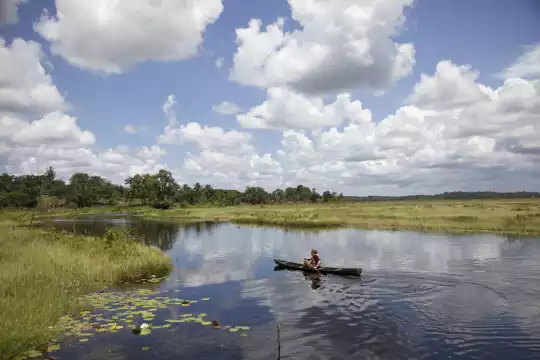
Start your morning with a stroll along the Essequibo River. The light dances on the water, and you might catch a glimpse of local fishermen casting their nets. Grab a breakfast of fresh roti and curry from a nearby stall. The spices will wake up your senses and fuel you for the day ahead.

In the afternoon, head to the nearby Iwokrama Forest. This isn’t just a tourist stop; it’s a living ecosystem. Join a guided tour to learn about the flora and fauna. The guide’s stories about the indigenous communities … read more 👉
Kurupukari, a small town in Guyana, is a gateway to adventure, where the sounds of the jungle blend with the hum of local life. It’s not on every tourist’s radar, but that’s what makes it special. The air is thick with the scent of wet earth and blooming flowers, inviting you to explore.

Start your morning with a stroll along the Essequibo River. The light dances on the water, and you might catch a glimpse of local fishermen casting their nets. Grab a breakfast of fresh roti and curry from a nearby stall. The spices will wake up your senses and fuel you for the day ahead.

In the afternoon, head to the nearby Iwokrama Forest. This isn’t just a tourist stop; it’s a living ecosystem. Join a guided tour to learn about the flora and fauna. The guide’s stories about the indigenous communities and their connection to the land will deepen your appreciation for this untouched paradise.

As evening approaches, return to Kurupukari and visit the local market. The vibrant colors of fruits and vegetables pop against the backdrop of wooden stalls. Engage with the vendors; their warmth and stories add a layer of authenticity to your experience.

Finish your day at a local eatery, savoring grilled fish seasoned with herbs. The laughter and chatter around you create a sense of belonging. In Kurupukari, every moment is a step into the heart of Guyana, where the journey feels as rewarding as the destination.
Turn your Kurupukari visit into an Guyana adventure
Build a complete Guyana route with Kurupukari, hidden gems, must-see destinations, and realistic travel times included.

Generate my trip

🌤️ When to go?Choosing the right time of year


  • Weather: Kurupukari’s dry season, from August to November, offers the clearest skies and manageable humidity. Rainfall drops sharply, making trails less slippery and river crossings safer. The wet season (December to July) floods paths and swells rivers, turning adventure into slog.

  • Temperature: Expect highs around 30–33°C (86–91°F) year-round, with nights cooling to 22–24°C (72–75°F). The dry season feels less oppressive, thanks to lower humidity, which means you’ll sweat less and sleep better.

  • Daylight Hours: Near the equator, daylight stays steady—about 11.5 to 12.5 hours daily. This consistency lets you plan long hikes without worrying about early dusk.

  • Crowds: Kurupukari is off the beaten path, so crowds are minimal year-round. However, the dry season attracts more eco-tourists
read more 👉

  • Weather: Kurupukari’s dry season, from August to November, offers the clearest skies and manageable humidity. Rainfall drops sharply, making trails less slippery and river crossings safer. The wet season (December to July) floods paths and swells rivers, turning adventure into slog.

  • Temperature: Expect highs around 30–33°C (86–91°F) year-round, with nights cooling to 22–24°C (72–75°F). The dry season feels less oppressive, thanks to lower humidity, which means you’ll sweat less and sleep better.

  • Daylight Hours: Near the equator, daylight stays steady—about 11.5 to 12.5 hours daily. This consistency lets you plan long hikes without worrying about early dusk.

  • Crowds: Kurupukari is off the beaten path, so crowds are minimal year-round. However, the dry season attracts more eco-tourists and researchers, slightly bumping up local activity and availability of guides.

  • Seasonal Activities: Dry months are prime for wildlife spotting and river navigation. The wet season floods the forest, limiting access but offering unique bird migrations and lush greenery if you’re up for a wetter challenge.

  • Price Fluctuations: Expect higher prices during the dry season when demand peaks. Off-season rates drop, but factor in extra costs for waterproof gear and potential delays during rains.


Pro-tip: Aim for late dry season—October to November—when the forest is still accessible, wildlife is active, and the heat hasn’t peaked, giving you the best balance of comfort and adventure.


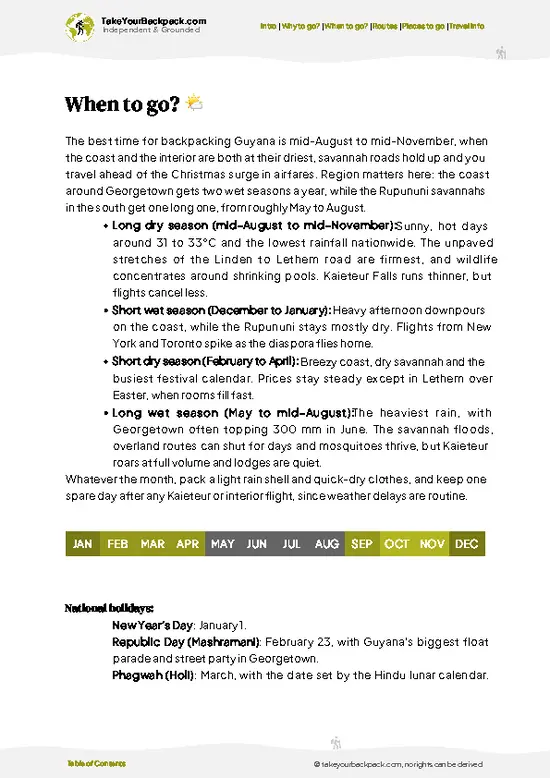
source: climatestotravel.comJANJanuary: fair for travelingFEBFebruary: fair for travelingMARMarch: fair for travelingAPRApril: fair for travelingMAYMay: fair for travelingJUNJune: fair for travelingJULJuly: fair for travelingAUGAugust: highly recommended for travelingSEPSeptember: excellent for travelingOCTOctober: excellent for travelingNOVNovember: excellent for travelingDECDecember: fair for traveling
when-to-go

✈️ The backpacker research shortcutGuyana Travel Guide

An offline-friendly backpacking guide with optimized travel routes, ranked highlights, transport advice, and the best areas to stay.
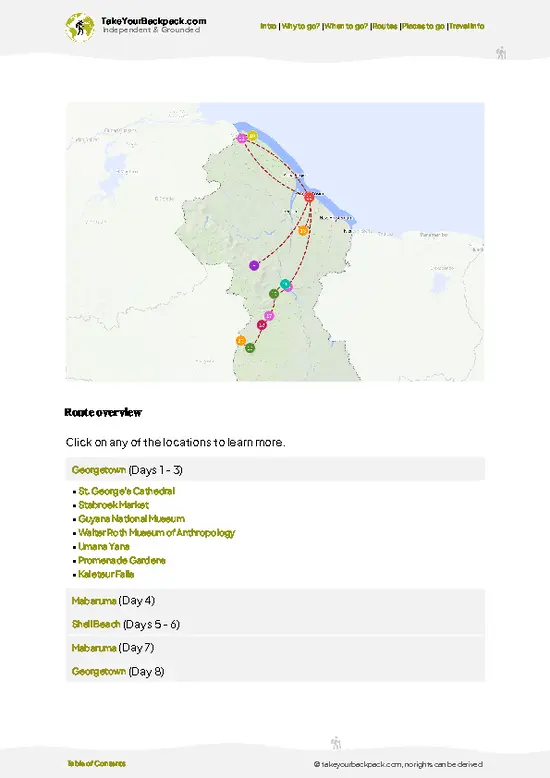
example page 0 from our offline Travel Guide for Guyana
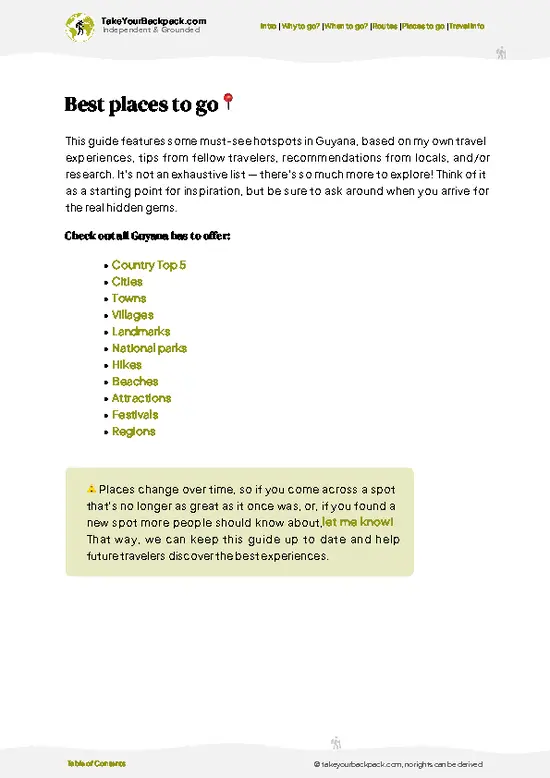
example page 1 from our offline Travel Guide for Guyana
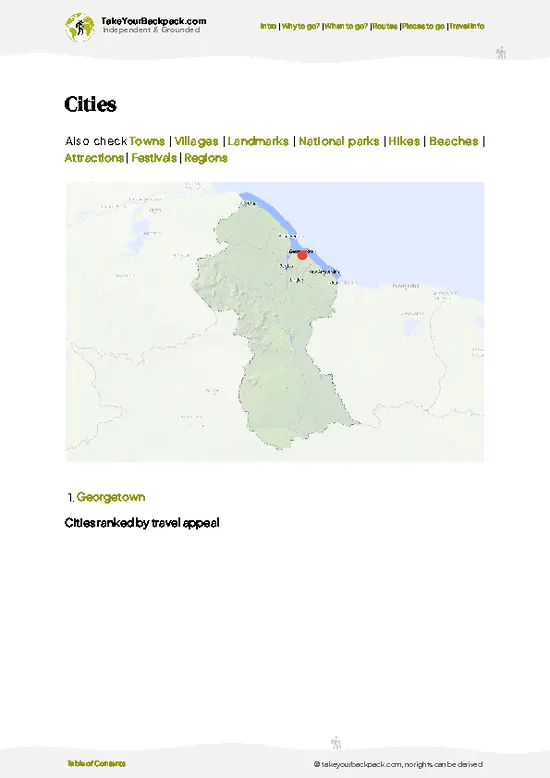
example page 2 from our offline Travel Guide for Guyana
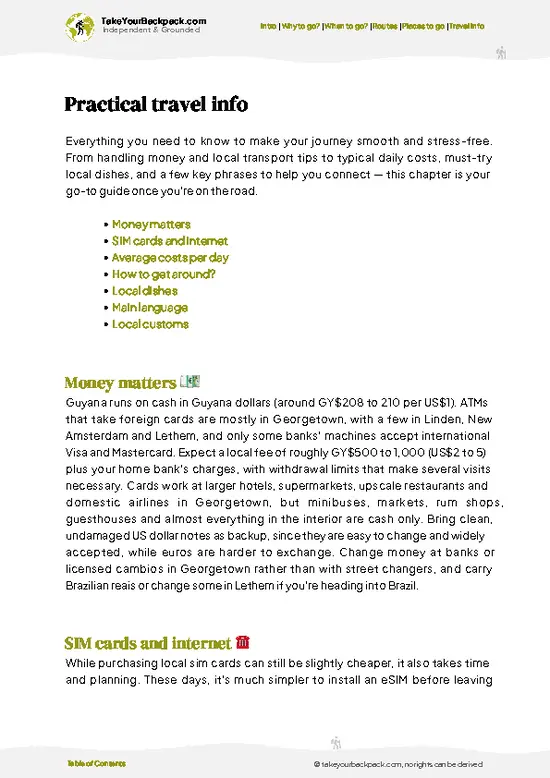
example page 3 from our offline Travel Guide for Guyana
example page 4 from our offline Travel Guide for Guyana
example page 5 from our offline Travel Guide for Guyana
example page 6 from our offline Travel Guide for Guyana
example page 7 from our offline Travel Guide for Guyana
The digital guide (205 pages) contains:
46 highlights, ranked by travel appeal
Optimized 5, 10 & 15-day travel routes
Cities, national parks, landmarks, beaches
How to get around
Offline-friendly for travel without Wi-Fi
👉 Click to see all 30+ guide features

📅 Plan smarter in minutes, not weeks
Month by month travel advice
Festivals & national holidays
Budget expectations

🗺️ Go to the right places, skip the overrated ones
Honest pros & cons of destinations
Top hikes, parks & viewpoints
Lesser-known places most travelers miss
Clear “worth it vs skip it” guidance

🛏️ Travel smoothly without rookie mistakes
Best areas to stay
Transport systems explained simply
Common scams & safety advice
SIM cards, money & practical tips

🌍 Understand the country, not just visit it
Culture & traditions
Local customs
Festivals worth planning around
Traveler-friendly historical context
Insights that make places more meaningful

📱 Built for real travel conditions
Fully downloadable PDF
Works completely offline
Optimized for phone use
Useful in remote areas & buses
Everything in one place
Save weeks of stressful planning
Get instant access to your full guide. 30‑day money-back guarantee.
+ Add another guide for just £5.98

By proceeding you agree to our terms.
Sent to your inbox immediately after payment • 100% Secure Checkout
Best Backpacking Travel Advisor 2025 tourism awardBest Backpacking
Travel Advisor
2025
What others say about Take Your Backpack Guides:
⭐⭐⭐⭐⭐
Fantastic, amazing amount of information!
⭐⭐⭐⭐⭐
My goodness this is amazing, it's what I've been looking for hats off too you!
⭐⭐⭐⭐⭐
I think this is absolutely BRILLIANT
⭐⭐⭐⭐
Very complete and informative. It's still missing places, but I gotta to commend you
⭐⭐⭐⭐⭐
This is truly amazing, thank you, can't wait to explore it with my kids!
⭐⭐⭐⭐⭐
Awesome resource, thank you!
⭐⭐⭐⭐⭐
This is amazing! Can't wait to explore the ones I haven't seen
⭐⭐⭐⭐
I love this! Well done, great idea.
⭐⭐⭐⭐⭐
Thanks for taking the time to make this gem!
⭐⭐⭐⭐⭐
This might be the best website I've ever seen.
⭐⭐⭐⭐⭐
Congratulations, and thank you so much for your work; it's incredibly valuable.
⭐⭐⭐⭐
In all seriousness I think you did a great job pointing out the important spots
⭐⭐⭐⭐⭐
10/10 very good
⭐⭐⭐⭐⭐
As someone who's only just starting to visit regularly this is awesome, thank you.
⭐⭐⭐⭐
Thank you very much! I'm going to visit my dad, it's going to be very useful!
⭐⭐⭐⭐⭐
This is really cool! We'll be travelling for the first time and this definitely come in handy.
⭐⭐⭐⭐⭐
You are now our minister of culture, congratulations 👨‍💼
⭐⭐⭐⭐⭐
Just wanted to tell you that this is a pearl! Going to follow your recommendations.
⭐⭐⭐⭐⭐
This is so cool. I'll definitely be using the resource for my travels soon.
⭐⭐⭐⭐⭐
This is very impressive! Good work.
⭐⭐⭐⭐⭐
This is an amazing and informative site. Very well done!

🛏️ Where to stay?Best areas to stay in Guyana

Kurupukari is small and remote, so the concept of neighborhoods is looser than in a city, but there’s a clear sweet spot for backpackers: the area near the ferry crossing and the ranger station. This cluster is where you’ll find the few budget lodges and communal campsites that cater to solo travelers and small groups. Staying here means you’re steps from the river’s edge, where the air carries the damp, earthy scent of the rainforest, and mornings start with the chorus of birds and insects. It’s safe, partly because it’s a hub for eco-tourism and park rangers, and partly because the community … read more 👉
Kurupukari is small and remote, so the concept of neighborhoods is looser than in a city, but there’s a clear sweet spot for backpackers: the area near the ferry crossing and the ranger station. This cluster is where you’ll find the few budget lodges and communal campsites that cater to solo travelers and small groups. Staying here means you’re steps from the river’s edge, where the air carries the damp, earthy scent of the rainforest, and mornings start with the chorus of birds and insects. It’s safe, partly because it’s a hub for eco-tourism and park rangers, and partly because the community is tight-knit—strangers quickly become travel companions swapping stories over campfires. Other parts of Kurupukari are more isolated, with fewer facilities and a heavier jungle vibe that’s better suited for seasoned adventurers with their own gear. For backpackers, the ferry-side zone offers the right balance: social enough to meet others, quiet enough to soak in the wild atmosphere without feeling exposed.

🚌 Getting aroundTransportation options and practical tips

Kurupukari moves at its own rhythm—less clockwork, more pulse. The air carries the scent of damp earth and river moss, thick with humidity that clings to your skin like a second layer. Here, schedules are whispers, not commands. The town’s flow is shaped by the river’s mood and the sun’s slow crawl across the sky. You’ll find that patience isn’t just a virtue; it’s the key to unlocking the real experience. The locals navigate by intuition and familiarity, not timetables, so your best bet is to sync with the natural cadence rather than fight it.


  • Walking: The most reliable and immersive way to get around. Paths are often uneven and muddy after rain, so sturdy boots are a must. Walking lets you catch the scent of wet leaves and hear the distant calls of birds, making every step part of the
read more 👉
Kurupukari moves at its own rhythm—less clockwork, more pulse. The air carries the scent of damp earth and river moss, thick with humidity that clings to your skin like a second layer. Here, schedules are whispers, not commands. The town’s flow is shaped by the river’s mood and the sun’s slow crawl across the sky. You’ll find that patience isn’t just a virtue; it’s the key to unlocking the real experience. The locals navigate by intuition and familiarity, not timetables, so your best bet is to sync with the natural cadence rather than fight it.


  • Walking: The most reliable and immersive way to get around. Paths are often uneven and muddy after rain, so sturdy boots are a must. Walking lets you catch the scent of wet leaves and hear the distant calls of birds, making every step part of the journey. It’s free, flexible, and the only way to truly absorb the town’s quiet, slow pulse.


  • Shared Motorbike Taxis: These are the town’s informal lifelines, darting through narrow dirt roads. Expect to negotiate fares upfront—usually a few Guyanese dollars per ride. They run from dawn until dusk but don’t expect strict schedules; they leave when full or when the driver feels like it. Fast and cheap, but hold on tight over the bumps.


  • River Boats: Essential for reaching spots beyond the town’s muddy edges. Boats depart irregularly, often early morning or late afternoon, depending on river conditions. Prices vary by distance but are generally affordable. The ride offers a sensory feast—water lapping against the hull, humid air thick with river life sounds, and the sun casting golden light on the rippling surface.


  • Local Minibuses: If you’re heading to nearby villages or the regional hub, minibuses are your go-to. They leave when full, so timing is flexible but unpredictable. Fares are low, and the ride is bumpy but efficient. Expect a lively atmosphere inside, with locals chatting and music playing softly.

👛 Costs (as of 4 September 2026)Typical daily expenses

Backpacking in Kurupukari, Guyana, is a raw, nature-driven experience where costs stay modest but vary with how deep you dive into the local scene.
  • Dorm Accommodation: Options are extremely limited here, mostly basic eco-lodges or guesthouses near the river. Expect to pay around $10 to $20 USD per night for a simple dorm bed or shared room. These places prioritize rustic comfort over luxury, often with mosquito nets and shared bathrooms.
  • Meals: Food is straightforward and fresh, mostly local staples like rice, beans, and fish. Street or lodge meals run about $3 to $7 USD each. Cooking your own food is rare but possible if you stay longer and find a spot with kitchen access.
  • Local Transport: Getting around Kurupukari means river boats or local taxis, which are infrequent and can be pricey
read more 👉
Backpacking in Kurupukari, Guyana, is a raw, nature-driven experience where costs stay modest but vary with how deep you dive into the local scene.
  • Dorm Accommodation: Options are extremely limited here, mostly basic eco-lodges or guesthouses near the river. Expect to pay around $10 to $20 USD per night for a simple dorm bed or shared room. These places prioritize rustic comfort over luxury, often with mosquito nets and shared bathrooms.
  • Meals: Food is straightforward and fresh, mostly local staples like rice, beans, and fish. Street or lodge meals run about $3 to $7 USD each. Cooking your own food is rare but possible if you stay longer and find a spot with kitchen access.
  • Local Transport: Getting around Kurupukari means river boats or local taxis, which are infrequent and can be pricey due to the remote location. Budget roughly $5 to $15 USD per day depending on how much you move around. Walking is often the best way to soak in the surroundings without extra cost.
  • Basic Activities/Entry Fees: The main draw is the natural environment—hiking, birdwatching, and river excursions. Entry fees to protected areas or guided tours typically range from $10 to $25 USD. Hiring a local guide is recommended for safety and richer insight, adding to the cost but worth it.
  • Miscellaneous Expenses: Think small essentials—water, snacks, occasional phone credit, or tips. These add up to about $2 to $5 USD daily. Internet access is spotty and often requires buying data bundles at higher rates than urban centers.

All told, you’re looking at roughly $30 to $70 USD per day to cover the essentials in Kurupukari. The range depends on your appetite for guided experiences and how much you rely on local transport versus staying put and soaking in the wild atmosphere. This budget reflects the balance between rugged adventure and the practical need for comfort and safety in a remote corner of Guyana.


source: guyanatourism.com
⚠️ Prices can change and everyone travels differently, so take this as a rough guide. Hope it helps you plan your adventure!

🚌 Day tripsShort trips worth adding

Kurupukari, Guyana, is a backpacker’s dream base, offering easy access to some of the most captivating spots in the region. Here are a few day trips that will elevate your experience.

1. Kaieteur Falls
This is not just a waterfall; it’s a spectacle that demands your attention. The journey involves a scenic flight from Kurupukari, lasting about 30 minutes. Once you arrive, the roar of the falls fills the air, and the mist cools your skin. The best time to visit is during the dry season (September to November) when the water flow is still impressive but manageable. Expect to spend around $200 for the round trip, which includes the flight and park fees. A common mistake? Underestimating the power of the sun; bring sunscreen and a hat.
👉 Explore Kaieteur Falls

2. Orinduik Falls
A 1.5-hour … read more 👉
Kurupukari, Guyana, is a backpacker’s dream base, offering easy access to some of the most captivating spots in the region. Here are a few day trips that will elevate your experience.

1. Kaieteur Falls
This is not just a waterfall; it’s a spectacle that demands your attention. The journey involves a scenic flight from Kurupukari, lasting about 30 minutes. Once you arrive, the roar of the falls fills the air, and the mist cools your skin. The best time to visit is during the dry season (September to November) when the water flow is still impressive but manageable. Expect to spend around $200 for the round trip, which includes the flight and park fees. A common mistake? Underestimating the power of the sun; bring sunscreen and a hat.
👉 Explore Kaieteur Falls

2. Orinduik Falls
A 1.5-hour drive will take you to Orinduik, where the cascading waters create natural pools perfect for a refreshing dip. The vibrant green surroundings and the sound of water splashing make this spot feel like paradise. Budget about $50 for transport and entrance fees. The best time to go is early morning to avoid crowds and catch the golden light filtering through the trees. Many first-timers forget to bring snacks; pack a picnic to enjoy by the falls.
👉 Explore Orinduik Falls

3. Rupununi Savannah
Head out for a day trip to the Rupununi Savannah, about two hours away. This vast expanse is alive with wildlife, from capybaras to exotic birds. The open sky and endless grasslands create a sense of freedom that’s hard to describe. Expect to spend around $60 for transport and a guided tour. The dry season is ideal for spotting wildlife, but be prepared for the heat. A rookie mistake is not bringing enough water; stay hydrated to enjoy every moment.
👉 Explore Rupununi Savannah

4. Iwokrama Rainforest
Just a short drive from Kurupukari, the Iwokrama Rainforest offers a chance to immerse yourself in one of the world’s most biodiverse ecosystems. Guided hikes last about three hours, and you’ll likely spot unique flora and fauna. Costs are around $40 for transport and a guide. The best time to visit is during the dry season when trails are more accessible. Don’t forget your insect repellent; the rainforest is home to some persistent critters.
Want to know what more Guyana offers?
The Guyana Travel Guide describes 46 highlights, from cities to national parks, from beaches to hikes

Get the Travel Guide -

🛡️ SafetySafety Tips and Common Scams in Kurupukari

Kurupukari is generally safe, but awareness is key. Stick to well-lit areas after dark, especially if you’re solo. The local vibe is friendly, but keep your belongings close—pickpocketing can happen in crowded spots.

When it comes to transportation, be cautious with unofficial taxis; always negotiate fares upfront. A common annoyance is the occasional lack of clear signage, so ask locals for directions—they’re usually eager to help.

Trust your instincts. If something feels off, it probably is. Engage with the community, but maintain a confident demeanor. This balance will help you navigate Kurupukari smoothly, allowing you to soak in its authentic charm without unnecessary stress.

FAQTraveler FAQ

Kurupukari is accessed primarily by boat from Lethem or by road via the Linden-Lethem Highway followed by a river crossing. The journey from Lethem typically takes several hours depending on river conditions and boat type. Road access is seasonal and can be challenging during the rainy season.
Yes, Kurupukari is worth the trip for those interested in indigenous culture, biodiversity, and remote rainforest experiences. The village is known for its rich Amerindian heritage and proximity to pristine natural areas, including the Kanuku Mountains. It offers a unique opportunity to experience traditional lifestyles and wildlife in a relatively untouched environment.
No, Kurupukari is not ideal for a day trip due to its remote location and travel time. Visitors usually spend at least one or two nights to fully experience the area and accommodate travel logistics. Planning for multiple days allows for better exploration and cultural interaction.
⚠️ Things can change over time, so always validate details locally before you go.

Other Guyanese villages near Kurupukari

Explore more nearby:

  • Surama Village—community tourism, forest walks, Makushi hospitality| 73 km away
  • Annai—savannah edge, eco-lodges, gateway to Iwokrama| 91 km away
  • Paramakatoi—mountain plateau, Patamona culture, remote airstrip| 115 km away

💡 Not sure where to go next?
Create a personalized itinerary for Guyana including Kurupukari and the places that fit your trip.

Generate my itinerary

👉 Discover all villages

Or checkout all Guyana has to offer (think cities, towns, villages, national parks, hikes, beaches, festivals)
Country photo of Guyana

We 💚 feedbackSumming up the experience

Kurupukari is a slice of raw beauty. The river glistens under the sun, and the air is thick with the scent of damp earth and wildflowers. Don’t miss the local food; the cassava bread is a revelation. Just be ready for the heat—stay hydrated. Embrace the slow pace; it’s part of the charm. You’ll leave feeling connected, not just to the land, but to its people.

✍️ Help improve this page!
The information on this page is based on in-depth research, insights shared by experienced travelers, and feedback from the local travel community in Guyana. While every effort is made to keep the information accurate and current, conditions can change — so if you spot anything incorrect or outdated, please get in touch.


🙋‍♂️ Give feedback

👋 Meet the founderWho’s Behind Take Your Backpack?

Johan, backpacker and founder of TakeYourBackpackHi, I’m Johan (Netherlands 🇳🇱), the creator of TakeYourBackpack. Over the past decade, I’ve backpacked through 80+ countries across six continents, gaining extensive experience with independent travel, long-term trips, and overland routes.

This site is built on a combination of firsthand travel experience and carefully curated insights from other backpackers. Many guides are based on places I’ve personally visited, while others bring together tips, observations, and practical advice shared by trusted travelers I’ve met along the way.

The goal is to provide realistic, experience-driven guidance — not generic itineraries — so you can explore destinations with better context, clearer expectations, and more confidence.

Get full Guyana guide •
Instant download • 46 highlights • Full Offline guide