



×

Guyana🇬🇾 | villagesParamakatoimountain plateau, Patamona culture, remote airstrip | things to do and best time to go

Explore Port KaitumaExplore Kurupukari

Backpacking in Paramakatoi
🌟 Highlightvillage ranked #4
By Johan Kruseman 🇳🇱 | Updated September 4, 2026

Most people who’ve heard of Paramakatoi imagine a remote “lost village” you stumble into after days in the jungle; in reality it’s a functioning Patamona community with a small airstrip, solar lights, schoolkids in uniforms, and a steady hum of village life. It sits in the Pakaraima Mountains of west-central Guyana, inland from Mahdia and north of the Brazilian borderlands, and it feels far more like a highland outpost than a rainforest river town. For backpackers, Paramakatoi works best as a base for mountain trails, waterfalls, and village-to-village hikes rather than as a destination for nightlife or cafés. You walk everywhere on red-dirt paths, with mist hanging over ridges in the morning and woodsmoke in the air by late afternoon. Getting in is the real filter: usually a small plane from Georgetown or a long, rough overland journey via Mahdia, which keeps costs higher than coastal Guyana but also keeps the scene quiet and very local. There are simple guesthouses and homestays instead of hostels, so you meet more villagers than fellow backpackers, and evenings are slow—card games under a single bulb, not bars. Compared with Mahdia, Paramakatoi feels cooler, more scenic, and less practical; compared with Lethem, it’s far less connected but more intimate, the kind of place you use as a launchpad for serious trekking rather than a hub for border runs or shopping.

Discover everything you want to know in the 📖 Guyana Travel Guide.


Get your Guyana guide
46 ranked highlights, routes & tips, works offline (205 pages)
Loading the map 🌍
CLICK TO FILTER
cities
towns
villages
landmarks
national parks
hikes
beaches
attractions
festivals
regions
SHOW COUNTRY’S BESTSHOW ALL

✨ Why go?
Ranked #4 village in Guyana
The unique appeal for travelers

Backpackers flock to Paramakatoi for its unique blend of convenience and cultural immersion. Nestled in the heart of Guyana, it serves as a gateway to nearby hikes and the stunning Kanuku Mountains. The local guesthouses offer a cozy, intimate vibe, perfect for those who prefer a homey atmosphere over large hostels. You’ll find walkable streets filled with the aroma of fresh cassava bread and pepperpot, inviting you to savor local flavors.

Travelers often linger here for a few days, soaking in the friendly social scene that encourages connections among solo adventurers and small groups alike. The pace is relaxed, making it ideal for slow travelers who want to absorb the surroundings rather than rush through. While nightlife is minimal, the evenings are often spent sharing stories with fellow … read more 👉
Backpackers flock to Paramakatoi for its unique blend of convenience and cultural immersion. Nestled in the heart of Guyana, it serves as a gateway to nearby hikes and the stunning Kanuku Mountains. The local guesthouses offer a cozy, intimate vibe, perfect for those who prefer a homey atmosphere over large hostels. You’ll find walkable streets filled with the aroma of fresh cassava bread and pepperpot, inviting you to savor local flavors.

Travelers often linger here for a few days, soaking in the friendly social scene that encourages connections among solo adventurers and small groups alike. The pace is relaxed, making it ideal for slow travelers who want to absorb the surroundings rather than rush through. While nightlife is minimal, the evenings are often spent sharing stories with fellow backpackers under a starlit sky. If you’re seeking a genuine slice of Guyanese life, Paramakatoi is more than just a stop; it’s a chance to truly connect.
Want to include Paramakatoi in your Guyana route?
Create a personalized Guyana itinerary that includes Paramakatoi and the places that fit your trip — based on your travel style, budget, and available time. Get your route in seconds.

Generate my trip

💡 HighlightsTop highlights of Paramakatoi

  • Main village square / meeting ground — The real social heart of Paramakatoi: markets, celebrations, public talks and the best place to sit, listen and see daily life unfold.
  • The Toshao’s house / village council area — Where local governance and decision-making happen; a visit (with permission) gives direct insight into community leadership, traditions and how visitors are welcomed.
  • Craft workshops and handicraft stalls — Small, locally run places where you can watch and buy beadwork, basketry and wood carvings made by villagers — great for supporting artisans and learning techniques first-hand.
  • Community guesthouses / homestays — Simple stays with families or community guest buildings that offer home-cooked meals, conversation and immersive cultural exchange rather than a hotel experience.
read more 👉
  • Main village square / meeting ground — The real social heart of Paramakatoi: markets, celebrations, public talks and the best place to sit, listen and see daily life unfold.
  • The Toshao’s house / village council area — Where local governance and decision-making happen; a visit (with permission) gives direct insight into community leadership, traditions and how visitors are welcomed.
  • Craft workshops and handicraft stalls — Small, locally run places where you can watch and buy beadwork, basketry and wood carvings made by villagers — great for supporting artisans and learning techniques first-hand.
  • Community guesthouses / homestays — Simple stays with families or community guest buildings that offer home-cooked meals, conversation and immersive cultural exchange rather than a hotel experience.
  • Local church — More than worship: services, music and Sunday gatherings are central to village life and offer a respectful way to see community cohesion and hear local choirs.
  • Community school and art spaces — The school often doubles as a cultural hub: murals, student artwork, and occasional performances or workshops where visitors can meet teachers and kids and see local creative energy.
  • Short village trails and lookout spots — Walkable paths leading to nearby hills and viewpoints right above the village; perfect for a 30-90 minute hike to watch sunrise/sunset and birdlife without needing a long trek.
  • Cassava-processing kitchen and food demonstrations — Visiting a household or communal kitchen to watch manioc being processed into bread and farine is one of the most tangible ways to learn about daily food traditions.
  • Soccer field and festival grounds — Sports and festivals draw crowds; if you time it right you’ll catch matches, dance nights or village feasts that reveal local rhythms and strong community ties.
  • Traditional homes and living cultural walk — A guided walk through the village to see traditional building styles, family gardens and everyday crafts offers an authentic, respectful snapshot of how people live and work here.
A few easy day trips from Paramakatoi include short hikes to nearby waterfalls and forest vistas just outside the village, visits to neighboring Amerindian villages for further cultural exchange, and the local airstrip (used for connections into the wider Potaro-Siparuni region).
Spotted a mistake or missing something? Contact us.

Things to do near Paramakatoi

Ratings based on Tripadvisor reviews. When you book through this link, you support our work at no extra cost to you.

⌛️ 1 daySeeing the highlights in 24 hours

Paramakatoi, tucked away in the heart of Guyana, is a vibrant tapestry of indigenous culture and lush landscapes. The air is thick with the scent of earth after rain, and the sounds of birds create a symphony that feels alive. This town offers a glimpse into the daily lives of the Akawaio people, making it a unique stop for those seeking authenticity.

Start your morning with a stroll through the local market. The stalls brim with fresh produce and handmade crafts. Engage with the vendors; their stories are as rich as the fruits they sell. Grab a hearty breakfast of cassava bread and fresh fruit. The flavors are simple yet satisfying, grounding you for the day ahead.

In the afternoon, head towards the nearby waterfalls, a short hike that rewards you with stunning views and the soothing sound … read more 👉
Paramakatoi, tucked away in the heart of Guyana, is a vibrant tapestry of indigenous culture and lush landscapes. The air is thick with the scent of earth after rain, and the sounds of birds create a symphony that feels alive. This town offers a glimpse into the daily lives of the Akawaio people, making it a unique stop for those seeking authenticity.

Start your morning with a stroll through the local market. The stalls brim with fresh produce and handmade crafts. Engage with the vendors; their stories are as rich as the fruits they sell. Grab a hearty breakfast of cassava bread and fresh fruit. The flavors are simple yet satisfying, grounding you for the day ahead.

In the afternoon, head towards the nearby waterfalls, a short hike that rewards you with stunning views and the soothing sound of cascading water. This isn’t just a scenic spot; it’s a place where locals gather, and you might catch a glimpse of traditional fishing techniques. Bring your camera, but also your curiosity. Ask about the plants and animals that thrive here; the locals are eager to share their knowledge.

As the sun begins to set, return to Paramakatoi and visit the community center. This often-overlooked spot is a hub of cultural activities. You might find a dance or music performance that showcases the vibrant traditions of the Akawaio. The energy is infectious, and you’ll leave feeling connected to the heart of the community.

End your day with a simple meal at a local eatery. The warmth of the people and the flavors of the food will linger long after you’ve left, making your visit to Paramakatoi not just a stop, but a meaningful experience.
Turn your Paramakatoi visit into an Guyana adventure
Build a complete Guyana route with Paramakatoi, hidden gems, must-see destinations, and realistic travel times included.

Generate my trip

🌤️ When to go?When to go for the best experience


  • Weather: Paramakatoi sits in a tropical rainforest climate, so expect heavy rains from May to August and November to January. The dry season, February to April and September to October, offers clearer skies and easier trails.

  • Temperature: Temperatures hover between 24°C and 31°C (75°F to 88°F) year-round, but humidity spikes during the rainy months, making the air feel thicker and more oppressive.

  • Daylight Hours: Near the equator, daylight is steady—about 12 hours daily year-round. This consistency means you can plan hikes without worrying about early sunsets.

  • Crowds: Paramakatoi is remote, so crowds are minimal year-round. However, local festivals during the dry season bring a burst of cultural energy worth timing your visit for.

  • Seasonal Activities: Dry months are best for trekking
read more 👉

  • Weather: Paramakatoi sits in a tropical rainforest climate, so expect heavy rains from May to August and November to January. The dry season, February to April and September to October, offers clearer skies and easier trails.

  • Temperature: Temperatures hover between 24°C and 31°C (75°F to 88°F) year-round, but humidity spikes during the rainy months, making the air feel thicker and more oppressive.

  • Daylight Hours: Near the equator, daylight is steady—about 12 hours daily year-round. This consistency means you can plan hikes without worrying about early sunsets.

  • Crowds: Paramakatoi is remote, so crowds are minimal year-round. However, local festivals during the dry season bring a burst of cultural energy worth timing your visit for.

  • Seasonal Activities: Dry months are best for trekking and village visits; rivers are lower, making crossings safer. The rainy season swells waterfalls and rivers, but trails get slippery and less accessible.

  • Price Fluctuations: Costs remain relatively stable due to the area’s remoteness, but transport can be pricier and less reliable during heavy rains, so budget extra for flexibility in the wet season.


Pro-tip: Aim for late dry season (September-October) to catch vibrant local life, manageable trails, and the clearest skies—this sweet spot turns the tough journey into a richly rewarding adventure.


source: climatestotravel.comJANJanuary: fair for travelingFEBFebruary: highly recommended for travelingMARMarch: highly recommended for travelingAPRApril: highly recommended for travelingMAYMay: fair for travelingJUNJune: fair for travelingJULJuly: fair for travelingAUGAugust: fair for travelingSEPSeptember: excellent for travelingOCTOctober: excellent for travelingNOVNovember: fair for travelingDECDecember: fair for traveling
when-to-go

✈️ The backpacker research shortcutGuyana Travel Guide

An offline-friendly backpacking guide with optimized travel routes, ranked highlights, transport advice, and the best areas to stay.
example page 0 from our offline Travel Guide for Guyana
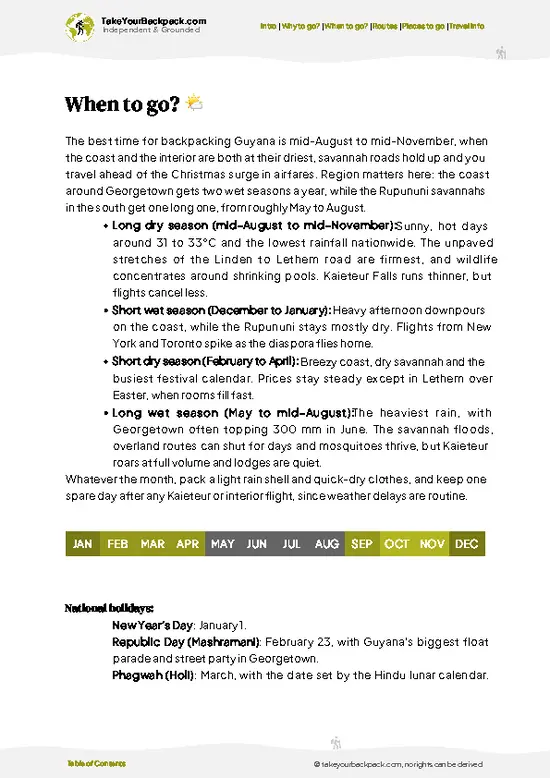
example page 1 from our offline Travel Guide for Guyana
example page 2 from our offline Travel Guide for Guyana
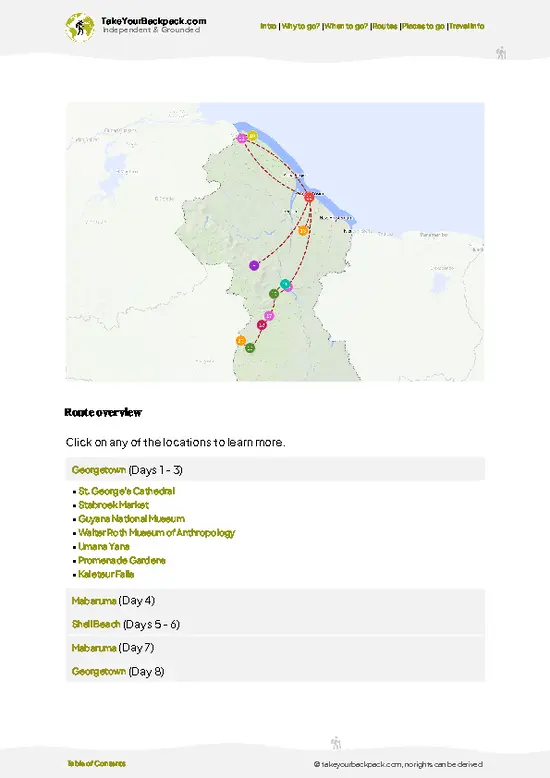
example page 3 from our offline Travel Guide for Guyana
example page 4 from our offline Travel Guide for Guyana
example page 5 from our offline Travel Guide for Guyana
example page 6 from our offline Travel Guide for Guyana
example page 7 from our offline Travel Guide for Guyana
The digital guide (205 pages) contains:
46 highlights, ranked by travel appeal
Optimized 5, 10 & 15-day travel routes
Cities, national parks, landmarks, beaches
How to get around
Offline-friendly for travel without Wi-Fi
👉 Click to see all 30+ guide features

📅 Plan smarter in minutes, not weeks
Month by month travel advice
Festivals & national holidays
Budget expectations

🗺️ Go to the right places, skip the overrated ones
Honest pros & cons of destinations
Top hikes, parks & viewpoints
Lesser-known places most travelers miss
Clear “worth it vs skip it” guidance

🛏️ Travel smoothly without rookie mistakes
Best areas to stay
Transport systems explained simply
Common scams & safety advice
SIM cards, money & practical tips

🌍 Understand the country, not just visit it
Culture & traditions
Local customs
Festivals worth planning around
Traveler-friendly historical context
Insights that make places more meaningful

📱 Built for real travel conditions
Fully downloadable PDF
Works completely offline
Optimized for phone use
Useful in remote areas & buses
Everything in one place
Save weeks of stressful planning
Get instant access to your full guide. 30‑day money-back guarantee.
+ Add another guide for just US$7.80

By proceeding you agree to our terms.
Sent to your inbox immediately after payment • 100% Secure Checkout
Best Backpacking Travel Advisor 2025 tourism awardBest Backpacking
Travel Advisor
2025
What others say about Take Your Backpack Guides:
⭐⭐⭐⭐⭐
Fantastic, amazing amount of information!
⭐⭐⭐⭐⭐
My goodness this is amazing, it's what I've been looking for hats off too you!
⭐⭐⭐⭐⭐
I think this is absolutely BRILLIANT
⭐⭐⭐⭐
Very complete and informative. It's still missing places, but I gotta to commend you
⭐⭐⭐⭐⭐
This is truly amazing, thank you, can't wait to explore it with my kids!
⭐⭐⭐⭐⭐
Awesome resource, thank you!
⭐⭐⭐⭐⭐
This is amazing! Can't wait to explore the ones I haven't seen
⭐⭐⭐⭐
I love this! Well done, great idea.
⭐⭐⭐⭐⭐
Thanks for taking the time to make this gem!
⭐⭐⭐⭐⭐
This might be the best website I've ever seen.
⭐⭐⭐⭐⭐
Congratulations, and thank you so much for your work; it's incredibly valuable.
⭐⭐⭐⭐
In all seriousness I think you did a great job pointing out the important spots
⭐⭐⭐⭐⭐
10/10 very good
⭐⭐⭐⭐⭐
As someone who's only just starting to visit regularly this is awesome, thank you.
⭐⭐⭐⭐
Thank you very much! I'm going to visit my dad, it's going to be very useful!
⭐⭐⭐⭐⭐
This is really cool! We'll be travelling for the first time and this definitely come in handy.
⭐⭐⭐⭐⭐
You are now our minister of culture, congratulations 👨‍💼
⭐⭐⭐⭐⭐
Just wanted to tell you that this is a pearl! Going to follow your recommendations.
⭐⭐⭐⭐⭐
This is so cool. I'll definitely be using the resource for my travels soon.
⭐⭐⭐⭐⭐
This is very impressive! Good work.
⭐⭐⭐⭐⭐
This is an amazing and informative site. Very well done!

🛏️ Where to stay?How to pick the right area

Paramakatoi is a small, remote village deep in the Pakaraima Mountains, so the concept of neighborhoods like in a city doesn’t quite apply. Instead, the best place to stay is near the village center, where the community hub pulses quietly with daily life. This area is your go-to for safety and social connection—locals and travelers mingle here, sharing stories over fires or around communal spaces. It’s where you’ll find the few guesthouses and basic hostels that cater to budget travelers and solo backpackers, offering a chance to plug into the rhythm of village life without feeling isolated.

read more 👉
Paramakatoi is a small, remote village deep in the Pakaraima Mountains, so the concept of neighborhoods like in a city doesn’t quite apply. Instead, the best place to stay is near the village center, where the community hub pulses quietly with daily life. This area is your go-to for safety and social connection—locals and travelers mingle here, sharing stories over fires or around communal spaces. It’s where you’ll find the few guesthouses and basic hostels that cater to budget travelers and solo backpackers, offering a chance to plug into the rhythm of village life without feeling isolated.

Staying outside this core risks losing that social vibe and can mean rougher access to essentials. The village center’s dirt paths, the scent of wood smoke, and the distant hum of children playing create an atmosphere that’s both grounding and inviting. Here, you’re not just passing through; you’re stepping into a living, breathing community that rewards curiosity and respect with genuine warmth.

🚌 Getting aroundMoving around without the hassle

Paramakatoi moves at the pace of the rainforest itself—unpredictable, alive, and shaped by the rhythms of nature more than any clock. The sun’s angle, the sudden downpour, or the chatter of the local Wai Wai people set the tempo here. You won’t find rigid timetables or polished transit hubs. Instead, travel in Paramakatoi is a dance with the environment, where patience and flexibility unlock the real experience. The air is thick with the scent of damp earth and wildflowers, and the sounds of birds punctuate the quiet stretches between villages. Understanding this flow means embracing a bit of chaos and learning to read the subtle cues of the town’s pulse.

Walking: The most reliable way to get around, especially within the village. Paths are uneven and muddy after rain, so sturdy boots are … read more 👉
Paramakatoi moves at the pace of the rainforest itself—unpredictable, alive, and shaped by the rhythms of nature more than any clock. The sun’s angle, the sudden downpour, or the chatter of the local Wai Wai people set the tempo here. You won’t find rigid timetables or polished transit hubs. Instead, travel in Paramakatoi is a dance with the environment, where patience and flexibility unlock the real experience. The air is thick with the scent of damp earth and wildflowers, and the sounds of birds punctuate the quiet stretches between villages. Understanding this flow means embracing a bit of chaos and learning to read the subtle cues of the town’s pulse.

Walking: The most reliable way to get around, especially within the village. Paths are uneven and muddy after rain, so sturdy boots are a must. Walking lets you soak in the dense greenery and catch glimpses of local life—kids playing, elders weaving. It’s free, slow, and immersive.

Shared Minibuses: These operate on a loose schedule, usually starting around 6:30 AM and winding down by late afternoon. Fares are low, but expect cramped seating and frequent stops. The ride is bumpy, with dust or mud depending on weather, but it’s the fastest way to reach nearby settlements or the airstrip.

Motorbike Taxis: A flexible option for short hops or when minibuses aren’t running. Prices vary but are generally affordable. The wind in your face and the jungle scents rushing by make this a sensory-rich choice, though it’s less comfortable in heavy rain or on rough trails.

Chartered 4x4s: For those with a bit more budget or traveling in groups, hiring a 4x4 is the way to go. It’s the only reliable option during the rainy season when roads turn to mud. It’s pricier but cuts travel time significantly and offers shelter from the elements.

Small Aircraft: Paramakatoi has a small airstrip serviced by occasional charter flights. These are expensive and infrequent but can be a lifesaver if you’re on a tight schedule or avoiding the jungle roads altogether. Flights depend heavily on weather conditions, so flexibility is key.

Mastering Paramakatoi’s transit means syncing with its natural rhythm—embracing unpredictability, choosing your mode based on weather and timing, and savoring the sensory journey as much as the destination.

👛 Costs (as of 4 September 2026)Travel costs and budget guide for Paramakatoi

Backpacking in Paramakatoi, Guyana, comes with a unique rhythm—remote, rustic, and deeply tied to local life. Understanding the costs here means embracing simplicity and the occasional logistical challenge, but it pays off in authentic experience.
  • Dorm Accommodation: Options are extremely limited, mostly basic guesthouses or community lodges rather than formal hostels. Expect to pay around $10 to $15 USD per night for a simple shared room. These places often have minimal amenities, so bring your own essentials.
  • Meals: Food is straightforward and locally sourced. A meal at a small local eatery or from street vendors typically costs between $3 and $6 USD. Expect hearty, filling dishes—root vegetables, rice, beans, and fresh fish or chicken when available. Cooking your own food is rare but
read more 👉
Backpacking in Paramakatoi, Guyana, comes with a unique rhythm—remote, rustic, and deeply tied to local life. Understanding the costs here means embracing simplicity and the occasional logistical challenge, but it pays off in authentic experience.
  • Dorm Accommodation: Options are extremely limited, mostly basic guesthouses or community lodges rather than formal hostels. Expect to pay around $10 to $15 USD per night for a simple shared room. These places often have minimal amenities, so bring your own essentials.
  • Meals: Food is straightforward and locally sourced. A meal at a small local eatery or from street vendors typically costs between $3 and $6 USD. Expect hearty, filling dishes—root vegetables, rice, beans, and fresh fish or chicken when available. Cooking your own food is rare but possible if you stay somewhere with kitchen access.
  • Local Transport: Getting around Paramakatoi is mostly on foot or by local boats and occasional shared taxis. A short boat ride or taxi within the area can cost $2 to $5 USD. There’s no formal public transport system, so plan for some walking and flexible timing.
  • Basic Activities/Entry Fees: Activities are nature and culture-focused—guided hikes, village tours, or visits to waterfalls. Expect to pay $5 to $15 USD for guided experiences, often arranged through your accommodation or local contacts. Entry fees to natural sites are minimal or included in the guide fee.
  • Miscellaneous Expenses: This includes bottled water, snacks, or small purchases like phone credit. Budget around $2 to $5 USD daily. Keep cash handy, as card payments are rare and ATMs nonexistent.

Paramakatoi’s daily budget for an independent backpacker typically falls between $22 and $46 USD. This range reflects the balance between basic comfort and the occasional guided adventure, all wrapped in the raw, earthy atmosphere of this remote Guyanese village.


source: guyanatourism.com
⚠️ Prices can change and everyone travels differently, so take this as a rough guide. Hope it helps you plan your adventure!

🚌 Day tripsShort trips worth adding

Paramakatoi, a small village in the heart of Guyana, serves as an excellent base for day trips that immerse you in the region’s rich culture and stunning landscapes. Here are some worthwhile excursions that will elevate your backpacking experience.

1. Kato Falls Adventure
A trek to Kato Falls is a must. The journey takes about two hours on foot, winding through lush rainforest where the air is thick with the scent of damp earth and blooming orchids. The falls themselves cascade dramatically, creating a refreshing mist that cools you down after the hike. Bring a packed lunch to enjoy by the water, and don’t forget your camera; the vibrant greens and the roar of the falls are a sight to behold. Aim for the dry season, from September to November, to avoid muddy trails. A common mistake is … read more 👉
Paramakatoi, a small village in the heart of Guyana, serves as an excellent base for day trips that immerse you in the region’s rich culture and stunning landscapes. Here are some worthwhile excursions that will elevate your backpacking experience.

1. Kato Falls Adventure
A trek to Kato Falls is a must. The journey takes about two hours on foot, winding through lush rainforest where the air is thick with the scent of damp earth and blooming orchids. The falls themselves cascade dramatically, creating a refreshing mist that cools you down after the hike. Bring a packed lunch to enjoy by the water, and don’t forget your camera; the vibrant greens and the roar of the falls are a sight to behold. Aim for the dry season, from September to November, to avoid muddy trails. A common mistake is underestimating the trail’s difficulty; sturdy shoes are essential.


2. Surama Village Cultural Experience
Just a short ride from Paramakatoi, Surama Village offers a deep dive into indigenous culture. Spend the day learning about traditional crafts, local cuisine, and the community’s sustainable practices. The trip takes about 30 minutes by car, and you can expect to spend around $10 for transport and a small fee for activities. The best time to visit is during cultural festivals, which usually happen in the dry season. Many first-timers overlook the importance of engaging with the locals; they’re eager to share stories and insights that enrich your visit.
👉 Explore Surama Village

3. The Kanuku Mountains Hike
For those craving a challenge, the Kanuku Mountains are calling. This day trip involves a three-hour hike through diverse ecosystems, where you might spot exotic birds and unique flora. The views from the summit are breathtaking, with the horizon stretching endlessly. Expect to spend around $15 on transport and snacks. The dry season is ideal for this trek, as the trails can become treacherous during heavy rains. A common pitfall is not bringing enough water; hydration is key for this adventure.
👉 Explore Kanuku Mountains

4. Lethem Market Day
Experience the vibrant Lethem market, just a couple of hours away. This bustling hub is alive with colors, sounds, and the aroma of local foods. You can find everything from handmade crafts to fresh produce. Plan your visit for a Saturday when the market is at its liveliest, and budget around $10 for transport. Many backpackers miss out on the chance to barter; it’s part of the fun and can lead to great deals.
Want to know what more Guyana offers?
The Guyana Travel Guide describes 46 highlights, from cities to national parks, from beaches to hikes

Get the Travel Guide -

🛡️ SafetySafety Tips and Common Scams in Paramakatoi

In Paramakatoi, safety is generally solid, but a few practical tips can enhance your experience. The town’s layout is simple, yet it’s wise to stay aware in crowded areas, especially around local markets where distractions can lead to minor theft.

If you’re solo, aim to explore during daylight. Nighttime can feel quieter, and while it’s not inherently dangerous, the lack of streetlights makes navigation tricky. Stick to well-lit paths and consider chatting with locals for guidance; they’re often eager to help.

Scams aren’t rampant, but be cautious with overly friendly strangers offering unsolicited help. A polite smile and a firm “no thanks” usually suffice. Carry yourself confidently, and you’ll blend in seamlessly, enjoying the rich culture without unnecessary stress.

FAQFrequently asked questions about Paramakatoi

Paramakatoi is accessed primarily by small aircraft from Georgetown to the nearby airstrip or by a multi-day hike through the rainforest, typically taking 3 to 5 days on foot. River transport is also possible but less common and slower. Flights are limited and weather-dependent, so plan accordingly.
Yes, Paramakatoi is worth the trip for those interested in indigenous culture and pristine rainforest environments. The village offers authentic Amerindian experiences and access to unique biodiversity, making it a valuable destination for eco-tourists and cultural travelers.
No, Paramakatoi cannot be visited as a day trip due to its remote location and limited transport options. Travel time alone requires at least one overnight stay, often several, to fully experience the area and return safely.
⚠️ Things can change over time, so always validate details locally before you go.

Other Guyanese villages near Paramakatoi

Explore more nearby:

  • Surama Village—community tourism, forest walks, Makushi hospitality| 95 km away
  • Annai—savannah edge, eco-lodges, gateway to Iwokrama| 104 km away
  • Kurupukari—Essequibo crossing, ferry point, forest research station| 115 km away

💡 Not sure where to go next?
Create a personalized itinerary for Guyana including Paramakatoi and the places that fit your trip.

Generate my itinerary

👉 Discover all villages

Or checkout all Guyana has to offer (think cities, towns, villages, national parks, hikes, beaches, festivals)
Country photo of Guyana

We 💚 feedbackWhat to keep in mind

Paramakatoi is raw and real, a slice of Guyana that feels untouched. The air is thick with the scent of earth after rain, and the laughter of locals fills the space. The best surprise? The warmth of the community; they’ll share stories that linger long after you leave. Just a heads-up: the roads can be rough, so brace yourself for a bumpy ride. But trust me, the journey is part of the adventure.

✍️ Help improve this page!
The information on this page is based on in-depth research, insights shared by experienced travelers, and feedback from the local travel community in Guyana. While every effort is made to keep the information accurate and current, conditions can change — so if you spot anything incorrect or outdated, please get in touch.


🙋‍♂️ Give feedback

👋 Meet the founderWho’s Behind Take Your Backpack?

Johan, backpacker and founder of TakeYourBackpackHi, I’m Johan (Netherlands 🇳🇱), the creator of TakeYourBackpack. Over the past decade, I’ve backpacked through 80+ countries across six continents, gaining extensive experience with independent travel, long-term trips, and overland routes.

This site is built on a combination of firsthand travel experience and carefully curated insights from other backpackers. Many guides are based on places I’ve personally visited, while others bring together tips, observations, and practical advice shared by trusted travelers I’ve met along the way.

The goal is to provide realistic, experience-driven guidance — not generic itineraries — so you can explore destinations with better context, clearer expectations, and more confidence.

Get full Guyana guide •
Instant download • 46 highlights • Full Offline guide