×

Guyana🇬🇾 | villagesPort KaitumaJonestown site, Kaituma landing, frontier market, gold-country hub | things to do and best time to go

Explore MabarumaExplore Paramakatoi

Backpacking in Port Kaituma
👌 Worth visitingvillage ranked #8
By Johan Kruseman 🇳🇱 | Updated October 19, 2026

Port Kaituma is best known as the river-and-mud gateway to the Barima-Waini hinterland, and as the place where the Jonestown tragedy of 1978 was staged from. It sits in the northwest of Guyana, inland from the Kaituma River, roughly west of Georgetown and reached by boat and road. Expect red laterite dust or red mud, depending on the week, the whine of minibuses and motorbikes, wood smoke, fried fish and diesel from the stelling. Gold and logging money drives the market, so prices run high and rooms are basic. Experienced travelers bring cash in small bills because no one here changes large notes or takes cards, and they book transport a day ahead because boats and buses leave when full. Evenings are loud with music from rum shops, but meeting other backpackers is rare. Unlike Mabaruma, which is greener and calmer, Port Kaituma is a working frontier town.

Discover everything you want to know in the 📖 Guyana Travel Guide.


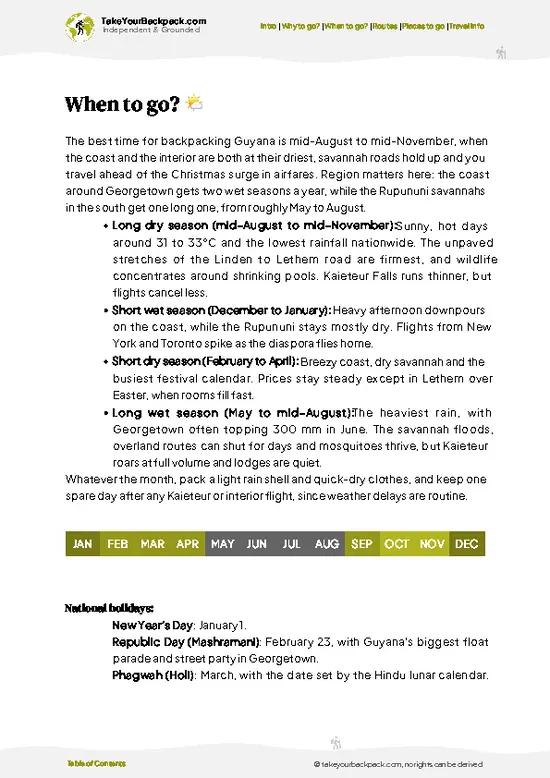
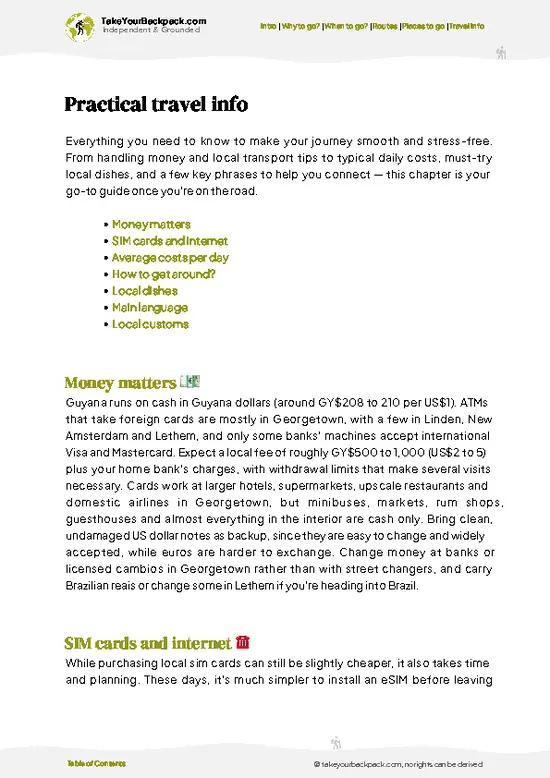
example page 0 from our offline Travel Guide for Guyana
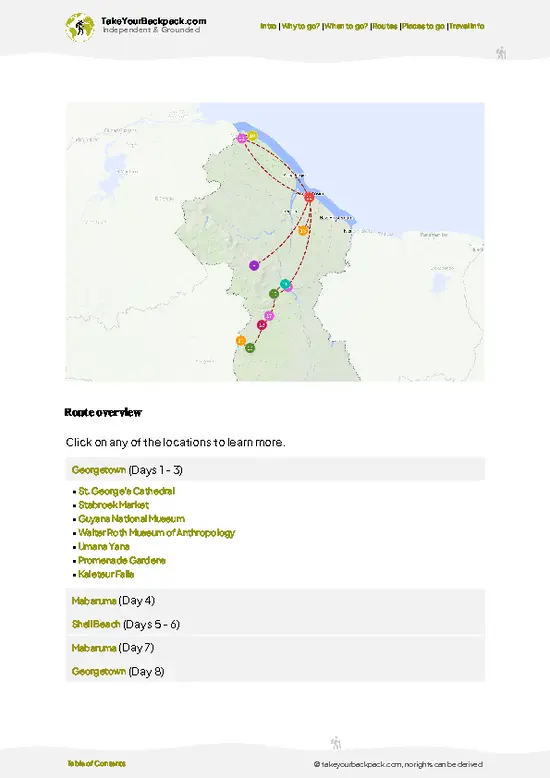
example page 1 from our offline Travel Guide for Guyana
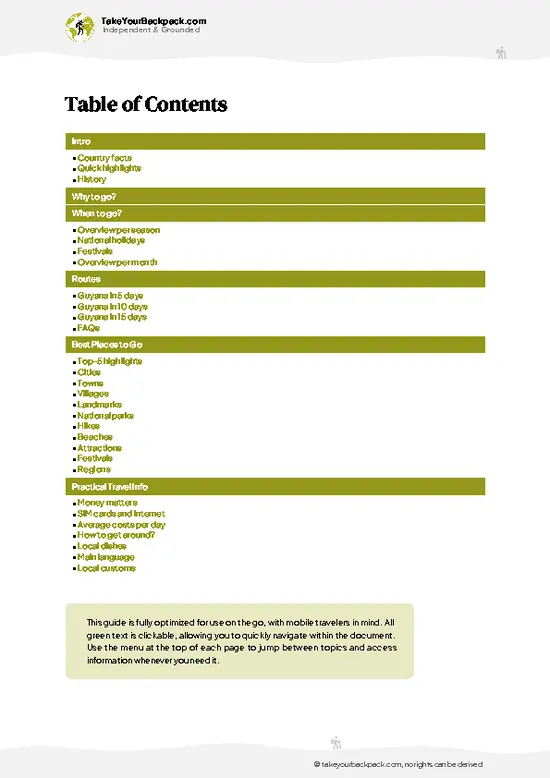
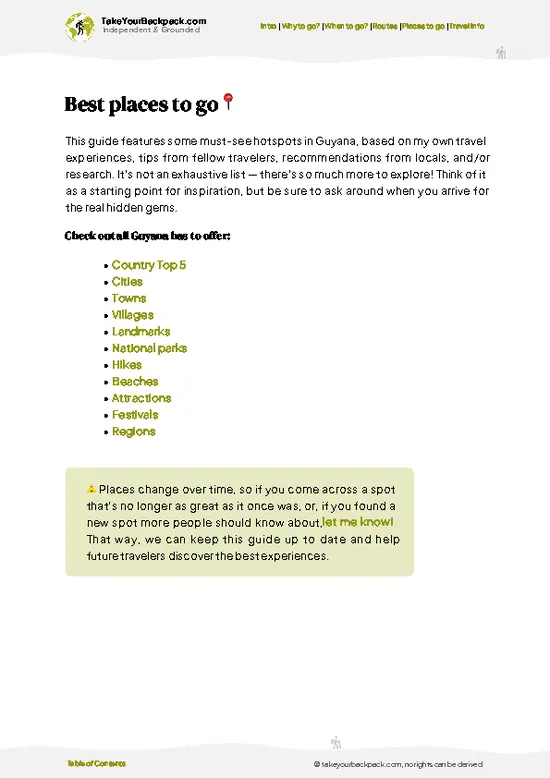
example page 2 from our offline Travel Guide for Guyana
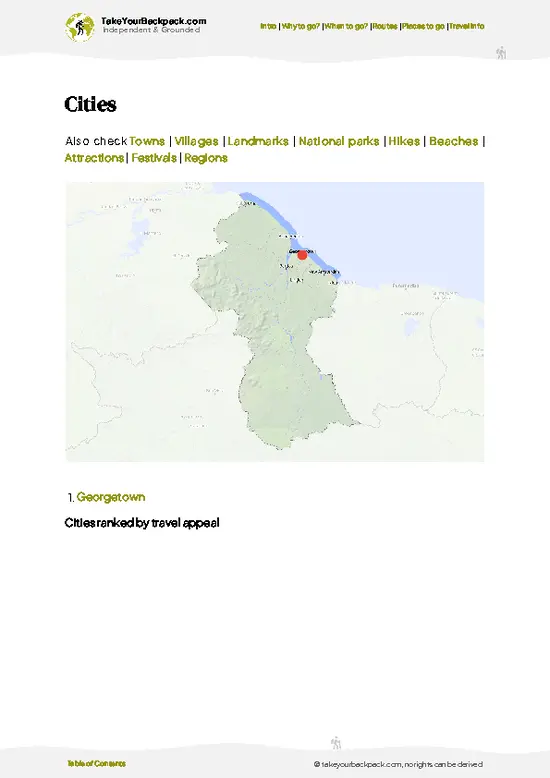
example page 3 from our offline Travel Guide for Guyana
example page 4 from our offline Travel Guide for Guyana
example page 5 from our offline Travel Guide for Guyana
example page 6 from our offline Travel Guide for Guyana
example page 7 from our offline Travel Guide for Guyana
Loading the map 🌍
CLICK TO FILTER
cities
towns
villages
landmarks
national parks
hikes
beaches
attractions
festivals
regions
SHOW COUNTRY’S BESTSHOW ALL

✨ Why go?
Ranked #8 village in Guyana
The unique appeal for travelers

Port Kaituma draws travelers who want the real northwest interior rather than a polished stop. It works as a pause on the way to Matthews Ridge or across toward the coast, and a night here lets you time boats and trucks sensibly. The main pull is the history. The old Jonestown site lies in the forest nearby, and local guides can explain what happened and how the community still lives with it. The other draw is the daily rhythm: miners, loggers and Amerindian families crowd the market, and the pace is raw and talkative. Most people stay one or two nights, and they tend to be solo travelers, history-minded wanderers and anyone who likes rough roads and unpolished towns. It is not social in a hostel sense, and comfort is limited, so beach seekers and anyone wanting tidy sightseeing should look … read more 👉
Port Kaituma draws travelers who want the real northwest interior rather than a polished stop. It works as a pause on the way to Matthews Ridge or across toward the coast, and a night here lets you time boats and trucks sensibly. The main pull is the history. The old Jonestown site lies in the forest nearby, and local guides can explain what happened and how the community still lives with it. The other draw is the daily rhythm: miners, loggers and Amerindian families crowd the market, and the pace is raw and talkative. Most people stay one or two nights, and they tend to be solo travelers, history-minded wanderers and anyone who likes rough roads and unpolished towns. It is not social in a hostel sense, and comfort is limited, so beach seekers and anyone wanting tidy sightseeing should look elsewhere. Go with patience and a flexible schedule.

💡 HighlightsPlaces and moments you shouldn't skip

  1. Jonestown memorial area: The site of the Peoples Temple settlement, now largely reclaimed by forest, lies a rough ride from town. It is a sober, quiet place, and a local guide gives the context that nothing on site does. Go in the dry months when tracks are firmer. Expect to pay a driver and guide roughly US$40 to 80 in total, and allow 3 to 4 hours.
  2. Port Kaituma airstrip and Kaituma River landing: The airstrip is where the 1978 shootings happened, and today it is an ordinary grass-and-gravel strip with goats and minibuses nearby. The river landing beside it is lively in the morning when boats, fuel drums and passengers arrive. It is free, and 30 to 45 minutes is enough.
  3. Port Kaituma market: A small, busy market where miners and villagers buy cassava bread, fish, produce and mining supplies.
… read more 👉
  1. Jonestown memorial area: The site of the Peoples Temple settlement, now largely reclaimed by forest, lies a rough ride from town. It is a sober, quiet place, and a local guide gives the context that nothing on site does. Go in the dry months when tracks are firmer. Expect to pay a driver and guide roughly US$40 to 80 in total, and allow 3 to 4 hours.
  2. Port Kaituma airstrip and Kaituma River landing: The airstrip is where the 1978 shootings happened, and today it is an ordinary grass-and-gravel strip with goats and minibuses nearby. The river landing beside it is lively in the morning when boats, fuel drums and passengers arrive. It is free, and 30 to 45 minutes is enough.
  3. Port Kaituma market: A small, busy market where miners and villagers buy cassava bread, fish, produce and mining supplies. Go in the morning before the heat. Browsing is free, snacks cost US$1 to 4, and an hour is plenty.
For day trips, Matthews Ridge, Mabaruma and the Barima River communities can be explored from here with advance planning. If time is short, skip the market and spend it on the Jonestown memorial area.
Spotted a mistake or missing something? Contact us.

🌤️ When to go?Weather, crowds, and seasonal trade-offs

  • Main Dry Season (September to November): Roads out of Port Kaituma stay firmest, and highs run 30 to 33°C (86 to 91°F). Rain is lighter and the laterite tracks to the Barima-Waini and Matthews Ridge side are passable.
  • Short Dry Spell (February to March): Quieter skies and similar heat, 29 to 32°C (84 to 90°F). Good for river trips on the Kaituma.
  • Long Wet Season (May to August): Heavy downpours, mud, and highs of 28 to 31°C (82 to 88°F). Ferry and truck schedules slip.
  • Holidays (December and Easter): Families return to the region, so minibus seats and rooms fill and fares rise a little.
Daylight stays close to 12 hours all year, so plan travel for the morning and leave extra buffer after rain.

source: climatestotravel.comJANJanuary: fair for travelingFEBFebruary: excellent for travelingMARMarch: excellent for travelingAPRApril: excellent for travelingMAYMay: good for travelingJUNJune: fair for travelingJULJuly: fair for travelingAUGAugust: fair for travelingSEPSeptember: fair for travelingOCTOctober: fair for travelingNOVNovember: good for travelingDECDecember: fair for traveling
when-to-go

✈️ The backpacker research shortcutGuyana Travel Guide

An offline-friendly backpacking guide with optimized travel routes, ranked highlights, transport advice, and the best areas to stay.
example page 0 from our offline Travel Guide for Guyana
example page 1 from our offline Travel Guide for Guyana
example page 2 from our offline Travel Guide for Guyana
example page 3 from our offline Travel Guide for Guyana
example page 4 from our offline Travel Guide for Guyana
example page 5 from our offline Travel Guide for Guyana
example page 6 from our offline Travel Guide for Guyana
example page 7 from our offline Travel Guide for Guyana
The digital guide (161 pages) contains:
✅ 43 highlights, ranked by travel appeal
✅ Optimized 5, 10 & 15-day travel routes
✅ Cities, national parks, landmarks, beaches
✅ How to get around
✅ Offline-friendly for travel without Wi-Fi
👉 Click to see all 30+ guide features

📅 Plan smarter in minutes, not weeks
✅ Month by month travel advice
✅ Festivals & national holidays
✅ Budget expectations

🗺️ Go to the right places, skip the overrated ones
✅ Honest pros & cons of destinations
✅ Top hikes, parks & viewpoints
✅ Lesser-known places most travelers miss
✅ Clear “worth it vs skip it” guidance

🛏️ Travel smoothly without rookie mistakes
✅ Best areas to stay
✅ Transport systems explained simply
✅ Common scams & safety advice
✅ SIM cards, money & practical tips

🌍 Understand the country, not just visit it
✅ Culture & traditions
✅ Local customs
✅ Festivals worth planning around
✅ Traveler-friendly historical context
✅ Insights that make places more meaningful

📱 Built for real travel conditions
✅ Fully downloadable PDF
✅ Works completely offline
✅ Optimized for phone use
✅ Useful in remote areas & buses
✅ Everything in one place
Stop searching, start planning
Get instant access to your full guide. 30‑day money-back guarantee.
+ Add another guide for just

By proceeding you agree to our terms.
Sent to your inbox immediately after payment • 100% Secure Checkout
Best Backpacking Travel Advisor 2025 tourism awardBest Backpacking
Travel Advisor
2025
What others say about Take Your Backpack Guides:
⭐⭐⭐⭐⭐
Fantastic, amazing amount of information!
⭐⭐⭐⭐⭐
My goodness this is amazing, it's what I've been looking for hats off too you!
⭐⭐⭐⭐⭐
I think this is absolutely BRILLIANT
⭐⭐⭐⭐
Very complete and informative. It's still missing places, but I gotta to commend you
⭐⭐⭐⭐⭐
This is truly amazing, thank you, can't wait to explore it with my kids!
⭐⭐⭐⭐⭐
Awesome resource, thank you!
⭐⭐⭐⭐⭐
This is amazing! Can't wait to explore the ones I haven't seen
⭐⭐⭐⭐
I love this! Well done, great idea.
⭐⭐⭐⭐⭐
Thanks for taking the time to make this gem!
⭐⭐⭐⭐⭐
This might be the best website I've ever seen.
⭐⭐⭐⭐⭐
Congratulations, and thank you so much for your work; it's incredibly valuable.
⭐⭐⭐⭐
In all seriousness I think you did a great job pointing out the important spots
⭐⭐⭐⭐⭐
10/10 very good
⭐⭐⭐⭐⭐
As someone who's only just starting to visit regularly this is awesome, thank you.
⭐⭐⭐⭐
Thank you very much! I'm going to visit my dad, it's going to be very useful!
⭐⭐⭐⭐⭐
This is really cool! We'll be travelling for the first time and this definitely come in handy.
⭐⭐⭐⭐⭐
You are now our minister of culture, congratulations 👨‍💼
⭐⭐⭐⭐⭐
Just wanted to tell you that this is a pearl! Going to follow your recommendations.
⭐⭐⭐⭐⭐
This is so cool. I'll definitely be using the resource for my travels soon.
⭐⭐⭐⭐⭐
This is very impressive! Good work.
⭐⭐⭐⭐⭐
This is an amazing and informative site. Very well done!

🛏️ Where to stay?Where staying makes the most sense

Port Kaituma has only a handful of small guesthouses, and the best choice for backpackers is a simple room near the main street and the market, where you can walk to food and the minibus stop. Expect basic private rooms with a fan or air conditioning for roughly US$15 to 35 a night. There are no hostels or dorms, so solo travelers pay the full room rate. Hot water is rare, and a bucket-style cold shower is normal in the heat.
Book ahead by phone if you can, especially around holidays or when mining and government crews are in town, since rooms are few. Bring cash in Guyanese dollars, as card machines … read more 👉
Port Kaituma has only a handful of small guesthouses, and the best choice for backpackers is a simple room near the main street and the market, where you can walk to food and the minibus stop. Expect basic private rooms with a fan or air conditioning for roughly US$15 to 35 a night. There are no hostels or dorms, so solo travelers pay the full room rate. Hot water is rare, and a bucket-style cold shower is normal in the heat.
Book ahead by phone if you can, especially around holidays or when mining and government crews are in town, since rooms are few. Bring cash in Guyanese dollars, as card machines are unreliable. Ask your host to arrange transport to the stelling (river landing) the evening before an early departure. Some guesthouses can also cook meals if you ask in advance. Pack a mosquito net or repellent, and a padlock for your door if the latch looks weak.

🚌 Day tripsShort trips worth adding

Port Kaituma works as a base for short river and road excursions, though public transport is thin, so most trips need a hired boat or a ride arranged through your guesthouse.
Kaituma River Boat Ride:
A hired small boat on the Kaituma gives you riverbank farms, fishing spots and forest edges within a few hours. Expect US$40 to 80 for the boat and driver, split among a group if you can find one. Go in the drier months, when water is lower and sandbars show. Many first-timers forget a rain jacket and sun protection.

Mabaruma:
The hilltop town of Mabaruma sits in the Barima-Waini region, and the trip combines a boat ride with a road leg. Count on 3 to 5 hours each way and US$30 to 60 round trip. The cooler hill air and the views over forest are the draw. A common mistake is leaving late and missing … read more 👉
Port Kaituma works as a base for short river and road excursions, though public transport is thin, so most trips need a hired boat or a ride arranged through your guesthouse.
Kaituma River Boat Ride:
A hired small boat on the Kaituma gives you riverbank farms, fishing spots and forest edges within a few hours. Expect US$40 to 80 for the boat and driver, split among a group if you can find one. Go in the drier months, when water is lower and sandbars show. Many first-timers forget a rain jacket and sun protection.

Mabaruma:
The hilltop town of Mabaruma sits in the Barima-Waini region, and the trip combines a boat ride with a road leg. Count on 3 to 5 hours each way and US$30 to 60 round trip. The cooler hill air and the views over forest are the draw. A common mistake is leaving late and missing the last return, so start at dawn.
👉 Explore Mabaruma
Matthews Ridge Road:
The rough road toward Matthews Ridge shows old manganese mining country, red earth and thick forest. A full return is too long for one day, so go only as far as the first villages, about 2 to 3 hours out and back, for US$25 to 50 in shared transport or a hire. Dry weather is the only sensible time, because rain turns the road to mud.

FAQFrequently asked questions about Port Kaituma

Port Kaituma is reached from Georgetown by flying to Port Kaituma airstrip on a small domestic charter, about 1 hour and roughly US$150 to 250 each way. The cheaper route is the government ferry from Georgetown to Kumaka near Mabaruma, then a smaller boat on to Port Kaituma, taking a full day or more. Check the weather, as rain slows the overland and river legs.
Port Kaituma is worth it if you want a working frontier town in northwest Guyana rather than a tourist stop. You get river life on the Kaituma, a market, and access to Mabaruma and the Matthews Ridge road. Plan 2 to 3 days, and expect basic rooms at about US$15 to 35 a night and little nightlife.
Port Kaituma is not practical as a day trip from Georgetown, because the journey takes a full day by road and river or about 1 hour by chartered flight at roughly US$150 to 250 each way. A same-day return by air is possible but expensive and leaves only a few hours on the ground. Staying at least one night lets you see the market and take a boat on the Kaituma River.
⚠️ Things can change over time, so always validate details locally before you go.

Other Guyanese villages near Port Kaituma

Explore more nearby:

  • Kumaka Beach—Tannin-dark river sand, calm swimming, weekend families, northwest Guyana| 53 km away
  • Mabaruma—Hill viewpoint, Region 1 town, produce market, Hosororo trails| 54 km away
  • Kamarang—Mazaruni landing, dirt airstrip, Akawaio hub, upriver gateway| 222 km away

💡 Not sure where to go next?
Create a personalized itinerary for Guyana including Port Kaituma and the places that fit your trip.

Generate my itinerary

👉 Discover all villages

Or checkout all Guyana has to offer (think cities, towns, villages, national parks, hikes, beaches, festivals)
Country photo of Guyana

We 💚 feedbackIs it worth it?

Give Port Kaituma one night, two if you want to visit the Jonestown area without rushing a guide or driver. A single day is enough for the market and airstrip, and a third night only makes sense if boats or trucks are delayed. I would bring cash, insect repellent and a rain layer, and I would skip planning tight connections.

✍️ Help improve this page!
The information on this page is based on in-depth research, insights shared by experienced travelers, and feedback from the local travel community in Guyana. While every effort is made to keep the information accurate and current, conditions can change — so if you spot anything incorrect or outdated, please get in touch.


🙋‍♂️ Give feedback

👋 Meet the founderWho’s Behind Take Your Backpack?

Johan, backpacker and founder of TakeYourBackpackHi, I’m Johan (Netherlands 🇳🇱), the creator of TakeYourBackpack. Over the past 3 decades, I’ve backpacked through 90+ countries across six continents, gaining extensive experience with independent travel, long-term trips, and overland routes.

This site is built on a combination of firsthand travel experience and carefully curated insights from other backpackers. Many guides are based on places I’ve personally visited, while others bring together tips, observations, and practical advice shared by trusted travelers I’ve met along the way.

The goal is to provide realistic, experience-driven guidance — not generic itineraries — so you can explore destinations with better context, clearer expectations, and more confidence.