v2.webp)
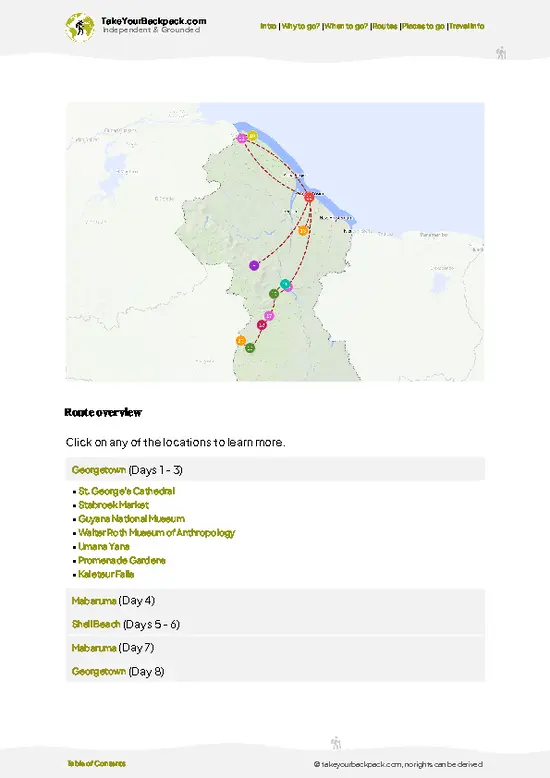
- Mabaruma Hill and the town viewpoint. The best-known spot in town is the rise above the center, where you can look out over canopy and the Aruka River plain. Go early in the morning, when mist lifts and birds are loudest. Free, and 1 to 2 hours is enough.
- Mabaruma Market. A small, working market where farmers and villagers sell cassava, plantains, fish, citrus and local produce. It is best on weekday mornings and Saturday, when more sellers arrive. Expect to spend little, around US$2 to 8 on snacks or fruit, and allow about an hour.
- Hosororo Waterfall trails and nearby Amerindian craft stops. Locals can point out short forest walks and craft sellers around the area, where you may see woven items and cassava processing. Go in the drier months, when paths are firmer. Guides or local help may cost
- Mabaruma Hill and the town viewpoint. The best-known spot in town is the rise above the center, where you can look out over canopy and the Aruka River plain. Go early in the morning, when mist lifts and birds are loudest. Free, and 1 to 2 hours is enough.
- Mabaruma Market. A small, working market where farmers and villagers sell cassava, plantains, fish, citrus and local produce. It is best on weekday mornings and Saturday, when more sellers arrive. Expect to spend little, around US$2 to 8 on snacks or fruit, and allow about an hour.
- Hosororo Waterfall trails and nearby Amerindian craft stops. Locals can point out short forest walks and craft sellers around the area, where you may see woven items and cassava processing. Go in the drier months, when paths are firmer. Guides or local help may cost around US$10 to 30, and you should allow half a day.
Spotted a mistake or missing something? Contact us.

 Best Backpacking
.jpg) Hi, I’m Johan (Netherlands 🇳🇱), the creator of TakeYourBackpack. Over the past 3 decades, I’ve backpacked through 90+ countries across six continents, gaining extensive experience with independent travel, long-term trips, and overland routes.
Hi, I’m Johan (Netherlands 🇳🇱), the creator of TakeYourBackpack. Over the past 3 decades, I’ve backpacked through 90+ countries across six continents, gaining extensive experience with independent travel, long-term trips, and overland routes.