×

Haiti🇭🇹 | citiesMirebalaiscentral crossroads, river valley, medical center | things to do and best time to go

Explore Saint-MarcExplore Ouanaminthe

Backpacking in Mirebalais
👌 Worth visitingcity ranked #10
By Johan Kruseman 🇳🇱 | Updated June 11, 2026

You land in Port-au-Prince and face an early fork: burn cash on a private car straight to Mirebalais, or save money with a crowded tap-tap that’s slower, hotter, and riskier after dark. That single choice sets the tone for your whole trip, because Mirebalais sits inland in Haiti’s Centre department, where infrastructure is thin and every hour of daylight matters. For backpackers, the town is low-key and workaday: a busy market, a few churches and colonial-era remnants, street food corners, and the hospital complex that quietly dominates local life. It’s cheaper and calmer than Port-au-Prince, but has far fewer travelers, almost no classic nightlife, and limited tourist services. The vibe is raw, curious, sometimes tense, and better for patient, French- or Kreyòl-speaking travelers than casual first-timers.

Discover everything you want to know in the 📖 Haiti Travel Guide.
Safety warning

The current risk level for Haiti is high. Check the advice before going.


Get your Haiti guide
99 ranked highlights, routes & tips, works offline (371 pages)
Loading the map 🌍
CLICK TO FILTER
cities
towns
villages
landmarks
national parks
hikes
beaches
attractions
festivals
SHOW COUNTRY’S BESTSHOW ALL

✨ Why go?
Ranked #10 city in Haiti
Why Mirebalais should be on your travel list

Mirebalais serves as a strategic basecamp for backpackers exploring Haiti. It’s not just about the highlights nearby; the city itself offers a unique blend of affordability and local culture. You’ll find a range of hostels that cater to different budgets, making it easy to settle in without breaking the bank. The food scene is vibrant, with local eateries serving up hearty meals that won’t dent your wallet.

Mirebalais is also walkable, allowing you to soak in the local vibe without the hassle of transport. When the sun sets, the nightlife offers a taste of authentic Haitian music and dance, perfect for unwinding after a day of exploration. Plus, its location makes onward travel to other destinations straightforward, whether you’re heading to the coast or the mountains. This city is ideal … read more 👉
Mirebalais serves as a strategic basecamp for backpackers exploring Haiti. It’s not just about the highlights nearby; the city itself offers a unique blend of affordability and local culture. You’ll find a range of hostels that cater to different budgets, making it easy to settle in without breaking the bank. The food scene is vibrant, with local eateries serving up hearty meals that won’t dent your wallet.

Mirebalais is also walkable, allowing you to soak in the local vibe without the hassle of transport. When the sun sets, the nightlife offers a taste of authentic Haitian music and dance, perfect for unwinding after a day of exploration. Plus, its location makes onward travel to other destinations straightforward, whether you’re heading to the coast or the mountains. This city is ideal for those looking to immerse themselves in Haiti while keeping options open for day trips.
Want to include Mirebalais in your Haiti route?
Create a personalized Haiti itinerary that includes Mirebalais and the places that fit your trip — based on your travel style, budget, and available time. Get your route in seconds.

Generate my trip

💡 HighlightsTop highlights of Mirebalais

  • Hôpital Universitaire de Mirebalais (HUM) — The big modern hospital run with Partners In Health; it’s not a typical “tourist” stop, but seeing its scale, its solar-powered systems and community health programs gives a clear window into how healthcare and development work in the region.
  • Marché municipal (the central market) — A chaotic, colorful daily market where farmers, fishers and traders sell produce, spices, roasted coffee and household goods. Great for people-watching, buying snacks, and getting a sense of local rhythms.
  • Place Centrale / town square — The social heart of Mirebalais: vendors, street food, motorbike traffic and church bells converge here. Sit with a coffee and watch everyday life — that’s where you’ll meet locals and feel the town’s pulse.
  • Main parish church (Église
read more 👉
  • Hôpital Universitaire de Mirebalais (HUM) — The big modern hospital run with Partners In Health; it’s not a typical “tourist” stop, but seeing its scale, its solar-powered systems and community health programs gives a clear window into how healthcare and development work in the region.
  • Marché municipal (the central market) — A chaotic, colorful daily market where farmers, fishers and traders sell produce, spices, roasted coffee and household goods. Great for people-watching, buying snacks, and getting a sense of local rhythms.
  • Place Centrale / town square — The social heart of Mirebalais: vendors, street food, motorbike traffic and church bells converge here. Sit with a coffee and watch everyday life — that’s where you’ll meet locals and feel the town’s pulse.
  • Main parish church (Église paroissiale) — The town’s central Catholic church is a focal point for community life, processions and Sunday services; visiting during a mass or feast day gives cultural context and music you won’t forget.
  • Riverside area and the main bridge over the local river — The riverbank and the bridge are practical meeting points and offer real views of daily rural-to-town commerce: fishermen, laundry, and rice barges in the distance. It’s low-key but authentic.
  • Street-food circuit (grilled fish, griot and local snacks) — Mirebalais’s best meals often come from street vendors and small cookshops near the market. Try fried pork (griot), marinades, plantain snacks and a cup of strong Haitian coffee from a local stand.
  • Artisan and metalwork alleyways — Small workshops where blacksmiths, carpenters and tailors still hammer and stitch by hand. Watching and chatting with these makers is a good way to see practical crafts that keep the town running.
  • Community health and education projects (visitor-friendly programs) — Beyond HUM, there are local clinics, maternal-health programs and school projects that accept respectful visitors or short volunteer stints; these give a grounded view of local priorities and resilience.
  • Local football pitch / community sports scene — Catching an evening or weekend match is one of the best ways to join locals — cheap, noisy, and full of energy. The pitch doubles as a communal gathering spot.
  • Small-scale coffee and food stalls around the city outskirts — Not fancy plantations, but family-run coffee sellers and small gardens where you can taste freshly roasted beans and meet growers from the Central Plateau, right in town.
A few real, visitable spots just outside Mirebalais worth day-tripping to: the pilgrimage waterfall at Saut-d’Eau, nearby Central Plateau coffee country and markets, and the broader Artibonite valley with its rice fields and river landscapes.
Spotted a mistake or missing something? Contact us.
🏘️ NeighborhoodsNeighborhood guide to Mirebalais

Mirebalais offers a unique blend of culture and accessibility for backpackers. Here’s a breakdown of key neighborhoods to help you navigate your stay.

Centre Ville: This is the heart of Mirebalais. It’s bustling, with local markets and street vendors. Costs are low, and you can easily walk to most attractions. The vibe is lively, making it great for short stays. Nightlife is minimal, but you’ll find local bars with a relaxed atmosphere.

La Plaine: A quieter area, perfect for those seeking a more laid-back experience. It’s slightly more expensive than Centre Ville but offers a peaceful retreat. Walkability is decent, though you might need a taxi for longer distances. Ideal for longer stays, as you can immerse yourself in local life without the hustle.

Route de l’Aéroport: This area is more … read more 👉
Mirebalais offers a unique blend of culture and accessibility for backpackers. Here’s a breakdown of key neighborhoods to help you navigate your stay.

Centre Ville: This is the heart of Mirebalais. It’s bustling, with local markets and street vendors. Costs are low, and you can easily walk to most attractions. The vibe is lively, making it great for short stays. Nightlife is minimal, but you’ll find local bars with a relaxed atmosphere.

La Plaine: A quieter area, perfect for those seeking a more laid-back experience. It’s slightly more expensive than Centre Ville but offers a peaceful retreat. Walkability is decent, though you might need a taxi for longer distances. Ideal for longer stays, as you can immerse yourself in local life without the hustle.

Route de l’Aéroport: This area is more commercial, with easy access to transport links. It’s a bit pricier, but you’ll find more amenities. The nightlife is limited, but it’s convenient for those needing to catch flights. Suitable for short stays, especially if you’re in transit.

Each neighborhood has its own flavor, allowing you to choose based on your priorities.

⌛️ 1 dayHow to make the most of one day

Mirebalais, Haiti, is a vibrant tapestry of culture and history, often overlooked by travelers. Nestled in the Central Plateau, it’s a place where the rhythm of daily life pulses through the streets, and the warmth of the locals invites you to explore.

Start your day at the bustling local market in the heart of the city. Here, the air is filled with the scent of fresh produce and spices. Engage with vendors selling everything from colorful fruits to handmade crafts. This is not just shopping; it’s a chance to connect with the community. Afterward, stroll over to the nearby Church of Saint Louis, an architectural gem that showcases the city’s rich heritage.

As the sun climbs higher, make your way to the Parc Historique de la Canne à Sucre, a lesser-known spot that offers a glimpse into Haiti’s … read more 👉
Mirebalais, Haiti, is a vibrant tapestry of culture and history, often overlooked by travelers. Nestled in the Central Plateau, it’s a place where the rhythm of daily life pulses through the streets, and the warmth of the locals invites you to explore.

Start your day at the bustling local market in the heart of the city. Here, the air is filled with the scent of fresh produce and spices. Engage with vendors selling everything from colorful fruits to handmade crafts. This is not just shopping; it’s a chance to connect with the community. Afterward, stroll over to the nearby Church of Saint Louis, an architectural gem that showcases the city’s rich heritage.

As the sun climbs higher, make your way to the Parc Historique de la Canne à Sucre, a lesser-known spot that offers a glimpse into Haiti’s sugar cane history. Wander through the lush grounds, where you can learn about traditional sugar production and enjoy the serene environment. Grab a light lunch at a local eatery, perhaps trying some griot or pikliz, to fuel your afternoon.

In the evening, head to the vibrant neighborhood of La Plaine. Here, you’ll find lively street food stalls and music filling the air. Sample local delicacies and soak in the atmosphere as the sun sets. If you’re lucky, you might catch a spontaneous dance performance, a true reflection of the city’s spirit.

Mirebalais may not be on every tourist’s radar, but its charm lies in the everyday moments that create lasting memories. Embrace the experience, and you’ll leave with a deeper understanding of Haiti’s heart.
Turn your Mirebalais visit into an Haiti adventure
Build a complete Haiti route with Mirebalais, hidden gems, must-see destinations, and realistic travel times included.

Generate my trip

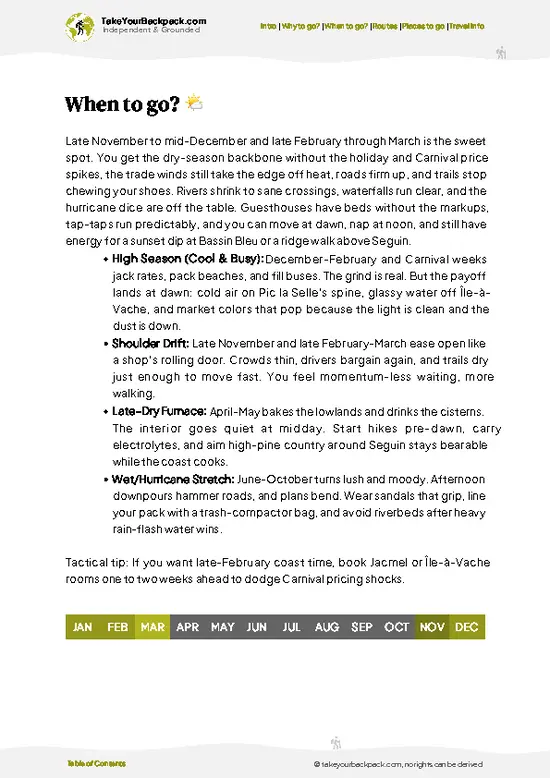
🌤️ When to go?Weather, crowds, and seasonal trade-offs


  • Weather: Mirebalais experiences a tropical climate with a wet season from April to October, bringing heavy rains and humidity that can slow down your hiking and exploration. The dry season, November to March, offers clearer skies and less mud, ideal for backpacking.

  • Temperature: Temperatures hover between 22°C to 30°C (72°F to 86°F) year-round, but the dry season feels more comfortable with lower humidity, making physical activity less draining.

  • Daylight Hours: Daylight remains fairly consistent, around 11 to 12 hours daily, so early starts and late finishes are possible any time of year.

  • Crowds: Mirebalais isn’t a tourist hotspot, so crowds are minimal year-round, but local festivals during the dry season can add lively cultural experiences without overwhelming numbers.

  • Seasonal
read more 👉

  • Weather: Mirebalais experiences a tropical climate with a wet season from April to October, bringing heavy rains and humidity that can slow down your hiking and exploration. The dry season, November to March, offers clearer skies and less mud, ideal for backpacking.

  • Temperature: Temperatures hover between 22°C to 30°C (72°F to 86°F) year-round, but the dry season feels more comfortable with lower humidity, making physical activity less draining.

  • Daylight Hours: Daylight remains fairly consistent, around 11 to 12 hours daily, so early starts and late finishes are possible any time of year.

  • Crowds: Mirebalais isn’t a tourist hotspot, so crowds are minimal year-round, but local festivals during the dry season can add lively cultural experiences without overwhelming numbers.

  • Seasonal Activities: The dry season aligns with local markets and cultural events, giving you a richer, more interactive experience beyond just the trails.

  • Price Fluctuations: Accommodation and transport costs dip slightly in the wet season due to fewer visitors, but the trade-off is less reliable weather and more travel disruptions.


Pro-tip: Aim for the dry season to maximize comfort and cultural engagement, but if you’re flexible and budget-conscious, the shoulder months of March or November offer a smart balance.


source: climatestotravel.comJANJanuary: excellent for travelingFEBFebruary: excellent for travelingMARMarch: highly recommended for travelingAPRApril: fair for travelingMAYMay: fair for travelingJUNJune: fair for travelingJULJuly: fair for travelingAUGAugust: fair for travelingSEPSeptember: fair for travelingOCTOctober: fair for travelingNOVNovember: highly recommended for travelingDECDecember: excellent for traveling
when-to-go

✈️ The backpacker research shortcutHaiti Travel Guide

An offline-friendly backpacking guide with optimized travel routes, ranked highlights, transport advice, and the best areas to stay.
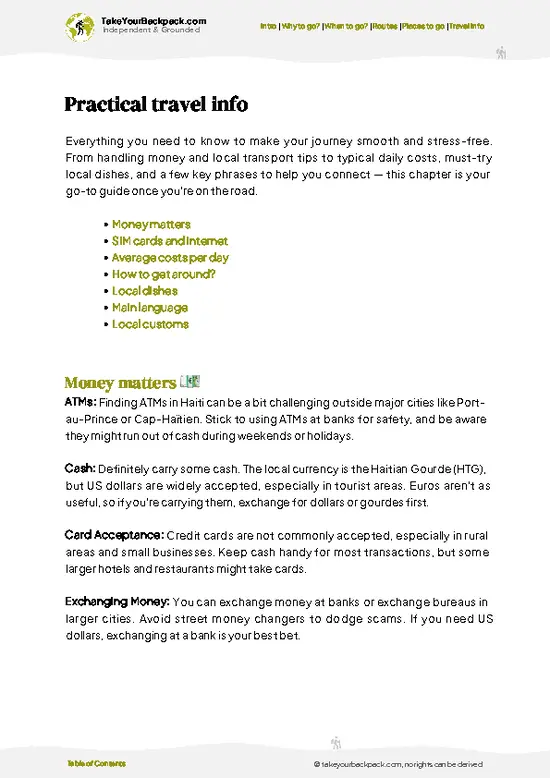
example page 0 from our offline Travel Guide for Haiti
example page 1 from our offline Travel Guide for Haiti
example page 2 from our offline Travel Guide for Haiti
example page 3 from our offline Travel Guide for Haiti
example page 4 from our offline Travel Guide for Haiti
example page 5 from our offline Travel Guide for Haiti
example page 6 from our offline Travel Guide for Haiti
example page 7 from our offline Travel Guide for Haiti
The digital guide (371 pages) contains:
99 highlights, ranked by travel appeal
Optimized 5, 10 & 15-day travel routes
Cities, national parks, landmarks, beaches
How to get around
Offline-friendly for travel without Wi-Fi
👉 Click to see all 30+ guide features

📅 Plan smarter in minutes, not weeks
Month by month travel advice
Festivals & national holidays
Budget expectations

🗺️ Go to the right places, skip the overrated ones
Honest pros & cons of destinations
Top hikes, parks & viewpoints
Lesser-known places most travelers miss
Clear “worth it vs skip it” guidance

🛏️ Travel smoothly without rookie mistakes
Best areas to stay
Transport systems explained simply
Common scams & safety advice
SIM cards, money & practical tips

🌍 Understand the country, not just visit it
Culture & traditions
52 Essential phrases & customs
Festivals worth planning around
Traveler-friendly historical context
Insights that make places more meaningful

📱 Built for real travel conditions
Fully downloadable PDF
Works completely offline
Optimized for phone use
Useful in remote areas & buses
Everything in one place
Save weeks of stressful planning
Get instant access to your full guide. 30‑day money-back guarantee.


By proceeding you agree to our terms.
Sent to your inbox immediately after payment • 100% Secure Checkout
Best Backpacking Travel Advisor 2025 tourism awardBest Backpacking
Travel Advisor
2025
What others say about Take Your Backpack Guides:
⭐⭐⭐⭐⭐
Fantastic, amazing amount of information!
⭐⭐⭐⭐⭐
My goodness this is amazing, it's what I've been looking for hats off too you!
⭐⭐⭐⭐⭐
I think this is absolutely BRILLIANT
⭐⭐⭐⭐
Very complete and informative. It's still missing places, but I gotta to commend you
⭐⭐⭐⭐⭐
This is truly amazing, thank you, can't wait to explore it with my kids!
⭐⭐⭐⭐⭐
Awesome resource, thank you!
⭐⭐⭐⭐⭐
This is amazing! Can't wait to explore the ones I haven't seen
⭐⭐⭐⭐
I love this! Well done, great idea.
⭐⭐⭐⭐⭐
Thanks for taking the time to make this gem!
⭐⭐⭐⭐⭐
This might be the best website I've ever seen.
⭐⭐⭐⭐⭐
Congratulations, and thank you so much for your work; it's incredibly valuable.
⭐⭐⭐⭐
In all seriousness I think you did a great job pointing out the important spots
⭐⭐⭐⭐⭐
10/10 very good
⭐⭐⭐⭐⭐
As someone who's only just starting to visit regularly this is awesome, thank you.
⭐⭐⭐⭐
Thank you very much! I'm going to visit my dad, it's going to be very useful!
⭐⭐⭐⭐⭐
This is really cool! We'll be travelling for the first time and this definitely come in handy.
⭐⭐⭐⭐⭐
You are now our minister of culture, congratulations 👨‍💼
⭐⭐⭐⭐⭐
Just wanted to tell you that this is a pearl! Going to follow your recommendations.
⭐⭐⭐⭐⭐
This is so cool. I'll definitely be using the resource for my travels soon.
⭐⭐⭐⭐⭐
This is very impressive! Good work.
⭐⭐⭐⭐⭐
This is an amazing and informative site. Very well done!

🛏️ Where to stay?How to pick the right area

In Mirebalais, the backpacker sweet spot is the central district around the town square. This area strikes a rare balance between safety and social buzz, which is a big deal in a city where options can be patchy. You’re close enough to local markets and eateries to soak in authentic daily life without wandering into sketchier zones. It’s where budget travelers and solo adventurers tend to cluster, creating a low-key but steady vibe of camaraderie.

Hostel options here are limited but functional, leaning toward basic comfort rather than luxury. That’s the trade-off: you sacrifice plush amenities … read more 👉
In Mirebalais, the backpacker sweet spot is the central district around the town square. This area strikes a rare balance between safety and social buzz, which is a big deal in a city where options can be patchy. You’re close enough to local markets and eateries to soak in authentic daily life without wandering into sketchier zones. It’s where budget travelers and solo adventurers tend to cluster, creating a low-key but steady vibe of camaraderie.

Hostel options here are limited but functional, leaning toward basic comfort rather than luxury. That’s the trade-off: you sacrifice plush amenities for proximity and a genuine connection to the city’s pulse. Other neighborhoods either push you into quieter, less accessible corners or risk your comfort with less reliable security. So, if you want to maximize your time mingling with locals and fellow travelers while keeping your gear safe, the central district is your strategic base camp. It’s the smartest move for turning logistics into an advantage rather than a headache.

🚌 Getting aroundGetting around like a local

Mirebalais moves at its own rhythm—less a clock-driven metropolis and more a place where intuition and local know-how dictate your pace. The city’s pulse is a blend of informal hustle and pockets of calm, where schedules exist but bend to the realities of road conditions and the ebb and flow of daily life. Here, time is a flexible currency, and your choices about how to get around reveal what you value most: speed, comfort, or saving every gourde. Understanding this trade-off map is your secret weapon to mastering Mirebalais without draining your energy or wallet.


  • Walking: The most straightforward and free option. Mirebalais is compact enough to explore on foot, especially the central market and main streets. Walking lets you soak in the city’s textures and sounds at your own pace, but
read more 👉
Mirebalais moves at its own rhythm—less a clock-driven metropolis and more a place where intuition and local know-how dictate your pace. The city’s pulse is a blend of informal hustle and pockets of calm, where schedules exist but bend to the realities of road conditions and the ebb and flow of daily life. Here, time is a flexible currency, and your choices about how to get around reveal what you value most: speed, comfort, or saving every gourde. Understanding this trade-off map is your secret weapon to mastering Mirebalais without draining your energy or wallet.


  • Walking: The most straightforward and free option. Mirebalais is compact enough to explore on foot, especially the central market and main streets. Walking lets you soak in the city’s textures and sounds at your own pace, but it’s slower and less practical for reaching outlying areas.


  • Tap-tap (Shared Minibus): The backbone of local transit. Runs roughly from 6 a.m. to 6 p.m., fares hover around 20-30 HTG (about 20-30 cents USD). Tap-taps are cheap and frequent but can be cramped and unpredictable in timing. They follow set routes but wait for enough passengers before leaving, so expect some waiting and a lively, communal atmosphere.


  • Motorcycle Taxi (Motos): Fast and flexible, motos dart through traffic and reach places tap-taps don’t. Prices vary but expect around 50-100 HTG per short trip. They’re great for saving time but less comfortable and riskier, especially if you’re carrying gear or unfamiliar with local traffic patterns.


  • Private Taxi: Offers comfort and direct routes but at a premium. Fares start around 300 HTG and can climb depending on distance and negotiation skills. Best for groups or when time is tight, but it’s the least budget-friendly option.


Mastering Mirebalais means balancing these options. Walk when you want to absorb the city’s character. Tap-taps save money but demand patience. Motos cut time but trade comfort and safety. Private taxis buy convenience but cost more. Your trip’s flavor depends on how you juggle these trade-offs—choose wisely, and you’re not just traveling; you’re playing the city’s game and winning.

👛 Costs (as of 24 January 2026)Typical daily expenses

Backpacking in Mirebalais, Haiti, offers a clear trade-off between cost and comfort, with prices reflecting the local economy and travel infrastructure. Here’s the breakdown of what you’re likely to spend daily as an independent traveler:
  • Dorm Accommodation (High Season): Expect to pay around $10 to $15 per night. Options are limited but decent, with basic amenities and a chance to meet other travelers.
  • Dorm Accommodation (Off-Season): Prices drop to about $7 to $12. Fewer tourists mean more bargaining power, but some places might close or reduce services.
  • Meals: Local street food and small eateries will run you about $3 to $6 per meal. Fresh, simple, and filling—think rice, beans, and grilled meats or fish. Western-style meals or restaurants catering to tourists can push $8 to $12.
  • Local
read more 👉
Backpacking in Mirebalais, Haiti, offers a clear trade-off between cost and comfort, with prices reflecting the local economy and travel infrastructure. Here’s the breakdown of what you’re likely to spend daily as an independent traveler:
  • Dorm Accommodation (High Season): Expect to pay around $10 to $15 per night. Options are limited but decent, with basic amenities and a chance to meet other travelers.
  • Dorm Accommodation (Off-Season): Prices drop to about $7 to $12. Fewer tourists mean more bargaining power, but some places might close or reduce services.
  • Meals: Local street food and small eateries will run you about $3 to $6 per meal. Fresh, simple, and filling—think rice, beans, and grilled meats or fish. Western-style meals or restaurants catering to tourists can push $8 to $12.
  • Local Transport: Minibuses and shared taxis are the norm, costing roughly $0.50 to $1 per trip within the city. It’s cheap but expect crowded conditions and irregular schedules.
  • City Transport Pass: Mirebalais doesn’t have a formal city transport pass system. Budgeting for individual rides is necessary.
  • Basic Activities/Entry Fees: Most local attractions are free or have minimal fees, around $1 to $3. Organized tours or special cultural events might cost more, but these are rare and usually arranged locally.
  • Miscellaneous Expenses: Budget $2 to $5 for essentials like bottled water, snacks, or small tips. Internet access can be patchy and might require buying data packages for $5 to $10.

In total, you’re looking at roughly $15 to $30 per day, depending on your choices and season. This range balances the bare necessities with a bit of comfort and flexibility, letting you decide how much you want to stretch your budget without losing the authentic experience.
⚠️ Prices can change and everyone travels differently, so take this as a rough guide. Hope it helps you plan your adventure!

🚌 Day tripsWhere to go beyond the main area

Mirebalais is a fantastic launchpad for day trips that dive deep into Haiti’s rich culture and stunning landscapes. Here are some high-value excursions that will make your trip memorable.

Bassin Bleu
A short 45-minute drive from Mirebalais, Bassin Bleu is a series of breathtaking waterfalls and turquoise pools. The hike to the falls is a bit rugged, but the reward is a refreshing swim in crystal-clear waters. Bring a picnic to enjoy by the falls, and don’t forget your camera; the colors are vibrant. Expect to spend around $10 for transportation and entrance fees. The best time to visit is during the dry season, from November to March, when the trails are less muddy. A common mistake is underestimating the hike; wear sturdy shoes.
👉 Explore Bassin Bleu

Saut-d’Eau
Just an hour away, … read more 👉
Mirebalais is a fantastic launchpad for day trips that dive deep into Haiti’s rich culture and stunning landscapes. Here are some high-value excursions that will make your trip memorable.

Bassin Bleu
A short 45-minute drive from Mirebalais, Bassin Bleu is a series of breathtaking waterfalls and turquoise pools. The hike to the falls is a bit rugged, but the reward is a refreshing swim in crystal-clear waters. Bring a picnic to enjoy by the falls, and don’t forget your camera; the colors are vibrant. Expect to spend around $10 for transportation and entrance fees. The best time to visit is during the dry season, from November to March, when the trails are less muddy. A common mistake is underestimating the hike; wear sturdy shoes.
👉 Explore Bassin Bleu

Saut-d’Eau
Just an hour away, Saut-d’Eau is known for its stunning waterfall and the local Vodou culture. The area is sacred, and you can witness rituals and ceremonies that are both fascinating and respectful. The entrance fee is minimal, around $5, and you can easily find a local guide for about $10. Visit in the morning to avoid crowds and soak in the spiritual atmosphere. First-timers often miss the chance to engage with locals; don’t hesitate to ask questions.
👉 Explore Saut-d’Eau

Citadelle Laferrière
A bit further afield, about two hours from Mirebalais, this UNESCO World Heritage site is a must-see. The fortress, built in the early 19th century, offers stunning views and a glimpse into Haiti’s history. The entrance fee is around $10, and you can hire a guide for an additional $15. The best time to visit is early in the day to beat the heat. Many travelers underestimate the hike up to the Citadelle; pace yourself and enjoy the journey.
👉 Explore Citadelle Laferrière

Pétion-Ville
Just under two hours away, Pétion-Ville is a vibrant neighborhood in Port-au-Prince known for its art scene and local markets. You can explore galleries, sample street food, and shop for unique crafts. Budget around $15 for transportation and food. The dry season is ideal for wandering the streets. A common mistake is sticking to the touristy spots; venture into local cafes for an authentic experience.
👉 Explore Pétion-Ville
Want to know what more Haiti offers?
The Haiti Travel Guide describes 99 highlights, from cities to national parks, from beaches to hikes

Get the Travel Guide -

🍲 FoodLocal Cuisine & Drinks

In Mirebalais, food is a vibrant tapestry of flavors that tells the story of Haiti. Dive into griot, marinated pork fried to crispy perfection, often served with pikliz, a spicy pickled vegetable mix that adds a zesty kick. Don’t miss djon djon, a unique black mushroom rice that’s a local favorite, rich in flavor and history.

Street vendors are your best friends here. They dish out akra, crispy fritters made from malanga, and pâté, savory pastries filled with meat or vegetables. The markets buzz with life, offering fresh fruits and local snacks. Grab a coconut water straight from the shell for a refreshing break from the heat.

When it comes to drinking, try a local rhum or a cold Prestige beer. It’s customary to share a drink with friends, so don’t be surprised if someone offers you a toast. … read more 👉
In Mirebalais, food is a vibrant tapestry of flavors that tells the story of Haiti. Dive into griot, marinated pork fried to crispy perfection, often served with pikliz, a spicy pickled vegetable mix that adds a zesty kick. Don’t miss djon djon, a unique black mushroom rice that’s a local favorite, rich in flavor and history.

Street vendors are your best friends here. They dish out akra, crispy fritters made from malanga, and pâté, savory pastries filled with meat or vegetables. The markets buzz with life, offering fresh fruits and local snacks. Grab a coconut water straight from the shell for a refreshing break from the heat.

When it comes to drinking, try a local rhum or a cold Prestige beer. It’s customary to share a drink with friends, so don’t be surprised if someone offers you a toast. Embrace the communal spirit; it’s all part of the experience. Eating and drinking here is not just about sustenance; it’s about connection, flavor, and the joy of being present.

🛡️ SafetyTraveler Safety Guide

Mirebalais is generally safe, but like any city, it has its nuances. Stay aware in crowded markets and bus stations; pickpockets can be opportunistic. If you’re solo, avoid wandering too far after dark. The streets can feel different at night, so stick to well-lit areas and travel with a local if possible.

Common scams include overly friendly locals who might offer unsolicited help, then expect payment. A firm but polite “no, thank you” usually suffices. Everyday annoyances can arise from aggressive vendors; a smile and a quick walk away often do the trick. Carry your belongings close and keep your phone out of sight when not in use. With a little awareness, you can navigate Mirebalais confidently and enjoy its vibrant culture.

Other Haitian cities near Mirebalais

Explore more nearby:

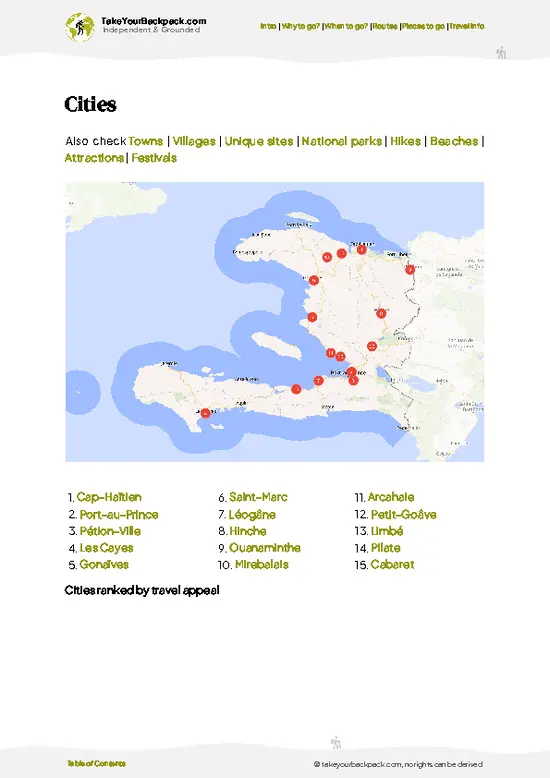
  • Port-au-Prince—urban sprawl, art districts, government center| 34 km away
  • Cabaret—river delta, agricultural plots, roadside eateries| 35 km away
  • Hinche—highland plateau, market square, rural crossroads| 35 km away

💡 Not sure where to go next?
Create a personalized itinerary for Haiti including Mirebalais and the places that fit your trip.

Generate my itinerary

👉 Discover all cities

Or checkout all Haiti has to offer (think cities, towns, villages, national parks, hikes, beaches, festivals)
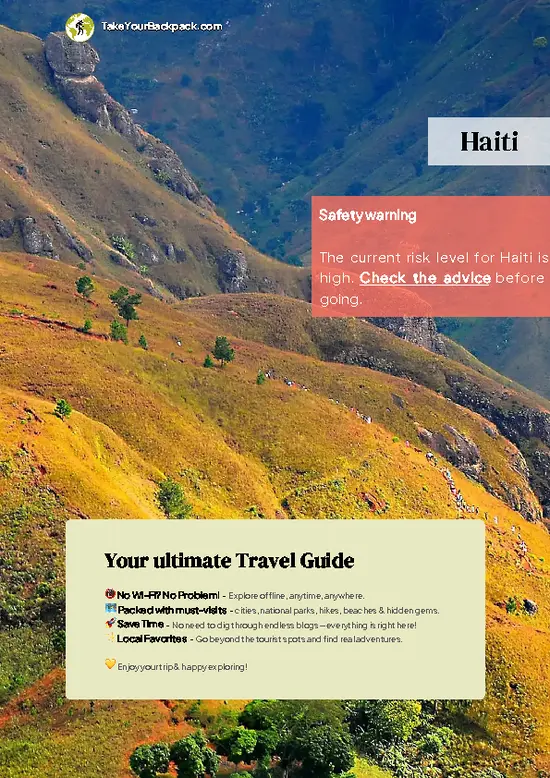
Country photo of Haiti

We 💚 feedbackFinal thoughts on visiting Mirebalais

Mirebalais has a raw energy that’s hard to find elsewhere in Haiti. The bustling market is a sensory overload—colors, sounds, and the smell of street food wafting through the air. Don’t miss the local art scene; it’s vibrant and genuine. Just be mindful of your surroundings; it can feel chaotic. Embrace the unpredictability, and you’ll walk away with stories that stick with you long after you leave.

✍️ Help improve this page!
The information on this page is based on in-depth research, insights shared by experienced travelers, and feedback from the local travel community in Haiti. While every effort is made to keep the information accurate and current, conditions can change — so if you spot anything incorrect or outdated, please get in touch.


🙋‍♂️ Give feedback

👋 Meet the founderWho’s Behind Take Your Backpack?

Johan, backpacker and founder of TakeYourBackpackHi, I’m Johan (Netherlands 🇳🇱), the creator of TakeYourBackpack. Over the past decade, I’ve backpacked through 80+ countries across six continents, gaining extensive experience with independent travel, long-term trips, and overland routes.

This site is built on a combination of firsthand travel experience and carefully curated insights from other backpackers. Many guides are based on places I’ve personally visited, while others bring together tips, observations, and practical advice shared by trusted travelers I’ve met along the way.

The goal is to provide realistic, experience-driven guidance — not generic itineraries — so you can explore destinations with better context, clearer expectations, and more confidence.

Get full Haiti guide •
Instant download • 99 highlights • Full Offline guide