×

Honduras🇭🇳 | best beachesDiscover the 3 Best beaches Across Honduras

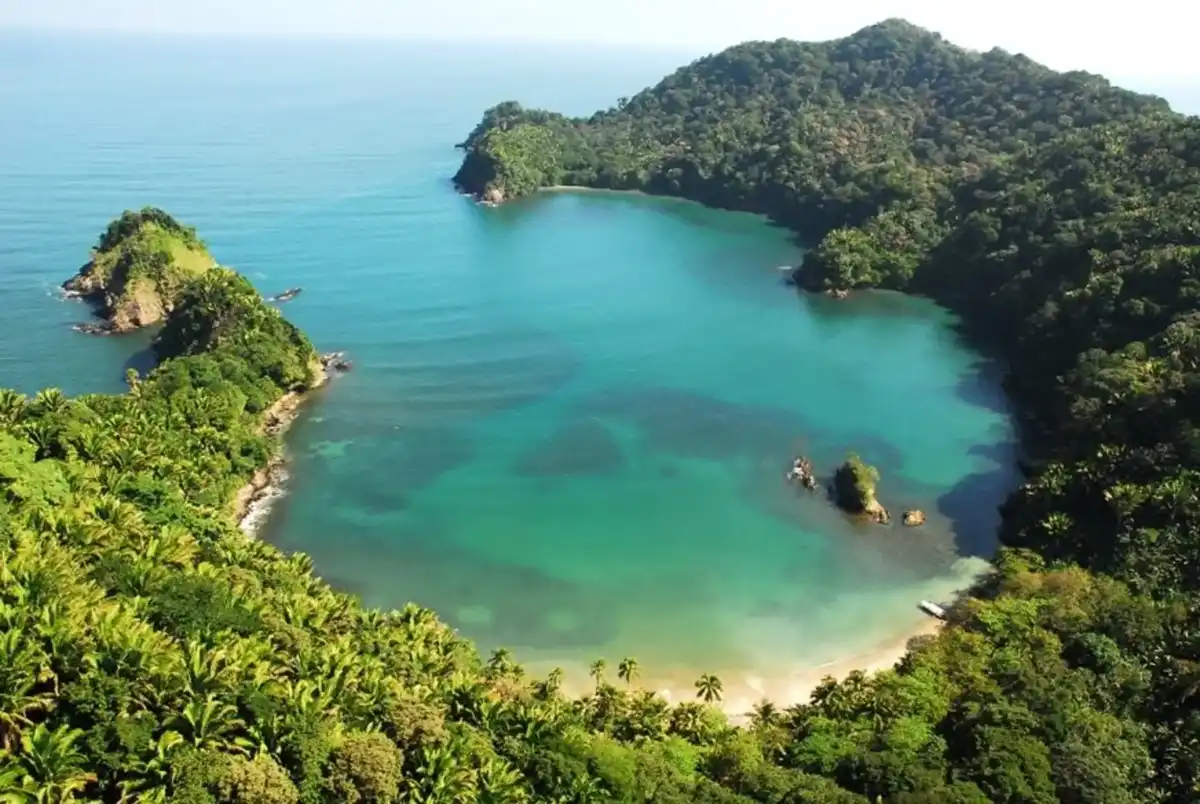
Beaches in Honduras split into two worlds. The Bay Islands (Roatán, Utila) have the reef, the dive shops and the highest prices, with dorm beds around US$10 to 20 and ferries or short flights to reach them. The north coast mainland, around Tela and Trujillo, is cheaper, quieter and rougher, with Garifuna villages, palm-lined sand and few other foreigners. The Pacific side on the Gulf of Fonseca is muddy and not worth a detour. Independent travelers who want swimming and snorkeling should head to the islands. Those who want local food and empty sand should take the mainland. Skip the Caribbean towns you only pass through for resort-style crowds; the sand there is average.

By Johan Kruseman 🇳🇱 | Updated October 23, 2026
Explore the best attractions in Honduras

Why go?Key Factors That Shape the Experience

Honduras sits on the Mesoamerican Barrier Reef, the second-largest reef system in the world, and that single fact explains most of its appeal. The Bay Islands have reef close enough to reach on a swim from shore, which is rare and which keeps diving and snorkeling prices among the lowest in the Caribbean. Certification courses cost far less than in Mexico or Belize.

The mainland Caribbean coast tells a different story. It is the home of the Garifuna, descendants of West African and Indigenous Caribbean people, whose coastal villages shape the music, cooking (fish and coconut stews, cassava bread) and pace of the beaches. Development there is thin, so facilities are basic and the sand is often shared with fishing boats rather than sunbeds.

Before choosing Honduras for beaches, know the limits. … read more 👉
Honduras sits on the Mesoamerican Barrier Reef, the second-largest reef system in the world, and that single fact explains most of its appeal. The Bay Islands have reef close enough to reach on a swim from shore, which is rare and which keeps diving and snorkeling prices among the lowest in the Caribbean. Certification courses cost far less than in Mexico or Belize.

The mainland Caribbean coast tells a different story. It is the home of the Garifuna, descendants of West African and Indigenous Caribbean people, whose coastal villages shape the music, cooking (fish and coconut stews, cassava bread) and pace of the beaches. Development there is thin, so facilities are basic and the sand is often shared with fishing boats rather than sunbeds.

Before choosing Honduras for beaches, know the limits. Infrastructure outside the islands is patchy: roads can be slow, cash is needed in small villages, and ATMs are scarce. The Pacific coast is short and has dark sand and little reason to visit. The country also has a reputation for crime in big cities such as San Pedro Sula and Tegucigalpa, though the islands and most beach towns are far calmer. Reef quality depends on water clarity and weather, so a lagoon-flat sea is not guaranteed. Honduras suits travelers who value reef and culture over polished resorts.
How the List Was Created
The list of best beaches in Honduras is created based on beauty, vibe, water quality, activities, and surrounding scenery. If you feel a beach is missing in this list, please let us know.

When to go?Optimal Periods for Travel

Best months and weather: The best months for beaches in Honduras are February to May, when the Bay Islands are driest, seas are calm and visibility for diving often reaches 25 to 30 meters. Daytime temperatures run 28 to 32°C, and water sits around 27 to 29°C.
Regional differences: The north coast and islands get their heaviest rain from October to January, when northern fronts bring several wet days in a row, rough seas and canceled ferries. The mainland coast can receive over 2,500 mm a year. Rain is lighter on the islands, but not absent. Skip November and December if reef clarity matters; the weather is the least reliable then.
Crowds and prices: Peak periods are Christmas to New Year and Semana Santa (the week before Easter), when Hondurans fill mainland beaches such as Tela and rooms can … read more 👉
Best months and weather: The best months for beaches in Honduras are February to May, when the Bay Islands are driest, seas are calm and visibility for diving often reaches 25 to 30 meters. Daytime temperatures run 28 to 32°C, and water sits around 27 to 29°C.
Regional differences: The north coast and islands get their heaviest rain from October to January, when northern fronts bring several wet days in a row, rough seas and canceled ferries. The mainland coast can receive over 2,500 mm a year. Rain is lighter on the islands, but not absent. Skip November and December if reef clarity matters; the weather is the least reliable then.
Crowds and prices: Peak periods are Christmas to New Year and Semana Santa (the week before Easter), when Hondurans fill mainland beaches such as Tela and rooms can cost 30 to 50 percent more. Book ahead only for those weeks. June to September is the shoulder season, with warm water, afternoon showers and fewer visitors. Hurricane season runs June to November, with the highest risk in September and October, though direct hits on Honduras are rare. Dive shops and guesthouses on the islands often offer discounts of 10 to 20 percent in the low season. Outside the holidays, mainland beaches stay quiet all year.

beach hoppingSuggested Travel Strategies

How many days to plan: A trip combining several Honduran beaches needs 10 to 14 days; under a week, pick one coast only. Distances look small on the map and are slow on the ground.
Which regions pair well: The Bay Islands and the north coast link through La Ceiba, the ferry and bus hub. Fly into San Pedro Sula, take a bus to La Ceiba (3 to 4 hours) or Tela (about 2 to 3 hours), and finish on the islands, which suit the end of a trip because diving days and rest days run together. Ferries from La Ceiba to Utila take about 1 hour and to Roatán about 1.5 hours. Flights to Roatán from San Pedro Sula or La Ceiba take about 30 to 45 minutes. Trujillo is another 5 to 6 hours east of La Ceiba, so only add it if there are 12 days or more.
Time per stop and common mistakes: Allow 3 to 5 nights on the … read more 👉
How many days to plan: A trip combining several Honduran beaches needs 10 to 14 days; under a week, pick one coast only. Distances look small on the map and are slow on the ground.
Which regions pair well: The Bay Islands and the north coast link through La Ceiba, the ferry and bus hub. Fly into San Pedro Sula, take a bus to La Ceiba (3 to 4 hours) or Tela (about 2 to 3 hours), and finish on the islands, which suit the end of a trip because diving days and rest days run together. Ferries from La Ceiba to Utila take about 1 hour and to Roatán about 1.5 hours. Flights to Roatán from San Pedro Sula or La Ceiba take about 30 to 45 minutes. Trujillo is another 5 to 6 hours east of La Ceiba, so only add it if there are 12 days or more.
Time per stop and common mistakes: Allow 3 to 5 nights on the islands and 2 to 3 nights on each mainland stop. The first mistake is trying to cover the islands and Trujillo in one week; the buses eat the days. The second is booking ferries or flights on the same day as a long bus ride, since the last ferries leave La Ceiba in the early afternoon. Travel in the morning and keep a spare night before any flight home. Do not backtrack through San Pedro Sula; fly out of Roatán or La Ceiba instead.

The ListMust-Visit beaches in Honduras

1 West Bay Beach

Public white sand, shallow turquoise shelf, shore reef, west-facing evenings

Wade into calm, waist-deep water and swim out to a nearby reef, then stay for evening light over open sea.

honduras-beach-west-bay-beach
© Google | Axel Escobar

2 Punta Sal Beach

Mangrove sand spit, howler monkey trail, lagoon boat trips, beachfront fried fish

Walk a narrow peninsula of sand and mangrove where calm bay water, jungle trails and lagoon channels keep the pace slow and quiet.

honduras-beach-punta-sal-beach
© Google | Punta Sal Tela

3 Tela Beach

Palm-lined bay, Garifuna villages, baleadas at dawn, Rio Tela sandbar

Stroll east along warm, calm shallows toward Garifuna kitchens and fishing boats, then follow the sand to pelicans at the river mouth.

Loading the map 🌍

Expert viewPro Tips for Exploring the Best

How many beaches to visit: Plan on three or four beach stops at most. Honduras rewards staying put: reef diving needs several days, and mainland villages need a night or two to feel anything beyond the sand. More stops mean more buses and more lost days, with little to gain.
Which kind to choose: Divers and snorkelers should prioritize the Bay Islands, where reef starts near shore and a dive course is the best value. Budget travelers who prefer low prices and local food should take the mainland Garifuna coast. Anyone who wants nightlife can find it on Utila or West End on Roatán; people who want silence will find it on the mainland. The Pacific side is not worth the time.
What it costs: Budget about US$30 to 50 a day on the mainland and US$45 to 80 a day on the islands, including dorm or basic … read more 👉
How many beaches to visit: Plan on three or four beach stops at most. Honduras rewards staying put: reef diving needs several days, and mainland villages need a night or two to feel anything beyond the sand. More stops mean more buses and more lost days, with little to gain.
Which kind to choose: Divers and snorkelers should prioritize the Bay Islands, where reef starts near shore and a dive course is the best value. Budget travelers who prefer low prices and local food should take the mainland Garifuna coast. Anyone who wants nightlife can find it on Utila or West End on Roatán; people who want silence will find it on the mainland. The Pacific side is not worth the time.
What it costs: Budget about US$30 to 50 a day on the mainland and US$45 to 80 a day on the islands, including dorm or basic room, food and local transport. A dorm bed costs US$10 to 20 on the islands and US$8 to 15 on the mainland. Fun dives cost roughly US$30 to 45 each, and an Open Water course around US$300 to 400. Ferries from La Ceiba run about US$25 to 35 one way. Some Roatán beach spots charge US$5 to 10 entry or a drink minimum; Garifuna villages usually charge nothing, though boat trips to nearby cays cost US$10 to 30 a person. Cruise-ship days at Roatán push prices up, so avoid the tourist-heavy strips on those days.
Costs and mistakes that catch travelers out: Cash is the first trap. Villages on the mainland often lack working ATMs, so withdraw in La Ceiba or Tela and carry small lempira notes. Card payments on the islands commonly add a 3 to 5 percent surcharge. The second trap is weather delays: rough seas can cancel ferries in the wet season, so keep a flexible day before any flight. The third is reef-unfriendly sunscreen and touching coral; many dive shops ban both, and fines or expulsion from a trip are possible. Pay for activities in full only at licensed operators.
Safety and culture: Do not walk empty beaches at night or leave bags unattended on the sand; petty theft happens, especially on busy island stretches. Use taxis after dark rather than walking between beach bars. Rip currents occur on the open mainland coast, and few beaches have lifeguards, so swim near other people. In Garifuna villages, ask before taking photos, dress modestly away from the sand and buy meals from local kitchens, which keeps money in the community. Drinking tap water is not safe; buy bottled or filtered water.

✈️ The backpacker research shortcutHonduras Travel Guide

An offline-friendly backpacking guide with optimized travel routes, ranked highlights, transport advice, and the best areas to stay.
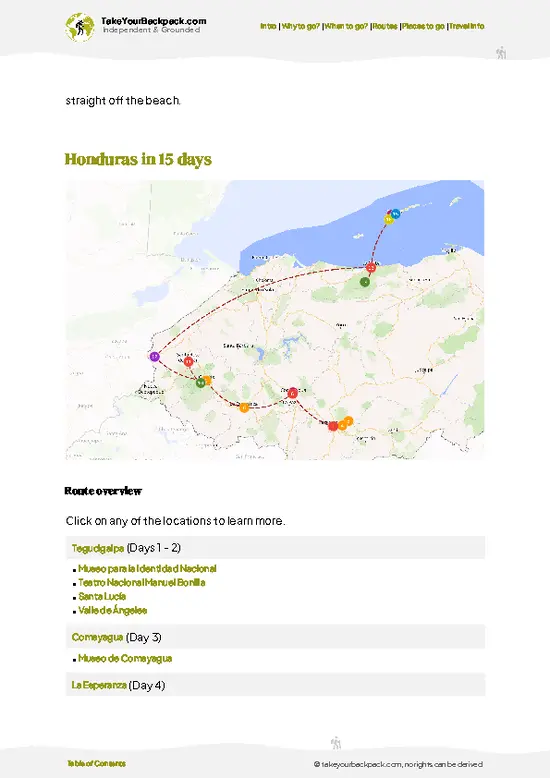
example page 0 from our offline Travel Guide for Honduras
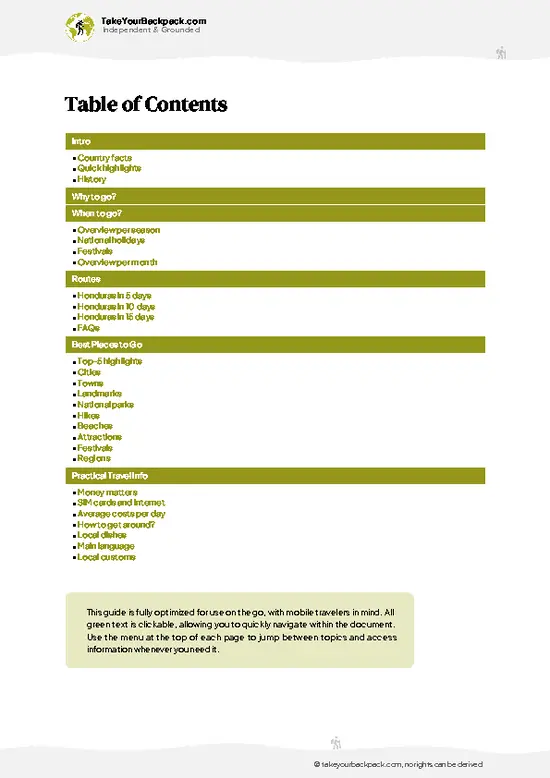
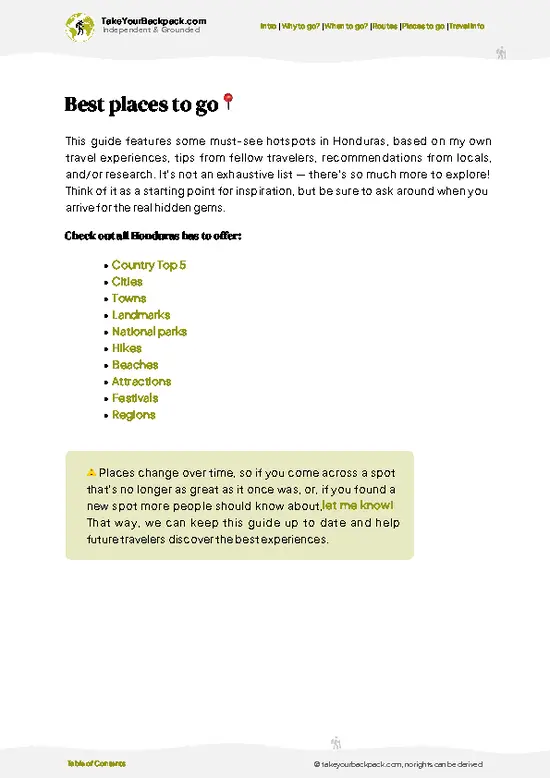
example page 1 from our offline Travel Guide for Honduras
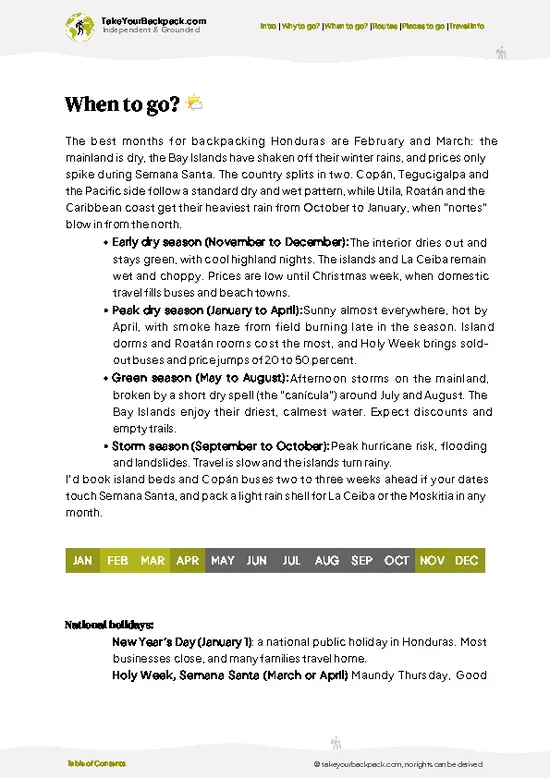
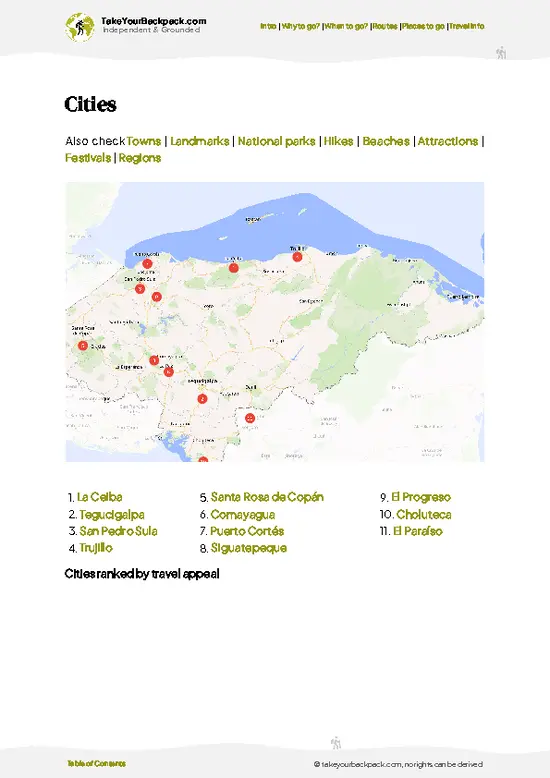
example page 2 from our offline Travel Guide for Honduras
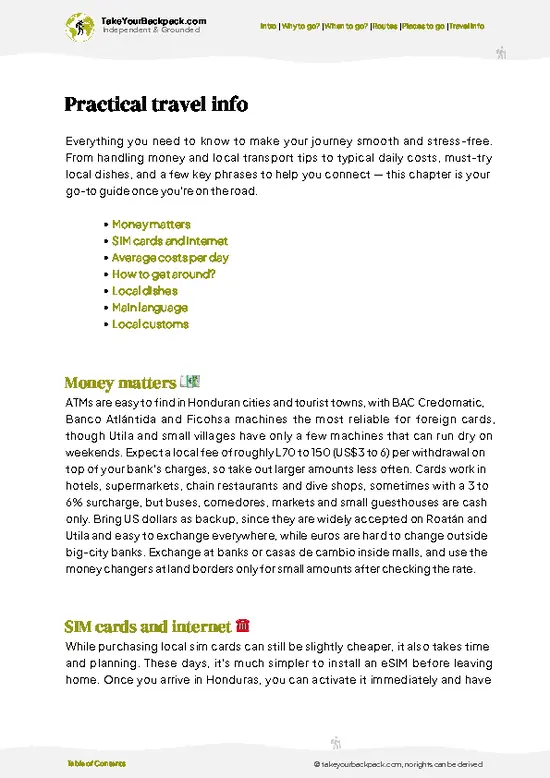
example page 3 from our offline Travel Guide for Honduras
example page 4 from our offline Travel Guide for Honduras
example page 5 from our offline Travel Guide for Honduras
example page 6 from our offline Travel Guide for Honduras
example page 7 from our offline Travel Guide for Honduras
The digital guide (255 pages) contains:
✅ 70 highlights, ranked by travel appeal
✅ Optimized 5, 10 & 15-day travel routes
✅ Cities, national parks, landmarks, beaches
✅ How to get around
✅ Offline-friendly for travel without Wi-Fi
👉 Click to see all 30+ guide features

📅 Plan smarter in minutes, not weeks
✅ Month by month travel advice
✅ Festivals & national holidays
✅ Budget expectations

🗺️ Go to the right places, skip the overrated ones
✅ Honest pros & cons of destinations
✅ Top hikes, parks & viewpoints
✅ Lesser-known places most travelers miss
✅ Clear “worth it vs skip it” guidance

🛏️ Travel smoothly without rookie mistakes
✅ Best areas to stay
✅ Transport systems explained simply
✅ Common scams & safety advice
✅ SIM cards, money & practical tips

🌍 Understand the country, not just visit it
✅ Culture & traditions
✅ 52 Essential phrases & customs
✅ Festivals worth planning around
✅ Traveler-friendly historical context
✅ Insights that make places more meaningful

📱 Built for real travel conditions
✅ Fully downloadable PDF
✅ Works completely offline
✅ Optimized for phone use
✅ Useful in remote areas & buses
✅ Everything in one place
Stop searching, start planning
Get instant access to your full guide. 30‑day money-back guarantee.
+ Add another guide for just

By proceeding you agree to our terms.
Sent to your inbox immediately after payment • 100% Secure Checkout
Best Backpacking Travel Advisor 2025 tourism awardBest Backpacking
Travel Advisor
2025
What others say about Take Your Backpack Guides:
⭐⭐⭐⭐⭐
Fantastic, amazing amount of information!
⭐⭐⭐⭐⭐
My goodness this is amazing, it's what I've been looking for hats off too you!
⭐⭐⭐⭐⭐
I think this is absolutely BRILLIANT
⭐⭐⭐⭐
Very complete and informative. It's still missing places, but I gotta to commend you
⭐⭐⭐⭐⭐
This is truly amazing, thank you, can't wait to explore it with my kids!
⭐⭐⭐⭐⭐
Awesome resource, thank you!
⭐⭐⭐⭐⭐
This is amazing! Can't wait to explore the ones I haven't seen
⭐⭐⭐⭐
I love this! Well done, great idea.
⭐⭐⭐⭐⭐
Thanks for taking the time to make this gem!
⭐⭐⭐⭐⭐
This might be the best website I've ever seen.
⭐⭐⭐⭐⭐
Congratulations, and thank you so much for your work; it's incredibly valuable.
⭐⭐⭐⭐
In all seriousness I think you did a great job pointing out the important spots
⭐⭐⭐⭐⭐
10/10 very good
⭐⭐⭐⭐⭐
As someone who's only just starting to visit regularly this is awesome, thank you.
⭐⭐⭐⭐
Thank you very much! I'm going to visit my dad, it's going to be very useful!
⭐⭐⭐⭐⭐
This is really cool! We'll be travelling for the first time and this definitely come in handy.
⭐⭐⭐⭐⭐
You are now our minister of culture, congratulations 👨‍💼
⭐⭐⭐⭐⭐
Just wanted to tell you that this is a pearl! Going to follow your recommendations.
⭐⭐⭐⭐⭐
This is so cool. I'll definitely be using the resource for my travels soon.
⭐⭐⭐⭐⭐
This is very impressive! Good work.
⭐⭐⭐⭐⭐
This is an amazing and informative site. Very well done!

🛏️ Where to stay?Where to Base Yourself

Honduras has a solid hostel scene, with dorm beds typically around L250 to 500 (US$10 to 20) and private rooms in guesthouses from about L600 (US$25), concentrated where backpackers actually go rather than in the big cities. On the Bay Islands, Utila has the most and cheapest beds plus a loud dive-bar night scene, while West End on Roatán costs more but puts you on a walkable beach strip; inland, the cobbled grid of Copán Ruinas is quiet, safe and a short walk from the ruins, and the Lake Yojoa area around Los Naranjos and Peña Blanca is all hammocks and early nights. In Tegucigalpa, stick to Colonia Palmira and the streets near Boulevard Morazán, where options are fewer and pricier but the … read more 👉
Honduras has a solid hostel scene, with dorm beds typically around L250 to 500 (US$10 to 20) and private rooms in guesthouses from about L600 (US$25), concentrated where backpackers actually go rather than in the big cities. On the Bay Islands, Utila has the most and cheapest beds plus a loud dive-bar night scene, while West End on Roatán costs more but puts you on a walkable beach strip; inland, the cobbled grid of Copán Ruinas is quiet, safe and a short walk from the ruins, and the Lake Yojoa area around Los Naranjos and Peña Blanca is all hammocks and early nights. In Tegucigalpa, stick to Colonia Palmira and the streets near Boulevard Morazán, where options are fewer and pricier but the area is calmer and close to restaurants, and treat San Pedro Sula as a one-night transit stop near the bus terminal.

If you enjoy meeting fellow travelers, consider choosing hostels with high ratings for atmosphere. On the other hand, if you prefer having your own space, a hotel might be a better option.

HondurasExpand Your Journey

👋 Meet the founderWho’s Behind Take Your Backpack?

Johan, backpacker and founder of TakeYourBackpackHi, I’m Johan (Netherlands 🇳🇱), the creator of TakeYourBackpack. Over the past 3 decades, I’ve backpacked through 90+ countries across six continents, gaining extensive experience with independent travel, long-term trips, and overland routes.

This site is built on a combination of firsthand travel experience and carefully curated insights from other backpackers. Many guides are based on places I’ve personally visited, while others bring together tips, observations, and practical advice shared by trusted travelers I’ve met along the way.

The goal is to provide realistic, experience-driven guidance — not generic itineraries — so you can explore destinations with better context, clearer expectations, and more confidence.