×

Honduras🇭🇳 | best regionsDiscover the 5 Best regions Across Honduras

Honduras splits into regions that feel like different countries, and picking the wrong one wastes days. The Bay Islands are the priciest and most polished, with the cheapest PADI certifications in the Caribbean. The north coast is hot, rough and mostly skippable for sightseeing. The western highlands hold the best mix of ruins, coffee towns and cool nights for independent travel. The Mosquitia in the east has no roads and real expedition costs. The south and the capital area are transit zones, not destinations. Match the region to your budget and appetite for effort, because distances are short but buses are slow.

By Johan Kruseman 🇳🇱 | Updated October 23, 2026
Explore the best cities in Honduras

Why go?Key Factors That Shape the Experience

Honduras is small, roughly the size of Tennessee, yet it crams in Maya ruins, cloud forest, the second-largest barrier reef in the Western Hemisphere and one of Central America’s largest tracts of rainforest. That range is the real draw. Its weakness is infrastructure. Mountains cut the country into pockets, roads wind and flood, and there is no passenger rail. Distances that look trivial on a map often take six to eight hours by chicken bus or shuttle.

Prices are low by regional standards, and tourism is far less developed than in Guatemala or Costa Rica. That means fewer crowds and more direct contact with locals, but also thinner information, fewer hostels outside the main stops and little English away from the islands. Spanish helps enormously.

Travelers should also know that Honduras … read more 👉
Honduras is small, roughly the size of Tennessee, yet it crams in Maya ruins, cloud forest, the second-largest barrier reef in the Western Hemisphere and one of Central America’s largest tracts of rainforest. That range is the real draw. Its weakness is infrastructure. Mountains cut the country into pockets, roads wind and flood, and there is no passenger rail. Distances that look trivial on a map often take six to eight hours by chicken bus or shuttle.

Prices are low by regional standards, and tourism is far less developed than in Guatemala or Costa Rica. That means fewer crowds and more direct contact with locals, but also thinner information, fewer hostels outside the main stops and little English away from the islands. Spanish helps enormously.

Travelers should also know that Honduras has one of the highest homicide rates in Latin America, concentrated in large cities and certain neighborhoods rather than in the places visitors go. Backpackers do well by using established shuttles, avoiding night buses and skipping San Pedro Sula and Tegucigalpa as stopovers. Anyone wanting polished, turnkey travel should pick another country. Anyone who accepts rough edges gets some of the best value in the Americas.
Our Approach to Ranking
The list of best regions in Honduras is created based on landscapes, local culture, attractions, vibes, and overall appeal. If you feel a region is missing in this list, please let us know.

When to go?Optimal Periods for Travel

Best months and weather: The best window is February to May, when the Caribbean is calm, visibility for diving is at its best and the highlands are dry. Temperatures run 28 to 33°C on the coast and islands, and 18 to 26°C in the western highlands, where nights drop to 10 to 15°C.

Shoulder and wet seasons: On the north coast, the Bay Islands and the Mosquitia, rain peaks from October to January, often 300 to 500 mm a month, so cancelled ferries, muddy roads and rough seas are common. Skip the Mosquitia entirely in those months, since river travel becomes unreliable. The interior and south have a more typical wet season from May to October, with afternoon downpours of an hour or two that rarely wreck a day. June to September is a fine time for highland trips and for cheaper beds.

Peak periods … read more 👉
Best months and weather: The best window is February to May, when the Caribbean is calm, visibility for diving is at its best and the highlands are dry. Temperatures run 28 to 33°C on the coast and islands, and 18 to 26°C in the western highlands, where nights drop to 10 to 15°C.

Shoulder and wet seasons: On the north coast, the Bay Islands and the Mosquitia, rain peaks from October to January, often 300 to 500 mm a month, so cancelled ferries, muddy roads and rough seas are common. Skip the Mosquitia entirely in those months, since river travel becomes unreliable. The interior and south have a more typical wet season from May to October, with afternoon downpours of an hour or two that rarely wreck a day. June to September is a fine time for highland trips and for cheaper beds.

Peak periods and prices: Prices jump at Semana Santa (the week before Easter) and over Christmas and New Year, when Hondurans travel and coastal rooms can cost 30 to 50 percent more. Book ahead then. Hurricane season runs June to November, with the greatest risk from August to October, and storms mainly hit the north coast and islands. Dorm beds on the islands cost about US$12 to 20 in high season and drop a little in the wet months.

region hoppingSuggested Travel Strategies

How many days to plan: A trip linking several regions needs 12 to 21 days, because transfers eat more time than most people expect. Anything under ten days should stick to two regions at most.

Direction and grouping: The western highlands, the capital corridor and the north coast chain together by road, and the Bay Islands tack onto the end by ferry from La Ceiba. Travel west to east, starting near the Guatemala or El Salvador border and finishing at the coast, so the water comes last and a delay does not strand you away from a flight home. Fly out of Roatán or San Pedro Sula. The Mosquitia belongs on its own, as an add-on of five to seven days, and only with a booked operator.

Time per stop and transfers: Allow two to four nights in each highland stop and three to six on the islands, longer … read more 👉
How many days to plan: A trip linking several regions needs 12 to 21 days, because transfers eat more time than most people expect. Anything under ten days should stick to two regions at most.

Direction and grouping: The western highlands, the capital corridor and the north coast chain together by road, and the Bay Islands tack onto the end by ferry from La Ceiba. Travel west to east, starting near the Guatemala or El Salvador border and finishing at the coast, so the water comes last and a delay does not strand you away from a flight home. Fly out of Roatán or San Pedro Sula. The Mosquitia belongs on its own, as an add-on of five to seven days, and only with a booked operator.

Time per stop and transfers: Allow two to four nights in each highland stop and three to six on the islands, longer if you are getting certified. Typical transfers take 3 to 4 hours between neighboring towns, 5 to 6 hours from the highlands to the north coast, and 1.5 hours by ferry to the islands. Shuttles are faster and safer than local buses.

Planning mistakes: Trying to cover the whole country in a week means living on buses. Cutting through the capital or San Pedro Sula after dark is another error, so schedule arrivals before 3 pm. Booking a tight flight the day after a ferry is also risky, since rough seas cancel sailings. Leave a spare day.

The ListMust-Visit regions in Honduras

1 Roatán

West End diving, reef from the dock, Punta Gorda, quiet northern coves

Dive or snorkel the barrier reef from the shore, then head north to Garifuna drumming, mangrove kayaking and empty beaches.

honduras-region-roatan
© Google |

2 Guanaja

Car-free Bonacca, wreck dives, Pico Dixon, mangrove inlets

Wander footbridges over canals, dive a sunken freighter, hike pine ridges to a summit view, then paddle quiet mangrove inlets by boat.

3 Cayos Cochinos

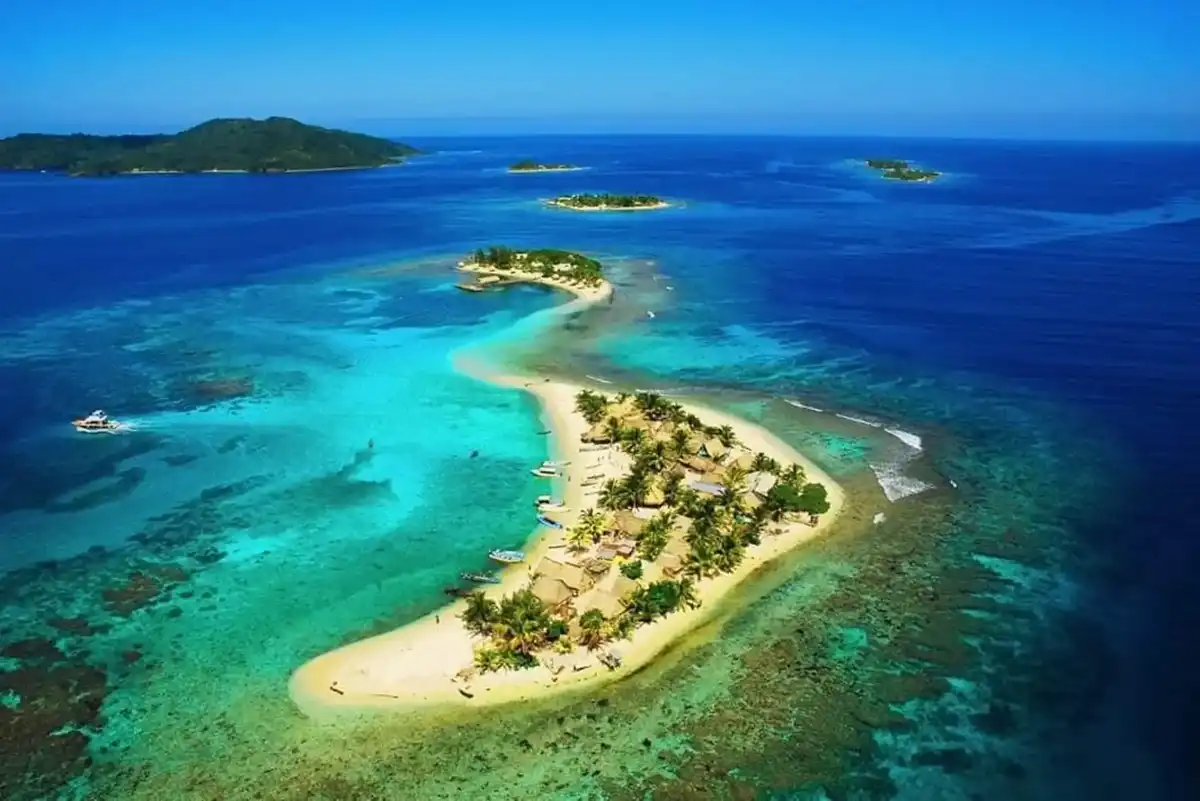
Garifuna sandbar stays, fringing reef snorkeling, pink boa trails, oil-lamp nights

Hike to the Cayo Grande lighthouse, snorkel coral just off the beach, then sleep in a Garifuna cabin on Chachahuate after the day boats leave.

honduras-region-cayos-cochinos
© Google | Mario Galeas

4 La Mosquitia

Dugout rivers, Río Plátano, Miskito lagoons, airstrip access

Travel by dugout and small plane into rainforest reserve country, paddling lagoons at dawn and staying with Miskito and Garifuna communities.

5 Lake Yojoa

400-species birding, Pulhapanzak falls, Los Naranjos mounds, lakeside breweries

Drift the reed beds at dawn for herons and kingfishers, walk behind a 43-meter waterfall, and end the day on a brewery terrace.

honduras-region-lake-yojoa
© Google |
Loading the map 🌍

Expert viewPro Tips for Exploring the Best

How many regions to visit: Pick two or three regions for a trip of two to three weeks. Honduran roads are slow, and every extra region costs a full day in transit, often two. Two regions with real time in each beat five rushed ones, and the money saved on transport goes to experiences.

Choosing between kinds of regions: Divers and beach people should prioritize the island and coast type, accepting higher prices. Culture, hiking and coffee fans get more for less in the highlands, which suit tight budgets and slower travel. Wildlife and adventure seekers can consider the remote rainforest, but only with proper time and money. Do not bother with the industrial north coast cities or the capital as destinations. They offer little for visitors and cost you hours.

What it costs: Budget about US$25 … read more 👉
How many regions to visit: Pick two or three regions for a trip of two to three weeks. Honduran roads are slow, and every extra region costs a full day in transit, often two. Two regions with real time in each beat five rushed ones, and the money saved on transport goes to experiences.

Choosing between kinds of regions: Divers and beach people should prioritize the island and coast type, accepting higher prices. Culture, hiking and coffee fans get more for less in the highlands, which suit tight budgets and slower travel. Wildlife and adventure seekers can consider the remote rainforest, but only with proper time and money. Do not bother with the industrial north coast cities or the capital as destinations. They offer little for visitors and cost you hours.

What it costs: Budget about US$25 to 40 a day in the highlands (dorm bed US$8 to 12, meals US$3 to 6, local transport US$2 to 8 a leg). Expect US$45 to 80 a day on the islands, where dorms run US$12 to 20 and meals cost US$6 to 12. Remote rainforest trips run US$100 to 200 a day because guides, boats and fuel are priced for expeditions. Fees for ruins and national parks usually fall between US$5 and 20 for foreigners. Dive certification costs roughly US$300 to 400, and fun dives US$30 to 45 each.

The costs that catch people out are extras. Guides at remote sites are often compulsory. Boat transfers are priced per vessel, not per person, so solo travelers overpay unless they join a group. ATMs are scarce outside towns, so carry lempiras (about 25 per US$1) in small notes, because change for large bills is hard to find.

Safety and cultural points: Violent crime is concentrated in big cities and certain neighborhoods, but tourists get robbed on night buses and on isolated trails. Use shuttles or reputable bus lines, travel in daylight, keep phones out of sight and carry a decoy wallet. Never hike remote paths alone without a local guide. Petty theft rises around bus terminals.

Cultural habits matter too. Greet people with a quick “buenos días” when entering shops or boarding buses, since skipping it comes across as rude. Dress modestly away from the coast. Ask before photographing people, particularly Garífuna and indigenous communities. Tipping 10 percent in restaurants is normal.

Delays and mistakes to avoid: Ferries and flights get disrupted by weather, so keep a buffer day before any departure. Do not pre-book everything. Local hostels fill only on holidays, and walk-in rates are often lower. Carry a photocopy of your passport instead of the original on day trips. Check the situation with hostel staff before heading anywhere remote, because road blockades and protests happen and can add hours.

✈️ The backpacker research shortcutHonduras Travel Guide

An offline-friendly backpacking guide with optimized travel routes, ranked highlights, transport advice, and the best areas to stay.
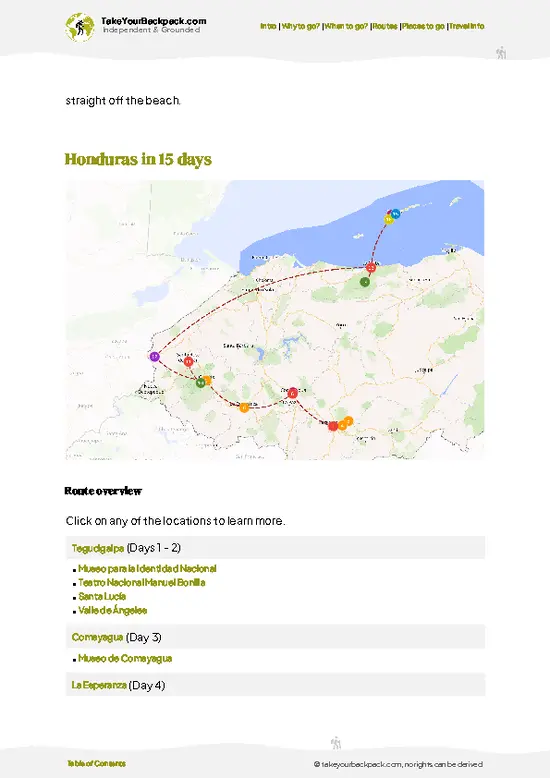
example page 0 from our offline Travel Guide for Honduras
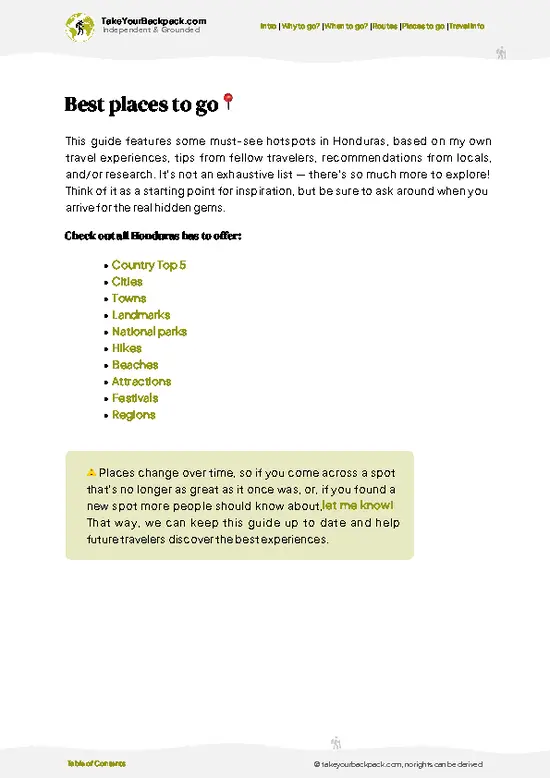
example page 1 from our offline Travel Guide for Honduras
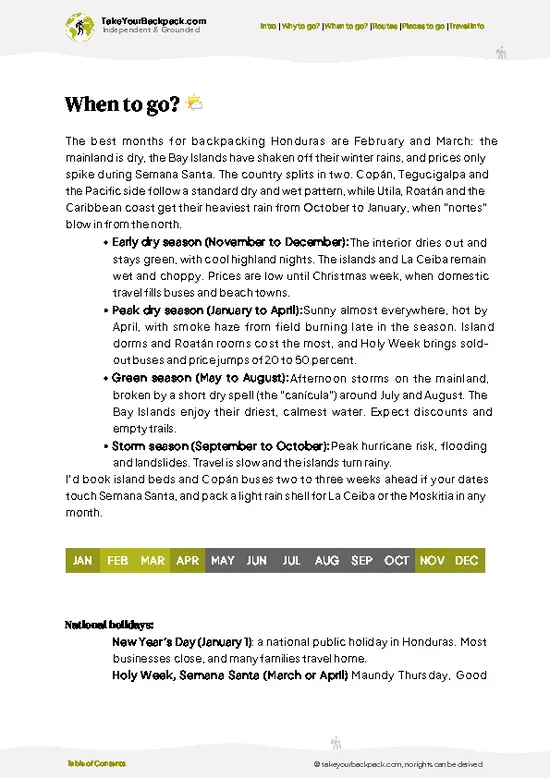
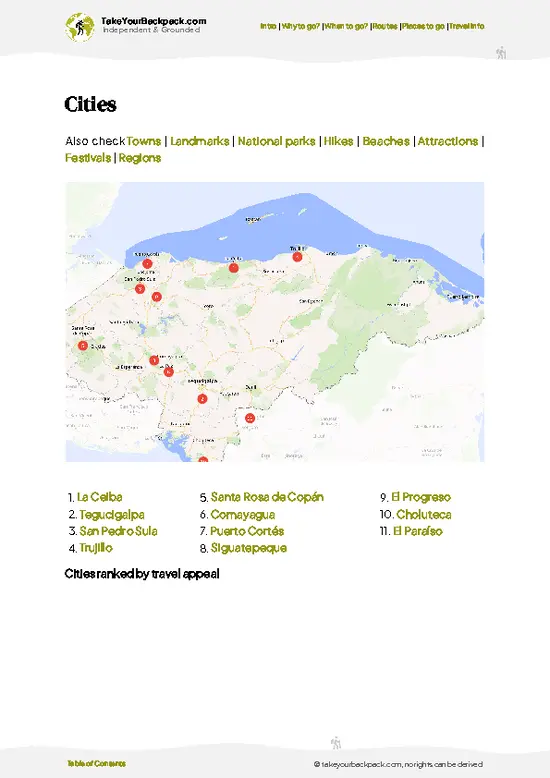
example page 2 from our offline Travel Guide for Honduras
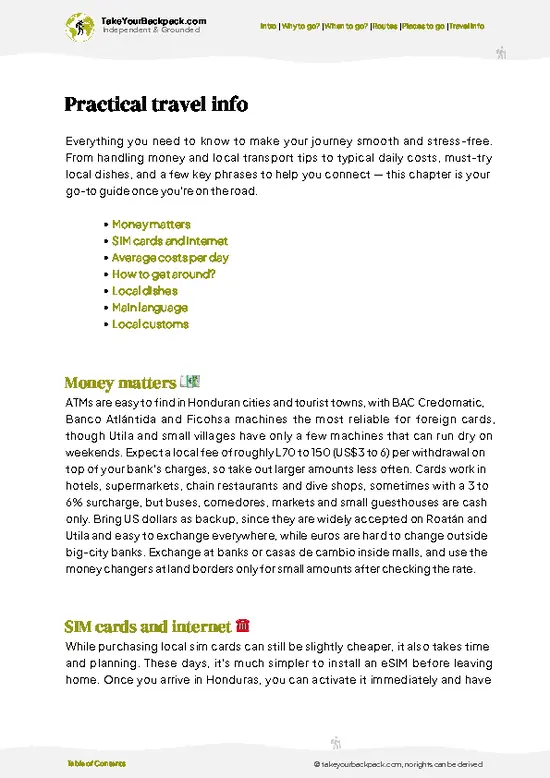
example page 3 from our offline Travel Guide for Honduras
example page 4 from our offline Travel Guide for Honduras
example page 5 from our offline Travel Guide for Honduras
example page 6 from our offline Travel Guide for Honduras
example page 7 from our offline Travel Guide for Honduras
The digital guide (255 pages) contains:
✅ 70 highlights, ranked by travel appeal
✅ Optimized 5, 10 & 15-day travel routes
✅ Cities, national parks, landmarks, beaches
✅ How to get around
✅ Offline-friendly for travel without Wi-Fi
👉 Click to see all 30+ guide features

📅 Plan smarter in minutes, not weeks
✅ Month by month travel advice
✅ Festivals & national holidays
✅ Budget expectations

🗺️ Go to the right places, skip the overrated ones
✅ Honest pros & cons of destinations
✅ Top hikes, parks & viewpoints
✅ Lesser-known places most travelers miss
✅ Clear “worth it vs skip it” guidance

🛏️ Travel smoothly without rookie mistakes
✅ Best areas to stay
✅ Transport systems explained simply
✅ Common scams & safety advice
✅ SIM cards, money & practical tips

🌍 Understand the country, not just visit it
✅ Culture & traditions
✅ 52 Essential phrases & customs
✅ Festivals worth planning around
✅ Traveler-friendly historical context
✅ Insights that make places more meaningful

📱 Built for real travel conditions
✅ Fully downloadable PDF
✅ Works completely offline
✅ Optimized for phone use
✅ Useful in remote areas & buses
✅ Everything in one place
Stop searching, start planning
Get instant access to your full guide. 30‑day money-back guarantee.
+ Add another guide for just

By proceeding you agree to our terms.
Sent to your inbox immediately after payment • 100% Secure Checkout
Best Backpacking Travel Advisor 2025 tourism awardBest Backpacking
Travel Advisor
2025
What others say about Take Your Backpack Guides:
⭐⭐⭐⭐⭐
Fantastic, amazing amount of information!
⭐⭐⭐⭐⭐
My goodness this is amazing, it's what I've been looking for hats off too you!
⭐⭐⭐⭐⭐
I think this is absolutely BRILLIANT
⭐⭐⭐⭐
Very complete and informative. It's still missing places, but I gotta to commend you
⭐⭐⭐⭐⭐
This is truly amazing, thank you, can't wait to explore it with my kids!
⭐⭐⭐⭐⭐
Awesome resource, thank you!
⭐⭐⭐⭐⭐
This is amazing! Can't wait to explore the ones I haven't seen
⭐⭐⭐⭐
I love this! Well done, great idea.
⭐⭐⭐⭐⭐
Thanks for taking the time to make this gem!
⭐⭐⭐⭐⭐
This might be the best website I've ever seen.
⭐⭐⭐⭐⭐
Congratulations, and thank you so much for your work; it's incredibly valuable.
⭐⭐⭐⭐
In all seriousness I think you did a great job pointing out the important spots
⭐⭐⭐⭐⭐
10/10 very good
⭐⭐⭐⭐⭐
As someone who's only just starting to visit regularly this is awesome, thank you.
⭐⭐⭐⭐
Thank you very much! I'm going to visit my dad, it's going to be very useful!
⭐⭐⭐⭐⭐
This is really cool! We'll be travelling for the first time and this definitely come in handy.
⭐⭐⭐⭐⭐
You are now our minister of culture, congratulations 👨‍💼
⭐⭐⭐⭐⭐
Just wanted to tell you that this is a pearl! Going to follow your recommendations.
⭐⭐⭐⭐⭐
This is so cool. I'll definitely be using the resource for my travels soon.
⭐⭐⭐⭐⭐
This is very impressive! Good work.
⭐⭐⭐⭐⭐
This is an amazing and informative site. Very well done!

🛏️ Where to stay?Top Places to Consider Staying

Honduras has a solid hostel scene, with dorm beds typically around L250 to 500 (US$10 to 20) and private rooms in guesthouses from about L600 (US$25), concentrated where backpackers actually go rather than in the big cities. On the Bay Islands, Utila has the most and cheapest beds plus a loud dive-bar night scene, while West End on Roatán costs more but puts you on a walkable beach strip; inland, the cobbled grid of Copán Ruinas is quiet, safe and a short walk from the ruins, and the Lake Yojoa area around Los Naranjos and Peña Blanca is all hammocks and early nights. In Tegucigalpa, stick to Colonia Palmira and the streets near Boulevard Morazán, where options are fewer and pricier but the … read more 👉
Honduras has a solid hostel scene, with dorm beds typically around L250 to 500 (US$10 to 20) and private rooms in guesthouses from about L600 (US$25), concentrated where backpackers actually go rather than in the big cities. On the Bay Islands, Utila has the most and cheapest beds plus a loud dive-bar night scene, while West End on Roatán costs more but puts you on a walkable beach strip; inland, the cobbled grid of Copán Ruinas is quiet, safe and a short walk from the ruins, and the Lake Yojoa area around Los Naranjos and Peña Blanca is all hammocks and early nights. In Tegucigalpa, stick to Colonia Palmira and the streets near Boulevard Morazán, where options are fewer and pricier but the area is calmer and close to restaurants, and treat San Pedro Sula as a one-night transit stop near the bus terminal.

If you enjoy meeting fellow travelers, consider choosing hostels with high ratings for atmosphere. On the other hand, if you prefer having your own space, a hotel might be a better option.

HondurasMore Places Across Honduras

👋 Meet the founderWho’s Behind Take Your Backpack?

Johan, backpacker and founder of TakeYourBackpackHi, I’m Johan (Netherlands 🇳🇱), the creator of TakeYourBackpack. Over the past 3 decades, I’ve backpacked through 90+ countries across six continents, gaining extensive experience with independent travel, long-term trips, and overland routes.

This site is built on a combination of firsthand travel experience and carefully curated insights from other backpackers. Many guides are based on places I’ve personally visited, while others bring together tips, observations, and practical advice shared by trusted travelers I’ve met along the way.

The goal is to provide realistic, experience-driven guidance — not generic itineraries — so you can explore destinations with better context, clearer expectations, and more confidence.