×

Honduras🇭🇳 | best festivalsDiscover the 6 Best festivals Across Honduras

Festivals in Honduras are mostly local affairs, not tourist productions. The country has no single headline event, so the experience depends on where you land. La Ceiba on the Caribbean coast throws the biggest party, with crowds, loud music and packed hostels. Garifuna villages along the north coast offer drumming and dance in small settings, cheap but slow to reach. Colonial highland towns like Gracias and Copán Ruinas run religious and cultural events that are walkable and easy for independent travelers. Capital-city events are crowded and not worth a detour. I back the coast and highlands, and I skip anything that needs a pricey package tour.

By Johan Kruseman 🇳🇱 | Updated October 23, 2026
Explore the best regions in Honduras

Why go?Key Factors That Shape the Experience

Honduras suits festivals because its calendar is driven by Catholic patron saints, Garifuna heritage and Indigenous Lenca and Maya traditions, and each of those lives in a different part of the country. The Caribbean coast carries African and Carib roots, the western highlands carry colonial and Indigenous ones, and the Bay Islands lean on Anglo-Caribbean culture. That mix means celebrations differ sharply from region to region, which is the real draw.

It is less suited to travelers who want polished, ticketed spectacles. Most events are community-run, schedules shift, and information is often posted late on social media or by word of mouth. Infrastructure is uneven: main highways between San Pedro Sula, Tegucigalpa and the north coast are fine, but villages and mountain towns depend on slow … read more 👉
Honduras suits festivals because its calendar is driven by Catholic patron saints, Garifuna heritage and Indigenous Lenca and Maya traditions, and each of those lives in a different part of the country. The Caribbean coast carries African and Carib roots, the western highlands carry colonial and Indigenous ones, and the Bay Islands lean on Anglo-Caribbean culture. That mix means celebrations differ sharply from region to region, which is the real draw.

It is less suited to travelers who want polished, ticketed spectacles. Most events are community-run, schedules shift, and information is often posted late on social media or by word of mouth. Infrastructure is uneven: main highways between San Pedro Sula, Tegucigalpa and the north coast are fine, but villages and mountain towns depend on slow buses and colectivos.

Before choosing Honduras for festivals, know that weather and security affect planning. Heavy rains can wash out roads and outdoor events, and big cities need more caution than small towns. Book lodging early for major dates, since hostel beds in popular towns fill up. If you want a few well-chosen local events and can handle some improvisation, Honduras delivers. If you want a tight schedule, pick somewhere else.
Why These Made the Cut
The list of best festivals in Honduras is created based on energy, traditions, crowd experience, activities, and overall excitement. If you feel a festival is missing in this list, please let us know.

When to go?Optimal Periods for Travel

Best months for festivals: The best months for festivals in Honduras are February through May, when the dry season keeps roads passable and outdoor events run on schedule, and May adds the biggest coastal celebrations. Highland temperatures sit around 18 to 28°C (64 to 82°F), while the north coast runs 28 to 34°C (82 to 93°F) and feels heavy with humidity.
Shoulder and wet seasons: The rainy season runs roughly June to October in most of the country, with daily downpours and landslide risk on mountain roads. Rain on the Caribbean side lasts longer, with heavy showers into November and December. Festivals still happen in the wet months, but outdoor parades can be moved or cut short, and unpaved village access gets slow. September to October is also the peak of hurricane risk on the coast and … read more 👉
Best months for festivals: The best months for festivals in Honduras are February through May, when the dry season keeps roads passable and outdoor events run on schedule, and May adds the biggest coastal celebrations. Highland temperatures sit around 18 to 28°C (64 to 82°F), while the north coast runs 28 to 34°C (82 to 93°F) and feels heavy with humidity.
Shoulder and wet seasons: The rainy season runs roughly June to October in most of the country, with daily downpours and landslide risk on mountain roads. Rain on the Caribbean side lasts longer, with heavy showers into November and December. Festivals still happen in the wet months, but outdoor parades can be moved or cut short, and unpaved village access gets slow. September to October is also the peak of hurricane risk on the coast and islands, so avoid those weeks for coastal plans.
Crowds and prices: Peak periods that change decisions are Semana Santa (March or April), when the whole country travels, buses fill and lodging in popular towns can double, and the December holidays. Outside those windows, dorm beds typically run US$8 to 15 and private rooms US$25 to 50. During major events expect rises of 30 to 100 percent and book weeks ahead. November to January is cooler and drier in the highlands, a decent second choice, though not as reliable on the coast.

festival hoppingSuggested Travel Strategies

How long a multi-festival trip needs: A trip linking several festivals in Honduras needs 12 to 18 days, and anything under 10 days turns into a string of bus terminals. Honduras is small on the map, but mountain roads and slow buses stretch every leg.
Which regions group well: The western highlands (Copán Ruínas, Gracias, La Esperanza, Santa Rosa de Copán) cluster tightly, with 2 to 4 hours between most of them. The north coast (San Pedro Sula, La Ceiba, Trujillo, Tela) forms a second cluster along one main highway, and the Bay Islands sit off La Ceiba by ferry (about 1 to 1.5 hours to Roatán, 1 hour to Utila). Tegucigalpa and its colonial neighbors make a third, smaller group. A west-to-east direction works best: enter through Copán from Guatemala, drop to San Pedro Sula, run the coast to … read more 👉
How long a multi-festival trip needs: A trip linking several festivals in Honduras needs 12 to 18 days, and anything under 10 days turns into a string of bus terminals. Honduras is small on the map, but mountain roads and slow buses stretch every leg.
Which regions group well: The western highlands (Copán Ruínas, Gracias, La Esperanza, Santa Rosa de Copán) cluster tightly, with 2 to 4 hours between most of them. The north coast (San Pedro Sula, La Ceiba, Trujillo, Tela) forms a second cluster along one main highway, and the Bay Islands sit off La Ceiba by ferry (about 1 to 1.5 hours to Roatán, 1 hour to Utila). Tegucigalpa and its colonial neighbors make a third, smaller group. A west-to-east direction works best: enter through Copán from Guatemala, drop to San Pedro Sula, run the coast to La Ceiba, and finish on the islands or in Trujillo.
Time per stop and between regions: Give each highland town 1 to 2 nights and each coastal base 2 to 3 nights, since festival days often run late and the following morning is lost. San Pedro Sula to Tegucigalpa takes 4 to 5 hours by bus, San Pedro Sula to La Ceiba 3 to 4 hours, and La Ceiba to Trujillo 3 to 4 hours. Copán to San Pedro Sula takes about 3 to 4 hours by shuttle or bus.
Planning mistakes to avoid: The biggest error is stacking two festivals in different regions on consecutive days. Add a buffer day for every long transfer. Another is arriving on the festival day itself, when rooms are gone and buses run full. Book beds 1 to 3 days ahead and arrive the day before. Finally, skip the Tegucigalpa detour unless a festival is there. It adds a full day each way and little else for this type of trip.

The ListMust-Visit festivals in Honduras

1 La Ceiba Carnival

Third-Saturday-of-May parade, feathered costumes, Garifuna punta, beach kiosks

Stake out a sidewalk for hours of floats and brass, learn the punta step from locals, and recover at beach kiosks over fried fish.

2 Semana Santa in Comayagua

Sawdust carpets, Good Friday burial procession, colonial cathedral square, Caribbean beach week

Rise before dawn to watch families press colored sawdust into biblical scenes, then follow the solemn procession that walks over them by midday.

3 Feria Juniana

School marching bands, month-long fair, city anniversary, curbside griddles

Claim a curb spot for the parade of school bands and floats, then finish at fairground concerts and rides after dark.

4 Garífuna Arrival Day in Punta Gorda

Garifuna landing reenactment, hand drums, casabe, village waterfront

See villagers carry cassava ashore from boats, join a punta circle in the lanes, and eat fish in coconut sauce from family yards.

5 Festival de la Virgen de Suyapa

Tiny wooden Virgin, overnight vigil, walking pilgrims, February basilica

Join pilgrims on the last stretch to the basilica, spend the night among candles and hymns, and eat a cheap breakfast beside the plaza.

6 Baleada Fest

Baleada stalls, regional fillings, live local bands, family crowds

Compare folded flour tortillas from cooks across the country, pair them with fruit drinks and coffee, and listen to Honduran bands between bites.

Loading the map 🌍

Expert viewPro Tips for Exploring the Best

How many to visit: Aim for two or three festivals in a single trip. Honduran events are spread across distant regions, buses are slow, and each one deserves two or three nights to feel properly. Packing in more means you spend the trip on the road and see each event through a window.
Choosing by travel style: Social travelers and anyone who wants nightlife should prioritize a coastal party event in La Ceiba, where hostels fill with other backpackers. If you care about culture and conversation, choose a Garifuna community celebration or a highland religious event; they are smaller, calmer and far more personal. Budget travelers get the best value in the highlands, where lodging and food cost less. Skip anything marketed through a tour operator with inflated prices, because local events are free … read more 👉
How many to visit: Aim for two or three festivals in a single trip. Honduran events are spread across distant regions, buses are slow, and each one deserves two or three nights to feel properly. Packing in more means you spend the trip on the road and see each event through a window.
Choosing by travel style: Social travelers and anyone who wants nightlife should prioritize a coastal party event in La Ceiba, where hostels fill with other backpackers. If you care about culture and conversation, choose a Garifuna community celebration or a highland religious event; they are smaller, calmer and far more personal. Budget travelers get the best value in the highlands, where lodging and food cost less. Skip anything marketed through a tour operator with inflated prices, because local events are free to attend and you gain little from a package.
What it costs: Plan on US$30 to 55 a day for dorm beds, street food, local transport and event spending. Most festivals have no entry fee. Typical extras include a US$2 to 10 cover for concerts or organized dances, food and drink at US$2 to 6 a meal, and a local guide if you want context at US$15 to 30 for a half day. Intercity buses cost roughly US$5 to 15 a leg; shuttles run US$12 to 25. During major events, expect accommodation to rise 30 to 100 percent, so a festival stop can cost US$50 to 80 a day. Carry small lempira notes, because change is scarce and ATMs in small towns run dry on busy weekends.
Safety and etiquette: Honduras has high crime in larger cities, so the festival risks are pickpocketing, drink spiking and late-night robberies. Leave your passport in the hostel (carry a photocopy), take only the cash you need, and use registered taxis or arranged rides after dark. Do not walk home alone from a crowded event, even on short distances. Stay in small groups and keep phones out of sight in dense crowds.
Cultural care: Many events are religious or community-owned, so dress modestly in processions and ask before photographing people, especially in Garifuna and Indigenous settings. Some communities expect a small donation or purchase from local vendors, which is a better use of money than tipping informally. Alcohol-heavy celebrations can turn rowdy by night, so know your exit. Check local news for road conditions and security advisories before long trips, since schedules and routes change at short notice.

✈️ The backpacker research shortcutHonduras Travel Guide

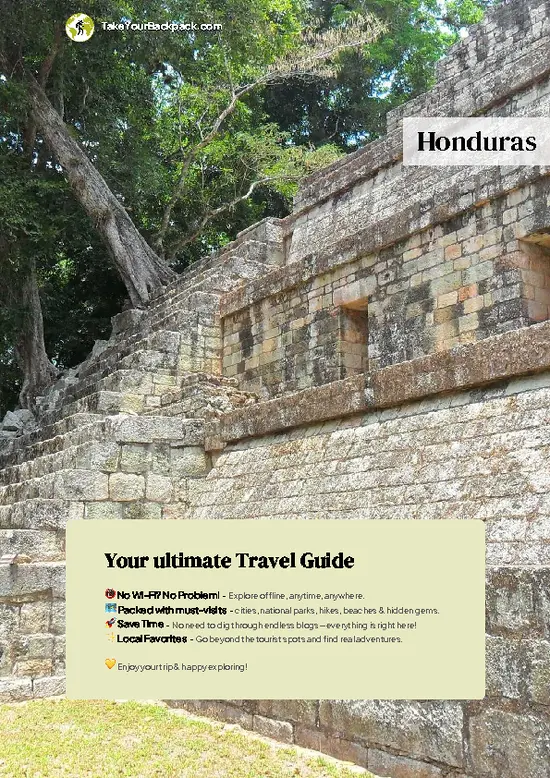
An offline-friendly backpacking guide with optimized travel routes, ranked highlights, transport advice, and the best areas to stay.
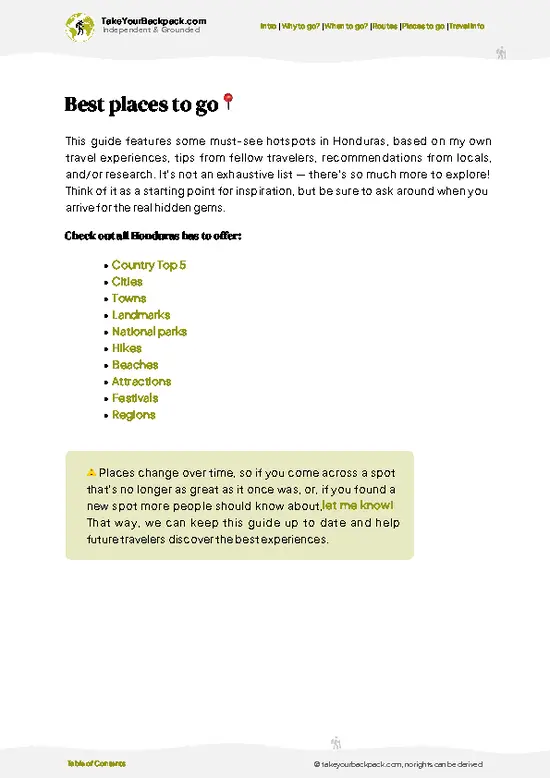
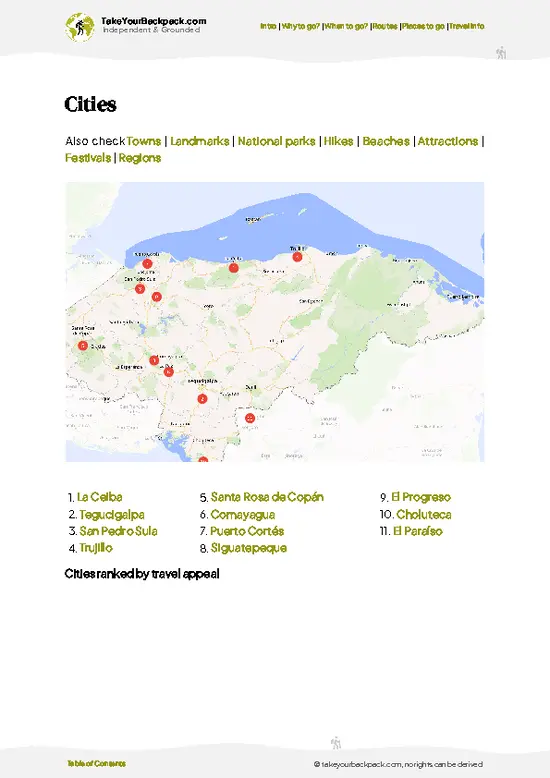
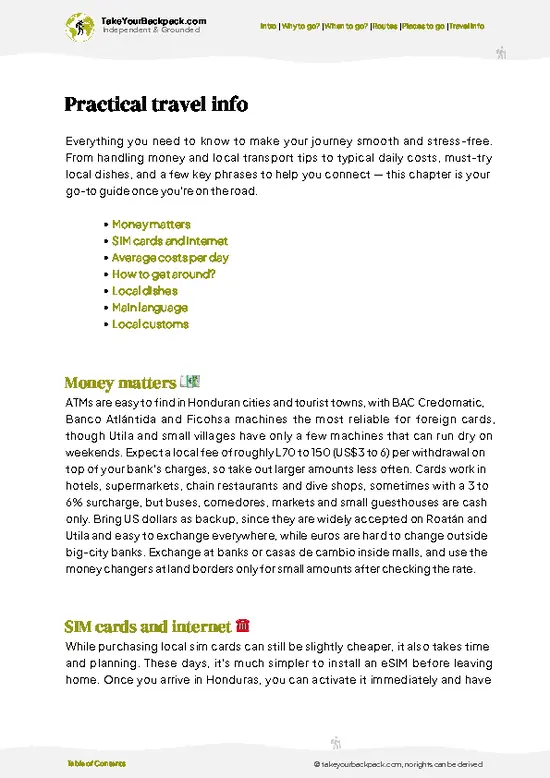
example page 0 from our offline Travel Guide for Honduras
example page 1 from our offline Travel Guide for Honduras
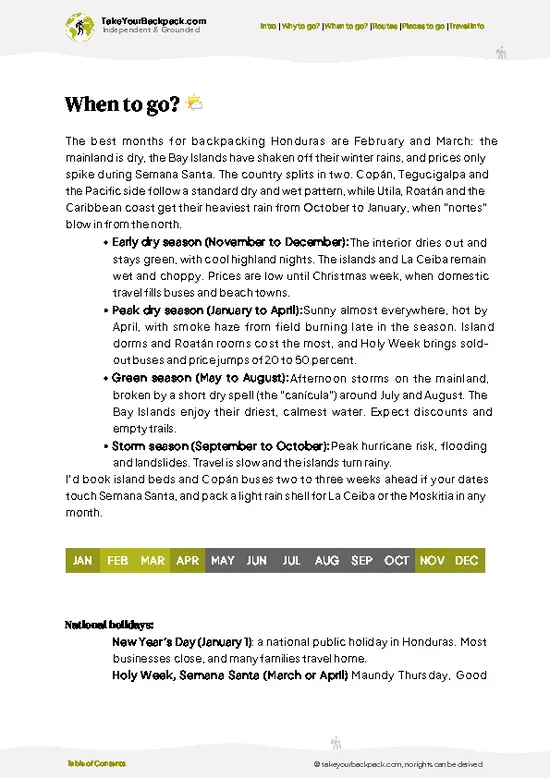
example page 2 from our offline Travel Guide for Honduras
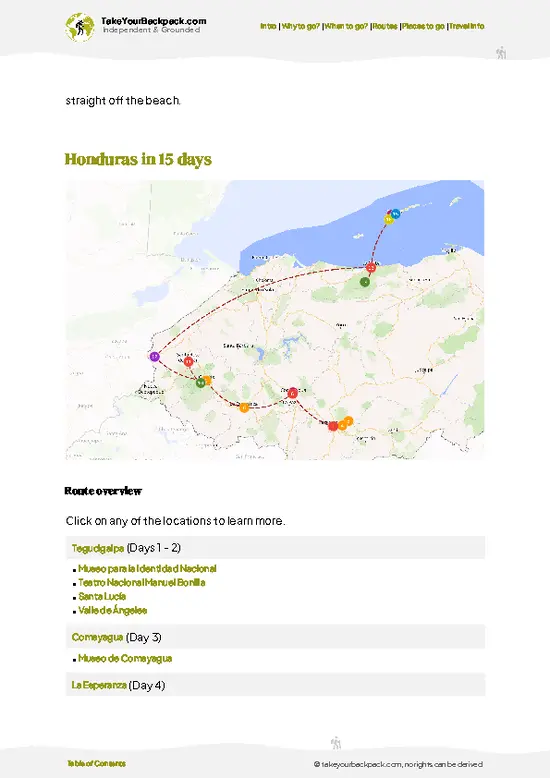
example page 3 from our offline Travel Guide for Honduras
example page 4 from our offline Travel Guide for Honduras
example page 5 from our offline Travel Guide for Honduras
example page 6 from our offline Travel Guide for Honduras
example page 7 from our offline Travel Guide for Honduras
The digital guide (255 pages) contains:
✅ 70 highlights, ranked by travel appeal
✅ Optimized 5, 10 & 15-day travel routes
✅ Cities, national parks, landmarks, beaches
✅ How to get around
✅ Offline-friendly for travel without Wi-Fi
👉 Click to see all 30+ guide features

📅 Plan smarter in minutes, not weeks
✅ Month by month travel advice
✅ Festivals & national holidays
✅ Budget expectations

🗺️ Go to the right places, skip the overrated ones
✅ Honest pros & cons of destinations
✅ Top hikes, parks & viewpoints
✅ Lesser-known places most travelers miss
✅ Clear “worth it vs skip it” guidance

🛏️ Travel smoothly without rookie mistakes
✅ Best areas to stay
✅ Transport systems explained simply
✅ Common scams & safety advice
✅ SIM cards, money & practical tips

🌍 Understand the country, not just visit it
✅ Culture & traditions
✅ 52 Essential phrases & customs
✅ Festivals worth planning around
✅ Traveler-friendly historical context
✅ Insights that make places more meaningful

📱 Built for real travel conditions
✅ Fully downloadable PDF
✅ Works completely offline
✅ Optimized for phone use
✅ Useful in remote areas & buses
✅ Everything in one place
Stop searching, start planning
Get instant access to your full guide. 30‑day money-back guarantee.
+ Add another guide for just

By proceeding you agree to our terms.
Sent to your inbox immediately after payment • 100% Secure Checkout
Best Backpacking Travel Advisor 2025 tourism awardBest Backpacking
Travel Advisor
2025
What others say about Take Your Backpack Guides:
⭐⭐⭐⭐⭐
Fantastic, amazing amount of information!
⭐⭐⭐⭐⭐
My goodness this is amazing, it's what I've been looking for hats off too you!
⭐⭐⭐⭐⭐
I think this is absolutely BRILLIANT
⭐⭐⭐⭐
Very complete and informative. It's still missing places, but I gotta to commend you
⭐⭐⭐⭐⭐
This is truly amazing, thank you, can't wait to explore it with my kids!
⭐⭐⭐⭐⭐
Awesome resource, thank you!
⭐⭐⭐⭐⭐
This is amazing! Can't wait to explore the ones I haven't seen
⭐⭐⭐⭐
I love this! Well done, great idea.
⭐⭐⭐⭐⭐
Thanks for taking the time to make this gem!
⭐⭐⭐⭐⭐
This might be the best website I've ever seen.
⭐⭐⭐⭐⭐
Congratulations, and thank you so much for your work; it's incredibly valuable.
⭐⭐⭐⭐
In all seriousness I think you did a great job pointing out the important spots
⭐⭐⭐⭐⭐
10/10 very good
⭐⭐⭐⭐⭐
As someone who's only just starting to visit regularly this is awesome, thank you.
⭐⭐⭐⭐
Thank you very much! I'm going to visit my dad, it's going to be very useful!
⭐⭐⭐⭐⭐
This is really cool! We'll be travelling for the first time and this definitely come in handy.
⭐⭐⭐⭐⭐
You are now our minister of culture, congratulations 👨‍💼
⭐⭐⭐⭐⭐
Just wanted to tell you that this is a pearl! Going to follow your recommendations.
⭐⭐⭐⭐⭐
This is so cool. I'll definitely be using the resource for my travels soon.
⭐⭐⭐⭐⭐
This is very impressive! Good work.
⭐⭐⭐⭐⭐
This is an amazing and informative site. Very well done!

🛏️ Where to stay?Where to Stay: Honduras Edition

Honduras has a solid hostel scene, with dorm beds typically around L250 to 500 (US$10 to 20) and private rooms in guesthouses from about L600 (US$25), concentrated where backpackers actually go rather than in the big cities. On the Bay Islands, Utila has the most and cheapest beds plus a loud dive-bar night scene, while West End on Roatán costs more but puts you on a walkable beach strip; inland, the cobbled grid of Copán Ruinas is quiet, safe and a short walk from the ruins, and the Lake Yojoa area around Los Naranjos and Peña Blanca is all hammocks and early nights. In Tegucigalpa, stick to Colonia Palmira and the streets near Boulevard Morazán, where options are fewer and pricier but the … read more 👉
Honduras has a solid hostel scene, with dorm beds typically around L250 to 500 (US$10 to 20) and private rooms in guesthouses from about L600 (US$25), concentrated where backpackers actually go rather than in the big cities. On the Bay Islands, Utila has the most and cheapest beds plus a loud dive-bar night scene, while West End on Roatán costs more but puts you on a walkable beach strip; inland, the cobbled grid of Copán Ruinas is quiet, safe and a short walk from the ruins, and the Lake Yojoa area around Los Naranjos and Peña Blanca is all hammocks and early nights. In Tegucigalpa, stick to Colonia Palmira and the streets near Boulevard Morazán, where options are fewer and pricier but the area is calmer and close to restaurants, and treat San Pedro Sula as a one-night transit stop near the bus terminal.

If you enjoy meeting fellow travelers, consider choosing hostels with high ratings for atmosphere. On the other hand, if you prefer having your own space, a hotel might be a better option.

HondurasExplore Beyond This Category

👋 Meet the founderWho’s Behind Take Your Backpack?

Johan, backpacker and founder of TakeYourBackpackHi, I’m Johan (Netherlands 🇳🇱), the creator of TakeYourBackpack. Over the past 3 decades, I’ve backpacked through 90+ countries across six continents, gaining extensive experience with independent travel, long-term trips, and overland routes.

This site is built on a combination of firsthand travel experience and carefully curated insights from other backpackers. Many guides are based on places I’ve personally visited, while others bring together tips, observations, and practical advice shared by trusted travelers I’ve met along the way.

The goal is to provide realistic, experience-driven guidance — not generic itineraries — so you can explore destinations with better context, clearer expectations, and more confidence.