×

Honduras🇭🇳 | regionsCayos CochinosGarifuna sandbar stays, fringing reef snorkeling, pink boa trails, oil-lamp nights | things to do and best time to go

Explore La Muralla National ParkExplore Roatán

Backpacking in Cayos Cochinos
👍 Recommendedregion ranked #2
By Johan Kruseman 🇳🇱 | Updated October 23, 2026

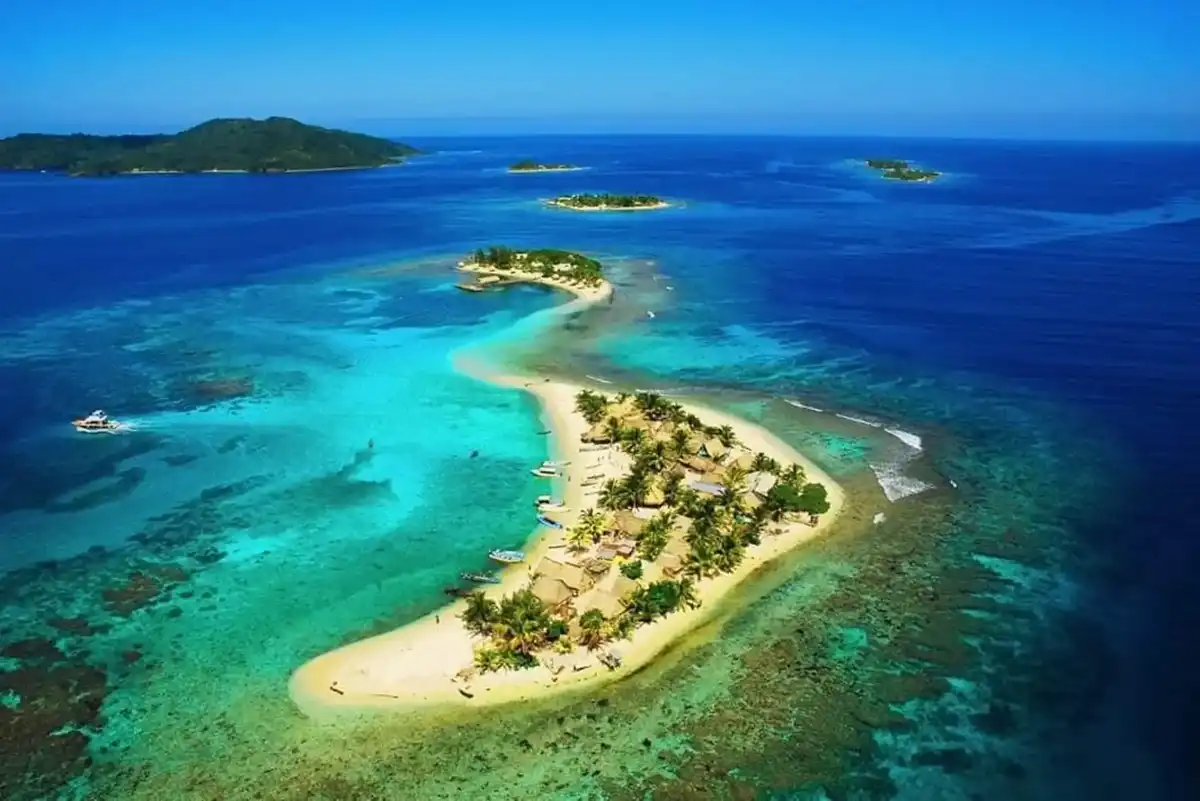
The boat cuts its engine, and the first thing you hear is a Garifuna fisherman’s paddle knocking the hull of a dugout while the sand-and-palm sliver of Chachauate slides into view. I stepped off with wet shins and the smell of frying fish already waiting. Cayos Cochinos is a small marine reserve of two hilly cays and about a dozen sandbars off the north coast of Honduras, reached by boat from La Ceiba. Skip it if you want nightlife, ATMs or a bed with air conditioning; none exist. Go for reef snorkeling a few strokes from the sand, for grilled fish eaten with locals, and for a hike on Cayo Menor where the pink boa lives. Beds are basic and boat prices stay fixed. Compared with Roatán, there are no roads, no cruise crowds and almost no cars, so quiet is the default.

Discover everything you want to know in the 📖 Honduras Travel Guide.


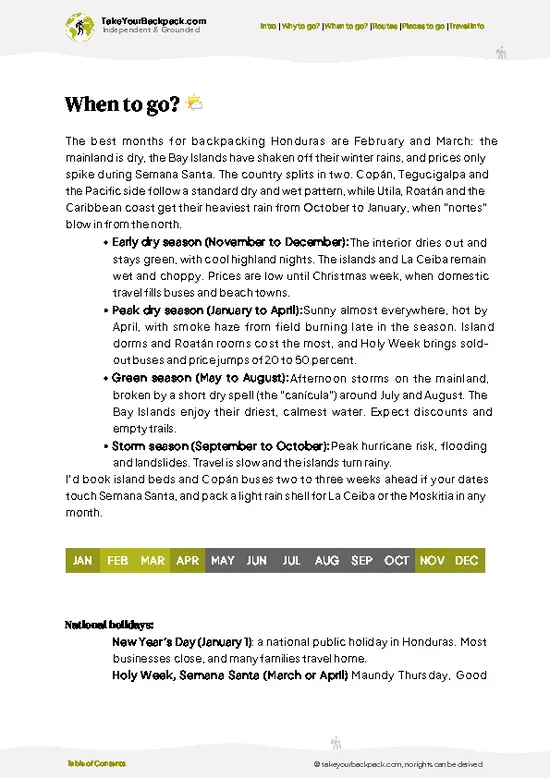
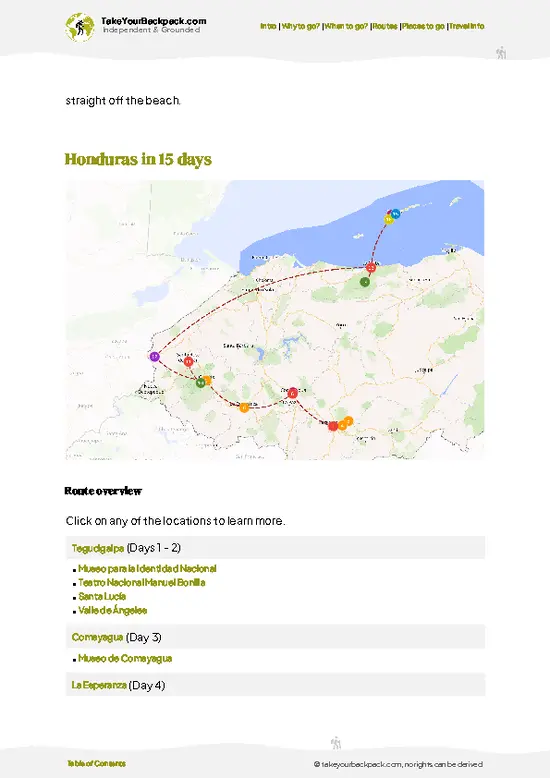
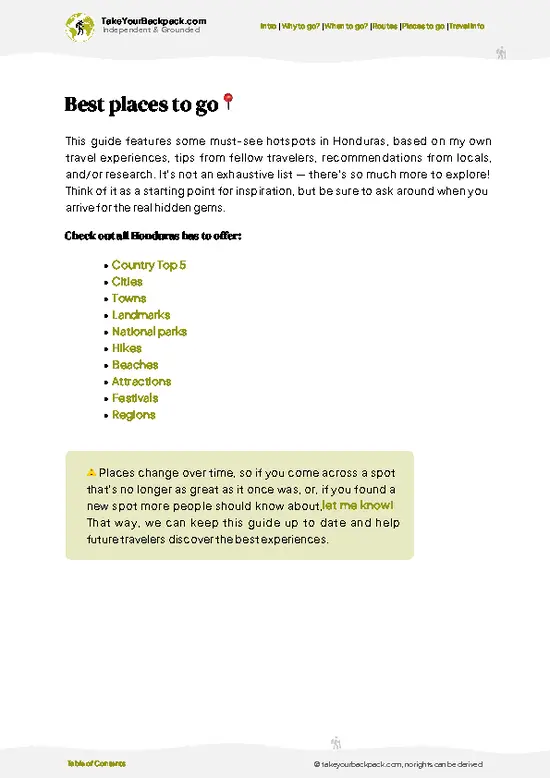
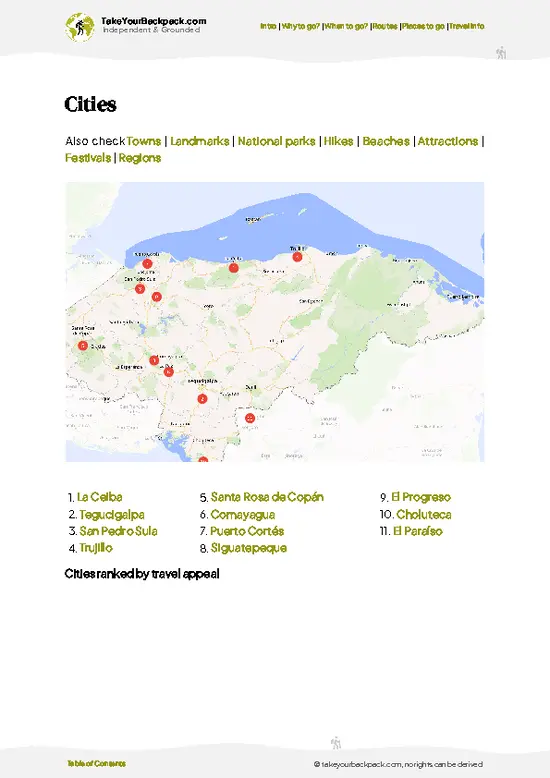
example page 0 from our offline Travel Guide for Honduras
example page 1 from our offline Travel Guide for Honduras
example page 2 from our offline Travel Guide for Honduras
example page 3 from our offline Travel Guide for Honduras
example page 4 from our offline Travel Guide for Honduras
example page 5 from our offline Travel Guide for Honduras
example page 6 from our offline Travel Guide for Honduras
example page 7 from our offline Travel Guide for Honduras
Loading the map 🌍
CLICK TO FILTER
cities
towns
landmarks
national parks
hikes
beaches
attractions
festivals
regions
SHOW COUNTRY’S BESTSHOW ALL

✨ Why go?
Ranked #2 region in Honduras
What sets this place apart

Cayos Cochinos gives you a reef, a living Garifuna community and a protected forest within a few minutes of each other by small boat. That compactness is the main draw: you can snorkel in the morning, hike for the endemic pink boa on Cayo Menor, and still be eating fresh fish at Chachauate before dark, all without repacking your bag. Because the area is a marine monument, fishing and building are restricted, so the water holds more life than much of the mainland coast. Divers and snorkelers find healthy coral, turtles and rays, and visibility is usually good between storms.

The second reason is the Garifuna culture. Chachauate is a working fishing community, not a staged village, and sleeping there means hearing drums, smelling coconut bread and seeing how people live with no roads at all. … read more 👉
Cayos Cochinos gives you a reef, a living Garifuna community and a protected forest within a few minutes of each other by small boat. That compactness is the main draw: you can snorkel in the morning, hike for the endemic pink boa on Cayo Menor, and still be eating fresh fish at Chachauate before dark, all without repacking your bag. Because the area is a marine monument, fishing and building are restricted, so the water holds more life than much of the mainland coast. Divers and snorkelers find healthy coral, turtles and rays, and visibility is usually good between storms.

The second reason is the Garifuna culture. Chachauate is a working fishing community, not a staged village, and sleeping there means hearing drums, smelling coconut bread and seeing how people live with no roads at all. Pair it with La Ceiba on the mainland, where river rafting and jungle lodges sit close, and you can mix remote island time with adventure sports in a single slow loop. Stay overnight rather than rushing back, because the cays reveal themselves best when the day boats leave.

💡 HighlightsWhat this place is best known for

  1. Chachahuate Cay: A tiny sandbar of thatched Garifuna homes, where families fish, cook and rent simple cabins and hammocks. Fried fish with coconut rice eaten barefoot is the meal to order. Stay overnight if you can, once the day boats leave.
  2. Cayo Grande Lighthouse Viewpoint: The short hiking trail climbs through dry forest on Cayo Grande to the lighthouse. From the top you see the whole chain, turquoise water, reef edges and the Honduran mainland ridge behind.
  3. Pink Boa Trails on Cayo Grande: The island is home to the Cochinos pink boa, a pale pink-and-cream snake found nowhere else. Rangers know where it rests, and spotting one is a wildlife thrill that needs sharp eyes and patience.
  4. Cayo Menor Research Station and Beach: Cayo Menor holds the research station of the Honduran Coral Reef Foundation,
… read more 👉
  1. Chachahuate Cay: A tiny sandbar of thatched Garifuna homes, where families fish, cook and rent simple cabins and hammocks. Fried fish with coconut rice eaten barefoot is the meal to order. Stay overnight if you can, once the day boats leave.
  2. Cayo Grande Lighthouse Viewpoint: The short hiking trail climbs through dry forest on Cayo Grande to the lighthouse. From the top you see the whole chain, turquoise water, reef edges and the Honduran mainland ridge behind.
  3. Pink Boa Trails on Cayo Grande: The island is home to the Cochinos pink boa, a pale pink-and-cream snake found nowhere else. Rangers know where it rests, and spotting one is a wildlife thrill that needs sharp eyes and patience.
  4. Cayo Menor Research Station and Beach: Cayo Menor holds the research station of the Honduran Coral Reef Foundation, which manages the reserve. The small beach beside it has clear shallow water and is lovely for a quiet swim.
  5. Snorkeling the Fringing Reefs: Healthy hard and soft coral sits just off the beaches, part of the Mesoamerican Reef. Expect parrotfish, angelfish, sea fans and the occasional turtle in water that is often very clear.
  6. Diving the Reserve Walls: Dive operators from the mainland run trips to drop-offs and coral gardens around the islands. Fish life is dense because fishing is restricted inside the protected area.
  7. Cayo Bolaños: A small, quiet cay on the edge of the group, mostly visited by captains who know it. It is good for a calm stop with a sandy edge and few other boats.
  8. Cayo Timón: A lesser-visited speck with coconut palms and shallow sand flats. It suits snorkelers who want empty water rather than a crowd.
  9. Plan Grande Beach, Cayo Grande: A long, palm-backed beach on the island’s sheltered side, with soft sand and calm water. Few day boats linger here, so the stretch away from the resort feels very private.
  10. Night Skies from Chachahuate: With no road lights for miles and only a few oil lamps, the stars spread thick over the water. Lie on the sand after dinner and the Milky Way is easy to see on clear nights.
Cayos Cochinos is a protected marine reserve, so a reserve fee applies on every visit and is usually folded into boat tour prices, while overnight cabins on Chachahuate are worth arranging ahead through your tour operator.
Spotted a mistake or missing something? Contact us.
⌛️ 5 daysA smart one-week plan

Day 1: Chachauate: Start at the La Ceiba or Sambo Creek dock early, because the sea is calmest in the morning and boats leave on the operator’s schedule, not yours. That single boat link sets the pace for the whole trip: you arrive once, stay put and leave once. Drop your bag in a Chachauate hut, snorkel the reef in front of the cay, then eat grilled fish as the day boats depart and the island goes quiet.

Day 2: Chachauate: Spend a second day here, since moving between cays means chartering a boat anyway. Wake early for glassy water, snorkel farther along the reef, then swim at the sandbar. Afternoons are for hammocks, talking with the families and watching fishermen come in.

Day 3: Cayo Menor: Ask your host to arrange a boat to the neighboring island, and go in the morning when the forest is … read more 👉
Day 1: Chachauate: Start at the La Ceiba or Sambo Creek dock early, because the sea is calmest in the morning and boats leave on the operator’s schedule, not yours. That single boat link sets the pace for the whole trip: you arrive once, stay put and leave once. Drop your bag in a Chachauate hut, snorkel the reef in front of the cay, then eat grilled fish as the day boats depart and the island goes quiet.

Day 2: Chachauate: Spend a second day here, since moving between cays means chartering a boat anyway. Wake early for glassy water, snorkel farther along the reef, then swim at the sandbar. Afternoons are for hammocks, talking with the families and watching fishermen come in.

Day 3: Cayo Menor: Ask your host to arrange a boat to the neighboring island, and go in the morning when the forest is still cool and snakes are more active. A guide leads you along the trail in search of the pink boa, then you swim at a quiet beach. This is the best use of a boat charter because the walk and the snorkeling sit in the same stop.

Day 4: East End Village: The detour: ride over to this Garifuna settlement on Cayo Grande, ideally combined with a snorkel on the way. It adds local life and a second beach without more than one extra boat leg. Buy lunch from a family kitchen.

Day 5: Return to La Ceiba: Take the morning boat back and keep the afternoon free, because swell can delay crossings. If the weather turns, you lose a day of buffer, not a connection.

The day that justifies the whole trip is Day 3. I would stand on the Cayo Menor trail at first light, waiting for the boa to show itself in the leaves, then swim straight afterward.

🌤️ When to go?When to go for the best experience

  • Dry Season (March to May): Calmest seas and the clearest water, with visibility often 20 to 30 m (65 to 100 ft). Highs run 29 to 32°C (84 to 90°F). Easter week fills the Cayos with Honduran day-trippers and pushes boat prices up.
  • Early Wet Season (June to September): Hot and humid, 28 to 32°C (82 to 90°F), with short downpours and decent diving. Whale sharks and manta rays are occasional visitors. Crowds thin and rates ease.
  • Rainy Season (October to January): This is the Caribbean coast's wettest stretch. Northers bring rain, 24 to 28°C (75 to 82°F) and rough crossings. Boats are often canceled for days.
  • February: Drier again and quiet, with water about 26°C (79°F). Daylight is shortest in December and longest in June, a spread of roughly 11 to 13 hours.
Book your boat for a weekday morning in … read more 👉
  • Dry Season (March to May): Calmest seas and the clearest water, with visibility often 20 to 30 m (65 to 100 ft). Highs run 29 to 32°C (84 to 90°F). Easter week fills the Cayos with Honduran day-trippers and pushes boat prices up.
  • Early Wet Season (June to September): Hot and humid, 28 to 32°C (82 to 90°F), with short downpours and decent diving. Whale sharks and manta rays are occasional visitors. Crowds thin and rates ease.
  • Rainy Season (October to January): This is the Caribbean coast's wettest stretch. Northers bring rain, 24 to 28°C (75 to 82°F) and rough crossings. Boats are often canceled for days.
  • February: Drier again and quiet, with water about 26°C (79°F). Daylight is shortest in December and longest in June, a spread of roughly 11 to 13 hours.
Book your boat for a weekday morning in March or April, when the sea is flattest and the marine reserve is least crowded.


source: climatestotravel.comJANJanuary: highly recommended for travelingFEBFebruary: excellent for travelingMARMarch: excellent for travelingAPRApril: excellent for travelingMAYMay: highly recommended for travelingJUNJune: fair for travelingJULJuly: fair for travelingAUGAugust: fair for travelingSEPSeptember: below average for travelingOCTOctober: fair for travelingNOVNovember: fair for travelingDECDecember: good for traveling
honduras-region-cayos-cochinos
© Google | Mario Galeas

✈️ The backpacker research shortcutHonduras Travel Guide

An offline-friendly backpacking guide with optimized travel routes, ranked highlights, transport advice, and the best areas to stay.
example page 0 from our offline Travel Guide for Honduras
example page 1 from our offline Travel Guide for Honduras
example page 2 from our offline Travel Guide for Honduras
example page 3 from our offline Travel Guide for Honduras
example page 4 from our offline Travel Guide for Honduras
example page 5 from our offline Travel Guide for Honduras
example page 6 from our offline Travel Guide for Honduras
example page 7 from our offline Travel Guide for Honduras
The digital guide (255 pages) contains:
✅ 70 highlights, ranked by travel appeal
✅ Optimized 5, 10 & 15-day travel routes
✅ Cities, national parks, landmarks, beaches
✅ How to get around
✅ Offline-friendly for travel without Wi-Fi
👉 Click to see all 30+ guide features

📅 Plan smarter in minutes, not weeks
✅ Month by month travel advice
✅ Festivals & national holidays
✅ Budget expectations

🗺️ Go to the right places, skip the overrated ones
✅ Honest pros & cons of destinations
✅ Top hikes, parks & viewpoints
✅ Lesser-known places most travelers miss
✅ Clear “worth it vs skip it” guidance

🛏️ Travel smoothly without rookie mistakes
✅ Best areas to stay
✅ Transport systems explained simply
✅ Common scams & safety advice
✅ SIM cards, money & practical tips

🌍 Understand the country, not just visit it
✅ Culture & traditions
✅ 52 Essential phrases & customs
✅ Festivals worth planning around
✅ Traveler-friendly historical context
✅ Insights that make places more meaningful

📱 Built for real travel conditions
✅ Fully downloadable PDF
✅ Works completely offline
✅ Optimized for phone use
✅ Useful in remote areas & buses
✅ Everything in one place
Stop searching, start planning
Get instant access to your full guide. 30‑day money-back guarantee.
+ Add another guide for just

By proceeding you agree to our terms.
Sent to your inbox immediately after payment • 100% Secure Checkout
Best Backpacking Travel Advisor 2025 tourism awardBest Backpacking
Travel Advisor
2025
What others say about Take Your Backpack Guides:
⭐⭐⭐⭐⭐
Fantastic, amazing amount of information!
⭐⭐⭐⭐⭐
My goodness this is amazing, it's what I've been looking for hats off too you!
⭐⭐⭐⭐⭐
I think this is absolutely BRILLIANT
⭐⭐⭐⭐
Very complete and informative. It's still missing places, but I gotta to commend you
⭐⭐⭐⭐⭐
This is truly amazing, thank you, can't wait to explore it with my kids!
⭐⭐⭐⭐⭐
Awesome resource, thank you!
⭐⭐⭐⭐⭐
This is amazing! Can't wait to explore the ones I haven't seen
⭐⭐⭐⭐
I love this! Well done, great idea.
⭐⭐⭐⭐⭐
Thanks for taking the time to make this gem!
⭐⭐⭐⭐⭐
This might be the best website I've ever seen.
⭐⭐⭐⭐⭐
Congratulations, and thank you so much for your work; it's incredibly valuable.
⭐⭐⭐⭐
In all seriousness I think you did a great job pointing out the important spots
⭐⭐⭐⭐⭐
10/10 very good
⭐⭐⭐⭐⭐
As someone who's only just starting to visit regularly this is awesome, thank you.
⭐⭐⭐⭐
Thank you very much! I'm going to visit my dad, it's going to be very useful!
⭐⭐⭐⭐⭐
This is really cool! We'll be travelling for the first time and this definitely come in handy.
⭐⭐⭐⭐⭐
You are now our minister of culture, congratulations 👨‍💼
⭐⭐⭐⭐⭐
Just wanted to tell you that this is a pearl! Going to follow your recommendations.
⭐⭐⭐⭐⭐
This is so cool. I'll definitely be using the resource for my travels soon.
⭐⭐⭐⭐⭐
This is very impressive! Good work.
⭐⭐⭐⭐⭐
This is an amazing and informative site. Very well done!

🛏️ Where to stay?How to pick the right area

La Ceiba is the best base for reaching Cayos Cochinos, with the largest choice of hostels and the bulk of the boat operators, mostly at US$10 to 20 for a dorm bed. It is a working port city, social around its backpacker spots and Pico Bonito tours, though it is wise to take taxis after dark.

Sambo Creek, 20 minutes east, suits people who prefer a quiet Garifuna beach village with simple guesthouses at US$15 to 30. The crossing to the islands is shorter from here, and the beach is good for slow evenings with a few travelers.

On the islands themselves, rooms are limited. Chachahuate offers basic … read more 👉
La Ceiba is the best base for reaching Cayos Cochinos, with the largest choice of hostels and the bulk of the boat operators, mostly at US$10 to 20 for a dorm bed. It is a working port city, social around its backpacker spots and Pico Bonito tours, though it is wise to take taxis after dark.

Sambo Creek, 20 minutes east, suits people who prefer a quiet Garifuna beach village with simple guesthouses at US$15 to 30. The crossing to the islands is shorter from here, and the beach is good for slow evenings with a few travelers.

On the islands themselves, rooms are limited. Chachahuate offers basic hammock and cabin stays with the Garifuna community for roughly US$15 to 30 a night, often with fish and rice included. Expect no hot water and little power. Nights are dark, with stars, surf and a handful of other travelers sharing a fire. Cayo Menor has a research station and some small lodging for divers and groups, so it is less of a hangout.

If you want nightlife and a wider crowd, stay in La Ceiba for a night before and after. If you want your trip to feel like an escape, spend one night on Chachahuate.

🚌 Getting aroundHow to get from A to B

Cayos Cochinos has no public roads and no buses, so a round-trip boat from La Ceiba or Sambo Creek typically costs US$25 to 60 per person on a shared tour and is paid in cash (lempiras or dollars) to the operator, with the reserve fee often bundled in. Plan on the water being your only road, and a reliable one in the dry months.
  • Shared day-trip boat from La Ceiba: Departures are usually around 8 to 9 a.m., with a 60 to 90 minute crossing in a covered speedboat for US$40 to 60. You get snorkeling over reef and a long beach lunch on a sandbar, which is the best value for one day.
  • Boat from Sambo Creek: This fishing village sits about 20 minutes east of La Ceiba by bus or taxi and has a shorter crossing of 45 to 60 minutes. Fares run US$25 to 45 and you land sooner, which means more time in the
… read more 👉
Cayos Cochinos has no public roads and no buses, so a round-trip boat from La Ceiba or Sambo Creek typically costs US$25 to 60 per person on a shared tour and is paid in cash (lempiras or dollars) to the operator, with the reserve fee often bundled in. Plan on the water being your only road, and a reliable one in the dry months.
  • Shared day-trip boat from La Ceiba: Departures are usually around 8 to 9 a.m., with a 60 to 90 minute crossing in a covered speedboat for US$40 to 60. You get snorkeling over reef and a long beach lunch on a sandbar, which is the best value for one day.
  • Boat from Sambo Creek: This fishing village sits about 20 minutes east of La Ceiba by bus or taxi and has a shorter crossing of 45 to 60 minutes. Fares run US$25 to 45 and you land sooner, which means more time in the water and less on the swell.
  • Garifuna fishing boats (lanchas): Locals hop between the two Garifuna villages, East End and Chachahuate, on open boats for a few dollars. The ride is wet and bumpy, and you arrive among stilt houses and grilled fish.
  • Walking: Trails on Cayo Grande climb through the forest to a small lighthouse on its highest point, and the islands are otherwise tiny. Skip hiring a guide for anything else, because there is nothing else to cover. The view over the reef is why you go.
Skip the cheapest unlicensed boats if seas look rough, since life jackets and radios are not guaranteed. Book through an operator in La Ceiba the day before, and pick a morning departure, as afternoon winds raise chop and can delay your return.

🍲 FoodWhat to Eat & Drink

Fish is the headline at Cayos Cochinos, and on Chachahuate it comes straight off the boat: whole grilled snapper with smoky skin, served with tajadas (crisp fried plantain slices) and a squeeze of lime for around US$8 to 12. Garifuna cooking adds coconut everywhere, and the standout dish is machuca, mashed green plantain in a rich coconut fish broth, thick and peppery, eaten with a spoon and a lot of patience.

Most meals come from community kitchens and small palm-roofed shacks, because there are no restaurants on the islands. On day trips, lunch is usually included on the sand: fried fish, rice, beans and cold sodas. In La Ceiba, look for the street grills and the baleada stands, where warm flour tortillas get folded around beans and cream for under US$2.

Drink coconut water cracked open … read more 👉
Fish is the headline at Cayos Cochinos, and on Chachahuate it comes straight off the boat: whole grilled snapper with smoky skin, served with tajadas (crisp fried plantain slices) and a squeeze of lime for around US$8 to 12. Garifuna cooking adds coconut everywhere, and the standout dish is machuca, mashed green plantain in a rich coconut fish broth, thick and peppery, eaten with a spoon and a lot of patience.

Most meals come from community kitchens and small palm-roofed shacks, because there are no restaurants on the islands. On day trips, lunch is usually included on the sand: fried fish, rice, beans and cold sodas. In La Ceiba, look for the street grills and the baleada stands, where warm flour tortillas get folded around beans and cream for under US$2.

Drink coconut water cracked open on the beach, or local Salva Vida beer. A homemade guifiti, a Garifuna herbal spirit, has a bitter, medicinal bite that locals sip in small doses, so taste before you commit.

Bring cash, since there are no cards or ATMs on the islands. Order food early, as it is cooked fresh and takes time, and carry your drinking water because supply is limited.

🛡️ SafetyScams, Hazards, and Annoyances

Cayos Cochinos beach is a slice of paradise, but like any good adventure, it comes with its quirks. The swimming conditions here are generally friendly, but keep an eye on the currents. They can surprise you, especially if you wander too far from the shallows. Locals know where to swim, so take a cue from them.

Marine life is mostly chill, but don’t be shocked if a jellyfish floats by. They’re not out for blood, but a sting can ruin your day. Sharks? Rarely a concern, but it’s always good to respect the ocean’s inhabitants.

Weather can shift, so lather on that sunscreen early and often. The sun is relentless, and midday can feel like a sauna. As for theft, keep your valuables close. A beach bag left unattended is like a neon sign for opportunists. Enjoy the waves, but stay savvy; that’s the real secret to a great day at Cayos Cochinos.

FAQTraveler FAQ

Two days is enough for Cayos Cochinos if you want time to snorkel and sleep on the beach, while a single day trip from La Ceiba covers the main reef spots in about 7 to 8 hours. A night at Chachahuate adds sunset and stars with the Garifuna community for roughly US$15 to 30. Divers often stretch to three or four days to cover multiple sites around Cayo Menor.
Cayos Cochinos is reached only by boat, with no cars or roads on the islands. Shared speedboats leave La Ceiba or Sambo Creek in the morning, taking 45 to 90 minutes, for around US$25 to 60 per person. Once there, you walk between beaches or take a small Garifuna lancha for a few dollars, and trails on Cayo Grande climb through the forest to a small lighthouse on its highest point.
Cayos Cochinos is known for its protected marine reserve, with coral reefs, clear water and snorkeling and diving over healthy reef. The two Garifuna fishing communities, East End and Chachahuate, live here on stilted houses and serve fresh fish and coconut dishes. The Cayos are also known for sandbars, a small research station on Cayo Menor and a rare pink boa on the islands. Entry to the reserve is usually bundled into your boat fee, with small extras of US$5 to 10.
⚠️ Things can change over time, so always validate details locally before you go.

Other Honduran regions near Cayos Cochinos

Explore more nearby:

  • Roatán—West End diving, reef from the dock, Punta Gorda, quiet northern coves| 40 km away
  • Guanaja—Car-free Bonacca, wreck dives, Pico Dixon, mangrove inlets| 85 km away
  • El Cacao—cacao farms, rural villages, foothill trails| 117 km away

💡 Not sure where to go next?
Create a personalized itinerary for Honduras including Cayos Cochinos and the places that fit your trip.

Generate my itinerary

👉 Discover all regions

Or checkout all Honduras has to offer (think cities, towns, villages, national parks, hikes, beaches, festivals)
Country photo of Honduras

We 💚 feedbackParting advice and final tips

Cayos Cochinos punishes the traveler who shows up expecting a casual walk-up island hop. Access runs through organized boats and permits tied to the marine reserve, so arranging your trip and your stay beforehand is the move. I would bring cash in lempiras, reef-safe sunscreen and your own snorkel mask, then book the overnight option so the morning calm is yours.

✈️ When did I visit Honduras?
Honduras I visited during my half year trip through South and Central America back in 2003

✍️ Help improve this page!
The information on this page is based on my own backpacking experience in Honduras, supplemented with up-to-date research and feedback from other travelers. Travel details can change, so if you notice anything outdated or incomplete, feel free to let me know.


🙋‍♂️ Give feedback

👋 Meet the founderWho’s Behind Take Your Backpack?

Johan, backpacker and founder of TakeYourBackpackHi, I’m Johan (Netherlands 🇳🇱), the creator of TakeYourBackpack. Over the past 3 decades, I’ve backpacked through 90+ countries across six continents, gaining extensive experience with independent travel, long-term trips, and overland routes.

This site is built on a combination of firsthand travel experience and carefully curated insights from other backpackers. Many guides are based on places I’ve personally visited, while others bring together tips, observations, and practical advice shared by trusted travelers I’ve met along the way.

The goal is to provide realistic, experience-driven guidance — not generic itineraries — so you can explore destinations with better context, clearer expectations, and more confidence.