
×

Honduras🇭🇳 | regionsRoatánWest End diving, reef from the dock, Punta Gorda, quiet northern coves | things to do and best time to go

Explore Cayos CochinosExplore Lake Yojoa

Backpacking in Roatán
🏆 Top pickregion ranked #1
By Johan Kruseman 🇳🇱 | Updated October 23, 2026

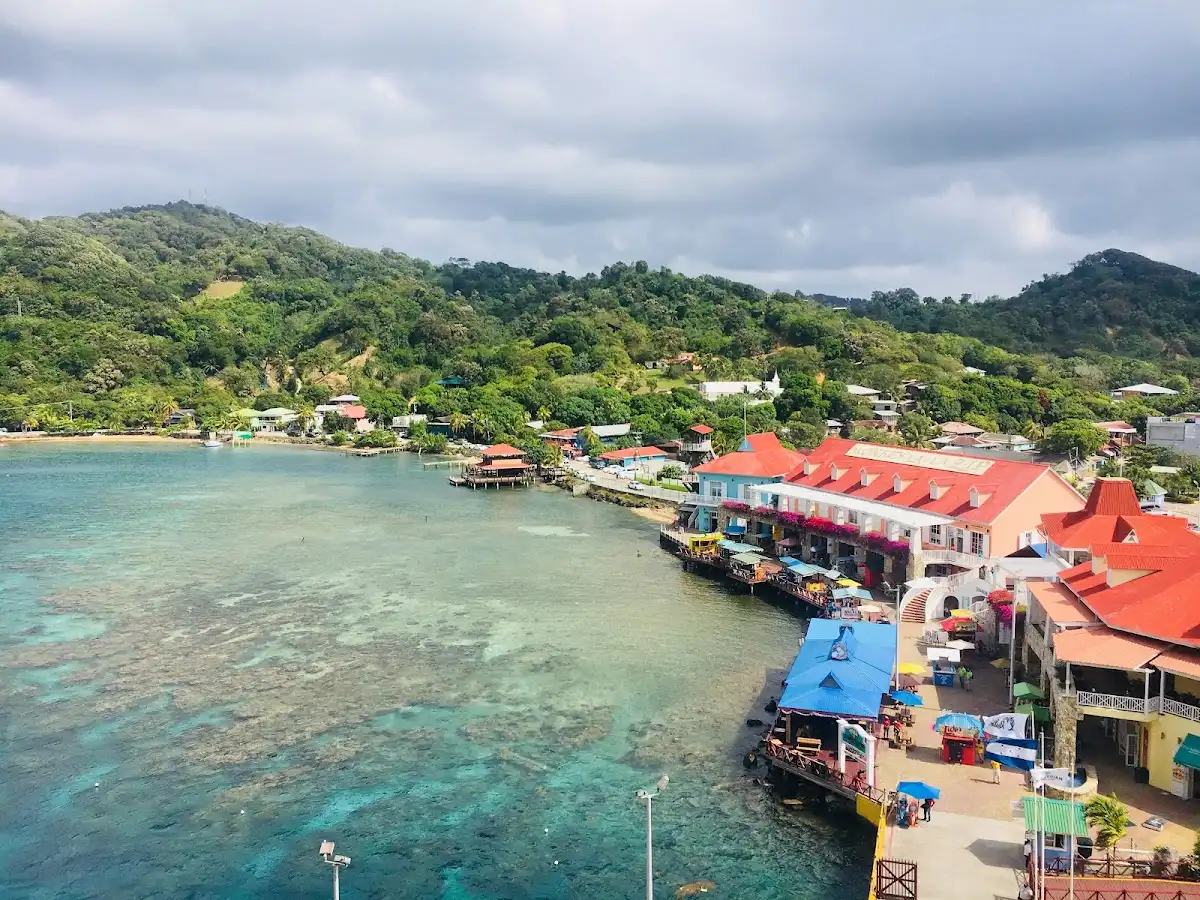
Roatán is famous for the Mesoamerican Barrier Reef, which runs so close to shore that you can wade off a dock and be over coral within minutes, and certifying here is some of the cheapest in the Caribbean. What gets overlooked is the island’s other half: Garifuna Punta Gorda, English-speaking Creole fishing villages in the east, and coves where nobody sells you anything. Roatán sits in the Bay Islands, off the north coast of Honduras. Skip the fenced cruise-port beach complexes around Mahogany Bay, which could be anywhere and cost you a day. West End is the better base: one sandy road, dive shops, and a clear sea you enter from a ladder, so you get a reef before breakfast. The smell I connect with it is coconut bread baking behind the shops at dawn, sweet and yeasty enough to pull you out of a bunk. Carry small US bills, because taxi drivers rarely have change for large ones.

Discover everything you want to know in the 📖 Honduras Travel Guide.


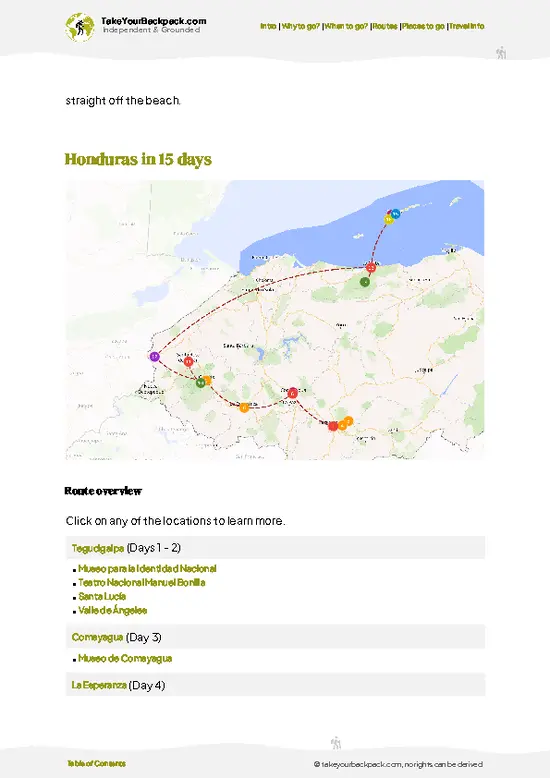
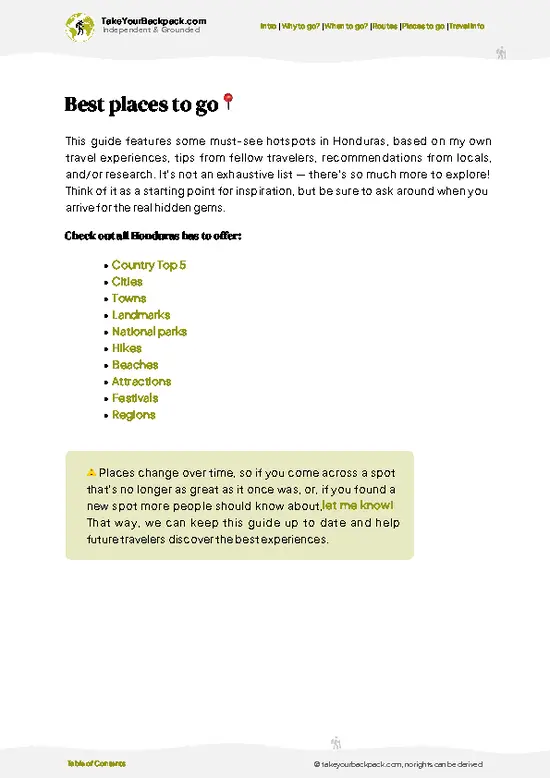
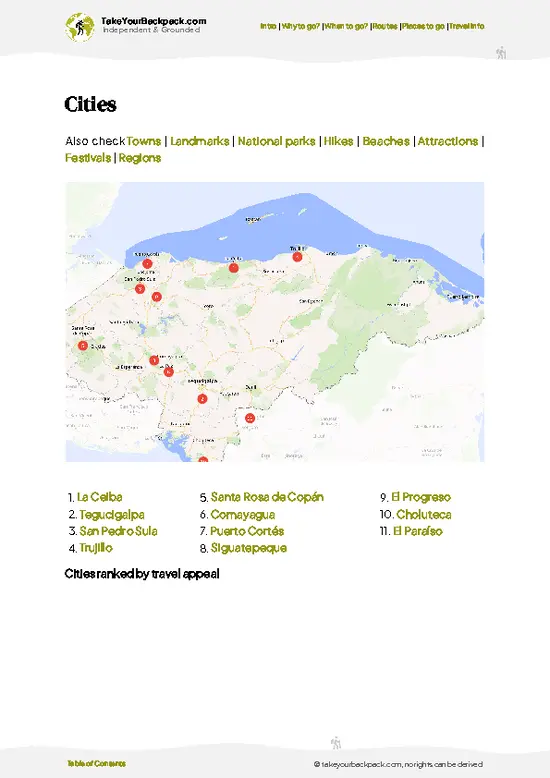
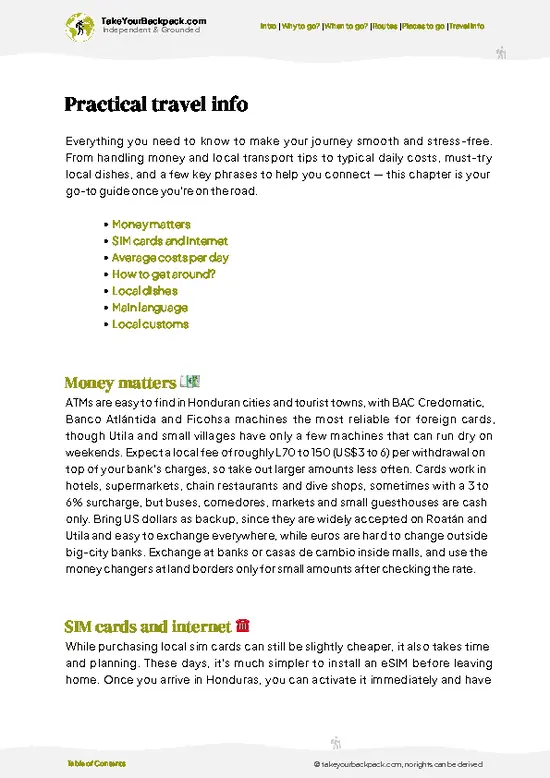
example page 0 from our offline Travel Guide for Honduras
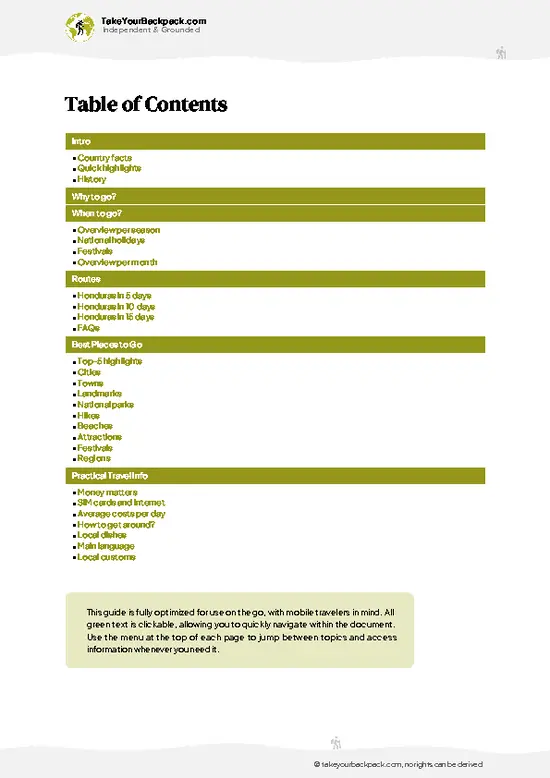
example page 1 from our offline Travel Guide for Honduras
example page 2 from our offline Travel Guide for Honduras
example page 3 from our offline Travel Guide for Honduras
example page 4 from our offline Travel Guide for Honduras
example page 5 from our offline Travel Guide for Honduras
example page 6 from our offline Travel Guide for Honduras
example page 7 from our offline Travel Guide for Honduras
Loading the map 🌍
CLICK TO FILTER
cities
towns
landmarks
national parks
hikes
beaches
attractions
festivals
regions
SHOW COUNTRY’S BESTSHOW ALL

✨ Why go?
Ranked #1 region in Honduras
Why Roatán should be on your travel list

Roatán works for backpackers because the reef starts at the shoreline. At West End, you can walk from your bed to a dive boat or a snorkel entry in minutes, so you spend your money on water time instead of transfers. Dive shops here run courses year-round, and the same strip has hostels, cheap fried-fish counters and a social crowd that makes solo travel easy.

The second reason is the island’s shape. One main road runs along the spine, with minibuses and shared taxis that let you swap the western beaches for the east without repacking a bag. That east side holds Punta Gorda, a Garifuna community with drumming, cassava bread and a very different mood from the dive bars. Add Creole villages around Oak Ridge, where wooden houses stand on stilts over mangrove water, and you get culture and nature … read more 👉
Roatán works for backpackers because the reef starts at the shoreline. At West End, you can walk from your bed to a dive boat or a snorkel entry in minutes, so you spend your money on water time instead of transfers. Dive shops here run courses year-round, and the same strip has hostels, cheap fried-fish counters and a social crowd that makes solo travel easy.

The second reason is the island’s shape. One main road runs along the spine, with minibuses and shared taxis that let you swap the western beaches for the east without repacking a bag. That east side holds Punta Gorda, a Garifuna community with drumming, cassava bread and a very different mood from the dive bars. Add Creole villages around Oak Ridge, where wooden houses stand on stilts over mangrove water, and you get culture and nature on a single island.

Finally, the Marine Park trails and cays give you low-effort wildlife: iguanas, parrots, and reef fish within a short paddle of the road. You never need to chase it. Slow travel here means picking a base, then letting the road bring the rest.

💡 HighlightsKey sights and experiences for travelers

  1. West Bay Beach: the island’s best-known stretch, a long arc of white sand with calm water and reef just offshore. Arrive early, before the cruise crowds, and snorkel the coral at the north end.
  2. West End village: a single street of dive shops, bars and sunset decks. It is the island’s backpacker hub, and the water taxis and boats leave from here.
  3. Mary’s Place: a dive site where you drop into a narrow crevice and swim through a steep canyon of coral. Experienced divers rate it highly, and the shops in West End run it regularly.
  4. Half Moon Bay: a calm, sheltered cove at the north end of West End with reef you can snorkel from the sand. It is far quieter than the beaches nearby.
  5. Gumbalimba Park: a forested reserve with a canopy tour, a bird aviary, iguanas and monkeys, plus a beach. There is an entry
… read more 👉
  1. West Bay Beach: the island’s best-known stretch, a long arc of white sand with calm water and reef just offshore. Arrive early, before the cruise crowds, and snorkel the coral at the north end.
  2. West End village: a single street of dive shops, bars and sunset decks. It is the island’s backpacker hub, and the water taxis and boats leave from here.
  3. Mary’s Place: a dive site where you drop into a narrow crevice and swim through a steep canyon of coral. Experienced divers rate it highly, and the shops in West End run it regularly.
  4. Half Moon Bay: a calm, sheltered cove at the north end of West End with reef you can snorkel from the sand. It is far quieter than the beaches nearby.
  5. Gumbalimba Park: a forested reserve with a canopy tour, a bird aviary, iguanas and monkeys, plus a beach. There is an entry fee, and the zip-line cost is separate.
  6. Carambola Botanical Gardens: shaded trails near Sandy Bay with tropical plants and a climb up a hill for a view over the island. Locals bring visitors here when they want a break from the sea.
  7. Punta Gorda: a Garifuna village on the north coast, the island’s oldest Garifuna settlement. Come for fresh seafood, coconut bread, and drumming in the evenings when the community hosts it. Few backpackers make the trip.
  8. Oak Ridge mangrove tunnels: kayak or take a small boat through narrow mangrove channels around stilt houses and fishing boats. Calm water and herons make this a quiet morning.
  9. Camp Bay Beach: a long, empty beach on the north shore with shallow clear water and few vendors. It is a favorite of residents on weekends.
  10. Port Royal wildlife refuge: hilly forest and coast at the eastern end, protecting the harbor where pirates once sheltered. Birds, quiet trails and nobody around.
On Roatán, start with West Bay Beach at dawn, because the calm water and empty sand disappear once cruise passengers arrive mid-morning.
Spotted a mistake or missing something? Contact us.

Things to do around Roatán

Ratings based on Tripadvisor reviews. When you book through this link, you support our work at no extra cost to you.

🏘️ NeighborhoodsWhere things are and how it's laid out

Roatán offers a mix of vibrant culture and stunning nature, making it a prime spot for backpackers. Here’s how the neighborhoods stack up:

West End: This is the heart of backpacker life. Expect a lively vibe with beach bars, dive shops, and restaurants lining the shore. It’s walkable, making it easy to explore. Prices range from budget hostels to mid-range hotels. Nightlife is buzzing, but you can find quieter spots if you wander a bit. Perfect for both short and longer stays, especially if you love socializing.

West Bay: Known for its beautiful beach, West Bay is a bit more upscale. It’s quieter than West End, ideal for those seeking relaxation. Accommodations here can be pricier, but you’ll find some budget options. The beach is stunning, and while nightlife is limited, the sunset views … read more 👉
Roatán offers a mix of vibrant culture and stunning nature, making it a prime spot for backpackers. Here’s how the neighborhoods stack up:

West End: This is the heart of backpacker life. Expect a lively vibe with beach bars, dive shops, and restaurants lining the shore. It’s walkable, making it easy to explore. Prices range from budget hostels to mid-range hotels. Nightlife is buzzing, but you can find quieter spots if you wander a bit. Perfect for both short and longer stays, especially if you love socializing.

West Bay: Known for its beautiful beach, West Bay is a bit more upscale. It’s quieter than West End, ideal for those seeking relaxation. Accommodations here can be pricier, but you’ll find some budget options. The beach is stunning, and while nightlife is limited, the sunset views are worth it. Great for a short getaway or a peaceful retreat.

Oak Ridge: This area offers a glimpse into local life, away from the tourist hustle. It’s less walkable, so renting a bike or using local transport is key. The vibe is laid-back, with fewer tourists and more authentic experiences. Costs are lower here, making it suitable for longer stays if you want to immerse yourself in the culture.

Utila: Technically not Roatán, but a quick ferry ride away. Known for its diving, it’s a backpacker favorite. The vibe is relaxed, with a focus on adventure. Prices are budget-friendly, and the nightlife is lively. Ideal for short stays focused on diving or exploring the island’s natural beauty.

Choose wisely based on what you value most: social scenes, tranquility, or local immersion. Each area has its own charm and trade-offs.

⌛️ 5 daysA smart one-week plan

Day 1: West End: Arrive and settle in at West End, because the island’s taxis and minibuses start here and the shops are within walking distance. Snorkel off the docks in the afternoon, then eat fried fish at one of the street counters and watch the sunset from a deck. The main road is the island’s only real artery, so everything you plan afterward starts with a short ride along it.

Day 2: West Bay: Take a shared taxi to West Bay Beach early, when the sand is empty and the water is glassy. Snorkel the reef at the north end, then walk back toward Half Moon Bay for a quieter swim before the afternoon heat. If you want to dive, book a morning boat at West End for Mary’s Place the day before.

Day 3: Sandy Bay: Start at Gumbalimba Park, on the road to West Bay, for the forest, birds and canopy … read more 👉
Day 1: West End: Arrive and settle in at West End, because the island’s taxis and minibuses start here and the shops are within walking distance. Snorkel off the docks in the afternoon, then eat fried fish at one of the street counters and watch the sunset from a deck. The main road is the island’s only real artery, so everything you plan afterward starts with a short ride along it.

Day 2: West Bay: Take a shared taxi to West Bay Beach early, when the sand is empty and the water is glassy. Snorkel the reef at the north end, then walk back toward Half Moon Bay for a quieter swim before the afternoon heat. If you want to dive, book a morning boat at West End for Mary’s Place the day before.

Day 3: Sandy Bay: Start at Gumbalimba Park, on the road to West Bay, for the forest, birds and canopy tour, then take a minibus east to Carambola Botanical Gardens in Sandy Bay. Both are short rides from West End, so you can fit them into one day without paying for a long ride. Return to West End by late afternoon, since minibuses thin out toward evening.

Day 4: Punta Gorda: Move to the east side by changing minibuses at Coxen Hole, the island’s transport hub. Punta Gorda rewards time on foot: Garifuna cooking, coconut bread and drumming if a gathering is on. Sleep in the east to avoid the rush back.

Detour: from Oak Ridge, hire a boat or kayak for a morning in the mangrove tunnels. It adds a lot and stays on the road you are already using.

Day 5: Camp Bay: Finish on the north shore at Camp Bay Beach, where shallow clear water and an empty beach make a calm last day. Then head back west along the main road.

If you only get one day, make it Day 4. Punta Gorda is the one place on Roatán you cannot replace with a beach anywhere else.

🌤️ When to go?Choosing the right time of year

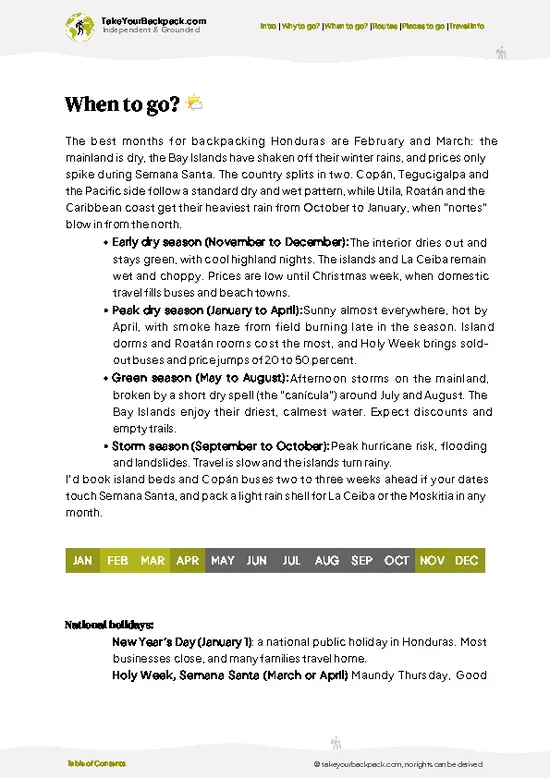
  • Dry Season (February to May): Roatán is at its most reliable here, with highs of 28 to 31°C (82 to 88°F), calm seas, and underwater visibility that often passes 30 meters (100 feet). Days run about 11 to 13 hours. Easter week fills beds and lifts prices.
  • Early Wet Season (June to September): Expect short, hot downpours and highs near 31 to 33°C (88 to 91°F). Dive shops quiet down, dorm and room rates soften, and the sea stays warm at about 28°C (82°F). Sea turtles are still around.
  • Rainy Peak (October to January): This is the wettest stretch, with the strongest rain from November to January, lows near 22°C (72°F), and rougher water that cancels some boat trips and ferries. Hurricane risk runs June to November, peaking around September and October. Prices are lowest, except around Christmas and
… read more 👉
  • Dry Season (February to May): Roatán is at its most reliable here, with highs of 28 to 31°C (82 to 88°F), calm seas, and underwater visibility that often passes 30 meters (100 feet). Days run about 11 to 13 hours. Easter week fills beds and lifts prices.
  • Early Wet Season (June to September): Expect short, hot downpours and highs near 31 to 33°C (88 to 91°F). Dive shops quiet down, dorm and room rates soften, and the sea stays warm at about 28°C (82°F). Sea turtles are still around.
  • Rainy Peak (October to January): This is the wettest stretch, with the strongest rain from November to January, lows near 22°C (72°F), and rougher water that cancels some boat trips and ferries. Hurricane risk runs June to November, peaking around September and October. Prices are lowest, except around Christmas and New Year, when they jump.
Book December and Easter beds early, and plan your dives for March through May if visibility matters most.


source: climatestotravel.comJANJanuary: fair for travelingFEBFebruary: excellent for travelingMARMarch: excellent for travelingAPRApril: excellent for travelingMAYMay: highly recommended for travelingJUNJune: fair for travelingJULJuly: fair for travelingAUGAugust: fair for travelingSEPSeptember: fair for travelingOCTOctober: fair for travelingNOVNovember: highly recommended for travelingDECDecember: fair for traveling
honduras-region-roatan v1
© Google |

✈️ The backpacker research shortcutHonduras Travel Guide

An offline-friendly backpacking guide with optimized travel routes, ranked highlights, transport advice, and the best areas to stay.
example page 0 from our offline Travel Guide for Honduras
example page 1 from our offline Travel Guide for Honduras
example page 2 from our offline Travel Guide for Honduras
example page 3 from our offline Travel Guide for Honduras
example page 4 from our offline Travel Guide for Honduras
example page 5 from our offline Travel Guide for Honduras
example page 6 from our offline Travel Guide for Honduras
example page 7 from our offline Travel Guide for Honduras
The digital guide (255 pages) contains:
✅ 70 highlights, ranked by travel appeal
✅ Optimized 5, 10 & 15-day travel routes
✅ Cities, national parks, landmarks, beaches
✅ How to get around
✅ Offline-friendly for travel without Wi-Fi
👉 Click to see all 30+ guide features

📅 Plan smarter in minutes, not weeks
✅ Month by month travel advice
✅ Festivals & national holidays
✅ Budget expectations

🗺️ Go to the right places, skip the overrated ones
✅ Honest pros & cons of destinations
✅ Top hikes, parks & viewpoints
✅ Lesser-known places most travelers miss
✅ Clear “worth it vs skip it” guidance

🛏️ Travel smoothly without rookie mistakes
✅ Best areas to stay
✅ Transport systems explained simply
✅ Common scams & safety advice
✅ SIM cards, money & practical tips

🌍 Understand the country, not just visit it
✅ Culture & traditions
✅ 52 Essential phrases & customs
✅ Festivals worth planning around
✅ Traveler-friendly historical context
✅ Insights that make places more meaningful

📱 Built for real travel conditions
✅ Fully downloadable PDF
✅ Works completely offline
✅ Optimized for phone use
✅ Useful in remote areas & buses
✅ Everything in one place
Stop searching, start planning
Get instant access to your full guide. 30‑day money-back guarantee.
+ Add another guide for just

By proceeding you agree to our terms.
Sent to your inbox immediately after payment • 100% Secure Checkout
Best Backpacking Travel Advisor 2025 tourism awardBest Backpacking
Travel Advisor
2025
What others say about Take Your Backpack Guides:
⭐⭐⭐⭐⭐
Fantastic, amazing amount of information!
⭐⭐⭐⭐⭐
My goodness this is amazing, it's what I've been looking for hats off too you!
⭐⭐⭐⭐⭐
I think this is absolutely BRILLIANT
⭐⭐⭐⭐
Very complete and informative. It's still missing places, but I gotta to commend you
⭐⭐⭐⭐⭐
This is truly amazing, thank you, can't wait to explore it with my kids!
⭐⭐⭐⭐⭐
Awesome resource, thank you!
⭐⭐⭐⭐⭐
This is amazing! Can't wait to explore the ones I haven't seen
⭐⭐⭐⭐
I love this! Well done, great idea.
⭐⭐⭐⭐⭐
Thanks for taking the time to make this gem!
⭐⭐⭐⭐⭐
This might be the best website I've ever seen.
⭐⭐⭐⭐⭐
Congratulations, and thank you so much for your work; it's incredibly valuable.
⭐⭐⭐⭐
In all seriousness I think you did a great job pointing out the important spots
⭐⭐⭐⭐⭐
10/10 very good
⭐⭐⭐⭐⭐
As someone who's only just starting to visit regularly this is awesome, thank you.
⭐⭐⭐⭐
Thank you very much! I'm going to visit my dad, it's going to be very useful!
⭐⭐⭐⭐⭐
This is really cool! We'll be travelling for the first time and this definitely come in handy.
⭐⭐⭐⭐⭐
You are now our minister of culture, congratulations 👨‍💼
⭐⭐⭐⭐⭐
Just wanted to tell you that this is a pearl! Going to follow your recommendations.
⭐⭐⭐⭐⭐
This is so cool. I'll definitely be using the resource for my travels soon.
⭐⭐⭐⭐⭐
This is very impressive! Good work.
⭐⭐⭐⭐⭐
This is an amazing and informative site. Very well done!

🛏️ Where to stay?How to pick the right area

West End is where most backpackers should sleep, with dorms and budget rooms packed along one sandy main street, dive shops on every block, and a crowd that actually talks to each other. You can walk everywhere, snorkel off the dock, and book a dive course in the morning. Dorm beds usually run US$12 to 25 and basic private rooms US$35 to 70, with prices rising in the dry season.

West Bay sits a short water taxi ride away and has the best white sand on the island. It is quieter and pricier, better for a day trip than a bed unless you want a beach-first stay with fewer bars.

Sandy Bay and Anthony’s … read more 👉
West End is where most backpackers should sleep, with dorms and budget rooms packed along one sandy main street, dive shops on every block, and a crowd that actually talks to each other. You can walk everywhere, snorkel off the dock, and book a dive course in the morning. Dorm beds usually run US$12 to 25 and basic private rooms US$35 to 70, with prices rising in the dry season.

West Bay sits a short water taxi ride away and has the best white sand on the island. It is quieter and pricier, better for a day trip than a bed unless you want a beach-first stay with fewer bars.

Sandy Bay and Anthony’s Key lie along the north shore toward the west and suit people interested in marine science and calmer evenings, although the social scene is thinner.

French Harbour and Coxen Hole are working towns. Coxen Hole has the island’s main market and sits near the Dixon Cove ferry terminal, so it is practical for a night before an early boat, but it lacks the social energy of the beach areas.

Oak Ridge and Punta Gorda on the east side give you a glimpse of fishing villages and Garifuna culture. Rooms are scarce, so these are better as day outings from West End.

🚌 Getting aroundHow to get from A to B

Booking a taxi from the airport straight to West End without asking the fare first is the habit that drains the most cash on Roatán, since unmetered drivers quote tourist prices that can double the going rate. Agree on the price in US dollars before you get in, or walk to the road and share a ride. Most backpackers stick to one main road and a handful of water taxis, and it works well enough if you accept that nothing runs on a tight timetable.
  • Colectivo vans and minibuses: These run along the main road between Coxen Hole, West End, West Bay, and French Harbour for roughly US$1 to 3 a hop. They are packed, loud, and stop wherever you wave. You get cheap rides with locals and a quick feel for the island, but service thins out after dark.
  • Taxis: Short hops such as West End to West Bay cost around
… read more 👉
Booking a taxi from the airport straight to West End without asking the fare first is the habit that drains the most cash on Roatán, since unmetered drivers quote tourist prices that can double the going rate. Agree on the price in US dollars before you get in, or walk to the road and share a ride. Most backpackers stick to one main road and a handful of water taxis, and it works well enough if you accept that nothing runs on a tight timetable.
  • Colectivo vans and minibuses: These run along the main road between Coxen Hole, West End, West Bay, and French Harbour for roughly US$1 to 3 a hop. They are packed, loud, and stop wherever you wave. You get cheap rides with locals and a quick feel for the island, but service thins out after dark.
  • Taxis: Short hops such as West End to West Bay cost around US$8 to 15, and the airport to West End about US$20 to 30. Worth it at night or with a heavy pack. Skip them for daytime trips along the main road, where a colectivo does the same job for a fraction of the price.
  • Water taxis: In West End, small boats shuttle you to West Bay beach for about US$3 to 5, in 10 to 15 minutes. Spend the money. You skip the hot road and land right on the white sand with your feet barely wet.
  • Ferry from La Ceiba: The mainland crossing takes about 1 hour to 1 hour 30 minutes and costs roughly US$30 to 45 one way. It sails once or twice a day, and rough seas can cancel it. Sit near the middle if the swell is up, and arrive at Dixon Cove with time to catch a ride onward.
  • Rental scooters and bikes: Scooters rent for around US$30 to 45 a day. The road is paved and fine for a day of exploring the quieter east side, ending at a roadside seafood shack. Avoid riding at night, as there are potholes and few streetlights.
Keep a stack of small US dollar bills, since drivers rarely have change for large ones.

👛 Costs (as of 23 October 2026)Typical daily expenses

Backpacking in Roatán, Honduras, means balancing your budget against the island’s laid-back vibe and tourist-driven prices. Here’s how your daily costs typically break down:
  • Dorm Accommodation (High Season): Expect to pay around $15-$25 per night. High season pushes prices up as demand spikes, especially near popular beaches and dive spots.
  • Dorm Accommodation (Off-Season): Dropping to about $10-$18 per night, off-season rates offer a bit more breathing room for budget travelers willing to dodge the crowds.
  • Meals: Street food and local eateries will run you $5-$10 per meal. If you stick to Honduran staples like baleadas or fresh seafood at small joints, you’ll keep costs low without sacrificing flavor.
  • Local Transport: Getting around by colectivo or local bus costs roughly $1-$3 per trip.
… read more 👉
Backpacking in Roatán, Honduras, means balancing your budget against the island’s laid-back vibe and tourist-driven prices. Here’s how your daily costs typically break down:
  • Dorm Accommodation (High Season): Expect to pay around $15-$25 per night. High season pushes prices up as demand spikes, especially near popular beaches and dive spots.
  • Dorm Accommodation (Off-Season): Dropping to about $10-$18 per night, off-season rates offer a bit more breathing room for budget travelers willing to dodge the crowds.
  • Meals: Street food and local eateries will run you $5-$10 per meal. If you stick to Honduran staples like baleadas or fresh seafood at small joints, you’ll keep costs low without sacrificing flavor.
  • Local Transport: Getting around by colectivo or local bus costs roughly $1-$3 per trip. These are informal but reliable and the cheapest way to navigate the island.
  • City Transport Pass: Roatán doesn’t have a formal city transport pass system. Budget for individual rides instead, as fixed passes aren’t part of the local transit setup.
  • Basic Activities/Entry Fees: Snorkeling spots, small museums, or entry to natural parks typically charge $5-$15. Diving and guided tours are pricier but optional for a basic backpacking budget.
  • Miscellaneous Expenses: Factor in $3-$7 daily for water, snacks, occasional tips, or small purchases like sunscreen or souvenirs.

All told, you’re looking at a daily spend of roughly $25 to $55 if you’re playing it smart and independent. Roatán’s charm is in its simplicity—spend a little more for comfort or adventure, but know exactly what you’re trading off.


source: honduras.travel
⚠️ Prices can change and everyone travels differently, so take this as a rough guide. Hope it helps you plan your adventure!

🚌 Day tripsWhere to go beyond the main area

Roatán, Honduras, is a backpacker’s dream base for day trips, offering a mix of adventure, culture, and stunning scenery. Here’s how to make the most of your time without breaking the bank.

West End Beach Day
On Roatán’s western tip, West End is the perfect spot to soak up sun and local vibes. The beach is lined with colorful bars and restaurants, where you can grab a fresh ceviche or a cold beer. Snorkeling here is a must; the coral reefs are teeming with life, and you can rent gear for around $10. Aim for the early morning to beat the crowds and enjoy the calm waters. A common mistake is to skip the local eateries for overpriced tourist traps—don’t miss the chance to taste authentic Honduran food!


Little French Key
A short boat ride from Roatán, Little French Key is an idyllic escape. … read more 👉
Roatán, Honduras, is a backpacker’s dream base for day trips, offering a mix of adventure, culture, and stunning scenery. Here’s how to make the most of your time without breaking the bank.

West End Beach Day
On Roatán’s western tip, West End is the perfect spot to soak up sun and local vibes. The beach is lined with colorful bars and restaurants, where you can grab a fresh ceviche or a cold beer. Snorkeling here is a must; the coral reefs are teeming with life, and you can rent gear for around $10. Aim for the early morning to beat the crowds and enjoy the calm waters. A common mistake is to skip the local eateries for overpriced tourist traps—don’t miss the chance to taste authentic Honduran food!


Little French Key
A short boat ride from Roatán, Little French Key is an idyllic escape. This private island offers a slice of paradise with hammocks, beach chairs, and crystal-clear waters. For about $30, you can spend the day enjoying the beach, snorkeling, or even interacting with animals at the small sanctuary. The best time to visit is during the week when it’s less crowded. Many first-timers underestimate the time needed for the boat ride, so plan for about 30 minutes each way.


Gumbalimba Park
Located near West Bay, Gumbalimba Park is a blend of nature and adventure. You can zip-line through the treetops or stroll through the lush gardens filled with exotic wildlife. Entry is around $30, which includes access to the park and its activities. The park is best visited in the dry season (November to April) to avoid muddy trails. A common pitfall is not budgeting enough time for the various activities—plan to spend at least half a day here.
👉 Explore Gumbalimba Park

Pigeon Cay
For a more off-the-beaten-path experience, take a boat to Pigeon Cay, about an hour from Roatán. This secluded spot is perfect for those seeking tranquility and stunning views. The trip costs around $40, including transportation and a picnic lunch. The best time to go is during the dry season, and be sure to bring your own snorkeling gear. Many backpackers overlook this gem, thinking it’s too far, but the journey is worth it for the serene atmosphere.


Each of these trips offers a unique slice of Roatán, making it easy to explore while keeping your budget intact. Choose wisely, and you’ll create lasting memories without sacrificing comfort or cash.

🍲 FoodLocal Flavors for Backpackers

Start with the baleada or the island’s signature conch soup, a coconut-milk broth thick with chunks of conch, yuca, and plantain, heavy with pepper and lime. Fresh grilled snapper or lobster comes with tajadas (fried plantain slices) and pickled cabbage, usually for US$8 to 15. Roatán’s Garifuna communities cook machuca, mashed green plantain with coconut fish soup, and fry golden coconut bread that smells of toasted sugar and browned butter.

For eating cheaply, look for fondas and small family kitchens in Coxen Hole and French Harbour, where plates of rice, beans, and chicken or fish cost US$3 to 6. West End has beachfront shacks, bakeries, and casual grills, with fish tacos and ceviche served in thin paper trays. Evenings revolve around beach bars with rum punch and the local Salva Vida … read more 👉
Start with the baleada or the island’s signature conch soup, a coconut-milk broth thick with chunks of conch, yuca, and plantain, heavy with pepper and lime. Fresh grilled snapper or lobster comes with tajadas (fried plantain slices) and pickled cabbage, usually for US$8 to 15. Roatán’s Garifuna communities cook machuca, mashed green plantain with coconut fish soup, and fry golden coconut bread that smells of toasted sugar and browned butter.

For eating cheaply, look for fondas and small family kitchens in Coxen Hole and French Harbour, where plates of rice, beans, and chicken or fish cost US$3 to 6. West End has beachfront shacks, bakeries, and casual grills, with fish tacos and ceviche served in thin paper trays. Evenings revolve around beach bars with rum punch and the local Salva Vida beer, cold and light, at around US$2 to 3 a bottle. Try fresh coconut water sold from machete-wielding vendors near the beaches.

A few customs help. Menus are often in English and prices in US dollars, though you can also pay in lempiras. A 10 percent service charge is sometimes added to the bill, so check before tipping extra. Service is relaxed, so order without hurrying, and remember that lobster has a closed season in spring.

🛡️ SafetySafety Tips and Common Scams in Roatán

Roatán is generally safe for backpackers, but a few smart habits can enhance your experience. Stick to well-trodden areas, especially in West End and West Bay, where the vibe is lively and friendly. When wandering at night, keep to the main streets and avoid dimly lit shortcuts. If you’re solo, consider joining a group for evening activities; it’s a great way to meet fellow travelers and stay secure.

Scams are rare, but some vendors may inflate prices for tourists. Always ask for prices upfront, especially for taxis or tours. If a deal seems too good to be true, it probably is. A common annoyance is the persistent beach vendors; a polite but firm “no, gracias” usually does the trick.

Carry your belongings close and be mindful of your surroundings. A little awareness goes a long way in ensuring … read more 👉
Roatán is generally safe for backpackers, but a few smart habits can enhance your experience. Stick to well-trodden areas, especially in West End and West Bay, where the vibe is lively and friendly. When wandering at night, keep to the main streets and avoid dimly lit shortcuts. If you’re solo, consider joining a group for evening activities; it’s a great way to meet fellow travelers and stay secure.

Scams are rare, but some vendors may inflate prices for tourists. Always ask for prices upfront, especially for taxis or tours. If a deal seems too good to be true, it probably is. A common annoyance is the persistent beach vendors; a polite but firm “no, gracias” usually does the trick.

Carry your belongings close and be mindful of your surroundings. A little awareness goes a long way in ensuring your trip is smooth and enjoyable. Embrace the island’s charm while staying savvy, and you’ll have a fantastic time.

FAQTraveler FAQ

Four to five days covers the essentials on Roatán, with time for West End, a beach afternoon at West Bay, and a dive or snorkel trip. An Open Water course takes 3 to 4 days, so divers often stay a week or more. Fit in a day for the east side villages of Oak Ridge and Punta Gorda.
Roatán has no train, and getting around without a car works through colectivo vans on the main road for about US$1 to 3 a ride, plus water taxis from West End to West Bay for US$3 to 5. Taxis cover night trips, with the airport to West End around US$20 to 30. Scooters at roughly US$30 to 45 a day suit the quieter east side.
Roatán is known for its reef, part of the Mesoamerican Barrier Reef, with walls and wrecks that make it one of the cheapest places in the Caribbean to learn to dive. A certification course costs roughly US$300 to 400. Its beaches at West Bay, the Garifuna food and culture at Punta Gorda, and the relaxed West End scene round out the appeal.
⚠️ Things can change over time, so always validate details locally before you go.

Other Honduran regions near Roatán

Explore more nearby:

  • Cayos Cochinos—Garifuna sandbar stays, fringing reef snorkeling, pink boa trails, oil-lamp nights| 40 km away
  • Guanaja—Car-free Bonacca, wreck dives, Pico Dixon, mangrove inlets| 71 km away
  • El Cacao—cacao farms, rural villages, foothill trails| 150 km away

💡 Not sure where to go next?
Create a personalized itinerary for Honduras including Roatán and the places that fit your trip.

Generate my itinerary

👉 Discover all regions

Or checkout all Honduras has to offer (think cities, towns, villages, national parks, hikes, beaches, festivals)
Country photo of Honduras

We 💚 feedbackIs it worth it?

Roatán trips go wrong when travelers book every night in West Bay and never leave the western strip. You then see only the island’s priciest, most crowded side. I would spend the first nights in West End, then move east for Punta Gorda and the quiet shore, and I would carry cash for the minibuses.

✈️ When did I visit Honduras?
Honduras I visited during my half year trip through South and Central America back in 2003

✍️ Help improve this page!
The information on this page is based on my own backpacking experience in Honduras, supplemented with up-to-date research and feedback from other travelers. Travel details can change, so if you notice anything outdated or incomplete, feel free to let me know.


🙋‍♂️ Give feedback

👋 Meet the founderWho’s Behind Take Your Backpack?

Johan, backpacker and founder of TakeYourBackpackHi, I’m Johan (Netherlands 🇳🇱), the creator of TakeYourBackpack. Over the past 3 decades, I’ve backpacked through 90+ countries across six continents, gaining extensive experience with independent travel, long-term trips, and overland routes.

This site is built on a combination of firsthand travel experience and carefully curated insights from other backpackers. Many guides are based on places I’ve personally visited, while others bring together tips, observations, and practical advice shared by trusted travelers I’ve met along the way.

The goal is to provide realistic, experience-driven guidance — not generic itineraries — so you can explore destinations with better context, clearer expectations, and more confidence.