×

Hungary🇭🇺 | attractionsDohány Street Synagogue and Jewish MuseumMoorish architecture, memorial garden, Jewish heritage | things to do and best time to go

Explore Great Market HallExplore Hungarian National Gallery

Backpacking in Dohány Street Synagogue and Jewish Museum
👍 Recommendedattraction ranked #8
By Johan Kruseman 🇳🇱 | Updated September 4, 2026

If you want to actually *hear* the stories behind the stones, visit Dohány Street Synagogue and Jewish Museum late in the afternoon—most tour groups have cleared out, and you can linger in the courtyard without being herded along. Smack in Budapest’s historic Jewish Quarter, this isn’t just a photo stop; it’s a living, breathing crossroads of memory and resilience. Backpackers get a double shot here: the jaw-dropping scale of Europe’s largest synagogue, plus a museum that doesn’t sugarcoat Hungary’s tangled, often brutal, 20th-century history. Yes, the ticket price stings compared to most Budapest attractions, and yes, you’ll be elbow-to-elbow with cruise ship crowds if you show up at noon. But the payoff is real. The atmosphere is heavy, but not hopeless—there’s a pulse to the place, especially if you catch a local guide mid-story. Compared to the city’s castles and baths, this is less about spectacle and more about substance. If you want a shortcut to Budapest’s soul, start here.

Discover everything you want to know in the 📖 Hungary Travel Guide.


Get your Hungary guide
90 ranked highlights, routes & tips, works offline (345 pages)
Loading the map 🌍
CLICK TO FILTER
cities
towns
villages
landmarks
national parks
hikes
beaches
attractions
festivals
regions
SHOW COUNTRY’S BESTSHOW ALL

✨ Why go?
Ranked #8 attraction in Hungary
Reasons people choose to visit here

The Dohány Street Synagogue isn’t just another pretty building to tick off your Budapest list—it’s a heavyweight in Europe’s Jewish history and a brutal reminder of the past’s shadows. Yes, it’s crowded, especially midday when tour groups swarm like bees, and the entrance fee isn’t pocket change. But here’s the kicker: this place is the largest synagogue in Europe and the second largest in the world. That scale alone demands respect. Inside, the intricate Moorish Revival architecture grabs you by the eyeballs, but it’s the layers beneath—the stories of resilience, loss, and survival during the Holocaust—that hit hardest. The adjoining Jewish Museum and the hauntingly beautiful Raoul Wallenberg Memorial Park deepen the experience, turning a visit into a profound reckoning with history. For … read more 👉
The Dohány Street Synagogue isn’t just another pretty building to tick off your Budapest list—it’s a heavyweight in Europe’s Jewish history and a brutal reminder of the past’s shadows. Yes, it’s crowded, especially midday when tour groups swarm like bees, and the entrance fee isn’t pocket change. But here’s the kicker: this place is the largest synagogue in Europe and the second largest in the world. That scale alone demands respect. Inside, the intricate Moorish Revival architecture grabs you by the eyeballs, but it’s the layers beneath—the stories of resilience, loss, and survival during the Holocaust—that hit hardest. The adjoining Jewish Museum and the hauntingly beautiful Raoul Wallenberg Memorial Park deepen the experience, turning a visit into a profound reckoning with history. For backpackers threading through Hungary, it’s a milestone that connects you to a narrative far bigger than Budapest’s nightlife or thermal baths. It’s a place where you feel the weight of history and the pulse of cultural revival. If you’re after something that challenges your perspective and rewards your effort with raw, unfiltered truth, this is the stop that delivers every time.
Want to include Dohány Street Synagogue and Jewish Museum in your Hungary route?
Create a personalized Hungary itinerary that includes Dohány Street Synagogue and Jewish Museum and the places that fit your trip — based on your travel style, budget, and available time. Get your route in seconds.

Generate my trip

💡 HighlightsDon't-miss highlights and experiences

Main Sanctuary
Let’s get real: the Dohány Street Synagogue’s main hall is not just “Europe’s largest.” It’s a jaw-dropper, even if you’ve seen a hundred cathedrals. The Moorish Revival architecture is a riot of color and pattern—think golden stars on a deep blue ceiling, horseshoe arches, and a pipe organ that once hosted Franz Liszt. The scale is almost theatrical, but the atmosphere is reverent. You’ll feel the weight of history and the pulse of a living community, not just a photo op.


Jewish Museum
Skip the Instagram “I was here” shot and actually walk through the museum. It’s attached to the synagogue, but it’s not an afterthought. The collection is dense with ritual objects, Torah crowns, and everyday artifacts that survived centuries of upheaval. The Holocaust memorial room is blunt … read more 👉
Main Sanctuary
Let’s get real: the Dohány Street Synagogue’s main hall is not just “Europe’s largest.” It’s a jaw-dropper, even if you’ve seen a hundred cathedrals. The Moorish Revival architecture is a riot of color and pattern—think golden stars on a deep blue ceiling, horseshoe arches, and a pipe organ that once hosted Franz Liszt. The scale is almost theatrical, but the atmosphere is reverent. You’ll feel the weight of history and the pulse of a living community, not just a photo op.


Jewish Museum
Skip the Instagram “I was here” shot and actually walk through the museum. It’s attached to the synagogue, but it’s not an afterthought. The collection is dense with ritual objects, Torah crowns, and everyday artifacts that survived centuries of upheaval. The Holocaust memorial room is blunt and unfiltered—no soft-focus storytelling here. You’ll leave with a sense of what was lost, but also what’s fiercely preserved.


Raoul Wallenberg Memorial Park
Out back, you’ll find the Tree of Life—a metal weeping willow with names of Holocaust victims etched on every leaf. It’s not subtle, and it shouldn’t be. The park is a place to sit, reflect, and feel the raw edges of history. The memorial honors not just the dead, but the righteous among nations—people who risked everything to save others. It’s a gut punch, but also a reminder that courage is contagious.


Heroes’ Temple
This smaller synagogue, tucked beside the main building, is easy to overlook. Don’t. It was built to honor Hungarian Jews who died in World War I, and it’s still used for services. The intimacy here is a sharp contrast to the grandeur next door. If you want to feel the heartbeat of a community, not just its monuments, step inside.


The Cemetery
Here’s the myth-buster: Jewish tradition forbids cemeteries next to synagogues, but history forced a break in the rules. During the Holocaust, thousands died in the Budapest Ghetto, and the synagogue grounds became a burial site out of necessity. Walking among the gravestones, you’re not just seeing history—you’re standing in the middle of it. It’s sobering, but it’s also a testament to survival.


Guided Tours with Local Historians
Forget the generic audio guide. The real magic is in the stories told by local guides—often descendants of the community. They’ll point out details you’d never notice: bullet holes from WWII, hidden Stars of David, the politics behind the architecture. If you want to understand Budapest’s Jewish Quarter beyond the surface, this is your ticket.


Live Concerts and Events
If you’re lucky, catch a concert in the main hall. The acoustics are phenomenal, and the programming ranges from classical to klezmer. This isn’t just a relic; it’s a living, breathing venue. The energy during a performance is electric—proof that history isn’t just something you look at, but something you feel.
Spotted a mistake or missing something? Contact us.

Things to do around Dohány Street Synagogue and Jewish Museum

Ratings based on Tripadvisor reviews. When you book through this link, you support our work at no extra cost to you.

🌤️ When to go?Best time to visit Dohány Street Synagogue and Jewish Museum


  • Weather & Temperature: Budapest’s climate swings from chilly winters to hot summers. From November to February, expect temperatures around 0°C to 5°C (32°F to 41°F), which can make wandering the Dohány Street Synagogue feel brisk but less crowded. Late spring (April-May) and early autumn (September-October) offer mild weather, typically 15°C to 22°C (59°F to 72°F), perfect for comfortable exploration without sweating through your shirt.

  • Daylight Hours: Winter days are short, with as little as 8 hours of daylight in December, limiting your sightseeing window. By contrast, May through August stretches daylight to 15 hours or more, giving you plenty of time to soak in the architecture and museum exhibits without rushing.

  • Crowds: Peak tourist season hits in summer (June-August), when the
read more 👉

  • Weather & Temperature: Budapest’s climate swings from chilly winters to hot summers. From November to February, expect temperatures around 0°C to 5°C (32°F to 41°F), which can make wandering the Dohány Street Synagogue feel brisk but less crowded. Late spring (April-May) and early autumn (September-October) offer mild weather, typically 15°C to 22°C (59°F to 72°F), perfect for comfortable exploration without sweating through your shirt.

  • Daylight Hours: Winter days are short, with as little as 8 hours of daylight in December, limiting your sightseeing window. By contrast, May through August stretches daylight to 15 hours or more, giving you plenty of time to soak in the architecture and museum exhibits without rushing.

  • Crowds: Peak tourist season hits in summer (June-August), when the synagogue is swarmed by tour groups and selfie sticks. Visiting in shoulder seasons like March or October means fewer people, so you get a more personal, reflective experience inside this historic site.

  • Seasonal Activities: The synagogue hosts special events around Jewish holidays like Hanukkah (December) and Passover (spring), which can add depth to your visit but also spike visitor numbers and prices. If you want the cultural buzz without the crush, avoid these peak event times.

  • Price Fluctuations: Entrance fees and guided tours tend to be pricier during summer and major holidays. Booking in shoulder months like April or September often nets better deals and more flexible tour options, letting you stretch your budget further.


Pro-tip: Aim for late spring or early autumn—mild weather, manageable crowds, and reasonable prices combine to make your visit to Dohány Street Synagogue genuinely rewarding, not just another tick on the tourist checklist.


source: climatestotravel.comJANJanuary: good for travelingFEBFebruary: good for travelingMARMarch: highly recommended for travelingAPRApril: excellent for travelingMAYMay: excellent for travelingJUNJune: fair for travelingJULJuly: fair for travelingAUGAugust: fair for travelingSEPSeptember: excellent for travelingOCTOctober: highly recommended for travelingNOVNovember: good for travelingDECDecember: good for traveling
hungary-attraction-dohany-street-synagogue-and-jewish-museum
© Google |

✈️ The backpacker research shortcutHungary Travel Guide

An offline-friendly backpacking guide with optimized travel routes, ranked highlights, transport advice, and the best areas to stay.
example page 0 from our offline Travel Guide for Hungary
example page 1 from our offline Travel Guide for Hungary
example page 2 from our offline Travel Guide for Hungary
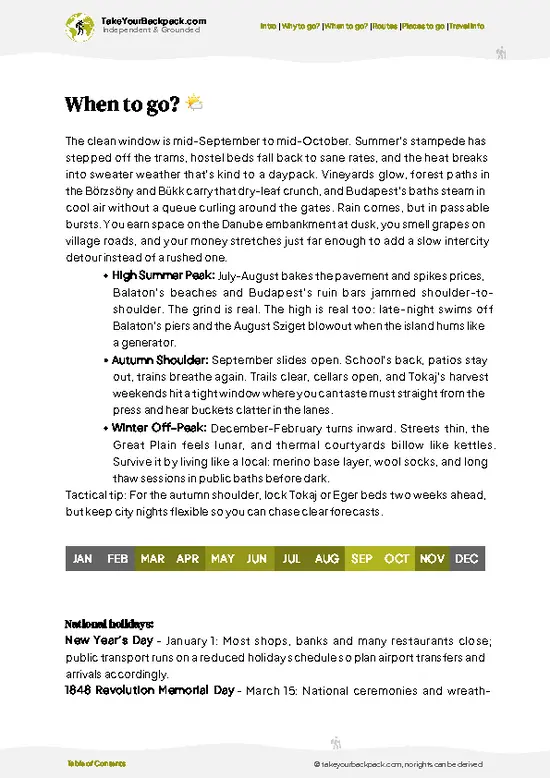
example page 3 from our offline Travel Guide for Hungary
example page 4 from our offline Travel Guide for Hungary
example page 5 from our offline Travel Guide for Hungary
example page 6 from our offline Travel Guide for Hungary
example page 7 from our offline Travel Guide for Hungary
The digital guide (345 pages) contains:
90 highlights, ranked by travel appeal
Optimized 5, 10 & 15-day travel routes
Cities, national parks, landmarks, beaches
How to get around
Offline-friendly for travel without Wi-Fi
👉 Click to see all 30+ guide features

📅 Plan smarter in minutes, not weeks
Month by month travel advice
Festivals & national holidays
Budget expectations

🗺️ Go to the right places, skip the overrated ones
Honest pros & cons of destinations
Top hikes, parks & viewpoints
Lesser-known places most travelers miss
Clear “worth it vs skip it” guidance

🛏️ Travel smoothly without rookie mistakes
Best areas to stay
Transport systems explained simply
Common scams & safety advice
SIM cards, money & practical tips

🌍 Understand the country, not just visit it
Culture & traditions
52 Essential phrases & customs
Festivals worth planning around
Traveler-friendly historical context
Insights that make places more meaningful

📱 Built for real travel conditions
Fully downloadable PDF
Works completely offline
Optimized for phone use
Useful in remote areas & buses
Everything in one place
Save weeks of stressful planning
Get instant access to your full guide. 30‑day money-back guarantee.
+ Add another guide for just US$7.80

By proceeding you agree to our terms.
Sent to your inbox immediately after payment • 100% Secure Checkout
Best Backpacking Travel Advisor 2025 tourism awardBest Backpacking
Travel Advisor
2025
What others say about Take Your Backpack Guides:
⭐⭐⭐⭐⭐
Fantastic, amazing amount of information!
⭐⭐⭐⭐⭐
My goodness this is amazing, it's what I've been looking for hats off too you!
⭐⭐⭐⭐⭐
I think this is absolutely BRILLIANT
⭐⭐⭐⭐
Very complete and informative. It's still missing places, but I gotta to commend you
⭐⭐⭐⭐⭐
This is truly amazing, thank you, can't wait to explore it with my kids!
⭐⭐⭐⭐⭐
Awesome resource, thank you!
⭐⭐⭐⭐⭐
This is amazing! Can't wait to explore the ones I haven't seen
⭐⭐⭐⭐
I love this! Well done, great idea.
⭐⭐⭐⭐⭐
Thanks for taking the time to make this gem!
⭐⭐⭐⭐⭐
This might be the best website I've ever seen.
⭐⭐⭐⭐⭐
Congratulations, and thank you so much for your work; it's incredibly valuable.
⭐⭐⭐⭐
In all seriousness I think you did a great job pointing out the important spots
⭐⭐⭐⭐⭐
10/10 very good
⭐⭐⭐⭐⭐
As someone who's only just starting to visit regularly this is awesome, thank you.
⭐⭐⭐⭐
Thank you very much! I'm going to visit my dad, it's going to be very useful!
⭐⭐⭐⭐⭐
This is really cool! We'll be travelling for the first time and this definitely come in handy.
⭐⭐⭐⭐⭐
You are now our minister of culture, congratulations 👨‍💼
⭐⭐⭐⭐⭐
Just wanted to tell you that this is a pearl! Going to follow your recommendations.
⭐⭐⭐⭐⭐
This is so cool. I'll definitely be using the resource for my travels soon.
⭐⭐⭐⭐⭐
This is very impressive! Good work.
⭐⭐⭐⭐⭐
This is an amazing and informative site. Very well done!

🛏️ Where to stay?How to pick the right area

The area around Dohány Street Synagogue is a magnet for backpackers, but let’s cut through the hype. Yes, it’s central Budapest, so expect crowds—especially midday when tour groups swarm like bees. It’s not a quiet retreat, and prices here can lean higher than other parts of the city. But here’s the kicker: staying nearby puts you right in the heart of Budapest’s Jewish Quarter, a neighborhood alive with gritty charm, street art, and some of the city’s best ruin pubs.

For solo travelers and budget backpackers, the 7th district is your playground. It’s safe, walkable, and packed with social spots … read more 👉
The area around Dohány Street Synagogue is a magnet for backpackers, but let’s cut through the hype. Yes, it’s central Budapest, so expect crowds—especially midday when tour groups swarm like bees. It’s not a quiet retreat, and prices here can lean higher than other parts of the city. But here’s the kicker: staying nearby puts you right in the heart of Budapest’s Jewish Quarter, a neighborhood alive with gritty charm, street art, and some of the city’s best ruin pubs.

For solo travelers and budget backpackers, the 7th district is your playground. It’s safe, walkable, and packed with social spots where you’ll meet fellow wanderers without the forced hostel vibe. The streets pulse with a mix of old-world history and youthful energy, making it easy to dive into local life beyond the synagogue’s impressive facade. Skip the tourist traps and explore the side streets—this is where Budapest’s real stories unfold. Staying here means you’re not just visiting a landmark; you’re living its ongoing narrative.

👛 Costs (as of 4 September 2026)Money, prices, and spending tips

The entrance ticket to Dohány Street Synagogue and Jewish Museum typically costs between €10 and €15. Additional costs may include guided tours or audio guides, which can add around €5. Special exhibitions or events might have separate fees, generally within the same price range.

source: jewishbudapest.org
⚠️ Prices can change and everyone travels differently, so take this as a rough guide. Hope it helps you plan your adventure!

FAQTraveler FAQ

Allow about 1 to 1.5 hours to visit Dohány Street Synagogue and Jewish Museum, enough time to explore the synagogue, the museum exhibits, and the surrounding complex including the Holocaust Memorial.
Yes, the entrance fee is worth it. The ticket, typically around 3500 HUF (about 10-12 USD), grants access to the largest synagogue in Europe and a well-curated museum that offers deep insight into Jewish history and culture in Hungary.
Take the M2 metro line to Deák Ferenc tér station, then walk about 5 minutes east to Dohány Street. Alternatively, several trams (4, 6) and buses stop nearby, making it easily accessible from central Budapest.
⚠️ Things can change over time, so always validate details locally before you go.

Other Hungarian attractions near Dohány Street Synagogue and Jewish Museum

Explore more nearby:


💡 Not sure where to go next?
Create a personalized itinerary for Hungary including Dohány Street Synagogue and Jewish Museum and the places that fit your trip.

Generate my itinerary

👉 Discover all attractions

Or checkout all Hungary has to offer (think cities, towns, villages, national parks, hikes, beaches, festivals)
Country photo of Hungary

We 💚 feedbackFinal thoughts on visiting Dohány Street Synagogue and Jewish Museum

The Dohány Street Synagogue isn’t just a pretty façade for your Instagram feed—it’s a living, breathing piece of history that hits harder when you step inside. Yes, it gets crowded, especially midday, and the ticket price isn’t pocket change, but the real magic is in the quiet moments by the Holocaust memorial or the intricate details you’ll miss if you rush. Take your time. Sit in the pews. Let the weight of the place settle in. That’s when it stops feeling like a tourist stop and starts feeling like a story you’ll carry with you.

✍️ Help improve this page!
The information on this page is based on in-depth research, insights shared by experienced travelers, and feedback from the local travel community in Hungary. While every effort is made to keep the information accurate and current, conditions can change — so if you spot anything incorrect or outdated, please get in touch.


🙋‍♂️ Give feedback

👋 Meet the founderWho’s Behind Take Your Backpack?

Johan, backpacker and founder of TakeYourBackpackHi, I’m Johan (Netherlands 🇳🇱), the creator of TakeYourBackpack. Over the past decade, I’ve backpacked through 80+ countries across six continents, gaining extensive experience with independent travel, long-term trips, and overland routes.

This site is built on a combination of firsthand travel experience and carefully curated insights from other backpackers. Many guides are based on places I’ve personally visited, while others bring together tips, observations, and practical advice shared by trusted travelers I’ve met along the way.

The goal is to provide realistic, experience-driven guidance — not generic itineraries — so you can explore destinations with better context, clearer expectations, and more confidence.

Get full Hungary guide •
Instant download • 90 highlights • Full Offline guide