×

India🇮🇳 | regionsLadakh and the Trans-Himalayan regionhigh-altitude deserts, Buddhist stupas, salt lakes | things to do and best time to go

Explore Kerala BackwatersExplore Majuli

Backpacking in Ladakh and the Trans-Himalayan region
🌟 Highlightregion ranked #4
By Johan Kruseman 🇳🇱 | Updated September 4, 2026

Your breath fogs the window as the shared taxi grinds up another switchback, prayer flags snapping in the wind, diesel and cold dust leaking through the cracked door while a kid in the front seat quietly throws up into a plastic bag. Outside: cliffs the color of rust and bone, a river the color of wet cement, and a monastery glued to a ridge that looks like it should have fallen centuries ago.

Ladakh and the wider Trans-Himalayan belt sit in India’s far north, beyond Kashmir and Himachal, pressed up against Tibet. For backpackers, it’s high-reward, high-effort. Landscapes are outrageous, monasteries feel lived-in not staged, and towns like Leh, Diskit, and Kaza still have that “you earned this” energy, even as Leh gets busier every year. Transport is slow, roads can be brutal, and altitude hits harder than the budget does. Compared with Himachal’s greener, easier valleys, Ladakh is harsher, drier, more lunar—and that’s exactly why it hooks you.

Discover everything you want to know in the 📖 India Travel Guide.


Get your India guide
162 ranked highlights, routes & tips, works offline (498 pages)
Loading the map 🌍
CLICK TO FILTER
cities
towns
villages
landmarks
national parks
hikes
beaches
attractions
festivals
regions
SHOW COUNTRY’S BESTSHOW ALL

✨ Why go?
Ranked #4 region in India
What makes it a must-see region

Ladakh and the Trans-Himalayan region are a backpacker’s playground, and here’s why savvy travelers flock here. First off, the variety of landscapes is mind-blowing. You’ve got everything from stark deserts to lush valleys, all within a few hours’ drive. This means you can soak in diverse experiences without the hassle of constant relocation.

Next, let’s talk about transport flexibility. Local buses and shared taxis make it easy to hop between towns and sights. You can take your time, savoring the journey instead of racing from one spot to another. This is where slow travel shines. You can immerse yourself in the culture, chat with locals, and enjoy the stunning scenery at your own pace.

And don’t forget the chance to mix nature and culture. Explore ancient monasteries perched on cliffs, … read more 👉
Ladakh and the Trans-Himalayan region are a backpacker’s playground, and here’s why savvy travelers flock here. First off, the variety of landscapes is mind-blowing. You’ve got everything from stark deserts to lush valleys, all within a few hours’ drive. This means you can soak in diverse experiences without the hassle of constant relocation.

Next, let’s talk about transport flexibility. Local buses and shared taxis make it easy to hop between towns and sights. You can take your time, savoring the journey instead of racing from one spot to another. This is where slow travel shines. You can immerse yourself in the culture, chat with locals, and enjoy the stunning scenery at your own pace.

And don’t forget the chance to mix nature and culture. Explore ancient monasteries perched on cliffs, then trek through breathtaking landscapes. It’s a perfect blend that keeps your adventure fresh and exciting.

In Ladakh, every moment feels intentional. You’re not just ticking boxes; you’re crafting memories that resonate long after you’ve left. Choose wisely, and you’ll find the high-value experiences that make this region truly special.
Want to include Ladakh and the Trans-Himalayan region in your India route?
Create a personalized India itinerary that includes Ladakh and the Trans-Himalayan region and the places that fit your trip — based on your travel style, budget, and available time. Get your route in seconds.

Generate my trip

💡 HighlightsKey sights and experiences for travelers

  1. Pangong Tso — That impossibly blue, high-altitude lake that straddles India and China. The water shifts colors by the hour, the shoreline is otherworldly, and the wide-open silence is exactly why people come. Go early or late in shoulder season for fewer crowds; wild camping lakeside (where allowed) is unforgettable.
  2. Nubra Valley (Diskit & Hunder) — Cold desert, sand dunes, and double-humped Bactrian camels against a Himalayan backdrop. Diskit’s giant Maitreya statue and simple village life make Nubra feel completely different from Leh; the Hunder dunes at sunset are a photographer’s dream and genuinely unique to this rain-shadow zone.
  3. Tso Moriri — A quieter, wilder twin to Pangong: remote, saline, and surrounded by snow-splashed ridges. Great for birdlife (including bar-headed geese),
read more 👉
  1. Pangong Tso — That impossibly blue, high-altitude lake that straddles India and China. The water shifts colors by the hour, the shoreline is otherworldly, and the wide-open silence is exactly why people come. Go early or late in shoulder season for fewer crowds; wild camping lakeside (where allowed) is unforgettable.
  2. Nubra Valley (Diskit & Hunder) — Cold desert, sand dunes, and double-humped Bactrian camels against a Himalayan backdrop. Diskit’s giant Maitreya statue and simple village life make Nubra feel completely different from Leh; the Hunder dunes at sunset are a photographer’s dream and genuinely unique to this rain-shadow zone.
  3. Tso Moriri — A quieter, wilder twin to Pangong: remote, saline, and surrounded by snow-splashed ridges. Great for birdlife (including bar-headed geese), long Tibetan-style village stays, and total solitude. Fewer tourists than Pangong, so you actually hear the wind and the stars.
  4. Markha Valley Trek (Personal favorite) — A classic trans-Himalayan trek that threads villages, high passes, mani walls, and yak pastures. It’s cultural as much as scenic: you sleep in local homestays or tiny teahouses and pass through real Ladakhi villages where traditions are alive. Challenging but not extreme—perfect for hikers who want both people and panorama. Personal favorite for the mix of mountain riding and authentic village life.
  5. Lamayuru “Moonland” and Monastery — Dramatic lunar-like rock formations that actually make you feel on another planet, with an ancient gompa perched above. Short walks around the moonscape and sunrise views are unique—this landscape isn’t something you’ll find outside the trans-Himalayan rain-shadow.
  6. Hemis and the Hemis Festival — Hemis is the largest and wealthiest monastery in Ladakh, but more than a building: its annual festival (masked dances, music, local pilgrims) is an immersive cultural event. Even outside festival time, the murals and relics give deep insight into Ladakhi Buddhism and regional history.
  7. Alchi Monastery (Hidden gem) — Compact, ancient Kashmiri-style frescoes and wooden architecture that feel more like a gallery than a fortress gompa. Fewer tourists than the big-name monasteries, and the art here is unusually delicate and well-preserved. A short detour that rewards anyone into history or religious art.
  8. Tso Kar / “White Lake” (Hidden gem) — A quieter salt marsh about an hour from Tso Moriri, brilliant for birding and lunar salt patterns. Not many visitors stop here, so you get wild, reflective landscapes and flocks of waders—great for a peaceful afternoon picnic and bird photography.
  9. Zanskar Valley (Padum & surroundings) — Rugged, remote, and spectacularly steep-walled: Zanskar is where river gorges, red rock, and hardy villages dominate. Padum is a reachable base for treks and river rafting; the valley’s culture and the scale of the canyon scenery can’t be replicated down in the lower Himalaya.
  10. Suru Valley & Parkachik Glacier / Rangdum (Hidden gem) — A green, lesser-visited valley with massive views of the Nun-Kun massif, easy glacier access at Parkachik, and the simple Buddhist community around Rangdum Monastery. It feels like a secret slice of Ladakh—green meadows, nomad camps, and fewer tourists than any of the mainstream stops.
Spotted a mistake or missing something? Contact us.

Things to do around Ladakh and the Trans-Himalayan region

Ratings based on Tripadvisor reviews. When you book through this link, you support our work at no extra cost to you.

⌛️ 5 daysSeeing the highlights in 5 days

Day 1: Leh

Leh is your gateway to the Trans-Himalayas. Arriving here, you’ll feel the altitude hit you like a freight train. Take it easy. Spend the day acclimatizing, wandering the bustling markets, and sipping on butter tea. The local cuisine is a must-try; don’t skip the momos. This day sets the tone for your journey, allowing you to adjust to the thin air while soaking in the vibrant culture.

Day 2: Nubra Valley

Get ready for a wild ride. The journey to Nubra Valley takes you over the Khardung La Pass, one of the highest motorable roads in the world. It’s a bumpy, exhilarating trip, but the views are jaw-dropping. Once you arrive, explore the sand dunes of Hunder and maybe even take a camel ride. The contrast of the desert against the snow-capped mountains is surreal. This day is about … read more 👉
Day 1: Leh

Leh is your gateway to the Trans-Himalayas. Arriving here, you’ll feel the altitude hit you like a freight train. Take it easy. Spend the day acclimatizing, wandering the bustling markets, and sipping on butter tea. The local cuisine is a must-try; don’t skip the momos. This day sets the tone for your journey, allowing you to adjust to the thin air while soaking in the vibrant culture.

Day 2: Nubra Valley

Get ready for a wild ride. The journey to Nubra Valley takes you over the Khardung La Pass, one of the highest motorable roads in the world. It’s a bumpy, exhilarating trip, but the views are jaw-dropping. Once you arrive, explore the sand dunes of Hunder and maybe even take a camel ride. The contrast of the desert against the snow-capped mountains is surreal. This day is about embracing the extremes of Ladakh.

Day 3: Pangong Lake

Head to Pangong Lake, a stunning body of water that stretches across the border into China. The drive is long but worth every moment. The lake’s colors shift from deep blue to turquoise, depending on the light. Pack a picnic and enjoy the serenity. This is where you can truly disconnect.

Day 4: Tso Moriri

Now, let’s take a detour to Tso Moriri. This off-path reward is less crowded than Pangong but equally breathtaking. The journey is a bit rugged, but the tranquility and the chance to spot wildlife make it worthwhile. The lake is surrounded by mountains, creating a perfect backdrop for reflection.

Day 5: Return to Leh

As you make your way back to Leh, take a moment to appreciate the landscapes you’ve traversed. This return trip is not just about logistics; it’s a chance to reflect on your adventures. Spend your last evening in Leh at a local café, sharing stories with fellow travelers.

If you can only pick one day, make it Day 2 in Nubra Valley. The thrill of the pass, the unique landscapes, and the cultural experiences will leave you buzzing long after you’ve left. This is the essence of Ladakh, where every moment feels like a postcard.
Turn your Ladakh and the Trans-Himalayan region visit into an India adventure
Build a complete India route with Ladakh and the Trans-Himalayan region, hidden gems, must-see destinations, and realistic travel times included.

Generate my trip

🌤️ When to go?When to go for the best experience


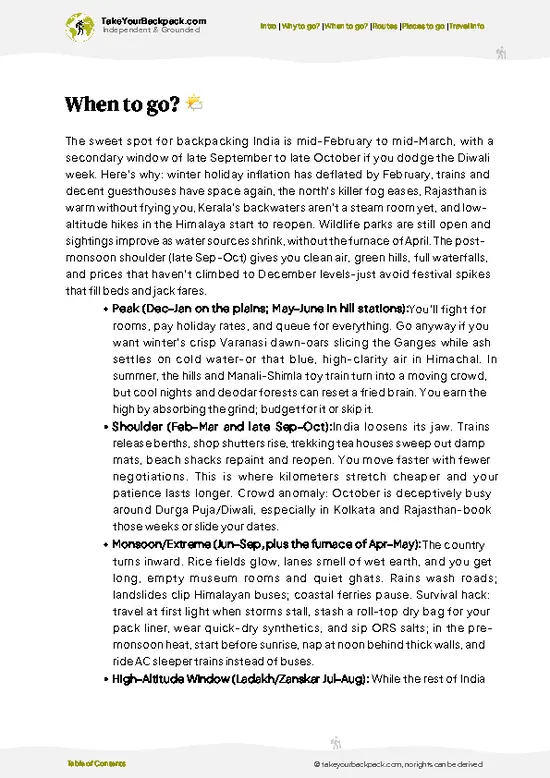
  • Topic: Weather and Temperature – The sweet spot is June to September. Days hover between 15-25°C (59-77°F), perfect for trekking without melting or freezing. Nights can still dip to 5°C (41°F), so pack layers. Outside this window, expect bone-chilling cold, especially from October to April, when temperatures plunge below freezing.

  • Topic: Daylight Hours – Summer grants you long days, up to 14-15 hours of light. This means more trekking time and less rushing. Winter days shrink to 9-10 hours, making early starts essential but also limiting how far you can push each day.

  • Topic: Crowds – Peak season (July-August) brings a surge of tourists, especially around popular spots like Leh and Pangong Lake. If you want fewer people and still decent weather, aim for late June or early September.
read more 👉

  • Topic: Weather and Temperature – The sweet spot is June to September. Days hover between 15-25°C (59-77°F), perfect for trekking without melting or freezing. Nights can still dip to 5°C (41°F), so pack layers. Outside this window, expect bone-chilling cold, especially from October to April, when temperatures plunge below freezing.

  • Topic: Daylight Hours – Summer grants you long days, up to 14-15 hours of light. This means more trekking time and less rushing. Winter days shrink to 9-10 hours, making early starts essential but also limiting how far you can push each day.

  • Topic: Crowds – Peak season (July-August) brings a surge of tourists, especially around popular spots like Leh and Pangong Lake. If you want fewer people and still decent weather, aim for late June or early September. Shoulder months offer a quieter vibe without sacrificing too much comfort.

  • Topic: Seasonal Activities – Summer is festival season—think Hemis and Ladakh Festival—where you catch local culture in full swing. Winter opens the door to frozen lakes and snow treks, but only for the hardcore prepared for sub-zero temps.

  • Topic: Price Fluctuations – Expect prices to spike during peak summer months. Accommodation and tours can double compared to shoulder seasons. Booking early or going late summer can save you serious cash without sacrificing the experience.


Pro-tip: Hit Ladakh in late June for that perfect cocktail of manageable crowds, solid weather, and wallet-friendly rates—plus you’ll catch the tail end of the spring bloom before the full summer rush.


source: climatestotravel.comJANJanuary: below average for travelingFEBFebruary: below average for travelingMARMarch: fair for travelingAPRApril: fair for travelingMAYMay: good for travelingJUNJune: excellent for travelingJULJuly: highly recommended for travelingAUGAugust: highly recommended for travelingSEPSeptember: excellent for travelingOCTOctober: fair for travelingNOVNovember: below average for travelingDECDecember: below average for traveling
when-to-go

✈️ The backpacker research shortcutIndia Travel Guide

An offline-friendly backpacking guide with optimized travel routes, ranked highlights, transport advice, and the best areas to stay.
example page 0 from our offline Travel Guide for India
example page 1 from our offline Travel Guide for India
example page 2 from our offline Travel Guide for India
example page 3 from our offline Travel Guide for India
example page 4 from our offline Travel Guide for India
example page 5 from our offline Travel Guide for India
example page 6 from our offline Travel Guide for India
example page 7 from our offline Travel Guide for India
The digital guide (498 pages) contains:
162 highlights, ranked by travel appeal
Optimized 14, 21 & 30-day travel routes
Cities, national parks, landmarks, beaches
How to get around
Offline-friendly for travel without Wi-Fi
👉 Click to see all 30+ guide features

📅 Plan smarter in minutes, not weeks
Month by month travel advice
Festivals & national holidays
Budget expectations

🗺️ Go to the right places, skip the overrated ones
Honest pros & cons of destinations
Top hikes, parks & viewpoints
Lesser-known places most travelers miss
Clear “worth it vs skip it” guidance

🛏️ Travel smoothly without rookie mistakes
Best areas to stay
Transport systems explained simply
Common scams & safety advice
SIM cards, money & practical tips

🌍 Understand the country, not just visit it
Culture & traditions
52 Essential phrases & customs
Festivals worth planning around
Traveler-friendly historical context
Insights that make places more meaningful

📱 Built for real travel conditions
Fully downloadable PDF
Works completely offline
Optimized for phone use
Useful in remote areas & buses
Everything in one place
Save weeks of stressful planning
Get instant access to your full guide. 30‑day money-back guarantee.
+ Add another guide for just US$7.80

By proceeding you agree to our terms.
Sent to your inbox immediately after payment • 100% Secure Checkout
Best Backpacking Travel Advisor 2025 tourism awardBest Backpacking
Travel Advisor
2025
What others say about Take Your Backpack Guides:
⭐⭐⭐⭐⭐
Fantastic, amazing amount of information!
⭐⭐⭐⭐⭐
My goodness this is amazing, it's what I've been looking for hats off too you!
⭐⭐⭐⭐⭐
I think this is absolutely BRILLIANT
⭐⭐⭐⭐
Very complete and informative. It's still missing places, but I gotta to commend you
⭐⭐⭐⭐⭐
This is truly amazing, thank you, can't wait to explore it with my kids!
⭐⭐⭐⭐⭐
Awesome resource, thank you!
⭐⭐⭐⭐⭐
This is amazing! Can't wait to explore the ones I haven't seen
⭐⭐⭐⭐
I love this! Well done, great idea.
⭐⭐⭐⭐⭐
Thanks for taking the time to make this gem!
⭐⭐⭐⭐⭐
This might be the best website I've ever seen.
⭐⭐⭐⭐⭐
Congratulations, and thank you so much for your work; it's incredibly valuable.
⭐⭐⭐⭐
In all seriousness I think you did a great job pointing out the important spots
⭐⭐⭐⭐⭐
10/10 very good
⭐⭐⭐⭐⭐
As someone who's only just starting to visit regularly this is awesome, thank you.
⭐⭐⭐⭐
Thank you very much! I'm going to visit my dad, it's going to be very useful!
⭐⭐⭐⭐⭐
This is really cool! We'll be travelling for the first time and this definitely come in handy.
⭐⭐⭐⭐⭐
You are now our minister of culture, congratulations 👨‍💼
⭐⭐⭐⭐⭐
Just wanted to tell you that this is a pearl! Going to follow your recommendations.
⭐⭐⭐⭐⭐
This is so cool. I'll definitely be using the resource for my travels soon.
⭐⭐⭐⭐⭐
This is very impressive! Good work.
⭐⭐⭐⭐⭐
This is an amazing and informative site. Very well done!

🛏️ Where to stay?How to pick the right area

In Ladakh and the Trans-Himalayan region, you’ve got some stellar options that cater to backpackers.

Start with Leh, the capital. It’s a hub for travelers, buzzing with energy. You’ll find a mix of cafes, shops, and a vibrant market scene. The best part? It’s a great base for acclimatization before you dive into the surrounding mountains. Plus, the community vibe makes it easy to meet fellow adventurers.

Next up, consider Nubra Valley. This place is a bit off the beaten path but worth the trek. Stay in Diskit or Hunder, where you can chill by the sand dunes and soak in the stunning landscapes. … read more 👉
In Ladakh and the Trans-Himalayan region, you’ve got some stellar options that cater to backpackers.

Start with Leh, the capital. It’s a hub for travelers, buzzing with energy. You’ll find a mix of cafes, shops, and a vibrant market scene. The best part? It’s a great base for acclimatization before you dive into the surrounding mountains. Plus, the community vibe makes it easy to meet fellow adventurers.

Next up, consider Nubra Valley. This place is a bit off the beaten path but worth the trek. Stay in Diskit or Hunder, where you can chill by the sand dunes and soak in the stunning landscapes. The locals are friendly, and you’ll find plenty of opportunities for shared experiences, like camel rides or village visits.

Don’t overlook Pangong Lake. While it’s a bit touristy, the area around the lake offers stunning views and a chance to camp under the stars. The social scene here is lively, especially during peak season when backpackers gather to share stories around a fire.

Lastly, Zanskar Valley is for the adventurous spirit. It’s remote, but the breathtaking scenery and the chance to connect with local culture make it a must. Just be prepared for a bit of a journey to get there, but the payoff is huge.

Each of these spots offers a unique slice of Ladakh’s charm, making your trip not just a journey, but a collection of unforgettable moments.

🚌 Getting aroundTransportation options and practical tips

Ladakh and the Trans-Himalayan region pulse with a rhythm all their own. Here, schedules are mere suggestions, and the landscape dictates the flow. You might find yourself waiting for a bus that arrives when it feels like it, or hopping into a shared taxi that’s more about the journey than the destination. This is a place where intuition reigns, and the chaotic beauty of the mountains invites you to embrace spontaneity. The air is thin, the views are breathtaking, and every twist in the road reveals a new adventure.

Here’s how to navigate this rugged paradise without breaking the bank:


  • Shared Taxis: These are your best bet for getting around. They run frequently between major towns like Leh, Nubra Valley, and Pangong Lake. Expect to pay around ₹300-₹500 per ride, depending on the distance.
read more 👉
Ladakh and the Trans-Himalayan region pulse with a rhythm all their own. Here, schedules are mere suggestions, and the landscape dictates the flow. You might find yourself waiting for a bus that arrives when it feels like it, or hopping into a shared taxi that’s more about the journey than the destination. This is a place where intuition reigns, and the chaotic beauty of the mountains invites you to embrace spontaneity. The air is thin, the views are breathtaking, and every twist in the road reveals a new adventure.

Here’s how to navigate this rugged paradise without breaking the bank:


  • Shared Taxis: These are your best bet for getting around. They run frequently between major towns like Leh, Nubra Valley, and Pangong Lake. Expect to pay around ₹300-₹500 per ride, depending on the distance. They’re usually packed, but the camaraderie and stunning views make it worthwhile.


  • Buses: The state-run buses are a budget traveler’s lifeline. They connect Leh to places like Manali and Srinagar. Prices range from ₹600 to ₹1,200, with the journey taking anywhere from 12 to 24 hours. They’re not the most comfortable, but they’re reliable and offer a chance to mingle with locals.


  • Motorbike Rentals: For the adventurous spirit, renting a motorbike is a game-changer. Prices hover around ₹800-₹1,500 per day. You’ll have the freedom to explore at your own pace, but be prepared for rugged roads and unpredictable weather. Just make sure you have an international driving license!


  • Private Cabs: If you’re feeling a bit splurge-y, hiring a private cab can be a great way to see the sights without the hassle. Rates start at ₹3,000 for a day, and you can customize your itinerary. It’s more comfortable, but you’ll pay for the luxury.


  • Local Bicycles: For the eco-conscious traveler, renting a bicycle in Leh is a fantastic way to soak in the scenery. Rentals are around ₹200-₹400 per day. Just remember, the altitude can be a challenge, so take it slow!


Here’s a tactical tip: always check the local weather before setting out. Conditions can change rapidly in the mountains, and a sunny morning can turn into a stormy afternoon. If you’re planning a long journey, aim to leave early in the day to maximize daylight and avoid any unexpected delays. Embrace the chaos, and let the journey unfold!

🍲 FoodWhat to Eat & Drink

In Ladakh and the Trans-Himalayan region, food is a celebration of the land’s rugged beauty and rich culture. You can’t miss momos, those delightful dumplings filled with spiced meat or veggies, often served with a fiery chili sauce that packs a punch. Then there’s thukpa, a hearty noodle soup that warms you from the inside out, perfect after a day of trekking. Don’t overlook chhang, a local fermented barley drink that’s both refreshing and a bit of a buzz—ideal for mingling with locals.

For a true taste of the region, hit up the bustling local markets. Vendors serve up street food that’s as authentic as it gets. Grab a plate of aloo paratha from a roadside stall, and watch the world go by as you savor every bite. Cafés in Leh offer cozy spots to sip on butter tea, a creamy concoction that’s … read more 👉
In Ladakh and the Trans-Himalayan region, food is a celebration of the land’s rugged beauty and rich culture. You can’t miss momos, those delightful dumplings filled with spiced meat or veggies, often served with a fiery chili sauce that packs a punch. Then there’s thukpa, a hearty noodle soup that warms you from the inside out, perfect after a day of trekking. Don’t overlook chhang, a local fermented barley drink that’s both refreshing and a bit of a buzz—ideal for mingling with locals.

For a true taste of the region, hit up the bustling local markets. Vendors serve up street food that’s as authentic as it gets. Grab a plate of aloo paratha from a roadside stall, and watch the world go by as you savor every bite. Cafés in Leh offer cozy spots to sip on butter tea, a creamy concoction that’s surprisingly addictive.

Dining here is a communal affair. Expect to share dishes and stories, breaking bread with fellow travelers and locals alike. Remember, it’s polite to accept food offered to you, as it’s a sign of hospitality. Embrace the quirks—like the way locals slurp their noodles. It’s not just acceptable; it’s encouraged! This is how you truly dive into the flavors and friendships of Ladakh.

FAQTraveler FAQ

10 to 14 days are ideal to explore Ladakh and the Trans-Himalayan region thoroughly, allowing time for acclimatization and visits to key sites like Pangong Lake, Nubra Valley, and Hemis Monastery. Shorter trips of 7 days can cover main highlights but feel rushed due to high altitude and travel distances.
Public buses and shared taxis are the main options for getting around without a car, with routes connecting Leh to major destinations like Nubra Valley and Pangong Lake. Renting a motorcycle is also popular among backpackers for flexibility, with daily rates around 800-1200 INR.
Ladakh and the Trans-Himalayan region are known for their dramatic high-altitude landscapes, Buddhist monasteries, and unique culture influenced by Tibetan traditions. The area is famous for trekking, mountain passes above 5,000 meters, and pristine lakes such as Tso Moriri and Pangong.
⚠️ Things can change over time, so always validate details locally before you go.

Other Indian regions near Ladakh and the Trans-Himalayan region

Explore more nearby:


💡 Not sure where to go next?
Create a personalized itinerary for India including Ladakh and the Trans-Himalayan region and the places that fit your trip.

Generate my itinerary

👉 Discover all regions

Or checkout all India has to offer (think cities, towns, villages, national parks, hikes, beaches, festivals)
Country photo of India

We 💚 feedbackFinal thoughts on visiting Ladakh and the Trans-Himalayan region

Ladakh is a dream for those craving raw, untouched beauty. The stark landscapes and vibrant culture will have you questioning why you ever settled for anything less. But here’s the kicker: altitude sickness can hit hard. Take it slow, hydrate, and don’t rush into the high passes. Embrace the journey, and you’ll find that the rewards far outweigh the discomfort. Trust me, it’s worth every breathless moment.

✈️ When did I visit India?
As part of my 1.5 year travel around the world trip, I visited India in December 2015.

✍️ Help improve this page!
The information on this page is based on my own backpacking experience in India, supplemented with up-to-date research and feedback from other travelers. Travel details can change, so if you notice anything outdated or incomplete, feel free to let me know.


🙋‍♂️ Give feedback

👋 Meet the founderWho’s Behind Take Your Backpack?

Johan, backpacker and founder of TakeYourBackpackHi, I’m Johan (Netherlands 🇳🇱), the creator of TakeYourBackpack. Over the past decade, I’ve backpacked through 80+ countries across six continents, gaining extensive experience with independent travel, long-term trips, and overland routes.

This site is built on a combination of firsthand travel experience and carefully curated insights from other backpackers. Many guides are based on places I’ve personally visited, while others bring together tips, observations, and practical advice shared by trusted travelers I’ve met along the way.

The goal is to provide realistic, experience-driven guidance — not generic itineraries — so you can explore destinations with better context, clearer expectations, and more confidence.

Get full India guide •
Instant download • 162 highlights • Full Offline guide