×

India🇮🇳 | townsLehHigh-altitude town, Buddhist monasteries, mountain passes | things to do and best time to go

Explore PushkarExplore McLeod Ganj

Backpacking in Leh
🏆 Top picktown ranked #2
By Johan Kruseman 🇳🇱 | Updated September 4, 2026

You land in Leh and hit your first real fork: do you burn precious acclimatization days in town, or push straight out to Nubra, Pangong, or Tso Moriri and risk altitude sickness wrecking your whole Ladakh plan. That choice matters more than any hotel upgrade. Leh sits in India’s far north, in the high-altitude desert of Ladakh, Jammu & Kashmir, closer in feel to Tibet than to Delhi. For backpackers, it’s a compact base camp: Leh Palace and Namgyal Tsemo above, Shanti Stupa for sunset, a tight bazaar, simple cafés where everyone’s comparing road conditions. It’s cheap once you’re there, but getting there costs time or money. Safer and calmer than Manali or Srinagar, slower nightlife, easy to meet people, but the thin air and remoteness make every mistake more expensive.

Discover everything you want to know in the 📖 India Travel Guide.


Get your India guide
162 ranked highlights, routes & tips, works offline (498 pages)
Loading the map 🌍
CLICK TO FILTER
cities
towns
villages
landmarks
national parks
hikes
beaches
attractions
festivals
regions
SHOW COUNTRY’S BESTSHOW ALL

✨ Why go?
Ranked #2 town in India
Reasons people choose to visit here

Leh is a backpacker’s hub that strikes a balance between adventure and comfort. It’s a basecamp for day trips into the stunning landscapes of Ladakh, making it a strategic stop on your journey. The highlights are plentiful, but what really draws travelers is the affordability of hostels and guesthouses. You can find cozy spots that foster a sense of community, perfect for swapping stories and tips with fellow wanderers.

The food scene is a delightful mix of local flavors and international options, catering to every palate without breaking the bank. Plus, the city is incredibly walkable; you can explore bustling markets and serene monasteries on foot, soaking in the unique atmosphere.

When the sun sets, Leh’s nightlife offers a laid-back vibe, with cafes and bars that invite you to unwind … read more 👉
Leh is a backpacker’s hub that strikes a balance between adventure and comfort. It’s a basecamp for day trips into the stunning landscapes of Ladakh, making it a strategic stop on your journey. The highlights are plentiful, but what really draws travelers is the affordability of hostels and guesthouses. You can find cozy spots that foster a sense of community, perfect for swapping stories and tips with fellow wanderers.

The food scene is a delightful mix of local flavors and international options, catering to every palate without breaking the bank. Plus, the city is incredibly walkable; you can explore bustling markets and serene monasteries on foot, soaking in the unique atmosphere.

When the sun sets, Leh’s nightlife offers a laid-back vibe, with cafes and bars that invite you to unwind after a day of exploration. Finally, the easy onward travel options make it simple to continue your adventure, whether you’re heading deeper into the Himalayas or back to the plains. If you’re looking for a place that combines value and character, Leh is a solid choice, whether for a longer stay or a strategic pit stop.
Want to include Leh in your India route?
Create a personalized India itinerary that includes Leh and the places that fit your trip — based on your travel style, budget, and available time. Get your route in seconds.

Generate my trip

💡 HighlightsMust-see experiences and standout moments

  1. Leh Palace — The hulking, faded royal palace that dominates the old town skyline; it’s a perfect spot for history, gritty murals, and one of the best panoramic views of Leh and the surrounding ridges.
  2. Namgyal Tsemo Gompa (Tsemo Monastery) — A compact, atmospheric gompa uphill from the palace with a gold-covered Buddha and intimate prayer rooms; the climb is short and the vistas make the effort worth it.
  3. Shanti Stupa — The white Japanese-built stupa on Namgyal Hill is popular for sunrise/sunset light and a calm walk surrounded by prayer wheels and Himalayan views — great for photography and quiet reflection.
  4. Jama Masjid (Leh) — A historic mosque in the heart of the bazaar; visiting gives you a feel for Leh’s Muslim community, simple Ladakhi mosque architecture, and lively market life just
read more 👉
  1. Leh Palace — The hulking, faded royal palace that dominates the old town skyline; it’s a perfect spot for history, gritty murals, and one of the best panoramic views of Leh and the surrounding ridges.
  2. Namgyal Tsemo Gompa (Tsemo Monastery) — A compact, atmospheric gompa uphill from the palace with a gold-covered Buddha and intimate prayer rooms; the climb is short and the vistas make the effort worth it.
  3. Shanti Stupa — The white Japanese-built stupa on Namgyal Hill is popular for sunrise/sunset light and a calm walk surrounded by prayer wheels and Himalayan views — great for photography and quiet reflection.
  4. Jama Masjid (Leh) — A historic mosque in the heart of the bazaar; visiting gives you a feel for Leh’s Muslim community, simple Ladakhi mosque architecture, and lively market life just outside its doors.
  5. Main Bazaar / Old Town Alleys — Narrow streets, rooftop cafés, traditional shops selling pashmina, jewelry and apricot oil: this is where daily Ladakhi life meets tourist craft stalls — best wandered without a plan.
  6. Sankar Monastery (Sankar Gompa) — A smaller, quieter monastery right below Shanti Stupa with old murals and a friendly local monk presence; it’s an underrated stop for people who like low-key spiritual places.
  7. Polo Ground — More than just a field — the Polo Ground is where locals gather, festivals happen, and you can watch traditional polo or a casual game while soaking in the town’s open-air vibe.
  8. Hall of Fame (Leh) — The Indian Army museum and memorial just outside the market area; it explains Ladakh’s modern history, shows military gear and keepsakes, and gives excellent context to the region’s strategic importance.
  9. Men-Tsee-Khang (Tibetan Medical & Astrological Institute) — A working traditional medicine clinic and shop where you can learn about Tibetan healing, see herbal preparations, and buy authentic remedies — both cultural and practical.
  10. Rooftop Cafés & Old-House Rooftops — Not a single building but an experience: dozens of guesthouse and café rooftops around the old town offer unbeatable sunsets, local conversations, and front-row views of life in Leh.
A few great day trips just outside Leh are Thiksey Monastery, Shey Palace & Monastery, and Hemis Monastery — my personal favorite for a quick half-day is Thiksey for its dramatic hilltop setting and photogenic assembly of chapels.
Spotted a mistake or missing something? Contact us.

🏘️ NeighborhoodsNeighborhood guide to Leh

Leh is a captivating blend of ancient culture and stunning landscapes, making it a prime spot for backpackers seeking adventure and authenticity. Here’s a breakdown of key neighborhoods to help you navigate your stay.

Leh Market
This is the heart of the city. The vibe is bustling, with shops selling everything from pashmina shawls to local handicrafts. It’s walkable, with plenty of eateries and cafes. Prices are reasonable, but you can splurge on unique finds. Nightlife is low-key, perfect for winding down after a day of exploration. Ideal for short stays, as everything is within reach.

Chubi
A quieter area, Chubi offers a more relaxed atmosphere. It’s slightly away from the main hustle, making it suitable for those looking to recharge. Accommodations here are often cheaper, and the … read more 👉
Leh is a captivating blend of ancient culture and stunning landscapes, making it a prime spot for backpackers seeking adventure and authenticity. Here’s a breakdown of key neighborhoods to help you navigate your stay.

Leh Market
This is the heart of the city. The vibe is bustling, with shops selling everything from pashmina shawls to local handicrafts. It’s walkable, with plenty of eateries and cafes. Prices are reasonable, but you can splurge on unique finds. Nightlife is low-key, perfect for winding down after a day of exploration. Ideal for short stays, as everything is within reach.

Chubi
A quieter area, Chubi offers a more relaxed atmosphere. It’s slightly away from the main hustle, making it suitable for those looking to recharge. Accommodations here are often cheaper, and the walkability is decent, though you might need to rely on local transport for longer trips. Great for longer stays if you want to soak in the local culture without the noise.

Sankar
Home to the famous Sankar Monastery, this neighborhood has a serene vibe. It’s a bit more upscale, with guesthouses that offer stunning views. The area is walkable, but you’ll want to plan for transport to the main attractions. Perfect for those seeking a balance between tranquility and accessibility, making it suitable for both short and longer visits.

Upper Leh
This area is more residential and offers a glimpse into local life. It’s less touristy, which means prices can be lower. While it’s not as walkable, the views are spectacular. Ideal for longer stays if you want to immerse yourself in the community, but be prepared for a quieter nightlife scene.

⌛️ 1 daySeeing the highlights in 24 hours

Leh, perched in the heart of the Himalayas, is a mesmerizing blend of ancient culture and breathtaking landscapes. The stark mountains cradle a town rich in Tibetan Buddhist heritage, where prayer flags flutter and the air is filled with a sense of tranquility. Spending a day here is like diving into a vibrant tapestry of history, spirituality, and stunning vistas.

Start your morning at the bustling Leh Market. The aroma of freshly brewed chai mingles with the scent of spices and baked goods. Grab a flaky, buttery khambir (local bread) from a street vendor and pair it with some tangy apricot jam. As you wander through the narrow lanes, take a moment to chat with local artisans. Their stories add depth to the vibrant colors around you.

After fueling up, head to the iconic Shanti Stupa. A … read more 👉
Leh, perched in the heart of the Himalayas, is a mesmerizing blend of ancient culture and breathtaking landscapes. The stark mountains cradle a town rich in Tibetan Buddhist heritage, where prayer flags flutter and the air is filled with a sense of tranquility. Spending a day here is like diving into a vibrant tapestry of history, spirituality, and stunning vistas.

Start your morning at the bustling Leh Market. The aroma of freshly brewed chai mingles with the scent of spices and baked goods. Grab a flaky, buttery khambir (local bread) from a street vendor and pair it with some tangy apricot jam. As you wander through the narrow lanes, take a moment to chat with local artisans. Their stories add depth to the vibrant colors around you.

After fueling up, head to the iconic Shanti Stupa. A short uphill walk rewards you with panoramic views of the Indus Valley. The stupa itself, adorned with intricate murals, radiates peace. Spend some time here, soaking in the serenity and snapping photos that will make your friends envious.

In the afternoon, venture to the lesser-known village of Choglamsar, just a short drive away. This area is often overlooked by tourists, but it offers a glimpse into local life. Visit the Hemis Monastery, where you can witness monks in prayer and perhaps catch a glimpse of a traditional ceremony. The vibrant colors of the monastery against the backdrop of the mountains are a sight to behold.

As the sun begins to set, return to Leh and find a cozy rooftop café. Order a steaming bowl of thukpa, a hearty noodle soup, and watch the sky transform into shades of orange and pink. Reflect on your day as the stars begin to twinkle above the majestic peaks.

In just one day, you’ve tasted the essence of Leh—its culture, its people, and its stunning landscapes. Each moment spent here is a reminder that the best experiences often lie just off the beaten path.
Turn your Leh visit into an India adventure
Build a complete India route with Leh, hidden gems, must-see destinations, and realistic travel times included.

Generate my trip

🌤️ When to go?Choosing the right time of year


  • Weather: The prime window is June to September when Leh enjoys mild, dry weather. Outside this, winters plunge below -20°C (-4°F), freezing rivers and shutting down many trails.

  • Temperature: Summer highs hover around 20-25°C (68-77°F), perfect for trekking without overheating. Nights can still dip to 5°C (41°F), so pack layers.

  • Daylight Hours: Long summer days stretch up to 14 hours, giving you more daylight for exploration and acclimatization hikes.

  • Crowds: Peak season means more tourists, especially July-August. If you want fewer people, aim for June or early September, balancing weather and solitude.

  • Seasonal Activities: Summer hosts vibrant local festivals and opens high-altitude passes like Khardung La, which are closed in winter.

  • Price Fluctuations: Expect higher prices
read more 👉

  • Weather: The prime window is June to September when Leh enjoys mild, dry weather. Outside this, winters plunge below -20°C (-4°F), freezing rivers and shutting down many trails.

  • Temperature: Summer highs hover around 20-25°C (68-77°F), perfect for trekking without overheating. Nights can still dip to 5°C (41°F), so pack layers.

  • Daylight Hours: Long summer days stretch up to 14 hours, giving you more daylight for exploration and acclimatization hikes.

  • Crowds: Peak season means more tourists, especially July-August. If you want fewer people, aim for June or early September, balancing weather and solitude.

  • Seasonal Activities: Summer hosts vibrant local festivals and opens high-altitude passes like Khardung La, which are closed in winter.

  • Price Fluctuations: Expect higher prices for accommodation and transport during peak months. Off-season offers bargains but at the cost of harsh weather and limited services.


Pro-tip: Arrive just before peak season to enjoy decent weather, fewer crowds, and better rates—it’s the sweet spot for savvy backpackers.


source: climatestotravel.comJANJanuary: below average for travelingFEBFebruary: below average for travelingMARMarch: below average for travelingAPRApril: fair for travelingMAYMay: good for travelingJUNJune: excellent for travelingJULJuly: highly recommended for travelingAUGAugust: highly recommended for travelingSEPSeptember: excellent for travelingOCTOctober: good for travelingNOVNovember: fair for travelingDECDecember: below average for traveling
when-to-go

✈️ The backpacker research shortcutIndia Travel Guide

An offline-friendly backpacking guide with optimized travel routes, ranked highlights, transport advice, and the best areas to stay.
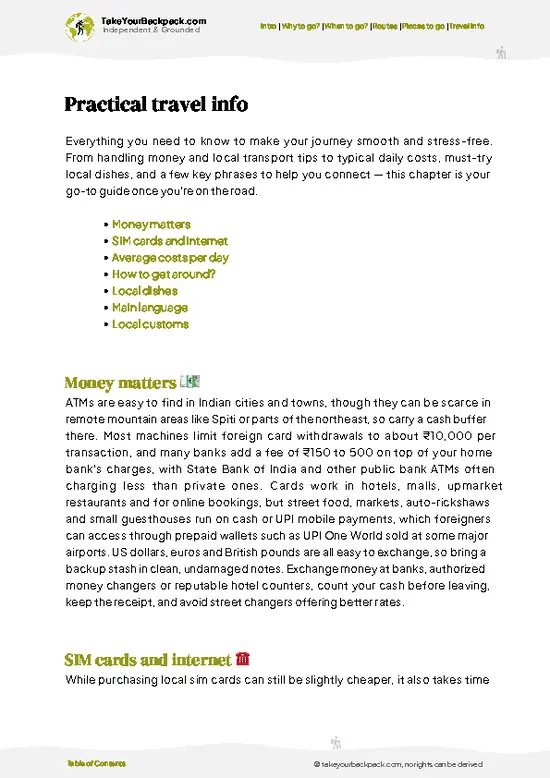
example page 0 from our offline Travel Guide for India
example page 1 from our offline Travel Guide for India
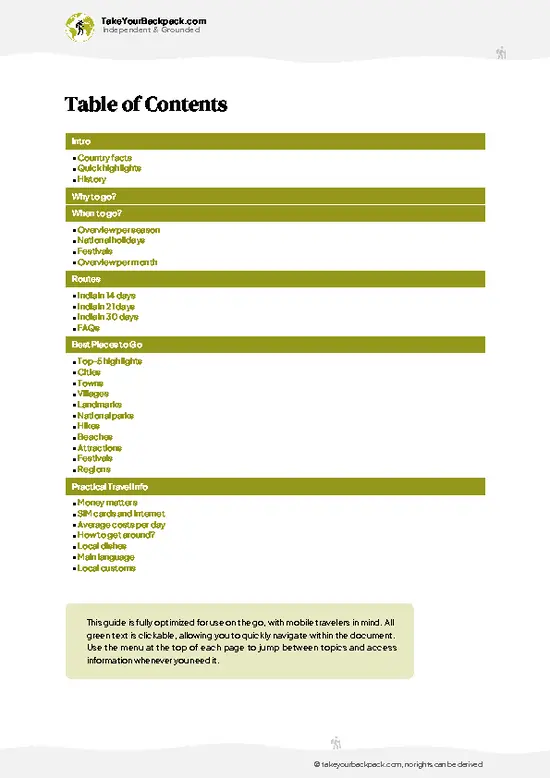
example page 2 from our offline Travel Guide for India
example page 3 from our offline Travel Guide for India
example page 4 from our offline Travel Guide for India
example page 5 from our offline Travel Guide for India
example page 6 from our offline Travel Guide for India
example page 7 from our offline Travel Guide for India
The digital guide (498 pages) contains:
162 highlights, ranked by travel appeal
Optimized 14, 21 & 30-day travel routes
Cities, national parks, landmarks, beaches
How to get around
Offline-friendly for travel without Wi-Fi
👉 Click to see all 30+ guide features

📅 Plan smarter in minutes, not weeks
Month by month travel advice
Festivals & national holidays
Budget expectations

🗺️ Go to the right places, skip the overrated ones
Honest pros & cons of destinations
Top hikes, parks & viewpoints
Lesser-known places most travelers miss
Clear “worth it vs skip it” guidance

🛏️ Travel smoothly without rookie mistakes
Best areas to stay
Transport systems explained simply
Common scams & safety advice
SIM cards, money & practical tips

🌍 Understand the country, not just visit it
Culture & traditions
52 Essential phrases & customs
Festivals worth planning around
Traveler-friendly historical context
Insights that make places more meaningful

📱 Built for real travel conditions
Fully downloadable PDF
Works completely offline
Optimized for phone use
Useful in remote areas & buses
Everything in one place
Save weeks of stressful planning
Get instant access to your full guide. 30‑day money-back guarantee.
+ Add another guide for just US$7.80

By proceeding you agree to our terms.
Sent to your inbox immediately after payment • 100% Secure Checkout
Best Backpacking Travel Advisor 2025 tourism awardBest Backpacking
Travel Advisor
2025
What others say about Take Your Backpack Guides:
⭐⭐⭐⭐⭐
Fantastic, amazing amount of information!
⭐⭐⭐⭐⭐
My goodness this is amazing, it's what I've been looking for hats off too you!
⭐⭐⭐⭐⭐
I think this is absolutely BRILLIANT
⭐⭐⭐⭐
Very complete and informative. It's still missing places, but I gotta to commend you
⭐⭐⭐⭐⭐
This is truly amazing, thank you, can't wait to explore it with my kids!
⭐⭐⭐⭐⭐
Awesome resource, thank you!
⭐⭐⭐⭐⭐
This is amazing! Can't wait to explore the ones I haven't seen
⭐⭐⭐⭐
I love this! Well done, great idea.
⭐⭐⭐⭐⭐
Thanks for taking the time to make this gem!
⭐⭐⭐⭐⭐
This might be the best website I've ever seen.
⭐⭐⭐⭐⭐
Congratulations, and thank you so much for your work; it's incredibly valuable.
⭐⭐⭐⭐
In all seriousness I think you did a great job pointing out the important spots
⭐⭐⭐⭐⭐
10/10 very good
⭐⭐⭐⭐⭐
As someone who's only just starting to visit regularly this is awesome, thank you.
⭐⭐⭐⭐
Thank you very much! I'm going to visit my dad, it's going to be very useful!
⭐⭐⭐⭐⭐
This is really cool! We'll be travelling for the first time and this definitely come in handy.
⭐⭐⭐⭐⭐
You are now our minister of culture, congratulations 👨‍💼
⭐⭐⭐⭐⭐
Just wanted to tell you that this is a pearl! Going to follow your recommendations.
⭐⭐⭐⭐⭐
This is so cool. I'll definitely be using the resource for my travels soon.
⭐⭐⭐⭐⭐
This is very impressive! Good work.
⭐⭐⭐⭐⭐
This is an amazing and informative site. Very well done!

🛏️ Where to stay?Best areas to stay in India

Leh’s heart for backpackers beats strongest in the Old Town and the adjacent Main Bazaar area. This cluster is where you’ll find the pulse of social life—streets lined with budget guesthouses, lively cafes, and travel shops buzzing with fellow adventurers swapping stories and planning treks. Staying here means you’re never far from the action, and the vibe leans toward communal, easygoing, and safe. It’s a natural magnet for solo travelers looking to connect without sacrificing their comfort or wallet.

Contrast this with the newer parts of Leh, which are quieter and more residential. They offer … read more 👉
Leh’s heart for backpackers beats strongest in the Old Town and the adjacent Main Bazaar area. This cluster is where you’ll find the pulse of social life—streets lined with budget guesthouses, lively cafes, and travel shops buzzing with fellow adventurers swapping stories and planning treks. Staying here means you’re never far from the action, and the vibe leans toward communal, easygoing, and safe. It’s a natural magnet for solo travelers looking to connect without sacrificing their comfort or wallet.

Contrast this with the newer parts of Leh, which are quieter and more residential. They offer a bit more space and calm but at the cost of social energy and easy access to backpacker hubs. Plus, transport options and eateries catering to budget travelers thin out, nudging you toward taxis or longer walks.

Choosing Old Town and Main Bazaar means trading a bit of peace for maximum social payoff and convenience. Hostels and guesthouses here are plentiful, affordable, and designed to foster interaction—perfect for anyone who wants to plug into Leh’s backpacker network without breaking the bank or feeling isolated.

🚌 Getting aroundMoving around without the hassle

Leh moves at its own pace—part deliberate, part unpredictable. The city’s rhythm is shaped by its altitude and rugged geography, where schedules exist but bend under the weight of weather, road conditions, and local temperament. You won’t find the slick precision of a metro system here, but rather a blend of slow, steady reliability and bursts of improvisation. This is a place where time is elastic, and your travel choices reflect a trade-off between patience, cost, and comfort. Understanding this flow is your secret weapon to mastering Leh’s transit game.


  • Walking: The purest way to absorb Leh’s compact layout. Free, flexible, and often faster than waiting for transport in congested spots. Ideal for short hops within the town center, but remember the altitude—take it slow to avoid burnout.
read more 👉
Leh moves at its own pace—part deliberate, part unpredictable. The city’s rhythm is shaped by its altitude and rugged geography, where schedules exist but bend under the weight of weather, road conditions, and local temperament. You won’t find the slick precision of a metro system here, but rather a blend of slow, steady reliability and bursts of improvisation. This is a place where time is elastic, and your travel choices reflect a trade-off between patience, cost, and comfort. Understanding this flow is your secret weapon to mastering Leh’s transit game.


  • Walking: The purest way to absorb Leh’s compact layout. Free, flexible, and often faster than waiting for transport in congested spots. Ideal for short hops within the town center, but remember the altitude—take it slow to avoid burnout.

  • Shared Taxis: These are the backbone of budget travel around Leh. Operating from early morning until dusk, fares hover around ₹30-50 for nearby villages. They’re slower than private taxis due to multiple stops but unbeatable for cost-efficiency and local interaction.

  • Private Taxis: Faster and more comfortable, private taxis offer door-to-door service but at a premium—expect to pay 3-5 times the shared taxi fare. Best for tight schedules or when traveling with gear. Availability depends on demand and weather, so book ahead during peak seasons.

  • Local Buses: Sparse and irregular, local buses run on fixed routes connecting Leh with surrounding areas. They’re the cheapest option (₹20-40) but notoriously slow and unpredictable. Use them if you have time to spare and want to experience local life without fuss.

  • Motorbike Rentals: For those craving freedom and speed, renting a motorbike is a popular choice. Costs vary from ₹500-800 per day. It’s the most flexible option but demands confidence in high-altitude riding and road conditions that can shift from smooth to treacherous without warning.

👛 Costs (as of 4 September 2026)Travel costs and budget guide for Leh

Backpacking in Leh, India, is a balancing act between budget and experience, and knowing the daily costs upfront lets you play that game smartly.
  • Dorm Accommodation (High Season): Expect to pay around $8 to $15 per night. High season—summer months and festivals—pushes prices up due to demand, but you still get basic, clean dorms with heating, which is crucial in Leh’s chilly nights.
  • Dorm Accommodation (Off-Season): Prices drop to about $5 to $10. Off-season means fewer travelers and sometimes limited services, but if you’re prepared for colder conditions and quieter streets, it’s a steal.
  • Meals: Simple local meals run $2 to $5 each. Think hearty Tibetan momos, thukpa, or dal with rice. Western-style cafes and restaurants push that to $7 or $8 per meal, but sticking to local joints keeps
read more 👉
Backpacking in Leh, India, is a balancing act between budget and experience, and knowing the daily costs upfront lets you play that game smartly.
  • Dorm Accommodation (High Season): Expect to pay around $8 to $15 per night. High season—summer months and festivals—pushes prices up due to demand, but you still get basic, clean dorms with heating, which is crucial in Leh’s chilly nights.
  • Dorm Accommodation (Off-Season): Prices drop to about $5 to $10. Off-season means fewer travelers and sometimes limited services, but if you’re prepared for colder conditions and quieter streets, it’s a steal.
  • Meals: Simple local meals run $2 to $5 each. Think hearty Tibetan momos, thukpa, or dal with rice. Western-style cafes and restaurants push that to $7 or $8 per meal, but sticking to local joints keeps your wallet happy and your stomach full.
  • Local Transport: Shared taxis or minibusses for short trips around town cost about $0.50 to $1. For longer rides to nearby villages or monasteries, budget $3 to $7 depending on distance and negotiation skills.
  • City Transport Pass: Leh doesn’t have a formal city transport pass system. Most travelers rely on walking or shared taxis, so no fixed pass cost here—just keep some small bills ready for rides.
  • Basic Activities/Entry Fees: Visiting monasteries or local museums usually costs between $1 and $3. Some trekking permits or special sites might push that to $5 or $7, but nothing here breaks the bank.
  • Miscellaneous Expenses: Bottled water, snacks, phone SIM cards, or small souvenirs add up to about $2 to $5 daily. Keep in mind Leh’s altitude means you might want to invest in some extra hydration or health supplies.

All told, you’re looking at roughly $15 to $35 per day, depending on how much comfort you want and how adventurous your palate is. Leh rewards those who embrace simplicity without sacrificing the essentials—knowing where to save and where to spend turns your trip into a smooth, memorable ride.
⚠️ Prices can change and everyone travels differently, so take this as a rough guide. Hope it helps you plan your adventure!

🚌 Day tripsEasy escapes and nearby places

Leh is a backpacker’s dream base, offering a gateway to some of the most breathtaking landscapes and cultural experiences in the Indian Himalayas. Here’s how to maximize your time, money, and comfort with these day trips.

Pangong Lake
A trip to Pangong Lake is a must. The drive takes about 5 hours, winding through stunning mountain passes. The lake itself stretches across two countries, shimmering in shades of blue that shift with the light. Pack a picnic and enjoy the serenity. Costs are manageable: expect around ₹1,500 for shared taxis and meals. The best time to visit is from May to September when the roads are clear. A common mistake? Underestimating the cold; even in summer, temperatures can drop dramatically at night.


Nubra Valley
Nubra Valley is a unique blend of desert and … read more 👉
Leh is a backpacker’s dream base, offering a gateway to some of the most breathtaking landscapes and cultural experiences in the Indian Himalayas. Here’s how to maximize your time, money, and comfort with these day trips.

Pangong Lake
A trip to Pangong Lake is a must. The drive takes about 5 hours, winding through stunning mountain passes. The lake itself stretches across two countries, shimmering in shades of blue that shift with the light. Pack a picnic and enjoy the serenity. Costs are manageable: expect around ₹1,500 for shared taxis and meals. The best time to visit is from May to September when the roads are clear. A common mistake? Underestimating the cold; even in summer, temperatures can drop dramatically at night.


Nubra Valley
Nubra Valley is a unique blend of desert and lush greenery, accessible via the Khardung La pass, one of the highest motorable roads in the world. The journey takes about 6 hours, but the views are worth every minute. You’ll find sand dunes, Bactrian camels, and the charming Diskit Monastery. Budget around ₹2,000 for transport and snacks. Late spring to early autumn is ideal. Many first-timers miss the chance to explore the local villages; don’t just rush through!


Shanti Stupa
For a quick cultural fix, head to Shanti Stupa, just a short 15-minute drive from Leh. This white-domed stupa offers panoramic views of the city and surrounding mountains. It’s a peaceful spot to reflect and soak in the atmosphere. Entry is free, and you can easily fit this into your day. Early morning or late afternoon visits are best for fewer crowds and softer light. A common oversight is skipping the climb to the top; the views are spectacular!


Thiksey Monastery
Thiksey Monastery is a stunning example of Tibetan architecture, located about 20 minutes from Leh. The monastery is home to a massive statue of Maitreya Buddha and offers insight into monastic life. The entrance fee is minimal, and you can spend a couple of hours exploring. Visit in the morning to catch the monks during their prayers. Many travelers overlook the small café nearby; it’s a great spot for a chai break.


Khardung La
If you’re up for an adventure, Khardung La is the highest motorable pass in the world. The drive takes about 2 hours from Leh, and the thrill of reaching this altitude is exhilarating. Expect to pay around ₹1,000 for transport. The best time is from May to October. A common mistake is not acclimatizing properly; take it slow to avoid altitude sickness.
Want to know what more India offers?
The India Travel Guide describes 162 highlights, from cities to national parks, from beaches to hikes

Get the Travel Guide -

🍲 FoodWhat to Eat & Drink

In Leh, food is a vibrant tapestry of flavors that tells the story of its high-altitude culture. Thukpa, a hearty noodle soup, is a must-try. Picture slurping up warm, savory broth filled with fresh vegetables and tender meat, perfect after a day of trekking. Then there’s momos, steamed dumplings that burst with flavor, often filled with spiced vegetables or meat. Grab a plate from a street vendor and enjoy them hot, dipped in tangy chili sauce.

Backpackers often find themselves at local markets or bustling street stalls, where the air is thick with the aroma of spices and grilled meats. These spots are where the real magic happens. You’ll see locals chatting over cups of butter tea, a rich, creamy drink that’s both comforting and energizing. Don’t shy away from trying chang, a traditional … read more 👉
In Leh, food is a vibrant tapestry of flavors that tells the story of its high-altitude culture. Thukpa, a hearty noodle soup, is a must-try. Picture slurping up warm, savory broth filled with fresh vegetables and tender meat, perfect after a day of trekking. Then there’s momos, steamed dumplings that burst with flavor, often filled with spiced vegetables or meat. Grab a plate from a street vendor and enjoy them hot, dipped in tangy chili sauce.

Backpackers often find themselves at local markets or bustling street stalls, where the air is thick with the aroma of spices and grilled meats. These spots are where the real magic happens. You’ll see locals chatting over cups of butter tea, a rich, creamy drink that’s both comforting and energizing. Don’t shy away from trying chang, a traditional barley beer that’s often shared among friends, embodying the spirit of camaraderie.

Eating customs here are relaxed but meaningful. It’s common to share dishes, so don’t hesitate to invite fellow travelers or locals to join in. And remember, when offered food, it’s polite to accept; it’s a gesture of hospitality. Embrace the flavors and the connections—they’re what make Leh truly special.

🛡️ SafetySafety Tips and Common Scams in Leh

Leh is generally safe, but like any destination, it has its quirks. The bustling markets can be a sensory overload, and while most vendors are genuine, keep an eye out for inflated prices, especially if you’re a solo traveler. Bargaining is expected, so don’t hesitate to negotiate; it’s part of the fun.

When wandering the streets at night, stick to well-lit areas and avoid isolated paths. The locals are friendly, but it’s wise to trust your instincts. If you’re approached by someone offering unsolicited help, be polite but firm.

Common scams include overly friendly locals who might guide you to shops where they earn a commission. If someone insists on showing you around, politely decline unless you’re comfortable.

Annoyances can arise from the altitude; acclimatization is key. Stay hydrated … read more 👉
Leh is generally safe, but like any destination, it has its quirks. The bustling markets can be a sensory overload, and while most vendors are genuine, keep an eye out for inflated prices, especially if you’re a solo traveler. Bargaining is expected, so don’t hesitate to negotiate; it’s part of the fun.

When wandering the streets at night, stick to well-lit areas and avoid isolated paths. The locals are friendly, but it’s wise to trust your instincts. If you’re approached by someone offering unsolicited help, be polite but firm.

Common scams include overly friendly locals who might guide you to shops where they earn a commission. If someone insists on showing you around, politely decline unless you’re comfortable.

Annoyances can arise from the altitude; acclimatization is key. Stay hydrated and take it slow. Overall, with a bit of awareness and a confident demeanor, you’ll navigate Leh smoothly and enjoy its unique charm.

FAQCommon questions from travelers

Leh is definitely worth visiting, not just a stopover. It offers unique cultural experiences, stunning landscapes, and historic sites like Leh Palace and Thiksey Monastery. Many travelers spend several days acclimatizing and exploring the region.
You need at least 3 to 4 days in Leh to acclimatize properly and explore key attractions. This allows time for day trips to places like Pangong Lake or Nubra Valley without rushing. Staying longer is recommended if you want to trek or visit remote monasteries.
No, Leh cannot be visited as a day trip from a nearby city due to its remote location and high altitude. The closest major city, Srinagar, is about 420 kilometers away and requires a full day of travel each way. Plan to stay in Leh for at least a few days to make the trip worthwhile.
⚠️ Things can change over time, so always validate details locally before you go.

Other Indian towns near Leh

Explore more nearby:

  • Kargil—Mountain passes, war memorials, apricot orchards| 140 km away
  • McLeod Ganj—Tibetan enclave, monastery life, mountain views| 242 km away
  • Mandawa—painted havelis, merchant mansions, desert town| 717 km away

💡 Not sure where to go next?
Create a personalized itinerary for India including Leh and the places that fit your trip.

Generate my itinerary

👉 Discover all towns

Or checkout all India has to offer (think cities, towns, villages, national parks, hikes, beaches, festivals)
Country photo of India

We 💚 feedbackFinal thoughts on visiting Leh

Leh is a playground for the adventurous spirit. The stark beauty of the Himalayas, the vibrant culture, and the chance to sip butter tea with locals make it a must-visit. But here’s the kicker: altitude sickness can hit hard. Give yourself time to acclimatize. Embrace the slow pace, and you’ll unlock the magic of this high-altitude wonderland. It’s a trade-off, but the rewards are worth every breath.

✈️ When did I visit India?
As part of my 1.5 year travel around the world trip, I visited India in December 2015.

✍️ Help improve this page!
The information on this page is based on my own backpacking experience in India, supplemented with up-to-date research and feedback from other travelers. Travel details can change, so if you notice anything outdated or incomplete, feel free to let me know.


🙋‍♂️ Give feedback

👋 Meet the founderWho’s Behind Take Your Backpack?

Johan, backpacker and founder of TakeYourBackpackHi, I’m Johan (Netherlands 🇳🇱), the creator of TakeYourBackpack. Over the past decade, I’ve backpacked through 80+ countries across six continents, gaining extensive experience with independent travel, long-term trips, and overland routes.

This site is built on a combination of firsthand travel experience and carefully curated insights from other backpackers. Many guides are based on places I’ve personally visited, while others bring together tips, observations, and practical advice shared by trusted travelers I’ve met along the way.

The goal is to provide realistic, experience-driven guidance — not generic itineraries — so you can explore destinations with better context, clearer expectations, and more confidence.

Get full India guide •
Instant download • 162 highlights • Full Offline guide