×

Indonesia🇮🇩 | regionsAmbon IslandMaluku spice history, Banda Sea access, Pattimura coast, Dutch forts | things to do and best time to go

Explore Tana TorajaExplore Bali

Backpacking in Ambon Island
👌 Worth visitingregion ranked #17
By Johan Kruseman 🇳🇱 | Updated October 15, 2026

Most backpackers discover too late that Ambon Island sits at the crossroads of Indonesia's eastern archipelago, cutting travel time to Raja Ampat and the Banda Islands by days. Located in Maluku province, east of Sulawesi, Ambon punches above its weight as a launching pad and destination. The island itself delivers: volcanic peaks wrapped in jungle, coral reefs that rival anywhere in Indonesia, and a genuinely multicultural vibe where Portuguese, Dutch, and Islamic histories collide in the architecture and food. I remember standing on a dock at dawn, watching fishermen haul in their nets while the call to prayer echoed across the water and a church bell rang in the distance, all at once. The island avoids the backpacker crush of Bali or the Gili Islands, which means cheaper accommodation, easier transport, and locals who still seem curious rather than weary. The catch is infrastructure: roads are rough, ferries run on island time, and English is sparse outside tourist zones.

Discover everything you want to know in the 📖 Indonesia Travel Guide.


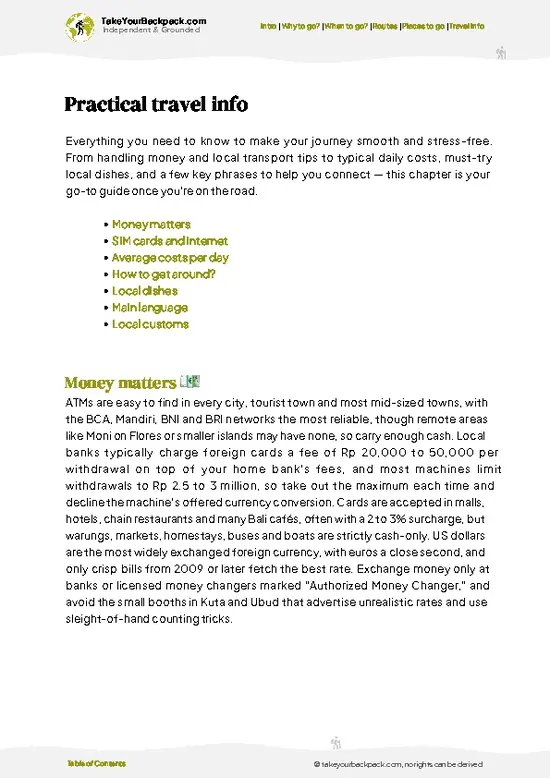
example page 0 from our offline Travel Guide for Indonesia
example page 1 from our offline Travel Guide for Indonesia
example page 2 from our offline Travel Guide for Indonesia
example page 3 from our offline Travel Guide for Indonesia
example page 4 from our offline Travel Guide for Indonesia
example page 5 from our offline Travel Guide for Indonesia
example page 6 from our offline Travel Guide for Indonesia
example page 7 from our offline Travel Guide for Indonesia
Loading the map 🌍
CLICK TO FILTER
cities
towns
villages
landmarks
national parks
hikes
beaches
attractions
festivals
regions
SHOW COUNTRY’S BESTSHOW ALL

✨ Why go?
Ranked #17 region in Indonesia
Reasons people choose to visit here

Ambon rewards slow travel. The island packs multiple landscapes into a compact space: volcanic ridges, coral reefs, and coastal villages all within reach of the main town. You can base yourself for 4 to 5 days and explore without moving accommodation constantly, which saves money and lets you build real connections. The transport network is reliable enough to reach remote spots by local boat or minibus, but loose enough that you'll stumble onto unmarked trails and fishing communities. Diving and snorkeling are world-class yet far cheaper than the Gili Islands. Most importantly, Ambon still feels like a place where locals outnumber tourists, so your presence actually matters.

💡 HighlightsWhat this place is best known for

  1. Sirimau Beach: A crescent of black sand backed by coconut palms, calm enough for swimming and close enough to Ambon City for a half-day visit without logistics headaches.
  2. Laha Village: A traditional Muslim fishing village on the island's west coast where locals still build wooden boats by hand; walk through and watch the work, then eat grilled fish at a warung overlooking the water.
  3. Tulehu Beach: Less crowded than Sirimau, with clearer water and a reef you can snorkel from the shore; locals come here on weekends, not tourists.
  4. Banda Neira: A day trip by ferry (90 minutes) to a cluster of spice islands with colonial ruins, nutmeg plantations, and a pace that feels frozen in the 1800s.
  5. Passo Waterfall: A short hike inland from the north coast leads to a freshwater cascade in the jungle; the trail
… read more 👉
  1. Sirimau Beach: A crescent of black sand backed by coconut palms, calm enough for swimming and close enough to Ambon City for a half-day visit without logistics headaches.
  2. Laha Village: A traditional Muslim fishing village on the island's west coast where locals still build wooden boats by hand; walk through and watch the work, then eat grilled fish at a warung overlooking the water.
  3. Tulehu Beach: Less crowded than Sirimau, with clearer water and a reef you can snorkel from the shore; locals come here on weekends, not tourists.
  4. Banda Neira: A day trip by ferry (90 minutes) to a cluster of spice islands with colonial ruins, nutmeg plantations, and a pace that feels frozen in the 1800s.
  5. Passo Waterfall: A short hike inland from the north coast leads to a freshwater cascade in the jungle; the trail is unmarked, so hire a local guide in the nearest village.
  6. Ambon City's Siwalima Museum: Houses artifacts from Maluku's spice-trade history and indigenous cultures; small but genuinely informative, and rarely crowded.
  7. Namalatu Beach: A fishing village beach on the south coast where you can hire a boat to nearby coral gardens or simply sit and watch the daily rhythm of the community.
  8. Waai Village: Known for its traditional weaving; visit a workshop, watch women at the loom, and buy directly from makers at a fraction of tourist-market prices.
  9. Seram Strait snorkeling: Hire a local boat operator for a morning trip to shallow reefs between Ambon and Seram; the coral and fish density rivals famous sites, and you'll likely be alone.
  10. Hila Village: A historic settlement on the north coast with a 17th-century Portuguese fort ruin and a strong sense of place; the beach is rocky but the village itself rewards a slow walk.
I'd start with Laha Village because it anchors you in the island's working reality before you chase the postcard moments.
Spotted a mistake or missing something? Contact us.

Things to do around Ambon Island

Ratings based on Tripadvisor reviews. When you book through this link, you support our work at no extra cost to you.

⌛️ 5 daysSeeing the highlights in 5 days

Day 1: Ambon City: Arrive and settle into the main port town. Spend the afternoon walking the waterfront, visiting the Siwalima Museum, and eating at a local warung to adjust to the pace. This grounds you in the island's history and gives you a sense of how transport hubs work here. Sleep in the city center so you can move easily the next morning.

Day 2: Sirimau and Laha: Take a local minibus (30 minutes) to Sirimau Beach for a swim and lunch, then continue to Laha Village by the same transport. Spend the afternoon watching boat builders and eating grilled fish at a waterside warung. This day connects you to the island's working coast without requiring a guide or long hikes.

Day 3: Tulehu and Waai: Head north to Tulehu Beach for snorkeling and a quiet morning, then push to Waai Village to … read more 👉
Day 1: Ambon City: Arrive and settle into the main port town. Spend the afternoon walking the waterfront, visiting the Siwalima Museum, and eating at a local warung to adjust to the pace. This grounds you in the island's history and gives you a sense of how transport hubs work here. Sleep in the city center so you can move easily the next morning.

Day 2: Sirimau and Laha: Take a local minibus (30 minutes) to Sirimau Beach for a swim and lunch, then continue to Laha Village by the same transport. Spend the afternoon watching boat builders and eating grilled fish at a waterside warung. This day connects you to the island's working coast without requiring a guide or long hikes.

Day 3: Tulehu and Waai: Head north to Tulehu Beach for snorkeling and a quiet morning, then push to Waai Village to watch weavers at work. Both are on the same minibus route, so you can move at your own pace. This phase balances water time with cultural immersion.

Day 4: Hila and Passo: Travel to Hila Village to explore the Portuguese fort ruins and the village itself, then hire a local guide for the short hike to Passo Waterfall inland. The waterfall is the trip's only real jungle moment and justifies the detour.

Day 5: Banda Neira day trip or rest: Take the ferry to Banda Neira for a final push into spice-island history, or use the day to revisit a favorite spot or simply rest. The ferry runs most mornings and returns by evening.

The one day that justifies the whole trip: Day 4, when you combine colonial history, a working village, and jungle in a single push.

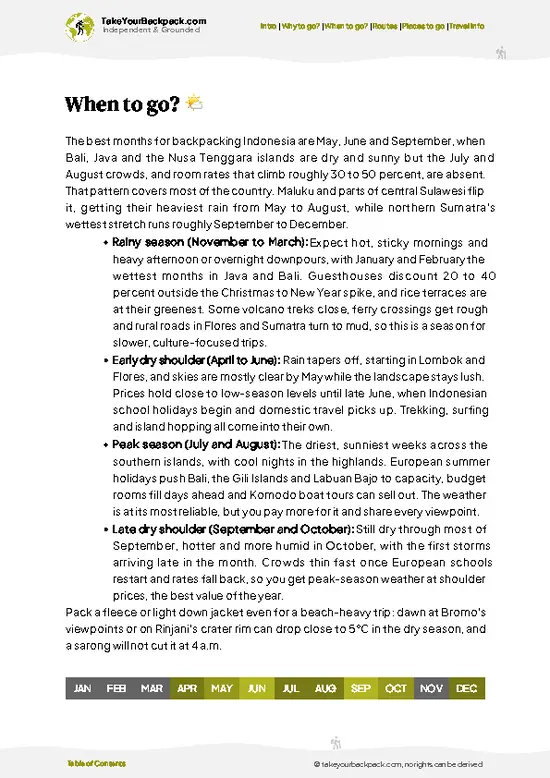
🌤️ When to go?Weather, crowds, and seasonal trade-offs

  • Dry Season (May to September): The best window for diving, snorkeling, and island hopping. Seas are calm, visibility is excellent, and temperatures hover around 28 to 30°C (82 to 86°F). Expect fewer tourists and lower prices than peak months.
  • Wet Season (November to March): Heavy rainfall and rough seas make diving risky and ferries less frequent. Temperatures climb to 30 to 32°C (86 to 90°F) with high humidity. Accommodation prices drop, but outdoor activities become unpredictable.
  • Shoulder Months (April, October): Transitional weather with occasional rain but improving seas. Fewer crowds than dry season, moderate prices, and still viable for most activities.
Plan your trip between May and September for the most reliable conditions and easiest logistics.

source: climatestotravel.comJANJanuary: fair for travelingFEBFebruary: fair for travelingMARMarch: fair for travelingAPRApril: highly recommended for travelingMAYMay: excellent for travelingJUNJune: excellent for travelingJULJuly: highly recommended for travelingAUGAugust: highly recommended for travelingSEPSeptember: excellent for travelingOCTOctober: highly recommended for travelingNOVNovember: below average for travelingDECDecember: below average for traveling
when-to-go

✈️ The backpacker research shortcutIndonesia Travel Guide

An offline-friendly backpacking guide with optimized travel routes, ranked highlights, transport advice, and the best areas to stay.
example page 0 from our offline Travel Guide for Indonesia
example page 1 from our offline Travel Guide for Indonesia
example page 2 from our offline Travel Guide for Indonesia
example page 3 from our offline Travel Guide for Indonesia
example page 4 from our offline Travel Guide for Indonesia
example page 5 from our offline Travel Guide for Indonesia
example page 6 from our offline Travel Guide for Indonesia
example page 7 from our offline Travel Guide for Indonesia
The digital guide (460 pages) contains:
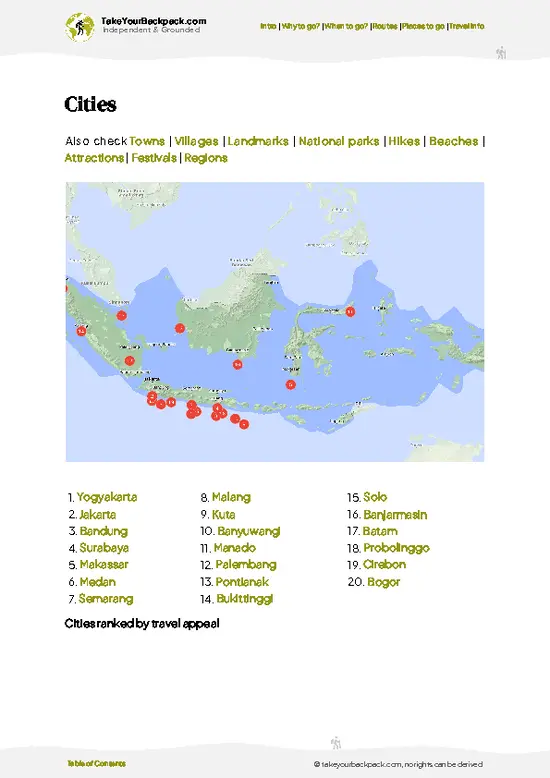
✅ 153 highlights, ranked by travel appeal
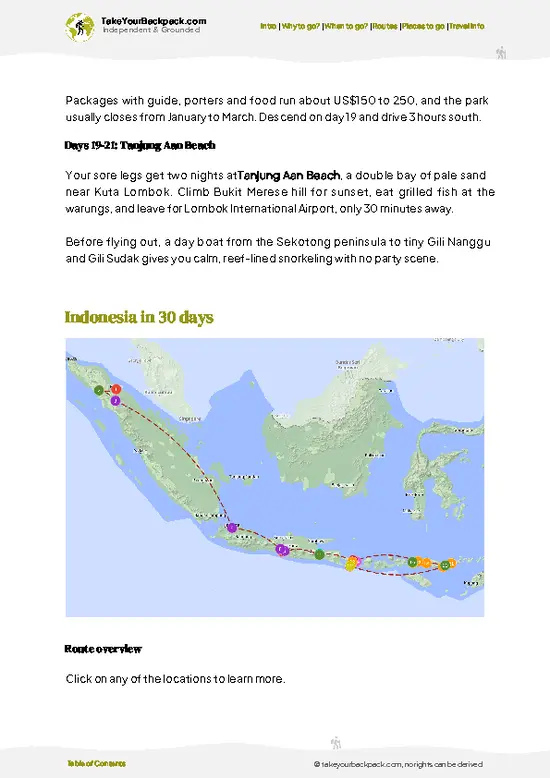
✅ Optimized 14, 21 & 30-day travel routes
✅ Cities, national parks, landmarks, beaches
✅ How to get around
✅ Offline-friendly for travel without Wi-Fi
👉 Click to see all 30+ guide features

📅 Plan smarter in minutes, not weeks
✅ Month by month travel advice
✅ Festivals & national holidays
✅ Budget expectations

🗺️ Go to the right places, skip the overrated ones
✅ Honest pros & cons of destinations
✅ Top hikes, parks & viewpoints
✅ Lesser-known places most travelers miss
✅ Clear “worth it vs skip it” guidance

🛏️ Travel smoothly without rookie mistakes
✅ Best areas to stay
✅ Transport systems explained simply
✅ Common scams & safety advice
✅ SIM cards, money & practical tips

🌍 Understand the country, not just visit it
✅ Culture & traditions
✅ 52 Essential phrases & customs
✅ Festivals worth planning around
✅ Traveler-friendly historical context
✅ Insights that make places more meaningful

📱 Built for real travel conditions
✅ Fully downloadable PDF
✅ Works completely offline
✅ Optimized for phone use
✅ Useful in remote areas & buses
✅ Everything in one place
Stop searching, start planning
Get instant access to your full guide. 30‑day money-back guarantee.
+ Add another guide for just

By proceeding you agree to our terms.
Sent to your inbox immediately after payment • 100% Secure Checkout
Best Backpacking Travel Advisor 2025 tourism awardBest Backpacking
Travel Advisor
2025
What others say about Take Your Backpack Guides:
⭐⭐⭐⭐⭐
Fantastic, amazing amount of information!
⭐⭐⭐⭐⭐
My goodness this is amazing, it's what I've been looking for hats off too you!
⭐⭐⭐⭐⭐
I think this is absolutely BRILLIANT
⭐⭐⭐⭐
Very complete and informative. It's still missing places, but I gotta to commend you
⭐⭐⭐⭐⭐
This is truly amazing, thank you, can't wait to explore it with my kids!
⭐⭐⭐⭐⭐
Awesome resource, thank you!
⭐⭐⭐⭐⭐
This is amazing! Can't wait to explore the ones I haven't seen
⭐⭐⭐⭐
I love this! Well done, great idea.
⭐⭐⭐⭐⭐
Thanks for taking the time to make this gem!
⭐⭐⭐⭐⭐
This might be the best website I've ever seen.
⭐⭐⭐⭐⭐
Congratulations, and thank you so much for your work; it's incredibly valuable.
⭐⭐⭐⭐
In all seriousness I think you did a great job pointing out the important spots
⭐⭐⭐⭐⭐
10/10 very good
⭐⭐⭐⭐⭐
As someone who's only just starting to visit regularly this is awesome, thank you.
⭐⭐⭐⭐
Thank you very much! I'm going to visit my dad, it's going to be very useful!
⭐⭐⭐⭐⭐
This is really cool! We'll be travelling for the first time and this definitely come in handy.
⭐⭐⭐⭐⭐
You are now our minister of culture, congratulations 👨‍💼
⭐⭐⭐⭐⭐
Just wanted to tell you that this is a pearl! Going to follow your recommendations.
⭐⭐⭐⭐⭐
This is so cool. I'll definitely be using the resource for my travels soon.
⭐⭐⭐⭐⭐
This is very impressive! Good work.
⭐⭐⭐⭐⭐
This is an amazing and informative site. Very well done!

🛏️ Where to stay?Where staying makes the most sense

Ambon City is the social hub and transport anchor, with the most hostels, restaurants, and reliable ferry connections. The waterfront area has budget guesthouses and a mix of solo travelers and small groups. Tanjung Panjang and Namalatu offer homestays and simple beachside lodges if you want to slow down near the water; these villages are quieter and cheaper but require planning transport back to the city. Waai Village has a handful of guesthouses and attracts travelers seeking isolation without sacrificing basic comfort. For divers, staying near Ambon City keeps you close to dive operators and … read more 👉
Ambon City is the social hub and transport anchor, with the most hostels, restaurants, and reliable ferry connections. The waterfront area has budget guesthouses and a mix of solo travelers and small groups. Tanjung Panjang and Namalatu offer homestays and simple beachside lodges if you want to slow down near the water; these villages are quieter and cheaper but require planning transport back to the city. Waai Village has a handful of guesthouses and attracts travelers seeking isolation without sacrificing basic comfort. For divers, staying near Ambon City keeps you close to dive operators and evening social scenes, while beach villages suit those prioritizing snorkeling and solitude.

🚌 Getting aroundGetting around like a local

Ambon City's center is walkable, with most hostels, markets, and restaurants within 20 to 30 minutes on foot. Walking stops making sense once you head to beaches or villages beyond the bay; that's when you shift to minibus or boat. Most backpackers move between towns and dive sites using a mix of local minibuses, chartered boats, and occasional ferries, all of which run regularly but on flexible schedules.

  • Minibus (Angkot): Shared vans connecting Ambon City to coastal villages and beaches; costs US$1 to 3 per trip, takes 30 to 90 minutes depending on destination, and runs throughout the day until early evening. Comfort is tight, but you'll meet locals and see the island's interior.
  • Public Ferry: Connects Ambon to the Banda Islands (2 to 3 hours, US$8 to 12) and Lease Island (30 to 45 minutes,
… read more 👉
Ambon City's center is walkable, with most hostels, markets, and restaurants within 20 to 30 minutes on foot. Walking stops making sense once you head to beaches or villages beyond the bay; that's when you shift to minibus or boat. Most backpackers move between towns and dive sites using a mix of local minibuses, chartered boats, and occasional ferries, all of which run regularly but on flexible schedules.

  • Minibus (Angkot): Shared vans connecting Ambon City to coastal villages and beaches; costs US$1 to 3 per trip, takes 30 to 90 minutes depending on destination, and runs throughout the day until early evening. Comfort is tight, but you'll meet locals and see the island's interior.
  • Public Ferry: Connects Ambon to the Banda Islands (2 to 3 hours, US$8 to 12) and Lease Island (30 to 45 minutes, US$2 to 4). Ferries run once or twice daily; schedules shift seasonally, so confirm the night before.
  • Chartered Speedboat: Groups of 4 to 6 can split the cost of a private boat to remote beaches or snorkeling sites; typically US$40 to 80 for a half-day, making it competitive with minibus if you're traveling with others.
  • Ojek (Motorcycle Taxi): Available everywhere in town and to nearby villages; costs US$1 to 3 per ride and is fastest for short distances, though not ideal if you're carrying a full pack.
Book ferry tickets the day before during dry season; minibus schedules are flexible enough that you can usually find a ride within an hour of arriving at the terminal.

🍲 FoodEating & Drinking in Ambon Island

Ambon's food reflects its position between three seas: fresh fish dominates every meal. Tinutuan, a rice porridge served with salted fish and sambal, is the standard breakfast and costs under US$1. Ikan bakar (grilled fish) appears at every warung, often caught that morning and cooked to order. The island's spice heritage means clove-infused dishes and nutmeg appear in unexpected places, a legacy of the Banda Islands trade. Eat at local warungs rather than tourist restaurants; you'll find them clustered near markets and bus terminals, where prices stay low and the fish rotates daily. Teh tarik (pulled tea) is the social drink, served hot and sweet at street stalls. Dining customs are relaxed; eat with your right hand if using hands, though spoons and forks are standard. Fresh tropical fruit … read more 👉
Ambon's food reflects its position between three seas: fresh fish dominates every meal. Tinutuan, a rice porridge served with salted fish and sambal, is the standard breakfast and costs under US$1. Ikan bakar (grilled fish) appears at every warung, often caught that morning and cooked to order. The island's spice heritage means clove-infused dishes and nutmeg appear in unexpected places, a legacy of the Banda Islands trade. Eat at local warungs rather than tourist restaurants; you'll find them clustered near markets and bus terminals, where prices stay low and the fish rotates daily. Teh tarik (pulled tea) is the social drink, served hot and sweet at street stalls. Dining customs are relaxed; eat with your right hand if using hands, though spoons and forks are standard. Fresh tropical fruit juices from street vendors cost pennies and are safer than bottled drinks.

FAQTraveler FAQ

Four to five days gives you time to explore the main beaches, visit Laha and Waai villages, and take a day trip to Banda Neira without rushing. Most backpackers spend 3 to 4 days on Ambon itself, then use it as a base for ferries to nearby islands like Banda Neira (90 minutes) or Seram (2 to 3 hours).
Walk the center of Ambon City easily, but beyond the waterfront, use local minibuses (called angkots) that run fixed routes for US$0.50 to 1.50 per trip. Ferries connect Ambon to Banda Neira, Seram, and other islands; they depart most mornings and cost US$8 to 15. Hiring a private boat for snorkeling or village visits runs US$30 to 50 for a half day.
Ambon is known as a gateway to Indonesia's eastern islands and a diving and snorkeling destination, but it's also valued by backpackers for its multicultural history, working fishing villages, and lack of tourist infrastructure. The island's real draw is its authenticity: you're moving through a place where tourism is secondary to daily life.
⚠️ Things can change over time, so always validate details locally before you go.

Other Indonesian regions near Ambon Island

Explore more nearby:

  • Raja Ampat Islands—biodiverse reefs, limestone islets, liveaboard cruises| 461 km away
  • West Papua—coastal mangroves, indigenous art, isolated settlements| 726 km away
  • Sulawesi—weaving traditions, highland cultures, intricate coastline| 897 km away

💡 Not sure where to go next?
Create a personalized itinerary for Indonesia including Ambon Island and the places that fit your trip.

Generate my itinerary

👉 Discover all regions

Or checkout all Indonesia has to offer (think cities, towns, villages, national parks, hikes, beaches, festivals)
Country photo of Indonesia

We 💚 feedbackParting advice and final tips

Ambon rewards slow travel and curiosity over speed. The island's real payoff is its lack of polish: you're exploring a working place, not a curated destination. The drawback is real: getting around requires patience, and English is sparse, so you'll need to embrace uncertainty.

✈️ When did I visit Indonesia?
As part of my 1.5 year travel around the world trip, I visited Indonesia twice (and it was worth it): first in September 2015 and a bit later again in January and February 2016.

✍️ Help improve this page!
The information on this page is based on my own backpacking experience in Indonesia, supplemented with up-to-date research and feedback from other travelers. Travel details can change, so if you notice anything outdated or incomplete, feel free to let me know.


🙋‍♂️ Give feedback

👋 Meet the founderWho’s Behind Take Your Backpack?

Johan, backpacker and founder of TakeYourBackpackHi, I’m Johan (Netherlands 🇳🇱), the creator of TakeYourBackpack. Over the past 3 decades, I’ve backpacked through 90+ countries across six continents, gaining extensive experience with independent travel, long-term trips, and overland routes.

This site is built on a combination of firsthand travel experience and carefully curated insights from other backpackers. Many guides are based on places I’ve personally visited, while others bring together tips, observations, and practical advice shared by trusted travelers I’ve met along the way.

The goal is to provide realistic, experience-driven guidance — not generic itineraries — so you can explore destinations with better context, clearer expectations, and more confidence.