
×

Indonesia🇮🇩 | regionsRaja Ampat Islandsbiodiverse reefs, limestone islets, liveaboard cruises | things to do and best time to go

Explore PapuaExplore Sulawesi

Backpacking in Raja Ampat Islands
🏆 Top pickregion ranked #2
By Johan Kruseman 🇳🇱 | Updated October 15, 2026

Raja Ampat is not the luxury-only playground online summaries claim: homestays on Gam, Kri and Mansuar put a bed, three meals and a boat-ready jetty at roughly US$25 to 45 a night. The archipelago sits off the northwest tip of West Papua, reached via Sorong. Compared with Komodo or Bali’s Nusa islands, you get far emptier reefs and zero nightlife. Cons are blunt: long transfers, boat fuel that inflates every excursion, spotty signal and a US$50-ish marine park tag (check the current fee, valid for a year). Splurging on a speedboat day costs money but saves hours; the slow public ferry costs almost nothing but eats a day and comfort. For most backpackers, a homestay plus shared boat trips wins. I slid off a Kri jetty at dawn, and a school of silver fusiliers swallowed the light around me before I had even fitted my mask.

Discover everything you want to know in the 📖 Indonesia Travel Guide.


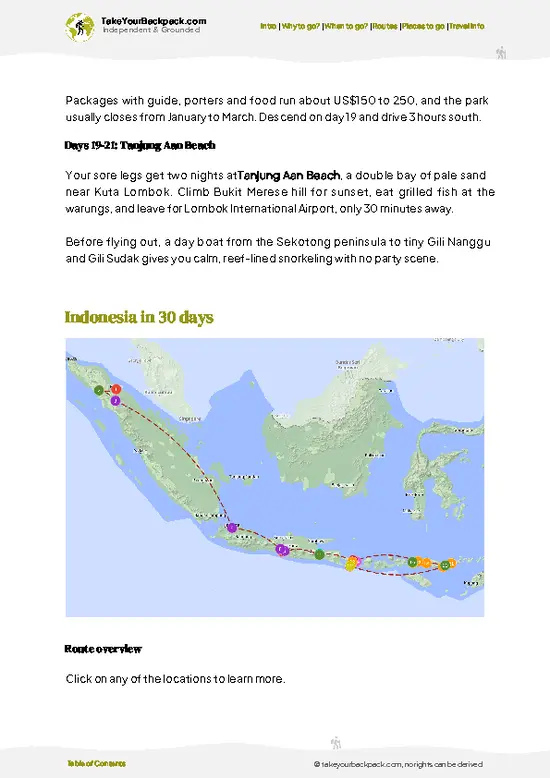
example page 0 from our offline Travel Guide for Indonesia
example page 1 from our offline Travel Guide for Indonesia
example page 2 from our offline Travel Guide for Indonesia
example page 3 from our offline Travel Guide for Indonesia
example page 4 from our offline Travel Guide for Indonesia
example page 5 from our offline Travel Guide for Indonesia
example page 6 from our offline Travel Guide for Indonesia
example page 7 from our offline Travel Guide for Indonesia
Loading the map 🌍
CLICK TO FILTER
cities
towns
villages
landmarks
national parks
hikes
beaches
attractions
festivals
regions
SHOW COUNTRY’S BESTSHOW ALL

✨ Why go?
Ranked #2 region in Indonesia
Why visitors keep coming back

Backpackers come to Raja Ampat because the diversity sits in one compact area. A single homestay base gives you house reef snorkeling off the jetty, jungle walks to viewpoints, and bird-watching for red birds-of-paradise, all without repacking. Pick Waigeo for the famous karst panoramas, Gam and Kri for easy reef access, or Misool for remote lagoons and cave paintings. The slow travel rhythm suits the place: you wake with roosters, swim, eat what the family caught, and take a shared boat when enough guests want the same spot. That sharing is the key to cost control, since chartering a whole boat alone gets expensive fast. Culture comes in through village life. You stay with Papuan families, join church on Sunday, and buy fish from the neighbor’s dugout. Transport is simple once you reach Waisai … read more 👉
Backpackers come to Raja Ampat because the diversity sits in one compact area. A single homestay base gives you house reef snorkeling off the jetty, jungle walks to viewpoints, and bird-watching for red birds-of-paradise, all without repacking. Pick Waigeo for the famous karst panoramas, Gam and Kri for easy reef access, or Misool for remote lagoons and cave paintings. The slow travel rhythm suits the place: you wake with roosters, swim, eat what the family caught, and take a shared boat when enough guests want the same spot. That sharing is the key to cost control, since chartering a whole boat alone gets expensive fast. Culture comes in through village life. You stay with Papuan families, join church on Sunday, and buy fish from the neighbor’s dugout. Transport is simple once you reach Waisai or Sorong: public ferries, chartered longboats and homestay pickups cover most routes. Few places let you swap a wall of coral for a rainforest trail within an hour, and still sleep for under US$50.

💡 HighlightsKey sights and experiences for travelers

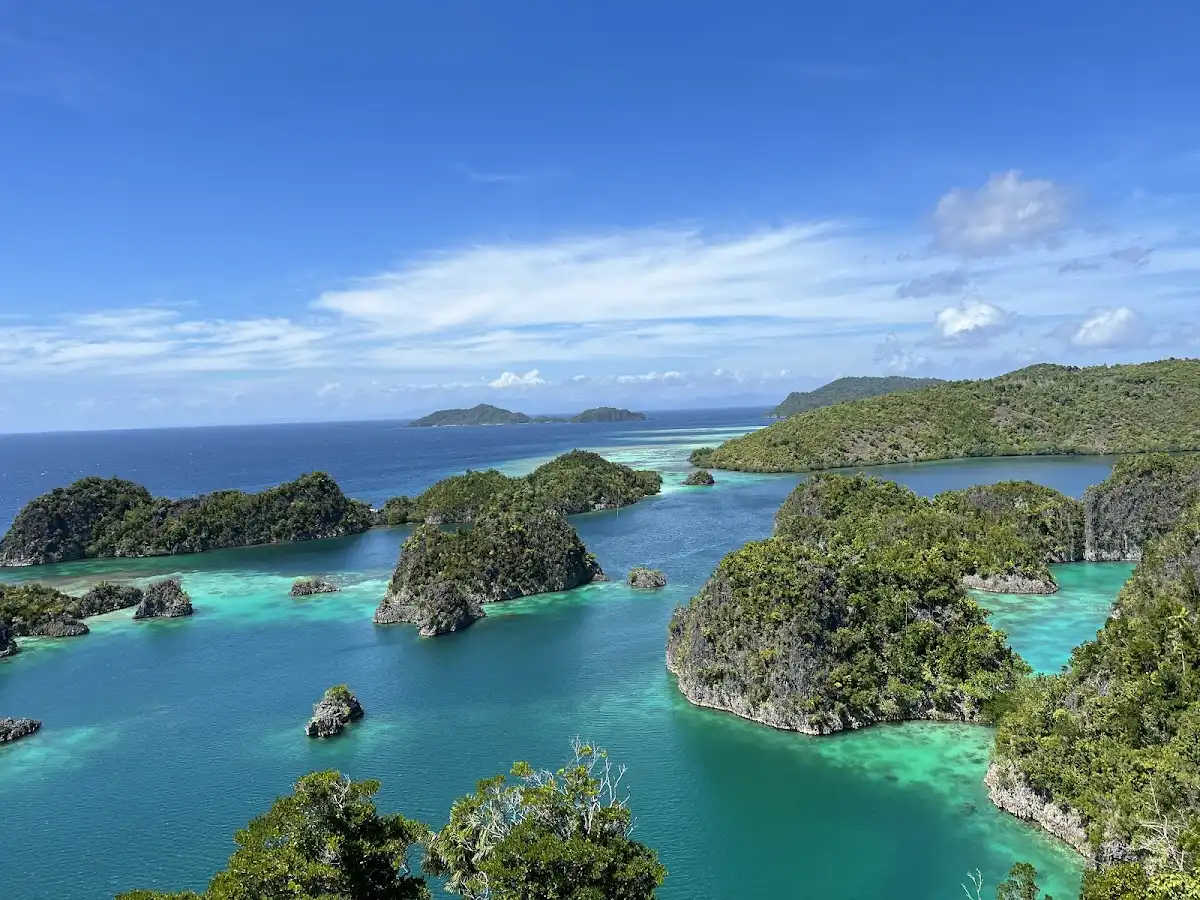
  1. Wayag: The postcard karst islets and turquoise lagoons. The climb to the viewpoint is steep and slippery, and reaching it needs a multi-hour boat ride, so it is best shared.
  2. Pianemo: A short, steep stair climb gives a view over limestone islets and blue lagoons. It is the easier cousin of Wayag, and visits usually fit into a day trip from Gam.
  3. Kri Island house reef: Jetty snorkeling with dense fish life, including schooling fusiliers and barracuda. It is the best free activity in the archipelago.
  4. Arborek Village: A tidy Papuan village with a jetty reef full of fish and handicraft stalls. Visit early to see the reef before day boats arrive.
  5. Manta Sandy and Manta Ridge: Cleaning stations where reef mantas glide past. Snorkelers can see them with luck, and the season for sightings is strong from
… read more 👉
  1. Wayag: The postcard karst islets and turquoise lagoons. The climb to the viewpoint is steep and slippery, and reaching it needs a multi-hour boat ride, so it is best shared.
  2. Pianemo: A short, steep stair climb gives a view over limestone islets and blue lagoons. It is the easier cousin of Wayag, and visits usually fit into a day trip from Gam.
  3. Kri Island house reef: Jetty snorkeling with dense fish life, including schooling fusiliers and barracuda. It is the best free activity in the archipelago.
  4. Arborek Village: A tidy Papuan village with a jetty reef full of fish and handicraft stalls. Visit early to see the reef before day boats arrive.
  5. Manta Sandy and Manta Ridge: Cleaning stations where reef mantas glide past. Snorkelers can see them with luck, and the season for sightings is strong from October to April.
  6. Sawandarek jetty: A calm village reef off Mansuar where you can float over coral with reef sharks passing. Fewer visitors than Arborek.
  7. Painted Rock (Tapokreng): Ancient hand-print paintings on a cliff face near Misool, with a quiet lagoon setting.
  8. Misool lagoons and Daram: Hidden coves, mangroves and karst walls. It is remote, pricey to reach, and rewards the effort with glassy, empty water.
  9. Warkesi birding trails on Gam: Locals guide dawn walks to watch Wilson’s birds-of-paradise and red birds-of-paradise on Waigeo. Lesser known and wonderfully quiet.
  10. Friwen Wall and Dayang village: A little-visited stretch of homestay shoreline on Waigeo where fishermen and guides know the quiet bays.
I would pick the Kri house reef first. It costs nothing, needs no boat, and shows you in twenty minutes whether this place will wreck every other reef for you.
Spotted a mistake or missing something? Contact us.
⌛️ 5 daysSeeing the highlights in 5 days

Day 1: Sorong: Fly into Sorong and take the morning ferry to Waisai if you can, because the public boat is the spine of this trip and runs only a few times a day. Arriving early avoids a night in the port city and sets the pace: everything here follows boat timetables, not road maps.
Day 2: Gam Island: Transfer to a homestay on Gam, then snorkel the house reef in the afternoon. Settle in now. Shared boat trips are set by guests and weather, so you need a day to meet others and agree on costs.
Day 3: Pianemo and Wayag: Join a shared boat to Pianemo, which is a shorter ride, and climb the stairs early before cloud arrives. If the group and sea allow, go farther to Wayag instead. It is a long day, so go with a full group to cut the price.
Day 4: Kri and Mansuar: Snorkel Kri’s jetty at dawn, … read more 👉
Day 1: Sorong: Fly into Sorong and take the morning ferry to Waisai if you can, because the public boat is the spine of this trip and runs only a few times a day. Arriving early avoids a night in the port city and sets the pace: everything here follows boat timetables, not road maps.
Day 2: Gam Island: Transfer to a homestay on Gam, then snorkel the house reef in the afternoon. Settle in now. Shared boat trips are set by guests and weather, so you need a day to meet others and agree on costs.
Day 3: Pianemo and Wayag: Join a shared boat to Pianemo, which is a shorter ride, and climb the stairs early before cloud arrives. If the group and sea allow, go farther to Wayag instead. It is a long day, so go with a full group to cut the price.
Day 4: Kri and Mansuar: Snorkel Kri’s jetty at dawn, then visit Arborek and Sawandarek. Short hops by longboat let you cover two villages without chasing connections.
Day 5: Return to Sorong: Take the ferry back and keep a buffer before flights. Delays happen.
Off-Path Reward: Join a dawn bird walk with a local guide for the red bird-of-paradise. It adds one quiet morning without altering the ferry schedule.
Must-do day: Day 3. Standing above the lagoons at Pianemo, with boat hulls tiny below, justifies the whole journey.

🌤️ When to go?Weather, crowds, and seasonal trade-offs

  • Best Season (October to April): Seas are calmest and visibility is often best, with water around 28 to 30°C (82 to 86°F) and air temperatures of 25 to 32°C (77 to 90°F). Divers and snorkelers arrive in numbers, so book homestays ahead.
  • Dry-ish Shoulder (May to June): Fewer visitors, occasional showers, and quieter reefs. Prices stay steady, though boat availability can thin out.
  • Windy Months (July to September): Southeast winds bring choppier crossings and some rain, particularly on southern routes. Manta sightings can still be good, and homestay rates sometimes ease slightly.
  • Daylight: Near the equator, expect about 12 hours of light year-round, roughly 5:30 to 6 am sunrise and 5:30 to 6 pm sunset, so plan boat trips for the morning.
Book the Sorong ferry for a morning departure, because afternoon seas are rougher and delays are common.

source: climatestotravel.comJANJanuary: excellent for travelingFEBFebruary: excellent for travelingMARMarch: excellent for travelingAPRApril: highly recommended for travelingMAYMay: fair for travelingJUNJune: fair for travelingJULJuly: fair for travelingAUGAugust: fair for travelingSEPSeptember: fair for travelingOCTOctober: highly recommended for travelingNOVNovember: good for travelingDECDecember: excellent for traveling
indonesia-region-raja-ampat-islands
© Google |

✈️ The backpacker research shortcutIndonesia Travel Guide

An offline-friendly backpacking guide with optimized travel routes, ranked highlights, transport advice, and the best areas to stay.
example page 0 from our offline Travel Guide for Indonesia
example page 1 from our offline Travel Guide for Indonesia
example page 2 from our offline Travel Guide for Indonesia
example page 3 from our offline Travel Guide for Indonesia
example page 4 from our offline Travel Guide for Indonesia
example page 5 from our offline Travel Guide for Indonesia
example page 6 from our offline Travel Guide for Indonesia
example page 7 from our offline Travel Guide for Indonesia
The digital guide (460 pages) contains:
✅ 153 highlights, ranked by travel appeal
✅ Optimized 14, 21 & 30-day travel routes
✅ Cities, national parks, landmarks, beaches
✅ How to get around
✅ Offline-friendly for travel without Wi-Fi
👉 Click to see all 30+ guide features

📅 Plan smarter in minutes, not weeks
✅ Month by month travel advice
✅ Festivals & national holidays
✅ Budget expectations

🗺️ Go to the right places, skip the overrated ones
✅ Honest pros & cons of destinations
✅ Top hikes, parks & viewpoints
✅ Lesser-known places most travelers miss
✅ Clear “worth it vs skip it” guidance

🛏️ Travel smoothly without rookie mistakes
✅ Best areas to stay
✅ Transport systems explained simply
✅ Common scams & safety advice
✅ SIM cards, money & practical tips

🌍 Understand the country, not just visit it
✅ Culture & traditions
✅ 52 Essential phrases & customs
✅ Festivals worth planning around
✅ Traveler-friendly historical context
✅ Insights that make places more meaningful

📱 Built for real travel conditions
✅ Fully downloadable PDF
✅ Works completely offline
✅ Optimized for phone use
✅ Useful in remote areas & buses
✅ Everything in one place
Stop searching, start planning
Get instant access to your full guide. 30‑day money-back guarantee.
+ Add another guide for just

By proceeding you agree to our terms.
Sent to your inbox immediately after payment • 100% Secure Checkout
Best Backpacking Travel Advisor 2025 tourism awardBest Backpacking
Travel Advisor
2025
What others say about Take Your Backpack Guides:
⭐⭐⭐⭐⭐
Fantastic, amazing amount of information!
⭐⭐⭐⭐⭐
My goodness this is amazing, it's what I've been looking for hats off too you!
⭐⭐⭐⭐⭐
I think this is absolutely BRILLIANT
⭐⭐⭐⭐
Very complete and informative. It's still missing places, but I gotta to commend you
⭐⭐⭐⭐⭐
This is truly amazing, thank you, can't wait to explore it with my kids!
⭐⭐⭐⭐⭐
Awesome resource, thank you!
⭐⭐⭐⭐⭐
This is amazing! Can't wait to explore the ones I haven't seen
⭐⭐⭐⭐
I love this! Well done, great idea.
⭐⭐⭐⭐⭐
Thanks for taking the time to make this gem!
⭐⭐⭐⭐⭐
This might be the best website I've ever seen.
⭐⭐⭐⭐⭐
Congratulations, and thank you so much for your work; it's incredibly valuable.
⭐⭐⭐⭐
In all seriousness I think you did a great job pointing out the important spots
⭐⭐⭐⭐⭐
10/10 very good
⭐⭐⭐⭐⭐
As someone who's only just starting to visit regularly this is awesome, thank you.
⭐⭐⭐⭐
Thank you very much! I'm going to visit my dad, it's going to be very useful!
⭐⭐⭐⭐⭐
This is really cool! We'll be travelling for the first time and this definitely come in handy.
⭐⭐⭐⭐⭐
You are now our minister of culture, congratulations 👨‍💼
⭐⭐⭐⭐⭐
Just wanted to tell you that this is a pearl! Going to follow your recommendations.
⭐⭐⭐⭐⭐
This is so cool. I'll definitely be using the resource for my travels soon.
⭐⭐⭐⭐⭐
This is very impressive! Good work.
⭐⭐⭐⭐⭐
This is an amazing and informative site. Very well done!

🛏️ Where to stay?Best areas to stay in Indonesia

Gam and Kri are the best bases for backpackers who want a social, safe setup. Homestays here sit along the water with house reefs and a steady flow of other travelers, so finding people to share boat costs is easy. Dinner is usually communal.
Kri and Sorido area works if reef access matters most. The snorkeling is superb from the jetty and the community is friendly and used to guests.
Gam island (Yenbeser and neighboring bays) gives a middle ground: more choices of homestay, mixed budgets, and shorter hops to Pianemo and Wayag departure points.
Mansuar (Arborek and Sawandarek) suits a quieter, village … read more 👉
Gam and Kri are the best bases for backpackers who want a social, safe setup. Homestays here sit along the water with house reefs and a steady flow of other travelers, so finding people to share boat costs is easy. Dinner is usually communal.
Kri and Sorido area works if reef access matters most. The snorkeling is superb from the jetty and the community is friendly and used to guests.
Gam island (Yenbeser and neighboring bays) gives a middle ground: more choices of homestay, mixed budgets, and shorter hops to Pianemo and Wayag departure points.
Mansuar (Arborek and Sawandarek) suits a quieter, village feel. You eat with families, hear church singing, and wake to calm reefs, though boat access to far sights costs more from here.
Waisai is the logistics town. It has shops, an ATM and ferry access, so one night there is practical if schedules do not line up, but it lacks the island atmosphere.
Sorong is a one-night stopover for flights, supplies and cash. Expect a working port, not a backpacker scene.
Bring enough cash, since ATMs on the islands are scarce.

🚌 Getting aroundHow to get from A to B

The easiest way to get around is a homestay-arranged longboat, because owners know the tides, fuel costs and which villages are worth a stop. Most backpackers combine the public ferry between Sorong and Waisai with shared boat trips once on the islands. Schedules are workable but weather and low passenger numbers can delay departures, so build in slack.
  • Public ferry (Sorong to Waisai): Roughly US$6 to 10, about 2 to 3 hours, a few departures daily. Cheapest and comfortable enough, with seats and a snack stall. Best value for time and money.
  • Fast boat (Sorong to Waisai): Around US$15 to 25 where running, about 1.5 to 2 hours. Quicker but rougher and less predictable.
  • Homestay shared longboat: Roughly US$20 to 60 per person on a split day trip to places like Pianemo or Arborek. Wet, loud and slow,
… read more 👉
The easiest way to get around is a homestay-arranged longboat, because owners know the tides, fuel costs and which villages are worth a stop. Most backpackers combine the public ferry between Sorong and Waisai with shared boat trips once on the islands. Schedules are workable but weather and low passenger numbers can delay departures, so build in slack.
  • Public ferry (Sorong to Waisai): Roughly US$6 to 10, about 2 to 3 hours, a few departures daily. Cheapest and comfortable enough, with seats and a snack stall. Best value for time and money.
  • Fast boat (Sorong to Waisai): Around US$15 to 25 where running, about 1.5 to 2 hours. Quicker but rougher and less predictable.
  • Homestay shared longboat: Roughly US$20 to 60 per person on a split day trip to places like Pianemo or Arborek. Wet, loud and slow, yet the best cost per sight when full.
  • Private charter: Often US$150 to 400 per day depending on distance and fuel. The most comfortable and flexible, but only sensible for groups of four or more.
  • Ojek and local pickups: On Waigeo, short rides cost about US$2 to 8 along the few roads. Useful for reaching Waisai or trailheads, though coverage is limited.
Message your homestay a few days ahead and ask who else is booked for boat trips. Joining an existing group can halve your daily cost.

🍲 FoodEating & Drinking in Raja Ampat Islands

Meals in Raja Ampat come from the sea and the garden, and your homestay handles nearly all of them. Expect grilled fish with a smoky, charred skin, served beside steamed rice, sautéed kangkung and a fiery sambal that wakes up the whole plate. Papeda, a glossy sago porridge, is the regional staple. It is slippery, mild and usually eaten with a sour-yellow fish soup (ikan kuah kuning) bright with turmeric and lime. Sweet potato, cassava and bananas fill in as snacks, and you may be offered pisang goreng with strong coffee in the evening.
Waisai and Sorong have small warungs and a night market with grilled fish, fried noodles and iced drinks. On the islands, there are few restaurants, so eating means joining the family table. Meals are often served at set times, so tell your host early about allergies … read more 👉
Meals in Raja Ampat come from the sea and the garden, and your homestay handles nearly all of them. Expect grilled fish with a smoky, charred skin, served beside steamed rice, sautéed kangkung and a fiery sambal that wakes up the whole plate. Papeda, a glossy sago porridge, is the regional staple. It is slippery, mild and usually eaten with a sour-yellow fish soup (ikan kuah kuning) bright with turmeric and lime. Sweet potato, cassava and bananas fill in as snacks, and you may be offered pisang goreng with strong coffee in the evening.
Waisai and Sorong have small warungs and a night market with grilled fish, fried noodles and iced drinks. On the islands, there are few restaurants, so eating means joining the family table. Meals are often served at set times, so tell your host early about allergies or vegetarian needs.
Eat with your right hand or a spoon, and wait for the host to say you can begin. Alcohol is rare and often unavailable, and many communities are devout Christian, so keep Sundays quiet. Bring snacks and water, since island shops carry little.

FAQTraveler FAQ

Plan 5 to 7 days for a solid first visit. That gives you a day for the Sorong to Waisai ferry, a couple of days around Gam and Kri, and a full boat day to Pianemo or Wayag. Add 2 to 3 more days if you want to reach Misool or see birds-of-paradise.
Use the public ferry from Sorong to Waisai (about 2 to 3 hours, US$6 to 10), then rely on homestay longboats. Shared day trips cost roughly US$20 to 60 per person, and a private boat can run US$150 to 400 a day. On Waigeo, local ojek rides cost a few dollars for short distances.
Raja Ampat is known for some of the richest coral reef diversity on Earth, with hundreds of coral species and more than 1,000 fish species recorded. Wayag and Pianemo offer the famous karst lagoon views, while Kri and Arborek have easy jetty snorkeling. It is also home to red and Wilson’s birds-of-paradise and Papuan homestay culture.
⚠️ Things can change over time, so always validate details locally before you go.

Other Indonesian regions near Raja Ampat Islands

Explore more nearby:

  • West Papua—coastal mangroves, indigenous art, isolated settlements| 406 km away
  • Ambon Island—Maluku spice history, Banda Sea access, Pattimura coast, Dutch forts| 461 km away
  • Baliem Valley—Dani villages, Wamena base, highland trekking, Papua culture| 1025 km away

💡 Not sure where to go next?
Create a personalized itinerary for Indonesia including Raja Ampat Islands and the places that fit your trip.

Generate my itinerary

👉 Discover all regions

Or checkout all Indonesia has to offer (think cities, towns, villages, national parks, hikes, beaches, festivals)
Country photo of Indonesia

We 💚 feedbackParting advice and final tips

Raja Ampat earns its reputation. Floating over the Kri house reef at sunrise, with fish crowding around you and no other boats in sight, is hard to match anywhere in Southeast Asia. The honest drawback is cost and logistics: boats, fuel and ferry timing add up, and a rainy or windy day can erase a plan. Go with flexibility, a full group for boat trips and cash in your pocket.

✈️ When did I visit Indonesia?
As part of my 1.5 year travel around the world trip, I visited Indonesia twice (and it was worth it): first in September 2015 and a bit later again in January and February 2016.

✍️ Help improve this page!
The information on this page is based on my own backpacking experience in Indonesia, supplemented with up-to-date research and feedback from other travelers. Travel details can change, so if you notice anything outdated or incomplete, feel free to let me know.


🙋‍♂️ Give feedback

👋 Meet the founderWho’s Behind Take Your Backpack?

Johan, backpacker and founder of TakeYourBackpackHi, I’m Johan (Netherlands 🇳🇱), the creator of TakeYourBackpack. Over the past 3 decades, I’ve backpacked through 90+ countries across six continents, gaining extensive experience with independent travel, long-term trips, and overland routes.

This site is built on a combination of firsthand travel experience and carefully curated insights from other backpackers. Many guides are based on places I’ve personally visited, while others bring together tips, observations, and practical advice shared by trusted travelers I’ve met along the way.

The goal is to provide realistic, experience-driven guidance — not generic itineraries — so you can explore destinations with better context, clearer expectations, and more confidence.