×

Indonesia🇮🇩 | regionsWest Papuacoastal mangroves, indigenous art, isolated settlements | things to do and best time to go

Explore Toraja LandExplore Karimunjawa Islands

Backpacking in West Papua
👍 Recommendedregion ranked #13
By Johan Kruseman 🇳🇱 | Updated October 15, 2026

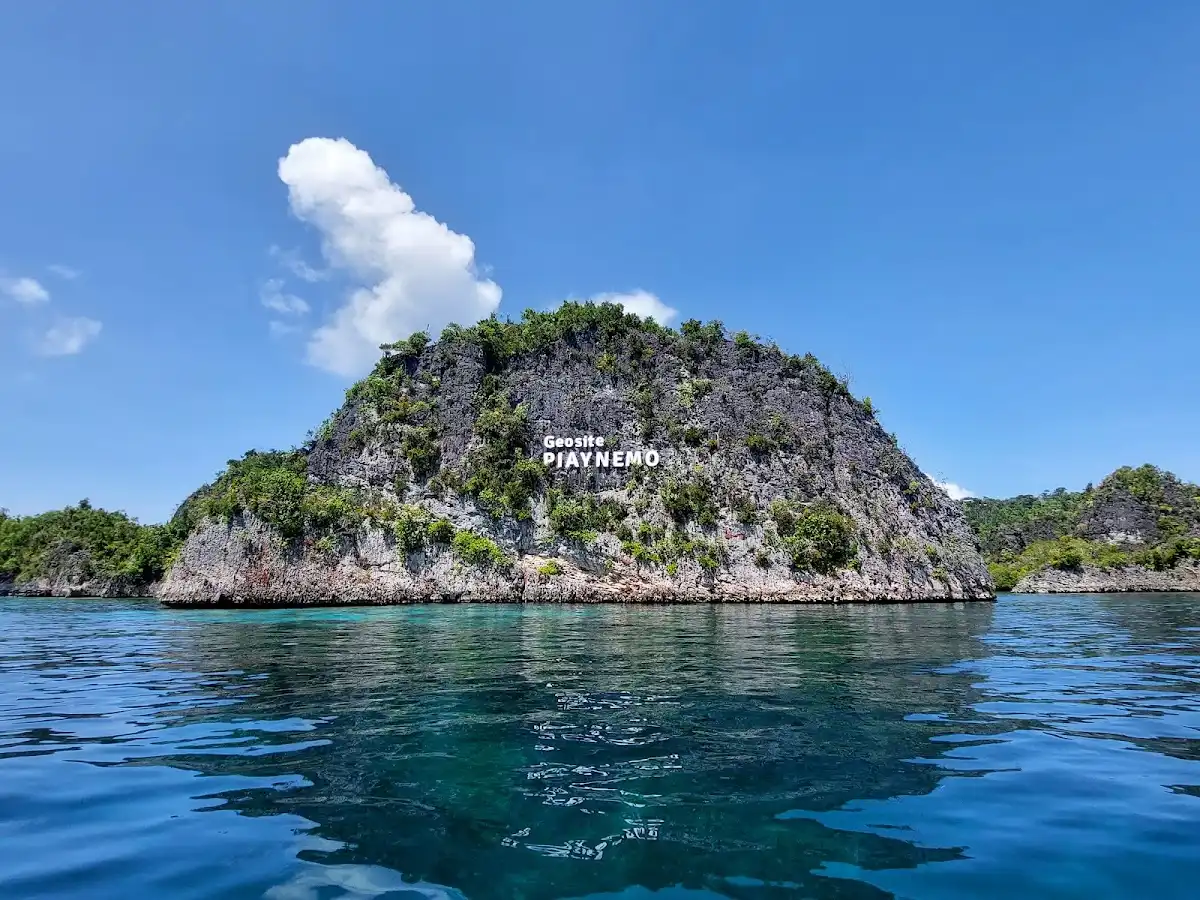
West Papua is not the remote, inaccessible frontier most travel blogs claim. It's Indonesia's easternmost region, sharing the island of New Guinea with Papua New Guinea, and it's genuinely reachable by budget backpackers willing to move deliberately. The region delivers what few places on Earth still offer: pristine rainforest, world-class diving, indigenous cultures that remain largely intact, and the sensation of traveling somewhere that hasn't been packaged for mass tourism. I remember standing on a limestone cliff above Raja Ampat's turquoise lagoons at dawn, watching hornbills cut across the canopy while the air hung thick and salt-sweet. The trade-off is real: getting here costs more than Java, the rainy season can isolate you, and infrastructure is thinner than the rest of Indonesia. But that friction is exactly why it rewards the effort.

Discover everything you want to know in the 📖 Indonesia Travel Guide.


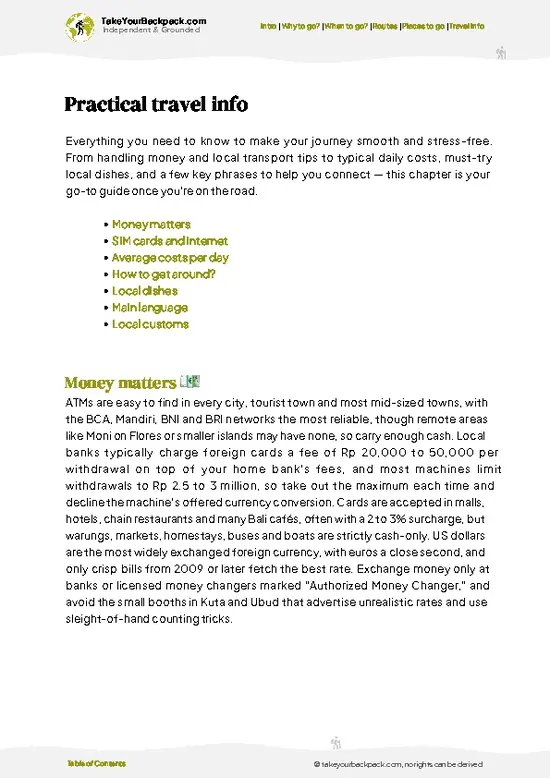
example page 0 from our offline Travel Guide for Indonesia
example page 1 from our offline Travel Guide for Indonesia
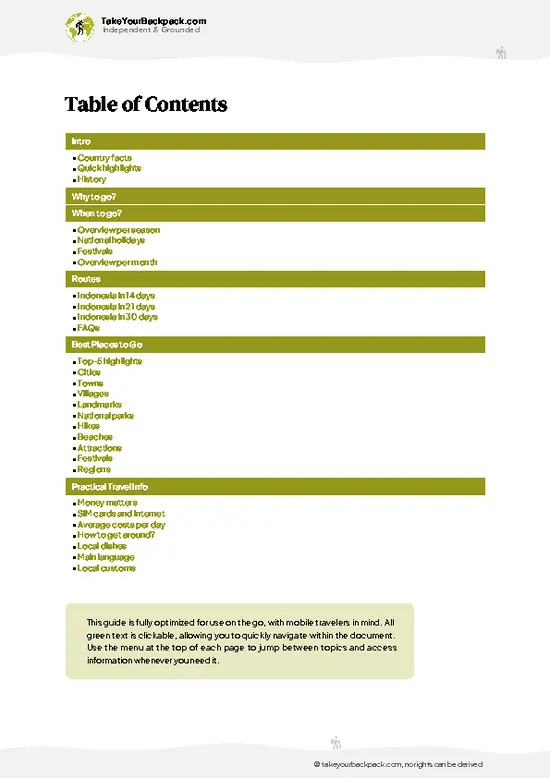
example page 2 from our offline Travel Guide for Indonesia
example page 3 from our offline Travel Guide for Indonesia
example page 4 from our offline Travel Guide for Indonesia
example page 5 from our offline Travel Guide for Indonesia
example page 6 from our offline Travel Guide for Indonesia
example page 7 from our offline Travel Guide for Indonesia
Loading the map 🌍
CLICK TO FILTER
cities
towns
villages
landmarks
national parks
hikes
beaches
attractions
festivals
regions
SHOW COUNTRY’S BESTSHOW ALL

✨ Why go?
Ranked #13 region in Indonesia
The unique appeal for travelers

West Papua demands slow travel because the region's geography makes it impossible to rush. Scattered islands, limited roads, and infrequent transport mean you'll spend time waiting for boats and flights, but that downtime becomes part of the experience. You'll find yourself anchored in small towns where diving, jungle trekking, and cultural encounters with indigenous communities happen at a deliberate pace. The lack of infrastructure that deters mass tourism is exactly what preserves the region's authenticity. You can mix world-class marine ecosystems with highland villages and coastal settlements without the constant churn of moving every night. Transport flexibility matters here: a delayed ferry becomes an extra day to explore, not a disaster. Few backpackers linger long enough to feel the … read more 👉
West Papua demands slow travel because the region's geography makes it impossible to rush. Scattered islands, limited roads, and infrequent transport mean you'll spend time waiting for boats and flights, but that downtime becomes part of the experience. You'll find yourself anchored in small towns where diving, jungle trekking, and cultural encounters with indigenous communities happen at a deliberate pace. The lack of infrastructure that deters mass tourism is exactly what preserves the region's authenticity. You can mix world-class marine ecosystems with highland villages and coastal settlements without the constant churn of moving every night. Transport flexibility matters here: a delayed ferry becomes an extra day to explore, not a disaster. Few backpackers linger long enough to feel the rhythm of the place, which means those who do gain access to experiences that feel genuinely untouched.

💡 HighlightsEssential experiences to have while visiting West Papua

  1. Raja Ampat Islands: Four main islands surrounded by limestone karsts and coral reefs that rank among the world's most biodiverse. Snorkeling and diving here reveal manta rays, sharks, and fish species found nowhere else. Most visitors base themselves in Waisai or Sorong and take day trips.
  2. Cenderawasih Bay National Park: A protected marine reserve where whale sharks congregate June through August. The park's mangrove forests and coral gardens support both diving and kayaking, with fewer crowds than Raja Ampat.
  3. Baliem Valley: A highland region inhabited by the Dani people, accessible by a steep trek or short flight from Jayapura. Traditional villages, terraced gardens, and cultural festivals (especially around August) offer insight into indigenous life largely unchanged for centuries.
  4. Sentani
… read more 👉
  1. Raja Ampat Islands: Four main islands surrounded by limestone karsts and coral reefs that rank among the world's most biodiverse. Snorkeling and diving here reveal manta rays, sharks, and fish species found nowhere else. Most visitors base themselves in Waisai or Sorong and take day trips.
  2. Cenderawasih Bay National Park: A protected marine reserve where whale sharks congregate June through August. The park's mangrove forests and coral gardens support both diving and kayaking, with fewer crowds than Raja Ampat.
  3. Baliem Valley: A highland region inhabited by the Dani people, accessible by a steep trek or short flight from Jayapura. Traditional villages, terraced gardens, and cultural festivals (especially around August) offer insight into indigenous life largely unchanged for centuries.
  4. Sentani Lake: Near Jayapura, this freshwater lake is ringed by villages and small islands. Local guides lead kayak tours to see traditional stilt houses and learn about the Sentani people's fishing practices.
  5. Arfak Mountains: A lesser-known trekking destination near Manokwari with cloud forests, endemic birds, and views across the coast. The trek takes 3 to 4 days and passes through villages where few tourists venture.
  6. Kaimana Beach: A quiet coastal town south of Manokwari where loggerhead turtles nest seasonally and the reef is accessible from shore. It's a backpacker's sweet spot for diving without the infrastructure crush of Raja Ampat.
  7. Yapen Island: Off the north coast, this island has minimal tourism infrastructure but rewards explorers with pristine beaches, local markets, and a genuine sense of discovery. Ferries run irregularly from Jayapura.
  8. Nabire: A port town that serves as a gateway to the interior and offshore islands. The surrounding area has mangrove kayaking and access to smaller islands with traditional communities.
  9. Teluk Cenderawasih Village: A small settlement within the national park where you can stay with local families and participate in daily fishing and foraging activities.
  10. Sorong Waterfront Markets: The main transport hub's early-morning fish and produce markets reveal the region's seafaring culture and offer cheap, fresh meals alongside local traders and fishermen.
I'd start with Raja Ampat because the underwater landscape justifies the logistics of getting there, and the islands' isolation means you'll have stretches of reef and jungle to yourself.
Spotted a mistake or missing something? Contact us.
⌛️ 5 daysSeeing the highlights in 5 days

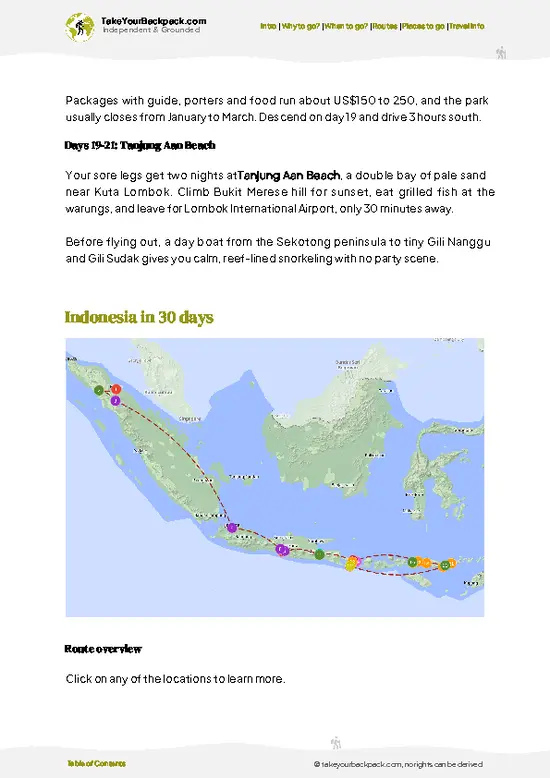
Day 1: Sorong: Arrive in Sorong, West Papua's main transport hub. Spend the day sorting onward transport (boats to Raja Ampat, flights to Jayapura or Manokwari), eating at the waterfront markets, and acclimatizing. This is where most backpackers enter the region, and the chaos of the port is your first real taste of how transport shapes travel here.Day 2-3: Raja Ampat (Waisai): Take a ferry or speedboat to Waisai, the administrative center of Raja Ampat. Base yourself here for two days of diving, snorkeling, and island-hopping. The logistics of reaching Raja Ampat are steep, but once anchored, you can move between dive sites and nearby islands without constant relocation. This is where the region's marine reputation becomes real.Day 4: Manokwari: Return to Sorong and fly or take an overnight … read more 👉
Day 1: Sorong: Arrive in Sorong, West Papua's main transport hub. Spend the day sorting onward transport (boats to Raja Ampat, flights to Jayapura or Manokwari), eating at the waterfront markets, and acclimatizing. This is where most backpackers enter the region, and the chaos of the port is your first real taste of how transport shapes travel here.Day 2-3: Raja Ampat (Waisai): Take a ferry or speedboat to Waisai, the administrative center of Raja Ampat. Base yourself here for two days of diving, snorkeling, and island-hopping. The logistics of reaching Raja Ampat are steep, but once anchored, you can move between dive sites and nearby islands without constant relocation. This is where the region's marine reputation becomes real.Day 4: Manokwari: Return to Sorong and fly or take an overnight ferry to Manokwari on the north coast. Manokwari offers a shift in pace: coastal town life, access to the Arfak Mountains for trekking, and proximity to Kaimana Beach. One day here lets you decide whether to trek or move on.Day 5: Jayapura or Baliem Valley: Fly to Jayapura (the provincial capital) or take a connecting flight to the Baliem Valley for highland culture. Jayapura anchors you near Sentani Lake and serves as a gateway to the interior. The Baliem Valley demands at least two days to justify the flight cost, so this day is your decision point.Off-Path Reward: Skip the standard Raja Ampat loop and take a ferry from Sorong to Yapen Island instead. It's slower, cheaper, and almost empty of tourists. You'll see fishing villages and reefs without the dive-shop infrastructure.The day that justifies the whole trip is your first dive or snorkel in Raja Ampat. The biodiversity and clarity of the water are unlike anywhere else in Indonesia, and that moment makes the transport delays and costs feel worth it.

🌤️ When to go?Best time to visit West Papua

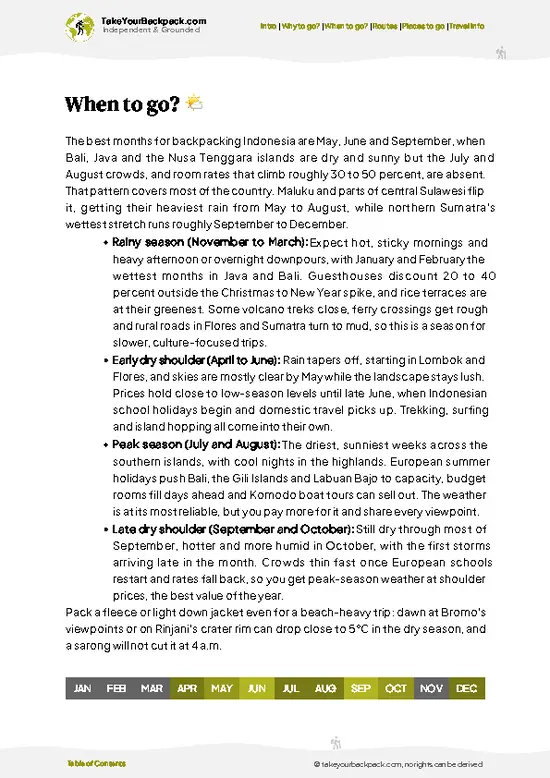
  • Dry Season (May to October): Best overall window. Temperatures 25 to 30°C (77 to 86°F), minimal rain, calm seas ideal for diving and island hopping. Daylight runs roughly 6 am to 6 pm. Prices peak and crowds increase slightly, but conditions are reliable.
  • Wet Season (November to April): Heavy rainfall, especially December to February, can isolate villages and cancel boat trips. Temperatures 26 to 32°C (79 to 90°F), humidity peaks. Prices drop significantly, and fewer tourists arrive. Diving visibility drops, but some sites remain accessible.
  • Shoulder Months (April, October): Unpredictable weather but fewer crowds and moderate prices. Good for travelers flexible with plans.
Book diving trips and island tours during the dry season; flexibility and patience pay off in the wet season if you're willing to wait out weather delays.

source: climatestotravel.comJANJanuary: fair for travelingFEBFebruary: fair for travelingMARMarch: fair for travelingAPRApril: fair for travelingMAYMay: highly recommended for travelingJUNJune: excellent for travelingJULJuly: excellent for travelingAUGAugust: excellent for travelingSEPSeptember: excellent for travelingOCTOctober: highly recommended for travelingNOVNovember: fair for travelingDECDecember: fair for traveling
indonesia-region-west-papua
© Google |

✈️ The backpacker research shortcutIndonesia Travel Guide

An offline-friendly backpacking guide with optimized travel routes, ranked highlights, transport advice, and the best areas to stay.
example page 0 from our offline Travel Guide for Indonesia
example page 1 from our offline Travel Guide for Indonesia
example page 2 from our offline Travel Guide for Indonesia
example page 3 from our offline Travel Guide for Indonesia
example page 4 from our offline Travel Guide for Indonesia
example page 5 from our offline Travel Guide for Indonesia
example page 6 from our offline Travel Guide for Indonesia
example page 7 from our offline Travel Guide for Indonesia
The digital guide (460 pages) contains:
✅ 153 highlights, ranked by travel appeal
✅ Optimized 14, 21 & 30-day travel routes
✅ Cities, national parks, landmarks, beaches
✅ How to get around
✅ Offline-friendly for travel without Wi-Fi
👉 Click to see all 30+ guide features

📅 Plan smarter in minutes, not weeks
✅ Month by month travel advice
✅ Festivals & national holidays
✅ Budget expectations

🗺️ Go to the right places, skip the overrated ones
✅ Honest pros & cons of destinations
✅ Top hikes, parks & viewpoints
✅ Lesser-known places most travelers miss
✅ Clear “worth it vs skip it” guidance

🛏️ Travel smoothly without rookie mistakes
✅ Best areas to stay
✅ Transport systems explained simply
✅ Common scams & safety advice
✅ SIM cards, money & practical tips

🌍 Understand the country, not just visit it
✅ Culture & traditions
✅ 52 Essential phrases & customs
✅ Festivals worth planning around
✅ Traveler-friendly historical context
✅ Insights that make places more meaningful

📱 Built for real travel conditions
✅ Fully downloadable PDF
✅ Works completely offline
✅ Optimized for phone use
✅ Useful in remote areas & buses
✅ Everything in one place
Stop searching, start planning
Get instant access to your full guide. 30‑day money-back guarantee.
+ Add another guide for just

By proceeding you agree to our terms.
Sent to your inbox immediately after payment • 100% Secure Checkout
Best Backpacking Travel Advisor 2025 tourism awardBest Backpacking
Travel Advisor
2025
What others say about Take Your Backpack Guides:
⭐⭐⭐⭐⭐
Fantastic, amazing amount of information!
⭐⭐⭐⭐⭐
My goodness this is amazing, it's what I've been looking for hats off too you!
⭐⭐⭐⭐⭐
I think this is absolutely BRILLIANT
⭐⭐⭐⭐
Very complete and informative. It's still missing places, but I gotta to commend you
⭐⭐⭐⭐⭐
This is truly amazing, thank you, can't wait to explore it with my kids!
⭐⭐⭐⭐⭐
Awesome resource, thank you!
⭐⭐⭐⭐⭐
This is amazing! Can't wait to explore the ones I haven't seen
⭐⭐⭐⭐
I love this! Well done, great idea.
⭐⭐⭐⭐⭐
Thanks for taking the time to make this gem!
⭐⭐⭐⭐⭐
This might be the best website I've ever seen.
⭐⭐⭐⭐⭐
Congratulations, and thank you so much for your work; it's incredibly valuable.
⭐⭐⭐⭐
In all seriousness I think you did a great job pointing out the important spots
⭐⭐⭐⭐⭐
10/10 very good
⭐⭐⭐⭐⭐
As someone who's only just starting to visit regularly this is awesome, thank you.
⭐⭐⭐⭐
Thank you very much! I'm going to visit my dad, it's going to be very useful!
⭐⭐⭐⭐⭐
This is really cool! We'll be travelling for the first time and this definitely come in handy.
⭐⭐⭐⭐⭐
You are now our minister of culture, congratulations 👨‍💼
⭐⭐⭐⭐⭐
Just wanted to tell you that this is a pearl! Going to follow your recommendations.
⭐⭐⭐⭐⭐
This is so cool. I'll definitely be using the resource for my travels soon.
⭐⭐⭐⭐⭐
This is very impressive! Good work.
⭐⭐⭐⭐⭐
This is an amazing and informative site. Very well done!

🛏️ Where to stay?How to pick the right area

Sorong is the main backpacker hub and transport nexus, with the most hostels, cheapest beds, and easiest onward connections. It's chaotic and functional rather than charming, but essential for logistics. Waisai in Raja Ampat attracts divers and snorkelers; it's smaller and more social, with guesthouses clustered near the port. Manokwari offers a quieter coastal vibe and serves as a base for trekking the Arfak Mountains or exploring nearby Kaimana Beach. Jayapura, the provincial capital, has more amenities and is the gateway to Sentani Lake and the Baliem Valley, though it's less of a backpacker … read more 👉
Sorong is the main backpacker hub and transport nexus, with the most hostels, cheapest beds, and easiest onward connections. It's chaotic and functional rather than charming, but essential for logistics. Waisai in Raja Ampat attracts divers and snorkelers; it's smaller and more social, with guesthouses clustered near the port. Manokwari offers a quieter coastal vibe and serves as a base for trekking the Arfak Mountains or exploring nearby Kaimana Beach. Jayapura, the provincial capital, has more amenities and is the gateway to Sentani Lake and the Baliem Valley, though it's less of a backpacker scene. For cultural immersion, the Baliem Valley's main town, Wamena, has basic guesthouses and connects you to Dani villages. Each town is small enough that finding a bed is straightforward; book ahead only during June to August peak season.

🚌 Getting aroundMoving around without the hassle

Boats and ferries move most backpackers between West Papua's towns and islands, and they run regularly enough to plan around but slowly enough that delays are normal. Speedboats are faster but pricier; ferries are cheaper and give you time to meet other travelers. Flights connect major towns but cost significantly more and require booking ahead during peak season.
  • Ferries and cargo boats: US$15 to 40 for inter-island routes (Sorong to Waisai, Sorong to Manokwari), 6 to 12 hours depending on sea state and stops. Slow, social, and the cheapest option; expect delays and basic facilities.
  • Speedboats: US$40 to 80 for the same routes, 3 to 5 hours, more comfortable seating and faster schedules. Worth the cost if you're short on time or want to minimize seasickness risk.
  • Domestic flights: US$80 to 150
… read more 👉
Boats and ferries move most backpackers between West Papua's towns and islands, and they run regularly enough to plan around but slowly enough that delays are normal. Speedboats are faster but pricier; ferries are cheaper and give you time to meet other travelers. Flights connect major towns but cost significantly more and require booking ahead during peak season.
  • Ferries and cargo boats: US$15 to 40 for inter-island routes (Sorong to Waisai, Sorong to Manokwari), 6 to 12 hours depending on sea state and stops. Slow, social, and the cheapest option; expect delays and basic facilities.
  • Speedboats: US$40 to 80 for the same routes, 3 to 5 hours, more comfortable seating and faster schedules. Worth the cost if you're short on time or want to minimize seasickness risk.
  • Domestic flights: US$80 to 150 between Sorong, Manokwari, Jayapura, and the Baliem Valley, 1 to 2 hours. Book through Garuda Indonesia or Batik Air; prices spike June through August and around holidays.
  • Local boats and water taxis: US$2 to 8 for short hops within towns or to nearby islands, 15 minutes to 1 hour. Negotiate prices beforehand; these are how locals move and the most authentic option.
  • Ojek (motorcycle taxis): US$1 to 3 for town transport, instant availability. Cheap and fast for getting around Sorong, Manokwari, or Jayapura, though roads are rough in places.
Book ferries at the port the day before departure; they fill quickly and schedules shift. Speedboats and flights need advance booking, especially June through August. Carry cash in small denominations; many transport operators don't accept cards.

🍲 FoodLocal Flavors for Backpackers

West Papua's food reflects its position between Indonesia and the Pacific: rice and noodles anchor most meals, but seafood dominates because you're surrounded by water. Grilled fish and squid are staples at warung (casual eateries), often served with sambal (chili paste) and lime. Papeda, a sago-based porridge unique to eastern Indonesia, appears frequently; it's bland on its own but becomes savory when mixed with fish broth and spices. Tuna and mackerel are cheap and fresh, especially in coastal towns. Street food includes satay skewers, fried bananas, and coconut rice cakes. Drink air kelapa (fresh coconut water straight from the nut) and es cendol (shaved ice with palm sugar and coconut milk). Dining customs are relaxed: eat with your right hand or a spoon, and it's normal to share dishes … read more 👉
West Papua's food reflects its position between Indonesia and the Pacific: rice and noodles anchor most meals, but seafood dominates because you're surrounded by water. Grilled fish and squid are staples at warung (casual eateries), often served with sambal (chili paste) and lime. Papeda, a sago-based porridge unique to eastern Indonesia, appears frequently; it's bland on its own but becomes savory when mixed with fish broth and spices. Tuna and mackerel are cheap and fresh, especially in coastal towns. Street food includes satay skewers, fried bananas, and coconut rice cakes. Drink air kelapa (fresh coconut water straight from the nut) and es cendol (shaved ice with palm sugar and coconut milk). Dining customs are relaxed: eat with your right hand or a spoon, and it's normal to share dishes family-style. Markets open early and close by mid-afternoon; eat there for the cheapest, freshest meals and genuine local interaction.

FAQFrequently asked questions about West Papua

Five to seven days minimum gives you time to reach Raja Ampat or the Baliem Valley and spend meaningful time there. Most backpackers spend 3 to 4 days in Raja Ampat (Waisai as a base) or 2 to 3 days trekking in the Baliem Valley, plus 1 to 2 days in Sorong for transport logistics. Longer stays (10 to 14 days) let you combine both regions without constant movement.
Ferries and speedboats connect the main towns; local boats and water taxis move you between islands and nearby settlements. Domestic flights link Sorong, Manokwari, Jayapura, and the Baliem Valley for longer distances. Within towns, ojek (motorcycle taxis) are cheap and instant. There's no public bus system, so you rely on boats and planes to move between regions.
West Papua is known for Raja Ampat's coral reefs and marine biodiversity, which rank among the world's richest. The Baliem Valley's Dani people and their traditional highland culture are equally iconic. The region is also a destination for serious divers and snorkelers seeking pristine, less-crowded reefs compared to Bali or the Gili Islands.
⚠️ Things can change over time, so always validate details locally before you go.

Other Indonesian regions near West Papua

Explore more nearby:

  • Raja Ampat Islands—biodiverse reefs, limestone islets, liveaboard cruises| 406 km away
  • Baliem Valley—Dani villages, Wamena base, highland trekking, Papua culture| 639 km away
  • Ambon Island—Maluku spice history, Banda Sea access, Pattimura coast, Dutch forts| 726 km away

💡 Not sure where to go next?
Create a personalized itinerary for Indonesia including West Papua and the places that fit your trip.

Generate my itinerary

👉 Discover all regions

Or checkout all Indonesia has to offer (think cities, towns, villages, national parks, hikes, beaches, festivals)
Country photo of Indonesia

We 💚 feedbackIs it worth it?

West Papua rewards patience with access to marine biodiversity and indigenous cultures that feel genuinely remote. The trade-off is real: transport is slow, infrastructure is minimal, and costs add up faster than in other Indonesian regions. If you have the time and budget, the isolation is the point.

✈️ When did I visit Indonesia?
As part of my 1.5 year travel around the world trip, I visited Indonesia twice (and it was worth it): first in September 2015 and a bit later again in January and February 2016.

✍️ Help improve this page!
The information on this page is based on my own backpacking experience in Indonesia, supplemented with up-to-date research and feedback from other travelers. Travel details can change, so if you notice anything outdated or incomplete, feel free to let me know.


🙋‍♂️ Give feedback

👋 Meet the founderWho’s Behind Take Your Backpack?

Johan, backpacker and founder of TakeYourBackpackHi, I’m Johan (Netherlands 🇳🇱), the creator of TakeYourBackpack. Over the past 3 decades, I’ve backpacked through 90+ countries across six continents, gaining extensive experience with independent travel, long-term trips, and overland routes.

This site is built on a combination of firsthand travel experience and carefully curated insights from other backpackers. Many guides are based on places I’ve personally visited, while others bring together tips, observations, and practical advice shared by trusted travelers I’ve met along the way.

The goal is to provide realistic, experience-driven guidance — not generic itineraries — so you can explore destinations with better context, clearer expectations, and more confidence.