
×

Indonesia🇮🇩 | regionsBaliem Valleyhighland tribes, mountain trails, traditional markets | things to do and best time to go

Explore BaliExplore Borneo

Backpacking in Baliem Valley
👍 Recommendedregion ranked #13
By Johan Kruseman 🇳🇱 | Updated June 2, 2026

Your calves burn on the last climb into Wamena as smoke from wood fires hangs in the cool air, pigs squeal somewhere below the ridge, and a Dani elder in a feathered headdress watches you with the kind of calm that makes your fancy hiking gear feel ridiculous. This is the Baliem Valley, high in the mountains of Papua, far off Indonesia’s usual Java–Bali–Flores loop. It’s wild, expensive for Indonesia, and logistically annoying: flights instead of buses, rough roads, limited choices. But the trade is real culture, serious trekking, and a raw, pre-tourism feel you won’t get in Raja Ampat or on the Bali rice terraces.

Discover everything you want to know in the 📖 Indonesia Travel Guide.
Loading the map 🌍
CLICK TO FILTER
cities
towns
landmarks
national parks
hikes
beaches
attractions
festivals
regions
SHOW COUNTRY’S BESTSHOW ALL

✨ Why go?
Ranked #13 region in Indonesia
The unique appeal for travelers

In the Baliem Valley, backpackers find a sweet spot where nature and culture collide. The variety of landscapes here is jaw-dropping—think lush valleys, towering mountains, and vibrant rice terraces. You can soak it all in without the hassle of constant relocation; everything is within reach.

Transport is flexible, whether you’re hopping on a local bus or renting a motorbike. This means you can explore at your own pace, diving deep into the local culture without feeling rushed.

The real magic lies in slow travel. Spend a few days in a village, share meals with the locals, and learn about their traditions. It’s not just about seeing; it’s about experiencing. This is where you’ll find those high-value moments that make your trip truly special.
Want to include Baliem Valley in your Indonesia route?
Create a personalized Indonesia itinerary that includes Baliem Valley and the places that fit your trip — based on your travel style, budget, and available time. Get your route in seconds.

Generate my trip

💡 HighlightsThe experiences that define the visit

  • Wamena Market (Pasar Wamena) — The heartbeat of the valley: early-morning pig trading, piles of sweet potato, women in traditional bilas and string bags, and genuine one-on-one contact with Dani and Lani families. Best for people-watching, bargaining for handicrafts, and seeing daily life up close. (Personal favorite — raw, loud, endlessly fascinating.)
  • Baliem Valley Lookout (panorama ridge near Wamena) — Twenty minutes from town will put you above the valley rim: a wide sweep of green fields, dotting honai (thatched huts) and distant ridgelines. Sunrise or late afternoon light makes the landscape sing — simple, iconic, and distinctly highland Papua.
  • Jiwika Village & the Mummy Cave — One of the more striking cultural sites: traditional Dani houses clustered below limestone outcrops where
read more 👉
  • Wamena Market (Pasar Wamena) — The heartbeat of the valley: early-morning pig trading, piles of sweet potato, women in traditional bilas and string bags, and genuine one-on-one contact with Dani and Lani families. Best for people-watching, bargaining for handicrafts, and seeing daily life up close. (Personal favorite — raw, loud, endlessly fascinating.)
  • Baliem Valley Lookout (panorama ridge near Wamena) — Twenty minutes from town will put you above the valley rim: a wide sweep of green fields, dotting honai (thatched huts) and distant ridgelines. Sunrise or late afternoon light makes the landscape sing — simple, iconic, and distinctly highland Papua.
  • Jiwika Village & the Mummy Cave — One of the more striking cultural sites: traditional Dani houses clustered below limestone outcrops where preserved ancestors were sometimes kept. It’s a sober, fascinating glimpse into funerary practice and local history; ask a local guide to explain the protocols before visiting.
  • Kurima Village and the Kurima Ridge Trek — Kurima is a proper working highland village with fewer tourists than the showier spots. A day hike along the ridge gives a real sense of how communities farm steep slopes, raise pigs, and move through the landscape — homestays here feel genuinely everyday, not staged.
  • Baliem Valley Festival (annual tribal gathering) — If you time it (usually August), this is the clearest chance to see national-scale tribal displays: mock battles, dances, elaborate dress and pig-feast rituals. It’s a festival, not a museum — theatrical but rooted in genuine inter-tribal rivalry and celebration.
  • Hubula Village (hidden gem) — A small, quieter hamlet that most day-trippers skip. The people here are relaxed about visitors once you’ve been introduced through a local fixer; good for long, unhurried conversations, watching children at play, and catching evening smoke-house scents you won’t get at the main festival sites.
  • Honai homestays and village compound life — Spend a night in a real honai (the round, thatched house) rather than a hotel: you’ll sleep on a mat, share a simple fire-cooked meal, and wake to the valley’s rooster/curlew chorus. It’s basic, sometimes damp, but the best way to understand daily rhythms here.
  • Wesaput Plateau walks (hidden gem) — A short drive or trek from Wamena takes you to quiet highland meadows and small family plots where the scale of hill agriculture is obvious: terraces aren’t dramatic here, but the patchwork sweet-potato fields and shepherding scenes are utterly local and photogenic without the tourist crowd.
  • Bilum and bilas weaving families (hidden gem) — Bilum (string bags) and traditional loincloths are everywhere — but a visit to a local weaver’s compound shows how patterns and colors carry clan identity. Workshops are informal; bring small gifts or trade goods and ask before photographing.
  • Baliem River & valley-floor walks — The river threads through the valley and the walks along its banks lead past irrigation channels, small gardens and kids splashing in the water. It’s ordinary-life scenery, but that ordinariness is exactly what makes Baliem feel unique compared with coastal Papua or other islands.
Spotted a mistake or missing something? Contact us.

⌛️ 5 daysHow to make the most of Baliem Valley

Day 1: Wamena
The journey kicks off in Wamena, the gateway to the Baliem Valley. You’ll want to acclimate here, soaking in the local vibe. The transport system is a mix of small planes and bumpy roads, so getting your bearings is crucial. Spend the day exploring the market, where vibrant textiles and fresh produce tell the story of the local tribes. This is your chance to connect with the culture before heading deeper into the valley.

Day 2: Wamena to Sogokmo
Rise early for a drive to Sogokmo. The road winds through stunning landscapes, but it’s not just about the views; it’s about the rhythm of travel here. Expect delays, but embrace them. This is where you’ll meet locals and maybe even share a meal. The slower pace allows for genuine interactions, a luxury in today’s fast-paced world. … read more 👉
Day 1: Wamena
The journey kicks off in Wamena, the gateway to the Baliem Valley. You’ll want to acclimate here, soaking in the local vibe. The transport system is a mix of small planes and bumpy roads, so getting your bearings is crucial. Spend the day exploring the market, where vibrant textiles and fresh produce tell the story of the local tribes. This is your chance to connect with the culture before heading deeper into the valley.

Day 2: Wamena to Sogokmo
Rise early for a drive to Sogokmo. The road winds through stunning landscapes, but it’s not just about the views; it’s about the rhythm of travel here. Expect delays, but embrace them. This is where you’ll meet locals and maybe even share a meal. The slower pace allows for genuine interactions, a luxury in today’s fast-paced world.

Day 3: Sogokmo to Baliem Valley
Today, you’ll trek into the heart of the Baliem Valley. The trails are well-trodden, but the experience is anything but ordinary. You’ll pass through villages where life unfolds at a different tempo. This is where the magic happens—connecting with the Dani people and their traditions.

Day 4: Off-Path Reward: Lake Habema
Take a detour to Lake Habema. It’s a bit of a trek, but the pristine waters and surrounding mountains are worth every step. This serene spot offers a moment of reflection and a break from the bustling valley.

Day 5: Return to Wamena
Head back to Wamena, but don’t rush. Use this day to revisit favorite spots or discover new ones. The transport back can be unpredictable, so savor the journey.

The must-do day? Day 3 in the Baliem Valley. It’s the heart of your adventure, where you’ll truly feel the pulse of this incredible region.
Turn your Baliem Valley visit into an Indonesia adventure
Build a complete Indonesia route with Baliem Valley, hidden gems, must-see destinations, and realistic travel times included.

Generate my trip

🌤️ When to go?Best time to visit Baliem Valley


  • Weather: Dry season runs May to September, offering clear skies and less mud—ideal for trekking. Wet season (October to April) means heavy rains, slippery trails, and fewer locals outside their homes.

  • Temperature: Daytime temps hover around 20-25°C (68-77°F), cool for Indonesia but perfect for hiking. Nights dip to 10-15°C (50-59°F), so pack layers.

  • Daylight Hours: Roughly 11-12 hours year-round, but dry season mornings are crisp and bright, giving you a head start on the trails.

  • Crowds: Peak dry months attract small groups of trekkers, but Baliem Valley stays low-key. Wet season sees almost no tourists, which means solitude but limited services.

  • Seasonal Activities: The Baliem Valley Festival in August is a cultural jackpot—war dances, pig feasts, and tribal rituals. It’s crowded
read more 👉

  • Weather: Dry season runs May to September, offering clear skies and less mud—ideal for trekking. Wet season (October to April) means heavy rains, slippery trails, and fewer locals outside their homes.

  • Temperature: Daytime temps hover around 20-25°C (68-77°F), cool for Indonesia but perfect for hiking. Nights dip to 10-15°C (50-59°F), so pack layers.

  • Daylight Hours: Roughly 11-12 hours year-round, but dry season mornings are crisp and bright, giving you a head start on the trails.

  • Crowds: Peak dry months attract small groups of trekkers, but Baliem Valley stays low-key. Wet season sees almost no tourists, which means solitude but limited services.

  • Seasonal Activities: The Baliem Valley Festival in August is a cultural jackpot—war dances, pig feasts, and tribal rituals. It’s crowded but worth the buzz.

  • Price Fluctuations: Dry season means higher prices on guides and accommodation, but you get reliability and comfort. Wet season slashes costs but expect basic conditions and possible cancellations.


Pro-tip: Aim for late May or early September—dry trails, fewer crowds, and better deals before and after the festival frenzy.


source: climatestotravel.comJANJanuary: fair for travelingFEBFebruary: fair for travelingMARMarch: fair for travelingAPRApril: fair for travelingMAYMay: highly recommended for travelingJUNJune: excellent for travelingJULJuly: excellent for travelingAUGAugust: excellent for travelingSEPSeptember: highly recommended for travelingOCTOctober: fair for travelingNOVNovember: fair for travelingDECDecember: fair for traveling
when-to-go

✈️ The backpacker research shortcutIndonesia Travel Guide

An offline-friendly backpacking guide with optimized travel routes, ranked highlights, transport advice, and the best areas to stay.
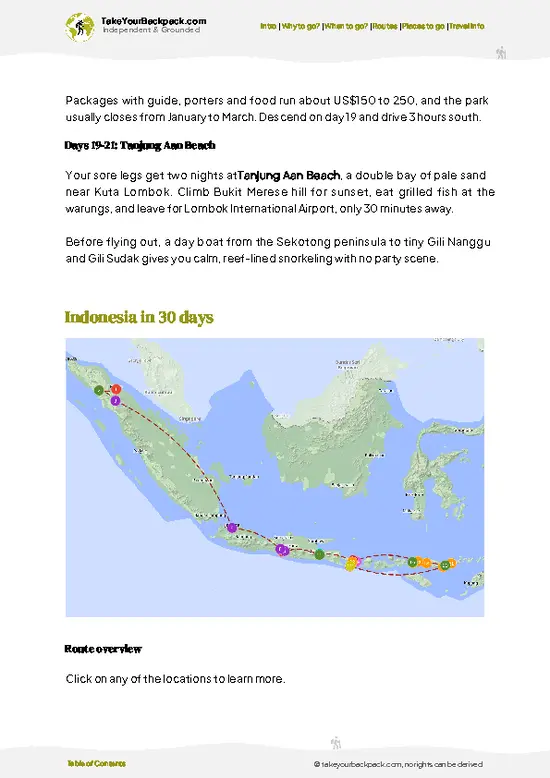
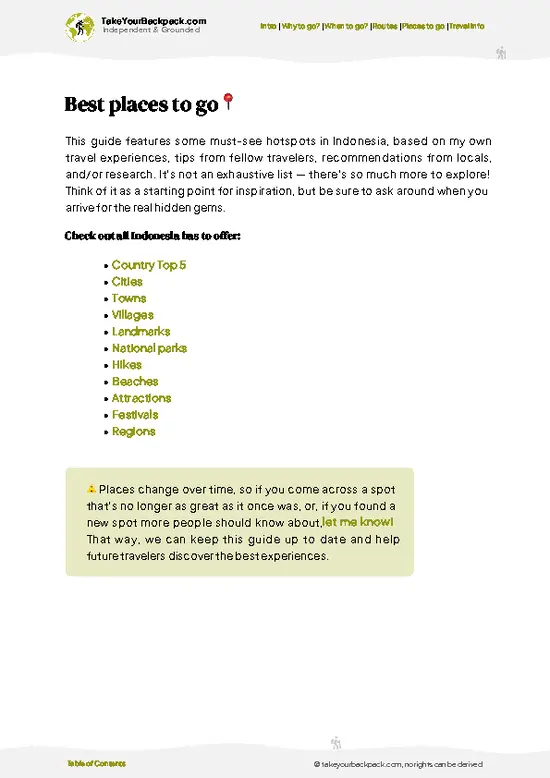
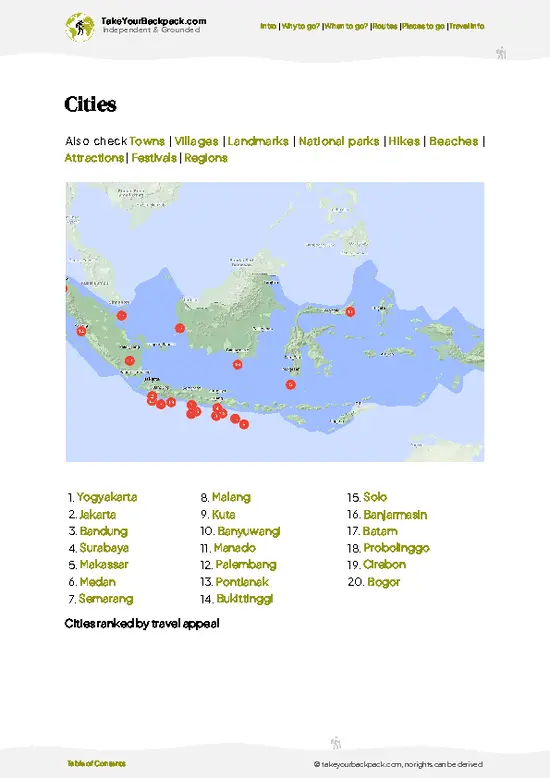
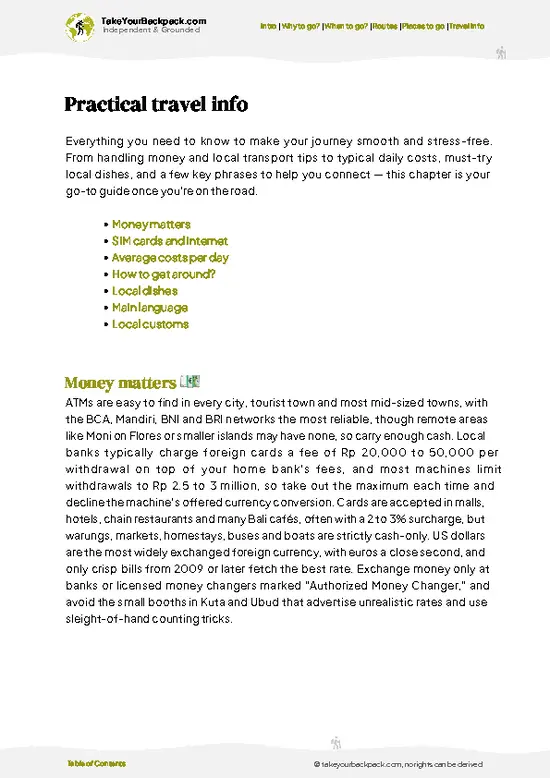
example page 0 from our offline Travel Guide for Indonesia
example page 1 from our offline Travel Guide for Indonesia
example page 2 from our offline Travel Guide for Indonesia
example page 3 from our offline Travel Guide for Indonesia
example page 4 from our offline Travel Guide for Indonesia
example page 5 from our offline Travel Guide for Indonesia
example page 6 from our offline Travel Guide for Indonesia
example page 7 from our offline Travel Guide for Indonesia
The digital guide (550 pages) contains:
155 highlights, ranked by travel appeal
Optimized 14, 21 & 30-day travel routes
Cities, national parks, landmarks, beaches
How to get around
Offline-friendly for travel without Wi-Fi
👉 Click to see all 30+ guide features

📅 Plan smarter in minutes, not weeks
Month by month travel advice
Festivals & national holidays
Budget expectations

🗺️ Go to the right places, skip the overrated ones
Honest pros & cons of destinations
Top hikes, parks & viewpoints
Lesser-known places most travelers miss
Clear “worth it vs skip it” guidance

🛏️ Travel smoothly without rookie mistakes
Best areas to stay
Transport systems explained simply
Common scams & safety advice
SIM cards, money & practical tips

🌍 Understand the country, not just visit it
Culture & traditions
52 Essential phrases & customs
Festivals worth planning around
Traveler-friendly historical context
Insights that make places more meaningful

📱 Built for real travel conditions
Fully downloadable PDF
Works completely offline
Optimized for phone use
Useful in remote areas & buses
Everything in one place
Save weeks of stressful planning
Get instant access to your full guide. 30‑day money-back guarantee.


By proceeding you agree to our terms.
Sent to your inbox immediately after payment • 100% Secure Checkout
Best Backpacking Travel Advisor 2025 tourism awardBest Backpacking
Travel Advisor
2025
What others say about Take Your Backpack Guides:
⭐⭐⭐⭐⭐
Fantastic, amazing amount of information!
⭐⭐⭐⭐⭐
My goodness this is amazing, it's what I've been looking for hats off too you!
⭐⭐⭐⭐⭐
I think this is absolutely BRILLIANT
⭐⭐⭐⭐
Very complete and informative. It's still missing places, but I gotta to commend you
⭐⭐⭐⭐⭐
This is truly amazing, thank you, can't wait to explore it with my kids!
⭐⭐⭐⭐⭐
Awesome resource, thank you!
⭐⭐⭐⭐⭐
This is amazing! Can't wait to explore the ones I haven't seen
⭐⭐⭐⭐
I love this! Well done, great idea.
⭐⭐⭐⭐⭐
Thanks for taking the time to make this gem!
⭐⭐⭐⭐⭐
This might be the best website I've ever seen.
⭐⭐⭐⭐⭐
Congratulations, and thank you so much for your work; it's incredibly valuable.
⭐⭐⭐⭐
In all seriousness I think you did a great job pointing out the important spots
⭐⭐⭐⭐⭐
10/10 very good
⭐⭐⭐⭐⭐
As someone who's only just starting to visit regularly this is awesome, thank you.
⭐⭐⭐⭐
Thank you very much! I'm going to visit my dad, it's going to be very useful!
⭐⭐⭐⭐⭐
This is really cool! We'll be travelling for the first time and this definitely come in handy.
⭐⭐⭐⭐⭐
You are now our minister of culture, congratulations 👨‍💼
⭐⭐⭐⭐⭐
Just wanted to tell you that this is a pearl! Going to follow your recommendations.
⭐⭐⭐⭐⭐
This is so cool. I'll definitely be using the resource for my travels soon.
⭐⭐⭐⭐⭐
This is very impressive! Good work.
⭐⭐⭐⭐⭐
This is an amazing and informative site. Very well done!

🛏️ Where to stay?Best areas to stay in Indonesia

In the Baliem Valley, your best bets for backpacker-friendly spots are Wamena and the surrounding villages.

Wamena is the bustling hub. It’s where you’ll find a mix of locals and travelers, creating a vibrant atmosphere. The market here is a sensory overload—think fresh produce, handmade crafts, and the chance to chat with the locals. It’s safe, social, and a great launchpad for your adventures.

Then there are the smaller villages like Sogokmo and Kimbim. These spots offer a more intimate experience. You’ll connect with the indigenous culture and enjoy stunning landscapes. The trade-off? Less … read more 👉
In the Baliem Valley, your best bets for backpacker-friendly spots are Wamena and the surrounding villages.

Wamena is the bustling hub. It’s where you’ll find a mix of locals and travelers, creating a vibrant atmosphere. The market here is a sensory overload—think fresh produce, handmade crafts, and the chance to chat with the locals. It’s safe, social, and a great launchpad for your adventures.

Then there are the smaller villages like Sogokmo and Kimbim. These spots offer a more intimate experience. You’ll connect with the indigenous culture and enjoy stunning landscapes. The trade-off? Less nightlife and fewer amenities, but the authentic vibe is worth it.

Timing matters. Visit during the dry season (May to October) for the best trekking conditions. Embrace the slower pace; it’s all part of the charm. Choose wisely, and you’ll leave with stories that outshine any postcard.

🚌 Getting aroundTransportation options and practical tips

The Baliem Valley pulses with a rhythm that’s anything but rigid. Here, time feels fluid, like the mist rolling off the mountains at dawn. Schedules? They’re more like suggestions. You’ll find locals weaving through the valleys on foot, while the occasional truck rumbles by, filled to the brim with goods and laughter. This isn’t a place for the tightly wound traveler; it’s a land where intuition guides your journey. Embrace the chaos, and you’ll discover the heart of the valley.


  • Public Minibus: These are your lifeline. They run from Wamena to various villages, with the first bus leaving around 6 AM and the last around 4 PM. Expect to pay about 50,000 IDR for a ride that takes roughly 1.5 to 2 hours. It’s a bit cramped, but you’ll soak in the local vibe.


  • Motorbike Taxi: Need to zip around?
read more 👉
The Baliem Valley pulses with a rhythm that’s anything but rigid. Here, time feels fluid, like the mist rolling off the mountains at dawn. Schedules? They’re more like suggestions. You’ll find locals weaving through the valleys on foot, while the occasional truck rumbles by, filled to the brim with goods and laughter. This isn’t a place for the tightly wound traveler; it’s a land where intuition guides your journey. Embrace the chaos, and you’ll discover the heart of the valley.


  • Public Minibus: These are your lifeline. They run from Wamena to various villages, with the first bus leaving around 6 AM and the last around 4 PM. Expect to pay about 50,000 IDR for a ride that takes roughly 1.5 to 2 hours. It’s a bit cramped, but you’ll soak in the local vibe.


  • Motorbike Taxi: Need to zip around? Grab a motorbike taxi. Prices vary, but a short ride within Wamena will cost you around 20,000 IDR. They’re fast and can navigate the narrow paths where larger vehicles can’t. Just hold on tight!


  • Private Car Hire: For a more comfortable experience, consider hiring a car. Prices start at around 500,000 IDR for a full day. This option gives you the freedom to explore at your own pace, but it’s a splurge compared to public transport.


  • Walking: Don’t underestimate the power of your own two feet. Many trails connect villages, and walking is free. Plus, it’s the best way to engage with locals and soak in the stunning scenery.


For efficient travel, always ask locals about the latest transport schedules. They know the real scoop, and you’ll often find options that aren’t listed in guidebooks. Trust me, this insider knowledge will save you time and keep your adventure flowing smoothly.

🍲 FoodLocal Cuisine & Drinks

In the Baliem Valley, food is a celebration of local culture. Dive into papeda, a starchy dish made from sago flour, often paired with rich fish or chicken stews. The smoky flavors of roasted sweet potatoes and the tang of fresh greens will dance on your palate. Don’t miss the chance to sip on arak, a local spirit distilled from palm sap, perfect for unwinding after a day of trekking.

For a true taste of the valley, hit up the local markets. Vendors serve up street food that’s as vibrant as the surroundings—think skewered meats and spicy sambals that pack a punch. Casual cafés offer a cozy vibe, where you can enjoy a cup of kopi Papua, a robust coffee that’s a morning ritual for many locals.

Dining here is communal. Expect to share dishes and stories, so don’t be shy. Just remember, eating … read more 👉
In the Baliem Valley, food is a celebration of local culture. Dive into papeda, a starchy dish made from sago flour, often paired with rich fish or chicken stews. The smoky flavors of roasted sweet potatoes and the tang of fresh greens will dance on your palate. Don’t miss the chance to sip on arak, a local spirit distilled from palm sap, perfect for unwinding after a day of trekking.

For a true taste of the valley, hit up the local markets. Vendors serve up street food that’s as vibrant as the surroundings—think skewered meats and spicy sambals that pack a punch. Casual cafés offer a cozy vibe, where you can enjoy a cup of kopi Papua, a robust coffee that’s a morning ritual for many locals.

Dining here is communal. Expect to share dishes and stories, so don’t be shy. Just remember, eating with your hands is not only accepted but encouraged—embrace the mess and savor every bite!

Other Indonesian regions near Baliem Valley

Explore more nearby:

  • Papua—tribal diversity, dense jungle, remote villages| 139 km away
  • West Papua—coastal mangroves, indigenous art, isolated settlements| 570 km away
  • Raja Ampat Islands—biodiverse reefs, limestone islets, liveaboard cruises| 1009 km away

💡 Not sure where to go next?
Create a personalized itinerary for Indonesia including Baliem Valley and the places that fit your trip.

Generate my itinerary

👉 Discover all regions

Or checkout all Indonesia has to offer (think cities, towns, villages, national parks, hikes, beaches, festivals)
Country photo of Indonesia

We 💚 feedbackWhat to keep in mind

Baliem Valley is a treasure trove of authentic tribal culture and breathtaking landscapes. You’ll feel like you’ve stepped back in time, mingling with the Dani people and witnessing their vibrant traditions. But be ready for the reality check: the remoteness can mean bumpy roads and limited amenities. Embrace the adventure, and you’ll find it’s all part of the experience.

✈️ When did I visit Indonesia?
As part of my 1.5 year travel around the world trip, I visited Indonesia twice (and it was worth it. First in September 2015 and a bit later again in January and February 2016.

✍️ Help improve this page!
The information on this page is based on my own backpacking experience in Indonesia, supplemented with up-to-date research and feedback from other travelers. Travel details can change, so if you notice anything outdated or incomplete, feel free to let me know.


🙋‍♂️ Give feedback

👋 Meet the founderWho’s Behind Take Your Backpack?

Johan, backpacker and founder of TakeYourBackpackHi, I’m Johan (Netherlands 🇳🇱), the creator of TakeYourBackpack. Over the past decade, I’ve backpacked through 80+ countries across six continents, gaining extensive experience with independent travel, long-term trips, and overland routes.

This site is built on a combination of firsthand travel experience and carefully curated insights from other backpackers. Many guides are based on places I’ve personally visited, while others bring together tips, observations, and practical advice shared by trusted travelers I’ve met along the way.

The goal is to provide realistic, experience-driven guidance — not generic itineraries — so you can explore destinations with better context, clearer expectations, and more confidence.

Get full Indonesia guide •
Instant download • 155 highlights • Full Offline guide