×

Indonesia🇮🇩 | regionsBorneorainforest reserves, orangutan habitats, river journeys | things to do and best time to go

Explore Baliem ValleyExplore Derawan Islands

Backpacking in Borneo
🌟 Highlightregion ranked #7
By Johan Kruseman 🇳🇱 | Updated June 6, 2026

Your socks are still damp from this morning’s jungle rain, your shirt smells faintly of woodsmoke and DEET, and a proboscis monkey is side‑eyeing you from a mangrove branch while a longboat engine coughs to life behind you. This is Borneo: the huge, wild island shared by Indonesia, Malaysia, and tiny Brunei, with Indonesian Borneo known as Kalimantan down south and east. For backpackers, Kalimantan is the opposite of Bali’s easy mode: cheaper on the ground, but slower, muddier, and logistically annoying. Towns feel workaday, not curated; river ports like Kumai or Pangkalan Bun are gateways, not destinations, and that’s the charm. You trade smooth transport and nightlife for orangutan-filled forests, longhouse culture, and river journeys where you might not see another foreigner all week.

Discover everything you want to know in the 📖 Indonesia Travel Guide.
Loading the map 🌍
CLICK TO FILTER
cities
towns
landmarks
national parks
hikes
beaches
attractions
festivals
regions
SHOW COUNTRY’S BESTSHOW ALL

✨ Why go?
Ranked #7 region in Indonesia
What sets this place apart

Borneo is a backpacker’s paradise for a reason. You get a variety of landscapes that range from dense rainforests to stunning coastlines, all without the hassle of constant relocation. Imagine waking up in a jungle lodge one day and sipping coffee by the beach the next. That’s the beauty of Borneo.

Transport is surprisingly flexible here. You can hop on a local bus or take a boat ride through the rivers, making it easy to explore at your own pace. This isn’t just about getting from A to B; it’s about soaking in the slow travel vibe. You’ll find yourself lingering in small villages, where you can connect with locals and experience their culture firsthand.

Plus, the mix of nature and culture is unbeatable. Trek through the rainforest, then dive into a vibrant market. You’re not just checking … read more 👉
Borneo is a backpacker’s paradise for a reason. You get a variety of landscapes that range from dense rainforests to stunning coastlines, all without the hassle of constant relocation. Imagine waking up in a jungle lodge one day and sipping coffee by the beach the next. That’s the beauty of Borneo.

Transport is surprisingly flexible here. You can hop on a local bus or take a boat ride through the rivers, making it easy to explore at your own pace. This isn’t just about getting from A to B; it’s about soaking in the slow travel vibe. You’ll find yourself lingering in small villages, where you can connect with locals and experience their culture firsthand.

Plus, the mix of nature and culture is unbeatable. Trek through the rainforest, then dive into a vibrant market. You’re not just checking off boxes; you’re creating memories that stick. So, if you’re looking for high-value experiences, Borneo delivers in spades.
Want to include Borneo in your Indonesia route?
Create a personalized Indonesia itinerary that includes Borneo and the places that fit your trip — based on your travel style, budget, and available time. Get your route in seconds.

Generate my trip

💡 HighlightsEssential experiences to have while visiting Borneo

  • Tanjung Puting National Park (Camp Leakey klotok cruises) — The classic Borneo wildlife encounter: slow wooden riverboats (klotoks), swamp forest and habituated wild orangutans coming down to feeding platforms. It’s where conservation, research and real, up-close animal behaviour meet — far more personal than a zoo, and you’ll remember the smell of the river for days. (Personal favorite.)
  • Derawan Archipelago (Derawan, Maratua, Sangalaki) — Transparent water, massive turtle nesting beaches, manta ray cleaning stations and easy wreck/reef diving. This is Borneo’s best marine scene: warm seas packed with megafauna and low-key island life that feels nothing like mainland tourist circuits.
  • Mahakam River longhouse trails (East Kalimantan) — Longhouse culture along Indonesia’s big river: boat
read more 👉
  • Tanjung Puting National Park (Camp Leakey klotok cruises) — The classic Borneo wildlife encounter: slow wooden riverboats (klotoks), swamp forest and habituated wild orangutans coming down to feeding platforms. It’s where conservation, research and real, up-close animal behaviour meet — far more personal than a zoo, and you’ll remember the smell of the river for days. (Personal favorite.)
  • Derawan Archipelago (Derawan, Maratua, Sangalaki) — Transparent water, massive turtle nesting beaches, manta ray cleaning stations and easy wreck/reef diving. This is Borneo’s best marine scene: warm seas packed with megafauna and low-key island life that feels nothing like mainland tourist circuits.
  • Mahakam River longhouse trails (East Kalimantan) — Longhouse culture along Indonesia’s big river: boat travel between Dayak communities, communal feasts, carved woodwork and simple village rhythms. It’s an immersive cultural trip — stay in a longhouse, swap stories with elders, watch children fish from bamboo rafts.
  • Danau Sentarum National Park (West Kalimantan) — Hidden gem — A huge seasonal lake system that floods and empties with the rains, turning forests into islands. You’ll see fish migrations, stilt houses, and a way of life adapted to changing water levels. Quiet, otherworldly, and still mostly off the main tourist map.
  • Gunung Palung National Park (Cabang Panti research area) — One of the most intact lowland rainforests in Borneo, with a solid chance of seeing wild proboscis monkeys, gibbons and orangutans plus jungle trails that feel genuinely primordial. The research station vibe gives extra depth if you’re into wildlife science.
  • Loksado & the Meratus Mountains (South Kalimantan) — Bamboo-raft down narrow rivers, hike to isolated Dayak villages and camp in jungle terraces. Loksado is a compact taste of mountain-Borneo culture and scenery — great for short treks and people who prefer local homestays to polished lodges.
  • Lok Baintan Floating Market (Banjarmasin) — Early-morning chaos on the river where traders sell fruit, grilled fish and spices from paddleboats. It’s tourist-accessible but still very authentic: great food, good photo angles and a real slice of riverine commerce that’s distinctly Kalimantan.
  • Wehea Forest (East Kalimantan community-conserved forest) — Hidden gem — A community-led conservation area that’s quietly impressive: intact montane rainforest, hornbills, sun bears and small, expertly guided treks. It’s the kind of place where local guardians still know every trail and every tree’s story.
  • Betung Kerihun / Kapuas Hulu border forests (West Kalimantan) — Remote, big-river landscapes and cross-border Dayak culture near the Malaysian frontier. You’ll find old-growth forest, traditional shifting gardens and villages that rarely appear on mainstream itineraries — great for real off-grid trekking and cultural exchange.
  • Kayan Mentarang National Park & Kenyah longhouses (North/Interior Kalimantan) — Hidden gem — Massive, rugged parks with steep rivers and highland Kenyah and Kayan longhouse communities. The trails are tougher but the payback is deep: dramatic rainforest, ancient trade routes and one-of-a-kind longhouse hospitality that you won’t get elsewhere.
Spotted a mistake or missing something? Contact us.

Things to do near Borneo

Ratings based on Tripadvisor reviews. When you book through this link, you support our work at no extra cost to you.

⌛️ 5 daysWhat you can realistically do in a week

Day 1: Kuching
Kuching is your gateway to Borneo, a city that blends culture and nature seamlessly. Start here to acclimate and soak in the local vibe. The transport system is efficient, with buses and taxis readily available. Spend the day exploring the waterfront and sampling street food. The Sarawak Cultural Village is a must-visit, showcasing the diverse indigenous cultures. This sets the tone for your adventure, giving you a taste of Borneo’s rich heritage.

Day 2: Bako National Park
Take a short boat ride from Kuching to Bako National Park. This is where the spine of your journey begins. The park’s trails are well-marked, but the real magic lies in the wildlife. Keep your eyes peeled for proboscis monkeys and monitor lizards. The transport here is straightforward, but timing is key; … read more 👉
Day 1: Kuching
Kuching is your gateway to Borneo, a city that blends culture and nature seamlessly. Start here to acclimate and soak in the local vibe. The transport system is efficient, with buses and taxis readily available. Spend the day exploring the waterfront and sampling street food. The Sarawak Cultural Village is a must-visit, showcasing the diverse indigenous cultures. This sets the tone for your adventure, giving you a taste of Borneo’s rich heritage.

Day 2: Bako National Park
Take a short boat ride from Kuching to Bako National Park. This is where the spine of your journey begins. The park’s trails are well-marked, but the real magic lies in the wildlife. Keep your eyes peeled for proboscis monkeys and monitor lizards. The transport here is straightforward, but timing is key; aim for an early start to avoid the midday heat. The park’s diverse ecosystems offer a refreshing contrast to the urban landscape.

Day 3: Mulu National Park
Fly from Kuching to Mulu, a quick hop that saves you hours on the road. Mulu is a UNESCO World Heritage site, famous for its limestone karst formations and extensive cave systems. The transport options are limited, so book your flights in advance. Spend the day exploring the caves; the Deer Cave is a highlight. The thrill of walking through these natural wonders is unmatched.

Day 4: Kinabatangan River
Travel to the Kinabatangan River area, a longer journey that requires some planning. You can take a bus or arrange a private transfer. This is where you’ll experience Borneo’s wildlife up close. Opt for a river cruise at dusk; the sight of orangutans and pygmy elephants is worth the trek. The slower pace here allows for deeper immersion in the rainforest.

Day 5: Sandakan
Finish your trip in Sandakan, a bustling town with a rich history. The transport options are varied, with buses and boats connecting you to nearby attractions like the Sepilok Orangutan Rehabilitation Centre. This is your off-path reward; the center is a heartwarming experience that connects you with conservation efforts.

The must-do day? Day 3 in Mulu. The caves are a breathtaking testament to nature’s artistry, and the experience will linger long after you leave. This day encapsulates the essence of Borneo, blending adventure with awe.
Turn your Borneo visit into an Indonesia adventure
Build a complete Indonesia route with Borneo, hidden gems, must-see destinations, and realistic travel times included.

Generate my trip

🌤️ When to go?Choosing the right time of year


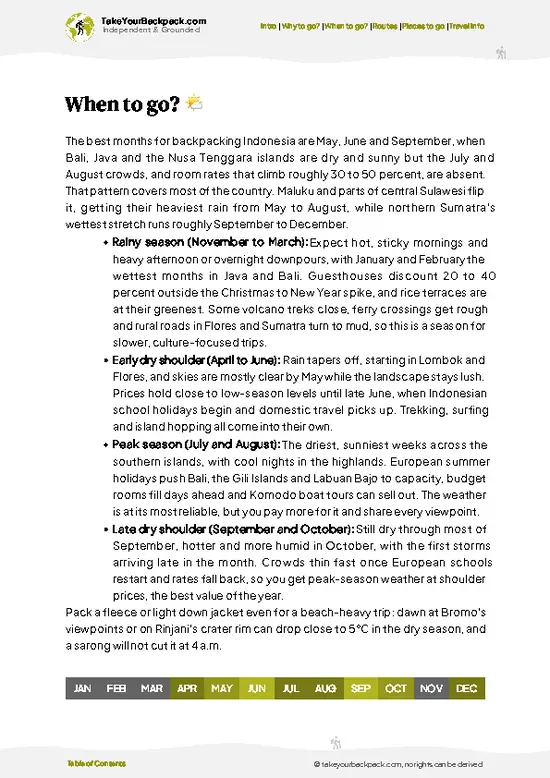
  • Weather: The dry season, from May to September, is your best bet. Expect less rain, which means trails stay firm and rivers calm. The wet season (October to April) floods paths and swells rivers, turning some treks into mud baths.

  • Temperature: Borneo stays warm year-round, averaging 27-32°C (80-90°F). Nights cool slightly during the dry season, making camping more comfortable. The wet season feels hotter and stickier thanks to humidity.

  • Daylight Hours: Roughly 12 hours of daylight year-round, but the dry season’s clearer skies give you more usable daylight for hiking and wildlife spotting.

  • Crowds: Peak tourist flow hits between June and August, especially in popular spots like Kota Kinabalu and Sepilok. Traveling shoulder months (May or September) means fewer people and better deals.
read more 👉

  • Weather: The dry season, from May to September, is your best bet. Expect less rain, which means trails stay firm and rivers calm. The wet season (October to April) floods paths and swells rivers, turning some treks into mud baths.

  • Temperature: Borneo stays warm year-round, averaging 27-32°C (80-90°F). Nights cool slightly during the dry season, making camping more comfortable. The wet season feels hotter and stickier thanks to humidity.

  • Daylight Hours: Roughly 12 hours of daylight year-round, but the dry season’s clearer skies give you more usable daylight for hiking and wildlife spotting.

  • Crowds: Peak tourist flow hits between June and August, especially in popular spots like Kota Kinabalu and Sepilok. Traveling shoulder months (May or September) means fewer people and better deals.

  • Seasonal Activities: Wildlife watching peaks in the dry months—orangutans, proboscis monkeys, and hornbills are easier to spot. The wet season brings fewer animals out but offers lush, vibrant jungle scenes.

  • Price Fluctuations: Accommodation and tours spike in the dry season’s high months. Booking in shoulder seasons can save you 20-30% without sacrificing much on weather or wildlife chances.


Pro-tip: Arrive in late April or early May—just before the dry season kicks in. You’ll dodge crowds, snag better prices, and still catch mostly dry trails. That’s the insider sweet spot.


source: climatestotravel.comJANJanuary: fair for travelingFEBFebruary: fair for travelingMARMarch: fair for travelingAPRApril: good for travelingMAYMay: highly recommended for travelingJUNJune: excellent for travelingJULJuly: excellent for travelingAUGAugust: excellent for travelingSEPSeptember: highly recommended for travelingOCTOctober: fair for travelingNOVNovember: fair for travelingDECDecember: fair for traveling
when-to-go

✈️ The backpacker research shortcutIndonesia Travel Guide

An offline-friendly backpacking guide with optimized travel routes, ranked highlights, transport advice, and the best areas to stay.
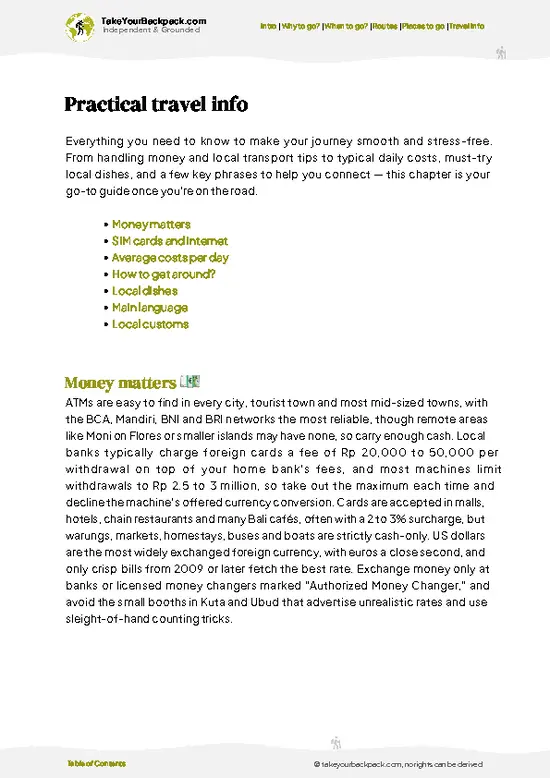
example page 0 from our offline Travel Guide for Indonesia
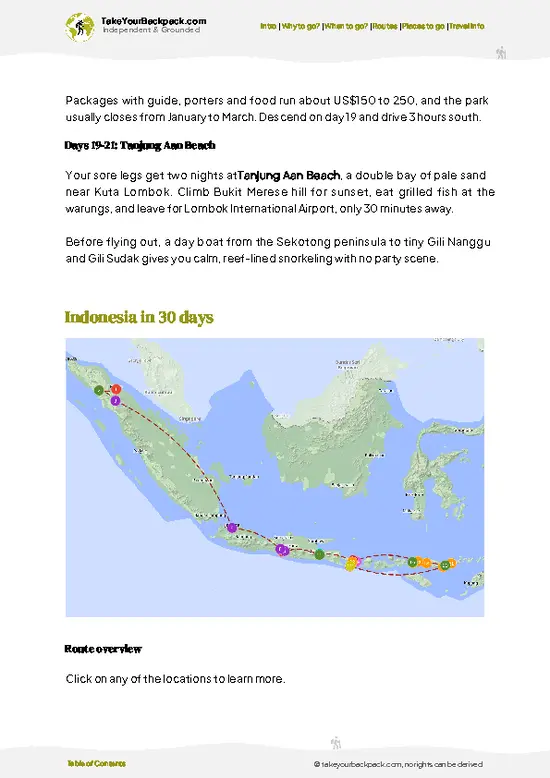
example page 1 from our offline Travel Guide for Indonesia
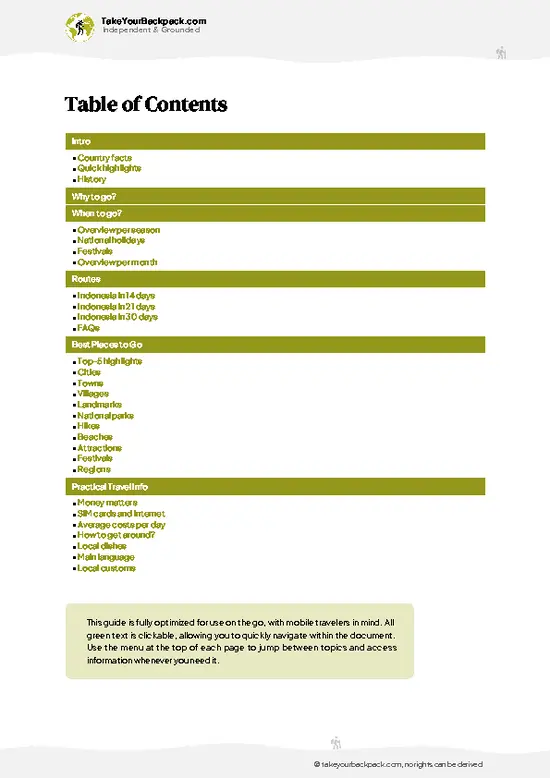
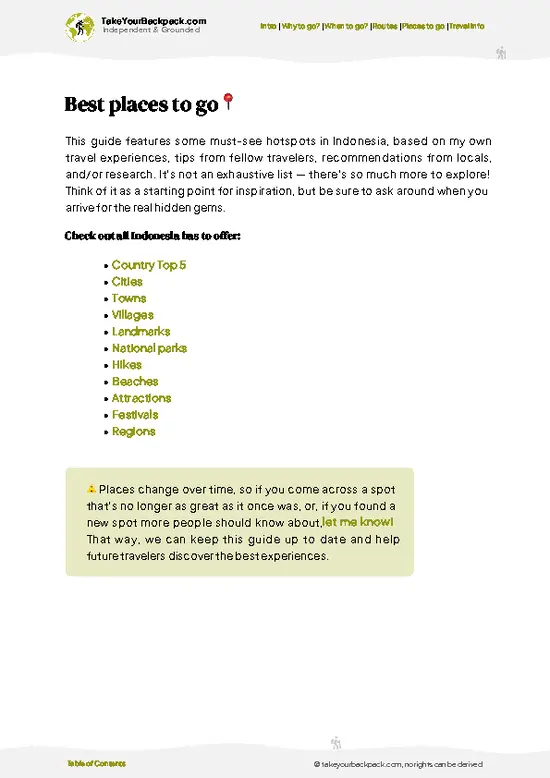
example page 2 from our offline Travel Guide for Indonesia
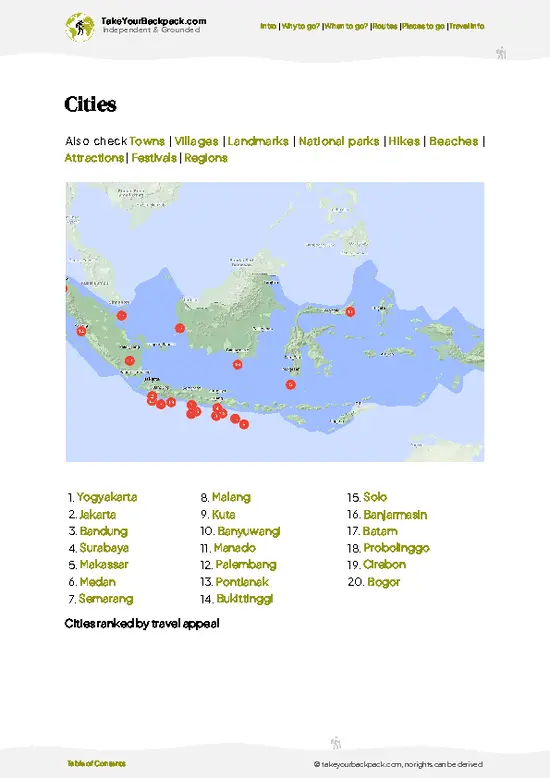
example page 3 from our offline Travel Guide for Indonesia
example page 4 from our offline Travel Guide for Indonesia
example page 5 from our offline Travel Guide for Indonesia
example page 6 from our offline Travel Guide for Indonesia
example page 7 from our offline Travel Guide for Indonesia
The digital guide (550 pages) contains:
155 highlights, ranked by travel appeal
Optimized 14, 21 & 30-day travel routes
Cities, national parks, landmarks, beaches
How to get around
Offline-friendly for travel without Wi-Fi
👉 Click to see all 30+ guide features

📅 Plan smarter in minutes, not weeks
Month by month travel advice
Festivals & national holidays
Budget expectations

🗺️ Go to the right places, skip the overrated ones
Honest pros & cons of destinations
Top hikes, parks & viewpoints
Lesser-known places most travelers miss
Clear “worth it vs skip it” guidance

🛏️ Travel smoothly without rookie mistakes
Best areas to stay
Transport systems explained simply
Common scams & safety advice
SIM cards, money & practical tips

🌍 Understand the country, not just visit it
Culture & traditions
52 Essential phrases & customs
Festivals worth planning around
Traveler-friendly historical context
Insights that make places more meaningful

📱 Built for real travel conditions
Fully downloadable PDF
Works completely offline
Optimized for phone use
Useful in remote areas & buses
Everything in one place
Save weeks of stressful planning
Get instant access to your full guide. 30‑day money-back guarantee.


By proceeding you agree to our terms.
Sent to your inbox immediately after payment • 100% Secure Checkout
Best Backpacking Travel Advisor 2025 tourism awardBest Backpacking
Travel Advisor
2025
What others say about Take Your Backpack Guides:
⭐⭐⭐⭐⭐
Fantastic, amazing amount of information!
⭐⭐⭐⭐⭐
My goodness this is amazing, it's what I've been looking for hats off too you!
⭐⭐⭐⭐⭐
I think this is absolutely BRILLIANT
⭐⭐⭐⭐
Very complete and informative. It's still missing places, but I gotta to commend you
⭐⭐⭐⭐⭐
This is truly amazing, thank you, can't wait to explore it with my kids!
⭐⭐⭐⭐⭐
Awesome resource, thank you!
⭐⭐⭐⭐⭐
This is amazing! Can't wait to explore the ones I haven't seen
⭐⭐⭐⭐
I love this! Well done, great idea.
⭐⭐⭐⭐⭐
Thanks for taking the time to make this gem!
⭐⭐⭐⭐⭐
This might be the best website I've ever seen.
⭐⭐⭐⭐⭐
Congratulations, and thank you so much for your work; it's incredibly valuable.
⭐⭐⭐⭐
In all seriousness I think you did a great job pointing out the important spots
⭐⭐⭐⭐⭐
10/10 very good
⭐⭐⭐⭐⭐
As someone who's only just starting to visit regularly this is awesome, thank you.
⭐⭐⭐⭐
Thank you very much! I'm going to visit my dad, it's going to be very useful!
⭐⭐⭐⭐⭐
This is really cool! We'll be travelling for the first time and this definitely come in handy.
⭐⭐⭐⭐⭐
You are now our minister of culture, congratulations 👨‍💼
⭐⭐⭐⭐⭐
Just wanted to tell you that this is a pearl! Going to follow your recommendations.
⭐⭐⭐⭐⭐
This is so cool. I'll definitely be using the resource for my travels soon.
⭐⭐⭐⭐⭐
This is very impressive! Good work.
⭐⭐⭐⭐⭐
This is an amazing and informative site. Very well done!

🛏️ Where to stay?How to pick the right area

Borneo is a treasure trove for backpackers, and knowing where to lay your head can make all the difference.

Start in Kota Kinabalu. It’s a bustling hub with a lively waterfront and plenty of street food stalls. The vibe is friendly, and you’ll find fellow travelers swapping stories over a plate of grilled fish. Plus, it’s your launchpad for Mount Kinabalu and nearby islands.

Next up, Sandakan. This town is your gateway to the Sepilok Orangutan Rehabilitation Centre. It’s laid-back and offers a unique chance to connect with nature. The local markets are a blast, and you’ll meet other solo adventurers … read more 👉
Borneo is a treasure trove for backpackers, and knowing where to lay your head can make all the difference.

Start in Kota Kinabalu. It’s a bustling hub with a lively waterfront and plenty of street food stalls. The vibe is friendly, and you’ll find fellow travelers swapping stories over a plate of grilled fish. Plus, it’s your launchpad for Mount Kinabalu and nearby islands.

Next up, Sandakan. This town is your gateway to the Sepilok Orangutan Rehabilitation Centre. It’s laid-back and offers a unique chance to connect with nature. The local markets are a blast, and you’ll meet other solo adventurers eager to share tips.

Don’t overlook Kuching. This city is rich in culture and history, with a charming riverside promenade. It’s safe, and the food scene is a culinary adventure. You can easily hop on a bus to Bako National Park for some epic hiking.

Lastly, consider Semporna. Known for its diving spots, it’s a bit more touristy but still has a backpacker-friendly atmosphere. The sunsets here are legendary, and you’ll bond with fellow divers over shared experiences.

Choose wisely, and you’ll find the right balance of time, money, and comfort.

🚌 Getting aroundTransportation options and practical tips

Borneo is a wild symphony of movement, where the rhythm of life dances between the structured and the spontaneous. Here, schedules can feel more like suggestions than rules, and the chaos of local markets spills into the streets, creating a vibrant tapestry of sound and color. You might find yourself waiting for a bus that’s late or hopping onto a shared van that’s already packed with locals, all while the scent of street food wafts through the air. It’s a place where intuition often trumps rigid planning, and that’s part of the adventure. Embrace the unpredictability, and you’ll uncover the true essence of this lush paradise.


  • Public Buses: These are the backbone of Borneo’s transport system. They run from early morning until around 6 PM, with fares typically ranging from $1 to $5 depending
read more 👉
Borneo is a wild symphony of movement, where the rhythm of life dances between the structured and the spontaneous. Here, schedules can feel more like suggestions than rules, and the chaos of local markets spills into the streets, creating a vibrant tapestry of sound and color. You might find yourself waiting for a bus that’s late or hopping onto a shared van that’s already packed with locals, all while the scent of street food wafts through the air. It’s a place where intuition often trumps rigid planning, and that’s part of the adventure. Embrace the unpredictability, and you’ll uncover the true essence of this lush paradise.


  • Public Buses: These are the backbone of Borneo’s transport system. They run from early morning until around 6 PM, with fares typically ranging from $1 to $5 depending on the distance. Expect basic comfort, but they’re a great way to mingle with locals and soak in the scenery.


  • Minivans (Shared Vans): Fast and efficient, these vans zip between towns and cities, often leaving when full. Prices hover around $5 to $15, depending on the route. They’re a bit cramped, but you’ll get to your destination quicker than by bus, usually within a couple of hours.


  • Longboats: For those venturing into the heart of Borneo’s rivers, longboats are essential. Prices vary widely based on distance and negotiation skills, but expect to pay around $10 to $30. They’re not the most comfortable ride, but the views of the jungle and wildlife are worth every bump.


  • Taxis and Ride-Sharing: In urban areas like Kota Kinabalu, taxis and apps like Grab are available. Fares start around $3, and they offer a comfortable, air-conditioned ride. Just be mindful of traffic during peak hours.


  • Motorbike Rentals: For the adventurous, renting a motorbike can cost around $10 to $20 per day. It gives you the freedom to explore at your own pace, but be prepared for some rough roads and local driving styles.


For a smooth journey across Borneo, consider timing your travel around local festivals or market days. Not only will you experience the culture firsthand, but you’ll also find transport options buzzing with energy, making it easier to hop on and off as you explore.

🍲 FoodLocal Flavors for Backpackers

In Borneo, food is a vibrant tapestry of flavors that tells the story of its diverse cultures. Dive into Nasi Goreng, a fragrant fried rice dish, often tossed with shrimp or chicken, and spiced just right. Don’t miss Soto, a hearty soup that warms the soul, packed with tender meat and aromatic herbs. For a real treat, try Ikan Bakar, grilled fish marinated in a zesty blend of spices, served with a side of sambal that packs a punch.

Street food is where the magic happens. Markets buzz with life, and you’ll find stalls serving satay skewers sizzling over charcoal, their smoky aroma drawing you in. Grab a seat at a local café and sip on Teh Tarik, a frothy pulled tea that’s as much about the show as the taste.

Dining here is a communal affair. Expect to share dishes, so don’t be shy about … read more 👉
In Borneo, food is a vibrant tapestry of flavors that tells the story of its diverse cultures. Dive into Nasi Goreng, a fragrant fried rice dish, often tossed with shrimp or chicken, and spiced just right. Don’t miss Soto, a hearty soup that warms the soul, packed with tender meat and aromatic herbs. For a real treat, try Ikan Bakar, grilled fish marinated in a zesty blend of spices, served with a side of sambal that packs a punch.

Street food is where the magic happens. Markets buzz with life, and you’ll find stalls serving satay skewers sizzling over charcoal, their smoky aroma drawing you in. Grab a seat at a local café and sip on Teh Tarik, a frothy pulled tea that’s as much about the show as the taste.

Dining here is a communal affair. Expect to share dishes, so don’t be shy about reaching across the table. And remember, it’s polite to eat with your right hand—your left is considered impolite. Embrace the chaos, savor the flavors, and you’ll feel like a true local in no time.

Other Indonesian regions near Borneo

Explore more nearby:

  • Maratua Island—atoll lagoons, dive resorts, mangrove forests| 460 km away
  • Derawan Islands—coral reefs, sea turtle nesting, stilt villages| 593 km away
  • Java—volcanic peaks, ancient temples, urban sprawl| 713 km away

💡 Not sure where to go next?
Create a personalized itinerary for Indonesia including Borneo and the places that fit your trip.

Generate my itinerary

👉 Discover all regions

Or checkout all Indonesia has to offer (think cities, towns, villages, national parks, hikes, beaches, festivals)
Country photo of Indonesia

We 💚 feedbackIs it worth it?

Borneo is a wild playground for nature lovers. The chance to see orangutans in their natural habitat? Priceless. But here’s the kicker: getting around can be a hassle. Expect bumpy roads and limited transport options. Embrace the adventure, though; it’s all part of the experience. Just remember, the journey is as much a part of the trip as the destination. So pack your patience and dive in!

✈️ When did I visit Indonesia?
As part of my 1.5 year travel around the world trip, I visited Indonesia twice (and it was worth it. First in September 2015 and a bit later again in January and February 2016.

✍️ Help improve this page!
The information on this page is based on my own backpacking experience in Indonesia, supplemented with up-to-date research and feedback from other travelers. Travel details can change, so if you notice anything outdated or incomplete, feel free to let me know.


🙋‍♂️ Give feedback

👋 Meet the founderWho’s Behind Take Your Backpack?

Johan, backpacker and founder of TakeYourBackpackHi, I’m Johan (Netherlands 🇳🇱), the creator of TakeYourBackpack. Over the past decade, I’ve backpacked through 80+ countries across six continents, gaining extensive experience with independent travel, long-term trips, and overland routes.

This site is built on a combination of firsthand travel experience and carefully curated insights from other backpackers. Many guides are based on places I’ve personally visited, while others bring together tips, observations, and practical advice shared by trusted travelers I’ve met along the way.

The goal is to provide realistic, experience-driven guidance — not generic itineraries — so you can explore destinations with better context, clearer expectations, and more confidence.

Get full Indonesia guide •
Instant download • 155 highlights • Full Offline guide