

×

Indonesia🇮🇩 | citiesCireboncoastal city, batik trade, palace complex | things to do and best time to go

Explore SoloExplore Batam

Backpacking in Cirebon
👍 Recommendedcity ranked #25
By Johan Kruseman 🇳🇱 | Updated June 7, 2026

Everyone talks about Cirebon’s royal palaces and batik, but what actually matters for backpackers is how easily it plugs into your Java route and how low-friction it makes your days. Sitting on the north coast between Jakarta and Semarang, it’s a cheap, safe, medium-chaotic city with real local life and almost no hostel scene. You trade easy socializing for palace complexes, seafood nights on plastic stools, and a very Indonesian, very uncurated vibe that nearby Bandung smooths over.

Discover everything you want to know in the 📖 Indonesia Travel Guide.
Loading the map 🌍
CLICK TO FILTER
cities
towns
landmarks
national parks
hikes
beaches
attractions
festivals
regions
SHOW COUNTRY’S BESTSHOW ALL

✨ Why go?
Ranked #25 city in Indonesia
What makes this city worth visiting

Cirebon is a strategic stop for backpackers weaving through Indonesia. It offers a basecamp value for day trips to nearby attractions, making it a smart choice for those wanting to explore without the hassle of constant packing. The hostel scene is solid, with budget-friendly options that foster a social vibe. You’ll find affordable food stalls serving up local flavors, perfect for fueling your adventures. The city is walkable, allowing you to soak in the atmosphere without relying on transport. When the sun sets, the nightlife is low-key but lively, ideal for unwinding after a day of exploration. Plus, Cirebon’s easy onward travel options make it a convenient link in your Indonesian journey, whether you’re heading to Jakarta or further east.
Want to include Cirebon in your Indonesia route?
Create a personalized Indonesia itinerary that includes Cirebon and the places that fit your trip — based on your travel style, budget, and available time. Get your route in seconds.

Generate my trip

💡 HighlightsMust-see experiences and standout moments

Keraton Kasepuhan
Cirebon’s living palace is a crash course in Javanese, Sundanese, and Islamic fusion. The sultans still hold court here, and the blend of Dutch tiles, Chinese ceramics, and ancient kris weapons is a visual history lesson. Arrive early (8-10am) to dodge school groups and catch the morning light. Entry is about 20,000 IDR. Give yourself 60-90 minutes to wander, longer if you’re a detail-hunter.

Masjid Agung Sang Cipta Rasa
This 15th-century mosque is the city’s spiritual heart. The teak pillars and multi-tiered roof are pure Cirebon—no minarets, just centuries of quiet devotion. Non-Muslims are welcome outside prayer times. Visit just before dusk for the call to prayer and golden light. Free entry. 30-45 minutes is enough unless you linger for the atmosphere.

Batik Trusmi
Skip … read more 👉
Keraton Kasepuhan
Cirebon’s living palace is a crash course in Javanese, Sundanese, and Islamic fusion. The sultans still hold court here, and the blend of Dutch tiles, Chinese ceramics, and ancient kris weapons is a visual history lesson. Arrive early (8-10am) to dodge school groups and catch the morning light. Entry is about 20,000 IDR. Give yourself 60-90 minutes to wander, longer if you’re a detail-hunter.

Masjid Agung Sang Cipta Rasa
This 15th-century mosque is the city’s spiritual heart. The teak pillars and multi-tiered roof are pure Cirebon—no minarets, just centuries of quiet devotion. Non-Muslims are welcome outside prayer times. Visit just before dusk for the call to prayer and golden light. Free entry. 30-45 minutes is enough unless you linger for the atmosphere.

Batik Trusmi
Skip the touristy batik shops and head to Trusmi village, technically within city limits. Here, you can watch artisans hand-dye fabric with Cirebon’s signature mega mendung (cloud) motifs. Workshops cost around 50,000-100,000 IDR. Go mid-morning to see the process in full swing. Allow 1-2 hours if you want to try your hand.

Taman Sari Gua Sunyaragi
A surreal water palace-meets-cave complex built for meditation and royal intrigue. The coral-stone labyrinth is unlike anything else in Java. Early morning or late afternoon beats the heat and crowds. Entry is about 15,000 IDR. Budget 45-60 minutes for a full circuit.

Pasar Kanoman
Cirebon’s oldest market is a sensory overload—spices, salted fish, and the city’s legendary empal gentong (beef soup). It’s chaotic, but that’s the point. Go before noon for the freshest finds. Free to enter, but bring small bills for snacks. 30-60 minutes is plenty unless you’re a market fiend.

For day trips, Gunung Ciremai National Park, the hot springs of Sangkanhurip, and the ancient port of Muara Jati are all within striking distance—Gunung Ciremai’s volcanic trails are my personal favorite for a real change of pace.
Spotted a mistake or missing something? Contact us.

Things to do near Cirebon

Ratings based on Tripadvisor reviews. When you book through this link, you support our work at no extra cost to you.

🏘️ NeighborhoodsWhere things are and how it's laid out

Cirebon is a vibrant crossroads of culture and history, making it a fascinating stop for backpackers. Here’s how to navigate its neighborhoods:

Kota Cirebon: This is the heart of the city, where you’ll find a mix of traditional markets and modern cafes. It’s walkable, with plenty of street food options. The vibe is lively, especially in the evenings. Ideal for short stays, but you can easily spend a few days soaking in the local culture.

Plered: A quieter area known for its local charm. It’s less touristy, making it perfect for those looking to escape the hustle. Accommodation is budget-friendly, and you can explore on foot. Great for longer stays if you want to immerse yourself in daily life.

Kejaksan: Close to the train station, this neighborhood offers easy transport access. It’s bustling … read more 👉
Cirebon is a vibrant crossroads of culture and history, making it a fascinating stop for backpackers. Here’s how to navigate its neighborhoods:

Kota Cirebon: This is the heart of the city, where you’ll find a mix of traditional markets and modern cafes. It’s walkable, with plenty of street food options. The vibe is lively, especially in the evenings. Ideal for short stays, but you can easily spend a few days soaking in the local culture.

Plered: A quieter area known for its local charm. It’s less touristy, making it perfect for those looking to escape the hustle. Accommodation is budget-friendly, and you can explore on foot. Great for longer stays if you want to immerse yourself in daily life.

Kejaksan: Close to the train station, this neighborhood offers easy transport access. It’s bustling during the day but calms down at night. You’ll find a mix of budget hostels and mid-range hotels. Perfect for those who want convenience without sacrificing comfort.

Gronggong: A bit further out, this area is more residential. It’s peaceful and offers a glimpse into local life. Not as walkable, but it’s a good base for day trips. Suitable for longer stays if you prefer a slower pace.

⌛️ 1 dayWhat you can realistically do in a day

Cirebon, a city rich in history and culture, offers a unique blend of Javanese and Chinese influences. It’s a place where you can feel the pulse of Indonesia without the overwhelming tourist crowds. Start your day in the bustling neighborhood of Kejaksan, where the vibrant morning market awakens your senses. Grab a traditional breakfast of nasi jamblang, a local rice dish wrapped in banana leaves, and sip on a cup of robust Indonesian coffee.

After fueling up, head to the Keraton Kasepuhan, the royal palace that showcases stunning architecture and intricate batik designs. Spend some time wandering the grounds, absorbing the stories of the sultans who once ruled here. This is a great spot for photos, so don’t forget your camera.

In the afternoon, make your way to the coastal area of Cirebon, … read more 👉
Cirebon, a city rich in history and culture, offers a unique blend of Javanese and Chinese influences. It’s a place where you can feel the pulse of Indonesia without the overwhelming tourist crowds. Start your day in the bustling neighborhood of Kejaksan, where the vibrant morning market awakens your senses. Grab a traditional breakfast of nasi jamblang, a local rice dish wrapped in banana leaves, and sip on a cup of robust Indonesian coffee.

After fueling up, head to the Keraton Kasepuhan, the royal palace that showcases stunning architecture and intricate batik designs. Spend some time wandering the grounds, absorbing the stories of the sultans who once ruled here. This is a great spot for photos, so don’t forget your camera.

In the afternoon, make your way to the coastal area of Cirebon, where you can visit the beautiful Sunyaragi Cave. This lesser-known site is a hidden treasure, featuring unique rock formations and a serene atmosphere. It’s a perfect escape from the city’s hustle.

As evening approaches, return to the heart of Cirebon and explore the vibrant food scene at the Cirebon Night Market. Sample local delicacies like empal gentong, a rich beef soup, while mingling with locals. This is where you’ll truly feel the city’s spirit. By the end of the day, you’ll have experienced Cirebon’s charm, leaving with memories that linger long after you’ve left.
Turn your Cirebon visit into an Indonesia adventure
Build a complete Indonesia route with Cirebon, hidden gems, must-see destinations, and realistic travel times included.

Generate my trip

🌤️ When to go?Weather, crowds, and seasonal trade-offs


  • Topic: Weather – The dry season from May to September is your best bet. Expect minimal rain, making trekking and exploring easier. The wet season (October to April) brings heavy showers that can disrupt plans.

  • Topic: Temperature – Daily highs hover around 30-33°C (86-91°F), with lows near 22-24°C (72-75°F). It’s warm year-round, so pack light, breathable clothes.

  • Topic: Daylight Hours – Roughly 12 hours of daylight year-round, so no drastic shifts in your hiking or sightseeing windows.

  • Topic: Crowds – Tourist numbers spike during the dry season, especially July and August. For fewer people, aim for shoulder months like May or September.

  • Topic: Seasonal Activities – Cultural festivals often align with the dry season, offering richer local experiences but also higher prices.

  • Topic:
read more 👉

  • Topic: Weather – The dry season from May to September is your best bet. Expect minimal rain, making trekking and exploring easier. The wet season (October to April) brings heavy showers that can disrupt plans.

  • Topic: Temperature – Daily highs hover around 30-33°C (86-91°F), with lows near 22-24°C (72-75°F). It’s warm year-round, so pack light, breathable clothes.

  • Topic: Daylight Hours – Roughly 12 hours of daylight year-round, so no drastic shifts in your hiking or sightseeing windows.

  • Topic: Crowds – Tourist numbers spike during the dry season, especially July and August. For fewer people, aim for shoulder months like May or September.

  • Topic: Seasonal Activities – Cultural festivals often align with the dry season, offering richer local experiences but also higher prices.

  • Topic: Price Fluctuations – Accommodation and transport costs rise in peak dry months. Traveling just before or after can save you a decent chunk without sacrificing weather quality.


Pro-tip: Arrive early in the dry season to catch good weather and avoid peak prices—smart timing turns a good trip into a great one.


source: climatestotravel.comJANJanuary: fair for travelingFEBFebruary: fair for travelingMARMarch: fair for travelingAPRApril: fair for travelingMAYMay: highly recommended for travelingJUNJune: excellent for travelingJULJuly: highly recommended for travelingAUGAugust: highly recommended for travelingSEPSeptember: highly recommended for travelingOCTOctober: fair for travelingNOVNovember: fair for travelingDECDecember: fair for traveling
when-to-go

✈️ The backpacker research shortcutIndonesia Travel Guide

An offline-friendly backpacking guide with optimized travel routes, ranked highlights, transport advice, and the best areas to stay.
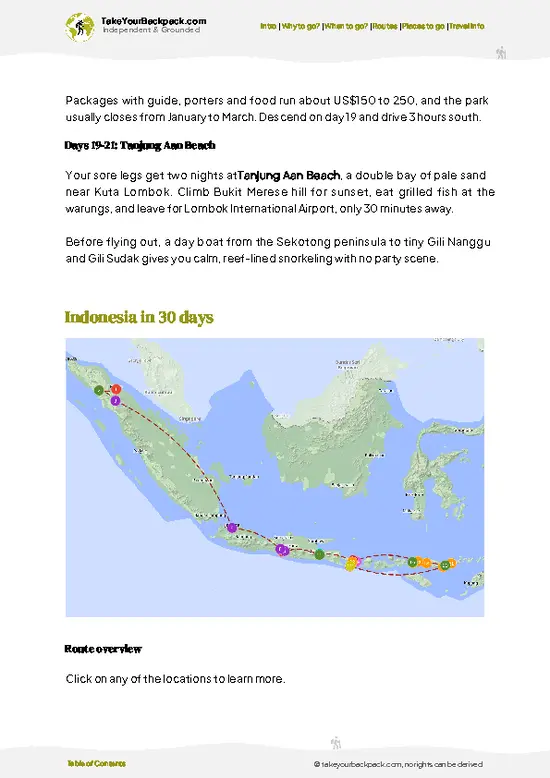
example page 0 from our offline Travel Guide for Indonesia
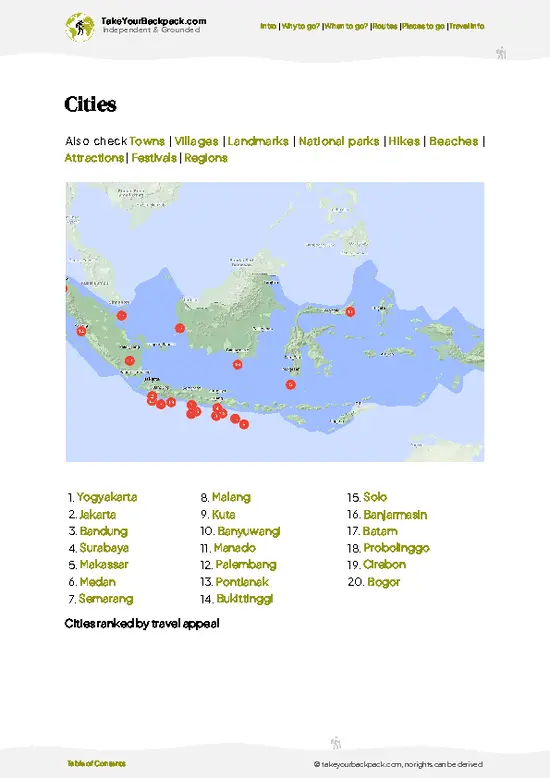
example page 1 from our offline Travel Guide for Indonesia
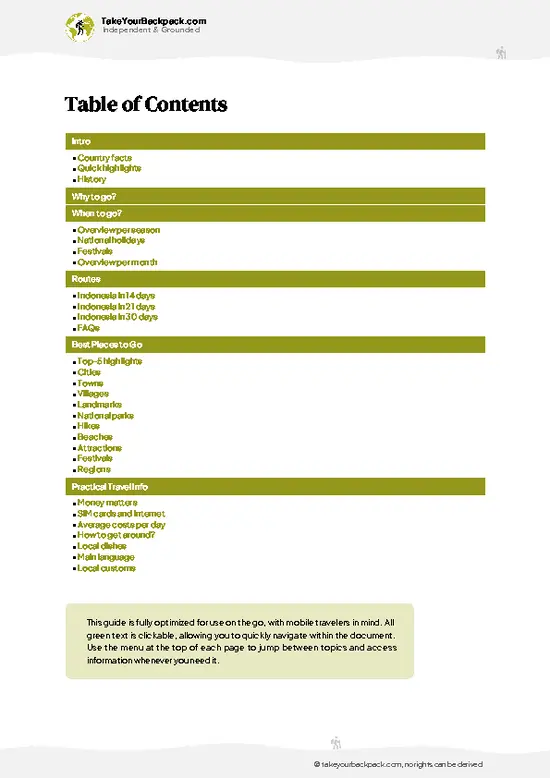
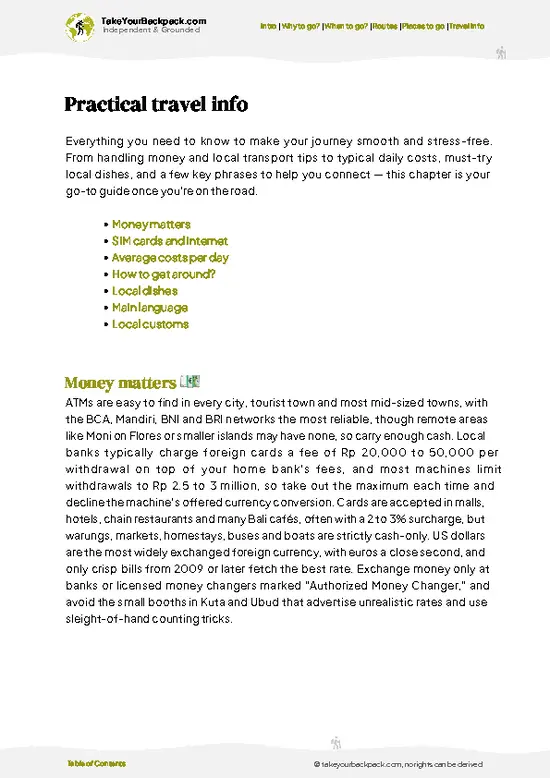
example page 2 from our offline Travel Guide for Indonesia
example page 3 from our offline Travel Guide for Indonesia
example page 4 from our offline Travel Guide for Indonesia
example page 5 from our offline Travel Guide for Indonesia
example page 6 from our offline Travel Guide for Indonesia
example page 7 from our offline Travel Guide for Indonesia
The digital guide (550 pages) contains:
155 highlights, ranked by travel appeal
Optimized 14, 21 & 30-day travel routes
Cities, national parks, landmarks, beaches
How to get around
Offline-friendly for travel without Wi-Fi
👉 Click to see all 30+ guide features

📅 Plan smarter in minutes, not weeks
Month by month travel advice
Festivals & national holidays
Budget expectations

🗺️ Go to the right places, skip the overrated ones
Honest pros & cons of destinations
Top hikes, parks & viewpoints
Lesser-known places most travelers miss
Clear “worth it vs skip it” guidance

🛏️ Travel smoothly without rookie mistakes
Best areas to stay
Transport systems explained simply
Common scams & safety advice
SIM cards, money & practical tips

🌍 Understand the country, not just visit it
Culture & traditions
52 Essential phrases & customs
Festivals worth planning around
Traveler-friendly historical context
Insights that make places more meaningful

📱 Built for real travel conditions
Fully downloadable PDF
Works completely offline
Optimized for phone use
Useful in remote areas & buses
Everything in one place
Save weeks of stressful planning
Get instant access to your full guide. 30‑day money-back guarantee.


By proceeding you agree to our terms.
Sent to your inbox immediately after payment • 100% Secure Checkout
Best Backpacking Travel Advisor 2025 tourism awardBest Backpacking
Travel Advisor
2025
What others say about Take Your Backpack Guides:
⭐⭐⭐⭐⭐
Fantastic, amazing amount of information!
⭐⭐⭐⭐⭐
My goodness this is amazing, it's what I've been looking for hats off too you!
⭐⭐⭐⭐⭐
I think this is absolutely BRILLIANT
⭐⭐⭐⭐
Very complete and informative. It's still missing places, but I gotta to commend you
⭐⭐⭐⭐⭐
This is truly amazing, thank you, can't wait to explore it with my kids!
⭐⭐⭐⭐⭐
Awesome resource, thank you!
⭐⭐⭐⭐⭐
This is amazing! Can't wait to explore the ones I haven't seen
⭐⭐⭐⭐
I love this! Well done, great idea.
⭐⭐⭐⭐⭐
Thanks for taking the time to make this gem!
⭐⭐⭐⭐⭐
This might be the best website I've ever seen.
⭐⭐⭐⭐⭐
Congratulations, and thank you so much for your work; it's incredibly valuable.
⭐⭐⭐⭐
In all seriousness I think you did a great job pointing out the important spots
⭐⭐⭐⭐⭐
10/10 very good
⭐⭐⭐⭐⭐
As someone who's only just starting to visit regularly this is awesome, thank you.
⭐⭐⭐⭐
Thank you very much! I'm going to visit my dad, it's going to be very useful!
⭐⭐⭐⭐⭐
This is really cool! We'll be travelling for the first time and this definitely come in handy.
⭐⭐⭐⭐⭐
You are now our minister of culture, congratulations 👨‍💼
⭐⭐⭐⭐⭐
Just wanted to tell you that this is a pearl! Going to follow your recommendations.
⭐⭐⭐⭐⭐
This is so cool. I'll definitely be using the resource for my travels soon.
⭐⭐⭐⭐⭐
This is very impressive! Good work.
⭐⭐⭐⭐⭐
This is an amazing and informative site. Very well done!

🛏️ Where to stay?Best areas to stay in Indonesia

In Cirebon, the best spot for backpackers is the area around Jalan Siliwangi and Jalan Kartini. This zone strikes a smart balance: it’s safe, buzzing enough to meet fellow travelers, yet not overwhelming. You’ll find budget hostels clustered here, offering simple comfort without the tourist price hike. Compared to the quieter, more residential outskirts, this neighborhood keeps you close to local markets, street food stalls, and transport hubs, saving time and money on daily logistics. It’s a practical choice for solo travelers who want to stay connected without sacrificing the authentic city … read more 👉
In Cirebon, the best spot for backpackers is the area around Jalan Siliwangi and Jalan Kartini. This zone strikes a smart balance: it’s safe, buzzing enough to meet fellow travelers, yet not overwhelming. You’ll find budget hostels clustered here, offering simple comfort without the tourist price hike. Compared to the quieter, more residential outskirts, this neighborhood keeps you close to local markets, street food stalls, and transport hubs, saving time and money on daily logistics. It’s a practical choice for solo travelers who want to stay connected without sacrificing the authentic city pulse. Other parts of Cirebon either lean too residential or too commercial, lacking that sweet spot of social energy and affordability.

🚌 Getting aroundMoving around without the hassle

Cirebon moves at a pace that’s neither frantic nor sluggish—it’s a city where old-school rhythms meet the practical demands of daily life. You won’t find a strict timetable etched in stone here; instead, the flow leans on a mix of local intuition and flexible timing. This means your transit choices aren’t just about getting from A to B—they’re about reading the city’s pulse and deciding what you’re willing to trade: time, money, or comfort. Master this balance, and you’re not just traveling—you’re playing the system like a pro.


  • Walking: The most cost-effective way to explore Cirebon’s compact core. It’s free, flexible, and lets you soak in street-level details, but expect slower travel and some sun exposure during midday.

  • Angkot (Shared Minivan): Runs roughly from 6 AM to 8 PM, fares
read more 👉
Cirebon moves at a pace that’s neither frantic nor sluggish—it’s a city where old-school rhythms meet the practical demands of daily life. You won’t find a strict timetable etched in stone here; instead, the flow leans on a mix of local intuition and flexible timing. This means your transit choices aren’t just about getting from A to B—they’re about reading the city’s pulse and deciding what you’re willing to trade: time, money, or comfort. Master this balance, and you’re not just traveling—you’re playing the system like a pro.


  • Walking: The most cost-effective way to explore Cirebon’s compact core. It’s free, flexible, and lets you soak in street-level details, but expect slower travel and some sun exposure during midday.

  • Angkot (Shared Minivan): Runs roughly from 6 AM to 8 PM, fares hover around IDR 3,000–5,000. It’s cheap and frequent but can get cramped and unpredictable during rush hours.

  • Becak (Pedicab): Available all day, perfect for short hops or navigating narrow alleys. Prices are negotiable, usually IDR 10,000–20,000. Comfortable and intimate, but slower than motorized options.

  • Ojek (Motorcycle Taxi): Operating 24/7, fares vary by distance but start around IDR 10,000. Fast and flexible, ideal when time is tight, though less comfortable in heavy traffic or rain.

  • Local Bus: Limited routes with schedules from 5 AM to 7 PM, fares around IDR 5,000–7,000. Slower than ojeks but more comfortable and budget-friendly for longer distances.

👛 Costs (as of 20 December 2024)How expensive it really is

Backpacking in Cirebon, Indonesia, offers a clear trade-off between cost and comfort, with prices that let you stretch your budget without sacrificing the essentials.
  • Dorm Accommodation (High Season): Expect to pay around $6 to $10 per night. High season pushes prices up slightly due to demand, but you’re still in basic, clean dorms with fan cooling rather than air conditioning.
  • Dorm Accommodation (Off-Season): Dropping to about $4 to $7 per night, off-season rates give you more negotiating power. The rooms remain simple but comfortable enough for a good night’s rest.
  • Meals: Street food and local warungs dominate here, with meals costing between $1.50 and $3.50. You can eat well on a tight budget, enjoying dishes like nasi jamblang or empal gentong without breaking the bank.
  • Local Transport:
read more 👉
Backpacking in Cirebon, Indonesia, offers a clear trade-off between cost and comfort, with prices that let you stretch your budget without sacrificing the essentials.
  • Dorm Accommodation (High Season): Expect to pay around $6 to $10 per night. High season pushes prices up slightly due to demand, but you’re still in basic, clean dorms with fan cooling rather than air conditioning.
  • Dorm Accommodation (Off-Season): Dropping to about $4 to $7 per night, off-season rates give you more negotiating power. The rooms remain simple but comfortable enough for a good night’s rest.
  • Meals: Street food and local warungs dominate here, with meals costing between $1.50 and $3.50. You can eat well on a tight budget, enjoying dishes like nasi jamblang or empal gentong without breaking the bank.
  • Local Transport: Short rides on ojeks (motorcycle taxis) or becaks (pedicabs) typically cost $0.50 to $1.50. These are perfect for quick hops around town but factor in some bargaining.
  • City Transport Pass: Cirebon doesn’t have a formal city transport pass system; most travelers rely on ojeks or shared angkot minibuses, which cost roughly $0.30 to $0.70 per trip. This keeps transport flexible but requires a bit of local savvy.
  • Basic Activities/Entry Fees: Visiting cultural sites like the Keraton Kasepuhan or local museums usually costs between $1 and $3. These fees are modest but add up if you’re hitting multiple spots in a day.
  • Miscellaneous Expenses: Budget $1 to $2 for bottled water, snacks, or small personal items. These small costs keep you comfortable without surprises.

All told, you’re looking at a daily budget of roughly $10 to $20 for a no-frills but authentic Cirebon experience. This range balances the essentials—sleep, food, transport, and culture—without padding for luxury. Knowing where to save and where to spend turns your trip into a strategic win, letting you focus on the unique flavors and rhythms of this city rather than worrying about overspending.


source: indonesia.travel
⚠️ Prices can change and everyone travels differently, so take this as a rough guide. Hope it helps you plan your adventure!

🚌 Day tripsExploring the surroundings

Cirebon, Indonesia, is a fantastic launchpad for day trips that blend culture, nature, and adventure. Here’s how to make the most of your time without breaking the bank.

Kampung Batik Trusmi
Just a 30-minute ride from Cirebon, this village is the heart of batik production. You can watch artisans at work, learn about the intricate designs, and even try your hand at creating your own piece. The experience is rich in culture and costs around $5 for a workshop. Avoid the mistake of just snapping photos; engage with the locals for a deeper understanding of this art form.


Mount Ciremai
If you’re up for a challenge, a day hike to Mount Ciremai is a must. It takes about two hours to reach the base, and the trek itself can be done in a day if you start early. Expect to spend around $10 on … read more 👉
Cirebon, Indonesia, is a fantastic launchpad for day trips that blend culture, nature, and adventure. Here’s how to make the most of your time without breaking the bank.

Kampung Batik Trusmi
Just a 30-minute ride from Cirebon, this village is the heart of batik production. You can watch artisans at work, learn about the intricate designs, and even try your hand at creating your own piece. The experience is rich in culture and costs around $5 for a workshop. Avoid the mistake of just snapping photos; engage with the locals for a deeper understanding of this art form.


Mount Ciremai
If you’re up for a challenge, a day hike to Mount Ciremai is a must. It takes about two hours to reach the base, and the trek itself can be done in a day if you start early. Expect to spend around $10 on transport and snacks. The best time to go is during the dry season, from May to September. Many first-timers underestimate the difficulty; come prepared with good shoes and plenty of water.


Keraton Kasepuhan
This royal palace is only a 15-minute drive from the city center. The architecture is stunning, and the museum inside offers a glimpse into the history of Cirebon’s sultanate. Entry is about $2, making it a budget-friendly stop. Aim to visit in the morning to avoid crowds. Don’t rush through; take your time to appreciate the artifacts and stories.


Taman Wisata Alam Gunung Ciremai
A bit farther out, this nature park is about an hour’s drive but worth every minute. You can explore lush trails and spot diverse wildlife. Entry fees are around $3, and it’s best visited in the cooler months. Many backpackers miss the park’s hidden waterfalls; keep your eyes peeled for these refreshing spots.
Want to know what more Indonesia offers?
The Indonesia Travel Guide describes 155 highlights, from cities to national parks, from beaches to hikes

Get the Travel Guide -

🍲 FoodWhat to Eat & Drink

Cirebon is a culinary playground for backpackers eager to dive into local flavors. Start with Nasi Jamblang, a fragrant rice dish served with an array of side dishes, each bursting with spices. The empal gentong, a rich beef soup, is another must-try, simmered to perfection with coconut milk and spices that linger on your palate.

Street food stalls and bustling markets are where the magic happens. Grab a plate of tahu gejrot, crispy tofu drenched in a tangy sauce, while mingling with locals. The atmosphere is electric, filled with laughter and the sizzling sounds of food being prepared.

Don’t overlook the drinking culture; sip on es dawet, a refreshing coconut and pandan drink, as you watch the sunset. Remember, sharing food is a sign of friendship here, so don’t hesitate to offer a bite … read more 👉
Cirebon is a culinary playground for backpackers eager to dive into local flavors. Start with Nasi Jamblang, a fragrant rice dish served with an array of side dishes, each bursting with spices. The empal gentong, a rich beef soup, is another must-try, simmered to perfection with coconut milk and spices that linger on your palate.

Street food stalls and bustling markets are where the magic happens. Grab a plate of tahu gejrot, crispy tofu drenched in a tangy sauce, while mingling with locals. The atmosphere is electric, filled with laughter and the sizzling sounds of food being prepared.

Don’t overlook the drinking culture; sip on es dawet, a refreshing coconut and pandan drink, as you watch the sunset. Remember, sharing food is a sign of friendship here, so don’t hesitate to offer a bite or two. Embrace the flavors and the community—it’s all part of the experience!

🛡️ SafetyScams, Hazards, and Annoyances

Cirebon is generally safe for backpackers, but a little awareness goes a long way. Stick to well-lit areas at night, especially if you’re solo. The bustling markets can be vibrant but also crowded; keep your belongings close to avoid pickpockets.

Watch out for the occasional taxi scam—always agree on a fare before getting in or use a ride-hailing app. Street vendors can be persistent, but a polite “no, thank you” usually does the trick.

Overall, approach Cirebon with a friendly demeanor and a sense of curiosity, and you’ll find the city welcoming rather than daunting.

Other Indonesian cities near Cirebon

Explore more nearby:

  • Bandung—art deco, mountain air, creative scene| 105 km away
  • Bogor—botanical gardens, cool climate, rain city| 193 km away
  • Jakarta—megacity, skyscrapers, street food| 201 km away

💡 Not sure where to go next?
Create a personalized itinerary for Indonesia including Cirebon and the places that fit your trip.

Generate my itinerary

👉 Discover all cities

Or checkout all Indonesia has to offer (think cities, towns, villages, national parks, hikes, beaches, festivals)
Country photo of Indonesia

We 💚 feedbackSumming up the experience

Cirebon’s vibrant street food scene is a feast for the senses—think spicy, tangy, and utterly delicious. You’ll find flavors that dance on your tongue and locals who are eager to share their culinary secrets. Just be ready for the heat; the humidity can be relentless. Embrace it, and you’ll discover a city that rewards your adventurous spirit.

✈️ When did I visit Indonesia?
As part of my 1.5 year travel around the world trip, I visited Indonesia twice (and it was worth it. First in September 2015 and a bit later again in January and February 2016.

✍️ Help improve this page!
The information on this page is based on my own backpacking experience in Indonesia, supplemented with up-to-date research and feedback from other travelers. Travel details can change, so if you notice anything outdated or incomplete, feel free to let me know.


🙋‍♂️ Give feedback

👋 Meet the founderWho’s Behind Take Your Backpack?

Johan, backpacker and founder of TakeYourBackpackHi, I’m Johan (Netherlands 🇳🇱), the creator of TakeYourBackpack. Over the past decade, I’ve backpacked through 80+ countries across six continents, gaining extensive experience with independent travel, long-term trips, and overland routes.

This site is built on a combination of firsthand travel experience and carefully curated insights from other backpackers. Many guides are based on places I’ve personally visited, while others bring together tips, observations, and practical advice shared by trusted travelers I’ve met along the way.

The goal is to provide realistic, experience-driven guidance — not generic itineraries — so you can explore destinations with better context, clearer expectations, and more confidence.

Get full Indonesia guide •
Instant download • 155 highlights • Full Offline guide