×

Indonesia🇮🇩 | attractionsTaman Sari Water Castleroyal pools, underground passages, 18th-century ruins | things to do and best time to go

Explore Yogyakarta PalaceExplore Fort Vredeburg Museum

Backpacking in Taman Sari Water Castle
🌟 Highlightattraction ranked #12
By Johan Kruseman 🇳🇱 | Updated October 15, 2026

Most visitors rush past the narrow water channels carved beneath Taman Sari's pavilions, never realizing they once cooled the entire complex during Yogyakarta's scorching afternoons. Tucked into the heart of Yogyakarta in Central Java, this 18th-century royal water castle sprawls across gardens, pools, and underground passages that feel more like an archaeological puzzle than a polished monument. The site demands active exploration: you wade through shallow channels, duck into shadowed grottoes, and piece together how a sultanate engineered pleasure and power from water. Crowds cluster at the main entrance, but venture into the back chambers and you'll find yourself alone with crumbling walls and the sound of trickling water. Yes, it's partially ruined and entry costs around USD 3 to 4, but the sensory payoff is real. I remember standing in the cool darkness of the underground bathing chamber, water dripping from stone arches above, suddenly understanding why a 18th-century court would have treasured this place. It's worth the journey for anyone serious about understanding Javanese history beyond the temples.

Discover everything you want to know in the 📖 Indonesia Travel Guide.


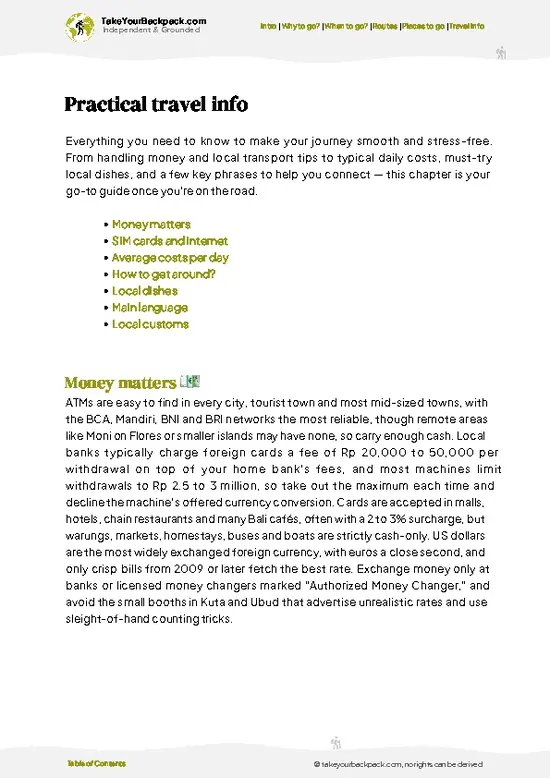
example page 0 from our offline Travel Guide for Indonesia
example page 1 from our offline Travel Guide for Indonesia
example page 2 from our offline Travel Guide for Indonesia
example page 3 from our offline Travel Guide for Indonesia
example page 4 from our offline Travel Guide for Indonesia
example page 5 from our offline Travel Guide for Indonesia
example page 6 from our offline Travel Guide for Indonesia
example page 7 from our offline Travel Guide for Indonesia
Loading the map 🌍
CLICK TO FILTER
cities
towns
villages
landmarks
national parks
hikes
beaches
attractions
festivals
regions
SHOW COUNTRY’S BESTSHOW ALL

✨ Why go?
Ranked #12 attraction in Indonesia
Why visitors keep coming back

Taman Sari Water Castle stands as a rare window into Javanese royal life during the height of the Sultanate's power. Built in 1758, it represents architectural ambition on a scale few backpackers expect to find in such a compact, walkable space. The site combines historical depth with genuine exploration, since much of it remains partially excavated and unrestored. Unlike Borobudur or Prambanan, which feel monumental and distant, Taman Sari invites you into intimate chambers and underground passages. It's a cultural milestone for anyone serious about understanding Java's pre-colonial sophistication, and it anchors a natural route through Yogyakarta's heritage sites without requiring a full day commitment.

💡 HighlightsEssential experiences to have while visiting Taman Sari Water Castle

  1. The Underground Bathing Chamber: A partially submerged room where the sultan and his family bathed in filtered water. The vaulted ceiling and carved stone channels showcase engineering skill and remain eerily intact despite centuries of neglect.
  2. The Pendopo (Pavilion): The main reception hall with its original stone pillars and open-air design. This is where the sultan conducted court business and entertained guests, and its scale hints at the complex's former grandeur.
  3. The Water Gardens: A series of interconnected pools and channels that once fed the entire complex. Walking the pathways reveals how water was diverted, stored, and distributed as both utility and aesthetic feature.
  4. The Tunnel Network: A network of underground passages connecting different sections of the palace. Some remain accessible
… read more 👉
  1. The Underground Bathing Chamber: A partially submerged room where the sultan and his family bathed in filtered water. The vaulted ceiling and carved stone channels showcase engineering skill and remain eerily intact despite centuries of neglect.
  2. The Pendopo (Pavilion): The main reception hall with its original stone pillars and open-air design. This is where the sultan conducted court business and entertained guests, and its scale hints at the complex's former grandeur.
  3. The Water Gardens: A series of interconnected pools and channels that once fed the entire complex. Walking the pathways reveals how water was diverted, stored, and distributed as both utility and aesthetic feature.
  4. The Tunnel Network: A network of underground passages connecting different sections of the palace. Some remain accessible and offer a cooler, more intimate perspective on the site's layout and defensive design.
  5. The Mosque Within the Complex: A small, restored prayer space that shows how religious life was integrated into the royal retreat. Its placement and design reflect the sultan's role as both ruler and spiritual leader.
  6. The Ornamental Ponds: Shallow basins decorated with carved stone edges and fed by the main water system. They served both practical and symbolic purposes in royal gardens.
I'd explore the Underground Bathing Chamber first because it's the most atmospheric and least crowded early in the morning, giving you a genuine sense of the site's intimacy before the tour groups arrive.
Spotted a mistake or missing something? Contact us.

Things to do around Taman Sari Water Castle

Ratings based on Tripadvisor reviews. When you book through this link, you support our work at no extra cost to you.

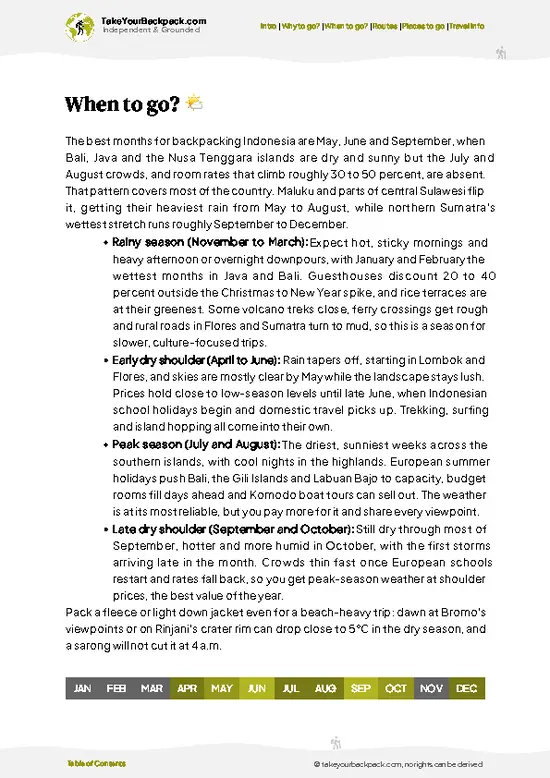
🌤️ When to go?Weather, crowds, and seasonal trade-offs

  • Dry Season (May to September): The best window for visiting. Temperatures range from 24 to 32°C (75 to 90°F), with minimal rain and clear skies ideal for exploring outdoor ruins. Crowds peak in July and August, so aim for May, June, or September for fewer visitors and lower prices.
  • Rainy Season (October to April): Heavy downpours flood low-lying areas and make stone surfaces slippery. Temperatures hover around 25 to 31°C (77 to 88°F), but humidity climbs sharply. Fewer tourists visit, so accommodation and entry fees drop noticeably.
  • Shoulder Months (April, September): Unpredictable weather but manageable crowds and mid-range pricing. Daylight lasts roughly 12 hours year-round near the equator.
Visit early morning to beat crowds and heat, and wear sturdy shoes with grip for wet stone.

source: climatestotravel.comJANJanuary: fair for travelingFEBFebruary: fair for travelingMARMarch: fair for travelingAPRApril: fair for travelingMAYMay: highly recommended for travelingJUNJune: good for travelingJULJuly: good for travelingAUGAugust: good for travelingSEPSeptember: highly recommended for travelingOCTOctober: fair for travelingNOVNovember: fair for travelingDECDecember: fair for traveling
when-to-go

✈️ The backpacker research shortcutIndonesia Travel Guide

An offline-friendly backpacking guide with optimized travel routes, ranked highlights, transport advice, and the best areas to stay.
example page 0 from our offline Travel Guide for Indonesia
example page 1 from our offline Travel Guide for Indonesia
example page 2 from our offline Travel Guide for Indonesia
example page 3 from our offline Travel Guide for Indonesia
example page 4 from our offline Travel Guide for Indonesia
example page 5 from our offline Travel Guide for Indonesia
example page 6 from our offline Travel Guide for Indonesia
example page 7 from our offline Travel Guide for Indonesia
The digital guide (460 pages) contains:
✅ 153 highlights, ranked by travel appeal
✅ Optimized 14, 21 & 30-day travel routes
✅ Cities, national parks, landmarks, beaches
✅ How to get around
✅ Offline-friendly for travel without Wi-Fi
👉 Click to see all 30+ guide features

📅 Plan smarter in minutes, not weeks
✅ Month by month travel advice
✅ Festivals & national holidays
✅ Budget expectations

🗺️ Go to the right places, skip the overrated ones
✅ Honest pros & cons of destinations
✅ Top hikes, parks & viewpoints
✅ Lesser-known places most travelers miss
✅ Clear “worth it vs skip it” guidance

🛏️ Travel smoothly without rookie mistakes
✅ Best areas to stay
✅ Transport systems explained simply
✅ Common scams & safety advice
✅ SIM cards, money & practical tips

🌍 Understand the country, not just visit it
✅ Culture & traditions
✅ 52 Essential phrases & customs
✅ Festivals worth planning around
✅ Traveler-friendly historical context
✅ Insights that make places more meaningful

📱 Built for real travel conditions
✅ Fully downloadable PDF
✅ Works completely offline
✅ Optimized for phone use
✅ Useful in remote areas & buses
✅ Everything in one place
Stop searching, start planning
Get instant access to your full guide. 30‑day money-back guarantee.
+ Add another guide for just

By proceeding you agree to our terms.
Sent to your inbox immediately after payment • 100% Secure Checkout
Best Backpacking Travel Advisor 2025 tourism awardBest Backpacking
Travel Advisor
2025
What others say about Take Your Backpack Guides:
⭐⭐⭐⭐⭐
Fantastic, amazing amount of information!
⭐⭐⭐⭐⭐
My goodness this is amazing, it's what I've been looking for hats off too you!
⭐⭐⭐⭐⭐
I think this is absolutely BRILLIANT
⭐⭐⭐⭐
Very complete and informative. It's still missing places, but I gotta to commend you
⭐⭐⭐⭐⭐
This is truly amazing, thank you, can't wait to explore it with my kids!
⭐⭐⭐⭐⭐
Awesome resource, thank you!
⭐⭐⭐⭐⭐
This is amazing! Can't wait to explore the ones I haven't seen
⭐⭐⭐⭐
I love this! Well done, great idea.
⭐⭐⭐⭐⭐
Thanks for taking the time to make this gem!
⭐⭐⭐⭐⭐
This might be the best website I've ever seen.
⭐⭐⭐⭐⭐
Congratulations, and thank you so much for your work; it's incredibly valuable.
⭐⭐⭐⭐
In all seriousness I think you did a great job pointing out the important spots
⭐⭐⭐⭐⭐
10/10 very good
⭐⭐⭐⭐⭐
As someone who's only just starting to visit regularly this is awesome, thank you.
⭐⭐⭐⭐
Thank you very much! I'm going to visit my dad, it's going to be very useful!
⭐⭐⭐⭐⭐
This is really cool! We'll be travelling for the first time and this definitely come in handy.
⭐⭐⭐⭐⭐
You are now our minister of culture, congratulations 👨‍💼
⭐⭐⭐⭐⭐
Just wanted to tell you that this is a pearl! Going to follow your recommendations.
⭐⭐⭐⭐⭐
This is so cool. I'll definitely be using the resource for my travels soon.
⭐⭐⭐⭐⭐
This is very impressive! Good work.
⭐⭐⭐⭐⭐
This is an amazing and informative site. Very well done!

🛏️ Where to stay?Choosing the right base

Stay in Malioboro or the surrounding Kraton district, both within walking distance or a short becak ride from Taman Sari. Malioboro is Yogyakarta's main backpacker hub, packed with hostels, budget guesthouses, and street food stalls. The energy is social and chaotic, ideal if you want to meet other travelers. The Kraton district, home to the sultan's current palace, feels quieter and more residential while remaining close to the water castle. Both areas have reliable transport links to other Yogyakarta attractions like Borobudur and Prambanan. Accommodation ranges from dorm beds at USD 5 to 8 … read more 👉
Stay in Malioboro or the surrounding Kraton district, both within walking distance or a short becak ride from Taman Sari. Malioboro is Yogyakarta's main backpacker hub, packed with hostels, budget guesthouses, and street food stalls. The energy is social and chaotic, ideal if you want to meet other travelers. The Kraton district, home to the sultan's current palace, feels quieter and more residential while remaining close to the water castle. Both areas have reliable transport links to other Yogyakarta attractions like Borobudur and Prambanan. Accommodation ranges from dorm beds at USD 5 to 8 per night to private rooms at USD 12 to 20. The trade-off is noise and crowds in Malioboro versus a more authentic, slower pace in Kraton. Either choice puts you within 15 to 20 minutes of Taman Sari on foot.

👛 Costs (as of 15 October 2026)Travel costs and budget guide for Taman Sari Water Castle

Entry to Taman Sari Water Castle costs between USD 3 and 5 for foreign visitors, making it one of Yogyakarta's most affordable heritage sites. A guided tour adds USD 8 to 15 depending on group size and guide experience, though self-guided exploration is entirely feasible with a map or smartphone. Transport to the site from central Yogyakarta runs USD 1 to 2 by local minibus or becak. Food and drinks near the entrance are minimal; most visitors eat elsewhere in the city. The site itself has no internal shops or facilities, so budget accordingly.
CategoryBudget RangeLocal Reality
Entrance FeeUSD 3 to 5Fixed price for foreign visitors; locals pay less. No discounts for students or groups.
Guided TourUSD 8 to 15Optional but recommended for historical context. Guides wait at the entrance and negotiate
… read more 👉
Entry to Taman Sari Water Castle costs between USD 3 and 5 for foreign visitors, making it one of Yogyakarta's most affordable heritage sites. A guided tour adds USD 8 to 15 depending on group size and guide experience, though self-guided exploration is entirely feasible with a map or smartphone. Transport to the site from central Yogyakarta runs USD 1 to 2 by local minibus or becak. Food and drinks near the entrance are minimal; most visitors eat elsewhere in the city. The site itself has no internal shops or facilities, so budget accordingly.
CategoryBudget RangeLocal Reality
Entrance FeeUSD 3 to 5Fixed price for foreign visitors; locals pay less. No discounts for students or groups.
Guided TourUSD 8 to 15Optional but recommended for historical context. Guides wait at the entrance and negotiate rates.
Transport (Minibus or Becak)USD 1 to 2Shared minibuses are cheapest; becak offers door-to-door convenience at slightly higher cost.
Food and DrinksUSD 1 to 3Limited vendors near the site. Eat before arrival or bring water and snacks.


source: indonesia.travel
⚠️ Prices can change and everyone travels differently, so take this as a rough guide. Hope it helps you plan your adventure!

FAQCommon questions from travelers

Plan for 1.5 to 2 hours to explore the main structures and underground passages thoroughly. Most backpackers spend 90 minutes walking through the pavilions, water channels, and grottoes without feeling rushed. Guides are available for an additional USD 5 to 8 if you want detailed historical context.
Yes, the USD 3 to 4 entrance fee is worth it for the unique combination of royal architecture, water engineering, and atmospheric ruins you won't find elsewhere in Java. The site is less crowded than Borobudur or Prambanan, giving you space to actually absorb the details. The underground chambers and narrow channels make it feel like genuine exploration rather than a checkbox visit.
Taman Sari is located in central Yogyakarta, about 2 kilometers southwest of the main city square. Take a local bus (angkot) from the city center for USD 0.30 to 0.50, a ride-share app for USD 2 to 3, or a 30-minute walk if you're comfortable navigating local streets. Most backpackers base themselves in the Malioboro Street area and reach it easily within 10 to 15 minutes by transport.
⚠️ Things can change over time, so always validate details locally before you go.

Other Indonesian attractions near Taman Sari Water Castle

Explore more nearby:


💡 Not sure where to go next?
Create a personalized itinerary for Indonesia including Taman Sari Water Castle and the places that fit your trip.

Generate my itinerary

👉 Discover all attractions

Or checkout all Indonesia has to offer (think cities, towns, villages, national parks, hikes, beaches, festivals)
Country photo of Indonesia

We 💚 feedbackKey takeaways before you go

Taman Sari rewards slow exploration and genuine curiosity about Javanese history. The ruins feel personal and tactile in ways polished monuments don't. The main drawback is that ongoing restoration work sometimes closes sections without warning, so check ahead and build flexibility into your itinerary.

✈️ When did I visit Indonesia?
As part of my 1.5 year travel around the world trip, I visited Indonesia twice (and it was worth it): first in September 2015 and a bit later again in January and February 2016.

✍️ Help improve this page!
The information on this page is based on my own backpacking experience in Indonesia, supplemented with up-to-date research and feedback from other travelers. Travel details can change, so if you notice anything outdated or incomplete, feel free to let me know.


🙋‍♂️ Give feedback

👋 Meet the founderWho’s Behind Take Your Backpack?

Johan, backpacker and founder of TakeYourBackpackHi, I’m Johan (Netherlands 🇳🇱), the creator of TakeYourBackpack. Over the past 3 decades, I’ve backpacked through 90+ countries across six continents, gaining extensive experience with independent travel, long-term trips, and overland routes.

This site is built on a combination of firsthand travel experience and carefully curated insights from other backpackers. Many guides are based on places I’ve personally visited, while others bring together tips, observations, and practical advice shared by trusted travelers I’ve met along the way.

The goal is to provide realistic, experience-driven guidance — not generic itineraries — so you can explore destinations with better context, clearer expectations, and more confidence.