×

Indonesia🇮🇩 | national parksTeluk Cenderawasih National Parkwhale shark encounters, Papua coastline, coral atolls | things to do and best time to go

Explore Wakatobi National ParkExplore Berbak National Park

Backpacking in Teluk Cenderawasih
👌 Worth visitingnational park ranked #14
By Johan Kruseman 🇳🇱 | Updated October 15, 2026

Most travelers arrive at Teluk Cenderawasih National Park expecting crowds and find instead a marine sanctuary that feels genuinely remote. Tucked into the northern coast of West Papua, this park sprawls across 14,500 square kilometers of coral reefs, mangrove forests, and limestone islands. The hiking is modest compared to other Indonesian parks, but the underwater world dominates: whale sharks glide through shallow bays, manta rays pulse beneath the surface, and snorkeling rivals any destination in Southeast Asia. Crowds thin dramatically once you move beyond the main jetty at Nabire. I remember floating above a coral garden at dawn, the water so clear I could count individual fish at ten meters, while a whale shark drifted past like a living submarine. The trade-off is accessibility: reaching the park requires patience with boats and basic logistics, and the rainy season can strand you. But for backpackers willing to embrace that friction, the payoff is a park that feels earned rather than consumed.

Discover everything you want to know in the 📖 Indonesia Travel Guide.


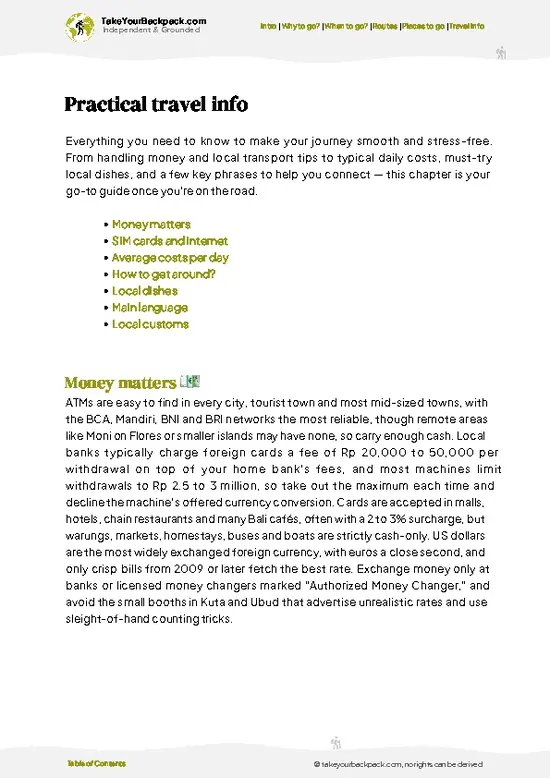
example page 0 from our offline Travel Guide for Indonesia
example page 1 from our offline Travel Guide for Indonesia
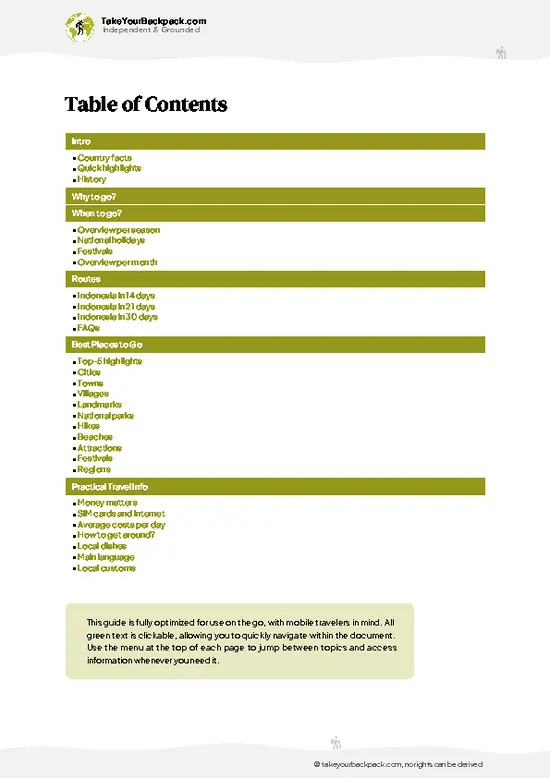
example page 2 from our offline Travel Guide for Indonesia
example page 3 from our offline Travel Guide for Indonesia
example page 4 from our offline Travel Guide for Indonesia
example page 5 from our offline Travel Guide for Indonesia
example page 6 from our offline Travel Guide for Indonesia
example page 7 from our offline Travel Guide for Indonesia
Loading the map 🌍
CLICK TO FILTER
cities
towns
villages
landmarks
national parks
hikes
beaches
attractions
festivals
regions
SHOW COUNTRY’S BESTSHOW ALL

✨ Why go?
Ranked #14 national park in Indonesia
The unique appeal for travelers

Teluk Cenderawasih rewards independent exploration over guided tours. The park's scattered islands and reefs mean you can base yourself in Nabire or on one of the park's homestays and navigate by boat at your own pace, choosing which reefs to snorkel and which trails to walk. Budget accommodation exists both in town and on the islands themselves, keeping daily costs low. The marine focus suits self-guided travelers perfectly: you need no special permit to snorkel, and boat operators are accustomed to independent backpackers. Unlike crowded parks elsewhere in Indonesia, you'll often have entire reefs to yourself. The trail variety is limited but worthwhile, ranging from short forest walks to longer ridge hikes with views across the bay. Most importantly, the park's remoteness means fewer tourists … read more 👉
Teluk Cenderawasih rewards independent exploration over guided tours. The park's scattered islands and reefs mean you can base yourself in Nabire or on one of the park's homestays and navigate by boat at your own pace, choosing which reefs to snorkel and which trails to walk. Budget accommodation exists both in town and on the islands themselves, keeping daily costs low. The marine focus suits self-guided travelers perfectly: you need no special permit to snorkel, and boat operators are accustomed to independent backpackers. Unlike crowded parks elsewhere in Indonesia, you'll often have entire reefs to yourself. The trail variety is limited but worthwhile, ranging from short forest walks to longer ridge hikes with views across the bay. Most importantly, the park's remoteness means fewer tourists and lower prices, making it ideal for travelers seeking authentic experience without the infrastructure overhead.

💡 HighlightsEssential experiences to have while exploring Teluk Cenderawasih

  1. Cenderawasih Bay: The park's centerpiece, a vast shallow bay where whale sharks congregate from November to June. Snorkeling here puts you meters from these gentle giants, an encounter that defines the park for most visitors.
  2. Manta Ray Gardens: Specific reef zones where manta rays gather to feed, particularly around the islands of Nemo and Yapen. The rays' wingspans can exceed four meters, and encounters are frequent during the dry season.
  3. Pulau Yapen: A limestone island with a short ridge trail offering panoramic views across the bay and access to pristine snorkeling sites on its eastern flank.
  4. Mangrove Forests: Dense coastal mangroves accessible by kayak or small boat, home to juvenile fish, crustaceans, and birds. The ecosystem is less dramatic than the reefs but essential to understanding
… read more 👉
  1. Cenderawasih Bay: The park's centerpiece, a vast shallow bay where whale sharks congregate from November to June. Snorkeling here puts you meters from these gentle giants, an encounter that defines the park for most visitors.
  2. Manta Ray Gardens: Specific reef zones where manta rays gather to feed, particularly around the islands of Nemo and Yapen. The rays' wingspans can exceed four meters, and encounters are frequent during the dry season.
  3. Pulau Yapen: A limestone island with a short ridge trail offering panoramic views across the bay and access to pristine snorkeling sites on its eastern flank.
  4. Mangrove Forests: Dense coastal mangroves accessible by kayak or small boat, home to juvenile fish, crustaceans, and birds. The ecosystem is less dramatic than the reefs but essential to understanding the park's biodiversity.
  5. Pulau Nemo: A small island with coral gardens immediately offshore and a basic homestay, making it an ideal base for multi-day exploration without returning to Nabire.
  6. Japanese Wreck: A World War II cargo ship resting at 12 to 15 meters, accessible to snorkelers and divers. The wreck is colonized by coral and fish, blending history with marine life.
I'd start with Cenderawasih Bay itself: the whale shark encounters are the park's signature experience, and they're most reliable from December to March. Everything else flows from that central draw.
Spotted a mistake or missing something? Contact us.

🌤️ When to go?When to go for the best experience

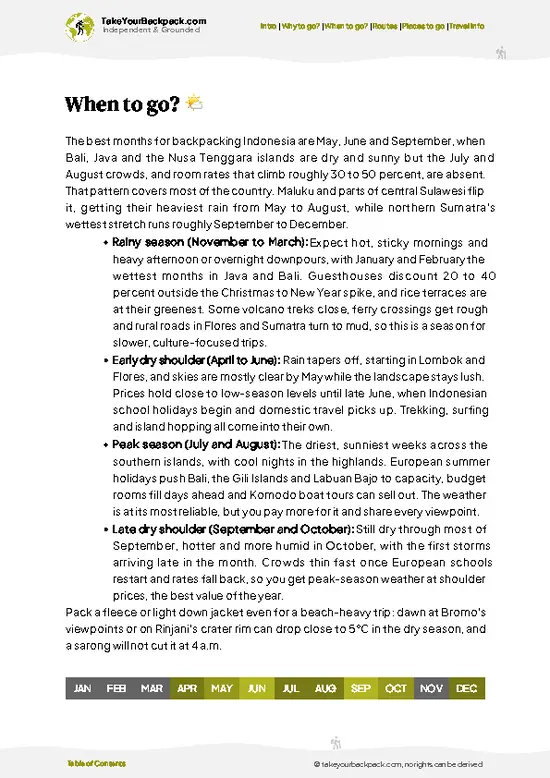
  • Dry Season (May to October): The best window for visiting. Seas are calm, visibility underwater reaches 20 to 30 meters, and rainfall is minimal. Temperatures hover around 28 to 32°C (82 to 90°F). Daylight lasts roughly 12 hours year-round, but clearer skies make early mornings ideal for snorkeling.
  • Wet Season (November to April): Heavy rain and rough seas make boat travel unpredictable and snorkeling visibility drops to 5 to 10 meters. Temperatures remain warm at 26 to 30°C (79 to 86°F), but weather delays are common. Accommodation prices dip, and crowds vanish almost entirely.
  • Shoulder Months (April, October): Transitional periods with mixed conditions. April sees the tail end of rain; October marks the start of the dry season. Both offer a balance of reasonable weather and fewer tourists.
… read more 👉
  • Dry Season (May to October): The best window for visiting. Seas are calm, visibility underwater reaches 20 to 30 meters, and rainfall is minimal. Temperatures hover around 28 to 32°C (82 to 90°F). Daylight lasts roughly 12 hours year-round, but clearer skies make early mornings ideal for snorkeling.
  • Wet Season (November to April): Heavy rain and rough seas make boat travel unpredictable and snorkeling visibility drops to 5 to 10 meters. Temperatures remain warm at 26 to 30°C (79 to 86°F), but weather delays are common. Accommodation prices dip, and crowds vanish almost entirely.
  • Shoulder Months (April, October): Transitional periods with mixed conditions. April sees the tail end of rain; October marks the start of the dry season. Both offer a balance of reasonable weather and fewer tourists.
Plan your visit for May through September if marine life and visibility matter most; accept weather uncertainty if solitude and budget are priorities.


source: climatestotravel.comJANJanuary: fair for travelingFEBFebruary: fair for travelingMARMarch: fair for travelingAPRApril: fair for travelingMAYMay: highly recommended for travelingJUNJune: excellent for travelingJULJuly: excellent for travelingAUGAugust: excellent for travelingSEPSeptember: excellent for travelingOCTOctober: highly recommended for travelingNOVNovember: fair for travelingDECDecember: fair for traveling
when-to-go

✈️ The backpacker research shortcutIndonesia Travel Guide

An offline-friendly backpacking guide with optimized travel routes, ranked highlights, transport advice, and the best areas to stay.
example page 0 from our offline Travel Guide for Indonesia
example page 1 from our offline Travel Guide for Indonesia
example page 2 from our offline Travel Guide for Indonesia
example page 3 from our offline Travel Guide for Indonesia
example page 4 from our offline Travel Guide for Indonesia
example page 5 from our offline Travel Guide for Indonesia
example page 6 from our offline Travel Guide for Indonesia
example page 7 from our offline Travel Guide for Indonesia
The digital guide (460 pages) contains:
✅ 153 highlights, ranked by travel appeal
✅ Optimized 14, 21 & 30-day travel routes
✅ Cities, national parks, landmarks, beaches
✅ How to get around
✅ Offline-friendly for travel without Wi-Fi
👉 Click to see all 30+ guide features

📅 Plan smarter in minutes, not weeks
✅ Month by month travel advice
✅ Festivals & national holidays
✅ Budget expectations

🗺️ Go to the right places, skip the overrated ones
✅ Honest pros & cons of destinations
✅ Top hikes, parks & viewpoints
✅ Lesser-known places most travelers miss
✅ Clear “worth it vs skip it” guidance

🛏️ Travel smoothly without rookie mistakes
✅ Best areas to stay
✅ Transport systems explained simply
✅ Common scams & safety advice
✅ SIM cards, money & practical tips

🌍 Understand the country, not just visit it
✅ Culture & traditions
✅ 52 Essential phrases & customs
✅ Festivals worth planning around
✅ Traveler-friendly historical context
✅ Insights that make places more meaningful

📱 Built for real travel conditions
✅ Fully downloadable PDF
✅ Works completely offline
✅ Optimized for phone use
✅ Useful in remote areas & buses
✅ Everything in one place
Stop searching, start planning
Get instant access to your full guide. 30‑day money-back guarantee.
+ Add another guide for just

By proceeding you agree to our terms.
Sent to your inbox immediately after payment • 100% Secure Checkout
Best Backpacking Travel Advisor 2025 tourism awardBest Backpacking
Travel Advisor
2025
What others say about Take Your Backpack Guides:
⭐⭐⭐⭐⭐
Fantastic, amazing amount of information!
⭐⭐⭐⭐⭐
My goodness this is amazing, it's what I've been looking for hats off too you!
⭐⭐⭐⭐⭐
I think this is absolutely BRILLIANT
⭐⭐⭐⭐
Very complete and informative. It's still missing places, but I gotta to commend you
⭐⭐⭐⭐⭐
This is truly amazing, thank you, can't wait to explore it with my kids!
⭐⭐⭐⭐⭐
Awesome resource, thank you!
⭐⭐⭐⭐⭐
This is amazing! Can't wait to explore the ones I haven't seen
⭐⭐⭐⭐
I love this! Well done, great idea.
⭐⭐⭐⭐⭐
Thanks for taking the time to make this gem!
⭐⭐⭐⭐⭐
This might be the best website I've ever seen.
⭐⭐⭐⭐⭐
Congratulations, and thank you so much for your work; it's incredibly valuable.
⭐⭐⭐⭐
In all seriousness I think you did a great job pointing out the important spots
⭐⭐⭐⭐⭐
10/10 very good
⭐⭐⭐⭐⭐
As someone who's only just starting to visit regularly this is awesome, thank you.
⭐⭐⭐⭐
Thank you very much! I'm going to visit my dad, it's going to be very useful!
⭐⭐⭐⭐⭐
This is really cool! We'll be travelling for the first time and this definitely come in handy.
⭐⭐⭐⭐⭐
You are now our minister of culture, congratulations 👨‍💼
⭐⭐⭐⭐⭐
Just wanted to tell you that this is a pearl! Going to follow your recommendations.
⭐⭐⭐⭐⭐
This is so cool. I'll definitely be using the resource for my travels soon.
⭐⭐⭐⭐⭐
This is very impressive! Good work.
⭐⭐⭐⭐⭐
This is an amazing and informative site. Very well done!

🛏️ Where to stay?Where staying makes the most sense

Waisai, the gateway town on Yapen Island, has a handful of guesthouses and budget hotels within walking distance of the harbor where boats depart for the park. Expect basic rooms with fans and squat toilets for USD 15 to 30 per night. The park itself has no lodging, so all visitors base themselves in Waisai or nearby Manokwari on the mainland. Waisai feels functional rather than polished, but that's the point: it keeps costs low and puts you close to early morning boat departures. A few homestays offer simple meals and can arrange transport to the dock. Book ahead during peak season (July to September), … read more 👉
Waisai, the gateway town on Yapen Island, has a handful of guesthouses and budget hotels within walking distance of the harbor where boats depart for the park. Expect basic rooms with fans and squat toilets for USD 15 to 30 per night. The park itself has no lodging, so all visitors base themselves in Waisai or nearby Manokwari on the mainland. Waisai feels functional rather than polished, but that's the point: it keeps costs low and puts you close to early morning boat departures. A few homestays offer simple meals and can arrange transport to the dock. Book ahead during peak season (July to September), as rooms fill quickly. The journey from Manokwari to Waisai takes 2 to 3 hours by speedboat, so many travelers overnight in Waisai before heading into the park.

👛 Costs (as of 15 October 2026)What things cost and how to budget

Daily costs in Teluk Cenderawasih are among Indonesia's lowest, especially if you base yourself on an island and cook with your homestay.
CategoryBudget RangeLocal Reality
Entrance FeeUSD 10 to 15Paid once at the park office in Nabire; covers access to all islands and reefs.
AccommodationUSD 15 to 40 per nightIsland homestays include meals; Nabire guesthouses are cheaper but less atmospheric.
Boat TransportUSD 30 to 60 per dayShared boats between islands cost less; private charters for snorkeling trips run higher.
Food and SuppliesUSD 8 to 15 per dayIsland homestays provide meals; Nabire has small markets for snacks and supplies.
Flights to NabireUSD 80 to 200From Jakarta or Makassar; book in advance for better rates.
A realistic daily budget for accommodation, food, and local transport is USD 35 … read more 👉
Daily costs in Teluk Cenderawasih are among Indonesia's lowest, especially if you base yourself on an island and cook with your homestay.
CategoryBudget RangeLocal Reality
Entrance FeeUSD 10 to 15Paid once at the park office in Nabire; covers access to all islands and reefs.
AccommodationUSD 15 to 40 per nightIsland homestays include meals; Nabire guesthouses are cheaper but less atmospheric.
Boat TransportUSD 30 to 60 per dayShared boats between islands cost less; private charters for snorkeling trips run higher.
Food and SuppliesUSD 8 to 15 per dayIsland homestays provide meals; Nabire has small markets for snacks and supplies.
Flights to NabireUSD 80 to 200From Jakarta or Makassar; book in advance for better rates.
A realistic daily budget for accommodation, food, and local transport is USD 35 to 60 per person, excluding flights. Snorkeling requires no additional fees beyond the entrance charge and boat costs.
⚠️ Prices can change and everyone travels differently, so take this as a rough guide. Hope it helps you plan your adventure!

🥾 TrailsWhere to hike in Teluk Cenderawasih: trails for every level

Hiking in Teluk Cenderawasih is secondary to snorkeling but offers rewarding short walks and ridge trails. Most trails are undemanding, ranging from 30-minute forest strolls to half-day ridge hikes with minimal elevation gain. Terrain is generally firm and well-trodden, though muddy sections appear during and after rain. Wildlife encounters are common: you'll spot hornbills, parrots, and occasionally monitor lizards, though large mammals are rare. The real challenge is navigation: trails are sometimes poorly marked, and hiring a local guide (available through your homestay) costs USD 15 to 25 … read more 👉
Hiking in Teluk Cenderawasih is secondary to snorkeling but offers rewarding short walks and ridge trails. Most trails are undemanding, ranging from 30-minute forest strolls to half-day ridge hikes with minimal elevation gain. Terrain is generally firm and well-trodden, though muddy sections appear during and after rain. Wildlife encounters are common: you'll spot hornbills, parrots, and occasionally monitor lizards, though large mammals are rare. The real challenge is navigation: trails are sometimes poorly marked, and hiring a local guide (available through your homestay) costs USD 15 to 25 per day and is worthwhile.

Pulau Yapen Ridge Trail
  • Length: Approximately 4 to 5 kilometers
  • Duration: 2 to 3 hours round trip
  • Difficulty: Easy to moderate
  • Features: Panoramic views of Cenderawasih Bay, limestone formations, coastal forest
  • Terrain: Packed earth and rock, steep sections near the summit but brief

Reaching the park requires flying to Nabire (the nearest airport) via Jakarta or Makassar, then arranging a boat to the park's islands or snorkeling sites. Public transport from Nabire town to the jetty is minimal; most travelers hire a local driver or negotiate with boat operators. The park is rarely crowded outside July and August, when Indonesian school holidays bring families. An entrance fee of approximately USD 10 to 15 per person applies, payable at the park office in Nabire. Boats to the islands cost USD 30 to 60 per day depending on group size and destination.
⚠️ Hiking info can sometimes be outdated or inaccurate. Before you hit the trail, check the latest conditions with locals. If you do spot anything that's off, I'd love to hear from you, so I can update it for fellow travelers.

🛡️ SafetyStaying Safe: What Travelers Should Know

Teluk Cenderawasih is straightforward for prepared backpackers. Weather volatility is the main concern: the wet season brings unpredictable seas that can strand you on islands for days, so build flexibility into your schedule and avoid tight connections. Snorkeling is safe in designated areas, though currents can be strong around certain reefs; always snorkel with a buddy and ask your boat operator about conditions before entering the water. Whale sharks and manta rays are harmless, but respect their space and never touch them. Terrain on the trails is stable, though muddy sections require careful footing after rain. Bring reef-safe sunscreen and a rash guard to prevent coral cuts and sun damage. The park has no medical facilities; serious injuries require evacuation to Nabire or beyond. Malaria … read more 👉
Teluk Cenderawasih is straightforward for prepared backpackers. Weather volatility is the main concern: the wet season brings unpredictable seas that can strand you on islands for days, so build flexibility into your schedule and avoid tight connections. Snorkeling is safe in designated areas, though currents can be strong around certain reefs; always snorkel with a buddy and ask your boat operator about conditions before entering the water. Whale sharks and manta rays are harmless, but respect their space and never touch them. Terrain on the trails is stable, though muddy sections require careful footing after rain. Bring reef-safe sunscreen and a rash guard to prevent coral cuts and sun damage. The park has no medical facilities; serious injuries require evacuation to Nabire or beyond. Malaria is present in the region, so take prophylaxis as recommended by your doctor and use insect repellent at dawn and dusk.

FAQFrequently asked questions about Teluk Cenderawasih

Three to four days is ideal: one day to reach the park from Waisai, two to three days exploring the main sites (Auri Island, Mioskon Island, and the whale shark zone), and one day returning. Most backpackers spend 4 to 5 days total including travel time from Manokwari. Speedboats from Waisai to the park cost USD 40 to 80 per person depending on group size and destination.
You can visit without a car, but you need boats. Fly or take a ferry to Manokwari, then speedboat to Waisai (2 to 3 hours, USD 25 to 40), then arrange a park boat through your guesthouse or a local operator. Most backpackers hire a boat for USD 150 to 300 per day for a small group, splitting costs. Public transport within the park does not exist; private boats are the only option.
Yes, there is an entrance fee of approximately 250,000 Indonesian rupiah (USD 16 to 17) per person, valid for three days. You pay at the park office in Waisai before departure. A permit is not required separately, but your boat operator will handle the fee as part of the booking. Some operators include it in the boat rental price, so confirm in advance.
⚠️ Things can change over time, so always validate details locally before you go.

Other Indonesian national parks near Teluk Cenderawasih

Explore more nearby:


💡 Not sure where to go next?
Create a personalized itinerary for Indonesia including Teluk Cenderawasih and the places that fit your trip.

Generate my itinerary

👉 Discover all national parks

Or checkout all Indonesia has to offer (think cities, towns, villages, national parks, hikes, beaches, festivals)
Country photo of Indonesia

We 💚 feedbackParting advice and final tips

Teluk Cenderawasih delivers genuine encounters with whale sharks and pristine reef life that few parks in Southeast Asia can match. The catch is that reaching it demands patience with boats and basic logistics, and the park rewards only those willing to accept slow travel as part of the experience.

✈️ When did I visit Indonesia?
As part of my 1.5 year travel around the world trip, I visited Indonesia twice (and it was worth it): first in September 2015 and a bit later again in January and February 2016.

✍️ Help improve this page!
The information on this page is based on my own backpacking experience in Indonesia, supplemented with up-to-date research and feedback from other travelers. Travel details can change, so if you notice anything outdated or incomplete, feel free to let me know.


🙋‍♂️ Give feedback

👋 Meet the founderWho’s Behind Take Your Backpack?

Johan, backpacker and founder of TakeYourBackpackHi, I’m Johan (Netherlands 🇳🇱), the creator of TakeYourBackpack. Over the past 3 decades, I’ve backpacked through 90+ countries across six continents, gaining extensive experience with independent travel, long-term trips, and overland routes.

This site is built on a combination of firsthand travel experience and carefully curated insights from other backpackers. Many guides are based on places I’ve personally visited, while others bring together tips, observations, and practical advice shared by trusted travelers I’ve met along the way.

The goal is to provide realistic, experience-driven guidance — not generic itineraries — so you can explore destinations with better context, clearer expectations, and more confidence.