×

Israel🇮🇱 | best beachesBest 3 beaches in Israel

Beaches in Israel come in four distinct kinds, and picking the wrong one wastes days. The Mediterranean coast is urban, sandy and free to enter, with lifeguards, showers and beachfront cafes, but weekends and August are packed. The Red Sea at Eilat is the only place for coral and snorkeling, and it costs more. The Dead Sea is a float-and-leave stop, not a beach day. The Sea of Galilee has modest pebbly shores. For independent travel, the Mediterranean gives the best value; skip Eilat unless reef is the goal.

By Johan Kruseman 🇳🇱 | Updated October 18, 2026
Explore the best attractions in Israel

Why go?Understanding Their Importance

Israel is a strong beach country in a narrow way. The Mediterranean coastline runs about 190 kilometers with almost no break in public access, because the law keeps the shore open to everyone. That means free entry, municipal lifeguards, showers and promenades along most of it. Tel Aviv-style beach culture, with volleyball, paddle ball (matkot) and sunset drinks, is a daily habit, not a resort product.

The climate does the rest. Summers are long, dry and hot, and sea temperatures stay swimmable for roughly six months. The country also holds two seas that offer nothing alike: the Red Sea at Eilat, with shore-accessible coral reef, and the Dead Sea, around 430 meters below sea level, where salinity makes floating effortless.

Before choosing Israel for beaches, know the limits. It is expensive, … read more 👉
Israel is a strong beach country in a narrow way. The Mediterranean coastline runs about 190 kilometers with almost no break in public access, because the law keeps the shore open to everyone. That means free entry, municipal lifeguards, showers and promenades along most of it. Tel Aviv-style beach culture, with volleyball, paddle ball (matkot) and sunset drinks, is a daily habit, not a resort product.

The climate does the rest. Summers are long, dry and hot, and sea temperatures stay swimmable for roughly six months. The country also holds two seas that offer nothing alike: the Red Sea at Eilat, with shore-accessible coral reef, and the Dead Sea, around 430 meters below sea level, where salinity makes floating effortless.

Before choosing Israel for beaches, know the limits. It is expensive, among the priciest countries for food and beds in the region. The Mediterranean seabed is mostly sand and rock, so snorkeling is poor there. The Dead Sea is shrinking and many shores are now far from the road, so access can mean a paid area. Shabbat shuts most intercity transport from Friday afternoon to Saturday evening, while beaches fill to capacity. Check current travel advisories for the region before booking.
Evaluating the Top Choices
The list of best beaches in Israel is created based on beauty, vibe, water quality, activities, and surrounding scenery. If you feel a beach is missing in this list, please let us know.

When to go?Best Time to Visit Israel for beaches

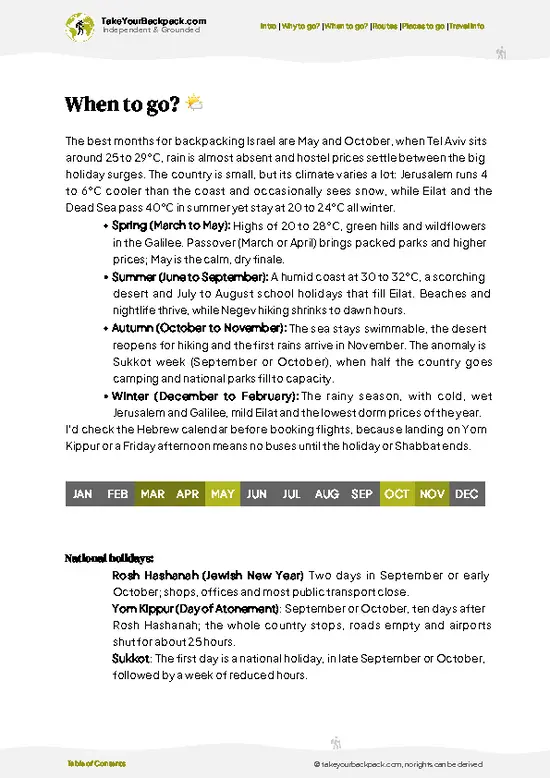
Best months and why: The best months for Israel's beaches are May to June and September to October, when the Mediterranean sits around 24 to 28°C, air temperatures are 27 to 32°C and the crowds are thinner than in midsummer. July and August bring sea water near 29 to 31°C, but also humidity and the heaviest crowds.Shoulder and low season: April and November are worth it only if you accept cooler water (around 19 to 22°C) and cooler evenings. From December to March the Mediterranean falls to about 17 to 20°C, and most of the country's rain (roughly 400 to 600 millimeters on the central coast) arrives between November and March. Skip the Mediterranean coast in these months unless you only want to walk the shore.

Eilat works differently. Winter days there are 20 to 24°C with almost no rain, … read more 👉
Best months and why: The best months for Israel's beaches are May to June and September to October, when the Mediterranean sits around 24 to 28°C, air temperatures are 27 to 32°C and the crowds are thinner than in midsummer. July and August bring sea water near 29 to 31°C, but also humidity and the heaviest crowds.Shoulder and low season: April and November are worth it only if you accept cooler water (around 19 to 22°C) and cooler evenings. From December to March the Mediterranean falls to about 17 to 20°C, and most of the country's rain (roughly 400 to 600 millimeters on the central coast) arrives between November and March. Skip the Mediterranean coast in these months unless you only want to walk the shore.

Eilat works differently. Winter days there are 20 to 24°C with almost no rain, and the Red Sea stays around 21 to 23°C, so it is the best beach choice from November to March. Summer reaches 40°C or higher, which makes midday on the sand uncomfortable. The Dead Sea is comfortable from October to April, since summer air temperatures reach 38 to 42°C.Peaks and prices: Jewish holidays (Passover in spring, Sukkot in autumn) and the July to August school break raise accommodation prices, often by 30 to 100 percent, especially in Eilat. Spring can also bring jellyfish to the Mediterranean coast, so check local reports before swimming.

beach hoppingHow to Combine beaches Into One Trip

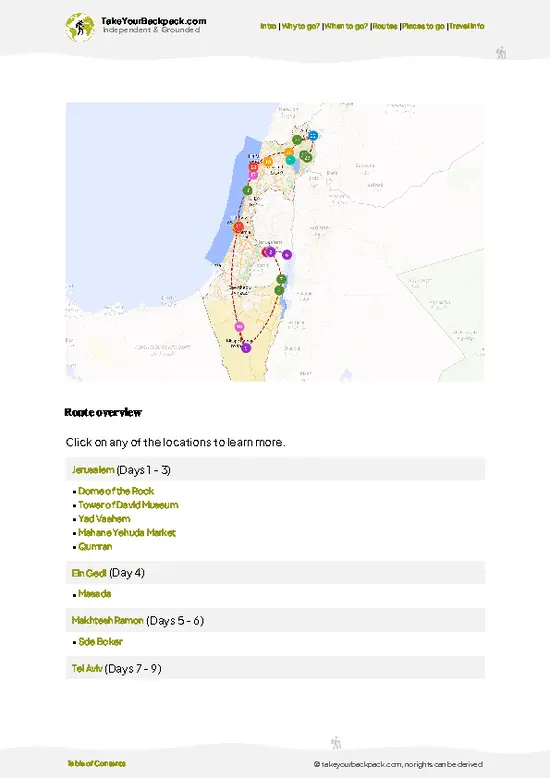
Days needed and direction: A trip combining several beaches in Israel needs 7 to 10 days, and less than 6 turns it into a transit exercise. The country is small, so the question is how to cluster stops rather than how far to go. Group the Mediterranean coast together: Tel Aviv works as the hub, with Haifa, Caesarea and the northern coast reachable in 1 to 2 hours by train. Eilat and the Dead Sea belong to the south and are separate legs.

Travel north to south: start on the northern coast, end with the Dead Sea, then finish at Eilat so the longest ride is last. Tel Aviv to the Dead Sea takes about 1.5 to 2 hours by bus or car; Tel Aviv to Eilat is roughly 4.5 to 5 hours by bus, or about 1 hour by flight.Time per stop: Give the Mediterranean coast 3 to 5 days, with Tel Aviv as your base. Eilat … read more 👉
Days needed and direction: A trip combining several beaches in Israel needs 7 to 10 days, and less than 6 turns it into a transit exercise. The country is small, so the question is how to cluster stops rather than how far to go. Group the Mediterranean coast together: Tel Aviv works as the hub, with Haifa, Caesarea and the northern coast reachable in 1 to 2 hours by train. Eilat and the Dead Sea belong to the south and are separate legs.

Travel north to south: start on the northern coast, end with the Dead Sea, then finish at Eilat so the longest ride is last. Tel Aviv to the Dead Sea takes about 1.5 to 2 hours by bus or car; Tel Aviv to Eilat is roughly 4.5 to 5 hours by bus, or about 1 hour by flight.Time per stop: Give the Mediterranean coast 3 to 5 days, with Tel Aviv as your base. Eilat deserves 2 to 3 days if you snorkel. The Dead Sea is a half day, since a float lasts 15 to 20 minutes and the minerals sting skin after that.Planning mistakes: The most common error is ignoring Shabbat: trains and most intercity buses stop from Friday afternoon, so be at your final base by early afternoon Friday. Another is trying Eilat as a day trip from Tel Aviv, which uses nearly 10 hours in transit. A third is booking the coast in many different towns, when day trips from one base are cheaper and simpler.

The ListTop beaches of Israel

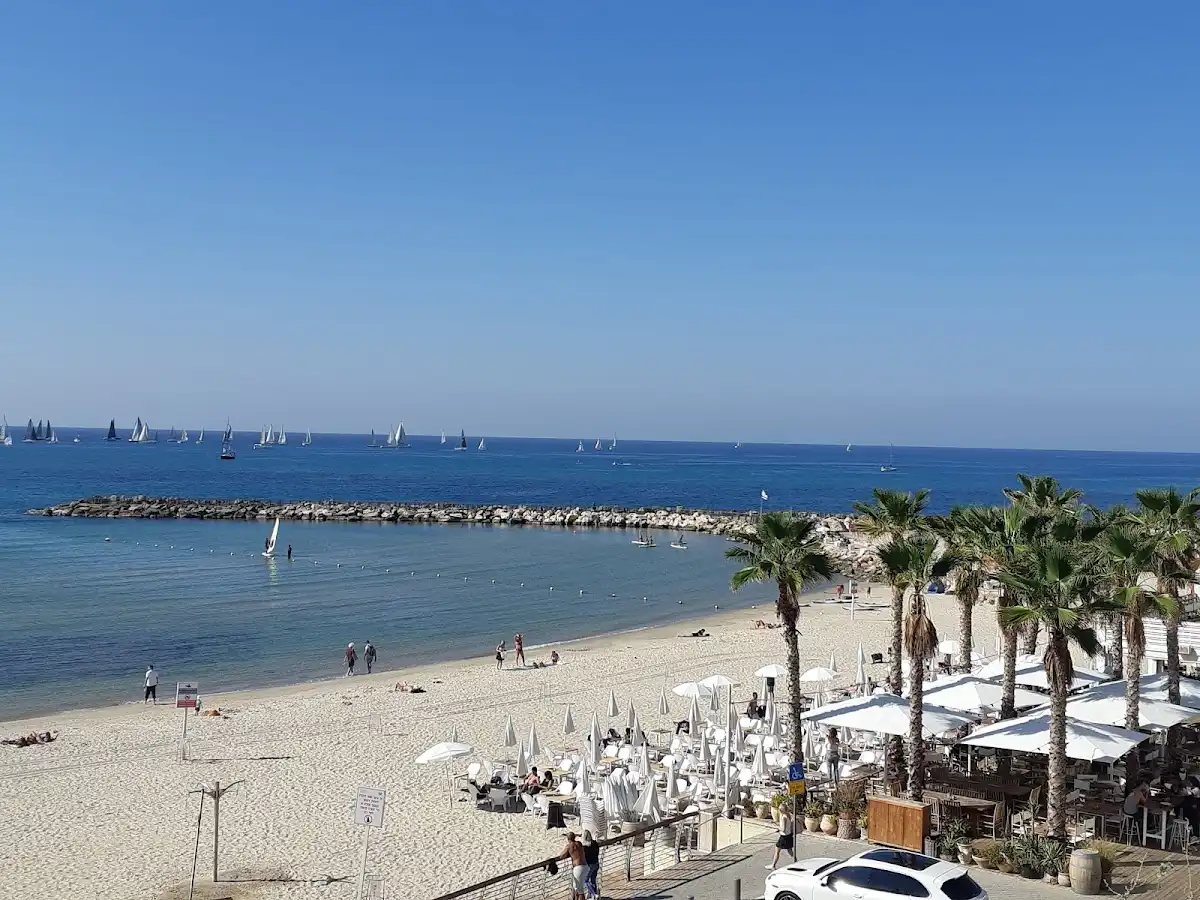
1 Gordon Beach

urban boardwalk, volleyball courts, outdoor gym

Join locals for morning swims, people-watch from shaded loungers, and enjoy quick access to city cafés and nightlife.

israel-beach-gordon-beach
© Google |

2 Hilton Beach

LGBTQ+ scene, surf breaks, dog-friendly area

Experience an inclusive atmosphere, catch waves with surfers, and find relaxed spaces for both pets and people.

israel-beach-hilton-beach
© Google |

3 Herzliya Beach

marina views, upscale restaurants, wide sands

Spend the day on spacious sands, sample seafood by the marina, and watch yachts drift in as the sun sets.

israel-beach-herzliya-beach
© Google |
Loading the map 🌍

Expert viewInsights from Locals and Experts

How many beaches to visit: Plan on four to six beach stops, not a checklist of every shore. Each kind of beach in Israel, whether Mediterranean, Red Sea or Dead Sea, gives a different experience, and more than two stops of the same kind blur together. Spend extra days on the one you like rather than racing across the country.Prioritizing by travel style: On a tight budget, pick the Mediterranean coast: entry is free by law, and you get lifeguards and showers at no cost. For snorkeling or diving, go to Eilat, because the Mediterranean seabed has little reef. The Dead Sea suits anyone who wants the float, but treat it as a short stop. Families and slow travelers get more from the Galilee shore, which is calmer and cheaper.What it costs: Israel is expensive, and a backpacker should plan US$80 … read more 👉
How many beaches to visit: Plan on four to six beach stops, not a checklist of every shore. Each kind of beach in Israel, whether Mediterranean, Red Sea or Dead Sea, gives a different experience, and more than two stops of the same kind blur together. Spend extra days on the one you like rather than racing across the country.Prioritizing by travel style: On a tight budget, pick the Mediterranean coast: entry is free by law, and you get lifeguards and showers at no cost. For snorkeling or diving, go to Eilat, because the Mediterranean seabed has little reef. The Dead Sea suits anyone who wants the float, but treat it as a short stop. Families and slow travelers get more from the Galilee shore, which is calmer and cheaper.What it costs: Israel is expensive, and a backpacker should plan US$80 to 130 a day (about NIS 290 to 470), including a dorm bed of NIS 150 to 250 (US$40 to 70). Beach entry itself is mostly free, but costs appear around it. Sunbed and umbrella rental runs NIS 30 to 60 (US$8 to 17). National park beaches and reserves charge about NIS 30 to 50 (US$8 to 14). Snorkel gear in Eilat costs roughly NIS 40 to 70 (US$11 to 19) a day, and paid Dead Sea areas with showers and lockers charge NIS 40 to 80 (US$11 to 22). A beachfront meal runs NIS 60 to 100 (US$17 to 28), so carry your own water and snacks from a supermarket.Safety: Only swim where a lifeguard is on duty. Coverage ends in the evening and is limited outside the summer season, and rip currents on the Mediterranean coast cause most drownings. The flag system is simple: black means no swimming, so obey it. Off-season or unguarded shores are not worth the risk. Jellyfish come in spring, so ask lifeguards. In the Dead Sea, keep water away from eyes and cuts, and do not shave beforehand; I would also skip swimming after a hard sunburn, since the salt burns. The sun is intense, so bring reef-safe SPF and a hat.Culture and timing: Beaches are lively on Shabbat and on Jewish holidays, so go early on Fridays and Saturdays to find space. In Tel Aviv, swimwear is normal on the sand, but dress covers up in the city. A few cities, including Tel Aviv, keep designated gender-separated beach areas or days for religious visitors, so check signs before setting up. Be careful with valuables, and avoid leaving a bag unattended; local police and lifeguards treat unattended items seriously. Always check current government advice before traveling, and keep plans flexible.

✈️ The backpacker research shortcutIsrael Travel Guide

An offline-friendly backpacking guide with optimized travel routes, ranked highlights, transport advice, and the best areas to stay.
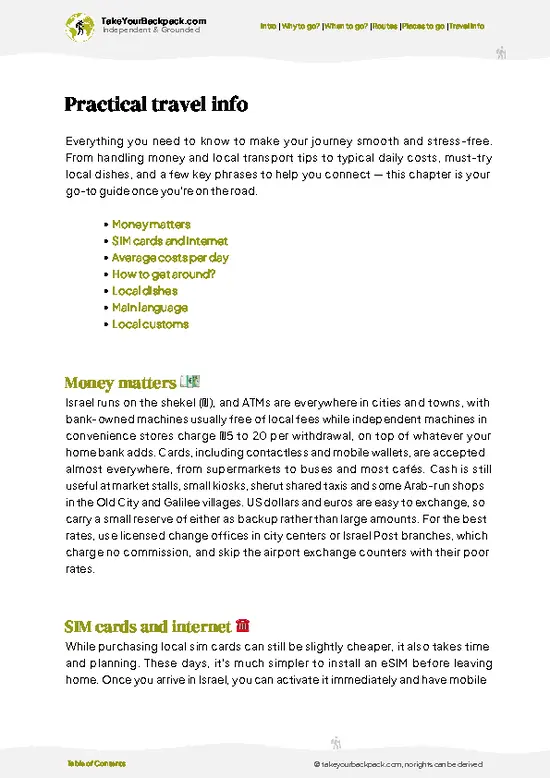
example page 0 from our offline Travel Guide for Israel
example page 1 from our offline Travel Guide for Israel
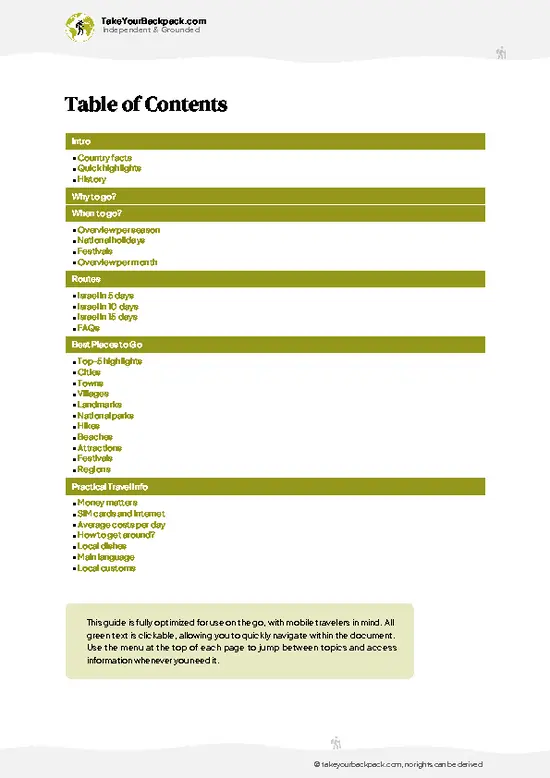
example page 2 from our offline Travel Guide for Israel
example page 3 from our offline Travel Guide for Israel
example page 4 from our offline Travel Guide for Israel
example page 5 from our offline Travel Guide for Israel
example page 6 from our offline Travel Guide for Israel
example page 7 from our offline Travel Guide for Israel
The digital guide (287 pages) contains:
✅ 77 highlights, ranked by travel appeal
✅ Optimized 5, 10 & 15-day travel routes
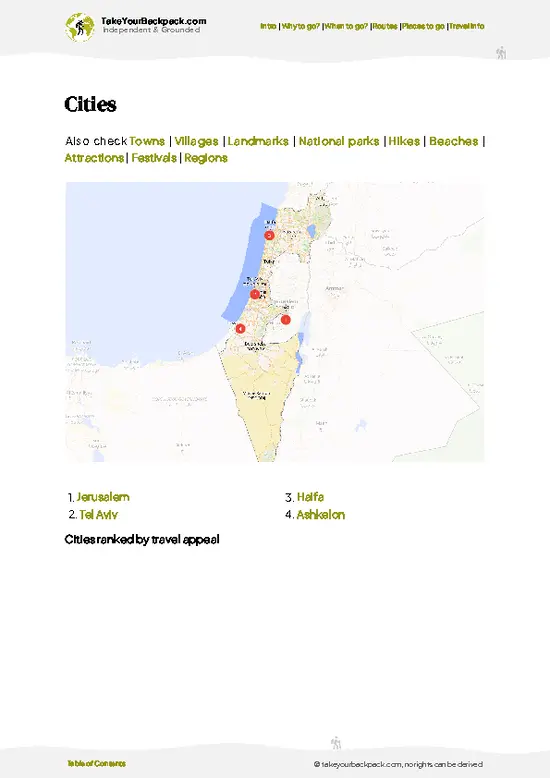
✅ Cities, national parks, landmarks, beaches
✅ How to get around
✅ Offline-friendly for travel without Wi-Fi
👉 Click to see all 30+ guide features

📅 Plan smarter in minutes, not weeks
✅ Month by month travel advice
✅ Festivals & national holidays
✅ Budget expectations

🗺️ Go to the right places, skip the overrated ones
✅ Honest pros & cons of destinations
✅ Top hikes, parks & viewpoints
✅ Lesser-known places most travelers miss
✅ Clear “worth it vs skip it” guidance

🛏️ Travel smoothly without rookie mistakes
✅ Best areas to stay
✅ Transport systems explained simply
✅ Common scams & safety advice
✅ SIM cards, money & practical tips

🌍 Understand the country, not just visit it
✅ Culture & traditions
✅ 52 Essential phrases & customs
✅ Festivals worth planning around
✅ Traveler-friendly historical context
✅ Insights that make places more meaningful

📱 Built for real travel conditions
✅ Fully downloadable PDF
✅ Works completely offline
✅ Optimized for phone use
✅ Useful in remote areas & buses
✅ Everything in one place
Stop searching, start planning
Get instant access to your full guide. 30‑day money-back guarantee.
+ Add another guide for just

By proceeding you agree to our terms.
Sent to your inbox immediately after payment • 100% Secure Checkout
Best Backpacking Travel Advisor 2025 tourism awardBest Backpacking
Travel Advisor
2025
What others say about Take Your Backpack Guides:
⭐⭐⭐⭐⭐
Fantastic, amazing amount of information!
⭐⭐⭐⭐⭐
My goodness this is amazing, it's what I've been looking for hats off too you!
⭐⭐⭐⭐⭐
I think this is absolutely BRILLIANT
⭐⭐⭐⭐
Very complete and informative. It's still missing places, but I gotta to commend you
⭐⭐⭐⭐⭐
This is truly amazing, thank you, can't wait to explore it with my kids!
⭐⭐⭐⭐⭐
Awesome resource, thank you!
⭐⭐⭐⭐⭐
This is amazing! Can't wait to explore the ones I haven't seen
⭐⭐⭐⭐
I love this! Well done, great idea.
⭐⭐⭐⭐⭐
Thanks for taking the time to make this gem!
⭐⭐⭐⭐⭐
This might be the best website I've ever seen.
⭐⭐⭐⭐⭐
Congratulations, and thank you so much for your work; it's incredibly valuable.
⭐⭐⭐⭐
In all seriousness I think you did a great job pointing out the important spots
⭐⭐⭐⭐⭐
10/10 very good
⭐⭐⭐⭐⭐
As someone who's only just starting to visit regularly this is awesome, thank you.
⭐⭐⭐⭐
Thank you very much! I'm going to visit my dad, it's going to be very useful!
⭐⭐⭐⭐⭐
This is really cool! We'll be travelling for the first time and this definitely come in handy.
⭐⭐⭐⭐⭐
You are now our minister of culture, congratulations 👨‍💼
⭐⭐⭐⭐⭐
Just wanted to tell you that this is a pearl! Going to follow your recommendations.
⭐⭐⭐⭐⭐
This is so cool. I'll definitely be using the resource for my travels soon.
⭐⭐⭐⭐⭐
This is very impressive! Good work.
⭐⭐⭐⭐⭐
This is an amazing and informative site. Very well done!

🛏️ Where to stay?Where to Base Yourself

Israel has a solid hostel scene, with dorm beds typically running ₪100 to 180 (about US$33 to 58) and private rooms in guesthouses from around ₪300 (US$100). In Tel Aviv, the Florentin district and the streets around Allenby and the beachfront put you near bars, street art and the sea, but expect late-night noise, while Jerusalem hostels cluster in the City Center around Jaffa Road (lively, close to the light rail and Mahane Yehuda market) and inside the Old City, which is atmospheric and steps from the holy sites but goes very quiet after dark. Haifa is calmer and cheaper, with most budget beds near the German Colony and downtown, a good pick if you want sleep over nightlife.

If you enjoy meeting … read more 👉
Israel has a solid hostel scene, with dorm beds typically running ₪100 to 180 (about US$33 to 58) and private rooms in guesthouses from around ₪300 (US$100). In Tel Aviv, the Florentin district and the streets around Allenby and the beachfront put you near bars, street art and the sea, but expect late-night noise, while Jerusalem hostels cluster in the City Center around Jaffa Road (lively, close to the light rail and Mahane Yehuda market) and inside the Old City, which is atmospheric and steps from the holy sites but goes very quiet after dark. Haifa is calmer and cheaper, with most budget beds near the German Colony and downtown, a good pick if you want sleep over nightlife.

If you enjoy meeting fellow travelers, consider choosing hostels with high ratings for atmosphere. On the other hand, if you prefer having your own space, a hotel might be a better option.

IsraelExpand Your Journey

👋 Meet the founderWho’s Behind Take Your Backpack?

Johan, backpacker and founder of TakeYourBackpackHi, I’m Johan (Netherlands 🇳🇱), the creator of TakeYourBackpack. Over the past 3 decades, I’ve backpacked through 90+ countries across six continents, gaining extensive experience with independent travel, long-term trips, and overland routes.

This site is built on a combination of firsthand travel experience and carefully curated insights from other backpackers. Many guides are based on places I’ve personally visited, while others bring together tips, observations, and practical advice shared by trusted travelers I’ve met along the way.

The goal is to provide realistic, experience-driven guidance — not generic itineraries — so you can explore destinations with better context, clearer expectations, and more confidence.