×

Italy🇮🇹 | national parksPollinoBosnian pines, deep gorges, remote villages | things to do and best time to go

Explore Parco Nazionale del Gran SassoExplore Stelvio

Backpacking in Pollino
🌟 Highlightnational park ranked #11
By Johan Kruseman 🇳🇱 | Updated June 17, 2026

Your first real decision with Pollino is whether to give it a full, slow few days or just “swing through” on a road trip; that choice decides if you actually feel the place or just burn time on mountain roads. Pollino National Park sits on the Calabria–Basilicata border in southern Italy, a big, raw chunk of limestone peaks, beech forests, and ancient Bosnian pines. Hiking is excellent and often empty, with real wilderness and chances to see wolves or eagles, but trail-marking can be inconsistent and public transport is thin, so you either rent a car or accept long, awkward connections. There’s no real entrance fee, which is great, but you’ll pay in logistics: scattered villages, limited shops, and mountain weather that turns fast. Camping is possible but regulated and sometimes confusing; I’ve had rangers give different answers in the same week, so always double-check locally. Budget rooms and agriturismi are good value but not everywhere; you plan your overnights first, then your routes. Crowds are light compared with Italy’s better-known parks: Gran Sasso feels more organized and dramatic at a glance, Cilento more coastal and food-focused, while Pollino is quieter, wilder, and less polished. The vibe is simple: no gloss, no big infrastructure, just a serious mountain area that rewards preparation and punishes winging it.

Discover everything you want to know in the 📖 Italy Travel Guide.


Get your Italy guide
149 ranked highlights, routes & tips, works offline (546 pages)
Loading the map 🌍
CLICK TO FILTER
cities
towns
villages
landmarks
national parks
hikes
beaches
attractions
festivals
regions
SHOW COUNTRY’S BESTSHOW ALL

✨ Why go?
Ranked #11 national park in Italy
Reasons people choose to explore here

Backpackers flock to Pollino National Park for its blend of independent exploration and affordable accommodations. You can pitch a tent at budget-friendly campsites or find cozy hostels nearby, making it easy on the wallet. The park boasts a variety of trails, catering to all skill levels, from leisurely strolls to challenging hikes. This diversity allows you to tailor your adventure, whether you’re chasing panoramic views or seeking solitude in the woods.

Pollino is particularly suited for self-guided travelers. With well-marked paths and plenty of resources available, you can navigate without the need for guided tours. Just remember, the park’s remote areas can be rugged, so a good map and some preparation are essential. Embrace the freedom, but stay smart to enjoy every moment.
Want to include Pollino in your Italy route?
Create a personalized Italy itinerary that includes Pollino and the places that fit your trip — based on your travel style, budget, and available time. Get your route in seconds.

Generate my trip

💡 HighlightsWhat this place is best known for

  • Serra Dolcedorme & Monte Pollino (the summits) — The two big peaks that define the massif (Serra Dolcedorme tops out around 2,267 m). Steep ridges, big views over Calabria and Basilicata, and classic day- or overnight-hikes — great for sunrise or stormy-sky photos if you’re into drama.
  • Pino loricato (ancient Bosnian pines) — Pollino is famous for gnarly, very old Bosnian pines (pino loricato) clinging to rocky slopes; some specimens are centuries old and look like trees from another planet. Personal favorite — slow a step around them, they’re oddly humbling and worth a quiet half-hour.
  • Gole del Raganello & Grotta del Romito — A dramatic limestone gorge carved by the Raganello river with narrow sections, pools and scrambling spots; nearby Grotta del Romito holds prehistoric engravings,
read more 👉
  • Serra Dolcedorme & Monte Pollino (the summits) — The two big peaks that define the massif (Serra Dolcedorme tops out around 2,267 m). Steep ridges, big views over Calabria and Basilicata, and classic day- or overnight-hikes — great for sunrise or stormy-sky photos if you’re into drama.
  • Pino loricato (ancient Bosnian pines) — Pollino is famous for gnarly, very old Bosnian pines (pino loricato) clinging to rocky slopes; some specimens are centuries old and look like trees from another planet. Personal favorite — slow a step around them, they’re oddly humbling and worth a quiet half-hour.
  • Gole del Raganello & Grotta del Romito — A dramatic limestone gorge carved by the Raganello river with narrow sections, pools and scrambling spots; nearby Grotta del Romito holds prehistoric engravings, so you get both geology and deep-time human traces in one walk.
  • Alta Via del Pollino (the high route) — The multi-day ridge trail that runs the length of the park: exposed skyline walking, long-distance camping or refugio hops, and the kind of terrain that rewards a light pack and decent boots. Perfect if you like route-planning and moving through a variety of habitats.
  • High plateaus and alpine meadows — Wide grassy “piani” (summer pastures) above the treeline where wildflowers explode in season and you can spot shepherds’ huts, grazing flocks, and expansive sunset panoramas. Easy to enjoy even on short walks.
  • Rivers, gorges and swimming spots — Beyond Raganello, rivers like the Lao cut canyons and make natural pools and small waterfalls — summer-ready for cooling dips or simple canyoning if you like wet adventures without expensive guides.
  • Wildlife and birdwatching — Pollino hides raptors (golden eagles and falcons), the Apennine wolf, and a rich understory of endemic plants and insects. It’s not a guaranteed safari, but dawn and dusk along quiet tracks are prime times to hear or see something good.
  • Arbëreshë villages and ridge viewpoints — Small Albanian-origin villages like Civita and others ring the park; they add color, good cheap food, and spectacular overlooks — perfect for a post-hike meal and a bit of local culture without straying far from nature.
Spotted a mistake or missing something? Contact us.

Things to do near Pollino

Ratings based on Tripadvisor reviews. When you book through this link, you support our work at no extra cost to you.

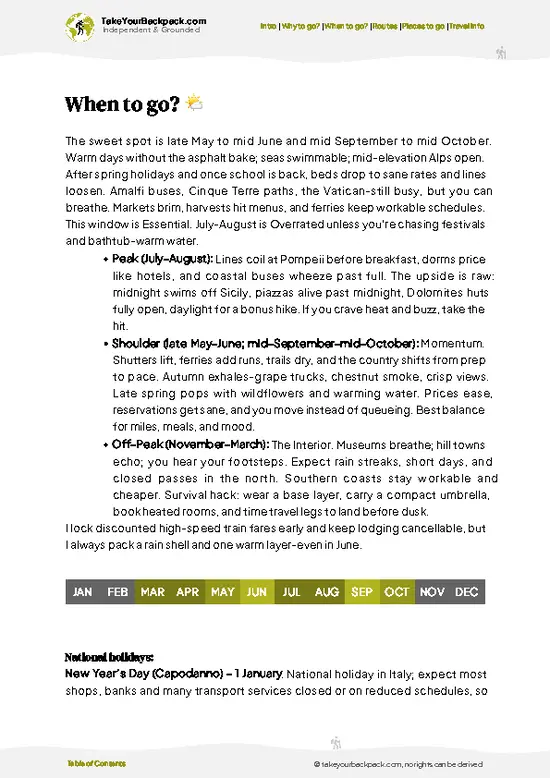
🌤️ When to go?Seasonal considerations and timing


  • Weather: Spring and early autumn offer the most stable weather. Summers can be hot, reaching 30°C (86°F), which makes hiking exhausting, while winters are cold and often snowy, limiting trail access.

  • Temperature: Expect mild days around 15-20°C (59-68°F) in spring and fall, perfect for long hikes without overheating or freezing. Nights can drop to near freezing, so pack layers.

  • Daylight Hours: Late spring and early fall provide about 10-12 hours of daylight, enough for full-day treks without rushing. Winter days shrink to 8 hours or less, cutting your hiking window.

  • Crowds: Peak summer draws local tourists, especially in August, which means crowded trails and higher prices. Shoulder seasons are quieter, letting you enjoy the park’s solitude.

  • Seasonal Activities: Spring showcases
read more 👉

  • Weather: Spring and early autumn offer the most stable weather. Summers can be hot, reaching 30°C (86°F), which makes hiking exhausting, while winters are cold and often snowy, limiting trail access.

  • Temperature: Expect mild days around 15-20°C (59-68°F) in spring and fall, perfect for long hikes without overheating or freezing. Nights can drop to near freezing, so pack layers.

  • Daylight Hours: Late spring and early fall provide about 10-12 hours of daylight, enough for full-day treks without rushing. Winter days shrink to 8 hours or less, cutting your hiking window.

  • Crowds: Peak summer draws local tourists, especially in August, which means crowded trails and higher prices. Shoulder seasons are quieter, letting you enjoy the park’s solitude.

  • Seasonal Activities: Spring showcases wildflowers and flowing streams, while autumn offers vibrant foliage and mushroom foraging. Winter limits activities mostly to snowshoeing or staying in lodges.

  • Price Fluctuations: Accommodation and transport costs spike in summer and around holidays. Booking in shoulder seasons can save you 20-30%, freeing budget for gear or guided tours.


Pro-tip: Aim for late April to early June or September to mid-October—this sweet spot balances weather, daylight, and crowd size, giving you the best bang for your backpacking buck.


source: climatestotravel.comJANJanuary: fair for travelingFEBFebruary: fair for travelingMARMarch: good for travelingAPRApril: highly recommended for travelingMAYMay: excellent for travelingJUNJune: excellent for travelingJULJuly: good for travelingAUGAugust: fair for travelingSEPSeptember: excellent for travelingOCTOctober: highly recommended for travelingNOVNovember: good for travelingDECDecember: fair for traveling
italy-national-park-pollino
© Google | Carmine Anastasia

✈️ The backpacker research shortcutItaly Travel Guide

An offline-friendly backpacking guide with optimized travel routes, ranked highlights, transport advice, and the best areas to stay.
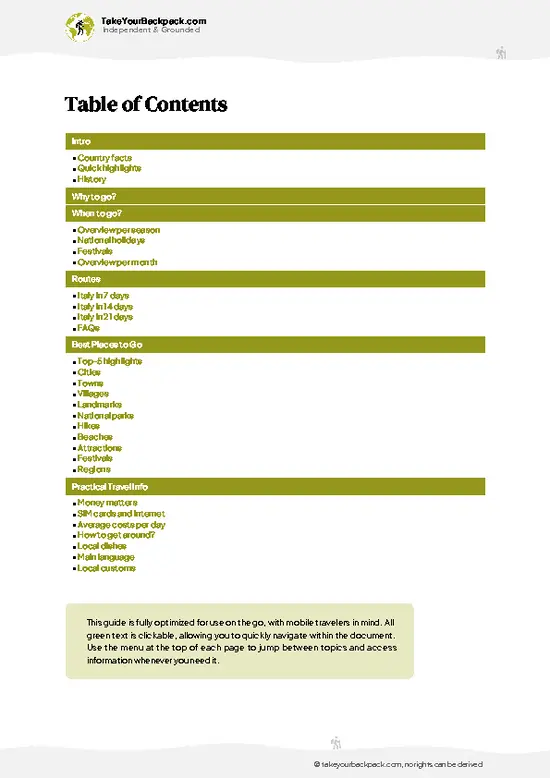
example page 0 from our offline Travel Guide for Italy
example page 1 from our offline Travel Guide for Italy
example page 2 from our offline Travel Guide for Italy
example page 3 from our offline Travel Guide for Italy
example page 4 from our offline Travel Guide for Italy
example page 5 from our offline Travel Guide for Italy
example page 6 from our offline Travel Guide for Italy
example page 7 from our offline Travel Guide for Italy
The digital guide (546 pages) contains:
149 highlights, ranked by travel appeal
Optimized 7, 14 & 21-day travel routes
Cities, national parks, landmarks, beaches
How to get around
Offline-friendly for travel without Wi-Fi
👉 Click to see all 30+ guide features

📅 Plan smarter in minutes, not weeks
Month by month travel advice
Festivals & national holidays
Budget expectations

🗺️ Go to the right places, skip the overrated ones
Honest pros & cons of destinations
Top hikes, parks & viewpoints
Lesser-known places most travelers miss
Clear “worth it vs skip it” guidance

🛏️ Travel smoothly without rookie mistakes
Best areas to stay
Transport systems explained simply
Common scams & safety advice
SIM cards, money & practical tips

🌍 Understand the country, not just visit it
Culture & traditions
52 Essential phrases & customs
Festivals worth planning around
Traveler-friendly historical context
Insights that make places more meaningful

📱 Built for real travel conditions
Fully downloadable PDF
Works completely offline
Optimized for phone use
Useful in remote areas & buses
Everything in one place
Save weeks of stressful planning
Get instant access to your full guide. 30‑day money-back guarantee.


By proceeding you agree to our terms.
Sent to your inbox immediately after payment • 100% Secure Checkout
Best Backpacking Travel Advisor 2025 tourism awardBest Backpacking
Travel Advisor
2025
What others say about Take Your Backpack Guides:
⭐⭐⭐⭐⭐
Fantastic, amazing amount of information!
⭐⭐⭐⭐⭐
My goodness this is amazing, it's what I've been looking for hats off too you!
⭐⭐⭐⭐⭐
I think this is absolutely BRILLIANT
⭐⭐⭐⭐
Very complete and informative. It's still missing places, but I gotta to commend you
⭐⭐⭐⭐⭐
This is truly amazing, thank you, can't wait to explore it with my kids!
⭐⭐⭐⭐⭐
Awesome resource, thank you!
⭐⭐⭐⭐⭐
This is amazing! Can't wait to explore the ones I haven't seen
⭐⭐⭐⭐
I love this! Well done, great idea.
⭐⭐⭐⭐⭐
Thanks for taking the time to make this gem!
⭐⭐⭐⭐⭐
This might be the best website I've ever seen.
⭐⭐⭐⭐⭐
Congratulations, and thank you so much for your work; it's incredibly valuable.
⭐⭐⭐⭐
In all seriousness I think you did a great job pointing out the important spots
⭐⭐⭐⭐⭐
10/10 very good
⭐⭐⭐⭐⭐
As someone who's only just starting to visit regularly this is awesome, thank you.
⭐⭐⭐⭐
Thank you very much! I'm going to visit my dad, it's going to be very useful!
⭐⭐⭐⭐⭐
This is really cool! We'll be travelling for the first time and this definitely come in handy.
⭐⭐⭐⭐⭐
You are now our minister of culture, congratulations 👨‍💼
⭐⭐⭐⭐⭐
Just wanted to tell you that this is a pearl! Going to follow your recommendations.
⭐⭐⭐⭐⭐
This is so cool. I'll definitely be using the resource for my travels soon.
⭐⭐⭐⭐⭐
This is very impressive! Good work.
⭐⭐⭐⭐⭐
This is an amazing and informative site. Very well done!

🛏️ Where to stay?Where staying makes the most sense

Pollino National Park offers a mix of options for backpackers. Inside the park, you’ll find a few rustic mountain lodges and agriturismos that provide a cozy base. Places like Agriturismo La Casa di Giulia in Rotonda offer a genuine experience with local cuisine and stunning views.

If you prefer more amenities, consider staying in nearby towns like Morano Calabro or Castrovillari. Morano Calabro, with its medieval charm, has affordable guesthouses and a vibrant local scene. Castrovillari has more options, including hostels and budget hotels, making it a practical choice for those wanting to explore … read more 👉
Pollino National Park offers a mix of options for backpackers. Inside the park, you’ll find a few rustic mountain lodges and agriturismos that provide a cozy base. Places like Agriturismo La Casa di Giulia in Rotonda offer a genuine experience with local cuisine and stunning views.

If you prefer more amenities, consider staying in nearby towns like Morano Calabro or Castrovillari. Morano Calabro, with its medieval charm, has affordable guesthouses and a vibrant local scene. Castrovillari has more options, including hostels and budget hotels, making it a practical choice for those wanting to explore the park.

Be aware that public transport can be limited, so having a car or planning your routes is crucial. This will save you time and energy, allowing you to focus on the breathtaking landscapes and outdoor adventures that Pollino is known for.

👛 Costs (as of 25 December 2025)Typical daily expenses

Visiting Pollino National Park in Italy can be a rewarding experience, but it’s essential to be aware of the costs involved to avoid surprises.

Entrance to the park is generally free, which is a plus. However, if you plan to participate in guided tours or specific activities, expect to pay between €15 to €50 per person. These tours often include hiking, wildlife watching, or cultural experiences, and they can enhance your visit significantly.

Accommodation options vary widely. Budget travelers can find hostels or guesthouses starting around €20 per night. Mid-range hotels typically range from €60 to €120. If you’re looking for something more upscale, expect to pay upwards of €150 per night. Booking in advance can help secure better rates.

Food costs can also add up. A meal at a local trattoria … read more 👉
Visiting Pollino National Park in Italy can be a rewarding experience, but it’s essential to be aware of the costs involved to avoid surprises.

Entrance to the park is generally free, which is a plus. However, if you plan to participate in guided tours or specific activities, expect to pay between €15 to €50 per person. These tours often include hiking, wildlife watching, or cultural experiences, and they can enhance your visit significantly.

Accommodation options vary widely. Budget travelers can find hostels or guesthouses starting around €20 per night. Mid-range hotels typically range from €60 to €120. If you’re looking for something more upscale, expect to pay upwards of €150 per night. Booking in advance can help secure better rates.

Food costs can also add up. A meal at a local trattoria might set you back €15 to €30, while a quick snack or sandwich can be found for around €5 to €10. If you’re self-catering, grocery prices are reasonable, with basic items like bread, cheese, and pasta being quite affordable.

Transportation is another factor. If you’re driving, fuel prices in Italy hover around €1.70 per liter. Public transport options are limited, so renting a car is often the best way to explore the park. Rental prices can range from €30 to €70 per day, depending on the vehicle type.

Plan for additional costs like parking fees, which can be around €5 per day in popular areas. Also, consider any entrance fees for specific attractions within the park, which can vary.

By keeping these costs in mind, you can budget effectively and focus your energy on enjoying the stunning landscapes and rich biodiversity of Pollino National Park.
⚠️ Prices can change and everyone travels differently, so take this as a rough guide. Hope it helps you plan your adventure!

🥾 TrailsWhere to hike in Pollino: trails for every level

Pollino National Park is a hidden gem in southern Italy, offering a mix of rugged mountains, lush valleys, and stunning vistas. The terrain varies widely, from rocky paths to soft forest trails, making it a playground for hikers of all levels. Keep an eye out for the diverse wildlife; you might spot golden eagles soaring overhead or elusive wolves in the distance.

One of the standout trails is Sentiero del Crispo. Here are the details:
  • Length: 12 km
  • Estimated Duration: 4-5 hours
  • Difficulty Level: Moderate
  • Key Features: Breathtaking views of the Pollino massif, ancient beech forests, and unique rock
read more 👉
Pollino National Park is a hidden gem in southern Italy, offering a mix of rugged mountains, lush valleys, and stunning vistas. The terrain varies widely, from rocky paths to soft forest trails, making it a playground for hikers of all levels. Keep an eye out for the diverse wildlife; you might spot golden eagles soaring overhead or elusive wolves in the distance.

One of the standout trails is Sentiero del Crispo. Here are the details:
  • Length: 12 km
  • Estimated Duration: 4-5 hours
  • Difficulty Level: Moderate
  • Key Features: Breathtaking views of the Pollino massif, ancient beech forests, and unique rock formations
  • Terrain: Mixed; some rocky sections and well-marked paths

Getting to Pollino is pretty straightforward. You can catch a train to the nearby towns of Castrovillari or Morano Calabro and then hop on a local bus or taxi to the park entrance. It’s not usually overrun with tourists, so you can enjoy the peace and quiet, especially if you visit during the shoulder seasons of spring or fall. As for entrance fees, there’s generally no charge to access the park, which is a nice bonus for budget travelers. Just remember to pack enough snacks and water; the trails can be a bit remote!
⚠️ Hiking info can sometimes be outdated or inaccurate. Before you hit the trail, check the latest conditions with locals. If you do spot anything that's off, I'd love to hear from you, so I can update it for fellow travelers.

🛡️ SafetyStaying Safe: What Travelers Should Know

Pollino National Park is generally welcoming for backpackers, but a few realities can catch you off guard. Weather can shift quickly, especially at higher altitudes. Be prepared for sudden rain or temperature drops, so pack layers and a reliable rain jacket.

The terrain varies; some trails are steep and rocky, demanding good footwear and careful footing. Navigation can be tricky in dense areas, so a map or GPS is essential.

Wildlife is present but typically shy. If you encounter animals, keep your distance and don’t feed them.

Plan your hikes early in the day to avoid afternoon storms and ensure you have enough daylight. Respect the trails and leave no trace; this keeps the park pristine for everyone.

Other Italian national parks near Pollino

Explore more nearby:


💡 Not sure where to go next?
Create a personalized itinerary for Italy including Pollino and the places that fit your trip.

Generate my itinerary

👉 Discover all national parks

Or checkout all Italy has to offer (think cities, towns, villages, national parks, hikes, beaches, festivals)
Country photo of Italy

We 💚 feedbackParting advice and final tips

Pollino is a treasure for those who crave wild landscapes and authentic Italian culture. The rugged trails and diverse flora are a hiker’s dream. Just be ready for the weather; it can shift quickly. A sunny morning can turn into a stormy afternoon, so pack layers and a solid rain jacket. Embrace the unpredictability—it’s part of the adventure.

✈️ When did I visit Italy?
Italy I have vistited a couple of times: Rome already when I was still in high school, and I did a 7 day hike in the Dolomites in 2021.

✍️ Help improve this page!
The information on this page is based on my own backpacking experience in Italy, supplemented with up-to-date research and feedback from other travelers. Travel details can change, so if you notice anything outdated or incomplete, feel free to let me know.


🙋‍♂️ Give feedback

👋 Meet the founderWho’s Behind Take Your Backpack?

Johan, backpacker and founder of TakeYourBackpackHi, I’m Johan (Netherlands 🇳🇱), the creator of TakeYourBackpack. Over the past decade, I’ve backpacked through 80+ countries across six continents, gaining extensive experience with independent travel, long-term trips, and overland routes.

This site is built on a combination of firsthand travel experience and carefully curated insights from other backpackers. Many guides are based on places I’ve personally visited, while others bring together tips, observations, and practical advice shared by trusted travelers I’ve met along the way.

The goal is to provide realistic, experience-driven guidance — not generic itineraries — so you can explore destinations with better context, clearer expectations, and more confidence.

Get full Italy guide •
Instant download • 149 highlights • Full Offline guide