

×

Italy🇮🇹 | townsPompeiArchaeological ruins, volcanic backdrop, ancient streets | things to do and best time to go

Explore PotenzaExplore Pisa

Backpacking in Pompei
👍 Recommendedtown ranked #11
By Johan Kruseman 🇳🇱 | Updated September 4, 2026

Most people think “Pompeii” and picture only the ruins, then rush in and out on a tour bus. The town of Pompei, though, is a separate, very alive place in Campania, just south of Naples and a short hop from the Amalfi Coast. As a backpacker base, it’s practical more than pretty: cheap guesthouses, a couple of hostels, easy trains to Naples, Sorrento, Vesuvius, and the archaeological sites. Streets feel a bit chaotic, traffic-heavy, and evenings are low-key rather than romantic. You’ll meet some travelers, but far fewer than in Sorrento or Naples. Costs are lower, safety is decent with normal city awareness, and the real payoff is using Pompei as a no-frills launchpad for ruins, hikes, and coastal day trips.

Discover everything you want to know in the 📖 Italy Travel Guide.


Get your Italy guide
143 ranked highlights, routes & tips, works offline (526 pages)
Loading the map 🌍
CLICK TO FILTER
cities
towns
villages
landmarks
national parks
hikes
beaches
attractions
festivals
regions
SHOW COUNTRY’S BESTSHOW ALL

✨ Why go?
Ranked #11 town in Italy
Reasons people choose to visit here

Pompei draws backpackers for its strategic location and authentic experiences. Nestled near the iconic ruins, it serves as a perfect base for those eager to explore both history and nature. The walkable streets invite leisurely strolls, where you can grab a slice of pizza that’s more than just a meal; it’s a taste of local culture.

Accommodations range from small-scale hostels to cozy guesthouses, fostering a friendly social atmosphere. You’ll find solo travelers and small groups mingling over shared meals, swapping stories about their adventures. Many choose to linger a few days, soaking in the local vibe and using Pompei as a launchpad for hikes in the nearby Mount Vesuvius or relaxing days at the Amalfi Coast.

This isn’t a party town; it’s for those who appreciate the slow travel experience. … read more 👉
Pompei draws backpackers for its strategic location and authentic experiences. Nestled near the iconic ruins, it serves as a perfect base for those eager to explore both history and nature. The walkable streets invite leisurely strolls, where you can grab a slice of pizza that’s more than just a meal; it’s a taste of local culture.

Accommodations range from small-scale hostels to cozy guesthouses, fostering a friendly social atmosphere. You’ll find solo travelers and small groups mingling over shared meals, swapping stories about their adventures. Many choose to linger a few days, soaking in the local vibe and using Pompei as a launchpad for hikes in the nearby Mount Vesuvius or relaxing days at the Amalfi Coast.

This isn’t a party town; it’s for those who appreciate the slow travel experience. If you’re seeking a blend of history, nature, and community, Pompei is more than a stop; it’s a rewarding chapter in your journey.
Want to include Pompei in your Italy route?
Create a personalized Italy itinerary that includes Pompei and the places that fit your trip — based on your travel style, budget, and available time. Get your route in seconds.

Generate my trip

💡 HighlightsEssential experiences to have while visiting Pompei

  1. Villa dei Misteri (Villa of the Mysteries) — Stunning, almost intact frescoes depicting ritual scenes that give you a real sense of private life and ceremony in a Roman villa; the scale and color here still stop people in their tracks.
  2. Forum of Pompei — The civic heart of the city where temples, the basilica and market stalls meet; wandering the columns and podiums you can feel how public life and politics unfolded before Vesuvius froze everything in time.
  3. Amphitheatre of Pompei — One of the oldest surviving Roman stone amphitheatres, compact and atmospheric; great to stand on the arena edge and imagine the crowd noise without modern restorations getting in the way.
  4. House of the Faun — The largest private house in Pompei, famous for its scale and mosaics (the Alexander mosaic was moved
read more 👉
  1. Villa dei Misteri (Villa of the Mysteries) — Stunning, almost intact frescoes depicting ritual scenes that give you a real sense of private life and ceremony in a Roman villa; the scale and color here still stop people in their tracks.
  2. Forum of Pompei — The civic heart of the city where temples, the basilica and market stalls meet; wandering the columns and podiums you can feel how public life and politics unfolded before Vesuvius froze everything in time.
  3. Amphitheatre of Pompei — One of the oldest surviving Roman stone amphitheatres, compact and atmospheric; great to stand on the arena edge and imagine the crowd noise without modern restorations getting in the way.
  4. House of the Faun — The largest private house in Pompei, famous for its scale and mosaics (the Alexander mosaic was moved to Naples), offering a clear picture of elite domestic architecture and urban wealth.
  5. House of the Vettii — A beautifully preserved merchant’s home packed with bright frescoes and clever interior layouts; it’s a great example of art used in everyday Roman life rather than temple display.
  6. Lupanar (the brothel) — Small, intimate rooms and striking erotic frescoes make this a bizarre but revealing glimpse into working-class and social practices that you won’t get just from ruins and temples.
  7. Terme Stabiane (Stabian Baths) — One of the oldest and most complete public bath complexes here; the changing rooms, heated pools and mosaics explain Roman routines better than any plaque can.
  8. Giardino dei Fuggiaschi (Garden of the Fugitives) — The plaster casts of real victims in the ash are chilling and humanizing; it’s a quiet, somber spot that connects you directly to the human cost of 79 AD.
  9. Casa del Chirurgo (House of the Surgeon) — A lesser-known but fascinating house that yielded surgical tools and equipment casts; if you’re into ancient medicine or detective-style archaeology, this one’s gold.
  10. Santuario della Beata Vergine del Rosario (Shrine/Basilica of Pompeii) — The beating heart of modern Pompei: a major pilgrimage church with a devotional atmosphere, the story of Bartolo Longo, votive ex-votos and a museum — it shows how the city’s identity evolved after the ruins were found.
A few great day trips just outside Pompei: hike Vesuvius, explore Herculaneum’s ruins (my personal favorite for preservation and human-scale details), or head to the Amalfi Coast/Sorrento for dramatic views and seaside towns.
Spotted a mistake or missing something? Contact us.

Things to do around Pompei

Ratings based on Tripadvisor reviews. When you book through this link, you support our work at no extra cost to you.

🏘️ NeighborhoodsUnderstanding the local layout

Pompei is more than just ruins; it’s a living town that pulses with history and modern life. Here’s how to navigate its neighborhoods for the best backpacking experience.

Centro Storico: This is the heart of Pompei, where ancient meets contemporary. You’re steps away from the archaeological site, making it perfect for short stays. The vibe is lively, with cafes and shops lining the streets. Prices can be higher here, but the convenience is worth it. Walkability is excellent; everything is within reach. Nightlife is low-key, with a few bars that cater to tourists and locals alike.

San Giuseppe: A quieter area, ideal for those seeking a more local experience. It’s slightly off the main tourist path, which means lower prices for accommodations and food. The atmosphere is relaxed, perfect for … read more 👉
Pompei is more than just ruins; it’s a living town that pulses with history and modern life. Here’s how to navigate its neighborhoods for the best backpacking experience.

Centro Storico: This is the heart of Pompei, where ancient meets contemporary. You’re steps away from the archaeological site, making it perfect for short stays. The vibe is lively, with cafes and shops lining the streets. Prices can be higher here, but the convenience is worth it. Walkability is excellent; everything is within reach. Nightlife is low-key, with a few bars that cater to tourists and locals alike.

San Giuseppe: A quieter area, ideal for those seeking a more local experience. It’s slightly off the main tourist path, which means lower prices for accommodations and food. The atmosphere is relaxed, perfect for longer stays. You’ll find charming trattorias and bakeries, and the walk to the ruins is manageable. Public transport access is decent, but you might want to rent a bike to explore further.

Scafati: Just outside Pompei, this neighborhood offers a more authentic Italian experience. It’s budget-friendly, with plenty of local eateries. The vibe is laid-back, making it suitable for longer stays. While it’s a bit further from the ruins, the train station connects you quickly to Pompei and beyond. This area is great for backpackers looking to escape the tourist hustle while still being close to the action.

⌛️ 1 dayA smart one-day plan

Pompei, Italy, is more than just the ruins of a city frozen in time; it’s a living testament to resilience and history. The air is thick with the scent of citrus from nearby orchards, and the cobblestone streets whisper stories of ancient life. Start your day early, as the sun rises over Vesuvius, casting a golden hue on the ruins. Head straight to the archaeological site. The moment you step through the gates, the scale of the city hits you. Walk through the Forum, where the echoes of bustling markets still linger.

After immersing yourself in history, take a leisurely stroll to the quieter neighborhood of Civita, where you can find the charming Trattoria Da Michele. Here, the homemade pasta is a revelation, and the locals will treat you like family. Savor a plate of gnocchi while soaking … read more 👉
Pompei, Italy, is more than just the ruins of a city frozen in time; it’s a living testament to resilience and history. The air is thick with the scent of citrus from nearby orchards, and the cobblestone streets whisper stories of ancient life. Start your day early, as the sun rises over Vesuvius, casting a golden hue on the ruins. Head straight to the archaeological site. The moment you step through the gates, the scale of the city hits you. Walk through the Forum, where the echoes of bustling markets still linger.

After immersing yourself in history, take a leisurely stroll to the quieter neighborhood of Civita, where you can find the charming Trattoria Da Michele. Here, the homemade pasta is a revelation, and the locals will treat you like family. Savor a plate of gnocchi while soaking in the atmosphere—this is where the heart of Pompei beats.

In the afternoon, venture to the lesser-known Villa of the Mysteries. It’s a short walk from the main site but often overlooked. The frescoes here are stunning, depicting ancient rituals that feel almost alive. The colors are vibrant, and the stories they tell are captivating.

As evening approaches, make your way to the bustling Piazza Bartolo Longo. Grab a gelato from a local shop and find a spot to sit. The light softens, and the town comes alive with laughter and chatter. Reflect on your day as the sun sets behind Vesuvius, painting the sky in hues of orange and pink. This is Pompei—where every corner holds a story, and every moment feels like a gift.
Turn your Pompei visit into an Italy adventure
Build a complete Italy route with Pompei, hidden gems, must-see destinations, and realistic travel times included.

Generate my trip

🌤️ When to go?Best time to visit Pompei


  • Weather: Spring (April to June) offers mild, dry days around 18-25°C (64-77°F), perfect for wandering ruins without melting under the sun. Autumn (September to October) mirrors this comfort but with a softer light that makes the ancient stones glow.

  • Temperature: Summer spikes to 30-35°C (86-95°F), turning the archaeological park into a sunbaked oven. Winters are cool and damp, hovering around 8-15°C (46-59°F), less inviting for long outdoor exploration.

  • Daylight Hours: Long days in late spring and early summer stretch your sightseeing window to 14-15 hours, letting you catch the ruins in morning calm and evening hues.

  • Crowds: July and August bring throngs that swarm the site by 10 AM, diluting the magic and making photos a challenge. Shoulder seasons see fewer tourists, letting you
read more 👉

  • Weather: Spring (April to June) offers mild, dry days around 18-25°C (64-77°F), perfect for wandering ruins without melting under the sun. Autumn (September to October) mirrors this comfort but with a softer light that makes the ancient stones glow.

  • Temperature: Summer spikes to 30-35°C (86-95°F), turning the archaeological park into a sunbaked oven. Winters are cool and damp, hovering around 8-15°C (46-59°F), less inviting for long outdoor exploration.

  • Daylight Hours: Long days in late spring and early summer stretch your sightseeing window to 14-15 hours, letting you catch the ruins in morning calm and evening hues.

  • Crowds: July and August bring throngs that swarm the site by 10 AM, diluting the magic and making photos a challenge. Shoulder seasons see fewer tourists, letting you savor the space and silence.

  • Seasonal Activities: Spring and autumn sometimes host cultural events or guided night tours, adding layers to the experience beyond daytime wandering.

  • Price Fluctuations: Accommodation and flights peak in summer; booking in shoulder seasons can save you 20-40%, freeing up cash for a killer espresso or extra gelato.


Pro-tip: Aim for early May or late September—cool light, manageable crowds, and a chance to feel like the ruins are whispering their stories just to you.


source: climatestotravel.comJANJanuary: fair for travelingFEBFebruary: fair for travelingMARMarch: good for travelingAPRApril: excellent for travelingMAYMay: excellent for travelingJUNJune: highly recommended for travelingJULJuly: fair for travelingAUGAugust: below average for travelingSEPSeptember: excellent for travelingOCTOctober: excellent for travelingNOVNovember: good for travelingDECDecember: fair for traveling
when-to-go

✈️ The backpacker research shortcutItaly Travel Guide

An offline-friendly backpacking guide with optimized travel routes, ranked highlights, transport advice, and the best areas to stay.
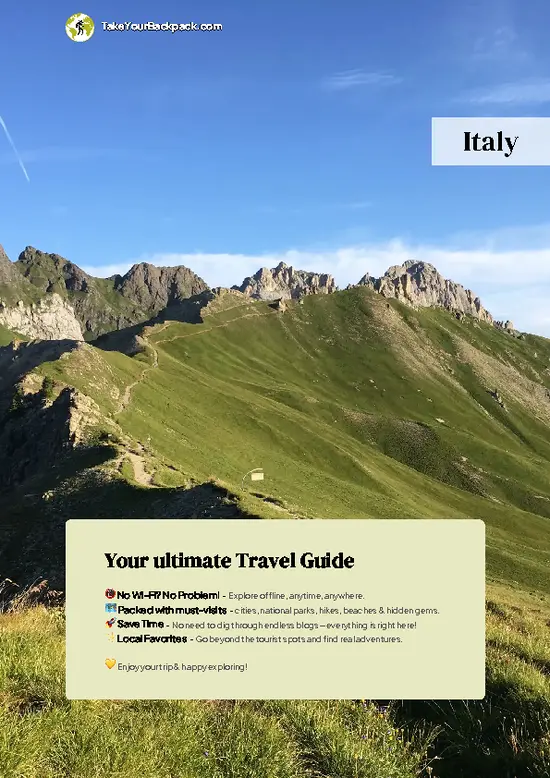
example page 0 from our offline Travel Guide for Italy
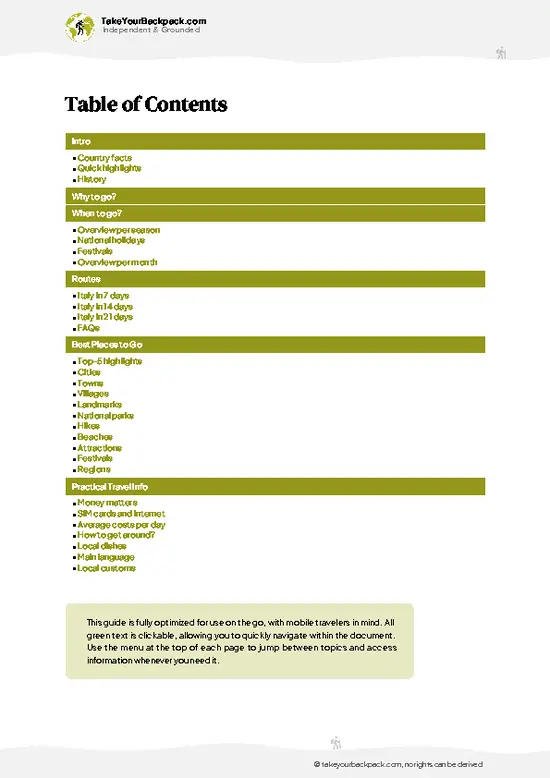
example page 1 from our offline Travel Guide for Italy
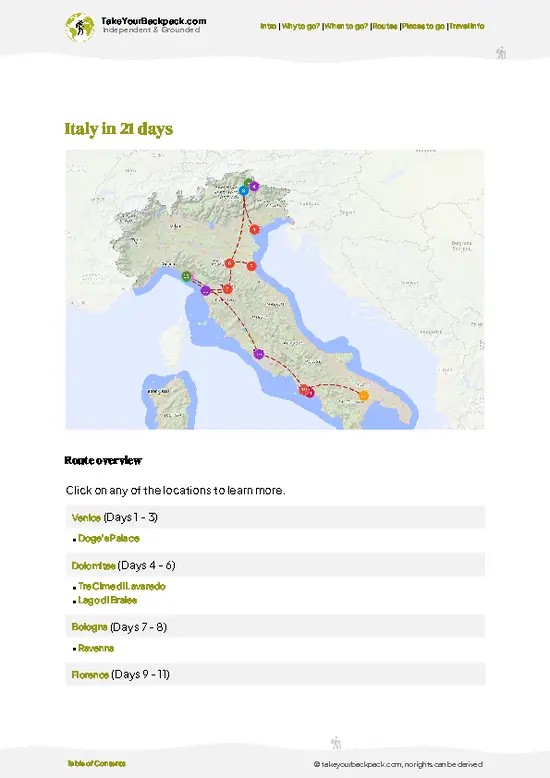
example page 2 from our offline Travel Guide for Italy
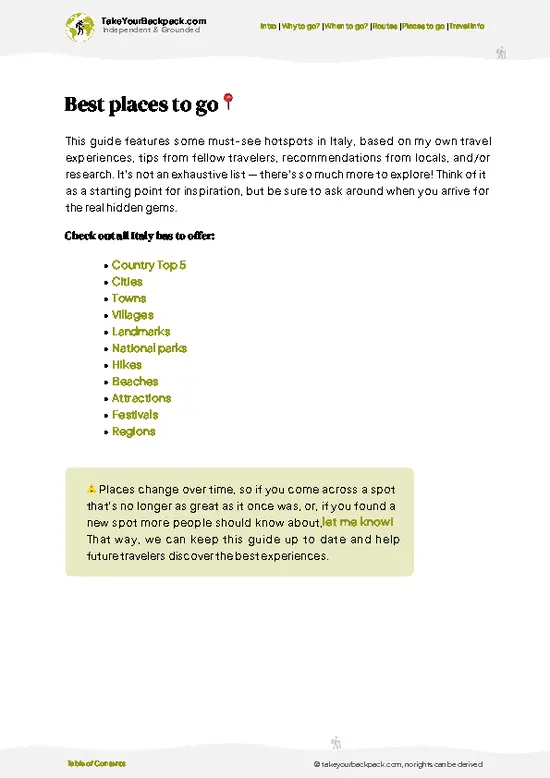
example page 3 from our offline Travel Guide for Italy
example page 4 from our offline Travel Guide for Italy
example page 5 from our offline Travel Guide for Italy
example page 6 from our offline Travel Guide for Italy
example page 7 from our offline Travel Guide for Italy
The digital guide (526 pages) contains:
143 highlights, ranked by travel appeal
Optimized 7, 14 & 21-day travel routes
Cities, national parks, landmarks, beaches
How to get around
Offline-friendly for travel without Wi-Fi
👉 Click to see all 30+ guide features

📅 Plan smarter in minutes, not weeks
Month by month travel advice
Festivals & national holidays
Budget expectations

🗺️ Go to the right places, skip the overrated ones
Honest pros & cons of destinations
Top hikes, parks & viewpoints
Lesser-known places most travelers miss
Clear “worth it vs skip it” guidance

🛏️ Travel smoothly without rookie mistakes
Best areas to stay
Transport systems explained simply
Common scams & safety advice
SIM cards, money & practical tips

🌍 Understand the country, not just visit it
Culture & traditions
52 Essential phrases & customs
Festivals worth planning around
Traveler-friendly historical context
Insights that make places more meaningful

📱 Built for real travel conditions
Fully downloadable PDF
Works completely offline
Optimized for phone use
Useful in remote areas & buses
Everything in one place
Save weeks of stressful planning
Get instant access to your full guide. 30‑day money-back guarantee.
+ Add another guide for just US$7.80

By proceeding you agree to our terms.
Sent to your inbox immediately after payment • 100% Secure Checkout
Best Backpacking Travel Advisor 2025 tourism awardBest Backpacking
Travel Advisor
2025
What others say about Take Your Backpack Guides:
⭐⭐⭐⭐⭐
Fantastic, amazing amount of information!
⭐⭐⭐⭐⭐
My goodness this is amazing, it's what I've been looking for hats off too you!
⭐⭐⭐⭐⭐
I think this is absolutely BRILLIANT
⭐⭐⭐⭐
Very complete and informative. It's still missing places, but I gotta to commend you
⭐⭐⭐⭐⭐
This is truly amazing, thank you, can't wait to explore it with my kids!
⭐⭐⭐⭐⭐
Awesome resource, thank you!
⭐⭐⭐⭐⭐
This is amazing! Can't wait to explore the ones I haven't seen
⭐⭐⭐⭐
I love this! Well done, great idea.
⭐⭐⭐⭐⭐
Thanks for taking the time to make this gem!
⭐⭐⭐⭐⭐
This might be the best website I've ever seen.
⭐⭐⭐⭐⭐
Congratulations, and thank you so much for your work; it's incredibly valuable.
⭐⭐⭐⭐
In all seriousness I think you did a great job pointing out the important spots
⭐⭐⭐⭐⭐
10/10 very good
⭐⭐⭐⭐⭐
As someone who's only just starting to visit regularly this is awesome, thank you.
⭐⭐⭐⭐
Thank you very much! I'm going to visit my dad, it's going to be very useful!
⭐⭐⭐⭐⭐
This is really cool! We'll be travelling for the first time and this definitely come in handy.
⭐⭐⭐⭐⭐
You are now our minister of culture, congratulations 👨‍💼
⭐⭐⭐⭐⭐
Just wanted to tell you that this is a pearl! Going to follow your recommendations.
⭐⭐⭐⭐⭐
This is so cool. I'll definitely be using the resource for my travels soon.
⭐⭐⭐⭐⭐
This is very impressive! Good work.
⭐⭐⭐⭐⭐
This is an amazing and informative site. Very well done!

🛏️ Where to stay?How to pick the right area

In Pompei, the best spot for backpackers is the area just outside the ancient ruins, near the main train station. This neighborhood hums with energy—streets lined with affordable eateries, buzzing cafes, and small shops where locals chat over espresso. It’s safe, well-lit at night, and packed with fellow travelers, making it easy to swap stories or find a walking buddy. Hostels here tend to be lively hubs, offering communal kitchens and shared spaces that invite connection without the touristy gloss.

Compared to the quieter residential zones farther from the station, this area feels like the … read more 👉
In Pompei, the best spot for backpackers is the area just outside the ancient ruins, near the main train station. This neighborhood hums with energy—streets lined with affordable eateries, buzzing cafes, and small shops where locals chat over espresso. It’s safe, well-lit at night, and packed with fellow travelers, making it easy to swap stories or find a walking buddy. Hostels here tend to be lively hubs, offering communal kitchens and shared spaces that invite connection without the touristy gloss.

Compared to the quieter residential zones farther from the station, this area feels like the town’s pulse, where you’re plugged into daily life and the rhythm of arrivals and departures. It’s practical, too—minutes from the ruins and a direct train ride to Naples or the Amalfi Coast. Staying here means you’re not just passing through Pompei; you’re part of its unfolding story, with the scent of fresh pizza dough and the chatter of street vendors as your backdrop.

🚌 Getting aroundGetting around like a local

Pompei moves at the pace of history itself—ancient stones and modern life tangled in a rhythm that’s part clockwork, part improvisation. The streets near the ruins pulse with a steady stream of tourists, but beyond the main drag, locals navigate with a relaxed certainty, where schedules blur and the scent of espresso drifts through narrow alleys. This isn’t a place where you’ll find rigid timetables etched in stone; instead, you learn to read the flow, catching buses as they roll in with a bit of patience and trusting the local rhythm to guide you. The payoff is worth it: the ruins themselves, bathed in golden afternoon light, feel like stepping into a living memory, earned through the dance of timing and movement.


  • Walking: The heart of Pompei is compact, and walking is your best bet for
read more 👉
Pompei moves at the pace of history itself—ancient stones and modern life tangled in a rhythm that’s part clockwork, part improvisation. The streets near the ruins pulse with a steady stream of tourists, but beyond the main drag, locals navigate with a relaxed certainty, where schedules blur and the scent of espresso drifts through narrow alleys. This isn’t a place where you’ll find rigid timetables etched in stone; instead, you learn to read the flow, catching buses as they roll in with a bit of patience and trusting the local rhythm to guide you. The payoff is worth it: the ruins themselves, bathed in golden afternoon light, feel like stepping into a living memory, earned through the dance of timing and movement.


  • Walking: The heart of Pompei is compact, and walking is your best bet for soaking in the atmosphere. From the train station to the archaeological site, it’s a 10-15 minute stroll along streets lined with cafes and souvenir stands. Walking costs nothing, gives you freedom to pause at a gelato shop, and lets you catch the scent of fresh bread from local bakeries.


  • Trenitalia Regional Train: Running between Naples and Pompei Scavi station, this train is the fastest and most budget-friendly way to arrive. Trains start early around 5:30 AM and run until about 11 PM, with tickets under €3. It’s reliable but can get crowded during peak tourist hours, so aim for early or late departures to avoid the crush.


  • Local Bus (EAV): Buses connect Pompei with nearby towns like Castellammare di Stabia and Sorrento. They run roughly from 6 AM to 9 PM, with tickets around €1.50. Buses can be slower and less predictable than trains, but they drop you closer to residential areas and markets, perfect if you want to explore beyond the ruins.


  • Taxi: Taxis are available but pricey for budget travelers, with fares starting around €10 for short trips within town. Use taxis sparingly—best for late arrivals or when you’re hauling gear. They offer door-to-door convenience but lack the immersive experience of public transit or walking.

👛 Costs (as of 4 September 2026)How expensive it really is

Backpacking through Pompei means stepping into a place where history weighs heavy in the air, but your wallet doesn’t have to feel the same pressure. Here’s what you’re realistically looking at for daily costs if you’re going independent and keeping it lean.
  • Dorm Accommodation: Dorm beds in Pompei hover around €20 to €35 per night. You’ll find basic hostels with clean, no-frills rooms close to the archaeological site. The vibe is often a mix of travelers buzzing about the ruins and locals running the show, so expect simple comfort rather than luxury.
  • Meals: Eating out can be surprisingly affordable if you avoid the tourist traps right at the entrance to the ruins. A solid pizza or pasta dish at a local trattoria will set you back about €7 to €12. For snacks or street food, like a slice of
read more 👉
Backpacking through Pompei means stepping into a place where history weighs heavy in the air, but your wallet doesn’t have to feel the same pressure. Here’s what you’re realistically looking at for daily costs if you’re going independent and keeping it lean.
  • Dorm Accommodation: Dorm beds in Pompei hover around €20 to €35 per night. You’ll find basic hostels with clean, no-frills rooms close to the archaeological site. The vibe is often a mix of travelers buzzing about the ruins and locals running the show, so expect simple comfort rather than luxury.
  • Meals: Eating out can be surprisingly affordable if you avoid the tourist traps right at the entrance to the ruins. A solid pizza or pasta dish at a local trattoria will set you back about €7 to €12. For snacks or street food, like a slice of sfogliatella or a panino, budget around €3 to €5. Grocery stores are your friend if you want to save more, with basic supplies for under €10 a day.
  • Local Transport: Pompei is compact, so walking is your best bet and costs nothing. If you want to hop on a local bus or train to nearby spots like Naples or Sorrento, tickets range from €2 to €5 each way. Taxis exist but are rarely worth it unless you’re in a rush or traveling in a group.
  • Basic Activities/Entry Fees: The star attraction, the Pompei archaeological site, costs about €18 for a full ticket. If you’re under 25 and an EU citizen, it’s cheaper or even free. Other smaller museums or sites nearby might charge €5 to €10. Budgeting around €20 a day for entry fees is a safe bet if you want to explore thoroughly.
  • Miscellaneous Expenses: Think bottled water (€1 to €2), a coffee (€1.50 to €3), and maybe a gelato (€2 to €4). Souvenirs or extra snacks can add up, so keep an eye on small indulgences. A daily buffer of €5 to €10 covers these little extras without stress.

All told, you’re looking at roughly €55 to €85 per day to cover the essentials in Pompei without cutting corners on the experience. This range lets you sleep in a dorm, eat well enough to fuel your explorations, get around easily, and dive into the ruins without feeling pinched. Pompei’s charm isn’t just in the ruins—it’s in the rhythm of the town, where every euro spent feels like a step deeper into history.
⚠️ Prices can change and everyone travels differently, so take this as a rough guide. Hope it helps you plan your adventure!

🚌 Day tripsShort trips worth adding

Pompei is a fantastic base for exploring the rich tapestry of Southern Italy. With its ancient ruins as a backdrop, you can easily venture out for day trips that offer a mix of history, nature, and local culture. Here are some worthwhile excursions that will elevate your experience.

Mount Vesuvius
Hiking up to the crater of this iconic volcano is a rite of passage. The trail is well-marked, and the views from the top are nothing short of breathtaking. You’ll feel the heat radiating from the ground as you approach the summit. The entire trek takes about 2-3 hours, and you can catch a bus from Pompei that takes around 30 minutes. Expect to spend about €10 for the bus and entrance fee. Early morning is the best time to avoid crowds and catch the sunrise over the Bay of Naples. A common mistake? … read more 👉
Pompei is a fantastic base for exploring the rich tapestry of Southern Italy. With its ancient ruins as a backdrop, you can easily venture out for day trips that offer a mix of history, nature, and local culture. Here are some worthwhile excursions that will elevate your experience.

Mount Vesuvius
Hiking up to the crater of this iconic volcano is a rite of passage. The trail is well-marked, and the views from the top are nothing short of breathtaking. You’ll feel the heat radiating from the ground as you approach the summit. The entire trek takes about 2-3 hours, and you can catch a bus from Pompei that takes around 30 minutes. Expect to spend about €10 for the bus and entrance fee. Early morning is the best time to avoid crowds and catch the sunrise over the Bay of Naples. A common mistake? Underestimating the weather; bring layers, as it can get chilly at the top.


Herculaneum
Just a short train ride away, Herculaneum offers a more intimate glimpse into life before the eruption. The ruins are smaller but incredibly well-preserved, allowing you to wander through ancient homes and even see frescoes that still pop with color. The train ride takes about 20 minutes and costs around €3. Aim for a weekday visit to dodge the weekend crowds. Many first-timers rush through; take your time to soak in the details.


Amalfi Coast
The Amalfi Coast is a feast for the senses. You can hop on a bus from Pompei to Positano, which takes about an hour. The winding roads offer stunning views of the cliffs and sea. Budget around €10 for the bus fare. Late spring or early fall is ideal for fewer tourists and pleasant weather. A common pitfall is sticking to the main road; venture down to the beach or explore the narrow alleyways for authentic local experiences.
👉 Explore Amalfi Coast

Naples
Just a 30-minute train ride away, Naples is a vibrant city bursting with life. Dive into the local food scene—try the pizza that originated here. The train costs about €2.50, making it an easy and affordable trip. Visit in the late morning to enjoy lunch at a local pizzeria and explore the bustling streets afterward. Many first-timers miss the underground tours; don’t skip the chance to see the ancient Greek ruins hidden beneath the city.
👉 Explore Naples
Want to know what more Italy offers?
The Italy Travel Guide describes 143 highlights, from cities to national parks, from beaches to hikes

Get the Travel Guide -

🛡️ SafetyStaying Safe: What Travelers Should Know

Pompei is generally safe, but a few practical tips can enhance your experience. The area around the ruins can get crowded, especially near the entrance. Keep your belongings close and be mindful of pickpockets, particularly in busy spots.

If you’re solo, the evenings can feel quieter. Stick to well-lit areas and main streets. The charm of Pompei at dusk is worth it, but stay aware of your surroundings.

Common scams are rare, but be cautious of overly friendly strangers offering unsolicited help or guiding services. If someone approaches you, trust your instincts.

Overall, carry yourself confidently, and don’t hesitate to ask locals for directions or advice. They’re usually friendly and can steer you clear of any minor annoyances. Enjoy the rich history and atmosphere—it’s what makes Pompei special.

FAQFrequently asked questions about Pompei

Yes, Pompei is worth visiting for its well-preserved ancient Roman ruins and unique archaeological significance. The site offers a rare glimpse into life frozen in time after the eruption of Mount Vesuvius in 79 AD. It is more than just a stopover if you are interested in history and archaeology.
You need at least one full day to explore Pompei thoroughly, including the main archaeological site and the museum. Two days are ideal if you want to explore more detailed areas and avoid rushing. Entrance fees are around 16 euros, and the site opens early to avoid crowds.
Yes, Pompei can be visited as a day trip from nearby cities like Naples or Sorrento. It is about 30-40 minutes by train from Naples, making it easily accessible for a day visit. Trains run frequently, and the site is open from early morning until late afternoon.
⚠️ Things can change over time, so always validate details locally before you go.

Other Italian towns near Pompei

Explore more nearby:

  • Positano—Terraced houses, pebble beaches, vertical streets| 14 km away
  • Amalfi—Cliffside harbor, lemon groves, medieval cathedral| 15 km away
  • Potenza—Hilltop setting, narrow stairways, regional capital| 110 km away

💡 Not sure where to go next?
Create a personalized itinerary for Italy including Pompei and the places that fit your trip.

Generate my itinerary

👉 Discover all towns

Or checkout all Italy has to offer (think cities, towns, villages, national parks, hikes, beaches, festivals)
Country photo of Italy

We 💚 feedbackParting advice and final tips

Pompei is a time capsule, where the air is thick with history and the ruins whisper stories of daily life before the eruption. You’ll feel the weight of the past as you wander those ancient streets. But brace yourself: the crowds can be overwhelming, especially in peak season. Arrive early or late to savor the stillness. It’s worth the effort to connect with a world frozen in time.

✈️ When did I visit Italy?
Italy I have vistited a couple of times: Rome already when I was still in high school, and I did a 7 day hike in the Dolomites in 2021.

✍️ Help improve this page!
The information on this page is based on my own backpacking experience in Italy, supplemented with up-to-date research and feedback from other travelers. Travel details can change, so if you notice anything outdated or incomplete, feel free to let me know.


🙋‍♂️ Give feedback

👋 Meet the founderWho’s Behind Take Your Backpack?

Johan, backpacker and founder of TakeYourBackpackHi, I’m Johan (Netherlands 🇳🇱), the creator of TakeYourBackpack. Over the past decade, I’ve backpacked through 80+ countries across six continents, gaining extensive experience with independent travel, long-term trips, and overland routes.

This site is built on a combination of firsthand travel experience and carefully curated insights from other backpackers. Many guides are based on places I’ve personally visited, while others bring together tips, observations, and practical advice shared by trusted travelers I’ve met along the way.

The goal is to provide realistic, experience-driven guidance — not generic itineraries — so you can explore destinations with better context, clearer expectations, and more confidence.

Get full Italy guide •
Instant download • 143 highlights • Full Offline guide