×

Italy🇮🇹 | citiesSyracuseisland quarter, Greek theater, baroque piazzas | things to do and best time to go

Explore RomeExplore Venice

Backpacking in Syracuse
UNESCO World Heritage site
👍 Recommendedcity ranked #12
By Johan Kruseman 🇳🇱 | Updated October 16, 2026

Everyone talks about Syracuse for the Greek theatre and ancient ruins, but what actually matters once you’re on the ground is how compact, walkable, and emotionally dense it feels for the time and money you spend. Syracuse sits on the southeast coast of Sicily, and for backpackers it’s a sweet-spot base: cheaper and calmer than Taormina, more graceful and historic than Catania. Ortigia’s alleys, sea walls, and Piazza Duomo do the heavy lifting; the archaeology park is the big “sight,” but the real win is slow evenings with cheap aperitivo and safe, late wandering. Hostels are few but social, nightlife is mellow, buses are workable, and the city rewards patience more than partying.

Discover everything you want to know in the 📖 Italy Travel Guide.


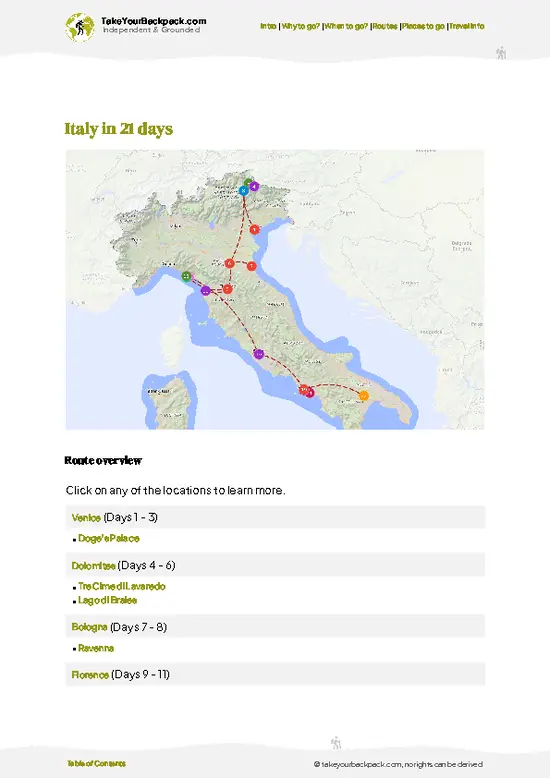
example page 0 from our offline Travel Guide for Italy
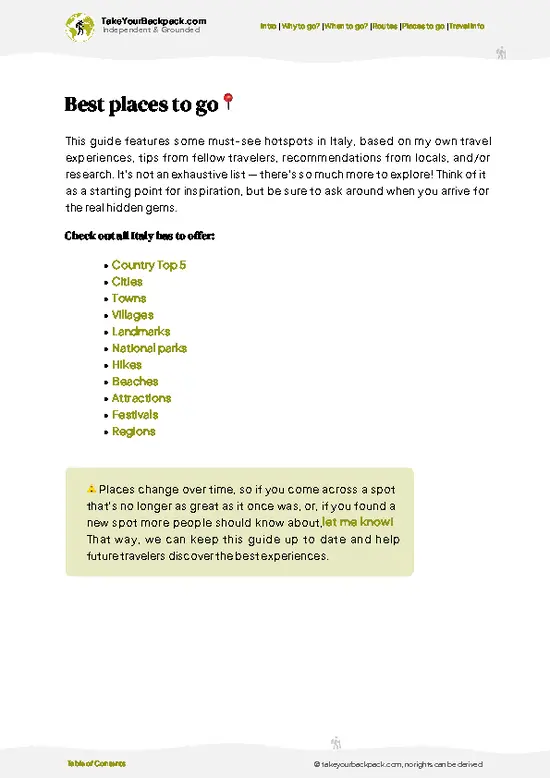
example page 1 from our offline Travel Guide for Italy
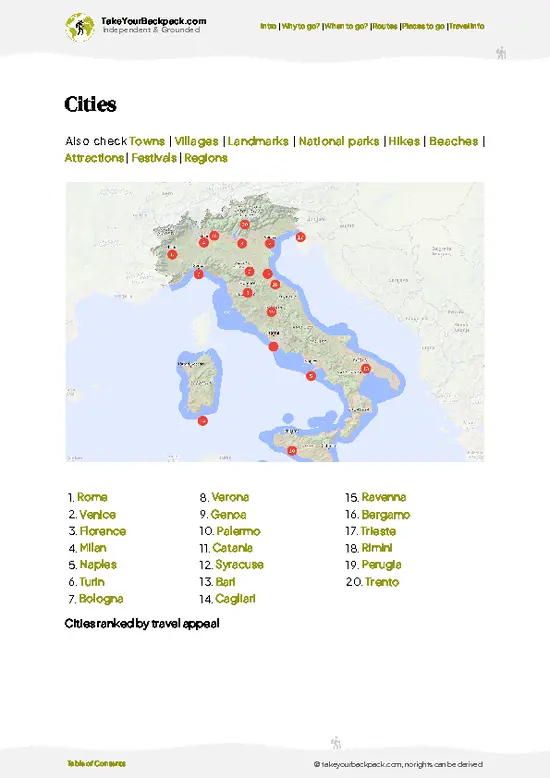
example page 2 from our offline Travel Guide for Italy
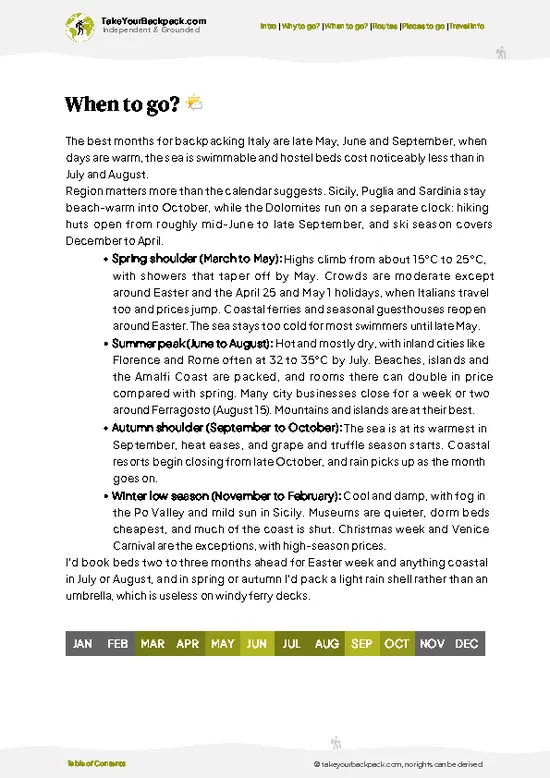
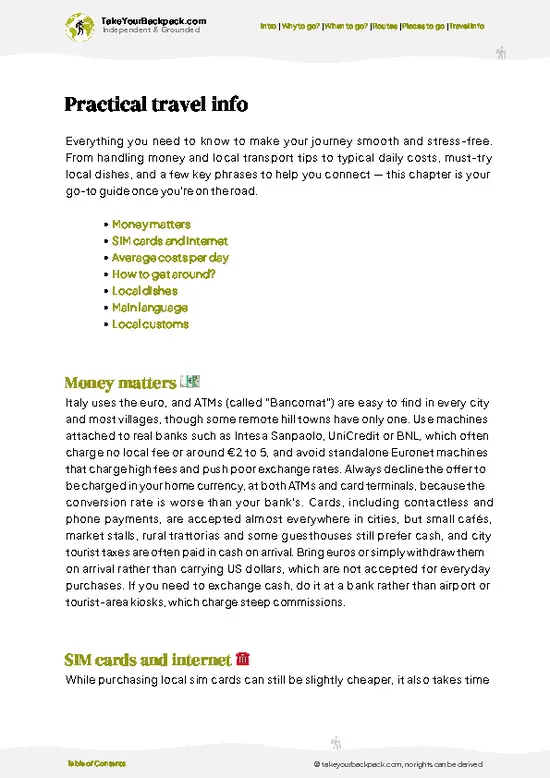
example page 3 from our offline Travel Guide for Italy
example page 4 from our offline Travel Guide for Italy
example page 5 from our offline Travel Guide for Italy
example page 6 from our offline Travel Guide for Italy
example page 7 from our offline Travel Guide for Italy
Loading the map 🌍
CLICK TO FILTER
cities
towns
villages
landmarks
national parks
hikes
beaches
attractions
festivals
regions
SHOW COUNTRY’S BESTSHOW ALL

✨ Why go?
Ranked #12 city in Italy
Reasons people choose to visit here

Syracuse is a backpacker’s sweet spot in Sicily, blending affordability with a rich tapestry of experiences. The city’s walkability makes it easy to explore, allowing you to soak in its historical charm without breaking a sweat. You’ll find a range of hostels that cater to different budgets, fostering a social vibe perfect for meeting fellow travelers.

Food is a highlight here; grab a slice of arancini or fresh seafood at local markets without emptying your wallet. Syracuse also serves as a solid basecamp for day trips to nearby gems, maximizing your time without the hassle of constant packing.

Nightlife is vibrant yet laid-back, offering a mix of bars and local hangouts where you can unwind after a day of exploration. If you’re looking for easy onward travel, Syracuse’s transport links … read more 👉
Syracuse is a backpacker’s sweet spot in Sicily, blending affordability with a rich tapestry of experiences. The city’s walkability makes it easy to explore, allowing you to soak in its historical charm without breaking a sweat. You’ll find a range of hostels that cater to different budgets, fostering a social vibe perfect for meeting fellow travelers.

Food is a highlight here; grab a slice of arancini or fresh seafood at local markets without emptying your wallet. Syracuse also serves as a solid basecamp for day trips to nearby gems, maximizing your time without the hassle of constant packing.

Nightlife is vibrant yet laid-back, offering a mix of bars and local hangouts where you can unwind after a day of exploration. If you’re looking for easy onward travel, Syracuse’s transport links make it a breeze to continue your Sicilian adventure.

💡 HighlightsTop highlights of Syracuse

  1. Duomo di Siracusa (Piazza Duomo) — A cathedral literally built into a 5th-century BC Greek temple: you can see Doric columns inside the baroque church. The square around it is high-energy and perfect for people-watching with a coffee or an aperitivo.
  2. Tempio di Apollo (Temple of Apollo) — One of Sicily’s oldest Doric temples, its ruined columns sit right at Ortigia’s entrance. It’s compact, photogenic at dusk, and gives a real sense of how ancient life bled into the medieval town.
  3. Fonte Aretusa — A freshwater spring on Ortigia fringed by papyrus and reeds, wrapped in myth (Arethusa and Alpheus). It’s atmospheric, great for a slow stroll, and a rare spot in Italy where papyrus actually grows in the open.
  4. Castello Maniace — A massive Angevin-French fortress sitting at the tip of Ortigia
… read more 👉
  1. Duomo di Siracusa (Piazza Duomo) — A cathedral literally built into a 5th-century BC Greek temple: you can see Doric columns inside the baroque church. The square around it is high-energy and perfect for people-watching with a coffee or an aperitivo.
  2. Tempio di Apollo (Temple of Apollo) — One of Sicily’s oldest Doric temples, its ruined columns sit right at Ortigia’s entrance. It’s compact, photogenic at dusk, and gives a real sense of how ancient life bled into the medieval town.
  3. Fonte Aretusa — A freshwater spring on Ortigia fringed by papyrus and reeds, wrapped in myth (Arethusa and Alpheus). It’s atmospheric, great for a slow stroll, and a rare spot in Italy where papyrus actually grows in the open.
  4. Castello Maniace — A massive Angevin-French fortress sitting at the tip of Ortigia with seawall walks and wide views of the harbor. Clamber up the battlements and you’ll get salty wind, history, and a proper sense of the island’s defenses.
  5. Teatro Greco (Greek Theatre) — A well-preserved Hellenistic theatre carved into the hill of the Neapolis Archaeological Park. It’s still used for performances in summer and the views across the cavea to the sea are unforgettable.
  6. Orecchio di Dionisio (Ear of Dionysius) — A dramatic, echoing limestone cave in the old quarries whose shape and acoustics are spooky and impressive. It’s small but visceral — you can hear whispers carry in a way that gives you chills.
  7. Latomie del Paradiso (Stone Quarries and Gardens) — These ancient rock quarries are peaceful, leafy gorges with olive trees and the ruins of quarrying activity. Walking the shaded paths feels like stepping back to the labor that built classical Syracuse.
  8. Museo Archeologico Regionale Paolo Orsi — One of Italy’s best archaeology museums for Greek and pre-Greek Sicily; massive collections of pottery, sculpture and finds from the area. Spend a couple of hours to get real context for everything you see around town.
  9. Mercato di Ortigia (Daily Market) — A noisy, colourful market near the fish stalls where locals buy fresh catch, fruit and street food. Eat a quick arancino, haggle for oranges, and you’ll feel the day-to-day Syracuse that guidebooks can’t capture.
  10. Catacombe di San Giovanni (Catacombs of St. John) — Extensive early-Christian burial galleries with frescoes, carvings and a surprisingly intimate atmosphere. It’s quieter than the big sites and gives a different, subterranean angle on the city’s layered history.
A few great day trips nearby: the baroque town of Noto, the coastal nature reserve of Riserva di Vendicari (my personal favorite for beaches and wildlife), and the ancient rock necropolis of Pantalica.
Spotted a mistake or missing something? Contact us.

Things to do in Syracuse

Ratings based on Tripadvisor reviews. When you book through this link, you support our work at no extra cost to you.

🏘️ NeighborhoodsUnderstanding the local layout

Syracuse is a captivating blend of history and coastal charm, making it a prime spot for backpackers. Here’s how the neighborhoods stack up:

Ortigia: This is the heart of Syracuse, where ancient ruins meet vibrant street life. The narrow alleys are a delight to wander, and you’ll find plenty of budget-friendly eateries. It’s walkable, with a lively atmosphere perfect for nightlife. Ideal for short stays, but the charm can keep you longer.

Neapolis: Home to the archaeological park, this area is quieter but rich in history. It’s less touristy, making it a great spot for those who want to soak in the local vibe. Public transport is accessible, and it’s a solid choice for longer stays if you prefer a more laid-back experience.

Fanusa: This coastal neighborhood offers a mix of beach access and … read more 👉
Syracuse is a captivating blend of history and coastal charm, making it a prime spot for backpackers. Here’s how the neighborhoods stack up:

Ortigia: This is the heart of Syracuse, where ancient ruins meet vibrant street life. The narrow alleys are a delight to wander, and you’ll find plenty of budget-friendly eateries. It’s walkable, with a lively atmosphere perfect for nightlife. Ideal for short stays, but the charm can keep you longer.

Neapolis: Home to the archaeological park, this area is quieter but rich in history. It’s less touristy, making it a great spot for those who want to soak in the local vibe. Public transport is accessible, and it’s a solid choice for longer stays if you prefer a more laid-back experience.

Fanusa: This coastal neighborhood offers a mix of beach access and local life. It’s a bit farther from the city center, so expect to rely on public transport or a bike. The vibe is relaxed, perfect for unwinding after a day of exploration. Great for longer stays if you want a beachy escape.

Epipoli: A residential area with a local feel, it’s less frequented by tourists. It’s affordable and offers a glimpse into everyday Sicilian life. While it’s not as walkable, it’s a good base for those looking to explore Syracuse’s outskirts. Best for longer stays if you want to immerse yourself in the culture.

⌛️ 1 dayA smart one-day plan

Syracuse, Italy, is a captivating blend of ancient history and vibrant local life. Nestled on the southeastern coast of Sicily, it boasts stunning Greek ruins, a lively market scene, and the enchanting Ortigia Island, where narrow streets whisper tales of the past.

Start your morning at the bustling Mercato di Ortigia. The aroma of fresh produce and local cheeses fills the air. Grab a pastry from a nearby bakery—try the cannoli, and let the sweet ricotta dance on your taste buds. Afterward, stroll to the stunning Piazza del Duomo. The baroque architecture is a feast for the eyes, and the cathedral’s history is rich enough to spark your imagination.

In the afternoon, head to the archaeological park, Parco Archeologico della Neapolis. Here, you’ll find the impressive Greek Theatre and the … read more 👉
Syracuse, Italy, is a captivating blend of ancient history and vibrant local life. Nestled on the southeastern coast of Sicily, it boasts stunning Greek ruins, a lively market scene, and the enchanting Ortigia Island, where narrow streets whisper tales of the past.

Start your morning at the bustling Mercato di Ortigia. The aroma of fresh produce and local cheeses fills the air. Grab a pastry from a nearby bakery—try the cannoli, and let the sweet ricotta dance on your taste buds. Afterward, stroll to the stunning Piazza del Duomo. The baroque architecture is a feast for the eyes, and the cathedral’s history is rich enough to spark your imagination.

In the afternoon, head to the archaeological park, Parco Archeologico della Neapolis. Here, you’ll find the impressive Greek Theatre and the Ear of Dionysius, a limestone cave with remarkable acoustics. It’s a bit touristy, but the history is palpable. For a less-traveled path, wander to the nearby Catacombs of San Giovanni. This underground labyrinth offers a glimpse into early Christian life and is often overlooked by visitors.

As the sun sets, return to Ortigia for dinner. Choose a local trattoria where you can savor fresh seafood pasta while overlooking the shimmering sea. The atmosphere is electric, filled with laughter and the clinking of glasses.

End your day with a leisurely stroll along the waterfront, where the waves gently lap against the rocks. This is Syracuse—where every corner holds a story, and every moment feels like a treasure.

🌤️ When to go?Seasonal considerations and timing

  • Weather: Syracuse enjoys a Mediterranean climate. Spring (April to June) offers mild temperatures around 15-25°C (59-77°F), perfect for exploring without overheating. Summer (July-August) hits highs of 30-35°C (86-95°F), which can drain your energy if you’re hiking or wandering all day.
  • Daylight Hours: Long summer days stretch up to 14-15 hours, giving you more daylight for adventures. Winter days shrink to about 9-10 hours, limiting exploration time but offering cozy evenings.
  • Crowds: Peak tourist season is July and August, when the city swells with visitors. This means crowded sites and higher prices. Shoulder seasons (April-June, September-October) balance fewer tourists with pleasant weather.
  • Seasonal Activities: Summer brings vibrant festivals and beach time, while spring and fall offer
… read more 👉
  • Weather: Syracuse enjoys a Mediterranean climate. Spring (April to June) offers mild temperatures around 15-25°C (59-77°F), perfect for exploring without overheating. Summer (July-August) hits highs of 30-35°C (86-95°F), which can drain your energy if you’re hiking or wandering all day.
  • Daylight Hours: Long summer days stretch up to 14-15 hours, giving you more daylight for adventures. Winter days shrink to about 9-10 hours, limiting exploration time but offering cozy evenings.
  • Crowds: Peak tourist season is July and August, when the city swells with visitors. This means crowded sites and higher prices. Shoulder seasons (April-June, September-October) balance fewer tourists with pleasant weather.
  • Seasonal Activities: Summer brings vibrant festivals and beach time, while spring and fall offer cultural events and quieter archaeological sites. Winter is low-key but great for museum visits and local life.
  • Price Fluctuations: Accommodation and flights spike in summer. Booking in shoulder seasons often nets better deals without sacrificing comfort or experience quality.
Pro-tip: Aim for late spring or early fall to maximize comfort, avoid crowds, and stretch your budget—this is when Syracuse feels like it’s just for you.


source: climatestotravel.comJANJanuary: good for travelingFEBFebruary: good for travelingMARMarch: good for travelingAPRApril: excellent for travelingMAYMay: excellent for travelingJUNJune: excellent for travelingJULJuly: fair for travelingAUGAugust: fair for travelingSEPSeptember: highly recommended for travelingOCTOctober: highly recommended for travelingNOVNovember: good for travelingDECDecember: good for traveling
italy-city-syracuse
© Google | Serghei Turcan

✈️ The backpacker research shortcutItaly Travel Guide

An offline-friendly backpacking guide with optimized travel routes, ranked highlights, transport advice, and the best areas to stay.
example page 0 from our offline Travel Guide for Italy
example page 1 from our offline Travel Guide for Italy
example page 2 from our offline Travel Guide for Italy
example page 3 from our offline Travel Guide for Italy
example page 4 from our offline Travel Guide for Italy
example page 5 from our offline Travel Guide for Italy
example page 6 from our offline Travel Guide for Italy
example page 7 from our offline Travel Guide for Italy
The digital guide (523 pages) contains:
✅ 142 highlights, ranked by travel appeal
✅ Optimized 7, 14 & 21-day travel routes
✅ Cities, national parks, landmarks, beaches
✅ How to get around
✅ Offline-friendly for travel without Wi-Fi
👉 Click to see all 30+ guide features

📅 Plan smarter in minutes, not weeks
✅ Month by month travel advice
✅ Festivals & national holidays
✅ Budget expectations

🗺️ Go to the right places, skip the overrated ones
✅ Honest pros & cons of destinations
✅ Top hikes, parks & viewpoints
✅ Lesser-known places most travelers miss
✅ Clear “worth it vs skip it” guidance

🛏️ Travel smoothly without rookie mistakes
✅ Best areas to stay
✅ Transport systems explained simply
✅ Common scams & safety advice
✅ SIM cards, money & practical tips

🌍 Understand the country, not just visit it
✅ Culture & traditions
✅ 52 Essential phrases & customs
✅ Festivals worth planning around
✅ Traveler-friendly historical context
✅ Insights that make places more meaningful

📱 Built for real travel conditions
✅ Fully downloadable PDF
✅ Works completely offline
✅ Optimized for phone use
✅ Useful in remote areas & buses
✅ Everything in one place
Stop searching, start planning
Get instant access to your full guide. 30‑day money-back guarantee.
+ Add another guide for just

By proceeding you agree to our terms.
Sent to your inbox immediately after payment • 100% Secure Checkout
Best Backpacking Travel Advisor 2025 tourism awardBest Backpacking
Travel Advisor
2025
What others say about Take Your Backpack Guides:
⭐⭐⭐⭐⭐
Fantastic, amazing amount of information!
⭐⭐⭐⭐⭐
My goodness this is amazing, it's what I've been looking for hats off too you!
⭐⭐⭐⭐⭐
I think this is absolutely BRILLIANT
⭐⭐⭐⭐
Very complete and informative. It's still missing places, but I gotta to commend you
⭐⭐⭐⭐⭐
This is truly amazing, thank you, can't wait to explore it with my kids!
⭐⭐⭐⭐⭐
Awesome resource, thank you!
⭐⭐⭐⭐⭐
This is amazing! Can't wait to explore the ones I haven't seen
⭐⭐⭐⭐
I love this! Well done, great idea.
⭐⭐⭐⭐⭐
Thanks for taking the time to make this gem!
⭐⭐⭐⭐⭐
This might be the best website I've ever seen.
⭐⭐⭐⭐⭐
Congratulations, and thank you so much for your work; it's incredibly valuable.
⭐⭐⭐⭐
In all seriousness I think you did a great job pointing out the important spots
⭐⭐⭐⭐⭐
10/10 very good
⭐⭐⭐⭐⭐
As someone who's only just starting to visit regularly this is awesome, thank you.
⭐⭐⭐⭐
Thank you very much! I'm going to visit my dad, it's going to be very useful!
⭐⭐⭐⭐⭐
This is really cool! We'll be travelling for the first time and this definitely come in handy.
⭐⭐⭐⭐⭐
You are now our minister of culture, congratulations 👨‍💼
⭐⭐⭐⭐⭐
Just wanted to tell you that this is a pearl! Going to follow your recommendations.
⭐⭐⭐⭐⭐
This is so cool. I'll definitely be using the resource for my travels soon.
⭐⭐⭐⭐⭐
This is very impressive! Good work.
⭐⭐⭐⭐⭐
This is an amazing and informative site. Very well done!

🛏️ Where to stay?Where staying makes the most sense

In Syracuse, Italy, the clear winner for backpackers is Ortigia Island. This compact historic center is where you get the most bang for your buck: safe streets, a lively social scene, and plenty of budget-friendly hostels packed with fellow travelers. Staying here means you’re steps away from ancient ruins, vibrant piazzas, and waterfront bars where conversations flow as easily as the local wine. The vibe is a mix of laid-back Mediterranean charm and youthful energy, perfect for solo travelers wanting to connect without sacrificing comfort.

Compare this to the mainland neighborhoods, which tend … read more 👉
In Syracuse, Italy, the clear winner for backpackers is Ortigia Island. This compact historic center is where you get the most bang for your buck: safe streets, a lively social scene, and plenty of budget-friendly hostels packed with fellow travelers. Staying here means you’re steps away from ancient ruins, vibrant piazzas, and waterfront bars where conversations flow as easily as the local wine. The vibe is a mix of laid-back Mediterranean charm and youthful energy, perfect for solo travelers wanting to connect without sacrificing comfort.

Compare this to the mainland neighborhoods, which tend to be quieter and more residential. They offer fewer social opportunities and limited hostel options, pushing you toward pricier hotels or guesthouses. If your priority is meeting people and having a dynamic base, Ortigia’s narrow alleys and bustling markets deliver that in spades. It’s a trade-off: a bit more noise and crowds for a richer, more interactive experience. For backpackers, that’s a winning formula every time.

🚌 Getting aroundTransportation options and practical tips

Syracuse moves with a rhythm that’s part old-school grit, part modern hustle. It’s not a city that demands you sync your watch to a strict timetable, but it’s also not a free-for-all where chaos reigns. Instead, it’s a blend: buses and trains run on schedules that mostly hold, but there’s enough wiggle room to roll with the flow. The streets invite walking, where you can soak in the city’s character at your own pace. Understanding this balance between time, money, and comfort is your key to mastering Syracuse’s transit game. You’re not just getting from A to B—you’re choosing how much patience, cash, and ease you’re willing to trade for the experience.
  • Walking: The ultimate zero-cost option. Syracuse’s downtown is compact enough to explore on foot, giving you full control over pace and route.
… read more 👉
Syracuse moves with a rhythm that’s part old-school grit, part modern hustle. It’s not a city that demands you sync your watch to a strict timetable, but it’s also not a free-for-all where chaos reigns. Instead, it’s a blend: buses and trains run on schedules that mostly hold, but there’s enough wiggle room to roll with the flow. The streets invite walking, where you can soak in the city’s character at your own pace. Understanding this balance between time, money, and comfort is your key to mastering Syracuse’s transit game. You’re not just getting from A to B—you’re choosing how much patience, cash, and ease you’re willing to trade for the experience.
  • Walking: The ultimate zero-cost option. Syracuse’s downtown is compact enough to explore on foot, giving you full control over pace and route. No schedules, no fares, just your own two feet and the city’s texture underfoot.
  • Centro Bus: The backbone of Syracuse’s public transit, Centro buses run roughly from 6 AM to 10 PM. A single ride costs about $1.75, making it a budget-friendly choice. Buses are reliable but can get crowded during rush hours, so comfort dips when the city’s pulse quickens.
  • Onondaga County Regional Airport Shuttle: For travelers needing a direct link to the airport, this shuttle operates on a fixed schedule with fares around $5. It’s a trade-off between time and money—faster and more comfortable than multiple bus transfers but pricier than local transit.
  • Car Share Services (e.g., Zipcar): If you want flexibility without the hassle of ownership, car shares offer hourly rentals starting around $10. This option boosts comfort and speed but at a higher cost, ideal for short bursts of freedom beyond bus routes.
  • Amtrak Train: Connecting Syracuse to larger cities, the train is a slower but more comfortable and scenic option. Tickets vary widely in price, and schedules are less frequent, so it’s a choice for those valuing comfort and experience over speed and budget.

👛 Costs (as of 16 October 2026)What things cost and how to budget

Backpacking in Syracuse, Italy, is a balancing act between savoring history and managing your wallet. Here’s the lowdown on what you’re likely to spend daily, broken into the essentials.
  • Dorm Accommodation (High Season): Expect to pay around €25-€35 per night. Summer months and festivals push prices up, especially near Ortigia, the historic heart.
  • Dorm Accommodation (Off-Season): Drop to about €15-€25. Winter and early spring bring quieter streets and friendlier prices, perfect for stretching your budget.
  • Meals: Budget about €10-€20 daily if you mix street food, casual trattorias, and occasional groceries. Sicilian street snacks like arancini or panelle are wallet-friendly and filling.
  • Local Transport: Single bus tickets cost roughly €1.50-€2. A few rides a day can add up, but many sites
… read more 👉
Backpacking in Syracuse, Italy, is a balancing act between savoring history and managing your wallet. Here’s the lowdown on what you’re likely to spend daily, broken into the essentials.
  • Dorm Accommodation (High Season): Expect to pay around €25-€35 per night. Summer months and festivals push prices up, especially near Ortigia, the historic heart.
  • Dorm Accommodation (Off-Season): Drop to about €15-€25. Winter and early spring bring quieter streets and friendlier prices, perfect for stretching your budget.
  • Meals: Budget about €10-€20 daily if you mix street food, casual trattorias, and occasional groceries. Sicilian street snacks like arancini or panelle are wallet-friendly and filling.
  • Local Transport: Single bus tickets cost roughly €1.50-€2. A few rides a day can add up, but many sites in Ortigia are walkable, saving you cash and letting you soak in the vibe.
  • City Transport Pass: A day pass runs around €4-€5, ideal if you plan multiple trips or want flexibility without fussing over tickets.
  • Basic Activities/Entry Fees: Museums and archaeological sites typically charge €5-€10. Some, like the Archaeological Park of Neapolis, are on the higher end but worth it for the deep dive into history.
  • Miscellaneous Expenses: Factor in about €5-€10 for things like water, occasional coffee, or small souvenirs. These little extras add flavor to your day but don’t break the bank.

Add it all up, and you’re looking at roughly €50-€80 per day for a solid backpacking experience in Syracuse. This range gives you room to choose comfort or scrimp a bit without missing out on the city’s essence. Knowing these trade-offs lets you decide where to splurge and where to save, turning your trip into a smart, satisfying game.


source: numbeo.com
⚠️ Prices can change and everyone travels differently, so take this as a rough guide. Hope it helps you plan your adventure!

🚌 Day tripsBest day trips from Syracuse

Syracuse, Italy, is a fantastic launchpad for day trips that blend history, culture, and stunning landscapes. Here’s how to maximize your experience without breaking the bank.

Noto
Just a 30-minute bus ride from Syracuse, Noto is a baroque wonderland. The golden-hued buildings and intricate facades are a feast for the eyes. Stroll along Corso Vittorio Emanuele, and don’t miss the stunning Noto Cathedral. A budget traveler can easily explore this town for under €20, including transport and a snack. Spring is ideal, as the flowers bloom and the crowds are manageable. A common mistake? Rushing through without taking time to savor the local pastries at a café.
👉 Explore Noto

Ortigia
While technically part of Syracuse, Ortigia deserves its own mention. This small island is packed with ancient … read more 👉
Syracuse, Italy, is a fantastic launchpad for day trips that blend history, culture, and stunning landscapes. Here’s how to maximize your experience without breaking the bank.

Noto
Just a 30-minute bus ride from Syracuse, Noto is a baroque wonderland. The golden-hued buildings and intricate facades are a feast for the eyes. Stroll along Corso Vittorio Emanuele, and don’t miss the stunning Noto Cathedral. A budget traveler can easily explore this town for under €20, including transport and a snack. Spring is ideal, as the flowers bloom and the crowds are manageable. A common mistake? Rushing through without taking time to savor the local pastries at a café.
👉 Explore Noto

Ortigia
While technically part of Syracuse, Ortigia deserves its own mention. This small island is packed with ancient ruins, vibrant markets, and a lively atmosphere. You can walk everywhere, making it easy to soak in the sights. Spend a few hours wandering the narrow streets, and grab a bite at the bustling market. A day here can cost around €15 if you stick to street food and local shops. Early mornings or late afternoons are best to avoid the heat and crowds. Don’t miss the chance to dip your toes in the Mediterranean!


Catania
About an hour away by train, Catania offers a different vibe with its bustling markets and the backdrop of Mount Etna. Explore the historic center, a UNESCO World Heritage site, and indulge in local street food like arancini. Expect to spend around €25 for the day, including transport and lunch. Fall is a great time to visit, as the weather is pleasant and the harvest season brings fresh flavors. First-timers often overlook the local customs, so brush up on a few phrases to connect with the locals.
👉 Explore Catania

Taormina
Roughly 1.5 hours from Syracuse, Taormina is famous for its stunning views and ancient Greek theater. The panoramic vistas of the coastline are breathtaking. A day trip here can set you back about €30, factoring in transport and a light meal. Late spring or early fall is perfect for fewer tourists and milder weather. Many visitors mistakenly think they can see everything in a few hours; take your time to enjoy the scenery and the charming streets.
👉 Explore Taormina

🍲 FoodEating & Drinking in Syracuse

In Syracuse, the food scene is a delightful maze of flavors that beckons you to explore. Start with Arancini, those golden rice balls stuffed with ragù or cheese, perfect for a quick snack as you wander. Don’t miss Pasta alla Norma, a local classic featuring eggplant, tomatoes, and ricotta salata. Each bite tells a story of the island’s rich agricultural heritage.

For drinks, the Nero d’Avola wine is a must-try. Its bold, fruity notes pair beautifully with the region’s seafood. You’ll find locals sipping it at casual bars or cafés, often accompanied by a plate of ciccioli—a savory pork spread that’s perfect on crusty bread.

Eating here is a communal affair. Expect to share tables at bustling markets or enjoy a leisurely meal with friends. Don’t rush; savor the moment. Embrace the Sicilian … read more 👉
In Syracuse, the food scene is a delightful maze of flavors that beckons you to explore. Start with Arancini, those golden rice balls stuffed with ragù or cheese, perfect for a quick snack as you wander. Don’t miss Pasta alla Norma, a local classic featuring eggplant, tomatoes, and ricotta salata. Each bite tells a story of the island’s rich agricultural heritage.

For drinks, the Nero d’Avola wine is a must-try. Its bold, fruity notes pair beautifully with the region’s seafood. You’ll find locals sipping it at casual bars or cafés, often accompanied by a plate of ciccioli—a savory pork spread that’s perfect on crusty bread.

Eating here is a communal affair. Expect to share tables at bustling markets or enjoy a leisurely meal with friends. Don’t rush; savor the moment. Embrace the Sicilian custom of lingering over meals, where conversation flows as freely as the wine. This isn’t just food; it’s a vibrant slice of life.

🛡️ SafetyScams, Hazards, and Annoyances

Syracuse is generally safe, but awareness is key. Stick to well-lit areas at night, especially around the historic center. While solo travel is common, trust your instincts and avoid empty streets after dark.

Scams are rare, but watch for overly friendly locals offering unsolicited help or guiding you to shops with inflated prices. Keep your belongings close in crowded spots like markets or bus stations; pickpockets can be opportunistic.

Annoyances may include aggressive street vendors, but a polite “no, grazie” usually suffices. Embrace the local pace and don’t rush; it’s part of the charm. By staying alert and confident, you’ll navigate Syracuse smoothly and enjoy its rich history without unnecessary stress.

FAQFrequently asked questions about Syracuse

3 days are sufficient to explore Syracuse, covering its main archaeological sites, historic center, and nearby beaches. This allows time to visit the Neapolis Archaeological Park, Ortigia Island, and the local markets without rushing.
Yes, Syracuse is generally safe for solo backpackers, with low crime rates in tourist areas. Standard precautions like avoiding poorly lit streets at night and keeping valuables secure are advised.
Syracuse is known for its rich ancient Greek history, especially the well-preserved Greek Theatre and the island of Ortigia with its Baroque architecture. It is also famous for its archaeological sites and vibrant local seafood cuisine.
⚠️ Things can change over time, so always validate details locally before you go.

Other Italian cities near Syracuse

Explore more nearby:

  • Catania—lava-stone streets, baroque facades, Mount Etna views| 51 km away
  • Reggio Calabria—Ionian promenade, Greek bronzes, citrus groves| 119 km away
  • Palermo—Arab-Norman architecture, street food stalls, layered neighborhoods| 205 km away

💡 Not sure where to go next?
Create a personalized itinerary for Italy including Syracuse and the places that fit your trip.

Generate my itinerary

👉 Discover all cities

Or checkout all Italy has to offer (think cities, towns, villages, national parks, hikes, beaches, festivals)
Country photo of Italy

We 💚 feedbackSumming up the experience

Syracuse is a treasure trove of ancient history, with its stunning Greek theater and vibrant markets that pulse with life. You’ll feel the weight of time here. But be ready for the summer heat; it can be relentless. If you’re not a fan of sweltering days, plan your visits for spring or fall. Embrace the charm, but don’t underestimate the sun!

✈️ When did I visit Italy?
Italy I have visited a couple of times: Rome already when I was still in high school, and I did a 7 day hike in the Dolomites in 2021.

✍️ Help improve this page!
The information on this page is based on my own backpacking experience in Italy, supplemented with up-to-date research and feedback from other travelers. Travel details can change, so if you notice anything outdated or incomplete, feel free to let me know.


🙋‍♂️ Give feedback

👋 Meet the founderWho’s Behind Take Your Backpack?

Johan, backpacker and founder of TakeYourBackpackHi, I’m Johan (Netherlands 🇳🇱), the creator of TakeYourBackpack. Over the past 3 decades, I’ve backpacked through 90+ countries across six continents, gaining extensive experience with independent travel, long-term trips, and overland routes.

This site is built on a combination of firsthand travel experience and carefully curated insights from other backpackers. Many guides are based on places I’ve personally visited, while others bring together tips, observations, and practical advice shared by trusted travelers I’ve met along the way.

The goal is to provide realistic, experience-driven guidance — not generic itineraries — so you can explore destinations with better context, clearer expectations, and more confidence.