×

Italy🇮🇹 | citiesVeronaRoman arena, river bends, medieval lanes | things to do and best time to go

Explore VeniceExplore Bologna

Backpacking in Verona
UNESCO World Heritage site
🌟 Highlightcity ranked #8
By Johan Kruseman 🇳🇱 | Updated July 30, 2026

Most people show up in Verona for Romeo and Juliet, but the surprising backpacker truth is that it’s one of the easiest cities in northern Italy to eat and drink well without torching your budget. Sitting between Milan and Venice in the Veneto region, it’s a compact, walkable base with a medieval core, a legit Roman arena, and riverside parks that feel made for cheap picnic dinners. Trains in and out are fast and frequent, but the hostel scene is thinner than in Bologna or Milan, so meeting other travelers takes a bit more effort and bar-chat initiative. It’s very safe, calm at night, and more “grown-up date weekend” than party hub; I treat Verona as a 1–2 day cultural pit stop rather than a long-stay backpacker home.

Discover everything you want to know in the 📖 Italy Travel Guide.


Get your Italy guide
143 ranked highlights, routes & tips, works offline (526 pages)
Loading the map 🌍
CLICK TO FILTER
cities
towns
villages
landmarks
national parks
hikes
beaches
attractions
festivals
regions
SHOW COUNTRY’S BESTSHOW ALL

✨ Why go?
Ranked #8 city in Italy
The unique appeal for travelers

Verona is a strategic stop for backpackers weaving through Italy. It’s not just about the highlights; it’s the basecamp value that makes it shine. You can easily launch day trips to nearby gems, maximizing your time without breaking the bank. The hostel scene is solid, offering affordable options that foster a communal vibe, perfect for meeting fellow travelers.

Strolling through the city is a breeze; its walkability lets you soak in the atmosphere without the hassle of public transport. When the sun sets, the nightlife kicks in, with cozy bars and lively piazzas that invite you to linger. Plus, Verona’s transport links make onward travel a cinch, whether you’re heading to Venice or Milan.

If you’re looking for a place that balances culture and convenience, Verona is a smart choice. Just … read more 👉
Verona is a strategic stop for backpackers weaving through Italy. It’s not just about the highlights; it’s the basecamp value that makes it shine. You can easily launch day trips to nearby gems, maximizing your time without breaking the bank. The hostel scene is solid, offering affordable options that foster a communal vibe, perfect for meeting fellow travelers.

Strolling through the city is a breeze; its walkability lets you soak in the atmosphere without the hassle of public transport. When the sun sets, the nightlife kicks in, with cozy bars and lively piazzas that invite you to linger. Plus, Verona’s transport links make onward travel a cinch, whether you’re heading to Venice or Milan.

If you’re looking for a place that balances culture and convenience, Verona is a smart choice. Just be ready to embrace its charm, even if it’s just for a short stop.
Want to include Verona in your Italy route?
Create a personalized Italy itinerary that includes Verona and the places that fit your trip — based on your travel style, budget, and available time. Get your route in seconds.

Generate my trip

💡 HighlightsMust-see experiences and standout moments

  1. Arena di Verona — A remarkably intact Roman amphitheatre that still hosts opera performances; even if you only stroll around it, you’ll feel how the city stages history and live culture in the same place.
  2. Piazza delle Erbe — The city’s market square, layered with Roman paving, medieval buildings and a lively market; great for people-watching, cheap snacks, and soaking up Verona’s everyday rhythm.
  3. Casa di Giulietta (Juliet’s House) — Tourist-heavy, yes, but visiting the tiny balcony and the courtyard makes Shakespeare’s myth tangible and offers a peek at how folklore shapes a city’s identity.
  4. Castelvecchio & Ponte Scaligero — A 14th-century fortress with a compact, high-quality art collection and a photogenic red-brick bridge; climb the walls for views and naval-history vibes on the Adige.
read more 👉
  1. Arena di Verona — A remarkably intact Roman amphitheatre that still hosts opera performances; even if you only stroll around it, you’ll feel how the city stages history and live culture in the same place.
  2. Piazza delle Erbe — The city’s market square, layered with Roman paving, medieval buildings and a lively market; great for people-watching, cheap snacks, and soaking up Verona’s everyday rhythm.
  3. Casa di Giulietta (Juliet’s House) — Tourist-heavy, yes, but visiting the tiny balcony and the courtyard makes Shakespeare’s myth tangible and offers a peek at how folklore shapes a city’s identity.
  4. Castelvecchio & Ponte Scaligero — A 14th-century fortress with a compact, high-quality art collection and a photogenic red-brick bridge; climb the walls for views and naval-history vibes on the Adige.
  5. Teatro Romano & Museo Archeologico — The ruins and tiers of the Roman theatre above the river are atmospheric at sunset, and the adjacent museum gives context to Verona’s ancient life.
  6. Basilica di San Zeno Maggiore — One of Italy’s best Romanesque churches: calm, beautifully proportioned, with an impressive bronze door and a crypt that rewards slow exploration.
  7. Giardino Giusti — A Renaissance garden tucked behind a palazzo; terraces, clipped hedges and surprise viewpoints over the city make it feel like a private escape from the tourist throng.
  8. Arche Scaligere (Scaliger Tombs) — Eerie, ornate Gothic tombs of Verona’s ruling family set against a quiet square; small but atmospheric, and a quick history lesson in stone.
  9. Torre dei Lamberti — Climb (or take the lift) for a sweeping, 360° view of Verona’s rooftops, church spires and the snaking Adige; timing your visit near sunset pays off.
  10. Piazza dei Signori & Loggia del Consiglio — A compact ensemble of civic buildings where you can feel medieval and Renaissance power close up; less noisy than Piazza delle Erbe and full of carved details worth hunting for.
A few easy day trips nearby: the thermal town and castles of Sirmione on Lake Garda (my personal favorite), the Valpolicella wine region for Amarone tastings, and the medieval village of Soave — all visitable from Verona in under an hour.
Spotted a mistake or missing something? Contact us.

Things to do in Verona

Ratings based on Tripadvisor reviews. When you book through this link, you support our work at no extra cost to you.

🏘️ NeighborhoodsWhere things are and how it's laid out

Verona is a city where history and modernity collide, offering backpackers a rich tapestry of experiences. Here’s how the neighborhoods stack up:

Centro Storico: This is the heart of Verona, where you’ll find the iconic Arena and Juliet’s Balcony. The vibe is buzzing with tourists and locals alike. Costs can be higher here, but the walkability is unbeatable. Perfect for short stays, you can soak in the sights without needing transport. Nightlife is lively, with plenty of bars and restaurants.

Borgo Trento: A quieter, residential area that feels more local. It’s a bit removed from the main tourist spots, which means lower costs and a more authentic vibe. Walkable, but you might need to hop on a bus for major attractions. Ideal for longer stays if you want a break from the hustle.

Verona read more 👉
Verona is a city where history and modernity collide, offering backpackers a rich tapestry of experiences. Here’s how the neighborhoods stack up:

Centro Storico: This is the heart of Verona, where you’ll find the iconic Arena and Juliet’s Balcony. The vibe is buzzing with tourists and locals alike. Costs can be higher here, but the walkability is unbeatable. Perfect for short stays, you can soak in the sights without needing transport. Nightlife is lively, with plenty of bars and restaurants.

Borgo Trento: A quieter, residential area that feels more local. It’s a bit removed from the main tourist spots, which means lower costs and a more authentic vibe. Walkable, but you might need to hop on a bus for major attractions. Ideal for longer stays if you want a break from the hustle.

Verona Sud: This area is more industrial and less charming, but it’s budget-friendly. You’ll find basic accommodations and easy access to public transport. Not the best for nightlife, but it’s a good base if you plan to explore nearby towns. Suitable for longer stays if you’re focused on saving money.

San Zeno: Known for its stunning basilica, this neighborhood offers a mix of tranquility and culture. Costs are moderate, and it’s walkable to the city center. Nightlife is subdued, making it perfect for those who prefer a quieter evening. Great for both short and longer visits.

⌛️ 1 dayA smart one-day plan

Verona, a city steeped in romance and history, is a playground for the senses. With its cobblestone streets, stunning architecture, and the echoes of Shakespeare’s ”Romeo and Juliet,” it invites you to explore its layers.

Start your morning in the vibrant Piazza delle Erbe. Grab a cappuccino at one of the local cafés and soak in the lively atmosphere. The market here buzzes with vendors selling fresh produce and local delicacies. After your caffeine fix, wander over to the nearby Juliet’s House. Yes, it’s touristy, but the balcony is iconic for a reason. Snap a photo, then stroll through the narrow streets of the historic center, where every corner reveals a new architectural marvel.

As the afternoon unfolds, make your way to the less-traveled district of Veronetta. Here, you’ll find the … read more 👉
Verona, a city steeped in romance and history, is a playground for the senses. With its cobblestone streets, stunning architecture, and the echoes of Shakespeare’s ”Romeo and Juliet,” it invites you to explore its layers.

Start your morning in the vibrant Piazza delle Erbe. Grab a cappuccino at one of the local cafés and soak in the lively atmosphere. The market here buzzes with vendors selling fresh produce and local delicacies. After your caffeine fix, wander over to the nearby Juliet’s House. Yes, it’s touristy, but the balcony is iconic for a reason. Snap a photo, then stroll through the narrow streets of the historic center, where every corner reveals a new architectural marvel.

As the afternoon unfolds, make your way to the less-traveled district of Veronetta. Here, you’ll find the beautiful Giardino Giusti, a serene garden that offers a peaceful escape from the crowds. Climb to the top for a panoramic view of the city—it’s a perfect spot for a quiet moment. Afterward, head to the ancient Roman amphitheater, the Arena di Verona. If you’re lucky, you might catch a rehearsal or a small performance, adding a dash of local culture to your visit.

As evening approaches, return to the Piazza Bra for dinner. Choose a trattoria where you can savor authentic risotto all’Amarone. The ambiance is warm, and the food is a true reflection of the region. After your meal, take a leisurely stroll along the Adige River. The city lights reflecting on the water create a magical scene, wrapping up your day in Verona with a sense of wonder and fulfillment.
Turn your Verona visit into an Italy adventure
Build a complete Italy route with Verona, hidden gems, must-see destinations, and realistic travel times included.

Generate my trip

🌤️ When to go?Best time to visit Verona


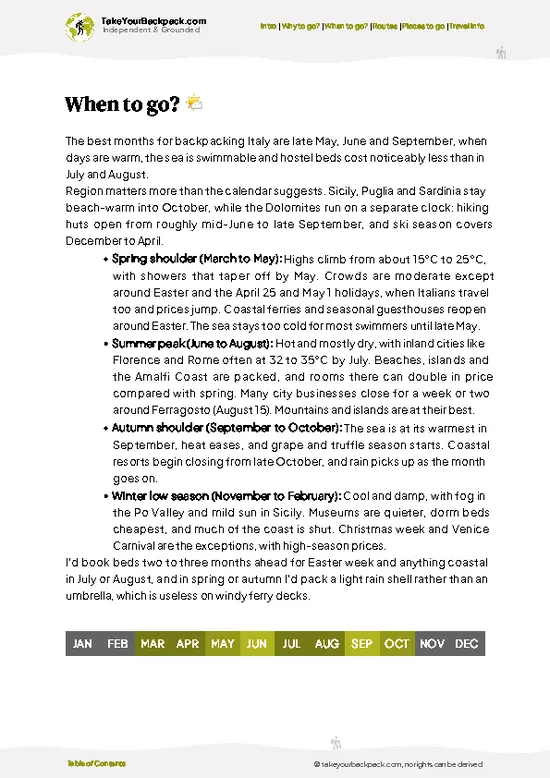
  • Weather: Verona enjoys a Mediterranean climate. Spring (April to June) offers mild, pleasant days around 15-25°C (59-77°F), perfect for exploring without overheating or freezing. Autumn mirrors this comfort, while summer can spike to 30-35°C (86-95°F), making midday wandering a sweaty slog.

  • Daylight Hours: Long days in late spring and early summer stretch up to 15 hours, giving you more daylight to soak in the city’s Roman ruins and piazzas. Winter days shrink to about 9 hours, limiting your sightseeing window.

  • Crowds: Peak tourist season hits July and August, swelling crowds and hiking prices. Shoulder seasons (April-June, September-October) balance fewer tourists with lively street life and open attractions.

  • Seasonal Activities: Verona’s famed opera season at the Arena runs June
read more 👉

  • Weather: Verona enjoys a Mediterranean climate. Spring (April to June) offers mild, pleasant days around 15-25°C (59-77°F), perfect for exploring without overheating or freezing. Autumn mirrors this comfort, while summer can spike to 30-35°C (86-95°F), making midday wandering a sweaty slog.

  • Daylight Hours: Long days in late spring and early summer stretch up to 15 hours, giving you more daylight to soak in the city’s Roman ruins and piazzas. Winter days shrink to about 9 hours, limiting your sightseeing window.

  • Crowds: Peak tourist season hits July and August, swelling crowds and hiking prices. Shoulder seasons (April-June, September-October) balance fewer tourists with lively street life and open attractions.

  • Seasonal Activities: Verona’s famed opera season at the Arena runs June to August, a cultural jackpot but also a crowd magnet. Spring and autumn host local markets and festivals that feel more authentic and less touristy.

  • Price Fluctuations: Accommodation and flights peak in summer. Shoulder seasons offer better deals without sacrificing much on weather or experience. Winter is cheapest but colder and quieter, which might suit budget travelers who don’t mind the chill.


Pro-tip: Aim for late May or early October—sweet spots where weather, crowd size, and prices align to give you the best bang for your backpacking buck.


source: climatestotravel.comJANJanuary: fair for travelingFEBFebruary: fair for travelingMARMarch: good for travelingAPRApril: highly recommended for travelingMAYMay: excellent for travelingJUNJune: highly recommended for travelingJULJuly: good for travelingAUGAugust: fair for travelingSEPSeptember: highly recommended for travelingOCTOctober: highly recommended for travelingNOVNovember: fair for travelingDECDecember: fair for traveling
italy-city-verona
© Google | Aneta Kupszta

✈️ The backpacker research shortcutItaly Travel Guide

An offline-friendly backpacking guide with optimized travel routes, ranked highlights, transport advice, and the best areas to stay.
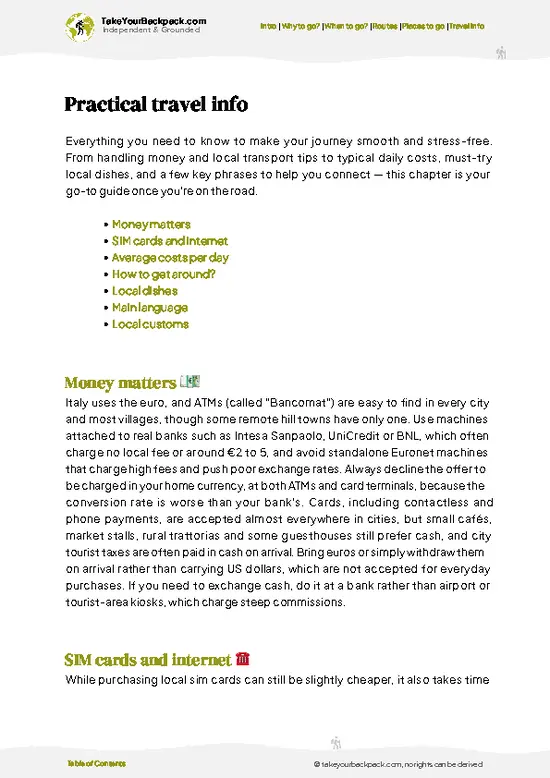
example page 0 from our offline Travel Guide for Italy
example page 1 from our offline Travel Guide for Italy
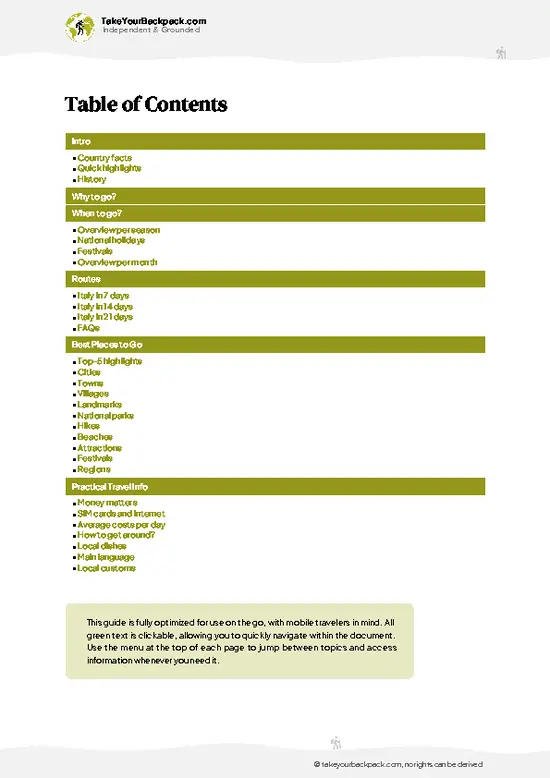
example page 2 from our offline Travel Guide for Italy
example page 3 from our offline Travel Guide for Italy
example page 4 from our offline Travel Guide for Italy
example page 5 from our offline Travel Guide for Italy
example page 6 from our offline Travel Guide for Italy
example page 7 from our offline Travel Guide for Italy
The digital guide (526 pages) contains:
143 highlights, ranked by travel appeal
Optimized 7, 14 & 21-day travel routes
Cities, national parks, landmarks, beaches
How to get around
Offline-friendly for travel without Wi-Fi
👉 Click to see all 30+ guide features

📅 Plan smarter in minutes, not weeks
Month by month travel advice
Festivals & national holidays
Budget expectations

🗺️ Go to the right places, skip the overrated ones
Honest pros & cons of destinations
Top hikes, parks & viewpoints
Lesser-known places most travelers miss
Clear “worth it vs skip it” guidance

🛏️ Travel smoothly without rookie mistakes
Best areas to stay
Transport systems explained simply
Common scams & safety advice
SIM cards, money & practical tips

🌍 Understand the country, not just visit it
Culture & traditions
52 Essential phrases & customs
Festivals worth planning around
Traveler-friendly historical context
Insights that make places more meaningful

📱 Built for real travel conditions
Fully downloadable PDF
Works completely offline
Optimized for phone use
Useful in remote areas & buses
Everything in one place
Save weeks of stressful planning
Get instant access to your full guide. 30‑day money-back guarantee.


By proceeding you agree to our terms.
Sent to your inbox immediately after payment • 100% Secure Checkout
Best Backpacking Travel Advisor 2025 tourism awardBest Backpacking
Travel Advisor
2025
What others say about Take Your Backpack Guides:
⭐⭐⭐⭐⭐
Fantastic, amazing amount of information!
⭐⭐⭐⭐⭐
My goodness this is amazing, it's what I've been looking for hats off too you!
⭐⭐⭐⭐⭐
I think this is absolutely BRILLIANT
⭐⭐⭐⭐
Very complete and informative. It's still missing places, but I gotta to commend you
⭐⭐⭐⭐⭐
This is truly amazing, thank you, can't wait to explore it with my kids!
⭐⭐⭐⭐⭐
Awesome resource, thank you!
⭐⭐⭐⭐⭐
This is amazing! Can't wait to explore the ones I haven't seen
⭐⭐⭐⭐
I love this! Well done, great idea.
⭐⭐⭐⭐⭐
Thanks for taking the time to make this gem!
⭐⭐⭐⭐⭐
This might be the best website I've ever seen.
⭐⭐⭐⭐⭐
Congratulations, and thank you so much for your work; it's incredibly valuable.
⭐⭐⭐⭐
In all seriousness I think you did a great job pointing out the important spots
⭐⭐⭐⭐⭐
10/10 very good
⭐⭐⭐⭐⭐
As someone who's only just starting to visit regularly this is awesome, thank you.
⭐⭐⭐⭐
Thank you very much! I'm going to visit my dad, it's going to be very useful!
⭐⭐⭐⭐⭐
This is really cool! We'll be travelling for the first time and this definitely come in handy.
⭐⭐⭐⭐⭐
You are now our minister of culture, congratulations 👨‍💼
⭐⭐⭐⭐⭐
Just wanted to tell you that this is a pearl! Going to follow your recommendations.
⭐⭐⭐⭐⭐
This is so cool. I'll definitely be using the resource for my travels soon.
⭐⭐⭐⭐⭐
This is very impressive! Good work.
⭐⭐⭐⭐⭐
This is an amazing and informative site. Very well done!

🛏️ Where to stay?Where staying makes the most sense

Verona’s historic center is the undeniable hotspot for backpackers who want to maximize social energy without blowing the budget. It’s compact, walkable, and packed with lively piazzas where solo travelers naturally bump into each other. The vibe here is a mix of old-world charm and youthful buzz—think cobblestones underfoot, street musicians, and late-night gelato runs. Hostels cluster around this core, offering dorms that are affordable and social, making it easy to swap stories over a shared kitchen or communal lounge.

Step outside the historic center, and you hit quieter residential neighborhoods … read more 👉
Verona’s historic center is the undeniable hotspot for backpackers who want to maximize social energy without blowing the budget. It’s compact, walkable, and packed with lively piazzas where solo travelers naturally bump into each other. The vibe here is a mix of old-world charm and youthful buzz—think cobblestones underfoot, street musicians, and late-night gelato runs. Hostels cluster around this core, offering dorms that are affordable and social, making it easy to swap stories over a shared kitchen or communal lounge.

Step outside the historic center, and you hit quieter residential neighborhoods like Borgo Milano or Veronetta. These areas are safer and less touristy but come with a trade-off: fewer social hubs and longer walks or bus rides to the action. They’re ideal if you want to save a bit more money and don’t mind sacrificing immediate nightlife or spontaneous meetups.

In short, the historic center is your best bet for comfort in terms of social life and convenience, while the outskirts offer savings at the cost of time and ease. Knowing this lets you pick your own balance of comfort, cost, and connection.

🚌 Getting aroundMoving around without the hassle

Verona moves with a rhythm that’s part old-world precision, part relaxed Italian charm. It’s not a city where you’ll find the frantic rush of a metropolis, but don’t mistake that for laziness. Here, schedules exist, but they bend to the flow of daily life rather than dictate it. The streets pulse with a mix of locals strolling to espresso stops and tourists weaving through cobblestones, all under the watchful gaze of Roman ruins and Renaissance palaces. Understanding how to navigate this blend of order and ease is your key to unlocking Verona without wasting time or money.


  • Walking: Verona’s compact historic center is a walker’s playground. No cost, zero wait times, and the freedom to explore every narrow alley and piazza at your own pace. Walking is often the fastest way to get between
read more 👉
Verona moves with a rhythm that’s part old-world precision, part relaxed Italian charm. It’s not a city where you’ll find the frantic rush of a metropolis, but don’t mistake that for laziness. Here, schedules exist, but they bend to the flow of daily life rather than dictate it. The streets pulse with a mix of locals strolling to espresso stops and tourists weaving through cobblestones, all under the watchful gaze of Roman ruins and Renaissance palaces. Understanding how to navigate this blend of order and ease is your key to unlocking Verona without wasting time or money.


  • Walking: Verona’s compact historic center is a walker’s playground. No cost, zero wait times, and the freedom to explore every narrow alley and piazza at your own pace. Walking is often the fastest way to get between close landmarks, especially since many streets are pedestrian-only.


  • ATV Buses: The local bus network runs roughly from 6:00 AM to midnight, with tickets costing about €1.50 for a 75-minute ride. Buses are reliable but can slow down during peak hours or on narrow streets. They’re a budget-friendly way to cover longer distances outside the center, but expect some waiting and standing room only during rush times.


  • Tramvia (Light Rail): Verona’s tram line is limited but efficient, connecting key points like the train station and the outskirts. Runs every 10-15 minutes from early morning until late evening, tickets are around €1.50. It’s faster and more comfortable than buses, but routes are fixed, so it’s less flexible for spontaneous detours.


  • Taxi: Taxis are available but pricey compared to public transit, with a base fare around €3.50 plus €1.10 per kilometer. They offer door-to-door comfort and save time when you’re in a rush or traveling with heavy gear, but they’re a trade-off in cost and often unnecessary within the city center.


  • Bicycle Rentals: Verona’s flat terrain and bike lanes make cycling a smart middle ground between walking and public transit. Rentals cost about €10-15 per day. You gain speed and flexibility without the expense of taxis, but you’ll need to be comfortable navigating some cobblestone streets and traffic.


Mastering Verona’s transit means balancing your priorities: save money by walking and using buses, gain comfort and speed with trams or bikes, or splurge on taxis when time is tight. Each choice shifts your experience, so pick your moves like a chess player—strategic, deliberate, and always a step ahead.

👛 Costs (as of 30 July 2026)Travel costs and budget guide for Verona

Backpacking in Verona, Italy, comes with a clear set of trade-offs between time, money, and comfort, and knowing the daily costs upfront lets you play the system smartly.
  • Dorm Accommodation (High Season): Expect to pay around €25-€35 per night in popular months like summer and early fall. These dorms are basic but clean, often close to the city center, which saves you time on transport.
  • Dorm Accommodation (Off-Season): Drop to about €15-€25 per night when the crowds thin out in winter or early spring. You might sacrifice some social buzz but gain quieter, more relaxed vibes.
  • Meals: Budget about €10-€15 daily if you stick to casual spots—think panini, pizza by the slice, or simple trattorias. Cooking your own meals can cut this down, but eating out in Verona is part of the experience.
  • Local
read more 👉
Backpacking in Verona, Italy, comes with a clear set of trade-offs between time, money, and comfort, and knowing the daily costs upfront lets you play the system smartly.
  • Dorm Accommodation (High Season): Expect to pay around €25-€35 per night in popular months like summer and early fall. These dorms are basic but clean, often close to the city center, which saves you time on transport.
  • Dorm Accommodation (Off-Season): Drop to about €15-€25 per night when the crowds thin out in winter or early spring. You might sacrifice some social buzz but gain quieter, more relaxed vibes.
  • Meals: Budget about €10-€15 daily if you stick to casual spots—think panini, pizza by the slice, or simple trattorias. Cooking your own meals can cut this down, but eating out in Verona is part of the experience.
  • Local Transport: Single bus tickets cost roughly €1.30 each. If you plan a few trips a day, this adds up quickly, so consider your next option.
  • City Transport Pass: A 24-hour pass runs about €4.50, which is a no-brainer if you’re hopping around. It’s a small upfront cost that buys you freedom and saves time waiting for tickets.
  • Basic Activities/Entry Fees: Verona’s main draws, like Juliet’s House or the Arena, charge around €6-€10. Budget for 1-2 paid entries daily if you want a solid cultural hit without breaking the bank.
  • Miscellaneous Expenses: Factor in about €5-€10 for things like bottled water, snacks, or a gelato break. These small indulgences add flavor to your day but can quietly inflate your budget.

All told, you’re looking at roughly €50-€75 per day for a balanced backpacking experience in Verona. This range covers basic comfort without skimping on the essentials that make the city tick. Knowing these numbers upfront means you can decide where to stretch and where to save, turning your trip into a well-played game rather than a guessing match.


source: numbeo.com
⚠️ Prices can change and everyone travels differently, so take this as a rough guide. Hope it helps you plan your adventure!

🚌 Day tripsExploring the surroundings

Verona is a fantastic launchpad for day trips that blend culture, history, and stunning landscapes. Here are some high-value excursions that will enrich your Italian adventure.

Lake Garda
Just a short train ride (about 30 minutes) from Verona, Lake Garda offers breathtaking views and charming towns. Explore Sirmione, famous for its thermal springs and the ancient Scaligero Castle. You can easily spend a day wandering the lakeside promenades, sampling local limoncello, and soaking in the sun. Expect to spend around €15 on transport and another €20 for food and activities. The best time to visit is late spring or early fall when the crowds are thinner. A common mistake? Skipping the ferry rides; they provide a unique perspective of the lake.


Bologna
In about an hour, you can be in Bologna, … read more 👉
Verona is a fantastic launchpad for day trips that blend culture, history, and stunning landscapes. Here are some high-value excursions that will enrich your Italian adventure.

Lake Garda
Just a short train ride (about 30 minutes) from Verona, Lake Garda offers breathtaking views and charming towns. Explore Sirmione, famous for its thermal springs and the ancient Scaligero Castle. You can easily spend a day wandering the lakeside promenades, sampling local limoncello, and soaking in the sun. Expect to spend around €15 on transport and another €20 for food and activities. The best time to visit is late spring or early fall when the crowds are thinner. A common mistake? Skipping the ferry rides; they provide a unique perspective of the lake.


Bologna
In about an hour, you can be in Bologna, the culinary heart of Italy. Dive into the local food scene with a pasta-making class or simply indulge in a plate of tagliatelle al ragù. The city’s vibrant atmosphere and stunning architecture make it a feast for the senses. Budget around €20 for the train and €30 for food and activities. Fall is ideal, as the food festivals are in full swing. First-timers often miss the hidden trattorias; don’t just stick to the main squares!
👉 Explore Bologna

Verona’s Vineyards
Take a short bus ride to the nearby Valpolicella region, known for its rich red wines. Spend the day touring vineyards, tasting Amarone, and enjoying the rolling hills. A wine tour can cost around €25, including tastings, while transport will be about €10. Late summer is perfect for grape harvesting, but spring offers beautiful blooms. Many travelers forget to book tastings in advance, which can lead to disappointment.


Vicenza
Just under an hour away, Vicenza is a UNESCO World Heritage site filled with Palladian architecture. The Teatro Olimpico is a must-see, showcasing stunning design and history. Expect to spend around €15 on transport and €10 for entry fees. Spring and early fall are best for pleasant weather. A common pitfall is underestimating the time needed to explore; give yourself a full day to soak it all in.
👉 Explore Vicenza
Want to know what more Italy offers?
The Italy Travel Guide describes 143 highlights, from cities to national parks, from beaches to hikes

Get the Travel Guide -

🍲 FoodLocal Cuisine & Drinks

In Verona, food is a celebration of local flavors and traditions. You can’t miss the bigoli, a thick, hand-rolled pasta often served with duck sauce. Pair it with a glass of Valpolicella, a red wine that’s as rich as the city’s history.

For a casual bite, head to the markets. The bustling stalls offer fresh produce, cured meats, and local cheeses. Grab a panino stuffed with soppressa, a cured salami that’s a regional favorite. Street food is alive here, with vendors selling arancini—crispy rice balls that are perfect for a quick snack.

When it comes to drinks, the aperitivo culture is a must-experience. Locals gather in the early evening for a spritz, often accompanied by small bites. It’s a social ritual, so don’t rush; savor the moment.

Etiquette is simple: share your food and drink … read more 👉
In Verona, food is a celebration of local flavors and traditions. You can’t miss the bigoli, a thick, hand-rolled pasta often served with duck sauce. Pair it with a glass of Valpolicella, a red wine that’s as rich as the city’s history.

For a casual bite, head to the markets. The bustling stalls offer fresh produce, cured meats, and local cheeses. Grab a panino stuffed with soppressa, a cured salami that’s a regional favorite. Street food is alive here, with vendors selling arancini—crispy rice balls that are perfect for a quick snack.

When it comes to drinks, the aperitivo culture is a must-experience. Locals gather in the early evening for a spritz, often accompanied by small bites. It’s a social ritual, so don’t rush; savor the moment.

Etiquette is simple: share your food and drink stories. It’s all about connection, and in Verona, every meal is an invitation to engage with the vibrant local life.

🛡️ SafetyStaying Safe: What Travelers Should Know

Verona is generally safe, but like any city, it has its quirks. Stay alert in crowded areas like Piazza delle Erbe, where pickpockets might lurk. If you’re solo, avoid dimly lit streets after dark; stick to well-trafficked paths.

Scams are rare, but be cautious of overly friendly strangers offering unsolicited help or trying to sell you something. A common annoyance is the occasional tourist trap restaurant; check reviews before diving in.

Carry your belongings close and maintain a confident demeanor. If something feels off, trust your instincts and move on. Engaging with locals can enhance your experience, but keep your wits about you. Enjoy Verona’s charm while staying savvy.

Other Italian cities near Verona

Explore more nearby:

  • Vicenza—Palladian villas, arcaded streets, goldsmith workshops| 44 km away
  • Brescia—Roman ruins, industrial districts, alpine foothills| 62 km away
  • Padua—frescoed chapels, botanical gardens, arcaded piazzas| 69 km away

💡 Not sure where to go next?
Create a personalized itinerary for Italy including Verona and the places that fit your trip.

Generate my itinerary

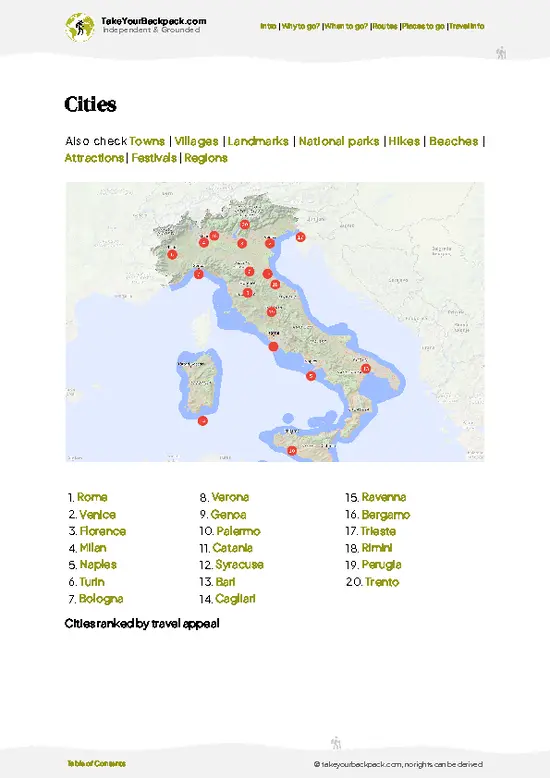
👉 Discover all cities

Or checkout all Italy has to offer (think cities, towns, villages, national parks, hikes, beaches, festivals)
Country photo of Italy

We 💚 feedbackIs it worth it?

Verona’s charm lies in its palpable history. Strolling through ancient streets, you can almost hear the whispers of Shakespeare’s characters. But here’s the catch: it can get crowded, especially during peak season. You’ll sacrifice some tranquility for that rich atmosphere. Embrace the buzz, but plan your visits to the major sights early or late in the day to savor the magic without the masses.

✈️ When did I visit Italy?
Italy I have vistited a couple of times: Rome already when I was still in high school, and I did a 7 day hike in the Dolomites in 2021.

✍️ Help improve this page!
The information on this page is based on my own backpacking experience in Italy, supplemented with up-to-date research and feedback from other travelers. Travel details can change, so if you notice anything outdated or incomplete, feel free to let me know.


🙋‍♂️ Give feedback

👋 Meet the founderWho’s Behind Take Your Backpack?

Johan, backpacker and founder of TakeYourBackpackHi, I’m Johan (Netherlands 🇳🇱), the creator of TakeYourBackpack. Over the past decade, I’ve backpacked through 80+ countries across six continents, gaining extensive experience with independent travel, long-term trips, and overland routes.

This site is built on a combination of firsthand travel experience and carefully curated insights from other backpackers. Many guides are based on places I’ve personally visited, while others bring together tips, observations, and practical advice shared by trusted travelers I’ve met along the way.

The goal is to provide realistic, experience-driven guidance — not generic itineraries — so you can explore destinations with better context, clearer expectations, and more confidence.

Get full Italy guide •
Instant download • 143 highlights • Full Offline guide