×

Japan🇯🇵 | regionsChugoku regioncoastal villages, volcanic landscapes, ancient shrines | things to do and best time to go

Explore Ise-Shima National ParkExplore Iya Valley

Backpacking in Chugoku region
👍 Recommendedregion ranked #4
By Johan Kruseman 🇳🇱 | Updated September 4, 2026

Most people only realize on their last day in Chugoku that they’ve basically been getting “Japan peak season” experiences at shoulder-season prices and crowd levels. Chugoku is that western chunk of Honshu between Kansai (Osaka/Kyoto) and Kyushu, the bit most people speed through on the Shinkansen without looking out the window. For backpackers, it’s a trade: you give up some convenience and nightlife density, and in return you get Hiroshima’s heavy history, Okayama’s easy base-city comfort, the old castle town of Hagi, the dunes of Tottori, and quiet fishing villages along the Sea of Japan. Trains connect the main cities well, but smaller coastal and mountain spots mean slower local lines or buses. It’s cheaper and more low-key than Kansai, less polished than Kyushu, and feels more “regular Japan” than Tokyo—sometimes sleepy, sometimes magical, rarely overrun.

Discover everything you want to know in the 📖 Japan Travel Guide.


Get your Japan guide
140 ranked highlights, routes & tips, works offline (482 pages)
Loading the map 🌍
CLICK TO FILTER
cities
towns
villages
landmarks
national parks
hikes
beaches
attractions
festivals
regions
SHOW COUNTRY’S BESTSHOW ALL

✨ Why go?
Ranked #4 region in Japan
The unique appeal for travelers

In the Chugoku region of Japan, backpackers find a sweet spot between nature and culture. You can explore mountains, coastal towns, and historic sites without the hassle of constant relocation. This region offers a variety of landscapes that keep your journey fresh.

Imagine waking up to the serenity of rice paddies one day and wandering through the ancient streets of Kurashiki the next. The transport flexibility here is a game-changer. Trains and buses connect you to key spots, making it easy to hop from one experience to another.

Plus, you can dive into slow travel. Spend a few days in a town, savoring local cuisine and soaking in the atmosphere. This isn’t just about ticking boxes; it’s about immersing yourself in the rhythm of life.

When you choose Chugoku, you’re not just sacrificing … read more 👉
In the Chugoku region of Japan, backpackers find a sweet spot between nature and culture. You can explore mountains, coastal towns, and historic sites without the hassle of constant relocation. This region offers a variety of landscapes that keep your journey fresh.

Imagine waking up to the serenity of rice paddies one day and wandering through the ancient streets of Kurashiki the next. The transport flexibility here is a game-changer. Trains and buses connect you to key spots, making it easy to hop from one experience to another.

Plus, you can dive into slow travel. Spend a few days in a town, savoring local cuisine and soaking in the atmosphere. This isn’t just about ticking boxes; it’s about immersing yourself in the rhythm of life.

When you choose Chugoku, you’re not just sacrificing time or comfort; you’re investing in a richer experience. The blend of natural beauty and cultural depth makes every moment feel worthwhile.
Want to include Chugoku region in your Japan route?
Create a personalized Japan itinerary that includes Chugoku region and the places that fit your trip — based on your travel style, budget, and available time. Get your route in seconds.

Generate my trip

💡 HighlightsPlaces and moments you shouldn't skip

  1. Tottori Sand Dunes (Tottori Sakyu) — Japan’s largest dunes meet the Sea of Japan: walk or sandboard down wind-sculpted slopes, catch sunrise over the water, and watch local fishermen pull boats in at low tide. It’s a desert-in-Japan vibe you won’t get anywhere else in the country.
  2. Mount Mitoku & Nageiredo Hall — (Hidden gem) A jaw-dropping cliff-hugging Buddhist hall reached by a steep, mossy trail through cedar forests. Few tourists make the trek, so you get real quiet, dramatic views, and the weird thrill of standing under a temple clinging to a rock face.
  3. Bitchu Matsuyama Castle (Takahashi) — One of the handful of original mountain-top castles left in Japan, perched above misty valleys. The hike up feels rewarding, and the castle’s wooden keep and views over agricultural terraces feel
read more 👉
  1. Tottori Sand Dunes (Tottori Sakyu) — Japan’s largest dunes meet the Sea of Japan: walk or sandboard down wind-sculpted slopes, catch sunrise over the water, and watch local fishermen pull boats in at low tide. It’s a desert-in-Japan vibe you won’t get anywhere else in the country.
  2. Mount Mitoku & Nageiredo Hall — (Hidden gem) A jaw-dropping cliff-hugging Buddhist hall reached by a steep, mossy trail through cedar forests. Few tourists make the trek, so you get real quiet, dramatic views, and the weird thrill of standing under a temple clinging to a rock face.
  3. Bitchu Matsuyama Castle (Takahashi) — One of the handful of original mountain-top castles left in Japan, perched above misty valleys. The hike up feels rewarding, and the castle’s wooden keep and views over agricultural terraces feel very old Japan and very local.
  4. Kurashiki Bikan Historical Quarter — A canalside Edo merchant district with willow-lined waterways, preserved white-walled storehouses, craft shops and atmospheric cafés. Great for wandering slowly, popping into small artisans’ workshops, and staying in a ryokan conversion without feeling like a theme-park experience.
  5. Akiyoshidai Plateau & Akiyoshido Cave — A huge karst plateau dotted with limestone sinkholes and one of Japan’s most impressive caves below. The surreal open landscape above and the cathedral-like chambers below are a combo you won’t find in most other regions.
  6. Oki Islands — (Hidden gem) Remote, raw islands off the Shimane coast with dramatic sea cliffs, marine terraces, and a distinct island culture: boat tours, local seafood, and quiet guesthouses. Ferries make it doable in a weekend and the geology/folk traditions feel uniquely Oki.
  7. Shimanami Kaido (Onomichi-Imabari cycling route) — My personal favorite — a multi-island cycle route with short bridge crossings, tiny island cafés, and panoramic Seto Inland Sea views. Rent a bike in Onomichi, ride as little or as much as you like, and jump on local ferries to mix islands and beaches.
  8. Iwami Ginzan Silver Mine & Mining Town — Historic mine trails, preserved mining settlements and forested ridgelines that tell the story of Japan’s historic silver industry. Hike between old mine sites and quiet village ruins — history meets proper nature, and it’s far less crowded than big heritage sites.
  9. Tsuwano (Shimane) — (Hidden gem) A tiny “little town” with carved samurai streets, a picturesque canal full of koi, and a slow, historic rhythm. It’s perfect for evening walks, trying local sake, and getting that small-town Japan feel without the tourist crush.
  10. Sandankyo Gorge (Hiroshima) — A narrow, ferned gorge with clear streams, wooden walkways and small boat rides; excellent hiking that’s especially gorgeous in autumn. It’s a proper nature escape close to Hiroshima city but has a quiet, local vibe that keeps it off the busy tourist lists.
Spotted a mistake or missing something? Contact us.

Things to do near Chugoku region

Ratings based on Tripadvisor reviews. When you book through this link, you support our work at no extra cost to you.

⌛️ 5 daysWhat you can realistically do in a week

Day 1: Hiroshima
Hiroshima is your gateway. The Shinkansen (bullet train) zips you here from Tokyo in about four hours. You’ll want to start with the Peace Memorial Park. It’s heavy but essential. The museum tells a story that’s both heartbreaking and inspiring. Spend the afternoon exploring the local food scene—try okonomiyaki, a savory pancake that’s a local specialty. The evening is perfect for a riverside stroll, soaking in the city’s vibe.

Day 2: Miyajima
A quick ferry ride takes you to Miyajima, home of the iconic floating torii gate. The morning is best for photos—less crowded and the light is just right. Hike up Mount Misen for panoramic views. It’s a workout, but the fresh air and scenery are worth it. Grab lunch at a local eatery before heading back to Hiroshima. This day is … read more 👉
Day 1: Hiroshima
Hiroshima is your gateway. The Shinkansen (bullet train) zips you here from Tokyo in about four hours. You’ll want to start with the Peace Memorial Park. It’s heavy but essential. The museum tells a story that’s both heartbreaking and inspiring. Spend the afternoon exploring the local food scene—try okonomiyaki, a savory pancake that’s a local specialty. The evening is perfect for a riverside stroll, soaking in the city’s vibe.

Day 2: Miyajima
A quick ferry ride takes you to Miyajima, home of the iconic floating torii gate. The morning is best for photos—less crowded and the light is just right. Hike up Mount Misen for panoramic views. It’s a workout, but the fresh air and scenery are worth it. Grab lunch at a local eatery before heading back to Hiroshima. This day is about soaking in the spiritual essence of Japan, a refreshing contrast to the previous day’s history.

Day 3: Okayama
Traveling to Okayama takes about an hour. Here, you’ll find Korakuen Garden, one of Japan’s top three gardens. Spend the morning wandering through its serene paths. In the afternoon, visit Okayama Castle. The black exterior is striking, and the views from the top are a treat. This day is about tranquility and beauty, a nice breather before the next adventure.

Day 4: Kurashiki
Just a short train ride from Okayama, Kurashiki’s historic canal area feels like stepping back in time. The preserved buildings and quaint shops are perfect for a leisurely exploration. Don’t miss the Ohara Museum of Art. It’s a hidden treasure that showcases Western art in a traditional setting. This day is about savoring the slower pace of life.

Day 5: Tottori
Head to Tottori, known for its sand dunes. It’s a bit off the main route, but the unique landscape is worth it. Rent a sandboard or take a camel ride for a quirky experience. The dunes are stunning at sunset. This day is your off-path reward, adding a dash of adventure to your trip.

The must-do day? Day 2 in Miyajima. It encapsulates the spirit of Japan—nature, culture, and history all in one. You’ll leave feeling enriched, a true insider.
Turn your Chugoku region visit into an Japan adventure
Build a complete Japan route with Chugoku region, hidden gems, must-see destinations, and realistic travel times included.

Generate my trip

🌤️ When to go?Best time to visit Chugoku region


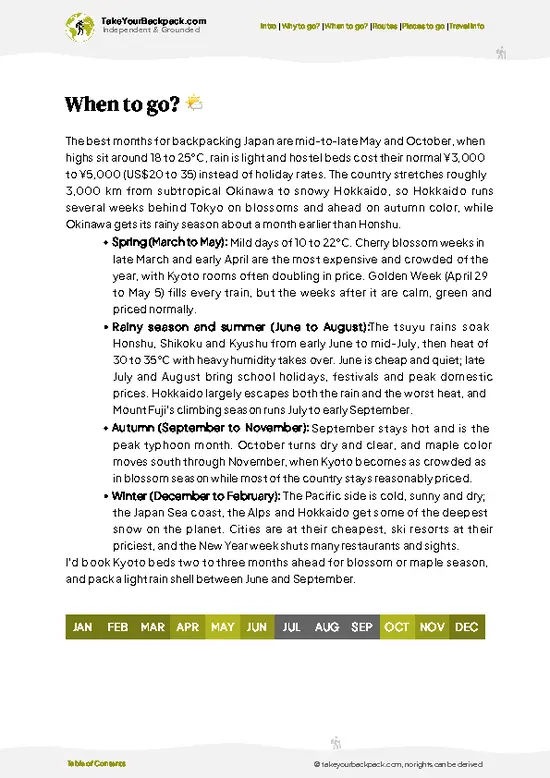
  • Weather: Spring (March to May) and autumn (September to November) bring mild, dry conditions perfect for hiking and city strolls. Summers can be hot and humid, often hitting 30°C (86°F) or more, while winters dip to around 0°C (32°F), sometimes colder in mountainous spots.

  • Temperature: Spring averages 12-20°C (54-68°F), autumn 15-22°C (59-72°F). These ranges keep you comfortable without sweating buckets or bundling up like a snowman.

  • Daylight Hours: Longer days in spring and autumn mean more time to explore—up to 12-13 hours of daylight. Winter days shrink to 9-10 hours, cutting your adventure time short.

  • Crowds: Cherry blossom season in April and autumn foliage in November draw crowds, especially around Hiroshima and Okayama. Visit just before or after these peaks to dodge the tourist
read more 👉

  • Weather: Spring (March to May) and autumn (September to November) bring mild, dry conditions perfect for hiking and city strolls. Summers can be hot and humid, often hitting 30°C (86°F) or more, while winters dip to around 0°C (32°F), sometimes colder in mountainous spots.

  • Temperature: Spring averages 12-20°C (54-68°F), autumn 15-22°C (59-72°F). These ranges keep you comfortable without sweating buckets or bundling up like a snowman.

  • Daylight Hours: Longer days in spring and autumn mean more time to explore—up to 12-13 hours of daylight. Winter days shrink to 9-10 hours, cutting your adventure time short.

  • Crowds: Cherry blossom season in April and autumn foliage in November draw crowds, especially around Hiroshima and Okayama. Visit just before or after these peaks to dodge the tourist crush.

  • Seasonal Activities: Spring offers hanami (flower viewing) parties, while autumn delivers vibrant maple leaf hikes. Summer festivals can be fun but expect heat and humidity to sap your energy.

  • Price Fluctuations: Expect accommodation and transport prices to spike during cherry blossom and autumn foliage seasons. Off-peak spring and late autumn offer better deals without sacrificing much in experience.


Pro-tip: Aim for late March or mid-October—just before the main crowds arrive. You’ll catch crisp weather, decent daylight, and prices that won’t make your wallet scream.


source: climatestotravel.comJANJanuary: fair for travelingFEBFebruary: fair for travelingMARMarch: highly recommended for travelingAPRApril: good for travelingMAYMay: excellent for travelingJUNJune: fair for travelingJULJuly: fair for travelingAUGAugust: fair for travelingSEPSeptember: highly recommended for travelingOCTOctober: excellent for travelingNOVNovember: good for travelingDECDecember: fair for traveling
when-to-go

✈️ The backpacker research shortcutJapan Travel Guide

An offline-friendly backpacking guide with optimized travel routes, ranked highlights, transport advice, and the best areas to stay.
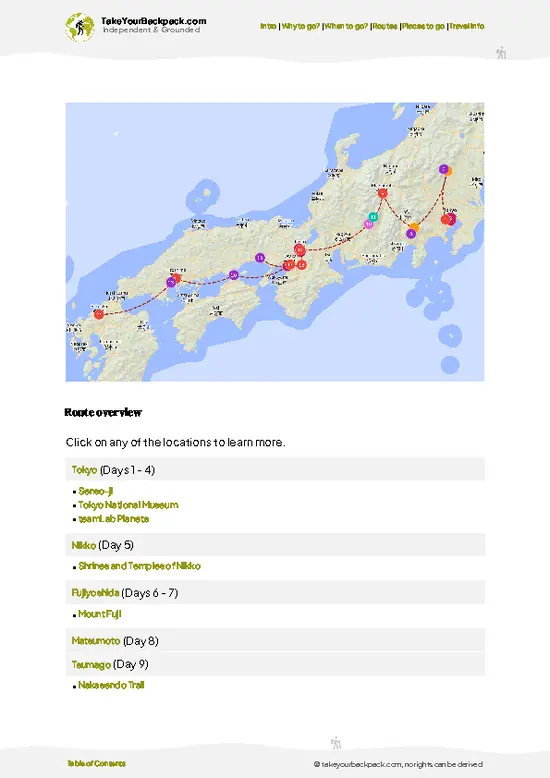
example page 0 from our offline Travel Guide for Japan
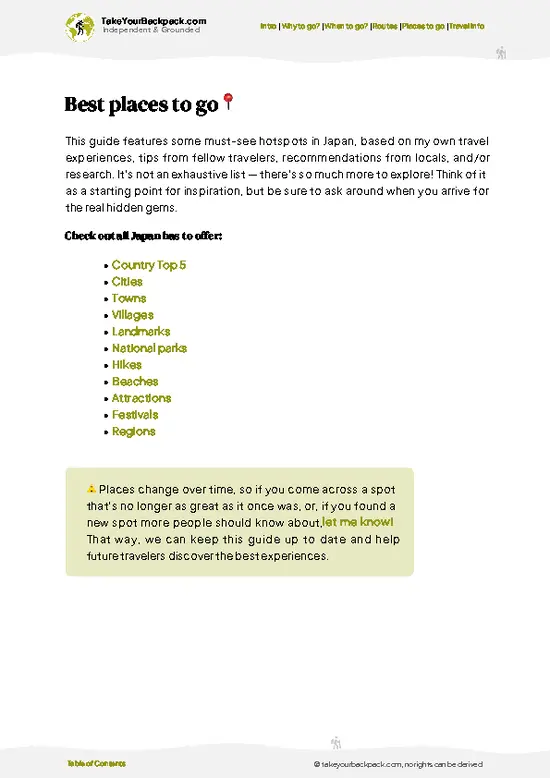
example page 1 from our offline Travel Guide for Japan
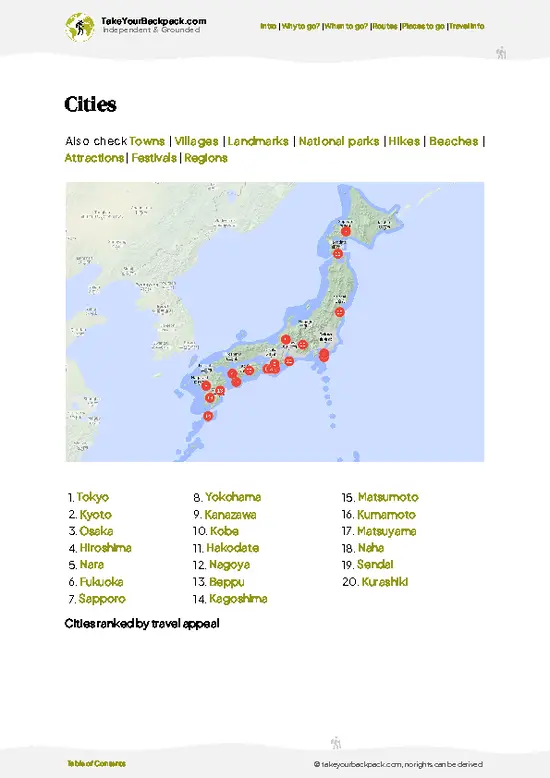
example page 2 from our offline Travel Guide for Japan
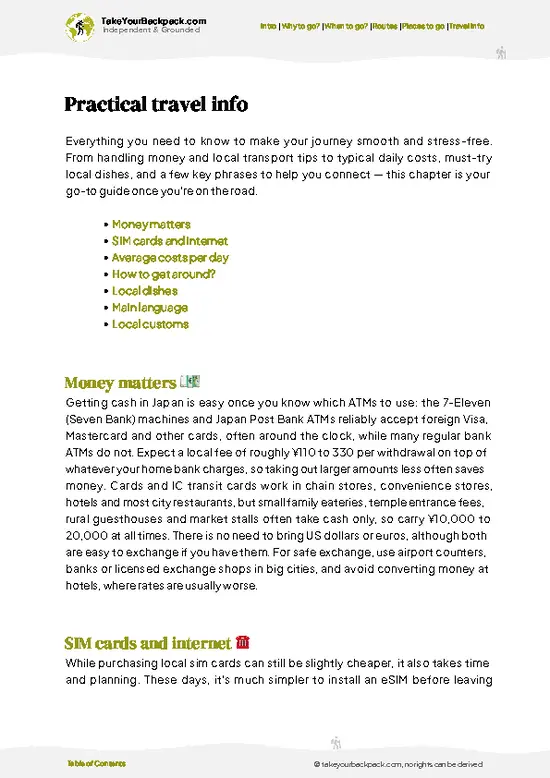
example page 3 from our offline Travel Guide for Japan
example page 4 from our offline Travel Guide for Japan
example page 5 from our offline Travel Guide for Japan
example page 6 from our offline Travel Guide for Japan
example page 7 from our offline Travel Guide for Japan
The digital guide (482 pages) contains:
140 highlights, ranked by travel appeal
Optimized 7, 14 & 21-day travel routes
Cities, national parks, landmarks, beaches
How to get around
Offline-friendly for travel without Wi-Fi
👉 Click to see all 30+ guide features

📅 Plan smarter in minutes, not weeks
Month by month travel advice
Festivals & national holidays
Budget expectations

🗺️ Go to the right places, skip the overrated ones
Honest pros & cons of destinations
Top hikes, parks & viewpoints
Lesser-known places most travelers miss
Clear “worth it vs skip it” guidance

🛏️ Travel smoothly without rookie mistakes
Best areas to stay
Transport systems explained simply
Common scams & safety advice
SIM cards, money & practical tips

🌍 Understand the country, not just visit it
Culture & traditions
52 Essential phrases & customs
Festivals worth planning around
Traveler-friendly historical context
Insights that make places more meaningful

📱 Built for real travel conditions
Fully downloadable PDF
Works completely offline
Optimized for phone use
Useful in remote areas & buses
Everything in one place
Save weeks of stressful planning
Get instant access to your full guide. 30‑day money-back guarantee.
+ Add another guide for just €6.50

By proceeding you agree to our terms.
Sent to your inbox immediately after payment • 100% Secure Checkout
Best Backpacking Travel Advisor 2025 tourism awardBest Backpacking
Travel Advisor
2025
What others say about Take Your Backpack Guides:
⭐⭐⭐⭐⭐
Fantastic, amazing amount of information!
⭐⭐⭐⭐⭐
My goodness this is amazing, it's what I've been looking for hats off too you!
⭐⭐⭐⭐⭐
I think this is absolutely BRILLIANT
⭐⭐⭐⭐
Very complete and informative. It's still missing places, but I gotta to commend you
⭐⭐⭐⭐⭐
This is truly amazing, thank you, can't wait to explore it with my kids!
⭐⭐⭐⭐⭐
Awesome resource, thank you!
⭐⭐⭐⭐⭐
This is amazing! Can't wait to explore the ones I haven't seen
⭐⭐⭐⭐
I love this! Well done, great idea.
⭐⭐⭐⭐⭐
Thanks for taking the time to make this gem!
⭐⭐⭐⭐⭐
This might be the best website I've ever seen.
⭐⭐⭐⭐⭐
Congratulations, and thank you so much for your work; it's incredibly valuable.
⭐⭐⭐⭐
In all seriousness I think you did a great job pointing out the important spots
⭐⭐⭐⭐⭐
10/10 very good
⭐⭐⭐⭐⭐
As someone who's only just starting to visit regularly this is awesome, thank you.
⭐⭐⭐⭐
Thank you very much! I'm going to visit my dad, it's going to be very useful!
⭐⭐⭐⭐⭐
This is really cool! We'll be travelling for the first time and this definitely come in handy.
⭐⭐⭐⭐⭐
You are now our minister of culture, congratulations 👨‍💼
⭐⭐⭐⭐⭐
Just wanted to tell you that this is a pearl! Going to follow your recommendations.
⭐⭐⭐⭐⭐
This is so cool. I'll definitely be using the resource for my travels soon.
⭐⭐⭐⭐⭐
This is very impressive! Good work.
⭐⭐⭐⭐⭐
This is an amazing and informative site. Very well done!

🛏️ Where to stay?Choosing the right base

In the Chugoku region, you’ve got some killer spots that scream backpacker-friendly. First up, Okayama. This city is a hub for budget travelers, thanks to its easy access to nearby attractions like Kurashiki’s historic canal area. The vibe is chill, and you’ll find plenty of cafes where you can swap stories with fellow wanderers.

Next, consider Hiroshima. It’s not just about the history; the nightlife is vibrant and welcoming. The Peace Memorial Park draws a crowd, but the local izakayas are where you’ll really connect with the culture. Plus, it’s a great base for day trips to Miyajima Island, … read more 👉
In the Chugoku region, you’ve got some killer spots that scream backpacker-friendly. First up, Okayama. This city is a hub for budget travelers, thanks to its easy access to nearby attractions like Kurashiki’s historic canal area. The vibe is chill, and you’ll find plenty of cafes where you can swap stories with fellow wanderers.

Next, consider Hiroshima. It’s not just about the history; the nightlife is vibrant and welcoming. The Peace Memorial Park draws a crowd, but the local izakayas are where you’ll really connect with the culture. Plus, it’s a great base for day trips to Miyajima Island, where you can hike and enjoy stunning views.

Then there’s Tottori, a bit off the beaten path but worth it. Famous for its sand dunes, it’s a quieter spot where you can really soak in the local life. The beach is a perfect place to unwind after a day of exploring.

Lastly, Shimonoseki offers a unique blend of seafood and scenic views. It’s less touristy, so you’ll feel like a local while enjoying fresh catches right from the sea. Each of these places has its own charm, making them ideal for socializing and discovering Japan’s hidden treasures.

🚌 Getting aroundHow to get around Chugoku region

The Chugoku region is a delightful dance of order and spontaneity. Here, the rhythm of life flows between the serene mountains and the bustling coastal towns, where rigid schedules meet the chaotic charm of local festivals and spontaneous roadside stalls. You might find yourself on a train that glides through rice paddies, only to hop off and meander through a market where the scent of grilled fish pulls you in. This is a place where time can feel elastic, and the best experiences often come from following your instincts rather than a strict itinerary.


  • Trains: The Shinkansen (bullet train) is your best bet for speed and comfort. The Nozomi service connects Okayama to Hiroshima in about 40 minutes, with tickets around ¥10,000. First train departs at 6:00 AM, last at 8:00 PM. For budget travelers,
read more 👉
The Chugoku region is a delightful dance of order and spontaneity. Here, the rhythm of life flows between the serene mountains and the bustling coastal towns, where rigid schedules meet the chaotic charm of local festivals and spontaneous roadside stalls. You might find yourself on a train that glides through rice paddies, only to hop off and meander through a market where the scent of grilled fish pulls you in. This is a place where time can feel elastic, and the best experiences often come from following your instincts rather than a strict itinerary.


  • Trains: The Shinkansen (bullet train) is your best bet for speed and comfort. The Nozomi service connects Okayama to Hiroshima in about 40 minutes, with tickets around ¥10,000. First train departs at 6:00 AM, last at 8:00 PM. For budget travelers, consider the slower local trains, which are cheaper but take longer.


  • Buses: Local buses crisscross the region, connecting smaller towns and attractions. Fares range from ¥500 to ¥1,500 depending on distance. They’re less frequent, so check schedules ahead of time. The last buses usually leave around 8:00 PM, so plan accordingly.


  • Rental Cars: If you crave freedom, renting a car is a game-changer. Prices start around ¥5,000 per day. This option gives you access to hidden spots like the scenic coastline of the San’in region. Just remember, parking can be tricky in cities, and you’ll need an International Driving Permit.


  • Bicycles: Many towns, especially in places like Onomichi, are bike-friendly. Rentals are about ¥1,000 per day. Cycling allows you to explore at your own pace, stopping for local snacks or a quick photo op whenever the mood strikes.


  • Ferries: If you’re heading to the islands like Naoshima, ferries are essential. Prices vary but expect around ¥1,500 for a one-way trip. They offer stunning views of the Seto Inland Sea, making the journey part of the adventure.


For a tactical tip: download the Japan Transit app before you go. It’ll help you navigate train schedules and bus routes like a local, ensuring you spend less time waiting and more time exploring. Trust me, this little hack will save you from the dreaded “where the heck am I?” moment.

🍲 FoodEating & Drinking in Chugoku region

In the Chugoku region, food is a celebration of local flavors and traditions. Dive into okonomiyaki, a savory pancake layered with cabbage, meat, and seafood, cooked right in front of you. The aroma wafts through bustling street stalls, where you can grab a quick bite and chat with locals. Don’t miss fugu, the infamous pufferfish, prepared by skilled chefs who make it both a thrill and a treat.

For a casual dining experience, head to local markets. Here, you’ll find stalls brimming with fresh seafood and seasonal produce. Try kaki (oysters) from Hiroshima, plump and briny, or sample sake from the region’s many breweries. The rich, smooth flavors of local sake are a must-try, especially when paired with a small plate of yakitori skewers sizzling over charcoal.

Dining customs are relaxed but … read more 👉
In the Chugoku region, food is a celebration of local flavors and traditions. Dive into okonomiyaki, a savory pancake layered with cabbage, meat, and seafood, cooked right in front of you. The aroma wafts through bustling street stalls, where you can grab a quick bite and chat with locals. Don’t miss fugu, the infamous pufferfish, prepared by skilled chefs who make it both a thrill and a treat.

For a casual dining experience, head to local markets. Here, you’ll find stalls brimming with fresh seafood and seasonal produce. Try kaki (oysters) from Hiroshima, plump and briny, or sample sake from the region’s many breweries. The rich, smooth flavors of local sake are a must-try, especially when paired with a small plate of yakitori skewers sizzling over charcoal.

Dining customs are relaxed but respectful. Always say “itadakimasu” before your meal and “gochisousama” afterward to show appreciation. Eating while walking is common, but be mindful of local etiquette—avoid slurping your noodles too loudly. Embrace the communal vibe, share dishes, and soak in the warmth of Chugoku’s culinary scene.

FAQFrequently asked questions about Chugoku region

5 to 7 days are sufficient to explore the main highlights of the Chugoku region. This allows time to visit Hiroshima, Okayama, Matsue, and the scenic areas like the Sand Dunes in Tottori. More days are needed if you want to explore rural or less accessible areas in depth.
You can get around the Chugoku region using the JR West rail network, including the Sanyo Shinkansen for faster travel between major cities. Local buses and ferries also connect smaller towns and tourist spots, with a regional rail pass costing around 7,000 yen for 3 days. Walking and cycling are practical in city centers and smaller towns.
The Chugoku region is known for its historical sites like Hiroshima Peace Memorial and Itsukushima Shrine on Miyajima Island. It is also famous for natural attractions such as the Tottori Sand Dunes and the scenic coastline of the Sea of Japan. The region is a cultural hub with traditional crafts, hot springs, and samurai heritage.
⚠️ Things can change over time, so always validate details locally before you go.

Other Japanese regions near Chugoku region

Explore more nearby:

  • Iya Valley—vine bridges, deep gorges, remote hamlets| 149 km away
  • Kansai region—imperial cities, culinary districts, temple complexes| 331 km away
  • Southern region—warm climate, volcanic islands, subtropical flora| 383 km away

💡 Not sure where to go next?
Create a personalized itinerary for Japan including Chugoku region and the places that fit your trip.

Generate my itinerary

👉 Discover all regions

Or checkout all Japan has to offer (think cities, towns, villages, national parks, hikes, beaches, festivals)
Country photo of Japan

We 💚 feedbackKey takeaways before you go

Chugoku is a treasure trove of authentic experiences. The food scene, especially the okonomiyaki in Hiroshima, is a must-try—it’s like a savory pancake party in your mouth. But here’s the kicker: public transport can be a bit tricky. If you’re not renting a car, expect some delays and limited options. Embrace the slower pace; it’s part of the charm. Just plan ahead, and you’ll be golden.

✈️ When did I visit Japan?
As part of my 1.5 year travel around the world trip, I visited Japan in August 2015.

✍️ Help improve this page!
The information on this page is based on my own backpacking experience in Japan, supplemented with up-to-date research and feedback from other travelers. Travel details can change, so if you notice anything outdated or incomplete, feel free to let me know.


🙋‍♂️ Give feedback

👋 Meet the founderWho’s Behind Take Your Backpack?

Johan, backpacker and founder of TakeYourBackpackHi, I’m Johan (Netherlands 🇳🇱), the creator of TakeYourBackpack. Over the past decade, I’ve backpacked through 80+ countries across six continents, gaining extensive experience with independent travel, long-term trips, and overland routes.

This site is built on a combination of firsthand travel experience and carefully curated insights from other backpackers. Many guides are based on places I’ve personally visited, while others bring together tips, observations, and practical advice shared by trusted travelers I’ve met along the way.

The goal is to provide realistic, experience-driven guidance — not generic itineraries — so you can explore destinations with better context, clearer expectations, and more confidence.

Get full Japan guide •
Instant download • 140 highlights • Full Offline guide