
×

Japan🇯🇵 | national parksFuji-Hakone-Izu National ParkMount Fuji, volcanic lakes, hot springs, coastal islands | things to do and best time to go

Explore YakushimaExplore Oze National Park

Backpacking in Fuji-Hakone-Izu
🏆 Top picknational park ranked #1
By Johan Kruseman 🇳🇱 | Updated September 4, 2026

Most people think “Fuji-Hakone-Izu” means one neat, walkable area around Mount Fuji; it’s actually a sprawling, broken-up national park spread across central Honshu, from Yamanashi and Shizuoka around Fuji down through Hakone and all the way to the Izu Peninsula and offshore islands. For backpackers, it’s a high-reward, medium-hassle destination: world-class volcanic scenery, lakes, hot springs, and coastal cliffs, but stitched together by trains, buses, and the occasional awkward transfer. Hiking ranges from mellow lakeside loops and Fuji’s summit trails in season to short but steep volcanic walks in Hakone; wildlife is there, but you’re mostly here for landscapes and geothermal drama. No single entrance fee, but transport and ropeways add up fast, and popular spots get crowded with day-trippers. Camping exists but is limited and regulated, so most budget travelers lean on hostels and cheap ryokan. Compared with quieter spots like Oze or the Japan Alps, Fuji-Hakone-Izu is busier, more fragmented, and less “wild,” but far more accessible if you’re bouncing out of Tokyo with a backpack and a tight schedule.

Discover everything you want to know in the 📖 Japan Travel Guide.


Get your Japan guide
140 ranked highlights, routes & tips, works offline (482 pages)
Loading the map 🌍
CLICK TO FILTER
cities
towns
villages
landmarks
national parks
hikes
beaches
attractions
festivals
regions
SHOW COUNTRY’S BESTSHOW ALL

✨ Why go?
Ranked #1 national park in Japan
The unique appeal for travelers

Backpackers flock to Fuji-Hakone-Izu National Park for its blend of independent exploration and stunning landscapes. This park offers a unique opportunity to camp or stay in budget-friendly hostels nearby, making it accessible for those watching their wallets. You can pitch your tent with views of Mount Fuji or find a cozy spot in a hostel that feels like home.

The trail variety is another draw. From easy walks to challenging hikes, there’s something for everyone. You can wander through lush forests, soak in hot springs, or tackle the iconic ascent of Fuji itself. This diversity allows for a personalized experience, catering to both the casual stroller and the seasoned trekker.

What sets this park apart is its suitability for self-guided travelers. You won’t feel pressured to join a tour; … read more 👉
Backpackers flock to Fuji-Hakone-Izu National Park for its blend of independent exploration and stunning landscapes. This park offers a unique opportunity to camp or stay in budget-friendly hostels nearby, making it accessible for those watching their wallets. You can pitch your tent with views of Mount Fuji or find a cozy spot in a hostel that feels like home.

The trail variety is another draw. From easy walks to challenging hikes, there’s something for everyone. You can wander through lush forests, soak in hot springs, or tackle the iconic ascent of Fuji itself. This diversity allows for a personalized experience, catering to both the casual stroller and the seasoned trekker.

What sets this park apart is its suitability for self-guided travelers. You won’t feel pressured to join a tour; the well-marked trails and ample resources make navigation straightforward. Just grab a map and go. This freedom enhances your adventure, allowing you to savor the moments that matter without the constraints of a group. In Fuji-Hakone-Izu, you’ll find a space that respects your pace and your budget.
Want to include Fuji-Hakone-Izu National Park in your Japan route?
Create a personalized Japan itinerary that includes Fuji-Hakone-Izu National Park and the places that fit your trip — based on your travel style, budget, and available time. Get your route in seconds.

Generate my trip

💡 HighlightsThe experiences that define the visit

  • Mount Fuji (and the Subaru Line 5th Station) — Japan’s iconic stratovolcano and a UNESCO World Cultural Heritage site. The full summit hike is a classic (main season: July-August) but even a trip up to the 5th Station gives jaw-dropping views, sunrise options, and a sense of scale without committing to the whole climb.
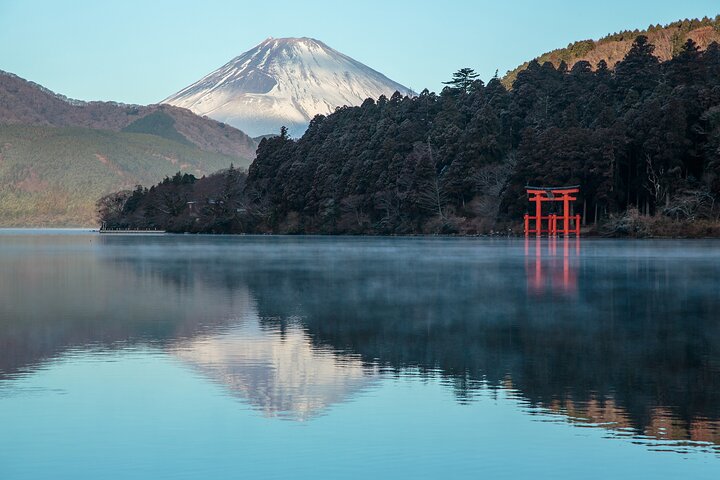
  • Lake Kawaguchiko (Fuji Five Lakes) — Calm water, perfect reflections of Fuji, and easy walking trails that make sunrise and sunset unbeatable for photographers. There are hot-spring towns and cheap boat cruises; personal favorite for relaxed camping vibes and that “mirror-Fuji” shot.
  • Shiraito Falls — A delicate, curtain-like waterfall fed by volcanic springs; very photogenic and peaceful compared with the busier spots. It’s an easy walk from the parking area and a nice contrast
read more 👉
  • Mount Fuji (and the Subaru Line 5th Station) — Japan’s iconic stratovolcano and a UNESCO World Cultural Heritage site. The full summit hike is a classic (main season: July-August) but even a trip up to the 5th Station gives jaw-dropping views, sunrise options, and a sense of scale without committing to the whole climb.
  • Lake Kawaguchiko (Fuji Five Lakes) — Calm water, perfect reflections of Fuji, and easy walking trails that make sunrise and sunset unbeatable for photographers. There are hot-spring towns and cheap boat cruises; personal favorite for relaxed camping vibes and that “mirror-Fuji” shot.
  • Shiraito Falls — A delicate, curtain-like waterfall fed by volcanic springs; very photogenic and peaceful compared with the busier spots. It’s an easy walk from the parking area and a nice contrast to the big wide mountain views.
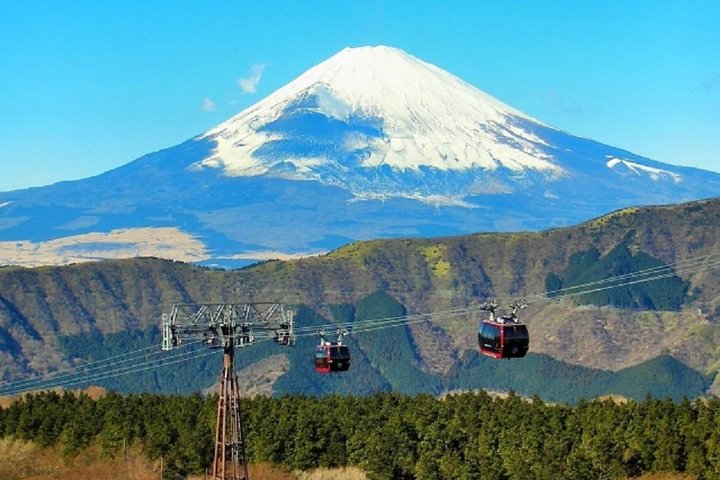
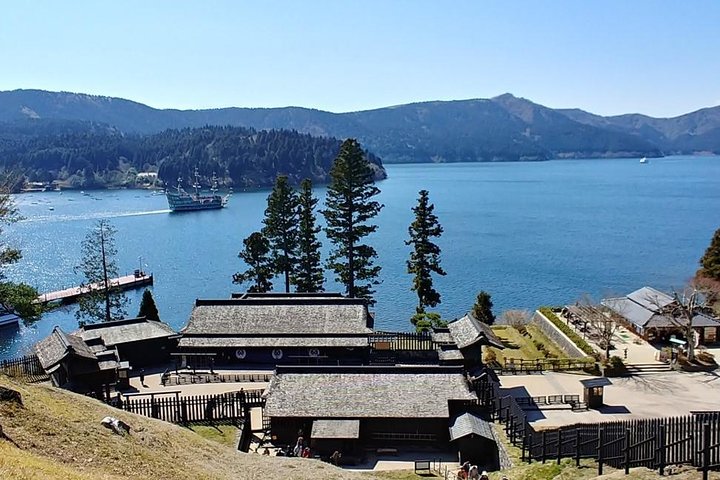
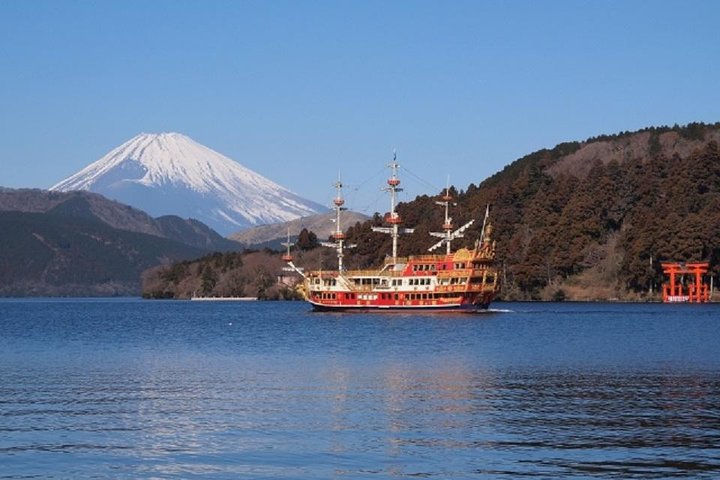
  • Hakone (Lake Ashi & Hakone Shrine) — A caldera lake with a photogenic torii gate and crater-ringed hiking trails. Take the pirate-ship cruise or the ropeway for views of Mt. Fuji on clear days, then soak in onsens nearby to recover.
  • Owakudani Valley — A raw volcanic valley with steam vents, sulfur smells, and the infamous “black eggs” boiled in hot springs. The place feels lunar and dramatic; note it’s often closed when volcanic activity rises, and the air can be pungent.
  • Jogasaki Coast (Izu Peninsula) — Rugged cliffs, a dramatic suspension bridge, and a cliffside trail hugging the Pacific. Great for sunset walks, coastal birdlife, and wild sea-spray views that feel a world away from city Japan.
  • The Izu Islands (e.g., Oshima, Miyake) — Volcanic, subtropical islands reachable by ferry or plane; excellent for snorkeling/diving, seabirds, and unusual island flora. Quiet, off-the-beaten-path vibes and a real change from the mainland’s crowds.
Spotted a mistake or missing something? Contact us.
Things to do around Fuji-Hakone-Izu National Park

Ratings based on Tripadvisor reviews. When you book through this link, you support our work at no extra cost to you.

🌤️ When to go?When to go for the best experience


  • Weather: Spring (April to early June) and autumn (September to November) offer the most stable weather. Avoid the rainy season in June and typhoon risks in late summer. Winter can be brutally cold, with temperatures often below freezing at higher elevations.

  • Temperature: Spring and autumn days hover around 15-20°C (59-68°F), perfect for hiking without overheating or freezing. Summer can spike above 30°C (86°F), making strenuous hikes uncomfortable, while winter drops to -5°C (23°F) or lower near Mount Fuji’s summit.

  • Daylight Hours: Longer days in late spring and early autumn mean more hiking time—up to 14 hours of daylight. Winter days shrink to about 9 hours, limiting your window for safe trekking.

  • Crowds: Golden Week (late April to early May) and autumn foliage weekends draw heavy
read more 👉

  • Weather: Spring (April to early June) and autumn (September to November) offer the most stable weather. Avoid the rainy season in June and typhoon risks in late summer. Winter can be brutally cold, with temperatures often below freezing at higher elevations.

  • Temperature: Spring and autumn days hover around 15-20°C (59-68°F), perfect for hiking without overheating or freezing. Summer can spike above 30°C (86°F), making strenuous hikes uncomfortable, while winter drops to -5°C (23°F) or lower near Mount Fuji’s summit.

  • Daylight Hours: Longer days in late spring and early autumn mean more hiking time—up to 14 hours of daylight. Winter days shrink to about 9 hours, limiting your window for safe trekking.

  • Crowds: Golden Week (late April to early May) and autumn foliage weekends draw heavy crowds, especially around Hakone and Fuji’s 5th Station. Mid-week visits outside these peaks reduce congestion significantly.

  • Seasonal Activities: Cherry blossoms in April and vibrant fall colors in October-November are the main draws. Winter offers snowshoeing but requires serious gear and experience. Summer is best for alpine flowers but expect heat and humidity.

  • Price Fluctuations: Accommodation and transport costs spike during Golden Week and autumn foliage season. Booking well in advance or visiting shoulder seasons can save you a significant chunk of your budget.


Pro-tip: Aim for late May or early October—weather is stable, crowds thin, and prices reasonable. You’ll keep your energy and wallet intact for the moments that truly count on the trail.


source: climatestotravel.comJANJanuary: fair for travelingFEBFebruary: fair for travelingMARMarch: good for travelingAPRApril: excellent for travelingMAYMay: highly recommended for travelingJUNJune: fair for travelingJULJuly: fair for travelingAUGAugust: fair for travelingSEPSeptember: highly recommended for travelingOCTOctober: excellent for travelingNOVNovember: highly recommended for travelingDECDecember: fair for traveling
when-to-go

✈️ The backpacker research shortcutJapan Travel Guide

An offline-friendly backpacking guide with optimized travel routes, ranked highlights, transport advice, and the best areas to stay.
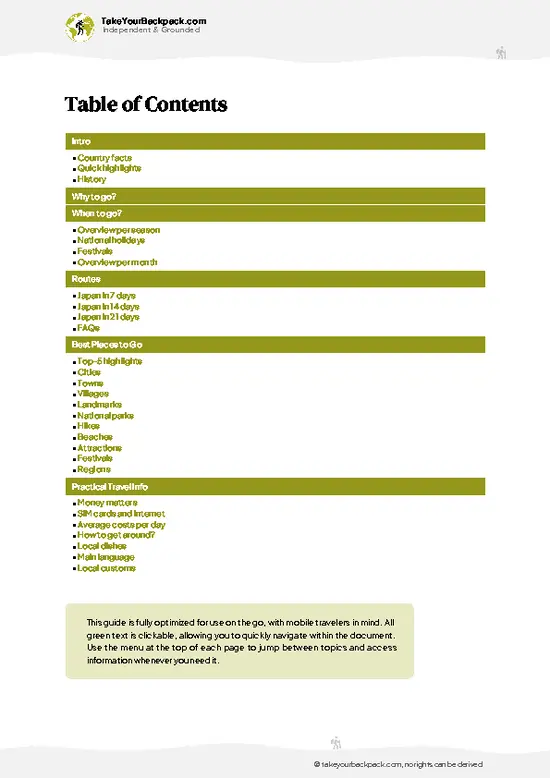
example page 0 from our offline Travel Guide for Japan
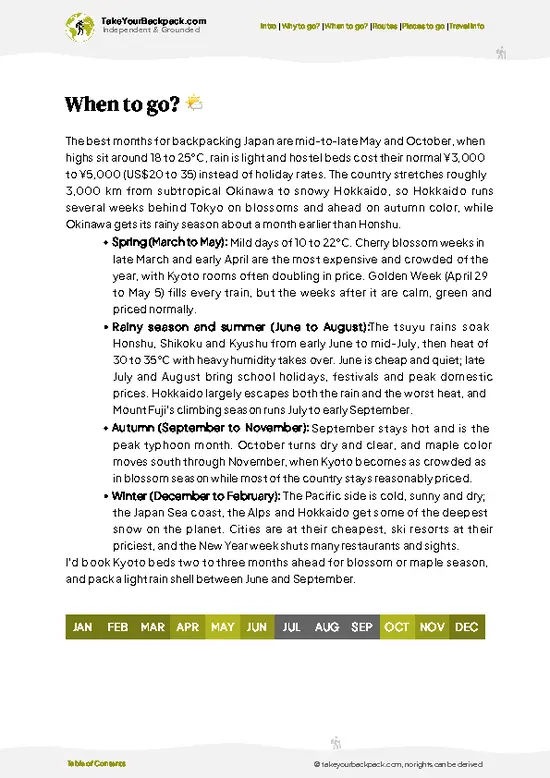
example page 1 from our offline Travel Guide for Japan
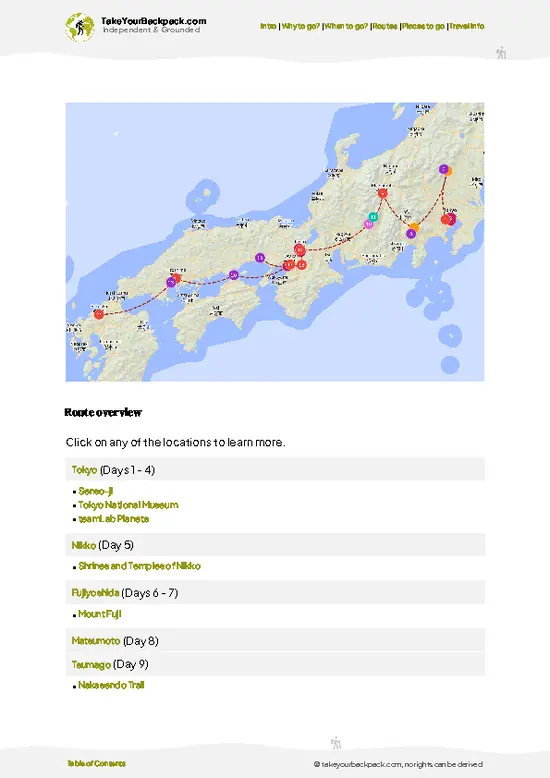
example page 2 from our offline Travel Guide for Japan
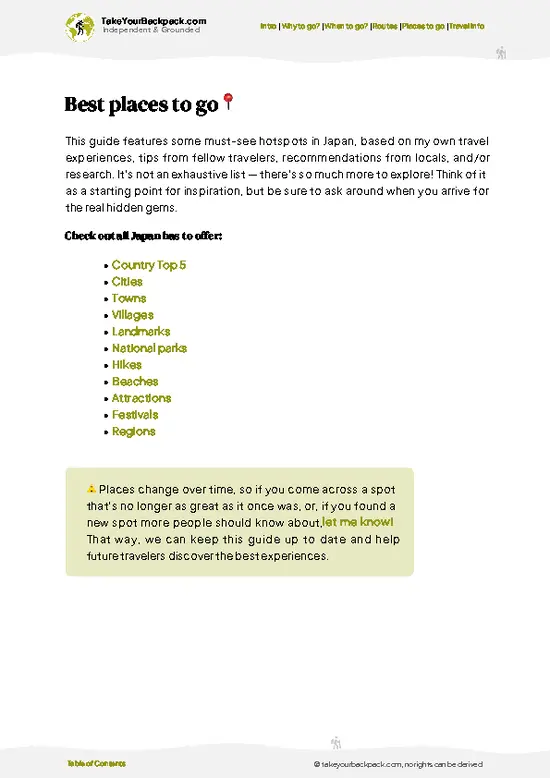
example page 3 from our offline Travel Guide for Japan
example page 4 from our offline Travel Guide for Japan
example page 5 from our offline Travel Guide for Japan
example page 6 from our offline Travel Guide for Japan
example page 7 from our offline Travel Guide for Japan
The digital guide (482 pages) contains:
140 highlights, ranked by travel appeal
Optimized 7, 14 & 21-day travel routes
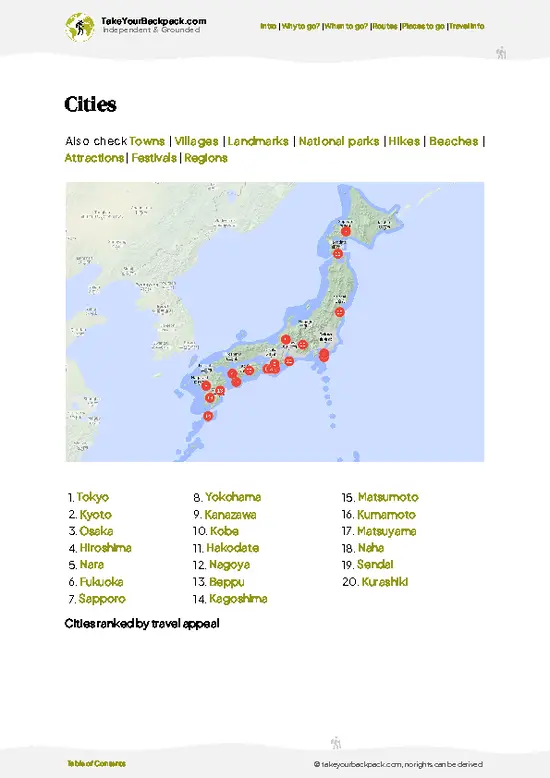
Cities, national parks, landmarks, beaches
How to get around
Offline-friendly for travel without Wi-Fi
👉 Click to see all 30+ guide features

📅 Plan smarter in minutes, not weeks
Month by month travel advice
Festivals & national holidays
Budget expectations

🗺️ Go to the right places, skip the overrated ones
Honest pros & cons of destinations
Top hikes, parks & viewpoints
Lesser-known places most travelers miss
Clear “worth it vs skip it” guidance

🛏️ Travel smoothly without rookie mistakes
Best areas to stay
Transport systems explained simply
Common scams & safety advice
SIM cards, money & practical tips

🌍 Understand the country, not just visit it
Culture & traditions
52 Essential phrases & customs
Festivals worth planning around
Traveler-friendly historical context
Insights that make places more meaningful

📱 Built for real travel conditions
Fully downloadable PDF
Works completely offline
Optimized for phone use
Useful in remote areas & buses
Everything in one place
Save weeks of stressful planning
Get instant access to your full guide. 30‑day money-back guarantee.
+ Add another guide for just US$7.80

By proceeding you agree to our terms.
Sent to your inbox immediately after payment • 100% Secure Checkout
Best Backpacking Travel Advisor 2025 tourism awardBest Backpacking
Travel Advisor
2025
What others say about Take Your Backpack Guides:
⭐⭐⭐⭐⭐
Fantastic, amazing amount of information!
⭐⭐⭐⭐⭐
My goodness this is amazing, it's what I've been looking for hats off too you!
⭐⭐⭐⭐⭐
I think this is absolutely BRILLIANT
⭐⭐⭐⭐
Very complete and informative. It's still missing places, but I gotta to commend you
⭐⭐⭐⭐⭐
This is truly amazing, thank you, can't wait to explore it with my kids!
⭐⭐⭐⭐⭐
Awesome resource, thank you!
⭐⭐⭐⭐⭐
This is amazing! Can't wait to explore the ones I haven't seen
⭐⭐⭐⭐
I love this! Well done, great idea.
⭐⭐⭐⭐⭐
Thanks for taking the time to make this gem!
⭐⭐⭐⭐⭐
This might be the best website I've ever seen.
⭐⭐⭐⭐⭐
Congratulations, and thank you so much for your work; it's incredibly valuable.
⭐⭐⭐⭐
In all seriousness I think you did a great job pointing out the important spots
⭐⭐⭐⭐⭐
10/10 very good
⭐⭐⭐⭐⭐
As someone who's only just starting to visit regularly this is awesome, thank you.
⭐⭐⭐⭐
Thank you very much! I'm going to visit my dad, it's going to be very useful!
⭐⭐⭐⭐⭐
This is really cool! We'll be travelling for the first time and this definitely come in handy.
⭐⭐⭐⭐⭐
You are now our minister of culture, congratulations 👨‍💼
⭐⭐⭐⭐⭐
Just wanted to tell you that this is a pearl! Going to follow your recommendations.
⭐⭐⭐⭐⭐
This is so cool. I'll definitely be using the resource for my travels soon.
⭐⭐⭐⭐⭐
This is very impressive! Good work.
⭐⭐⭐⭐⭐
This is an amazing and informative site. Very well done!

🛏️ Where to stay?How to pick the right area

When it comes to staying near Fuji-Hakone-Izu National Park, you have solid options that cater to backpackers without breaking the bank.

Inside the park, accommodations are limited, but you can find a few traditional ryokans, like the Hakone Yuyado Zen. It offers a genuine Japanese experience with tatami mats and onsen baths. Just be aware that prices can spike during peak seasons, so book ahead.

If you prefer a more budget-friendly vibe, head to Hakone town. It’s a hub for backpackers, with hostels like Onsen Guesthouse HAKONE TENT. This place has a laid-back atmosphere and is close to the … read more 👉
When it comes to staying near Fuji-Hakone-Izu National Park, you have solid options that cater to backpackers without breaking the bank.

Inside the park, accommodations are limited, but you can find a few traditional ryokans, like the Hakone Yuyado Zen. It offers a genuine Japanese experience with tatami mats and onsen baths. Just be aware that prices can spike during peak seasons, so book ahead.

If you prefer a more budget-friendly vibe, head to Hakone town. It’s a hub for backpackers, with hostels like Onsen Guesthouse HAKONE TENT. This place has a laid-back atmosphere and is close to the Hakone Open-Air Museum.

Another option is Gotemba, located on the park’s eastern edge. It’s less touristy and offers affordable guesthouses. Plus, you’ll get a fantastic view of Mount Fuji.

Avoid staying in Tokyo if you can; it’s too far for day trips and will drain your energy and budget. Instead, focus on these towns for easy access to the park’s trails and hot springs. Prioritize your comfort and budget by choosing wisely, and you’ll have the energy for the adventures that matter.

👛 Costs (as of 4 September 2026)Travel costs and budget guide for Fuji-Hakone-Izu

Visiting Fuji-Hakone-Izu National Park can be a rewarding experience, but it’s essential to be aware of the costs involved to avoid any surprises.

Entry to the park itself is generally free. However, certain attractions within the park, like the Hakone Open-Air Museum, charge admission fees ranging from $15 to $20 USD. If you plan to take the Hakone Ropeway or the pirate ship on Lake Ashi, expect to pay around $15 to $25 USD for each ride.

Transportation can add up quickly. If you’re using public transport, a round-trip from Tokyo to Hakone can cost between $30 and $50 USD, depending on the train service you choose. Local buses and the Hakone Free Pass, which covers various transport options in the area, can range from $40 to $60 USD for a two-day pass.

Accommodations vary widely. Budget … read more 👉
Visiting Fuji-Hakone-Izu National Park can be a rewarding experience, but it’s essential to be aware of the costs involved to avoid any surprises.

Entry to the park itself is generally free. However, certain attractions within the park, like the Hakone Open-Air Museum, charge admission fees ranging from $15 to $20 USD. If you plan to take the Hakone Ropeway or the pirate ship on Lake Ashi, expect to pay around $15 to $25 USD for each ride.

Transportation can add up quickly. If you’re using public transport, a round-trip from Tokyo to Hakone can cost between $30 and $50 USD, depending on the train service you choose. Local buses and the Hakone Free Pass, which covers various transport options in the area, can range from $40 to $60 USD for a two-day pass.

Accommodations vary widely. Budget travelers might find hostels or guesthouses for about $30 to $60 USD per night. Mid-range hotels typically range from $100 to $200 USD, while luxury ryokans can exceed $300 USD per night.

Food costs can also fluctuate. A meal at a casual restaurant might set you back $10 to $20 USD, while dining at a nicer establishment could cost $30 to $50 USD or more.

Keep these figures in mind as you plan. They’ll help you allocate your budget wisely, ensuring you have the energy and funds for the experiences that truly matter.


source: japan.travel
⚠️ Prices can change and everyone travels differently, so take this as a rough guide. Hope it helps you plan your adventure!

🥾 TrailsBest hikes in Fuji-Hakone-Izu national park

The hiking opportunities in Fuji-Hakone-Izu National Park are pretty fantastic, blending stunning views with diverse terrain. You’ve got everything from volcanic landscapes to lush forests, and if you’re lucky, you might spot some wildlife like Japanese macaques or various bird species. The trails vary in difficulty, so there’s something for everyone, whether you’re a seasoned hiker or just looking for a leisurely stroll.

One of the standout trails is Owakudani Trail. Here’s a quick breakdown:
  • Length: 3 km
  • Estimated Duration: 1-2 hours
  • Difficulty Level: Moderate
  • Key Features: Stunning
read more 👉
The hiking opportunities in Fuji-Hakone-Izu National Park are pretty fantastic, blending stunning views with diverse terrain. You’ve got everything from volcanic landscapes to lush forests, and if you’re lucky, you might spot some wildlife like Japanese macaques or various bird species. The trails vary in difficulty, so there’s something for everyone, whether you’re a seasoned hiker or just looking for a leisurely stroll.

One of the standout trails is Owakudani Trail. Here’s a quick breakdown:
  • Length: 3 km
  • Estimated Duration: 1-2 hours
  • Difficulty Level: Moderate
  • Key Features: Stunning views of Mount Fuji, volcanic activity, hot springs
  • Terrain: Rocky paths, some steep sections

Another great option is Hakone Ridge Trail:
  • Length: 10 km
  • Estimated Duration: 4-5 hours
  • Difficulty Level: Moderate to Hard
  • Key Features: Panoramic views of the surrounding mountains and lakes
  • Terrain: Varied, with both flat and steep sections

Getting to the park is pretty straightforward. You can hop on a train from Tokyo to Hakone, which takes about 1.5 to 2 hours. The area can get crowded, especially on weekends and holidays, so if you can, try to go during the week. As for entrance fees, there’s no specific fee for the park itself, but some attractions and facilities may charge a small fee. Just be prepared for a bit of a crowd at the popular spots, especially if you’re visiting during cherry blossom season or autumn foliage.
⚠️ Hiking info can sometimes be outdated or inaccurate. Before you hit the trail, check the latest conditions with locals. If you do spot anything that's off, I'd love to hear from you, so I can update it for fellow travelers.

🛡️ SafetyStaying Safe: What Travelers Should Know

Fuji-Hakone-Izu National Park is generally well-managed, making it accessible for most hikers, but a few practical considerations can enhance your experience. Weather can shift quickly, especially around Mount Fuji. Be prepared for sudden rain or temperature drops; layering is key.

The terrain varies, with some steep sections that require careful footing. Trails are well-marked, but navigation can be tricky in foggy conditions. A reliable map or GPS is essential.

Wildlife encounters are rare, but if you spot a Japanese macaque or a deer, keep your distance. Feeding wildlife is a no-go; it disrupts their natural behavior.

First-time visitors often underestimate the importance of hydration and snacks. Carry enough water and energy-boosting food to keep your pace steady. Timing your hikes … read more 👉
Fuji-Hakone-Izu National Park is generally well-managed, making it accessible for most hikers, but a few practical considerations can enhance your experience. Weather can shift quickly, especially around Mount Fuji. Be prepared for sudden rain or temperature drops; layering is key.

The terrain varies, with some steep sections that require careful footing. Trails are well-marked, but navigation can be tricky in foggy conditions. A reliable map or GPS is essential.

Wildlife encounters are rare, but if you spot a Japanese macaque or a deer, keep your distance. Feeding wildlife is a no-go; it disrupts their natural behavior.

First-time visitors often underestimate the importance of hydration and snacks. Carry enough water and energy-boosting food to keep your pace steady. Timing your hikes is crucial; starting early helps you avoid crowds and gives you a chance to enjoy the serene morning atmosphere.

Respect trail etiquette, and you’ll find the park welcoming and rewarding.

FAQCommon questions from travelers

3 to 4 days are recommended to explore Fuji-Hakone-Izu National Park thoroughly, allowing time for hiking, visiting hot springs, and sightseeing around Mount Fuji and the Izu Peninsula.
Yes, you can visit Fuji-Hakone-Izu National Park without a car. Public transportation options include trains and buses connecting major spots like Hakone, Fuji Five Lakes, and the Izu Peninsula, though some remote areas may require additional walking or taxis.
No entrance fee or permit is required to enter Fuji-Hakone-Izu National Park. However, some specific attractions within the park, such as museums or ropeways, may charge separate fees.
⚠️ Things can change over time, so always validate details locally before you go.

Other Japanese national parks near Fuji-Hakone-Izu

Explore more nearby:


💡 Not sure where to go next?
Create a personalized itinerary for Japan including Fuji-Hakone-Izu and the places that fit your trip.

Generate my itinerary

👉 Discover all national parks

Or checkout all Japan has to offer (think cities, towns, villages, national parks, hikes, beaches, festivals)
Country photo of Japan

We 💚 feedbackKey takeaways before you go

Fuji-Hakone-Izu National Park is a treasure trove of natural beauty, with Mount Fuji standing as a breathtaking backdrop. The onsen experience here is a must—nothing beats soaking in hot springs while gazing at the mountain. But be prepared: the weather can be unpredictable. Rain can sneak up on you, so pack a reliable rain jacket. Staying dry means you’ll enjoy those stunning views without the stress.

✈️ When did I visit Japan?
As part of my 1.5 year travel around the world trip, I visited Japan in August 2015.

✍️ Help improve this page!
The information on this page is based on my own backpacking experience in Japan, supplemented with up-to-date research and feedback from other travelers. Travel details can change, so if you notice anything outdated or incomplete, feel free to let me know.


🙋‍♂️ Give feedback

👋 Meet the founderWho’s Behind Take Your Backpack?

Johan, backpacker and founder of TakeYourBackpackHi, I’m Johan (Netherlands 🇳🇱), the creator of TakeYourBackpack. Over the past decade, I’ve backpacked through 80+ countries across six continents, gaining extensive experience with independent travel, long-term trips, and overland routes.

This site is built on a combination of firsthand travel experience and carefully curated insights from other backpackers. Many guides are based on places I’ve personally visited, while others bring together tips, observations, and practical advice shared by trusted travelers I’ve met along the way.

The goal is to provide realistic, experience-driven guidance — not generic itineraries — so you can explore destinations with better context, clearer expectations, and more confidence.

Get full Japan guide •
Instant download • 140 highlights • Full Offline guide