
×

Japan🇯🇵 | national parksKirishima-Kinkowan National ParkCrater lakes, volcanic cones, fumaroles, bay panoramas | things to do and best time to go

Explore Hakusan National ParkExplore Ogasawara National Park

Backpacking in Kirishima-Kinkowan
👍 Recommendednational park ranked #13
By Johan Kruseman 🇳🇱 | Updated September 4, 2026

Most guides sell Kirishima-Kinkowan as “just” volcano hikes, but the real curveball for backpackers is how spread out and semi-urban it is: you’re bouncing between crater trails in Kirishima and coastal hot-spring towns around Kagoshima Bay, not wandering a single big forest block. The park sits in southern Kyushu, straddling Miyazaki and Kagoshima prefectures. Trails range from mellow crater loops to longer ridge walks with real weather exposure, plus monkeys and deer but not much big wildlife drama. Access is decent by bus, no entrance fee, but transport adds up and eruptions can close marquee routes without much warning. Camping and cheap ryokan exist yet are patchy and often require advance planning, and weekends draw local hikers to the main peaks. Compared with nearby Yakushima or Aso-Kuju, Kirishima-Kinkowan feels more fragmented and less “epic,” but also cheaper, more flexible, and easier to slot into a broader Kyushu loop if you’re watching both time and cash.

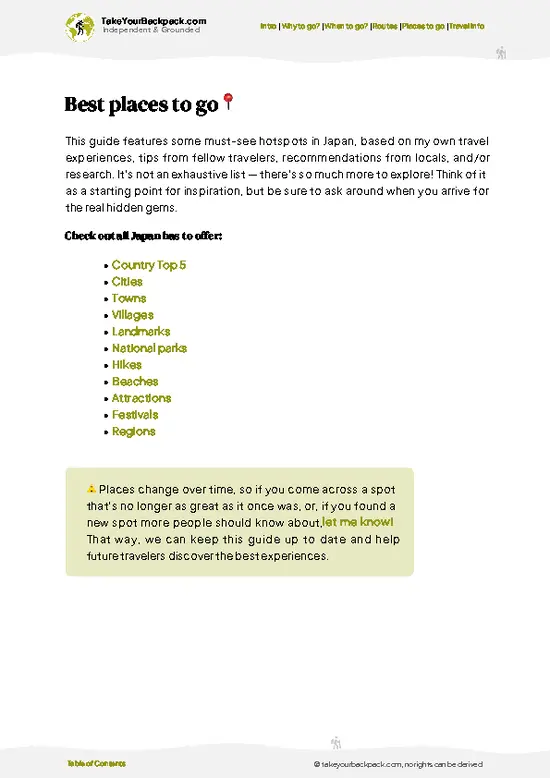
Discover everything you want to know in the 📖 Japan Travel Guide.


Get your Japan guide
140 ranked highlights, routes & tips, works offline (482 pages)
Loading the map 🌍
CLICK TO FILTER
cities
towns
villages
landmarks
national parks
hikes
beaches
attractions
festivals
regions
SHOW COUNTRY’S BESTSHOW ALL

✨ Why go?
Ranked #13 national park in Japan
Why Kirishima-Kinkowan should be on your travel list

Kirishima-Kinkowan National Park attracts backpackers for its independent exploration opportunities. You can wander through diverse trails, from volcanic landscapes to lush forests, all while soaking in the natural beauty without the constraints of guided tours. Budget-conscious travelers appreciate the camping options and nearby hostels, which keep costs low and allow for a more immersive experience. The park’s trail variety caters to all skill levels, making it ideal for both novices and seasoned hikers. Plus, the well-marked paths make it easy for self-guided travelers to navigate. By choosing this park, you preserve your energy and budget for the moments that truly matter, like watching the sunrise over a volcanic crater or soaking in a local onsen.
Want to include Kirishima-Kinkowan National Park in your Japan route?
Create a personalized Japan itinerary that includes Kirishima-Kinkowan National Park and the places that fit your trip — based on your travel style, budget, and available time. Get your route in seconds.

Generate my trip

💡 HighlightsDon't-miss highlights and experiences

  • Takachiho-no-mine (高千穂峰) — A dramatic, steep volcanic cone tied to Japanese creation myths; short but punchy hike to a razor ridge with stunning views over Kinko Bay and often Sakurajima in the distance. The little shrine at the base adds atmosphere and a cultural touch to the wild landscape.
  • Ebino Plateau (Ebino Kōgen) — High volcanic moorland with crater ponds, boardwalks and a network of trails that link several peaks; wildflowers in summer, brilliant autumn colors, and easy access to huts and onsen make it an ideal base for multi-day hiking. (Personal favorite — magic mornings and clear-night starfields.)
  • Shinmoedake — Fresh, raw volcanic scenery with a blackened crater rim and recent-eruption scars; the trail feels otherworldly and offers dramatic close-up views of volcanic geology
read more 👉
  • Takachiho-no-mine (高千穂峰) — A dramatic, steep volcanic cone tied to Japanese creation myths; short but punchy hike to a razor ridge with stunning views over Kinko Bay and often Sakurajima in the distance. The little shrine at the base adds atmosphere and a cultural touch to the wild landscape.
  • Ebino Plateau (Ebino Kōgen) — High volcanic moorland with crater ponds, boardwalks and a network of trails that link several peaks; wildflowers in summer, brilliant autumn colors, and easy access to huts and onsen make it an ideal base for multi-day hiking. (Personal favorite — magic mornings and clear-night starfields.)
  • Shinmoedake — Fresh, raw volcanic scenery with a blackened crater rim and recent-eruption scars; the trail feels otherworldly and offers dramatic close-up views of volcanic geology — check eruption warnings before you go.
  • Mount Karakunidake — The highest peak in the Kirishima range, rewarding hikers with broad panoramas across the crater chain and Kinko Bay; classic ridge walking and one of the best places for sunrise photos.
  • Lake Miike (Miike-ko) — A placid crater lake with clear water, a gentle loop trail and good birdwatching; peaceful contrast to the jagged volcanic peaks, especially beautiful in mist or autumn foliage.
  • Mount Kaimon (開聞岳) — The perfect conical “Satsuma Fuji” sitting near the coast; steep but direct hike and superb sea-and-volcano views from the top — a great one-day outing if you want dramatic coastal scenery.
  • Kirishima-jingu & cedar forests — Ancient shrine tucked into fragrant cedar woods at the foot of the mountains; easy strolls, historical vibes and a nice warm-up before tackling steeper trails higher up.
Spotted a mistake or missing something? Contact us.

Things to do near Kirishima-Kinkowan National Park

Ratings based on Tripadvisor reviews. When you book through this link, you support our work at no extra cost to you.

🌤️ When to go?Best time to explore Kirishima-Kinkowan


  • Topic: Weather and Temperature: Spring (March to May) and autumn (September to November) offer mild weather, with temperatures ranging from 10°C to 20°C (50°F to 68°F). Summers can be hot and humid, often above 30°C (86°F), while winters drop to near freezing, making some trails icy and less accessible.

  • Topic: Daylight Hours: Spring and autumn provide balanced daylight, roughly 11 to 13 hours, enough for full-day hikes without rushing. Winter days shorten significantly, limiting exploration time.

  • Topic: Crowds: Cherry blossom season in spring and autumn foliage attract more visitors, especially on weekends. Weekdays in these seasons are quieter. Summer sees local families, but trails can feel crowded near popular spots.

  • Topic: Seasonal Activities: Spring brings blooming azaleas and
read more 👉

  • Topic: Weather and Temperature: Spring (March to May) and autumn (September to November) offer mild weather, with temperatures ranging from 10°C to 20°C (50°F to 68°F). Summers can be hot and humid, often above 30°C (86°F), while winters drop to near freezing, making some trails icy and less accessible.

  • Topic: Daylight Hours: Spring and autumn provide balanced daylight, roughly 11 to 13 hours, enough for full-day hikes without rushing. Winter days shorten significantly, limiting exploration time.

  • Topic: Crowds: Cherry blossom season in spring and autumn foliage attract more visitors, especially on weekends. Weekdays in these seasons are quieter. Summer sees local families, but trails can feel crowded near popular spots.

  • Topic: Seasonal Activities: Spring brings blooming azaleas and cherry blossoms, while autumn showcases fiery maple leaves. Winter offers hot springs but limited hiking. Summer is good for mountain climbing but expect humidity.

  • Topic: Price Fluctuations: Accommodation and transport costs spike during cherry blossom and autumn foliage peaks. Booking early or visiting shoulder seasons can save money and reduce stress.


Pro-tip: Aim for late April or mid-October weekdays to dodge crowds, enjoy comfortable weather, and keep your budget intact—perfect for soaking in Kirishima-Kinkowan’s natural rhythm without the hassle.


source: climatestotravel.comJANJanuary: fair for travelingFEBFebruary: fair for travelingMARMarch: highly recommended for travelingAPRApril: excellent for travelingMAYMay: highly recommended for travelingJUNJune: good for travelingJULJuly: fair for travelingAUGAugust: fair for travelingSEPSeptember: highly recommended for travelingOCTOctober: excellent for travelingNOVNovember: highly recommended for travelingDECDecember: fair for traveling
when-to-go

✈️ The backpacker research shortcutJapan Travel Guide

An offline-friendly backpacking guide with optimized travel routes, ranked highlights, transport advice, and the best areas to stay.
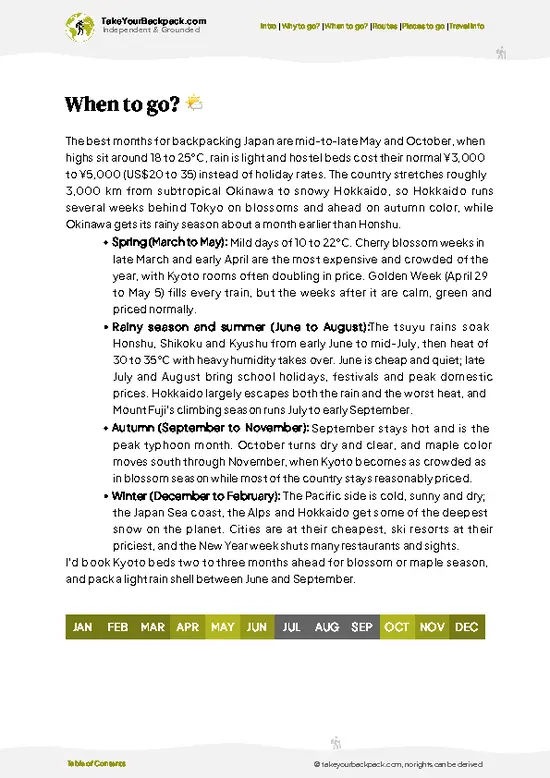
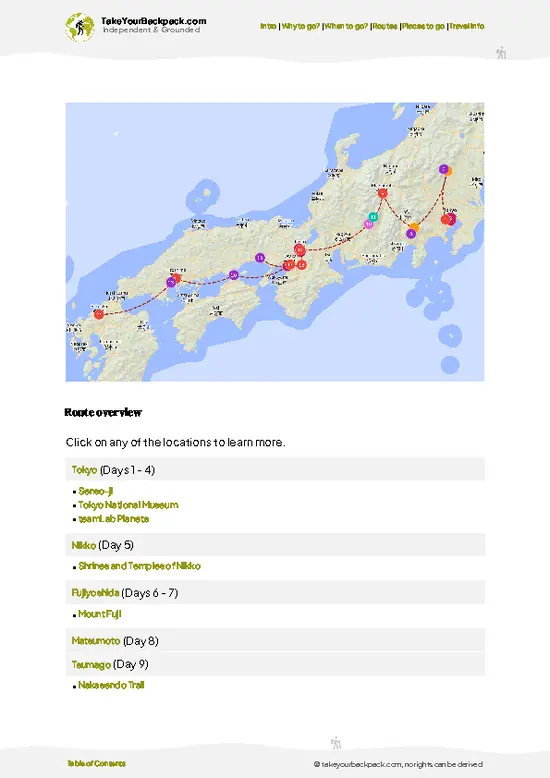
example page 0 from our offline Travel Guide for Japan
example page 1 from our offline Travel Guide for Japan
example page 2 from our offline Travel Guide for Japan
example page 3 from our offline Travel Guide for Japan
example page 4 from our offline Travel Guide for Japan
example page 5 from our offline Travel Guide for Japan
example page 6 from our offline Travel Guide for Japan
example page 7 from our offline Travel Guide for Japan
The digital guide (482 pages) contains:
140 highlights, ranked by travel appeal
Optimized 7, 14 & 21-day travel routes
Cities, national parks, landmarks, beaches
How to get around
Offline-friendly for travel without Wi-Fi
👉 Click to see all 30+ guide features

📅 Plan smarter in minutes, not weeks
Month by month travel advice
Festivals & national holidays
Budget expectations

🗺️ Go to the right places, skip the overrated ones
Honest pros & cons of destinations
Top hikes, parks & viewpoints
Lesser-known places most travelers miss
Clear “worth it vs skip it” guidance

🛏️ Travel smoothly without rookie mistakes
Best areas to stay
Transport systems explained simply
Common scams & safety advice
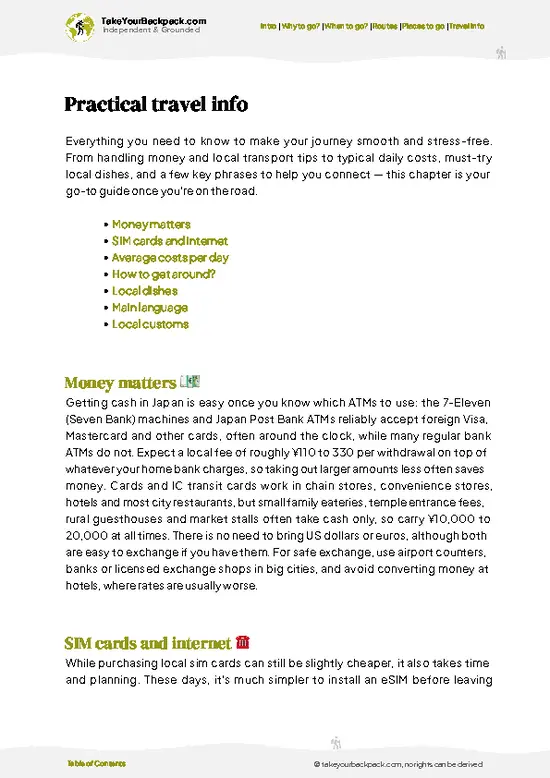
SIM cards, money & practical tips

🌍 Understand the country, not just visit it
Culture & traditions
52 Essential phrases & customs
Festivals worth planning around
Traveler-friendly historical context
Insights that make places more meaningful

📱 Built for real travel conditions
Fully downloadable PDF
Works completely offline
Optimized for phone use
Useful in remote areas & buses
Everything in one place
Save weeks of stressful planning
Get instant access to your full guide. 30‑day money-back guarantee.
+ Add another guide for just US$7.80

By proceeding you agree to our terms.
Sent to your inbox immediately after payment • 100% Secure Checkout
Best Backpacking Travel Advisor 2025 tourism awardBest Backpacking
Travel Advisor
2025
What others say about Take Your Backpack Guides:
⭐⭐⭐⭐⭐
Fantastic, amazing amount of information!
⭐⭐⭐⭐⭐
My goodness this is amazing, it's what I've been looking for hats off too you!
⭐⭐⭐⭐⭐
I think this is absolutely BRILLIANT
⭐⭐⭐⭐
Very complete and informative. It's still missing places, but I gotta to commend you
⭐⭐⭐⭐⭐
This is truly amazing, thank you, can't wait to explore it with my kids!
⭐⭐⭐⭐⭐
Awesome resource, thank you!
⭐⭐⭐⭐⭐
This is amazing! Can't wait to explore the ones I haven't seen
⭐⭐⭐⭐
I love this! Well done, great idea.
⭐⭐⭐⭐⭐
Thanks for taking the time to make this gem!
⭐⭐⭐⭐⭐
This might be the best website I've ever seen.
⭐⭐⭐⭐⭐
Congratulations, and thank you so much for your work; it's incredibly valuable.
⭐⭐⭐⭐
In all seriousness I think you did a great job pointing out the important spots
⭐⭐⭐⭐⭐
10/10 very good
⭐⭐⭐⭐⭐
As someone who's only just starting to visit regularly this is awesome, thank you.
⭐⭐⭐⭐
Thank you very much! I'm going to visit my dad, it's going to be very useful!
⭐⭐⭐⭐⭐
This is really cool! We'll be travelling for the first time and this definitely come in handy.
⭐⭐⭐⭐⭐
You are now our minister of culture, congratulations 👨‍💼
⭐⭐⭐⭐⭐
Just wanted to tell you that this is a pearl! Going to follow your recommendations.
⭐⭐⭐⭐⭐
This is so cool. I'll definitely be using the resource for my travels soon.
⭐⭐⭐⭐⭐
This is very impressive! Good work.
⭐⭐⭐⭐⭐
This is an amazing and informative site. Very well done!

🛏️ Where to stay?Best areas to stay in Japan

Kirishima-Kinkowan National Park offers a few solid options for backpackers. Inside the park, the Kirishima Onsen area is your best bet. It has several ryokans (traditional inns) that provide a cozy experience, often with access to hot springs. Look for places like Kirishima Kanko Hotel, which balances comfort and affordability.

If you prefer a more urban vibe, head to the nearby city of Miyakonojo. It’s about a 30-minute drive from the park and has budget-friendly hostels and guesthouses. Staying here gives you easy access to local eateries and shops, plus a chance to mingle with locals.

Be … read more 👉
Kirishima-Kinkowan National Park offers a few solid options for backpackers. Inside the park, the Kirishima Onsen area is your best bet. It has several ryokans (traditional inns) that provide a cozy experience, often with access to hot springs. Look for places like Kirishima Kanko Hotel, which balances comfort and affordability.

If you prefer a more urban vibe, head to the nearby city of Miyakonojo. It’s about a 30-minute drive from the park and has budget-friendly hostels and guesthouses. Staying here gives you easy access to local eateries and shops, plus a chance to mingle with locals.

Be mindful of transportation; public transit can be sparse. Renting a bike or car can save you time and energy, allowing you to focus on the park’s stunning landscapes.

👛 Costs (as of 4 September 2026)Travel costs and budget guide for Kirishima-Kinkowan

Visiting Kirishima-Kinkowan National Park in Japan can be a rewarding experience, but it’s essential to be aware of the costs involved to avoid surprises.

Entry to the park is free, which is a plus. However, if you plan to hike or explore specific areas, consider transportation costs. Public transport options like buses can range from €5 to €15 (or $5 to $15) depending on your starting point. If you opt for a rental car, expect to pay around €40 to €70 ($40 to $70) per day, plus fuel.

Accommodations vary widely. Budget hostels or guesthouses start around €20 to €40 ($20 to $40) per night. Mid-range hotels can cost between €70 and €150 ($70 to $150), while more upscale options may exceed €200 ($200) per night.

Food is another factor. Street food and casual dining can be quite affordable, … read more 👉
Visiting Kirishima-Kinkowan National Park in Japan can be a rewarding experience, but it’s essential to be aware of the costs involved to avoid surprises.

Entry to the park is free, which is a plus. However, if you plan to hike or explore specific areas, consider transportation costs. Public transport options like buses can range from €5 to €15 (or $5 to $15) depending on your starting point. If you opt for a rental car, expect to pay around €40 to €70 ($40 to $70) per day, plus fuel.

Accommodations vary widely. Budget hostels or guesthouses start around €20 to €40 ($20 to $40) per night. Mid-range hotels can cost between €70 and €150 ($70 to $150), while more upscale options may exceed €200 ($200) per night.

Food is another factor. Street food and casual dining can be quite affordable, with meals costing between €5 and €15 ($5 to $15). If you prefer dining in restaurants, expect to spend around €15 to €30 ($15 to $30) per meal.

Lastly, consider any additional activities. Guided tours or experiences can range from €30 to €100 ($30 to $100), depending on what you choose.

By planning for these costs, you can focus your energy and budget on enjoying the park’s natural beauty without the stress of unexpected expenses.
⚠️ Prices can change and everyone travels differently, so take this as a rough guide. Hope it helps you plan your adventure!

🥾 TrailsDiscover Kirishima-Kinkowan's top trails and natural wonders

Kirishima-Kinkowan National Park is a gem for hikers, offering stunning volcanic landscapes, lush forests, and an array of wildlife. The park is dotted with numerous trails that cater to various skill levels, so whether you’re a seasoned trekker or a casual walker, there’s something for you. The scenery is breathtaking, with views of active volcanoes, crater lakes, and vibrant flora. Keep your eyes peeled for deer, foxes, and a variety of bird species that call this place home.

One of the standout trails is Kirishima Trail. Here are some details:
  • Length: 14 km
  • Estimated Duration: 5-7 hours
  • Difficulty
read more 👉
Kirishima-Kinkowan National Park is a gem for hikers, offering stunning volcanic landscapes, lush forests, and an array of wildlife. The park is dotted with numerous trails that cater to various skill levels, so whether you’re a seasoned trekker or a casual walker, there’s something for you. The scenery is breathtaking, with views of active volcanoes, crater lakes, and vibrant flora. Keep your eyes peeled for deer, foxes, and a variety of bird species that call this place home.

One of the standout trails is Kirishima Trail. Here are some details:
  • Length: 14 km
  • Estimated Duration: 5-7 hours
  • Difficulty Level: Moderate
  • Key Features: Stunning views of the Kirishima mountain range, volcanic landscapes, and seasonal flowers
  • Terrain: Mixed forest paths and rocky sections, with some steep climbs

Another popular option is Ebino Kogen Trail:
  • Length: 6 km
  • Estimated Duration: 2-3 hours
  • Difficulty Level: Easy
  • Key Features: Beautiful grasslands, views of Mount Karakuni, and a chance to see unique wildlife
  • Terrain: Mostly flat with well-maintained paths

Getting to the park is pretty straightforward. You can hop on a train to Kirishima or Kagoshima and then catch a bus to the park entrance. It’s not overly crowded, especially if you hit the trails early in the morning or during weekdays. As for an entrance fee, there’s usually no charge, but it’s good to check for any updates before you go. Enjoy the adventure!
⚠️ Hiking info can sometimes be outdated or inaccurate. Before you hit the trail, check the latest conditions with locals. If you do spot anything that's off, I'd love to hear from you, so I can update it for fellow travelers.

🛡️ SafetySafety Tips and Common Scams in Kirishima-Kinkowan

Kirishima-Kinkowan National Park is generally accessible, but a few practical considerations can enhance your experience. Weather can shift quickly, especially at higher elevations, so pack layers and check forecasts before heading out. Trails vary; some sections are steep and rocky, requiring careful footing. Navigation is straightforward, but a map or GPS can help if you stray from marked paths.

Wildlife encounters are rare, but if you spot a bear or boar, keep your distance and make noise to avoid startling them. Finally, don’t underestimate the importance of hydration—carry enough water, especially on warmer days. With these tips, you’ll be set for a rewarding adventure.

FAQFrequently asked questions about Kirishima-Kinkowan

2 to 3 days are sufficient to explore Kirishima-Kinkowan National Park thoroughly. This allows time for hiking multiple trails, visiting volcanic craters, and enjoying hot springs. Some popular routes, like the hike to Mount Karakuni, take around 4 to 6 hours one way.
Yes, you can visit Kirishima-Kinkowan National Park without a car. Public buses connect major access points such as Kirishima Onsen and Shinmoedake, but schedules may be limited, so plan accordingly. Renting a bicycle or using taxis can help reach more remote areas within the park.
No entrance fee or special permit is required to enter Kirishima-Kinkowan National Park. However, some specific facilities or guided tours within the park may charge fees. Always check local regulations for any temporary restrictions or permits related to volcanic activity.
⚠️ Things can change over time, so always validate details locally before you go.

Other Japanese national parks near Kirishima-Kinkowan

Explore more nearby:

  • Unzen-Amakusa National Park—Active volcano, fumarole fields, island coastlines, Christian heritage| 110 km away
  • Aso-Kuju National Park—Active caldera, grassland plateaus, volcanic peaks, crater lakes| 113 km away
  • Yakushima—Ancient cedar forests, misty mountains, mossy valleys, endemic species| 178 km away

💡 Not sure where to go next?
Create a personalized itinerary for Japan including Kirishima-Kinkowan and the places that fit your trip.

Generate my itinerary

👉 Discover all national parks

Or checkout all Japan has to offer (think cities, towns, villages, national parks, hikes, beaches, festivals)
Country photo of Japan

We 💚 feedbackKey takeaways before you go

Kirishima-Kinkowan National Park is a treasure for those who crave volcanic landscapes and lush greenery. The hot springs are a must-try, offering a perfect way to unwind after a day of hiking. Just be prepared for the weather; it can shift quickly, so pack layers. Stay flexible, and you’ll enjoy every moment.

✈️ When did I visit Japan?
As part of my 1.5 year travel around the world trip, I visited Japan in August 2015.

✍️ Help improve this page!
The information on this page is based on my own backpacking experience in Japan, supplemented with up-to-date research and feedback from other travelers. Travel details can change, so if you notice anything outdated or incomplete, feel free to let me know.


🙋‍♂️ Give feedback

👋 Meet the founderWho’s Behind Take Your Backpack?

Johan, backpacker and founder of TakeYourBackpackHi, I’m Johan (Netherlands 🇳🇱), the creator of TakeYourBackpack. Over the past decade, I’ve backpacked through 80+ countries across six continents, gaining extensive experience with independent travel, long-term trips, and overland routes.

This site is built on a combination of firsthand travel experience and carefully curated insights from other backpackers. Many guides are based on places I’ve personally visited, while others bring together tips, observations, and practical advice shared by trusted travelers I’ve met along the way.

The goal is to provide realistic, experience-driven guidance — not generic itineraries — so you can explore destinations with better context, clearer expectations, and more confidence.

Get full Japan guide •
Instant download • 140 highlights • Full Offline guide