




×

Japan🇯🇵 | national parksOgasawara National ParkRemote islands, endemic species, steep cliffs, subtropical forests | things to do and best time to go

Explore Kirishima-Kinkowan National ParkExplore Ise-Shima National Park

Backpacking in Ogasawara
🌟 Highlightnational park ranked #7
By Johan Kruseman 🇳🇱 | Updated July 30, 2026

Most people think Ogasawara National Park is a quick side trip from Tokyo; it isn’t. It’s a remote Pacific archipelago, administratively part of Tokyo but sitting far south in open ocean, reachable only by a long ferry. For backpackers, that remoteness is both the hook and the headache. You get raw coastal cliffs, jungle-like trails, and serious whale, dolphin, and sea turtle action, but hiking is limited to short to moderate routes and some areas are tightly controlled to protect fragile ecosystems. No entrance fee, yet the ferry and food prices quietly drain your budget, and camping is heavily restricted, so you’re in simple guesthouses rather than tents. Compared with Fuji-Hakone-Izu or Nikko, Ogasawara feels less like a classic hiking park and more like a slow, island-science expedition where you pay in time and yen for real isolation.

Discover everything you want to know in the 📖 Japan Travel Guide.


Get your Japan guide
140 ranked highlights, routes & tips, works offline (482 pages)
Loading the map 🌍
CLICK TO FILTER
cities
towns
villages
landmarks
national parks
hikes
beaches
attractions
festivals
regions
SHOW COUNTRY’S BESTSHOW ALL

✨ Why go?
Ranked #7 national park in Japan
What makes this national park worth exploring

Backpackers flock to Ogasawara National Park for its independent exploration opportunities. The park’s remote islands offer a sense of freedom that’s hard to find elsewhere. Budget-conscious travelers appreciate the camping and hostel options nearby, making it easy to stretch your yen. With a variety of trails, from easy walks to challenging hikes, there’s something for everyone. This park is particularly suited for self-guided travelers; you can navigate the stunning landscapes at your own pace without the constraints of a tour. Just be aware of the ferry schedules and entry fees to avoid unexpected costs.
Want to include Ogasawara National Park in your Japan route?
Create a personalized Japan itinerary that includes Ogasawara National Park and the places that fit your trip — based on your travel style, budget, and available time. Get your route in seconds.

Generate my trip

💡 HighlightsEssential experiences to have while exploring Ogasawara

  • Subtropical laurel (primeval) forest — A rare, almost primeval forest of broadleaf evergreens that helped get the islands on the UNESCO list. Walking the shaded trails you feel like you’ve stepped into an ancient island ecosystem full of endemic plants and mossy ravines.
  • Chichijima island viewpoints and coastal walks — The main hub of the park with easy access to viewpoints that give sweeping views of the archipelago, rocky cliffs, small beaches and simple local cafés. Great for short hikes and getting oriented to Ogasawara’s scale.
  • Hahajima’s rugged coastline and hikes — Wilder and quieter than Chichijima, Hahajima has steeper trails, dramatic sea cliffs and a proper feeling of remoteness. You’re more likely to hear only wind and birds up here—excellent for longer day hikes.
  • Minamijima
read more 👉
  • Subtropical laurel (primeval) forest — A rare, almost primeval forest of broadleaf evergreens that helped get the islands on the UNESCO list. Walking the shaded trails you feel like you’ve stepped into an ancient island ecosystem full of endemic plants and mossy ravines.
  • Chichijima island viewpoints and coastal walks — The main hub of the park with easy access to viewpoints that give sweeping views of the archipelago, rocky cliffs, small beaches and simple local cafés. Great for short hikes and getting oriented to Ogasawara’s scale.
  • Hahajima’s rugged coastline and hikes — Wilder and quieter than Chichijima, Hahajima has steeper trails, dramatic sea cliffs and a proper feeling of remoteness. You’re more likely to hear only wind and birds up here—excellent for longer day hikes.
  • Minamijima and seabird colonies — A visit by boat brings you past sheer cliffs and offshore rocks that are important nesting sites for seabirds. The rock formations and clear water make it a favorite for photographers and snorkelers alike.
  • Nakano-hama Beach (sea turtles) — A gorgeous white-sand beach on Chichijima where green sea turtles commonly come close to shore. It’s an easy, rewarding place to relax after a hike—and yes, I’m calling this my personal favorite for swimming with calm water and a good chance of spotting turtles.
  • Marine life: snorkeling, dolphins and whales — The waters around Ogasawara are surprisingly biodiverse: coral gardens, sea turtles, pods of dolphins and seasonal whales. Day trips for snorkeling and wildlife-watching are the best way to experience the underwater side of the park.
  • Endemic wildlife and conservation stories — The islands host species you won’t see anywhere else, and many conservation efforts are visible on the ground (and in bird hides). If you care about island ecology, watching how these populations are managed and recover is fascinating.
Spotted a mistake or missing something? Contact us.

🌤️ When to go?Best time to explore Ogasawara


  • Topic: Weather – The best window is late spring to early autumn (May to October). This period avoids the cold, wet winters and the typhoon season peaks in August-September, which can disrupt travel plans and ferry schedules.

  • Topic: Temperature – Expect mild to warm temps, roughly 18-28°C (64-82°F) in summer. Winters hover around 13-18°C (55-64°F), which is cool but not freezing. The warmer months are better for swimming and hiking without bundling up.

  • Topic: Daylight Hours – Long summer days offer up to 14 hours of light, perfect for maximizing time outdoors. Winter days shrink to about 10 hours, limiting exploration time.

  • Topic: Crowds – Peak season is summer, especially July and August, when Japanese tourists flock to the islands. Visiting shoulder months like May or October means
read more 👉

  • Topic: Weather – The best window is late spring to early autumn (May to October). This period avoids the cold, wet winters and the typhoon season peaks in August-September, which can disrupt travel plans and ferry schedules.

  • Topic: Temperature – Expect mild to warm temps, roughly 18-28°C (64-82°F) in summer. Winters hover around 13-18°C (55-64°F), which is cool but not freezing. The warmer months are better for swimming and hiking without bundling up.

  • Topic: Daylight Hours – Long summer days offer up to 14 hours of light, perfect for maximizing time outdoors. Winter days shrink to about 10 hours, limiting exploration time.

  • Topic: Crowds – Peak season is summer, especially July and August, when Japanese tourists flock to the islands. Visiting shoulder months like May or October means fewer people and a quieter experience.

  • Topic: Seasonal Activities – Whale watching is prime from December to April, but this coincides with cooler weather. Snorkeling and diving thrive in summer when water temperatures are inviting.

  • Topic: Price Fluctuations – Expect higher ferry and accommodation rates during summer holidays and Golden Week (late April to early May). Booking outside these times can save you a significant chunk of cash.


Pro-tip: Aim for late May or early October to dodge crowds, enjoy pleasant weather, and keep costs reasonable—perfect for stretching your energy and budget where it counts.


source: climatestotravel.comJANJanuary: good for travelingFEBFebruary: good for travelingMARMarch: good for travelingAPRApril: good for travelingMAYMay: excellent for travelingJUNJune: excellent for travelingJULJuly: highly recommended for travelingAUGAugust: good for travelingSEPSeptember: fair for travelingOCTOctober: excellent for travelingNOVNovember: good for travelingDECDecember: good for traveling
when-to-go

✈️ The backpacker research shortcutJapan Travel Guide

An offline-friendly backpacking guide with optimized travel routes, ranked highlights, transport advice, and the best areas to stay.
example page 0 from our offline Travel Guide for Japan
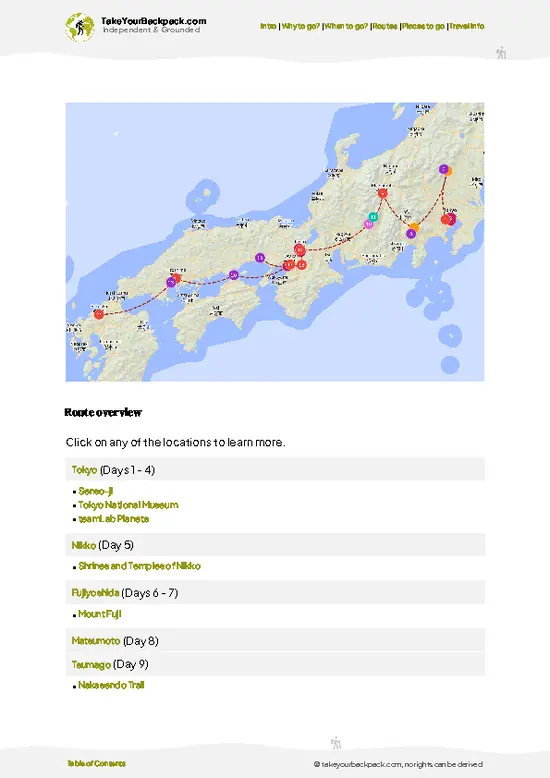
example page 1 from our offline Travel Guide for Japan
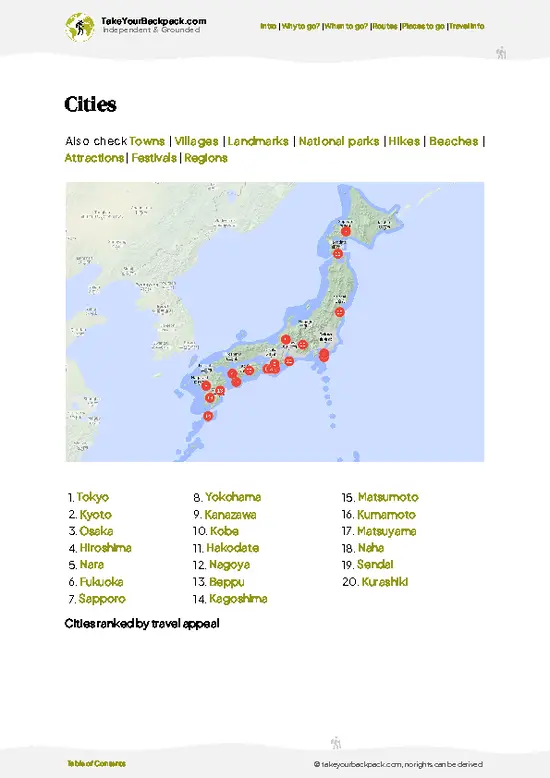
example page 2 from our offline Travel Guide for Japan
example page 3 from our offline Travel Guide for Japan
example page 4 from our offline Travel Guide for Japan
example page 5 from our offline Travel Guide for Japan
example page 6 from our offline Travel Guide for Japan
example page 7 from our offline Travel Guide for Japan
The digital guide (482 pages) contains:
140 highlights, ranked by travel appeal
Optimized 7, 14 & 21-day travel routes
Cities, national parks, landmarks, beaches
How to get around
Offline-friendly for travel without Wi-Fi
👉 Click to see all 30+ guide features

📅 Plan smarter in minutes, not weeks
Month by month travel advice
Festivals & national holidays
Budget expectations

🗺️ Go to the right places, skip the overrated ones
Honest pros & cons of destinations
Top hikes, parks & viewpoints
Lesser-known places most travelers miss
Clear “worth it vs skip it” guidance

🛏️ Travel smoothly without rookie mistakes
Best areas to stay
Transport systems explained simply
Common scams & safety advice
SIM cards, money & practical tips

🌍 Understand the country, not just visit it
Culture & traditions
52 Essential phrases & customs
Festivals worth planning around
Traveler-friendly historical context
Insights that make places more meaningful

📱 Built for real travel conditions
Fully downloadable PDF
Works completely offline
Optimized for phone use
Useful in remote areas & buses
Everything in one place
Save weeks of stressful planning
Get instant access to your full guide. 30‑day money-back guarantee.


By proceeding you agree to our terms.
Sent to your inbox immediately after payment • 100% Secure Checkout
Best Backpacking Travel Advisor 2025 tourism awardBest Backpacking
Travel Advisor
2025
What others say about Take Your Backpack Guides:
⭐⭐⭐⭐⭐
Fantastic, amazing amount of information!
⭐⭐⭐⭐⭐
My goodness this is amazing, it's what I've been looking for hats off too you!
⭐⭐⭐⭐⭐
I think this is absolutely BRILLIANT
⭐⭐⭐⭐
Very complete and informative. It's still missing places, but I gotta to commend you
⭐⭐⭐⭐⭐
This is truly amazing, thank you, can't wait to explore it with my kids!
⭐⭐⭐⭐⭐
Awesome resource, thank you!
⭐⭐⭐⭐⭐
This is amazing! Can't wait to explore the ones I haven't seen
⭐⭐⭐⭐
I love this! Well done, great idea.
⭐⭐⭐⭐⭐
Thanks for taking the time to make this gem!
⭐⭐⭐⭐⭐
This might be the best website I've ever seen.
⭐⭐⭐⭐⭐
Congratulations, and thank you so much for your work; it's incredibly valuable.
⭐⭐⭐⭐
In all seriousness I think you did a great job pointing out the important spots
⭐⭐⭐⭐⭐
10/10 very good
⭐⭐⭐⭐⭐
As someone who's only just starting to visit regularly this is awesome, thank you.
⭐⭐⭐⭐
Thank you very much! I'm going to visit my dad, it's going to be very useful!
⭐⭐⭐⭐⭐
This is really cool! We'll be travelling for the first time and this definitely come in handy.
⭐⭐⭐⭐⭐
You are now our minister of culture, congratulations 👨‍💼
⭐⭐⭐⭐⭐
Just wanted to tell you that this is a pearl! Going to follow your recommendations.
⭐⭐⭐⭐⭐
This is so cool. I'll definitely be using the resource for my travels soon.
⭐⭐⭐⭐⭐
This is very impressive! Good work.
⭐⭐⭐⭐⭐
This is an amazing and informative site. Very well done!

🛏️ Where to stay?Best areas and accommodation options

Ogasawara National Park is remote, so your options are limited but solid. The main hub is Chichijima, where you’ll find guesthouses and hostels catering to backpackers. Look for places like the Ogasawara Guesthouse or Minpaku, which offer a cozy atmosphere and local insights.

There are no accommodations directly within the park itself, but staying in Chichijima gives you easy access to boat tours and hiking trails. Be prepared for limited amenities; this isn’t a luxury destination. Budget for transportation, as ferries can be pricey and infrequent. Prioritize your energy and funds for experiences, not just a bed.

👛 Costs (as of 30 July 2026)Money, prices, and spending tips

Visiting Ogasawara National Park in Japan can be a rewarding experience, but it’s essential to be aware of the costs involved to avoid surprises.

First, getting there is a significant part of your budget. A round-trip ferry from Tokyo to the islands typically costs between $200 and $300 USD. The journey takes about 24 hours, so factor in the time and comfort level you’ll need.

Once you arrive, accommodation options vary. Basic guesthouses start around $50 USD per night, while more comfortable lodges can range from $100 to $200 USD. Booking in advance is wise, especially during peak seasons.

Food is another consideration. Expect to spend about $10 to $20 USD per meal at local eateries. If you opt for a more upscale dining experience, prices can climb to $30 USD or more.

Activities like … read more 👉
Visiting Ogasawara National Park in Japan can be a rewarding experience, but it’s essential to be aware of the costs involved to avoid surprises.

First, getting there is a significant part of your budget. A round-trip ferry from Tokyo to the islands typically costs between $200 and $300 USD. The journey takes about 24 hours, so factor in the time and comfort level you’ll need.

Once you arrive, accommodation options vary. Basic guesthouses start around $50 USD per night, while more comfortable lodges can range from $100 to $200 USD. Booking in advance is wise, especially during peak seasons.

Food is another consideration. Expect to spend about $10 to $20 USD per meal at local eateries. If you opt for a more upscale dining experience, prices can climb to $30 USD or more.

Activities like snorkeling, diving, or guided tours can add to your expenses. Prices for these experiences generally range from $50 to $150 USD, depending on the activity and duration.

Lastly, don’t overlook transportation costs on the islands. Renting a bicycle is a budget-friendly option, typically around $10 USD per day. If you prefer a motorbike, expect to pay closer to $30 USD.

Being aware of these costs will help you manage your budget effectively, allowing you to focus on enjoying the unique beauty of Ogasawara National Park.


source: env.go.jp
⚠️ Prices can change and everyone travels differently, so take this as a rough guide. Hope it helps you plan your adventure!

🥾 TrailsExploring Ogasawara: trails, terrain, and views

Ogasawara National Park is a hidden gem that feels like stepping into a tropical paradise. The hiking opportunities here are stunning, with trails that wind through lush forests and along rugged coastlines. The terrain varies from gentle slopes to steep ascents, making it a playground for all levels of hikers. Wildlife is abundant, with unique species that you won’t find anywhere else, like the Bonin flying fox and various seabirds.

One of the must-try trails is Chichijima Island Trail. Here are the details:
  • Length: 7 km
  • Estimated Duration: 3-4 hours
  • Difficulty Level: Moderate
  • Key Features: Breathtaking
read more 👉
Ogasawara National Park is a hidden gem that feels like stepping into a tropical paradise. The hiking opportunities here are stunning, with trails that wind through lush forests and along rugged coastlines. The terrain varies from gentle slopes to steep ascents, making it a playground for all levels of hikers. Wildlife is abundant, with unique species that you won’t find anywhere else, like the Bonin flying fox and various seabirds.

One of the must-try trails is Chichijima Island Trail. Here are the details:
  • Length: 7 km
  • Estimated Duration: 3-4 hours
  • Difficulty Level: Moderate
  • Key Features: Breathtaking views of the ocean, rich flora, and fauna
  • Terrain: Mixed; some steep sections, but mostly well-maintained paths

Another great option is Hahajima Island Trail:
  • Length: 5 km
  • Estimated Duration: 2-3 hours
  • Difficulty Level: Moderate to Challenging
  • Key Features: Stunning cliffside views, dense forests
  • Terrain: Steep and rocky in sections, requiring good footwear

Getting to Ogasawara National Park can be a bit of an adventure in itself. You’ll need to take a ferry from Tokyo, which can take about 25 hours, so plan accordingly. The park isn’t overly crowded, which is a relief for those seeking solitude in nature, though it can get busier during peak tourist seasons. As for entrance fees, there’s typically a small fee for accessing specific areas, but keep some yen handy just in case.
⚠️ Hiking info can sometimes be outdated or inaccurate. Before you hit the trail, check the latest conditions with locals. If you do spot anything that's off, I'd love to hear from you, so I can update it for fellow travelers.

🛡️ SafetyScams, Hazards, and Annoyances

Ogasawara National Park is generally well-managed, making it accessible for most hikers. However, be prepared for sudden weather changes, especially during the rainy season. Trails can be steep and rocky, so sturdy footwear is essential. Navigation is straightforward, but keep an eye on trail markers. Wildlife is present, including the occasional boar; maintain a respectful distance and avoid feeding them. Hydration is key, as some areas lack water sources. Plan your hikes early in the day to avoid the heat and ensure you have ample daylight for your return.

Other Japanese national parks near Ogasawara

Explore more nearby:


💡 Not sure where to go next?
Create a personalized itinerary for Japan including Ogasawara and the places that fit your trip.

Generate my itinerary

👉 Discover all national parks

Or checkout all Japan has to offer (think cities, towns, villages, national parks, hikes, beaches, festivals)
Country photo of Japan

We 💚 feedbackFinal thoughts on exploring Ogasawara

Ogasawara National Park is a paradise for those who crave isolation and pristine nature. The underwater life is a spectacular draw, perfect for snorkeling. But be prepared: getting there isn’t easy. Limited transport options can eat into your time and budget, so plan wisely.

✈️ When did I visit Japan?
As part of my 1.5 year travel around the world trip, I visited Japan in August 2015.

✍️ Help improve this page!
The information on this page is based on my own backpacking experience in Japan, supplemented with up-to-date research and feedback from other travelers. Travel details can change, so if you notice anything outdated or incomplete, feel free to let me know.


🙋‍♂️ Give feedback

👋 Meet the founderWho’s Behind Take Your Backpack?

Johan, backpacker and founder of TakeYourBackpackHi, I’m Johan (Netherlands 🇳🇱), the creator of TakeYourBackpack. Over the past decade, I’ve backpacked through 80+ countries across six continents, gaining extensive experience with independent travel, long-term trips, and overland routes.

This site is built on a combination of firsthand travel experience and carefully curated insights from other backpackers. Many guides are based on places I’ve personally visited, while others bring together tips, observations, and practical advice shared by trusted travelers I’ve met along the way.

The goal is to provide realistic, experience-driven guidance — not generic itineraries — so you can explore destinations with better context, clearer expectations, and more confidence.

Get full Japan guide •
Instant download • 140 highlights • Full Offline guide