
×

Japan🇯🇵 | landmarksKumano Kodopilgrimage trails, cedar forests, ancient stone paths | things to do and best time to go

Explore Itsukushima Shinto ShrineExplore Matsushima Bay

Backpacking in Kumano Kodo
🏆 Top pickunique site ranked #5
By Johan Kruseman 🇳🇱 | Updated July 23, 2026

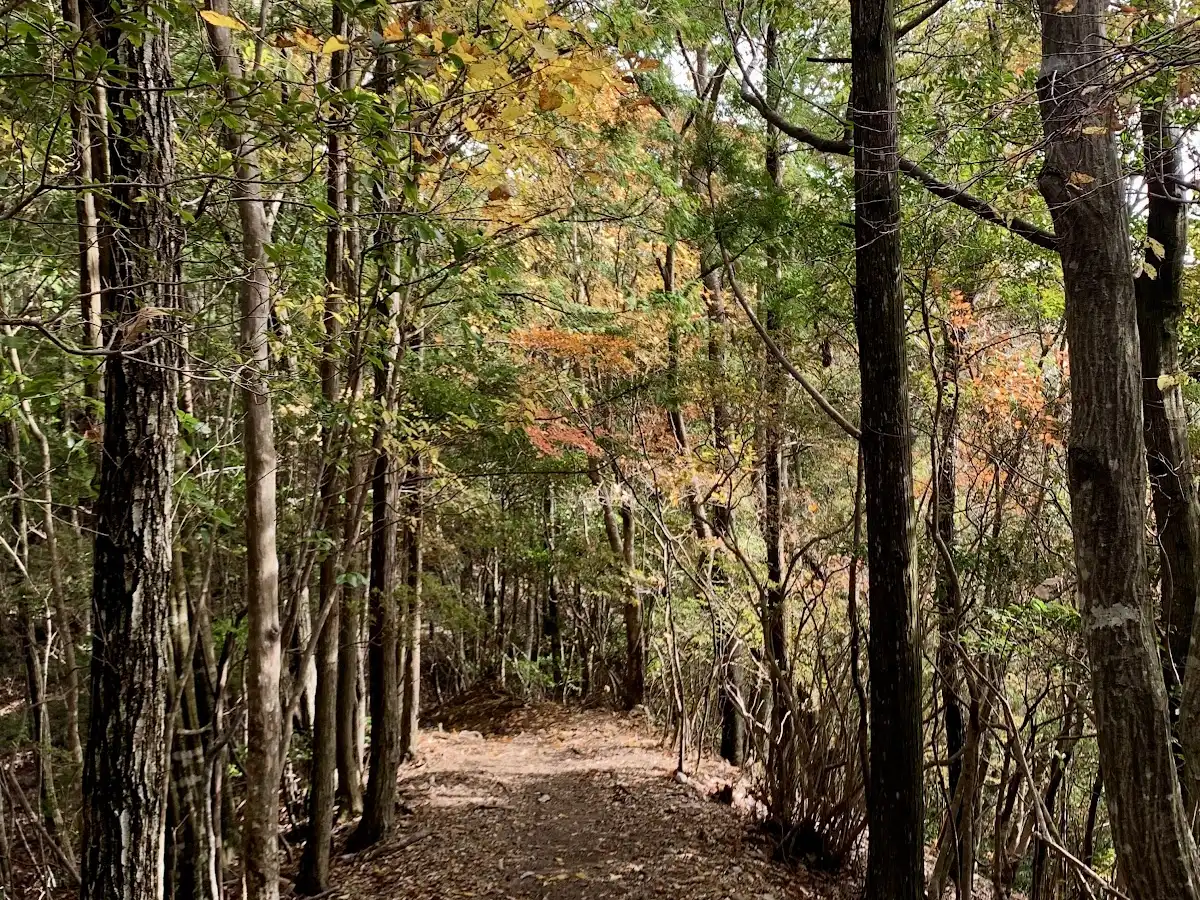
Most people imagine the Kumano Kodo as some empty, mystical forest path where you’ll walk alone like a wandering monk. That’s fantasy. Parts of it are quiet, yes, but others are shared with tour groups in bright rain jackets and retirees with trekking poles. The Kumano Kodo is a network of ancient pilgrimage trails in the Kii Peninsula, south of Osaka and Kyoto, threading through Wakayama and Mie. For backpackers, it’s a slow-burn kind of epic: mossy stone steps, cedar forests, hot springs, and shrines that feel genuinely old, not curated. It’s not cheap once you factor in rural transport and guesthouses, and logistics can be fiddly. But the crowds are modest compared with Japan’s big hits, the photo spots feel earned by sweat, and the overall vibe is calm, ritualistic, and quietly intense rather than flashy.

Discover everything you want to know in the 📖 Japan Travel Guide.


Get your Japan guide
140 ranked highlights, routes & tips, works offline (482 pages)
Loading the map 🌍
CLICK TO FILTER
cities
towns
villages
landmarks
national parks
hikes
beaches
attractions
festivals
regions
SHOW COUNTRY’S BESTSHOW ALL

✨ Why go?
Ranked #5 unique site in Japan
Why visitors keep coming back

The Kumano Kodo is not just another pretty path; it’s a sacred pilgrimage that’s been walked for over a thousand years. Sure, you’ll encounter crowds—especially near the starting points—but don’t let that deter you. The real magic happens when you venture beyond the popular spots.

This isn’t just a hike; it’s a journey through history. You’ll find ancient shrines, lush forests, and the kind of serenity that makes you forget the chaos of modern life. The effort-to-reward ratio is solid. You’ll sweat a bit, but the views and the sense of connection to the land are worth every step.

Accessibility is a breeze. Trains and buses link you to the trailheads, making it easy to fit into your broader Japan itinerary. Plus, it’s low-cost—just grab some snacks and water, and you’re set.

The Kumano … read more 👉
The Kumano Kodo is not just another pretty path; it’s a sacred pilgrimage that’s been walked for over a thousand years. Sure, you’ll encounter crowds—especially near the starting points—but don’t let that deter you. The real magic happens when you venture beyond the popular spots.

This isn’t just a hike; it’s a journey through history. You’ll find ancient shrines, lush forests, and the kind of serenity that makes you forget the chaos of modern life. The effort-to-reward ratio is solid. You’ll sweat a bit, but the views and the sense of connection to the land are worth every step.

Accessibility is a breeze. Trains and buses link you to the trailheads, making it easy to fit into your broader Japan itinerary. Plus, it’s low-cost—just grab some snacks and water, and you’re set.

The Kumano Kodo isn’t just a destination; it’s a cultural experience that enriches your travels. It seamlessly integrates into your route, offering a slice of Japan that’s often overlooked. Don’t just take the selfies; soak in the authenticity.
Want to include Kumano Kodo in your Japan route?
Create a personalized Japan itinerary that includes Kumano Kodo and the places that fit your trip — based on your travel style, budget, and available time. Get your route in seconds.

Generate my trip

💡 HighlightsTop highlights of Kumano Kodo

  1. Kumano Hongu Taisha and Oyunohara — The head shrine of the Kumano network, historically the spiritual center of the pilgrimage. The original shrine site (Oyunohara) is a haunting sandbank marked by a giant torii — great for understanding the ritual geography and feeling the scale of the place.
  2. Nachi Taisha, Seiganto-ji & Nachi Falls — A dramatic trio: a towering 133-m waterfall that’s worshipped as a deity, a cliffside Buddhist temple (Seiganto-ji) and the Nachi Taisha shrine above. The mix of shrine, temple and waterfall stacked together is visually striking and spiritually unique. (Personal favorite — the scene gets me every time.)
  3. Kumano Hayatama Taisha (Shingu) — One of the three Grand Shrines, set where the Kumano River meets the sea. It’s famous for its ancient sacred tree (the
read more 👉
  1. Kumano Hongu Taisha and Oyunohara — The head shrine of the Kumano network, historically the spiritual center of the pilgrimage. The original shrine site (Oyunohara) is a haunting sandbank marked by a giant torii — great for understanding the ritual geography and feeling the scale of the place.
  2. Nachi Taisha, Seiganto-ji & Nachi Falls — A dramatic trio: a towering 133-m waterfall that’s worshipped as a deity, a cliffside Buddhist temple (Seiganto-ji) and the Nachi Taisha shrine above. The mix of shrine, temple and waterfall stacked together is visually striking and spiritually unique. (Personal favorite — the scene gets me every time.)
  3. Kumano Hayatama Taisha (Shingu) — One of the three Grand Shrines, set where the Kumano River meets the sea. It’s famous for its ancient sacred tree (the Nagi), simple elegant shrine architecture, and the strong sense of continuation between local life and ritual practice.
  4. Daimonzaka Cedar Slope — A beautiful, well-preserved stone and wooden staircase flanked by towering cryptomeria (sugi). It’s the cinematic, Instagram-ready stretch of trail, but also a tangible slice of what pilgrims have walked for centuries — slow, shaded, and atmospheric.
  5. The pilgrimage trails themselves (Nakahechi, Kohechi, Ohechi, etc.) — Walking these mossy forest paths, over old stone steps and past tiny Oji shrines, is the core experience. The routes are a living cultural landscape — UNESCO-listed, remote in parts, and full of small markers that tell the story of centuries of pilgrimage.
  6. Yunomine Onsen and Tsuboyu — A tiny hot-spring village used by pilgrims since ancient times. Tsuboyu is a single-group, historically important bath (UNESCO-noted) — perfect for rinsing off after a long day on the trail and feeling connected to the old pilgrimage routine. Book ahead if you want the private soak.
  7. Local guesthouses, shojin ryori and festivals — Staying in minshuku or ryokan and eating monk-style (shojin) meals brings the cultural side home. Time your visit for a festival (like the Nachi Fire Festival in July) and you’ll see the old rites still practiced by local communities.
Spotted a mistake or missing something? Contact us.

Things to do near Kumano Kodo

Ratings based on Tripadvisor reviews. When you book through this link, you support our work at no extra cost to you.

🌤️ When to go?Weather, crowds, and seasonal trade-offs


  • Weather: Spring and autumn offer the best weather for Kumano Kodo. Expect mild, comfortable conditions—around 15-22°C (59-72°F) in spring and 10-18°C (50-64°F) in autumn. Summers are brutally humid and rainy, while winters can be cold and wet, making trails slippery and less enjoyable.

  • Temperature: Daytime temps in spring and autumn hover in the low 20s Celsius (mid-60s to low 70s Fahrenheit), perfect for hiking without overheating or freezing. Nights can dip to single digits Celsius (40s Fahrenheit), so pack layers.

  • Daylight Hours: Spring and autumn provide roughly 11-13 hours of daylight, enough to cover long stretches without rushing. Winter days shrink to 9-10 hours, limiting your hiking window.

  • Crowds: Peak seasons—especially the fall foliage period and cherry blossom time—draw
read more 👉

  • Weather: Spring and autumn offer the best weather for Kumano Kodo. Expect mild, comfortable conditions—around 15-22°C (59-72°F) in spring and 10-18°C (50-64°F) in autumn. Summers are brutally humid and rainy, while winters can be cold and wet, making trails slippery and less enjoyable.

  • Temperature: Daytime temps in spring and autumn hover in the low 20s Celsius (mid-60s to low 70s Fahrenheit), perfect for hiking without overheating or freezing. Nights can dip to single digits Celsius (40s Fahrenheit), so pack layers.

  • Daylight Hours: Spring and autumn provide roughly 11-13 hours of daylight, enough to cover long stretches without rushing. Winter days shrink to 9-10 hours, limiting your hiking window.

  • Crowds: Peak seasons—especially the fall foliage period and cherry blossom time—draw crowds. If you want solitude, aim for early spring or late autumn weekdays. Summer weekends are a no-go for peace.

  • Seasonal Activities: Autumn’s fiery leaves and spring’s cherry blossoms are the headline acts. Winter offers a quiet, almost meditative experience but fewer services. Summer’s lush greenery is overshadowed by rain and bugs.

  • Price Fluctuations: Expect higher accommodation and transport costs during peak cherry blossom and autumn foliage seasons. Off-peak months like late autumn and early spring see better deals and more availability.


Pro-tip: Skip the Instagram-perfect peak days and aim for shoulder seasons—early April or mid-November—to enjoy the trail’s soul without the swarm or sticker shock.


source: climatestotravel.comJANJanuary: fair for travelingFEBFebruary: fair for travelingMARMarch: highly recommended for travelingAPRApril: highly recommended for travelingMAYMay: good for travelingJUNJune: fair for travelingJULJuly: below average for travelingAUGAugust: below average for travelingSEPSeptember: fair for travelingOCTOctober: excellent for travelingNOVNovember: highly recommended for travelingDECDecember: fair for traveling
japan-unique-site-kumano-kodo
© Google |

✈️ The backpacker research shortcutJapan Travel Guide

An offline-friendly backpacking guide with optimized travel routes, ranked highlights, transport advice, and the best areas to stay.
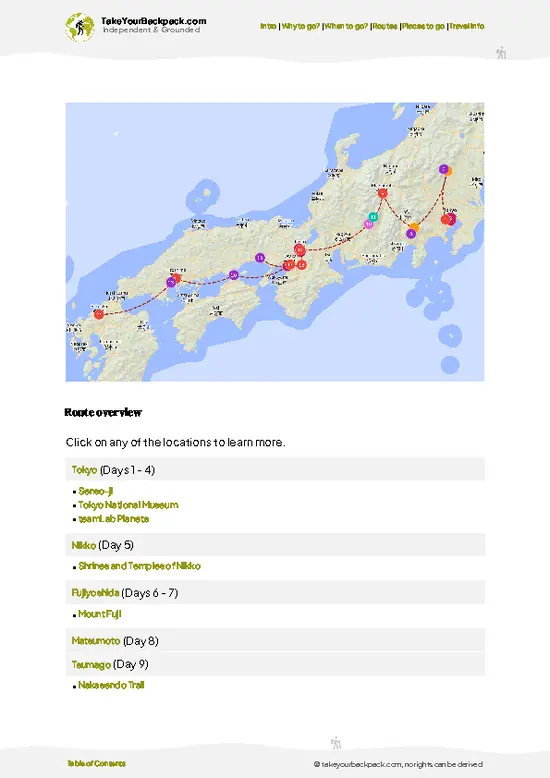
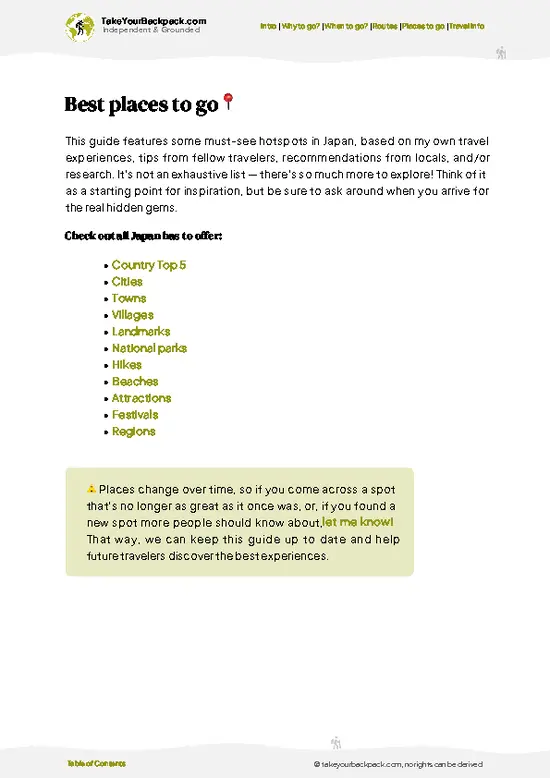
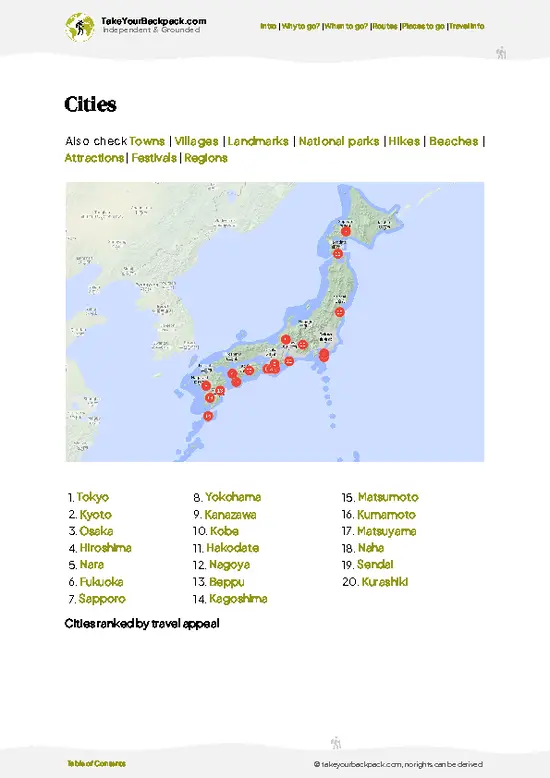
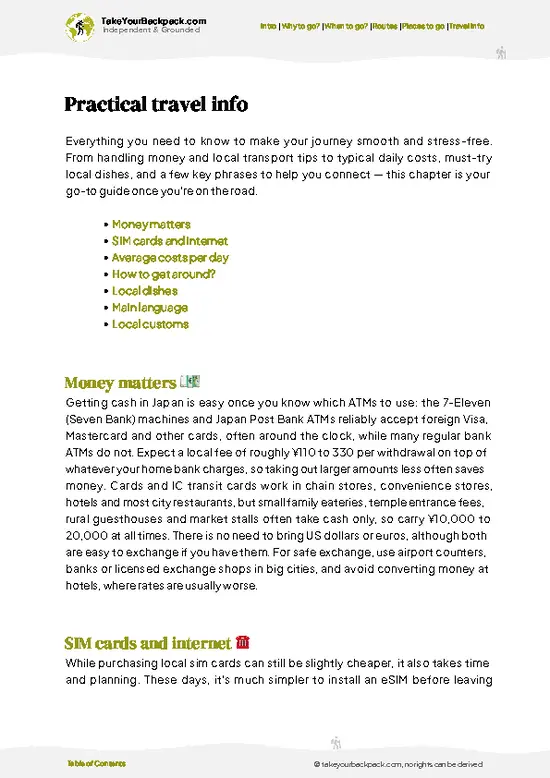
example page 0 from our offline Travel Guide for Japan
example page 1 from our offline Travel Guide for Japan
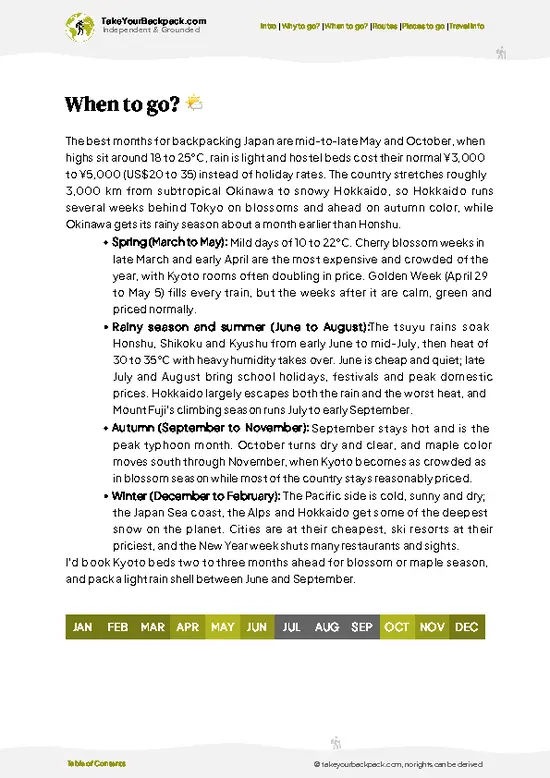
example page 2 from our offline Travel Guide for Japan
example page 3 from our offline Travel Guide for Japan
example page 4 from our offline Travel Guide for Japan
example page 5 from our offline Travel Guide for Japan
example page 6 from our offline Travel Guide for Japan
example page 7 from our offline Travel Guide for Japan
The digital guide (482 pages) contains:
140 highlights, ranked by travel appeal
Optimized 7, 14 & 21-day travel routes
Cities, national parks, landmarks, beaches
How to get around
Offline-friendly for travel without Wi-Fi
👉 Click to see all 30+ guide features

📅 Plan smarter in minutes, not weeks
Month by month travel advice
Festivals & national holidays
Budget expectations

🗺️ Go to the right places, skip the overrated ones
Honest pros & cons of destinations
Top hikes, parks & viewpoints
Lesser-known places most travelers miss
Clear “worth it vs skip it” guidance

🛏️ Travel smoothly without rookie mistakes
Best areas to stay
Transport systems explained simply
Common scams & safety advice
SIM cards, money & practical tips

🌍 Understand the country, not just visit it
Culture & traditions
52 Essential phrases & customs
Festivals worth planning around
Traveler-friendly historical context
Insights that make places more meaningful

📱 Built for real travel conditions
Fully downloadable PDF
Works completely offline
Optimized for phone use
Useful in remote areas & buses
Everything in one place
Save weeks of stressful planning
Get instant access to your full guide. 30‑day money-back guarantee.


By proceeding you agree to our terms.
Sent to your inbox immediately after payment • 100% Secure Checkout
Best Backpacking Travel Advisor 2025 tourism awardBest Backpacking
Travel Advisor
2025
What others say about Take Your Backpack Guides:
⭐⭐⭐⭐⭐
Fantastic, amazing amount of information!
⭐⭐⭐⭐⭐
My goodness this is amazing, it's what I've been looking for hats off too you!
⭐⭐⭐⭐⭐
I think this is absolutely BRILLIANT
⭐⭐⭐⭐
Very complete and informative. It's still missing places, but I gotta to commend you
⭐⭐⭐⭐⭐
This is truly amazing, thank you, can't wait to explore it with my kids!
⭐⭐⭐⭐⭐
Awesome resource, thank you!
⭐⭐⭐⭐⭐
This is amazing! Can't wait to explore the ones I haven't seen
⭐⭐⭐⭐
I love this! Well done, great idea.
⭐⭐⭐⭐⭐
Thanks for taking the time to make this gem!
⭐⭐⭐⭐⭐
This might be the best website I've ever seen.
⭐⭐⭐⭐⭐
Congratulations, and thank you so much for your work; it's incredibly valuable.
⭐⭐⭐⭐
In all seriousness I think you did a great job pointing out the important spots
⭐⭐⭐⭐⭐
10/10 very good
⭐⭐⭐⭐⭐
As someone who's only just starting to visit regularly this is awesome, thank you.
⭐⭐⭐⭐
Thank you very much! I'm going to visit my dad, it's going to be very useful!
⭐⭐⭐⭐⭐
This is really cool! We'll be travelling for the first time and this definitely come in handy.
⭐⭐⭐⭐⭐
You are now our minister of culture, congratulations 👨‍💼
⭐⭐⭐⭐⭐
Just wanted to tell you that this is a pearl! Going to follow your recommendations.
⭐⭐⭐⭐⭐
This is so cool. I'll definitely be using the resource for my travels soon.
⭐⭐⭐⭐⭐
This is very impressive! Good work.
⭐⭐⭐⭐⭐
This is an amazing and informative site. Very well done!

🛏️ Where to stay?Where staying makes the most sense

When it comes to the Kumano Kodo, the real magic isn’t just in the ancient trails; it’s in the places you choose to rest your head. First off, forget the glossy hotel chains. You want to dive into the local vibe, and that means heading to towns like Takijiri or Chikatsuyu. These spots are buzzing with fellow travelers, making it easy to swap stories over a bowl of ramen or a cup of matcha.

Takijiri is your gateway. It’s small but has a few cozy guesthouses where you can crash after a day of hiking. The atmosphere is warm and welcoming, perfect for solo backpackers looking to connect. Chikatsuyu, … read more 👉
When it comes to the Kumano Kodo, the real magic isn’t just in the ancient trails; it’s in the places you choose to rest your head. First off, forget the glossy hotel chains. You want to dive into the local vibe, and that means heading to towns like Takijiri or Chikatsuyu. These spots are buzzing with fellow travelers, making it easy to swap stories over a bowl of ramen or a cup of matcha.

Takijiri is your gateway. It’s small but has a few cozy guesthouses where you can crash after a day of hiking. The atmosphere is warm and welcoming, perfect for solo backpackers looking to connect. Chikatsuyu, on the other hand, offers a bit more social energy. You’ll find shared spaces where you can meet like-minded adventurers.

Both towns are safe, with locals who genuinely appreciate your presence. The costs? Totally manageable. You can find affordable options that won’t break the bank, allowing you to splurge on experiences instead.

Skip the tourist traps and embrace the authentic. The real Kumano Kodo experience lies in the connections you make and the stories you gather along the way.

👛 Costs (as of 21 December 2024)Money, prices, and spending tips

Visiting the Kumano Kodo in Japan can be a transformative experience, but it comes with its own set of costs. Here’s a breakdown to help you plan without the fluff.
  • Accommodation: Expect to pay between €30 to €150 per night. Options range from basic guesthouses to more luxurious ryokans. If you want that traditional Japanese experience, splurge on a ryokan with onsen access. Just remember, prices can spike during peak seasons.
  • Food: Budget around €10 to €30 per day. You can grab a quick meal at convenience stores for a few euros, or enjoy a sit-down meal for a bit more. Local specialties like Kumano beef are worth the extra cash. Eating at local izakayas can also be a fun way to experience the culture.
  • Transportation: Plan for about €5 to €20 per day. The Kumano Kodo is well-connected by buses
read more 👉
Visiting the Kumano Kodo in Japan can be a transformative experience, but it comes with its own set of costs. Here’s a breakdown to help you plan without the fluff.
  • Accommodation: Expect to pay between €30 to €150 per night. Options range from basic guesthouses to more luxurious ryokans. If you want that traditional Japanese experience, splurge on a ryokan with onsen access. Just remember, prices can spike during peak seasons.
  • Food: Budget around €10 to €30 per day. You can grab a quick meal at convenience stores for a few euros, or enjoy a sit-down meal for a bit more. Local specialties like Kumano beef are worth the extra cash. Eating at local izakayas can also be a fun way to experience the culture.
  • Transportation: Plan for about €5 to €20 per day. The Kumano Kodo is well-connected by buses and trains. If you’re hiking, you might need to budget for local transport to trailheads. Consider getting a transportation pass for better value if you’re moving around a lot.
  • Trail Fees: Some sections of the Kumano Kodo may have nominal fees, typically around €5 to €10. These fees help maintain the trails and facilities. It’s a small price to pay for the upkeep of such a historic path.
  • Guided Tours: If you want a deeper dive, guided tours can range from €50 to €200. This can include everything from a local guide to meals and transportation. It’s a great way to learn about the history and culture, but it’s not necessary if you’re comfortable navigating on your own.

Understanding these costs will help you experience the real magic of Kumano Kodo without breaking the bank. It’s about the journey, not just the destination.


source: tb-kumano.jp
⚠️ Prices can change and everyone travels differently, so take this as a rough guide. Hope it helps you plan your adventure!

Other Japanese landmarks near Kumano Kodo

Explore more nearby:

  • Himeji-jo—white castle, defensive walls, feudal architecture| 142 km away
  • Naoshima—contemporary art, island landscapes, outdoor installations| 167 km away
  • Tottori Sand Dunes—wind-shaped dunes, coastal desert, camel rides| 230 km away

💡 Not sure where to go next?
Create a personalized itinerary for Japan including Kumano Kodo and the places that fit your trip.

Generate my itinerary

👉 Discover all landmarks

Or checkout all Japan has to offer (think cities, towns, villages, national parks, hikes, beaches, festivals)
Country photo of Japan

We 💚 feedbackFinal thoughts on visiting Kumano Kodo

Kumano Kodo is a slice of spiritual serenity that’s hard to find elsewhere. Walking those ancient paths, surrounded by towering trees and the whispers of history, feels transformative. But let’s be real: the crowds can be overwhelming, especially during peak seasons. You’ll need to embrace the hustle to find those quiet moments. Still, the journey is worth it for the connection to nature and culture that you won’t get from a postcard.

✈️ When did I visit Japan?
As part of my 1.5 year travel around the world trip, I visited Japan in August 2015.

✍️ Help improve this page!
The information on this page is based on my own backpacking experience in Japan, supplemented with up-to-date research and feedback from other travelers. Travel details can change, so if you notice anything outdated or incomplete, feel free to let me know.


🙋‍♂️ Give feedback

👋 Meet the founderWho’s Behind Take Your Backpack?

Johan, backpacker and founder of TakeYourBackpackHi, I’m Johan (Netherlands 🇳🇱), the creator of TakeYourBackpack. Over the past decade, I’ve backpacked through 80+ countries across six continents, gaining extensive experience with independent travel, long-term trips, and overland routes.

This site is built on a combination of firsthand travel experience and carefully curated insights from other backpackers. Many guides are based on places I’ve personally visited, while others bring together tips, observations, and practical advice shared by trusted travelers I’ve met along the way.

The goal is to provide realistic, experience-driven guidance — not generic itineraries — so you can explore destinations with better context, clearer expectations, and more confidence.

Get full Japan guide •
Instant download • 140 highlights • Full Offline guide