×

Japan🇯🇵 | citiesYamaguchipagoda, hot springs, literary history | things to do and best time to go

Explore ShimonosekiExplore Nobeoka

Backpacking in Yamaguchi
👀 For curious travelerscity ranked #37
By Johan Kruseman 🇳🇱 | Updated September 4, 2026

Yamaguchi used to feel like a sleepy temple town you passed through on the way to Hiroshima, all mossy stone lanterns and empty streets after dark; now it’s still quiet, but better connected and just aware enough of tourism to be convenient without losing its calm. Tucked in western Honshu’s Chugoku region, it’s a gentle, low-drama stop for backpackers: Ruriko-ji’s pagoda, hot springs nearby, a compact center, cheap local food, very safe, but thinner on hostels, nightlife, and fellow travelers than Fukuoka or Hiroshima.

Discover everything you want to know in the 📖 Japan Travel Guide.


Get your Japan guide
140 ranked highlights, routes & tips, works offline (482 pages)
Loading the map 🌍
CLICK TO FILTER
cities
towns
villages
landmarks
national parks
hikes
beaches
attractions
festivals
regions
SHOW COUNTRY’S BESTSHOW ALL

✨ Why go?
Ranked #37 city in Japan
What makes this city worth visiting

Yamaguchi is a strategic stop for backpackers weaving through Japan. It offers a solid mix of highlights and activities without overwhelming your schedule. The city is walkable, making it easy to explore on foot, and the hostels here are budget-friendly, fostering a social vibe. You’ll find delicious local food that won’t break the bank, enhancing your culinary adventure. Plus, Yamaguchi serves as a great basecamp for day trips to nearby attractions, allowing you to maximize your time. With easy onward travel options, it’s a smart choice for those balancing comfort and value on their journey.
Want to include Yamaguchi in your Japan route?
Create a personalized Japan itinerary that includes Yamaguchi and the places that fit your trip — based on your travel style, budget, and available time. Get your route in seconds.

Generate my trip

💡 HighlightsMust-see experiences and standout moments

  1. Ruriko-ji Five-story Pagoda (瑠璃光寺五重塔) — The single most iconic sight in Yamaguchi: a National Treasure pagoda set in a neat temple garden. Perfect for photos at dawn or when the leaves turn; an essential piece of the city’s samurai-era vibe.
  2. Ruriko-ji Temple grounds and park — The temple precinct around the pagoda gives a calm strollable experience: temple buildings, small museum displays about the site, and seasonal plantings that show a quieter, reflective side of Yamaguchi life.
  3. Yuda Onsen (湯田温泉) — The city’s main hot-spring district close to Yamaguchi Station, with public footbaths, old-style ryokan and casual sentō. Ideal for relaxing after walking the city and for people-watching on the evening streets.
  4. Kameyama Park (site of old Yamaguchi Castle) — A compact hilltop park with stonework
read more 👉
  1. Ruriko-ji Five-story Pagoda (瑠璃光寺五重塔) — The single most iconic sight in Yamaguchi: a National Treasure pagoda set in a neat temple garden. Perfect for photos at dawn or when the leaves turn; an essential piece of the city’s samurai-era vibe.
  2. Ruriko-ji Temple grounds and park — The temple precinct around the pagoda gives a calm strollable experience: temple buildings, small museum displays about the site, and seasonal plantings that show a quieter, reflective side of Yamaguchi life.
  3. Yuda Onsen (湯田温泉) — The city’s main hot-spring district close to Yamaguchi Station, with public footbaths, old-style ryokan and casual sentō. Ideal for relaxing after walking the city and for people-watching on the evening streets.
  4. Kameyama Park (site of old Yamaguchi Castle) — A compact hilltop park with stonework and remnants of the castle site, offering pleasant paths and city views. Good for a short hike, a picnic, and getting a local perspective on historic Yamaguchi’s layout.
  5. Yamaguchi Prefectural Museum of Art — The main regional art museum presenting modern and traditional works connected to Yamaguchi and the Chūgoku region; useful for understanding local culture through paintings, ceramics and periodic special exhibitions.
A few great day trips nearby are Iwakuni’s Kintai Bridge, the castle town of Hagi, and the karst wonder Akiyoshidō cave — Akiyoshidō is my personal favorite.
Spotted a mistake or missing something? Contact us.

Things to do near Yamaguchi

Ratings based on Tripadvisor reviews. When you book through this link, you support our work at no extra cost to you.

🏘️ NeighborhoodsHow different areas shape the experience

Yamaguchi offers a blend of history and modernity, perfect for backpackers seeking authentic experiences.

Yamaguchi City Center: This is the heartbeat of the city. Vibrant yet manageable, it’s walkable with plenty of shops and eateries. Costs are moderate, making it ideal for short stays. Nightlife is lively but not overwhelming.

Kintai Bridge Area: Famous for its iconic bridge, this area is quieter and more picturesque. It’s great for longer stays if you enjoy nature walks. Costs can be higher here, but the views are worth it. Public transport is accessible, but you might want to rent a bike.

Yuda Onsen: Known for its hot springs, this area offers a relaxing vibe. It’s a bit pricier, but the experience is unique. Perfect for unwinding after a day of exploration. Walkability is decent, but transport options are limited.

⌛️ 1 dayWhat you can realistically do in a day

Yamaguchi, Japan, is a city where history and nature intertwine beautifully. It’s often overlooked, but its charm lies in serene gardens, ancient temples, and a laid-back vibe that invites exploration.

Start your morning at Rurikoji Temple, home to a stunning five-story pagoda. The tranquility here is palpable, and the early light casts a magical glow. After soaking in the peaceful atmosphere, stroll through the adjacent gardens, where cherry blossoms may greet you, depending on the season.

In the afternoon, head to the bustling Yamaguchi City Center. Grab lunch at a local eatery—try the Yamaguchi-style sushi, a delightful twist on the classic. Post-lunch, wander through the historic streets of the Motonosumi Shrine, where the red torii gates lining the coast create a striking contrast against … read more 👉
Yamaguchi, Japan, is a city where history and nature intertwine beautifully. It’s often overlooked, but its charm lies in serene gardens, ancient temples, and a laid-back vibe that invites exploration.

Start your morning at Rurikoji Temple, home to a stunning five-story pagoda. The tranquility here is palpable, and the early light casts a magical glow. After soaking in the peaceful atmosphere, stroll through the adjacent gardens, where cherry blossoms may greet you, depending on the season.

In the afternoon, head to the bustling Yamaguchi City Center. Grab lunch at a local eatery—try the Yamaguchi-style sushi, a delightful twist on the classic. Post-lunch, wander through the historic streets of the Motonosumi Shrine, where the red torii gates lining the coast create a striking contrast against the blue sea. This spot is often missed by tourists, but it’s a perfect blend of culture and nature.

As evening falls, find a cozy izakaya in the Nakagawa area. Enjoy local sake and share stories with friendly locals. Yamaguchi may be small, but it offers a rich tapestry of experiences that linger long after you leave.
Turn your Yamaguchi visit into an Japan adventure
Build a complete Japan route with Yamaguchi, hidden gems, must-see destinations, and realistic travel times included.

Generate my trip

🌤️ When to go?Best time to visit Yamaguchi


  • Weather: Spring (March to May) and autumn (September to November) offer mild, dry conditions. Expect 10-20°C (50-68°F) in spring and 15-25°C (59-77°F) in autumn, perfect for hiking and exploring without sweating buckets or freezing.

  • Daylight Hours: Longer days in spring and autumn, roughly 11-13 hours, maximize your daylight for sightseeing and side trips, unlike the shorter, colder winter days.

  • Crowds: Peak tourist influx hits during cherry blossom season (late March to early April) and autumn foliage (mid-November), so expect busier spots and higher prices then.

  • Seasonal Activities: Cherry blossoms and autumn leaves are the headline acts. Summer festivals bring energy but also humidity and crowds, while winter is quiet but chilly.

  • Price Fluctuations: Accommodation and transport
read more 👉

  • Weather: Spring (March to May) and autumn (September to November) offer mild, dry conditions. Expect 10-20°C (50-68°F) in spring and 15-25°C (59-77°F) in autumn, perfect for hiking and exploring without sweating buckets or freezing.

  • Daylight Hours: Longer days in spring and autumn, roughly 11-13 hours, maximize your daylight for sightseeing and side trips, unlike the shorter, colder winter days.

  • Crowds: Peak tourist influx hits during cherry blossom season (late March to early April) and autumn foliage (mid-November), so expect busier spots and higher prices then.

  • Seasonal Activities: Cherry blossoms and autumn leaves are the headline acts. Summer festivals bring energy but also humidity and crowds, while winter is quiet but chilly.

  • Price Fluctuations: Accommodation and transport costs spike during peak blossom and foliage seasons. Off-peak spring and autumn weeks offer better deals without sacrificing comfort.


Pro-tip: Aim for early spring or late autumn weekdays—sweet spots where weather, crowd size, and prices align to give you the best bang for your buck and boots.


source: climatestotravel.comJANJanuary: fair for travelingFEBFebruary: fair for travelingMARMarch: highly recommended for travelingAPRApril: good for travelingMAYMay: excellent for travelingJUNJune: good for travelingJULJuly: fair for travelingAUGAugust: fair for travelingSEPSeptember: highly recommended for travelingOCTOctober: excellent for travelingNOVNovember: good for travelingDECDecember: fair for traveling
when-to-go

✈️ The backpacker research shortcutJapan Travel Guide

An offline-friendly backpacking guide with optimized travel routes, ranked highlights, transport advice, and the best areas to stay.
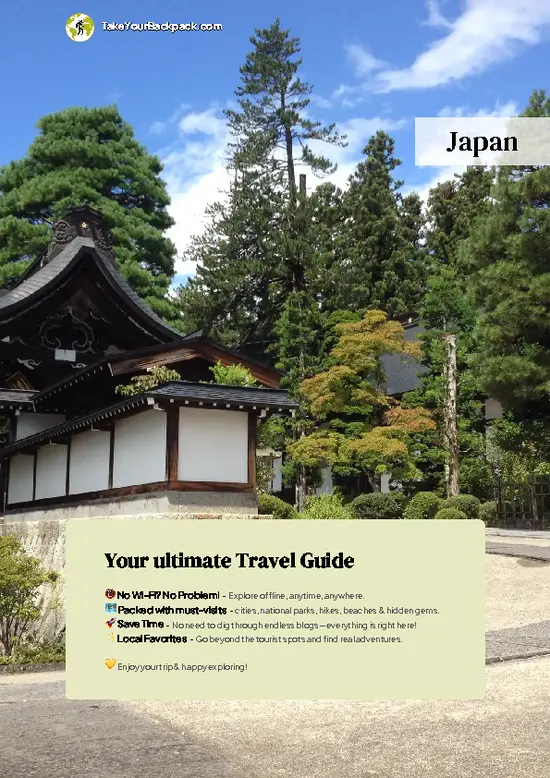
example page 0 from our offline Travel Guide for Japan
example page 1 from our offline Travel Guide for Japan
example page 2 from our offline Travel Guide for Japan
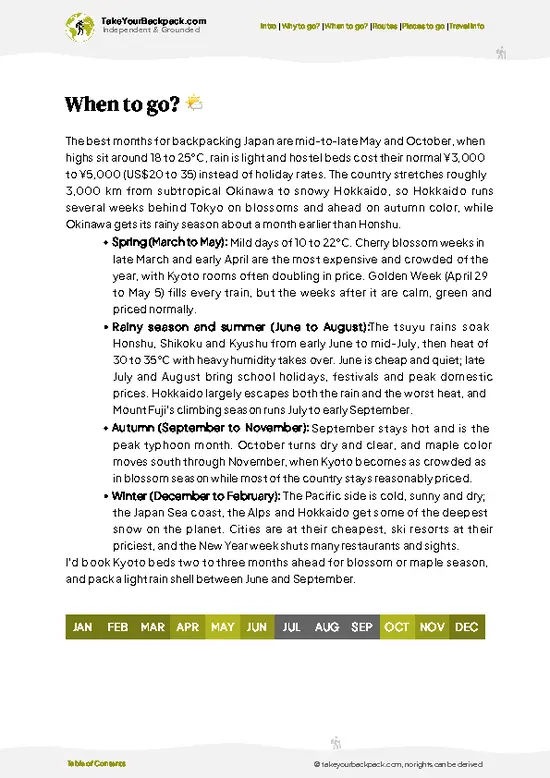
example page 3 from our offline Travel Guide for Japan
example page 4 from our offline Travel Guide for Japan
example page 5 from our offline Travel Guide for Japan
example page 6 from our offline Travel Guide for Japan
example page 7 from our offline Travel Guide for Japan
The digital guide (482 pages) contains:
140 highlights, ranked by travel appeal
Optimized 7, 14 & 21-day travel routes
Cities, national parks, landmarks, beaches
How to get around
Offline-friendly for travel without Wi-Fi
👉 Click to see all 30+ guide features

📅 Plan smarter in minutes, not weeks
Month by month travel advice
Festivals & national holidays
Budget expectations

🗺️ Go to the right places, skip the overrated ones
Honest pros & cons of destinations
Top hikes, parks & viewpoints
Lesser-known places most travelers miss
Clear “worth it vs skip it” guidance

🛏️ Travel smoothly without rookie mistakes
Best areas to stay
Transport systems explained simply
Common scams & safety advice
SIM cards, money & practical tips

🌍 Understand the country, not just visit it
Culture & traditions
52 Essential phrases & customs
Festivals worth planning around
Traveler-friendly historical context
Insights that make places more meaningful

📱 Built for real travel conditions
Fully downloadable PDF
Works completely offline
Optimized for phone use
Useful in remote areas & buses
Everything in one place
Save weeks of stressful planning
Get instant access to your full guide. 30‑day money-back guarantee.
+ Add another guide for just US$7.80

By proceeding you agree to our terms.
Sent to your inbox immediately after payment • 100% Secure Checkout
Best Backpacking Travel Advisor 2025 tourism awardBest Backpacking
Travel Advisor
2025
What others say about Take Your Backpack Guides:
⭐⭐⭐⭐⭐
Fantastic, amazing amount of information!
⭐⭐⭐⭐⭐
My goodness this is amazing, it's what I've been looking for hats off too you!
⭐⭐⭐⭐⭐
I think this is absolutely BRILLIANT
⭐⭐⭐⭐
Very complete and informative. It's still missing places, but I gotta to commend you
⭐⭐⭐⭐⭐
This is truly amazing, thank you, can't wait to explore it with my kids!
⭐⭐⭐⭐⭐
Awesome resource, thank you!
⭐⭐⭐⭐⭐
This is amazing! Can't wait to explore the ones I haven't seen
⭐⭐⭐⭐
I love this! Well done, great idea.
⭐⭐⭐⭐⭐
Thanks for taking the time to make this gem!
⭐⭐⭐⭐⭐
This might be the best website I've ever seen.
⭐⭐⭐⭐⭐
Congratulations, and thank you so much for your work; it's incredibly valuable.
⭐⭐⭐⭐
In all seriousness I think you did a great job pointing out the important spots
⭐⭐⭐⭐⭐
10/10 very good
⭐⭐⭐⭐⭐
As someone who's only just starting to visit regularly this is awesome, thank you.
⭐⭐⭐⭐
Thank you very much! I'm going to visit my dad, it's going to be very useful!
⭐⭐⭐⭐⭐
This is really cool! We'll be travelling for the first time and this definitely come in handy.
⭐⭐⭐⭐⭐
You are now our minister of culture, congratulations 👨‍💼
⭐⭐⭐⭐⭐
Just wanted to tell you that this is a pearl! Going to follow your recommendations.
⭐⭐⭐⭐⭐
This is so cool. I'll definitely be using the resource for my travels soon.
⭐⭐⭐⭐⭐
This is very impressive! Good work.
⭐⭐⭐⭐⭐
This is an amazing and informative site. Very well done!

🛏️ Where to stay?Best areas and accommodation options

In Yamaguchi, the best spot for backpackers is the area around Yamaguchi Station. It’s the city’s transport hub, so you’re plugged into buses and trains without fuss—time saved here is pure gold. This neighborhood balances safety with a low-key social scene, where budget travelers naturally cross paths in cozy cafés and local eateries. Hostels cluster nearby, offering simple, clean digs without the touristy price tag. Compared to the quieter suburbs or the more residential districts, this zone keeps you close to action and convenience without sacrificing comfort. It’s the smart choice for solo … read more 👉
In Yamaguchi, the best spot for backpackers is the area around Yamaguchi Station. It’s the city’s transport hub, so you’re plugged into buses and trains without fuss—time saved here is pure gold. This neighborhood balances safety with a low-key social scene, where budget travelers naturally cross paths in cozy cafés and local eateries. Hostels cluster nearby, offering simple, clean digs without the touristy price tag. Compared to the quieter suburbs or the more residential districts, this zone keeps you close to action and convenience without sacrificing comfort. It’s the smart choice for solo travelers who want to maximize experience without wasting time or cash on endless transit.

🚌 Getting aroundTransportation options and practical tips

Yamaguchi moves at its own pace—neither a frantic rush nor a laissez-faire drift. It’s a city where punctual trains slice through quiet streets, but where the rhythm of life still leans on intuition and local know-how. You’ll find that schedules are respected, but the real flow comes from blending those timetables with a bit of patience and a willingness to explore on foot. This balance means your choices between time, money, and comfort aren’t just about logistics—they’re about tuning into the city’s pulse and deciding how deeply you want to dive in.


  • JR Sanyo Line: Runs from early morning (around 5:30 AM) until just before midnight, with fares starting at about 200 yen for short hops. It’s fast and reliable, perfect for covering longer distances quickly without breaking the bank, but
read more 👉
Yamaguchi moves at its own pace—neither a frantic rush nor a laissez-faire drift. It’s a city where punctual trains slice through quiet streets, but where the rhythm of life still leans on intuition and local know-how. You’ll find that schedules are respected, but the real flow comes from blending those timetables with a bit of patience and a willingness to explore on foot. This balance means your choices between time, money, and comfort aren’t just about logistics—they’re about tuning into the city’s pulse and deciding how deeply you want to dive in.


  • JR Sanyo Line: Runs from early morning (around 5:30 AM) until just before midnight, with fares starting at about 200 yen for short hops. It’s fast and reliable, perfect for covering longer distances quickly without breaking the bank, but expect standard commuter comfort—no frills.

  • Local Bus Network: Buses cover the city and nearby towns, with fares around 200-300 yen. They’re slower than trains but drop you closer to off-the-beaten-path spots. Service typically runs from 6 AM to 9 PM, so plan accordingly if you want to avoid a long walk back.

  • Walking: Yamaguchi’s compact center is a walker’s playground. No cost, full control over your pace, and the chance to soak in details missed by faster transit. It’s the ultimate comfort trade-off—time spent on foot is time invested in discovery.

  • Rental Bicycles: Available at key spots for about 500-800 yen per day. Faster than walking, more flexible than buses, and a great middle ground if you want to cover more ground without the noise and crowds of public transit.

👛 Costs (as of 4 September 2026)How expensive it really is

Backpacking in Yamaguchi, Japan, offers a balanced blend of affordability and comfort, but knowing where your money goes helps you play the travel game smarter. Here’s how the daily costs typically stack up:
  • Dorm Accommodation (High Season): Expect to pay around $25 to $35 per night. High season, usually spring and autumn, pushes prices up due to demand, especially in popular guesthouses near the city center.
  • Dorm Accommodation (Off-Season): Dropping to about $18 to $25 per night, off-season rates give you a break without sacrificing too much on quality. Winter months see fewer tourists, so you can snag better deals.
  • Meals: Budget roughly $10 to $15 daily if you stick to convenience stores, local eateries, and occasional street food. Yamaguchi’s food scene is modest but satisfying—think
read more 👉
Backpacking in Yamaguchi, Japan, offers a balanced blend of affordability and comfort, but knowing where your money goes helps you play the travel game smarter. Here’s how the daily costs typically stack up:
  • Dorm Accommodation (High Season): Expect to pay around $25 to $35 per night. High season, usually spring and autumn, pushes prices up due to demand, especially in popular guesthouses near the city center.
  • Dorm Accommodation (Off-Season): Dropping to about $18 to $25 per night, off-season rates give you a break without sacrificing too much on quality. Winter months see fewer tourists, so you can snag better deals.
  • Meals: Budget roughly $10 to $15 daily if you stick to convenience stores, local eateries, and occasional street food. Yamaguchi’s food scene is modest but satisfying—think hearty bowls of ramen or simple bento boxes.
  • Local Transport: Single bus rides typically cost between $1.50 and $2.50. Since Yamaguchi is compact, you can often walk, but buses cover the outskirts and key sites efficiently.
  • City Transport Pass: A day pass for buses runs about $5 to $7, worthwhile if you plan multiple trips in a day. It’s a small investment for hassle-free hopping around.
  • Basic Activities/Entry Fees: Most temples and museums charge modest fees, usually $3 to $7. Some parks and shrines are free, so you can mix paid and no-cost experiences to stretch your budget.
  • Miscellaneous Expenses: Factor in around $5 to $10 for things like bottled water, snacks, or occasional small purchases. These add up but remain manageable.

All told, you’re looking at a daily budget ranging from about $40 on a tight, off-season plan to $65 if you lean into convenience and a few paid activities during peak times. Yamaguchi rewards those who balance walking with smart transport choices and mix free cultural spots with a few paid visits. This approach keeps your wallet happy while letting you soak in the city’s quiet charm.


source: yamaguchi-tourism.jp
⚠️ Prices can change and everyone travels differently, so take this as a rough guide. Hope it helps you plan your adventure!

🚌 Day tripsEasy escapes and nearby places

Yamaguchi serves as a fantastic launchpad for day trips that blend culture, nature, and adventure. Here are some standout options.

Akiyoshido Cave
Just an hour from Yamaguchi, Akiyoshido is Japan’s largest limestone cave. The cool, damp air and stunning rock formations create an otherworldly atmosphere. Entry is around ¥1,200, and you can easily spend a few hours exploring. The best time to visit is in spring or autumn when the weather is mild. A common mistake? Many rush through without taking the time to appreciate the unique acoustics and lighting.


Hagi
About 90 minutes away, Hagi is a charming town steeped in samurai history. Stroll through the preserved castle ruins and traditional streets, and don’t miss the local pottery. Expect to spend around ¥2,000 on transport and snacks. … read more 👉
Yamaguchi serves as a fantastic launchpad for day trips that blend culture, nature, and adventure. Here are some standout options.

Akiyoshido Cave
Just an hour from Yamaguchi, Akiyoshido is Japan’s largest limestone cave. The cool, damp air and stunning rock formations create an otherworldly atmosphere. Entry is around ¥1,200, and you can easily spend a few hours exploring. The best time to visit is in spring or autumn when the weather is mild. A common mistake? Many rush through without taking the time to appreciate the unique acoustics and lighting.


Hagi
About 90 minutes away, Hagi is a charming town steeped in samurai history. Stroll through the preserved castle ruins and traditional streets, and don’t miss the local pottery. Expect to spend around ¥2,000 on transport and snacks. Spring is ideal for cherry blossoms, while autumn offers vibrant foliage. First-timers often overlook the small museums that provide rich context about the area.


Shimonoseki
Just 30 minutes from Yamaguchi, Shimonoseki is famous for its fugu (pufferfish). Enjoy a meal at a local eatery for about ¥3,000. The Kanmon Bridge offers stunning views, especially at sunset. Visit in late spring for the best weather. A common pitfall? Skipping the local seafood market, which is a feast for the senses.
👉 Explore Shimonoseki
Want to know what more Japan offers?
The Japan Travel Guide describes 140 highlights, from cities to national parks, from beaches to hikes

Get the Travel Guide -

🍲 FoodLocal Cuisine & Drinks

In Yamaguchi, local cuisine is a treasure trove for backpackers. Dive into kawara soba, a unique dish served on a roof tile, featuring stir-fried noodles topped with beef and fresh greens. Don’t miss fugu, the infamous pufferfish, prepared by skilled chefs—it’s a culinary thrill.

Street food stalls and bustling markets are where you’ll find the heart of Yamaguchi’s food scene. Grab a yakitori skewer or sample yaki-udon from a vendor, soaking in the lively atmosphere.

When it comes to drinks, try sake brewed locally; it’s a social experience, often enjoyed in small, intimate bars. Remember, slurping your noodles is not just acceptable; it’s a sign of appreciation!

🛡️ SafetyStaying Safe: What Travelers Should Know

Yamaguchi is generally safe, but staying aware enhances your experience. When wandering the streets, especially around the train station at night, keep your belongings close. Solo travelers should avoid dimly lit areas and stick to well-populated paths.

While scams are rare, be cautious of overly friendly locals who might try to lead you to shops with inflated prices. The most common annoyance? Language barriers can lead to miscommunication, so a translation app can be a lifesaver. Carry yourself confidently, and you’ll navigate Yamaguchi like a pro.

FAQTraveler FAQ

2 to 3 days are sufficient to explore Yamaguchi city, covering main attractions like Rurikoji Temple and the Kintaikyo Bridge nearby. This allows time to enjoy local cuisine and visit museums without rushing.
Yes, Yamaguchi is safe for solo backpackers. The city has low crime rates and a friendly local population, making it comfortable for independent travelers to explore day and night.
Yamaguchi is known for its historic sites such as Rurikoji Temple with its five-story pagoda, and the scenic Kintaikyo Bridge. It is also famous for its hot springs and local delicacies like fugu (pufferfish).
⚠️ Things can change over time, so always validate details locally before you go.

Other Japanese cities near Yamaguchi

Explore more nearby:

  • Shimonoseki—fish market, Kanmon Strait, pufferfish cuisine| 55 km away
  • Iwakuni—arched bridge, riverside park, samurai quarters| 69 km away
  • Hiroshima—Peace Memorial, okonomiyaki, island shrine| 93 km away

💡 Not sure where to go next?
Create a personalized itinerary for Japan including Yamaguchi and the places that fit your trip.

Generate my itinerary

👉 Discover all cities

Or checkout all Japan has to offer (think cities, towns, villages, national parks, hikes, beaches, festivals)
Country photo of Japan

We 💚 feedbackWhat to keep in mind

Yamaguchi’s charm lies in its rich history and stunning natural beauty, especially the serene Rurikoji Temple. But be ready for limited English signage; it can be a puzzle for non-Japanese speakers. Embrace the challenge, and you’ll unlock a deeper connection to this unique place.

✈️ When did I visit Japan?
As part of my 1.5 year travel around the world trip, I visited Japan in August 2015.

✍️ Help improve this page!
The information on this page is based on my own backpacking experience in Japan, supplemented with up-to-date research and feedback from other travelers. Travel details can change, so if you notice anything outdated or incomplete, feel free to let me know.


🙋‍♂️ Give feedback

👋 Meet the founderWho’s Behind Take Your Backpack?

Johan, backpacker and founder of TakeYourBackpackHi, I’m Johan (Netherlands 🇳🇱), the creator of TakeYourBackpack. Over the past decade, I’ve backpacked through 80+ countries across six continents, gaining extensive experience with independent travel, long-term trips, and overland routes.

This site is built on a combination of firsthand travel experience and carefully curated insights from other backpackers. Many guides are based on places I’ve personally visited, while others bring together tips, observations, and practical advice shared by trusted travelers I’ve met along the way.

The goal is to provide realistic, experience-driven guidance — not generic itineraries — so you can explore destinations with better context, clearer expectations, and more confidence.

Get full Japan guide •
Instant download • 140 highlights • Full Offline guide