v2.webp)


Malindi Old Town
This isn’t just a cluster of old buildings—it’s a living, breathing crossroads of Swahili, Arab, Portuguese, and Italian influences. The narrow lanes are lined with coral-stone houses, faded wooden doors, and the kind of street life that rewards slow wandering. You’ll find tailors, spice sellers, and the occasional donkey cart. Go in the early morning or late afternoon when the sun is less punishing and the town feels most alive. Free to explore, but bring a few shillings for street snacks or a guided walk (about $5-10). Give yourself 1-2 hours, or more if you’re a people-watcher.
Vasco da Gama Pillar
This 15th-century coral stone pillar is Malindi’s most recognizable landmark, planted by the Portuguese explorer himself. It’s not just a photo op—the pillar marks centuries of … read more 👉
This isn’t just a cluster of old buildings—it’s a living, breathing crossroads of Swahili, Arab, Portuguese, and Italian influences. The narrow lanes are lined with coral-stone houses, faded wooden doors, and the kind of street life that rewards slow wandering. You’ll find tailors, spice sellers, and the occasional donkey cart. Go in the early morning or late afternoon when the sun is less punishing and the town feels most alive. Free to explore, but bring a few shillings for street snacks or a guided walk (about $5-10). Give yourself 1-2 hours, or more if you’re a people-watcher.
Vasco da Gama Pillar
This 15th-century coral stone pillar is Malindi’s most recognizable landmark, planted by the Portuguese explorer himself. It’s not just a photo op—the pillar marks centuries of … read more 👉
Malindi Old Town
This isn’t just a cluster of old buildings—it’s a living, breathing crossroads of Swahili, Arab, Portuguese, and Italian influences. The narrow lanes are lined with coral-stone houses, faded wooden doors, and the kind of street life that rewards slow wandering. You’ll find tailors, spice sellers, and the occasional donkey cart. Go in the early morning or late afternoon when the sun is less punishing and the town feels most alive. Free to explore, but bring a few shillings for street snacks or a guided walk (about $5-10). Give yourself 1-2 hours, or more if you’re a people-watcher.
Vasco da Gama Pillar
This 15th-century coral stone pillar is Malindi’s most recognizable landmark, planted by the Portuguese explorer himself. It’s not just a photo op—the pillar marks centuries of global trade and shifting alliances. Climb the bluff for a salty breeze and a panoramic sweep of the Indian Ocean. Best at sunset, when the light turns the stone golden and the fishermen haul in their catch. Entry is around $2. Expect to spend 30-45 minutes, unless you linger for the view.
Malindi Museum (House of Columns)
Skip the generic “museum fatigue.” This compact spot is packed with artifacts that actually tell Malindi’s story—Swahili pottery, Portuguese cannons, and the odd colonial oddity. The building itself is a relic, with creaky floors and a balcony that’s perfect for people-watching. Go mid-morning to dodge school groups. Entry is about $3. Budget 45 minutes to an hour.
Jami Mosque & Swahili Cultural Centre
The Jami Mosque is one of the oldest in East Africa, and the attached cultural centre is a crash course in Swahili architecture and traditions. Non-Muslims can’t enter the prayer hall, but the exterior and the centre’s exhibits are worth your time. Visit outside prayer times—late morning or mid-afternoon is ideal. Entry is free, but donations are welcome. Allow 30-40 minutes.
Malindi Marine National Park (Beach Entrance)
This is where Malindi’s wild side shines. The park’s beach entrance is right in town—no need for a boat or a tour. Snorkel straight off the sand, or just float and watch the kite surfers. The coral gardens are shallow, so even beginners can spot technicolor fish. Early morning means calm water and fewer crowds. Entry is about $15 for non-residents; gear rental extra. Plan for 2-3 hours if you’re swimming or snorkeling.
Falconry of Kenya
A quirky, hands-on rescue center for birds of prey and reptiles. You can hold a falcon, watch feeding time, or just marvel at the size of the resident python. It’s educational without being preachy, and kids (or adults with a sense of wonder) will love it. Go in the late afternoon for the coolest temperatures and most active birds. Entry is around $5. You’ll need 45 minutes to an hour.
Malindi’s city core is compact, but if you want to stretch your legs, day trips to the Gede Ruins, Marafa Hell’s Kitchen, and Watamu’s beaches are all within easy striking distance and add serious depth to your coastal adventure.
This isn’t just a cluster of old buildings—it’s a living, breathing crossroads of Swahili, Arab, Portuguese, and Italian influences. The narrow lanes are lined with coral-stone houses, faded wooden doors, and the kind of street life that rewards slow wandering. You’ll find tailors, spice sellers, and the occasional donkey cart. Go in the early morning or late afternoon when the sun is less punishing and the town feels most alive. Free to explore, but bring a few shillings for street snacks or a guided walk (about $5-10). Give yourself 1-2 hours, or more if you’re a people-watcher.
Vasco da Gama Pillar
This 15th-century coral stone pillar is Malindi’s most recognizable landmark, planted by the Portuguese explorer himself. It’s not just a photo op—the pillar marks centuries of global trade and shifting alliances. Climb the bluff for a salty breeze and a panoramic sweep of the Indian Ocean. Best at sunset, when the light turns the stone golden and the fishermen haul in their catch. Entry is around $2. Expect to spend 30-45 minutes, unless you linger for the view.
Malindi Museum (House of Columns)
Skip the generic “museum fatigue.” This compact spot is packed with artifacts that actually tell Malindi’s story—Swahili pottery, Portuguese cannons, and the odd colonial oddity. The building itself is a relic, with creaky floors and a balcony that’s perfect for people-watching. Go mid-morning to dodge school groups. Entry is about $3. Budget 45 minutes to an hour.
Jami Mosque & Swahili Cultural Centre
The Jami Mosque is one of the oldest in East Africa, and the attached cultural centre is a crash course in Swahili architecture and traditions. Non-Muslims can’t enter the prayer hall, but the exterior and the centre’s exhibits are worth your time. Visit outside prayer times—late morning or mid-afternoon is ideal. Entry is free, but donations are welcome. Allow 30-40 minutes.
Malindi Marine National Park (Beach Entrance)
This is where Malindi’s wild side shines. The park’s beach entrance is right in town—no need for a boat or a tour. Snorkel straight off the sand, or just float and watch the kite surfers. The coral gardens are shallow, so even beginners can spot technicolor fish. Early morning means calm water and fewer crowds. Entry is about $15 for non-residents; gear rental extra. Plan for 2-3 hours if you’re swimming or snorkeling.
Falconry of Kenya
A quirky, hands-on rescue center for birds of prey and reptiles. You can hold a falcon, watch feeding time, or just marvel at the size of the resident python. It’s educational without being preachy, and kids (or adults with a sense of wonder) will love it. Go in the late afternoon for the coolest temperatures and most active birds. Entry is around $5. You’ll need 45 minutes to an hour.
Malindi’s city core is compact, but if you want to stretch your legs, day trips to the Gede Ruins, Marafa Hell’s Kitchen, and Watamu’s beaches are all within easy striking distance and add serious depth to your coastal adventure.
Spotted a mistake or missing something? Contact us.

Day Trip - Tsavo East National Park ( Man Eater Lions of Tsavo & Other Big Five)

Private Circle Island Tour we build your dream Itinerary

Kisite Marine Park Private Boat Snorkeling with breakfast & Lunch

Safari-Tsavo east national park -2 days 1 night

Discover Kenya Safaris

Safari blue

Mida creek mangrove Kayaking adventure in Watamu, Kenya

Tour Malindi & Robinson Island & Marafa Hell's Kitchen

3 Days, 2 Nights Safari - Amboseli National Park and Tsavo West Adventure Safari


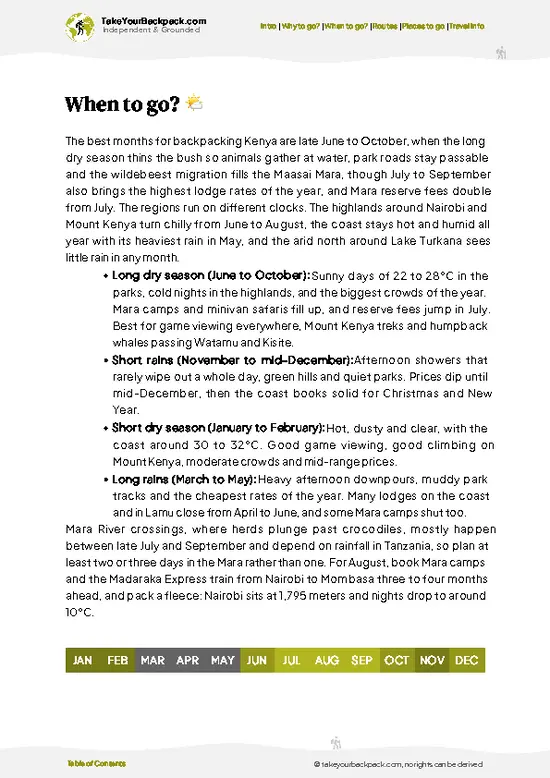
 Best Backpacking
.jpg) Hi, I’m Johan (Netherlands 🇳🇱), the creator of TakeYourBackpack. Over the past 3 decades, I’ve backpacked through 90+ countries across six continents, gaining extensive experience with independent travel, long-term trips, and overland routes.
Hi, I’m Johan (Netherlands 🇳🇱), the creator of TakeYourBackpack. Over the past 3 decades, I’ve backpacked through 90+ countries across six continents, gaining extensive experience with independent travel, long-term trips, and overland routes.