v2.webp)
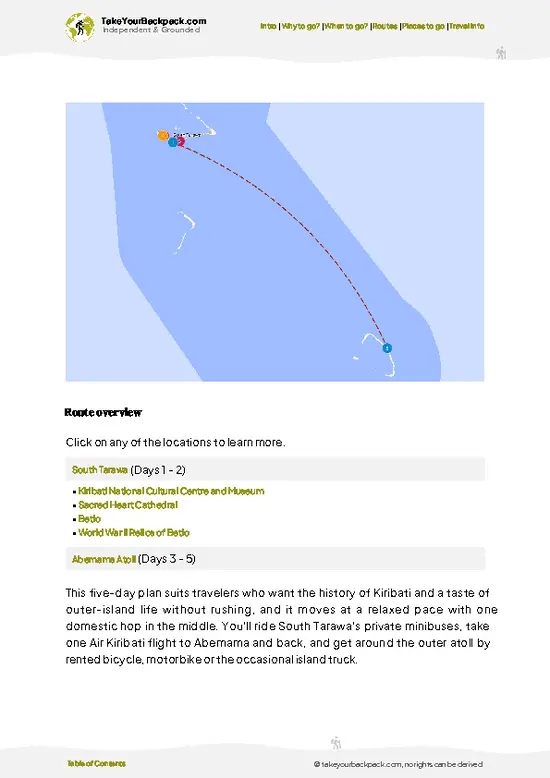
- Marakei Lagoon: the nearly closed inner sea is the island’s signature, calm enough for canoe trips and swimming at high tide.
- Village maneaba halls: the large open-sided meeting houses with thatched roofs are where visitors are welcomed, and you can sit in on gatherings if invited.
- Ocean-side reef and coral shore: the outer coast is rough and rocky, good for low-tide walks and watching waves break.
- The coast road by bicycle: a flat track linking the villages that lets you see houses, gardens and fishing gear at easy speed.
- Lagoon fish traps: stone and stake weirs in the shallows, still used by locals, are best seen with a host at low tide.
- Toddy cutting at dawn: villagers climb coconut palms to collect sap for the sweet drink, and a host can take you along early.
- Traditional weaving: women make
- Marakei Lagoon: the nearly closed inner sea is the island’s signature, calm enough for canoe trips and swimming at high tide.
- Village maneaba halls: the large open-sided meeting houses with thatched roofs are where visitors are welcomed, and you can sit in on gatherings if invited.
- Ocean-side reef and coral shore: the outer coast is rough and rocky, good for low-tide walks and watching waves break.
- The coast road by bicycle: a flat track linking the villages that lets you see houses, gardens and fishing gear at easy speed.
- Lagoon fish traps: stone and stake weirs in the shallows, still used by locals, are best seen with a host at low tide.
- Toddy cutting at dawn: villagers climb coconut palms to collect sap for the sweet drink, and a host can take you along early.
- Traditional weaving: women make pandanus mats and fans in the villages, and buying direct from the weaver is the best way to take one home.
- Canoe sailing: local outrigger canoes are handled with skill on the lagoon, and a short ride is possible through your host.
- Village churches: simple coral and timber buildings where Sunday singing is loud, layered and worth hearing.
- Sunset on the lagoon shore: the quiet western light over the water is the best free show, with the smell of cooking fires drifting over.
Spotted a mistake or missing something? Contact us.

 Best Backpacking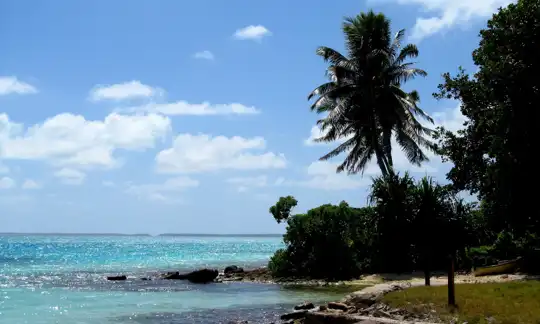
.jpg) Hi, I’m Johan (Netherlands 🇳🇱), the creator of TakeYourBackpack. Over the past 3 decades, I’ve backpacked through 90+ countries across six continents, gaining extensive experience with independent travel, long-term trips, and overland routes.
Hi, I’m Johan (Netherlands 🇳🇱), the creator of TakeYourBackpack. Over the past 3 decades, I’ve backpacked through 90+ countries across six continents, gaining extensive experience with independent travel, long-term trips, and overland routes.