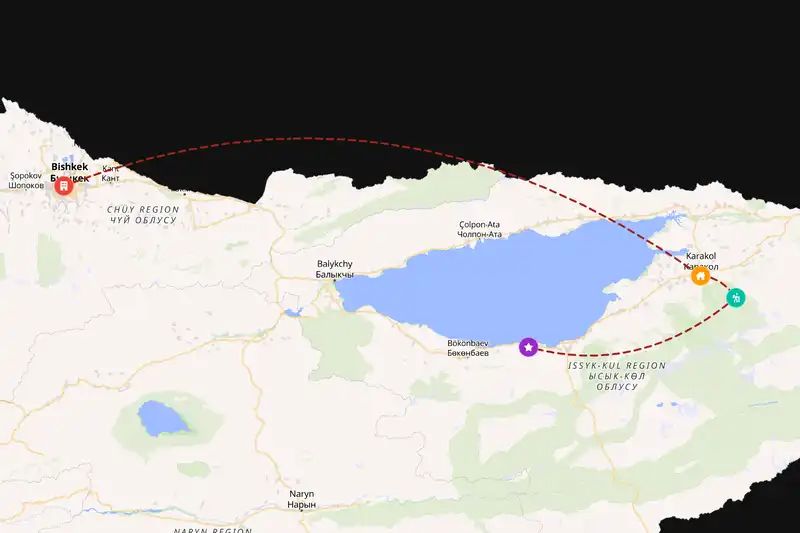
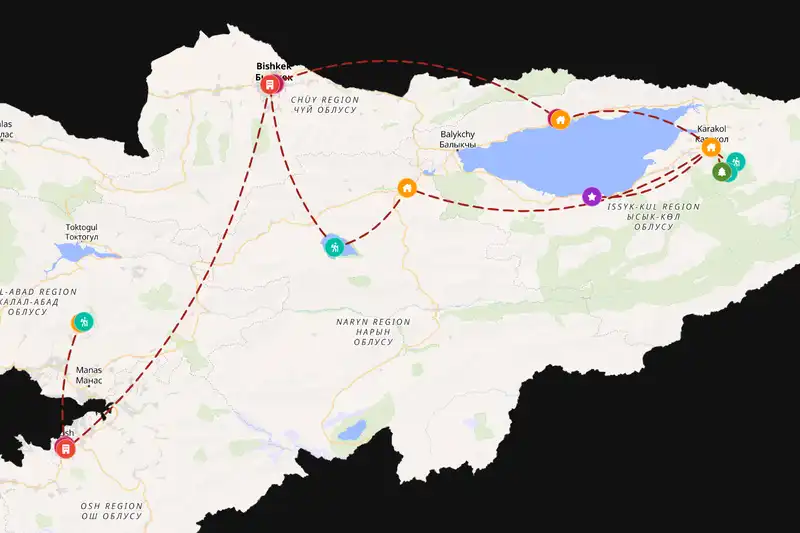
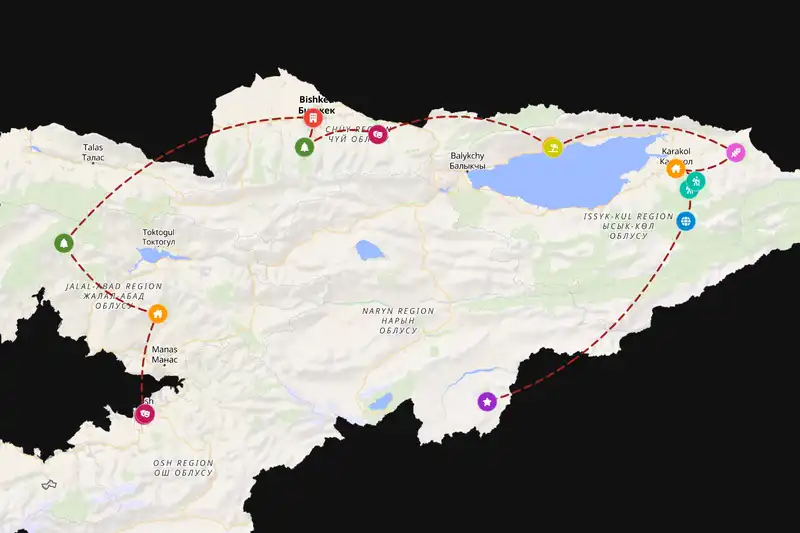
This ten-day route is for travelers who want the Kyrgyz interior, horses, yurts, high pasture and an old Silk Road stop, instead of the more familiar lakeshore. The pace is relaxed, with two-night stays in most places and one long drive back at the end. You’ll rely on shared taxis and marshrutkas between towns, a taxi for day trips from Bishkek, and hired cars arranged through community-based tourism offices for Song Kol and Tash Rabat.
Days 1-2: Bishkek and Ala Archa
Use
Bishkek as your base for two nights. On Day 2, take a taxi about 40 km south to
Ala Archa National Park, the easiest way to get above the treeline on your first full day. The trail up the main gorge follows a rushing river past juniper trees, and fit hikers can push on to the Ak-Sai waterfall for glacier views. It’s also a useful test of how your body handles altitude before the higher days ahead.
Days 3-4: Burana Tower and Kochkor
Head east and stop near Tokmok at
Burana Tower and Open-Air Museum, an 11th-century minaret …
read more 👉This ten-day route is for travelers who want the Kyrgyz interior, horses, yurts, high pasture and an old Silk Road stop, instead of the more familiar lakeshore. The pace is relaxed, with two-night stays in most places and one long drive back at the end. You’ll rely on shared taxis and marshrutkas between towns, a taxi for day trips from Bishkek, and hired cars arranged through community-based tourism offices for Song Kol and Tash Rabat.
Days 1-2: Bishkek and Ala Archa
Use Bishkek as your base for two nights. On Day 2, take a taxi about 40 km south to Ala Archa National Park, the easiest way to get above the treeline on your first full day. The trail up the main gorge follows a rushing river past juniper trees, and fit hikers can push on to the Ak-Sai waterfall for glacier views. It’s also a useful test of how your body handles altitude before the higher days ahead.Days 3-4: Burana Tower and Kochkor
Head east and stop near Tokmok at Burana Tower and Open-Air Museum, an 11th-century minaret surrounded by a field of carved stone grave markers called balbals. Climb the narrow staircase to the top for views of the Chui valley, then continue to Kochkor. Take two nights here: the town is known for shyrdak felt carpets, and a day spent watching women cut and stitch felt in local workshops gives you a slower look at Kyrgyz life than the mountains alone can.Days 5-6: Song Kol Lake
A hired car takes you up to Song Kol Lake, a 3,000-meter pasture lake where herders move their animals for the short summer. Two nights give you time for a horse ride along the shore, a walk to the ridge above camp, and evenings of kymyz and fresh bread in a family yurt. With only the horses to break the silence, this is often the part of Kyrgyzstan people talk about most afterward.Days 7-9: Naryn and Tash Rabat Caravanserai
Drop south over a high pass to Naryn, a working town on the Naryn river where you can resupply and sleep in a proper bed. The next day, continue past At-Bashy to Tash Rabat Caravanserai, a 15th-century stone building in a quiet side valley that sheltered Silk Road traders on the way to China. Sleep in a nearby yurt camp and walk up the valley behind the building in the evening. On Day 9, make the long drive back to Bishkek, broken with a lunch stop in Naryn, ready for your flight on Day 10.
If you’re staying at Tash Rabat, ask about Chatyr-Kul, a remote high lake close to the Chinese border that requires a border-zone permit arranged in advance.
 Best Backpacking