v2.webp)
- Mekong riverfront and boat pier — The spine of Huay Xai: slow boats and speedboats leave from here, ferries to Thailand pull in, and sunsets over the Mekong are genuinely lovely. It’s also the best place to watch everyday river life—fishermen, traders, and longboats coming and going.
- Huay Xai morning market (Talat) — A working-market full of fresh produce, dried fish, sticky rice and cheap breakfasts where locals shop. Great for seeing real Lao food culture and grabbing a cheap bowl of noodles and strong Lao coffee.
- Riverside night market — When the sun drops, food stalls and grill stands set up along the river road: Lao BBQ, grilled fish, banana pancakes and cheap beer. It’s small and low-key but perfect for a relaxed, authentic evening with the river as background noise.
- Wat Jom Khao
- Mekong riverfront and boat pier — The spine of Huay Xai: slow boats and speedboats leave from here, ferries to Thailand pull in, and sunsets over the Mekong are genuinely lovely. It’s also the best place to watch everyday river life—fishermen, traders, and longboats coming and going.
- Huay Xai morning market (Talat) — A working-market full of fresh produce, dried fish, sticky rice and cheap breakfasts where locals shop. Great for seeing real Lao food culture and grabbing a cheap bowl of noodles and strong Lao coffee.
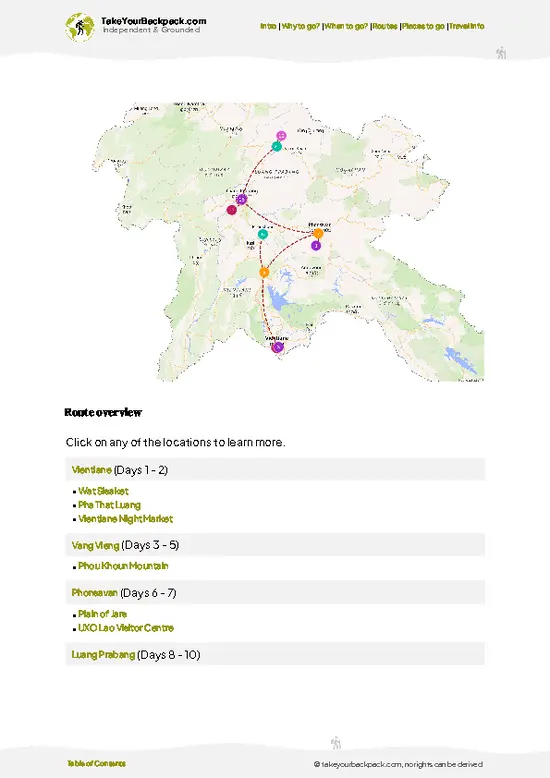
- Riverside night market — When the sun drops, food stalls and grill stands set up along the river road: Lao BBQ, grilled fish, banana pancakes and cheap beer. It’s small and low-key but perfect for a relaxed, authentic evening with the river as background noise.
- Wat Jom Khao Manilat (hilltop temple) — A local temple up a short climb that gives a tidy panoramic view over Huay Xai and the Mekong. The stupa and shrine feel very lived-in: monks, incense, and villagers stopping by — nice for a peaceful break and photos.
- Border/immigration area and ferry crossing — The practical (and fascinating) hub where Laos meets Thailand: passport offices, boat ticket counters and the busy ferry ramp. Watching border logistics and cross-river trade is instructive and oddly entertaining for a little while.
- Longboat piers and boatyards — Walk the smaller piers and you’ll find boat repair yards and craftsmen working on wooden hulls—an unvarnished glimpse into the river’s role in daily life. Good for photos and chatting with boatmen about routes upriver.
- Old market alleys and small Chinese shrine — The narrow lanes behind the main market are where traders store goods, produce is sorted, and a compact Chinese shrine sits with incense and red lanterns—small-scale, very local, and culturally layered.
- Riverside cafés and traveler strip — A handful of simple cafés, guesthouses and bars line the river road; you’ll meet backpackers, book transport, and swap route tips. Practical, social, and a convenient base for booking day trips or boats.
- Handicraft and textile stalls — Scattered around the market and riverside vendors are Lao textiles, small woven items and simple silver pieces made by local traders. Not a big artisan scene, but good for affordable souvenirs made regionally.
- Town square / central gathering spot — The small plaza near the market and municipal buildings is where locals hang out, tuk-tuks gather and buses stop. It’s an easy place to people-watch, catch a local festival or see daily town rhythms up close.
Spotted a mistake or missing something? Contact us.


 Best Backpacking
.jpg) Hi, I’m Johan (Netherlands 🇳🇱), the creator of TakeYourBackpack. Over the past 3 decades, I’ve backpacked through 90+ countries across six continents, gaining extensive experience with independent travel, long-term trips, and overland routes.
Hi, I’m Johan (Netherlands 🇳🇱), the creator of TakeYourBackpack. Over the past 3 decades, I’ve backpacked through 90+ countries across six continents, gaining extensive experience with independent travel, long-term trips, and overland routes.