×

Lebanon🇱🇧 | attractionsMIM Mineral Museumcrystal specimens, rare minerals, curated displays | things to do and best time to go

Explore Beit Beirut MuseumExplore Anjar Umayyad Ruins

Backpacking in MIM Mineral Museum
👌 Worth visitingattraction ranked #10
By Johan Kruseman 🇳🇱 | Updated June 4, 2026

Forget the idea that the MIM Mineral Museum is just a dusty collection for geology nerds or bored school groups. Tucked inside Saint Joseph University in Beirut, this place is a full-on sensory ambush—think more sci-fi vault than sleepy museum. For backpackers, it’s a curveball: you won’t find crowds jostling for selfies, and the entry fee is a fraction of what you’ll pay at Lebanon’s headline sites. The wow-factor is real—over 2,000 minerals, some so bizarre they look photoshopped, all curated with the obsessive care of a collector who actually loves rocks. There’s no ancient temple drama or adrenaline rush, but the cultural payoff is huge: you get a slice of Lebanon’s intellectual side, minus the tourist circus. It’s quiet, affordable, and genuinely surprising—rare qualities in a city that rarely slows down.

Discover everything you want to know in the 📖 Lebanon Travel Guide.
Safety warning

The current risk level for Lebanon is high. Check the advice before going.


Get your Lebanon guide
89 ranked highlights, routes & tips, works offline (331 pages)
Loading the map 🌍
CLICK TO FILTER
cities
towns
landmarks
national parks
hikes
beaches
attractions
festivals
regions
SHOW COUNTRY’S BESTSHOW ALL

✨ Why go?
Ranked #10 attraction in Lebanon
What makes this attraction worth visiting

Backpackers often breeze past Lebanon’s flashy coastal cities, but the MIM Mineral Museum demands a stop that’s more than just a photo op. Yes, it’s iconic—home to one of the world’s largest private mineral collections—but what really hooks you is the depth of history packed into every specimen. This isn’t just rocks on display; it’s a geological journey through time, revealing Lebanon’s ancient natural story in a way no beach or souk can match. The museum’s location in Beirut makes it a perfect milestone for anyone threading through the country’s cultural and natural tapestry. It’s not about adrenaline, but the effort-to-reward ratio is high: a modest entrance fee and a couple of hours here give you a rare, tangible connection to the earth beneath your feet. For backpackers craving something … read more 👉
Backpackers often breeze past Lebanon’s flashy coastal cities, but the MIM Mineral Museum demands a stop that’s more than just a photo op. Yes, it’s iconic—home to one of the world’s largest private mineral collections—but what really hooks you is the depth of history packed into every specimen. This isn’t just rocks on display; it’s a geological journey through time, revealing Lebanon’s ancient natural story in a way no beach or souk can match. The museum’s location in Beirut makes it a perfect milestone for anyone threading through the country’s cultural and natural tapestry. It’s not about adrenaline, but the effort-to-reward ratio is high: a modest entrance fee and a couple of hours here give you a rare, tangible connection to the earth beneath your feet. For backpackers craving something authentic and educational, this place is a quiet knockout.
Want to include MIM Mineral Museum in your Lebanon route?
Create a personalized Lebanon itinerary that includes MIM Mineral Museum and the places that fit your trip — based on your travel style, budget, and available time. Get your route in seconds.

Generate my trip

💡 HighlightsEssential experiences to have while visiting MIM Mineral Museum

The Main Mineral Gallery
Forget the dusty, dimly lit cases you remember from grade school. The MIM’s main gallery is a riot of color and geometry—over 2,000 minerals, each one spotlighted like a rockstar. You’ll see crystals that look like they were designed by a sci-fi set designer: electric-blue azurite, gold that’s actually gold, and pyrite cubes so perfect you’ll suspect a prank. The curation is obsessive, and the lighting is surgical. This isn’t just a collection; it’s a visual punch to the senses.


The Lebanese Minerals Section
Most museums bury their local finds in a corner. Not here. The Lebanese minerals display is a proud, in-your-face reminder that Lebanon isn’t just about ruins and mezze. You’ll see aragonite clusters and celestine crystals pulled from the country’s own mountains—proof … read more 👉
The Main Mineral Gallery
Forget the dusty, dimly lit cases you remember from grade school. The MIM’s main gallery is a riot of color and geometry—over 2,000 minerals, each one spotlighted like a rockstar. You’ll see crystals that look like they were designed by a sci-fi set designer: electric-blue azurite, gold that’s actually gold, and pyrite cubes so perfect you’ll suspect a prank. The curation is obsessive, and the lighting is surgical. This isn’t just a collection; it’s a visual punch to the senses.


The Lebanese Minerals Section
Most museums bury their local finds in a corner. Not here. The Lebanese minerals display is a proud, in-your-face reminder that Lebanon isn’t just about ruins and mezze. You’ll see aragonite clusters and celestine crystals pulled from the country’s own mountains—proof that world-class geology doesn’t require a passport stamp. It’s a rare chance to see the earth beneath your feet, not just the stuff shipped in from far-off mines.


The Fossil Collection
Yes, it’s a mineral museum, but the fossil room is a curveball worth your time. Lebanon’s ancient seas coughed up fish fossils so detailed you can count the scales. Some are so well-preserved they look like they could swim off the slab. It’s a jolt of perspective: millions of years ago, this land was underwater, and the evidence is right there, not behind velvet ropes.


The Interactive Displays
This isn’t a “look, don’t touch” kind of place. The MIM leans into tech with touchscreens and videos that actually teach you something. Want to know how a geode forms? Tap and watch it crack open. Curious about mining? There’s a mini-documentary for that. It’s hands-on without being childish, and it keeps even the most museum-averse companion engaged.


The Vault Room
If you’re expecting a sleepy finale, the Vault Room will snap you awake. Here’s where the rarest, most valuable specimens live—think gold nuggets, meteorites, and minerals that look like they belong in a Bond villain’s lair. The security is real, but so is the sense of awe. This is the museum’s mic-drop moment: proof that earth’s treasures can outshine any jewel.
Spotted a mistake or missing something? Contact us.

Things to do around MIM Mineral Museum

Ratings based on Tripadvisor reviews. When you book through this link, you support our work at no extra cost to you.

🌤️ When to go?Choosing the right time of year


  • Weather: Lebanon’s Mediterranean climate means mild, wet winters and hot, dry summers. The best weather for visiting MIM Mineral Museum is from April to June or September to October, when temperatures hover between 18-26°C (64-79°F), avoiding the stifling summer heat and winter rains.

  • Temperature: July and August can push highs above 30°C (86°F), making museum visits less comfortable. Winters dip to 10-15°C (50-59°F), which is fine indoors but less pleasant for exploring the surrounding areas.

  • Daylight Hours: Spring and fall offer balanced daylight—about 11-13 hours—enough time to soak in the exhibits without rushing, unlike the shorter winter days.

  • Crowds: Peak tourist season in summer floods Lebanon’s hotspots, but MIM Mineral Museum sees fewer visitors in shoulder seasons, letting
read more 👉

  • Weather: Lebanon’s Mediterranean climate means mild, wet winters and hot, dry summers. The best weather for visiting MIM Mineral Museum is from April to June or September to October, when temperatures hover between 18-26°C (64-79°F), avoiding the stifling summer heat and winter rains.

  • Temperature: July and August can push highs above 30°C (86°F), making museum visits less comfortable. Winters dip to 10-15°C (50-59°F), which is fine indoors but less pleasant for exploring the surrounding areas.

  • Daylight Hours: Spring and fall offer balanced daylight—about 11-13 hours—enough time to soak in the exhibits without rushing, unlike the shorter winter days.

  • Crowds: Peak tourist season in summer floods Lebanon’s hotspots, but MIM Mineral Museum sees fewer visitors in shoulder seasons, letting you enjoy the displays without the usual tourist crush.

  • Seasonal Activities: Spring and fall bring local festivals and markets nearby, adding cultural layers to your visit. Winter’s off-season means fewer events but also quieter, more contemplative museum time.

  • Price Fluctuations: Entry fees stay relatively stable year-round, but accommodation and transport costs spike in summer. Visiting in April-June or September-October can save you serious cash.


Pro-tip: Aim for late April or early October—perfect weather, manageable crowds, and a richer cultural vibe without the summer price gouge.


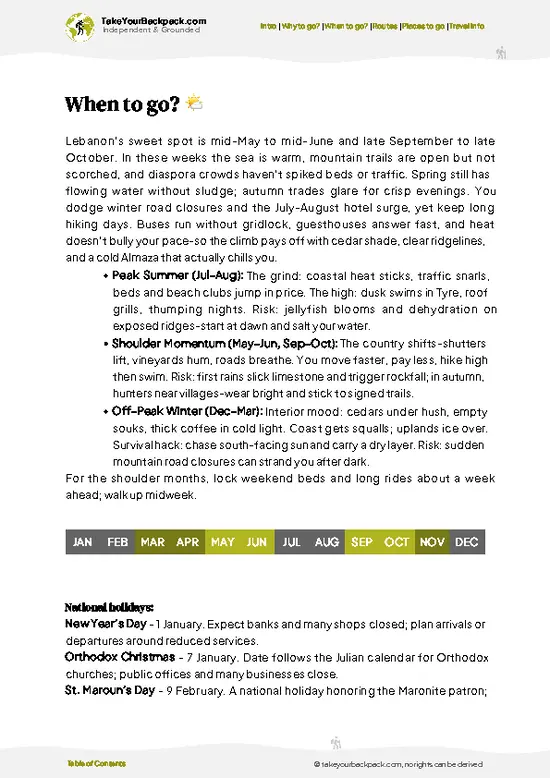
source: climatestotravel.comJANJanuary: fair for travelingFEBFebruary: fair for travelingMARMarch: good for travelingAPRApril: excellent for travelingMAYMay: excellent for travelingJUNJune: excellent for travelingJULJuly: fair for travelingAUGAugust: fair for travelingSEPSeptember: excellent for travelingOCTOctober: excellent for travelingNOVNovember: good for travelingDECDecember: fair for traveling
when-to-go

✈️ The backpacker research shortcutLebanon Travel Guide

An offline-friendly backpacking guide with optimized travel routes, ranked highlights, transport advice, and the best areas to stay.
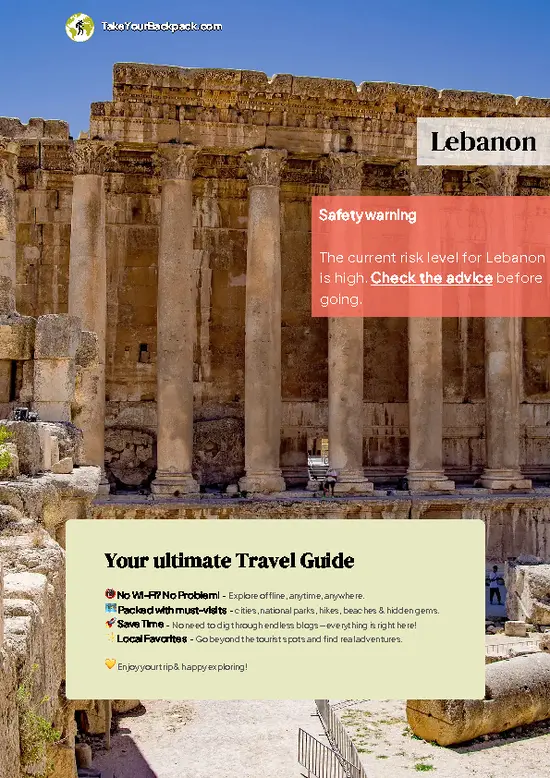
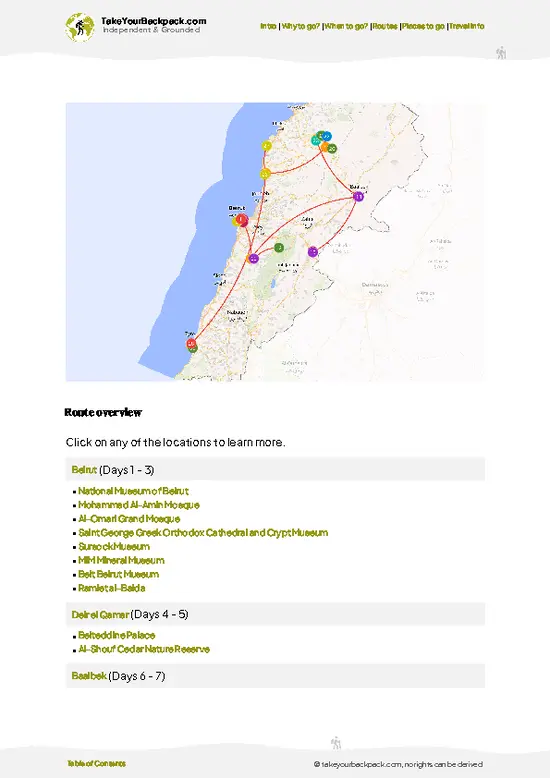
example page 0 from our offline Travel Guide for Lebanon
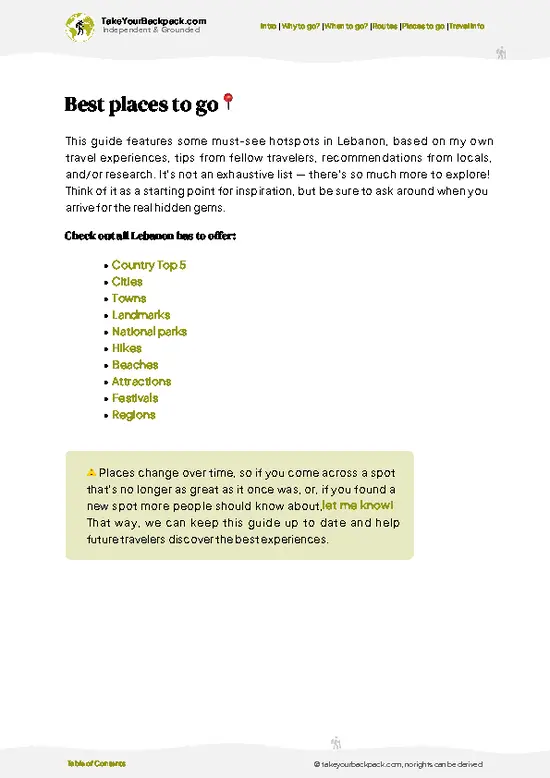
example page 1 from our offline Travel Guide for Lebanon
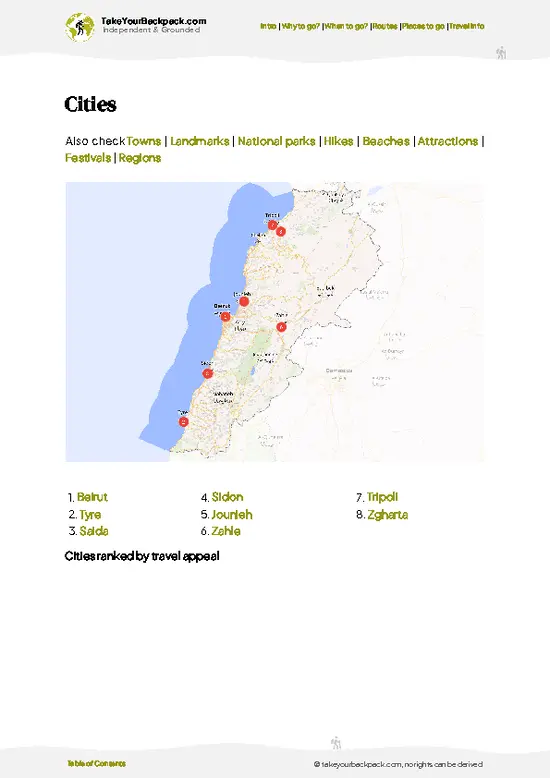
example page 2 from our offline Travel Guide for Lebanon
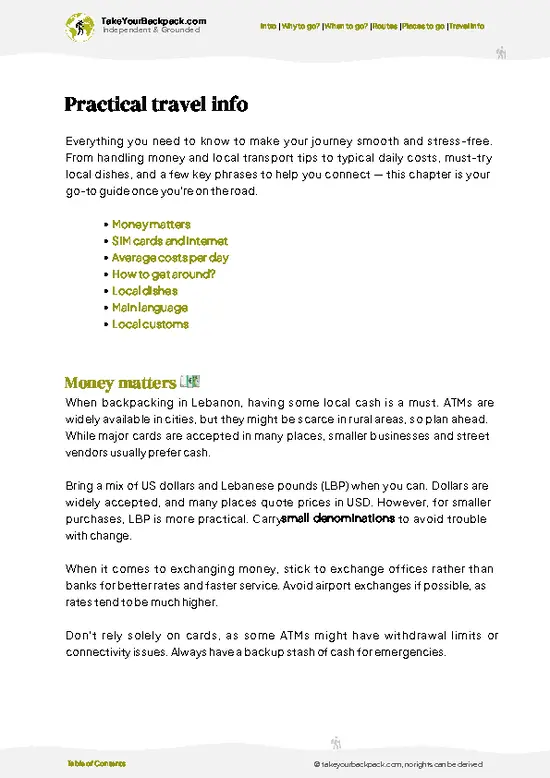
example page 3 from our offline Travel Guide for Lebanon
example page 4 from our offline Travel Guide for Lebanon
example page 5 from our offline Travel Guide for Lebanon
example page 6 from our offline Travel Guide for Lebanon
example page 7 from our offline Travel Guide for Lebanon
The digital guide (331 pages) contains:
89 highlights, ranked by travel appeal
Optimized 5, 10 & 15-day travel routes
Cities, national parks, landmarks, beaches
How to get around
Offline-friendly for travel without Wi-Fi
👉 Click to see all 30+ guide features

📅 Plan smarter in minutes, not weeks
Month by month travel advice
Festivals & national holidays
Budget expectations

🗺️ Go to the right places, skip the overrated ones
Honest pros & cons of destinations
Top hikes, parks & viewpoints
Lesser-known places most travelers miss
Clear “worth it vs skip it” guidance

🛏️ Travel smoothly without rookie mistakes
Best areas to stay
Transport systems explained simply
Common scams & safety advice
SIM cards, money & practical tips

🌍 Understand the country, not just visit it
Culture & traditions
52 Essential phrases & customs
Festivals worth planning around
Traveler-friendly historical context
Insights that make places more meaningful

📱 Built for real travel conditions
Fully downloadable PDF
Works completely offline
Optimized for phone use
Useful in remote areas & buses
Everything in one place
Save weeks of stressful planning
Get instant access to your full guide. 30‑day money-back guarantee.


By proceeding you agree to our terms.
Sent to your inbox immediately after payment • 100% Secure Checkout
Best Backpacking Travel Advisor 2025 tourism awardBest Backpacking
Travel Advisor
2025
What others say about Take Your Backpack Guides:
⭐⭐⭐⭐⭐
Fantastic, amazing amount of information!
⭐⭐⭐⭐⭐
My goodness this is amazing, it's what I've been looking for hats off too you!
⭐⭐⭐⭐⭐
I think this is absolutely BRILLIANT
⭐⭐⭐⭐
Very complete and informative. It's still missing places, but I gotta to commend you
⭐⭐⭐⭐⭐
This is truly amazing, thank you, can't wait to explore it with my kids!
⭐⭐⭐⭐⭐
Awesome resource, thank you!
⭐⭐⭐⭐⭐
This is amazing! Can't wait to explore the ones I haven't seen
⭐⭐⭐⭐
I love this! Well done, great idea.
⭐⭐⭐⭐⭐
Thanks for taking the time to make this gem!
⭐⭐⭐⭐⭐
This might be the best website I've ever seen.
⭐⭐⭐⭐⭐
Congratulations, and thank you so much for your work; it's incredibly valuable.
⭐⭐⭐⭐
In all seriousness I think you did a great job pointing out the important spots
⭐⭐⭐⭐⭐
10/10 very good
⭐⭐⭐⭐⭐
As someone who's only just starting to visit regularly this is awesome, thank you.
⭐⭐⭐⭐
Thank you very much! I'm going to visit my dad, it's going to be very useful!
⭐⭐⭐⭐⭐
This is really cool! We'll be travelling for the first time and this definitely come in handy.
⭐⭐⭐⭐⭐
You are now our minister of culture, congratulations 👨‍💼
⭐⭐⭐⭐⭐
Just wanted to tell you that this is a pearl! Going to follow your recommendations.
⭐⭐⭐⭐⭐
This is so cool. I'll definitely be using the resource for my travels soon.
⭐⭐⭐⭐⭐
This is very impressive! Good work.
⭐⭐⭐⭐⭐
This is an amazing and informative site. Very well done!

🛏️ Where to stay?Best areas and accommodation options

The MIM Mineral Museum sits just outside Beirut, so your best bet is to base yourself in Beirut’s northern neighborhoods—specifically Achrafieh or Mar Mikhael. These areas aren’t just safe; they’re buzzing with a mix of locals and travelers who know how to enjoy the city without breaking the bank. You’ll find plenty of affordable guesthouses and shared apartments where solo backpackers can easily connect with others over a cheap coffee or a late-night mezze.

Don’t expect a quiet retreat—Beirut is a city that hums with life, and these neighborhoods reflect that. The streets are alive with street … read more 👉
The MIM Mineral Museum sits just outside Beirut, so your best bet is to base yourself in Beirut’s northern neighborhoods—specifically Achrafieh or Mar Mikhael. These areas aren’t just safe; they’re buzzing with a mix of locals and travelers who know how to enjoy the city without breaking the bank. You’ll find plenty of affordable guesthouses and shared apartments where solo backpackers can easily connect with others over a cheap coffee or a late-night mezze.

Don’t expect a quiet retreat—Beirut is a city that hums with life, and these neighborhoods reflect that. The streets are alive with street art, dive bars, and tiny eateries where you can sample authentic Lebanese food without the tourist markup. It’s a gritty, real experience that contrasts sharply with the polished image you might see on Instagram. Staying here means you’re not just visiting the museum; you’re stepping into the pulse of Lebanese culture, making your trip about more than just ticking off a landmark.

👛 Costs (as of 6 November 2025)Money, prices, and spending tips

As of the latest available information, the MIM Mineral Museum in Beirut charges an entrance fee of 6,000 Lebanese pounds (approximately €5) for adults and 3,000 Lebanese pounds (approximately €3) for students. Children under 12 years old can enter for free. The museum is open from Tuesday to Sunday, with visiting hours from 10 AM to 1 PM and 2 PM to 6 PM. ([lebanontraveler.com](https://www.lebanontraveler.com/en/magazine/lebanon-traveler-mim-museum/?utm_source=openai))

source: mim.museum
⚠️ Prices can change and everyone travels differently, so take this as a rough guide. Hope it helps you plan your adventure!

Other Lebanese attractions near MIM Mineral Museum

Explore more nearby:


💡 Not sure where to go next?
Create a personalized itinerary for Lebanon including MIM Mineral Museum and the places that fit your trip.

Generate my itinerary

👉 Discover all attractions

Or checkout all Lebanon has to offer (think cities, towns, villages, national parks, hikes, beaches, festivals)
Country photo of Lebanon

We 💚 feedbackSumming up the experience

The MIM Mineral Museum isn’t your usual tourist stop—expect a quiet, almost reverent vibe that’s a break from Lebanon’s usual chaos. It’s not flashy, and yes, the entrance fee is a bit steep for the region, but the real surprise is how these ancient stones tell stories older than most countries. If you love geology or just want a break from the crowds, this place quietly delivers.

✍️ Help improve this page!
The information on this page is based on in-depth research, insights shared by experienced travelers, and feedback from the local travel community in Lebanon. While every effort is made to keep the information accurate and current, conditions can change — so if you spot anything incorrect or outdated, please get in touch.


🙋‍♂️ Give feedback

👋 Meet the founderWho’s Behind Take Your Backpack?

Johan, backpacker and founder of TakeYourBackpackHi, I’m Johan (Netherlands 🇳🇱), the creator of TakeYourBackpack. Over the past decade, I’ve backpacked through 80+ countries across six continents, gaining extensive experience with independent travel, long-term trips, and overland routes.

This site is built on a combination of firsthand travel experience and carefully curated insights from other backpackers. Many guides are based on places I’ve personally visited, while others bring together tips, observations, and practical advice shared by trusted travelers I’ve met along the way.

The goal is to provide realistic, experience-driven guidance — not generic itineraries — so you can explore destinations with better context, clearer expectations, and more confidence.

Get full Lebanon guide •
Instant download • 89 highlights • Full Offline guide