×

Lebanon🇱🇧 | best attractionsYour Guide to the 12 Best attractions in Lebanon

Lebanon’s best attractions are defined by a raw blend of ancient ruins, rugged mountains, and vibrant urban chaos that demands more than a cursory glance. From the Mediterranean coast’s salty breeze to the snow-capped peaks of the north, each region offers a distinct flavor that shapes your backpacking experience. Independent travelers must weigh how seasonality affects accessibility—summer heat can drain energy in Beirut’s bustling streets, while winter opens up remote mountain trails with fewer crowds. Choosing the right site isn’t just about ticking off landmarks; it’s about matching your vibe with local rhythms, budget realities, and safety considerations that shift dramatically between cities and countryside.

By Johan Kruseman 🇳🇱 | Updated June 10, 2026
Explore the best festivals in Lebanon

Why go?Key Factors That Shape the Experience

Lebanon’s attractions stand apart because they demand more than a casual glance—they require peeling back layers of history, culture, and geography that collide in a compact, intense space. Unlike sprawling countries where attractions are spread thin, Lebanon packs millennia of civilization into a small area, making travel time deceptively short but the depth of exploration profoundly rich. This density means visitors can experience Roman ruins, Ottoman architecture, and modern street art within hours, but it also means navigating narrow, often congested roads and unpredictable traffic, which can turn short distances into time-consuming journeys.

The country’s rugged terrain and Mediterranean climate shape the experience, offering a rare mix of coastal breezes and mountain chills in a single … read more 👉
Lebanon’s attractions stand apart because they demand more than a casual glance—they require peeling back layers of history, culture, and geography that collide in a compact, intense space. Unlike sprawling countries where attractions are spread thin, Lebanon packs millennia of civilization into a small area, making travel time deceptively short but the depth of exploration profoundly rich. This density means visitors can experience Roman ruins, Ottoman architecture, and modern street art within hours, but it also means navigating narrow, often congested roads and unpredictable traffic, which can turn short distances into time-consuming journeys.

The country’s rugged terrain and Mediterranean climate shape the experience, offering a rare mix of coastal breezes and mountain chills in a single day. This geographic diversity fuels a variety of attractions but also demands physical readiness—some sites require hiking steep trails or enduring uneven urban streets. Infrastructure varies sharply; while Beirut offers relatively modern amenities, rural areas may challenge expectations with limited public transport and spotty signage, making self-guided exploration a test of patience and preparation.

Lebanon’s cultural complexity adds another layer. The country’s mosaic of religious and ethnic communities means attractions carry deep, sometimes contested meanings. Visitors must approach with sensitivity and an understanding that what looks like a simple sightseeing stop often holds profound significance for locals. The payoff is an experience that goes beyond surface-level tourism—each attraction is a doorway into Lebanon’s resilient spirit and layered identity, rewarding those willing to navigate its challenges with moments of genuine connection and insight.
Our Approach to Ranking
The list of best attractions in Lebanon is created based on cultural significance or entertainment value. If you feel a attraction is missing in this list, please let us know.

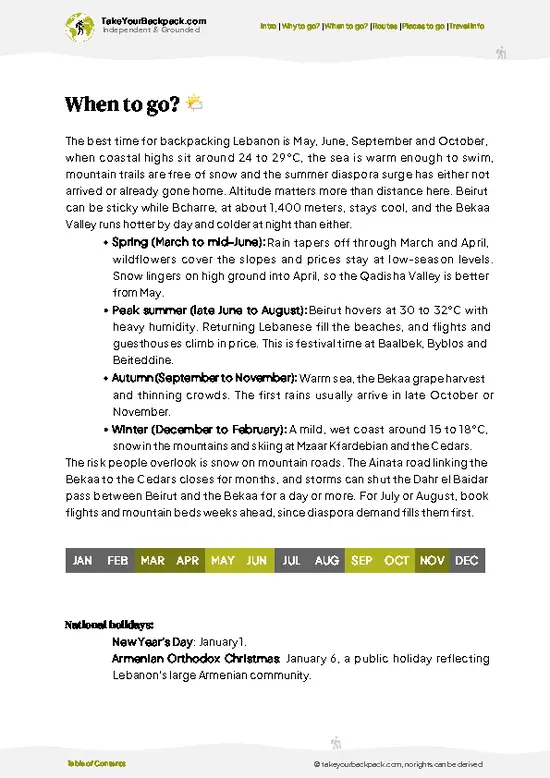
When to go?Optimal Periods for Travel

Seasonal Patterns Shape Your Lebanon Experience


Lebanon’s climate swings dramatically between extremes, and that’s the first reality to lock in. Summers scorch with relentless heat and humidity, pushing most outdoor activities into early mornings or late evenings. The coastal areas bake under the sun, making beaches crowded but lively, while the mountains offer a cooler refuge. Winters, on the other hand, bring cold, wet weather with snow blanketing the highlands, shutting down some outdoor attractions but opening doors for winter sports.

Spring and autumn are the real sweet spots. These shoulder seasons deliver mild temperatures and manageable crowds, striking a balance between comfort and accessibility. The landscape bursts with color in spring, while autumn offers crisp air and fewer … read more 👉

Seasonal Patterns Shape Your Lebanon Experience


Lebanon’s climate swings dramatically between extremes, and that’s the first reality to lock in. Summers scorch with relentless heat and humidity, pushing most outdoor activities into early mornings or late evenings. The coastal areas bake under the sun, making beaches crowded but lively, while the mountains offer a cooler refuge. Winters, on the other hand, bring cold, wet weather with snow blanketing the highlands, shutting down some outdoor attractions but opening doors for winter sports.

Spring and autumn are the real sweet spots. These shoulder seasons deliver mild temperatures and manageable crowds, striking a balance between comfort and accessibility. The landscape bursts with color in spring, while autumn offers crisp air and fewer tourists. Costs tend to be lower during these periods, and the weather is stable enough to explore without the extremes of summer heat or winter chill.

Peak summer months mean packed beaches and higher prices, with the trade-off being vibrant social scenes and extended daylight hours. Winter’s peak is limited mostly to ski resorts, which can get busy but offer a different kind of draw. Travelers must weigh whether they want to brave the heat and crowds or the cold and limited access.

Ultimately, the timing hinges on what you want from Lebanon: sun-soaked energy, mountain tranquility, or a quiet, temperate window to roam freely. Each season demands a different gear and mindset, but all deliver their own unmistakable rewards.

attraction hoppingPlanning Your Route Efficiently

Mapping Lebanon’s Attractions into a Cohesive Journey

Lebanon’s compact size is a blessing and a curse. It tempts you to cram in every landmark, but that’s a fast track to exhaustion and shallow experiences. The key is to cluster your stops by region—coastal cities, mountain villages, and the Bekaa Valley each demand their own chunk of time. Start with a logical flow: coastal hubs first, then inland climbs, finishing with the fertile plains. This avoids backtracking, which eats up hours better spent soaking in the atmosphere.

Timing and Tempo

Expect to spend at least half a day at major sites like ancient ruins or bustling souks. Smaller villages or natural spots can be quicker, but don’t rush. Lebanon’s charm often lies in lingering—watching the light shift on cedar forests or savoring … read more 👉

Mapping Lebanon’s Attractions into a Cohesive Journey

Lebanon’s compact size is a blessing and a curse. It tempts you to cram in every landmark, but that’s a fast track to exhaustion and shallow experiences. The key is to cluster your stops by region—coastal cities, mountain villages, and the Bekaa Valley each demand their own chunk of time. Start with a logical flow: coastal hubs first, then inland climbs, finishing with the fertile plains. This avoids backtracking, which eats up hours better spent soaking in the atmosphere.

Timing and Tempo

Expect to spend at least half a day at major sites like ancient ruins or bustling souks. Smaller villages or natural spots can be quicker, but don’t rush. Lebanon’s charm often lies in lingering—watching the light shift on cedar forests or savoring a slow meal in a mountain town. Realistic pacing means building in downtime and flexibility. Overloading your schedule turns discovery into a checklist.

Common Pitfalls and Trade-offs

Trying to cover too much ground sacrifices depth for speed. Budget travelers might opt for buses and shared taxis, but this can limit flexibility and add stress. Renting a car offers freedom but demands confidence in local driving chaos. Balancing comfort and cost is a personal call, but always factor in the energy drain of long drives on narrow, winding roads.

Strategic Planning for Maximum Reward

Prioritize quality over quantity. It’s better to fully absorb a few standout experiences than to skim dozens. Build your route around natural rhythms—morning hikes, afternoon cultural stops, evening meals in lively neighborhoods. This approach turns a packed itinerary into a layered, memorable adventure rather than a blur of missed moments.

The ListThe Best attractions of Lebanon

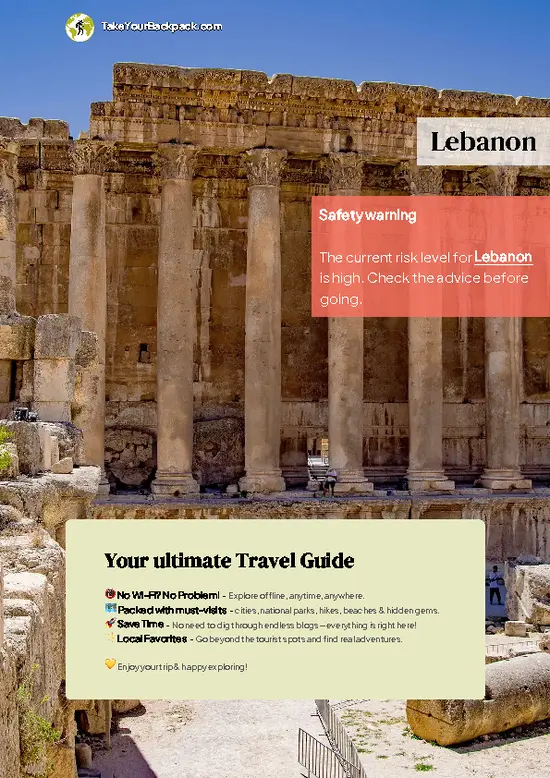
1 Baalbek Roman Ruins (Temples of Jupiter

towering columns, temple complex, carved stone blocks

Stand among monumental Roman structures, observing intricate reliefs and the scale of ancient religious architecture in the Beqaa Valley.

2 Jeita Grotto

limestone caverns, underground river, stalactite formations

Travel by foot and boat through a vast cave system, observing dramatic mineral shapes and cool subterranean chambers.

3 Byblos Castle and Archaeological Site

Crusader fortress, Phoenician ruins, harbor views

Climb castle walls and explore millennia-old layers of settlement, from ancient port remains to medieval fortifications overlooking the sea.

4 Anjar Umayyad Ruins

Umayyad palace, colonnaded streets, mountain backdrop

Wander through the remains of an 8th-century city, tracing the grid layout and faded grandeur of early Islamic urban planning.

5 National Museum of Beirut

archaeological artifacts, Phoenician sarcophagi, ancient mosaics

Survey Lebanon’s archaeological timeline through curated objects, including funerary art, statuary, and relics from prehistoric to medieval eras.

6 Al-Omari Grand Mosque

stone arches, medieval minaret, city center landmark

Step inside a mosque layered with Crusader and Mamluk history, where centuries-old architecture meets the pulse of downtown Beirut.

7 Mohammad Al-Amin Mosque

blue domes, Ottoman-inspired design, marble courtyard

Admire the mosque’s grand scale and decorative details, from its soaring domes to the intricate interior mosaics and calligraphy.

8 Saint George Greek Orthodox Cathedral and Crypt Museum

Byzantine mosaics, underground crypt, layered sanctuaries

Descend beneath the cathedral to see archaeological remains, then explore the main sanctuary’s blend of religious art and architecture.

9 Sursock Museum

modern art, Venetian-style villa, rotating exhibitions

Engage with contemporary and Lebanese art inside a historic mansion, with galleries that highlight changing artistic perspectives.

10 MIM Mineral Museum

crystal specimens, rare minerals, curated displays

View an extensive private collection of minerals, with striking colors and forms presented in a modern, informative setting.

11 Beit Beirut Museum

war-scarred façade, urban memory, modern exhibits

Experience Beirut’s layered past in a building marked by conflict, with displays focused on the city’s social and architectural evolution.

12 Robert Mouawad Private Museum

ornate mansion, antique collections, decorative arts

Browse a diverse array of artifacts in a restored residence, featuring everything from rare manuscripts to intricate jewelry and weaponry.

Loading the map 🌍

Expert viewPro Tips for Exploring the Best

Expert Commentary


Lebanon is a country where the past and present collide in ways that demand more than a cursory glance. When it comes to attractions, less is often more. Trying to cram in every site is a recipe for exhaustion and disappointment. Aim for a handful—three to five major stops—that let you breathe in the atmosphere rather than just snap photos. This isn’t about ticking boxes; it’s about feeling the weight of history under your boots or the pulse of a lively street corner.

Expect to invest a solid chunk of time at each attraction. The terrain and infrastructure vary wildly—some places require a rugged hike or a bumpy drive on roads that test your patience and your vehicle. This means your daily mileage will be lower than you might expect. Factor in the time to soak it all in … read more 👉

Expert Commentary


Lebanon is a country where the past and present collide in ways that demand more than a cursory glance. When it comes to attractions, less is often more. Trying to cram in every site is a recipe for exhaustion and disappointment. Aim for a handful—three to five major stops—that let you breathe in the atmosphere rather than just snap photos. This isn’t about ticking boxes; it’s about feeling the weight of history under your boots or the pulse of a lively street corner.

Expect to invest a solid chunk of time at each attraction. The terrain and infrastructure vary wildly—some places require a rugged hike or a bumpy drive on roads that test your patience and your vehicle. This means your daily mileage will be lower than you might expect. Factor in the time to soak it all in because rushing through Lebanon’s layered sites is like skimming the surface of a novel that demands deep reading. Budget-wise, Lebanon straddles a middle ground. You won’t break the bank, but don’t expect dirt-cheap either. Entrance fees are generally reasonable, but transportation and meals can add up, especially if you opt for local specialties or private guides. The trade-off here is clear: investing a bit more in comfort and access pays dividends in experience.

Planning your priorities means understanding the country’s patchwork of cultural and historical narratives. The attractions are not just scenic or archaeological—they’re living stories shaped by complex social and political layers. Some sites are vibrant with local life, others feel like echoes of a distant past. This duality means you’ll want to balance your itinerary between places that offer immersive cultural encounters and those that provide a quieter, reflective space. The challenge is that some of the most compelling spots are off the beaten path, requiring a willingness to navigate less-developed infrastructure and sometimes unpredictable local conditions.

Safety is a practical concern that can’t be glossed over. While many attractions are perfectly safe for travelers, the political landscape can shift, and certain areas demand caution or avoidance. Staying informed through local contacts or trusted sources is essential. Respect for local customs is non-negotiable—Lebanon’s cultural fabric is rich and diverse, and your behavior can open doors or close them. Dress modestly when visiting religious or traditional sites, and approach interactions with humility and curiosity rather than entitlement.

One of the most rewarding aspects of exploring Lebanon’s attractions is the sensory contrast. You might find yourself wiping sweat from your brow after a steep climb, only to be rewarded with a panoramic view that stretches from rugged mountains to the shimmering Mediterranean. Or you could be navigating a crowded market alley, the air thick with spices and the hum of bargaining voices, before stepping into a quiet, centuries-old ruin that feels untouched by time. These moments are the payoff for the grit—the physical effort, the patience with logistics, and the mental openness to complexity.

In practice, this means pacing yourself. Don’t expect to cover every highlight in a single trip. Lebanon’s attractions demand a measured approach, where you allow space for unexpected detours and local recommendations. The country’s charm is often found in the in-between moments: a shared cup of coffee with a local artisan, a sudden rain shower that clears the sky, or the first sip of a cold drink after a long day of exploration. These are the details that transform a checklist into a story worth telling.

Ultimately, the best way to approach Lebanon’s attractions is with a mindset that values depth over breadth. Choose your stops with intention, prepare for some logistical challenges, and embrace the country’s layered complexity. The reward is a travel experience that doesn’t just show you Lebanon but lets you live it, in all its gritty, beautiful contradictions.

✈️ The backpacker research shortcutLebanon Travel Guide

An offline-friendly backpacking guide with optimized travel routes, ranked highlights, transport advice, and the best areas to stay.
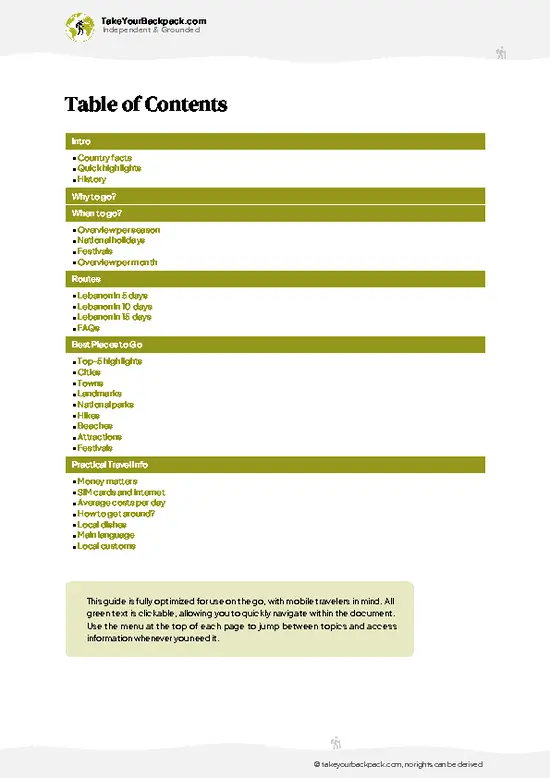
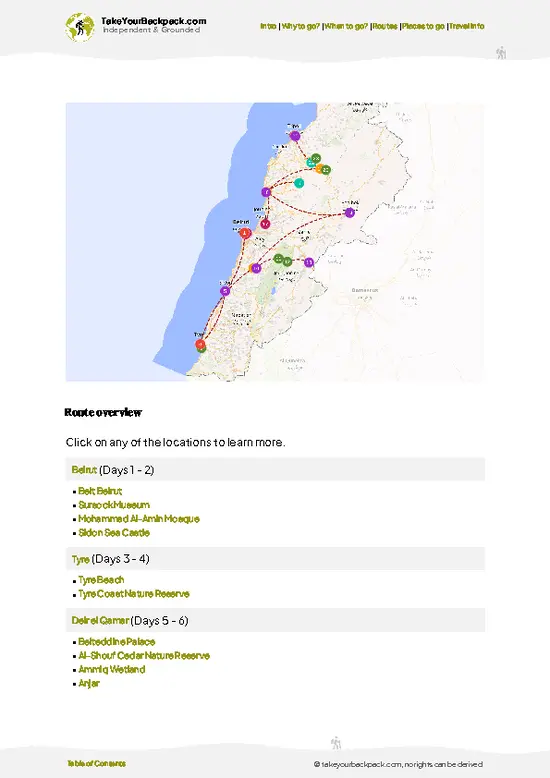
example page 0 from our offline Travel Guide for Lebanon
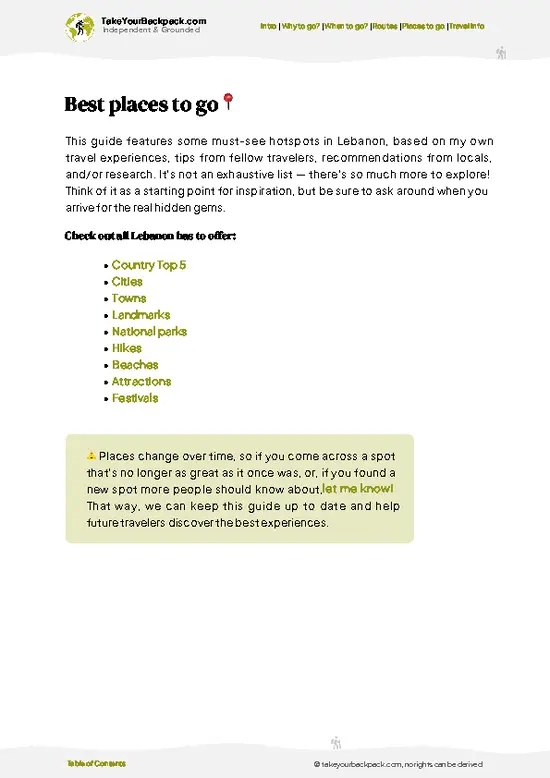
example page 1 from our offline Travel Guide for Lebanon
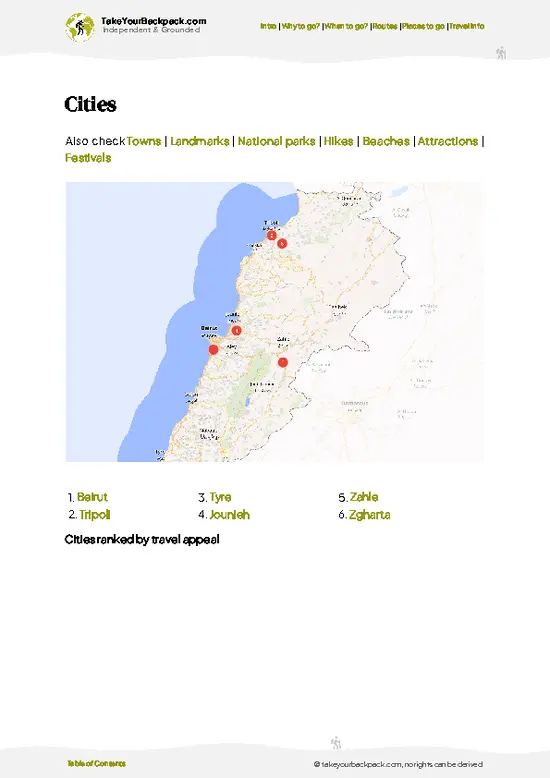
example page 2 from our offline Travel Guide for Lebanon
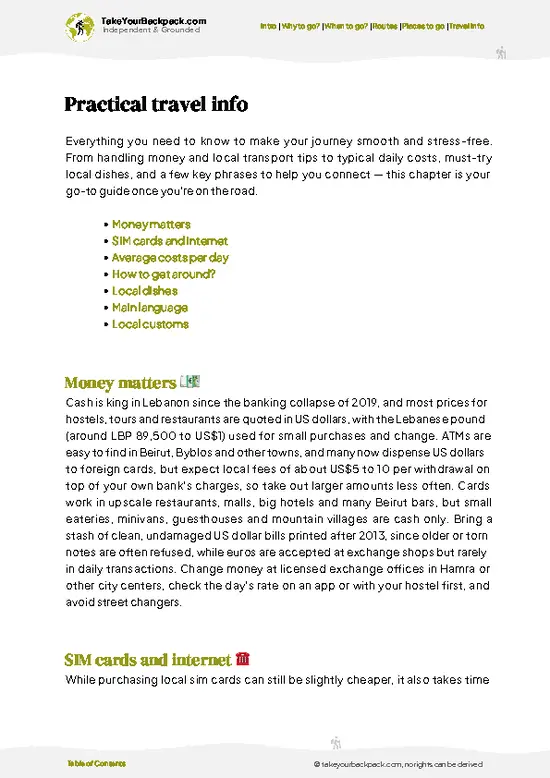
example page 3 from our offline Travel Guide for Lebanon
example page 4 from our offline Travel Guide for Lebanon
example page 5 from our offline Travel Guide for Lebanon
example page 6 from our offline Travel Guide for Lebanon
example page 7 from our offline Travel Guide for Lebanon
The digital guide (332 pages) contains:
89 highlights, ranked by travel appeal
Optimized 5, 10 & 15-day travel routes
Cities, national parks, landmarks, beaches
How to get around
Offline-friendly for travel without Wi-Fi
👉 Click to see all 30+ guide features

📅 Plan smarter in minutes, not weeks
Month by month travel advice
Festivals & national holidays
Budget expectations

🗺️ Go to the right places, skip the overrated ones
Honest pros & cons of destinations
Top hikes, parks & viewpoints
Lesser-known places most travelers miss
Clear “worth it vs skip it” guidance

🛏️ Travel smoothly without rookie mistakes
Best areas to stay
Transport systems explained simply
Common scams & safety advice
SIM cards, money & practical tips

🌍 Understand the country, not just visit it
Culture & traditions
52 Essential phrases & customs
Festivals worth planning around
Traveler-friendly historical context
Insights that make places more meaningful

📱 Built for real travel conditions
Fully downloadable PDF
Works completely offline
Optimized for phone use
Useful in remote areas & buses
Everything in one place
Save weeks of stressful planning
Get instant access to your full guide. 30‑day money-back guarantee.


By proceeding you agree to our terms.
Sent to your inbox immediately after payment • 100% Secure Checkout
Best Backpacking Travel Advisor 2025 tourism awardBest Backpacking
Travel Advisor
2025
What others say about Take Your Backpack Guides:
⭐⭐⭐⭐⭐
Fantastic, amazing amount of information!
⭐⭐⭐⭐⭐
My goodness this is amazing, it's what I've been looking for hats off too you!
⭐⭐⭐⭐⭐
I think this is absolutely BRILLIANT
⭐⭐⭐⭐
Very complete and informative. It's still missing places, but I gotta to commend you
⭐⭐⭐⭐⭐
This is truly amazing, thank you, can't wait to explore it with my kids!
⭐⭐⭐⭐⭐
Awesome resource, thank you!
⭐⭐⭐⭐⭐
This is amazing! Can't wait to explore the ones I haven't seen
⭐⭐⭐⭐
I love this! Well done, great idea.
⭐⭐⭐⭐⭐
Thanks for taking the time to make this gem!
⭐⭐⭐⭐⭐
This might be the best website I've ever seen.
⭐⭐⭐⭐⭐
Congratulations, and thank you so much for your work; it's incredibly valuable.
⭐⭐⭐⭐
In all seriousness I think you did a great job pointing out the important spots
⭐⭐⭐⭐⭐
10/10 very good
⭐⭐⭐⭐⭐
As someone who's only just starting to visit regularly this is awesome, thank you.
⭐⭐⭐⭐
Thank you very much! I'm going to visit my dad, it's going to be very useful!
⭐⭐⭐⭐⭐
This is really cool! We'll be travelling for the first time and this definitely come in handy.
⭐⭐⭐⭐⭐
You are now our minister of culture, congratulations 👨‍💼
⭐⭐⭐⭐⭐
Just wanted to tell you that this is a pearl! Going to follow your recommendations.
⭐⭐⭐⭐⭐
This is so cool. I'll definitely be using the resource for my travels soon.
⭐⭐⭐⭐⭐
This is very impressive! Good work.
⭐⭐⭐⭐⭐
This is an amazing and informative site. Very well done!

🛏️ Where to stay?Accommodation Highlights

Yes — hostels and budget guesthouses are available across Lebanon, concentrated in Beirut and in popular coastal and historic towns; expect the highest choice in Hamra, Gemmayzeh/Mar Mikhael (Beirut) and in tourist towns like Byblos, Batroun and Tripoli.
Choose Hamra for the lowest prices and best transport connections but expect traffic and noise; pick Gemmayzeh/Mar Mikhael for nightlife and walkable dining at slightly higher rates with late-night disturbance; opt for Byblos or Batroun for quieter coastal guesthouses and easy beach access with fewer late-night services; use Tripoli for very cheap stays near markets and historic sites but accept simpler facilities and mixed neighborhood safety; … read more 👉
Yes — hostels and budget guesthouses are available across Lebanon, concentrated in Beirut and in popular coastal and historic towns; expect the highest choice in Hamra, Gemmayzeh/Mar Mikhael (Beirut) and in tourist towns like Byblos, Batroun and Tripoli.
Choose Hamra for the lowest prices and best transport connections but expect traffic and noise; pick Gemmayzeh/Mar Mikhael for nightlife and walkable dining at slightly higher rates with late-night disturbance; opt for Byblos or Batroun for quieter coastal guesthouses and easy beach access with fewer late-night services; use Tripoli for very cheap stays near markets and historic sites but accept simpler facilities and mixed neighborhood safety; budget options near Baalbek and Sidon put you closest to ruins while offering sparse services and limited public transport.

If you enjoy meeting fellow travelers, consider choosing hostels with high ratings for atmosphere. On the other hand, if you prefer having your own space, a hotel might be a better option.

LebanonSee More of Lebanon

👋 Meet the founderWho’s Behind Take Your Backpack?

Johan, backpacker and founder of TakeYourBackpackHi, I’m Johan (Netherlands 🇳🇱), the creator of TakeYourBackpack. Over the past decade, I’ve backpacked through 80+ countries across six continents, gaining extensive experience with independent travel, long-term trips, and overland routes.

This site is built on a combination of firsthand travel experience and carefully curated insights from other backpackers. Many guides are based on places I’ve personally visited, while others bring together tips, observations, and practical advice shared by trusted travelers I’ve met along the way.

The goal is to provide realistic, experience-driven guidance — not generic itineraries — so you can explore destinations with better context, clearer expectations, and more confidence.

Get full Lebanon guide •
Instant download • 89 highlights • Full Offline guide