×

Lesotho🇱🇸 | townsHa Matelavillage cluster, hillside views, local markets | things to do and best time to go

Explore Ha NtsiExplore Ha Kome Caves

Backpacking in Ha Matela
By Johan Kruseman 🇳🇱 | Updated October 16, 2026

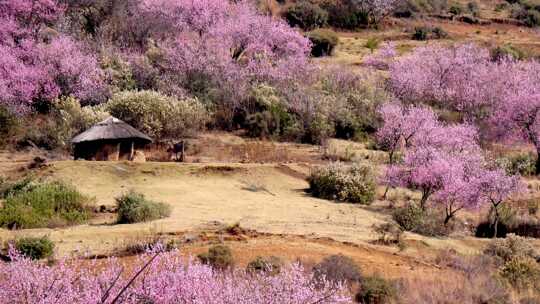
You’re standing in Ha Matela just after sunrise, the air sharp and clean, the distant bleat of goats echoing off the hills, and the scent of woodsmoke curling from rondavel chimneys. Ha Matela sits in Lesotho’s central highlands, a small, working village more practical than picturesque, but honest in its welcome. It’s not a destination for nightlife or urban buzz—think quiet evenings, a handful of shops, and the slow rhythm of rural life. For backpackers, Ha Matela works best as a launchpad for hiking the Maloti foothills or as a low-key stopover between Maseru and the mountain passes. Buses are infrequent and dusty, but you can walk most places once you’re here. Costs are low, safety is generally good, and while you won’t find hostels or a backpacker scene, you might share a meal with locals if you’re open. Compared to busier towns like Roma or Semonkong, Ha Matela is quieter, less polished, and more about the landscape than the amenities.

Discover everything you want to know in the 📖 Lesotho Travel Guide.


example page 0 from our offline Travel Guide for Lesotho
example page 1 from our offline Travel Guide for Lesotho
example page 2 from our offline Travel Guide for Lesotho
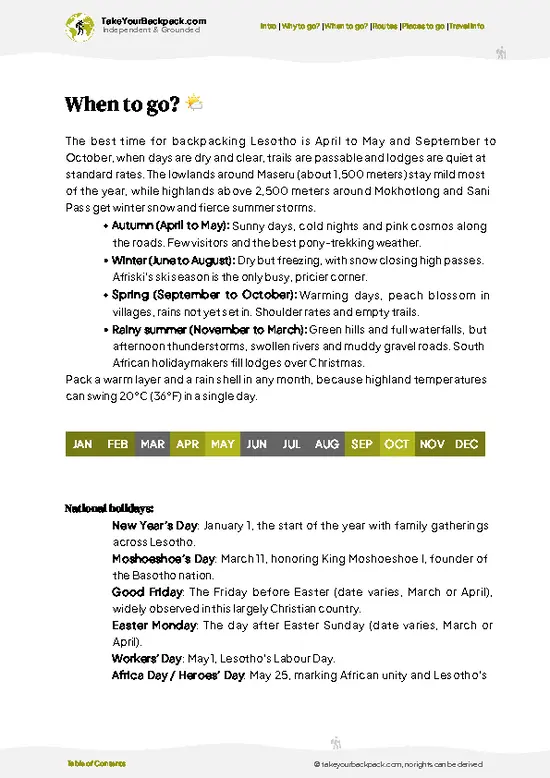
example page 3 from our offline Travel Guide for Lesotho
example page 4 from our offline Travel Guide for Lesotho
example page 5 from our offline Travel Guide for Lesotho
example page 6 from our offline Travel Guide for Lesotho
example page 7 from our offline Travel Guide for Lesotho
Loading the map 🌍
CLICK TO FILTER
cities
towns
villages
landmarks
national parks
hikes
attractions
festivals
regions
SHOW COUNTRY’S BESTSHOW ALL

✨ Why go?
Ranked #99 town in Lesotho
The unique appeal for travelers

Ha Matela serves as a gateway for backpackers exploring Lesotho’s rugged beauty. Its proximity to stunning hikes like the Sani Pass makes it a strategic stop. You’ll find small-scale hostels and guesthouses that foster a friendly atmosphere, perfect for solo travelers or small groups looking to connect. The walkable streets are lined with local eateries, where you can savor traditional dishes that tell the story of the land. While some pass through quickly, others linger for a few days, soaking in the cultural vibe and planning their next adventure. This town is ideal for those who appreciate a slower pace and the chance to engage with the local community.

💡 HighlightsDon't-miss highlights and experiences

  • The village khotla (chief’s meeting place) — The social and political heart of Ha Matela where elders settle disputes, host communal ceremonies, and where visitors can observe traditional Basotho governance and storytelling in a living setting.
  • Cluster of traditional rondavels — Well-preserved thatched rondavels show authentic local architecture, roof-thatching techniques, and everyday layout; walking through the cluster gives a real sense of how families live and organize space.
  • Local church — A focal point for weekly life and community gatherings; services and choir singing are a vivid cultural experience and a way to meet locals and see modern and traditional faith practices blended.
  • Market / market day spot — When the market sets up you’ll find fresh produce, Basotho blankets, small
… read more 👉
  • The village khotla (chief’s meeting place) — The social and political heart of Ha Matela where elders settle disputes, host communal ceremonies, and where visitors can observe traditional Basotho governance and storytelling in a living setting.
  • Cluster of traditional rondavels — Well-preserved thatched rondavels show authentic local architecture, roof-thatching techniques, and everyday layout; walking through the cluster gives a real sense of how families live and organize space.
  • Local church — A focal point for weekly life and community gatherings; services and choir singing are a vivid cultural experience and a way to meet locals and see modern and traditional faith practices blended.
  • Market / market day spot — When the market sets up you’ll find fresh produce, Basotho blankets, small livestock trade and local snacks; it’s the best place to taste home-cooked food and pick up handmade goods from villagers.
  • Community craft/blanket vendors — Local women and cooperatives sell and sometimes demonstrate Basotho blanket making, sewing and simple weaving; buying direct supports families and gives insight into a key cultural craft.
  • Village primary school grounds — The schoolyard is a lively place where children play, local education initiatives happen, and visitors can witness everyday community life—often you’ll see lessons or after-school activities in progress.
  • Pony and shepherding trails around the village — Short hikes or walks along the grazelands reveal Basotho pony culture, shepherding techniques, and wide-open mountain views that define village life; perfect for a low-effort, high-authenticity stroll.
A few real, visitable highlights just outside Ha Matela worth day-tripping to are Thaba-Bosiu, Katse Dam, Maletsunyane Falls, and the Sani Pass.
Spotted a mistake or missing something? Contact us.

Things to do near Ha Matela

Ratings based on Tripadvisor reviews. When you book through this link, you support our work at no extra cost to you.

🏘️ NeighborhoodsUnderstanding the local layout

Ha Matela is a vibrant hub in Lesotho, offering a unique blend of culture and adventure for backpackers. Here’s how to navigate its neighborhoods:

Central Ha Matela: This area buzzes with local life. You’ll find affordable guesthouses and eateries serving traditional dishes. It’s walkable, making it easy to explore markets and interact with locals. Perfect for short stays, but the nightlife is low-key—ideal if you prefer a quiet evening.

Ha Matela Heights: A bit elevated, this neighborhood offers stunning views and a more tranquil atmosphere. It’s less crowded, with a few cozy lodges. Great for longer stays if you want to soak in the scenery. Transport options are limited, so plan to hike or bike.

Ha Matela South: This area is more residential, giving you a taste of everyday life. It’s … read more 👉
Ha Matela is a vibrant hub in Lesotho, offering a unique blend of culture and adventure for backpackers. Here’s how to navigate its neighborhoods:

Central Ha Matela: This area buzzes with local life. You’ll find affordable guesthouses and eateries serving traditional dishes. It’s walkable, making it easy to explore markets and interact with locals. Perfect for short stays, but the nightlife is low-key—ideal if you prefer a quiet evening.

Ha Matela Heights: A bit elevated, this neighborhood offers stunning views and a more tranquil atmosphere. It’s less crowded, with a few cozy lodges. Great for longer stays if you want to soak in the scenery. Transport options are limited, so plan to hike or bike.

Ha Matela South: This area is more residential, giving you a taste of everyday life. It’s less touristy, which means lower prices. While it’s a bit farther from the main attractions, the peaceful vibe makes it worth the trek.

⌛️ 1 dayWhat you can realistically do in a day

Ha Matela, a small town in Lesotho, offers a unique blend of culture and stunning landscapes. It’s a place where the rhythm of life slows down, inviting you to soak in the vibrant local scene.

Start your morning at the bustling local market. The air is thick with the scent of fresh produce and spices, and the chatter of vendors fills the space. Grab a warm, flaky ‘pita’ bread stuffed with local cheese for breakfast. It’s a simple pleasure that sets the tone for the day.

Afterward, take a stroll through the nearby neighborhoods, where traditional Basotho houses dot the landscape. Visit the Ha Matela Cave, a lesser-known spot that showcases ancient rock art. The cool, shadowy cave feels like stepping back in time, and the stories etched into the stone whisper of a rich history.

As afternoon … read more 👉
Ha Matela, a small town in Lesotho, offers a unique blend of culture and stunning landscapes. It’s a place where the rhythm of life slows down, inviting you to soak in the vibrant local scene.

Start your morning at the bustling local market. The air is thick with the scent of fresh produce and spices, and the chatter of vendors fills the space. Grab a warm, flaky ‘pita’ bread stuffed with local cheese for breakfast. It’s a simple pleasure that sets the tone for the day.

Afterward, take a stroll through the nearby neighborhoods, where traditional Basotho houses dot the landscape. Visit the Ha Matela Cave, a lesser-known spot that showcases ancient rock art. The cool, shadowy cave feels like stepping back in time, and the stories etched into the stone whisper of a rich history.

As afternoon rolls in, head to the local craft center. Here, artisans create beautiful handmade goods. Engage with them; their passion is infectious. You might even find a unique souvenir that tells a story.

As the sun sets, find a cozy spot at a local eatery. Enjoy a hearty dish of ‘pap’ and ‘sosaties’ while the sky transforms into a canvas of oranges and purples. The warmth of the food and the friendly atmosphere wrap around you like a comforting blanket, making your day in Ha Matela feel complete.

🌤️ When to go?Seasonal considerations and timing

  • Weather: Ha Matela’s highland climate means chilly winters, often dipping below 0°C (32°F), with snow dusting the peaks. Summers are mild, hovering around 20-25°C (68-77°F), perfect for hiking without overheating.
  • Temperature: Spring and autumn offer the best balance—daytime highs near 18-22°C (64-72°F) with crisp, cool mornings that wake your senses without numbing fingers.
  • Daylight Hours: Longer days from October to March give you more daylight to explore, with sunsets stretching past 7 PM, letting you savor golden light on rugged trails.
  • Crowds: Peak tourist season aligns with summer holidays, so visiting shoulder seasons like late spring or early autumn means quieter trails and more authentic local encounters.
  • Seasonal Activities: Winter invites snowshoeing and cozy fireside chats,
… read more 👉
  • Weather: Ha Matela’s highland climate means chilly winters, often dipping below 0°C (32°F), with snow dusting the peaks. Summers are mild, hovering around 20-25°C (68-77°F), perfect for hiking without overheating.
  • Temperature: Spring and autumn offer the best balance—daytime highs near 18-22°C (64-72°F) with crisp, cool mornings that wake your senses without numbing fingers.
  • Daylight Hours: Longer days from October to March give you more daylight to explore, with sunsets stretching past 7 PM, letting you savor golden light on rugged trails.
  • Crowds: Peak tourist season aligns with summer holidays, so visiting shoulder seasons like late spring or early autumn means quieter trails and more authentic local encounters.
  • Seasonal Activities: Winter invites snowshoeing and cozy fireside chats, while summer bursts with wildflowers and vibrant village markets, each season offering a distinct rhythm.
  • Price Fluctuations: Accommodation and transport costs spike in summer; booking in shoulder seasons can save you a solid 20-30%, letting you stretch your budget further.
Pro-tip: Aim for late September to early November or March to April—when the air smells fresh, the light is soft, and the trails feel like your own secret passage through Lesotho’s highlands.


source: climatestotravel.comJANJanuary: highly recommended for travelingFEBFebruary: highly recommended for travelingMARMarch: excellent for travelingAPRApril: excellent for travelingMAYMay: good for travelingJUNJune: fair for travelingJULJuly: below average for travelingAUGAugust: fair for travelingSEPSeptember: highly recommended for travelingOCTOctober: excellent for travelingNOVNovember: excellent for travelingDECDecember: highly recommended for traveling
when-to-go

✈️ The backpacker research shortcutLesotho Travel Guide

An offline-friendly backpacking guide with optimized travel routes, ranked highlights, transport advice, and the best areas to stay.
example page 0 from our offline Travel Guide for Lesotho
example page 1 from our offline Travel Guide for Lesotho
example page 2 from our offline Travel Guide for Lesotho
example page 3 from our offline Travel Guide for Lesotho
example page 4 from our offline Travel Guide for Lesotho
example page 5 from our offline Travel Guide for Lesotho
example page 6 from our offline Travel Guide for Lesotho
example page 7 from our offline Travel Guide for Lesotho
The digital guide (154 pages) contains:
✅ 35 highlights, ranked by travel appeal
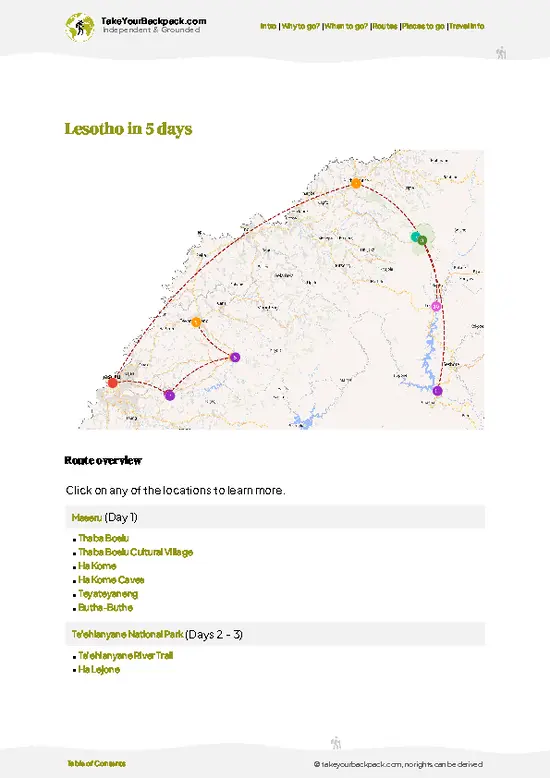
✅ Optimized 2, 3 & 5-day travel routes
✅ Cities, national parks, landmarks, beaches
✅ How to get around
✅ Offline-friendly for travel without Wi-Fi
👉 Click to see all 30+ guide features

📅 Plan smarter in minutes, not weeks
✅ Month by month travel advice
✅ Festivals & national holidays
✅ Budget expectations

🗺️ Go to the right places, skip the overrated ones
✅ Honest pros & cons of destinations
✅ Top hikes, parks & viewpoints
✅ Lesser-known places most travelers miss
✅ Clear “worth it vs skip it” guidance

🛏️ Travel smoothly without rookie mistakes
✅ Best areas to stay
✅ Transport systems explained simply
✅ Common scams & safety advice
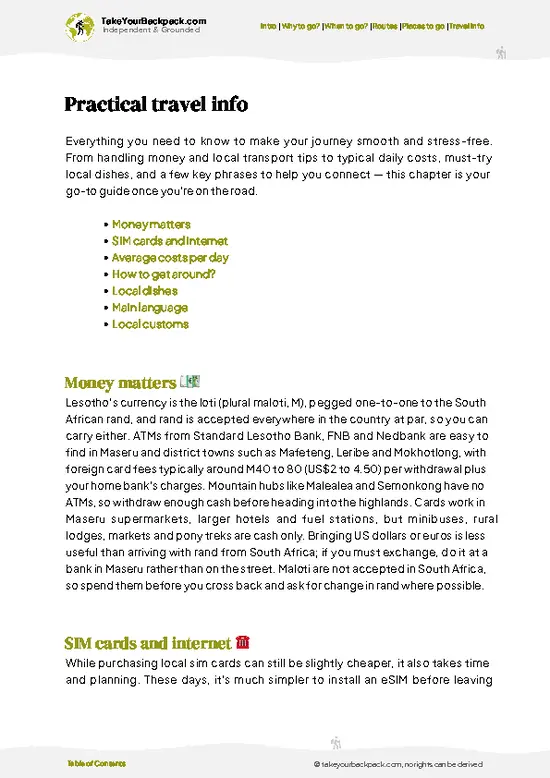
✅ SIM cards, money & practical tips

🌍 Understand the country, not just visit it
✅ Culture & traditions
✅ 52 Essential phrases & customs
✅ Festivals worth planning around
✅ Traveler-friendly historical context
✅ Insights that make places more meaningful

📱 Built for real travel conditions
✅ Fully downloadable PDF
✅ Works completely offline
✅ Optimized for phone use
✅ Useful in remote areas & buses
✅ Everything in one place
Stop searching, start planning
Get instant access to your full guide. 30‑day money-back guarantee.
+ Add another guide for just

By proceeding you agree to our terms.
Sent to your inbox immediately after payment • 100% Secure Checkout
Best Backpacking Travel Advisor 2025 tourism awardBest Backpacking
Travel Advisor
2025
What others say about Take Your Backpack Guides:
⭐⭐⭐⭐⭐
Fantastic, amazing amount of information!
⭐⭐⭐⭐⭐
My goodness this is amazing, it's what I've been looking for hats off too you!
⭐⭐⭐⭐⭐
I think this is absolutely BRILLIANT
⭐⭐⭐⭐
Very complete and informative. It's still missing places, but I gotta to commend you
⭐⭐⭐⭐⭐
This is truly amazing, thank you, can't wait to explore it with my kids!
⭐⭐⭐⭐⭐
Awesome resource, thank you!
⭐⭐⭐⭐⭐
This is amazing! Can't wait to explore the ones I haven't seen
⭐⭐⭐⭐
I love this! Well done, great idea.
⭐⭐⭐⭐⭐
Thanks for taking the time to make this gem!
⭐⭐⭐⭐⭐
This might be the best website I've ever seen.
⭐⭐⭐⭐⭐
Congratulations, and thank you so much for your work; it's incredibly valuable.
⭐⭐⭐⭐
In all seriousness I think you did a great job pointing out the important spots
⭐⭐⭐⭐⭐
10/10 very good
⭐⭐⭐⭐⭐
As someone who's only just starting to visit regularly this is awesome, thank you.
⭐⭐⭐⭐
Thank you very much! I'm going to visit my dad, it's going to be very useful!
⭐⭐⭐⭐⭐
This is really cool! We'll be travelling for the first time and this definitely come in handy.
⭐⭐⭐⭐⭐
You are now our minister of culture, congratulations 👨‍💼
⭐⭐⭐⭐⭐
Just wanted to tell you that this is a pearl! Going to follow your recommendations.
⭐⭐⭐⭐⭐
This is so cool. I'll definitely be using the resource for my travels soon.
⭐⭐⭐⭐⭐
This is very impressive! Good work.
⭐⭐⭐⭐⭐
This is an amazing and informative site. Very well done!

🛏️ Where to stay?Best areas and accommodation options

Ha Matela’s heart for backpackers pulses strongest around the town center, where the streets hum with local markets and the scent of wood smoke lingers in the crisp mountain air. This area balances safety with social buzz—hostels cluster here, making it easy to swap stories over a fire or plan your next trek with fellow travelers. Compared to the quieter outskirts, the center’s vibe is raw and real, offering a genuine slice of daily life without the isolation. Staying here means you’re never far from a friendly face or a practical amenity, turning the town’s rugged charm into a welcoming base camp rather than a lonely outpost.

🚌 Getting aroundGetting around like a local

Ha Matela moves with a rhythm that’s part old-school market bustle, part laid-back afternoon haze. The sun slants through narrow streets, casting long shadows on cracked sidewalks where vendors shout over the hum of scooters and the occasional clatter of a passing cart. Time here isn’t a strict appointment but a flexible suggestion—expect delays, but also unexpected kindness. The scent of grilled meat and fresh herbs drifts from street stalls, pulling you into a slow dance of discovery. To navigate Ha Matela like a local, you’ll want to blend patience with savvy choices that keep your wallet intact and your feet moving efficiently.
  • Walking: The heart of Ha Matela beats on foot. Streets are compact and full of surprises; walking lets you soak in the smells, sounds, and textures. It’s free,
… read more 👉
Ha Matela moves with a rhythm that’s part old-school market bustle, part laid-back afternoon haze. The sun slants through narrow streets, casting long shadows on cracked sidewalks where vendors shout over the hum of scooters and the occasional clatter of a passing cart. Time here isn’t a strict appointment but a flexible suggestion—expect delays, but also unexpected kindness. The scent of grilled meat and fresh herbs drifts from street stalls, pulling you into a slow dance of discovery. To navigate Ha Matela like a local, you’ll want to blend patience with savvy choices that keep your wallet intact and your feet moving efficiently.
  • Walking: The heart of Ha Matela beats on foot. Streets are compact and full of surprises; walking lets you soak in the smells, sounds, and textures. It’s free, flexible, and the best way to catch the town’s pulse.
  • Shared Minibus: These minibuses run from dawn until early evening, costing just a few cents. They’re cramped but fast, weaving through traffic with a local’s instinct. Flag one down anywhere along the route—no fixed stops.
  • Motorbike Taxi: When time is tight, a motorbike taxi cuts through the slow crawl of traffic. Expect to pay a bit more than the minibus, but it’s worth it for speed and the breeze on your face. Negotiate the fare upfront.
  • Bicycle Rental: For a budget-friendly middle ground, rent a bike for the day. It’s quiet, eco-friendly, and lets you cover more ground than walking without the noise and fumes of motor traffic.

👛 Costs (as of 16 October 2026)What things cost and how to budget

The daily cost of backpacking in Ha Matela, Lesotho, reflects the town’s remote, rugged character and limited tourist infrastructure, so expect modest prices but also some logistical quirks.
  • Dorm Accommodation: Dorm beds in basic guesthouses or community lodges hover around €8 to €15 per night. These places are simple—think sturdy beds, shared bathrooms, and the occasional power outage—but they put you right in the heart of local life.
  • Meals: Eating out is straightforward and affordable. A hearty local meal, often centered on maize porridge (pap) with vegetables or meat, costs about €3 to €6. Street food or small eateries offer filling options, but don’t expect a wide variety of international dishes.
  • Local Transport: Transport options are limited and mostly informal. Minibus taxis or shared
… read more 👉
The daily cost of backpacking in Ha Matela, Lesotho, reflects the town’s remote, rugged character and limited tourist infrastructure, so expect modest prices but also some logistical quirks.
  • Dorm Accommodation: Dorm beds in basic guesthouses or community lodges hover around €8 to €15 per night. These places are simple—think sturdy beds, shared bathrooms, and the occasional power outage—but they put you right in the heart of local life.
  • Meals: Eating out is straightforward and affordable. A hearty local meal, often centered on maize porridge (pap) with vegetables or meat, costs about €3 to €6. Street food or small eateries offer filling options, but don’t expect a wide variety of international dishes.
  • Local Transport: Transport options are limited and mostly informal. Minibus taxis or shared rides between villages cost around €1 to €3 per trip. Walking is common, but if you’re covering longer distances, budget for a few rides—just be ready for flexible schedules and rough roads.
  • Basic Activities/Entry Fees: Most activities revolve around nature and culture, with minimal fees. Visiting local markets or cultural sites might cost €1 to €3. Guided hikes or community tours, if available, can run €10 to €20, often negotiable and worth the investment for the insight and safety they provide.
  • Miscellaneous Expenses: This includes essentials like bottled water, snacks, or phone credit. Expect to spend about €2 to €5 daily, especially since clean water isn’t always guaranteed and connectivity can be patchy.

All told, you’re looking at roughly €15 to €40 per day to cover the basics in Ha Matela. The lower end means sticking to dorms, local food, and walking, while the upper end allows for a few guided experiences and more transport flexibility. This budget reflects the raw, authentic pace of life here—no frills, but plenty of room to connect with the landscape and people.
⚠️ Prices can change and everyone travels differently, so take this as a rough guide. Hope it helps you plan your adventure!

🚌 Day tripsBest day trips from Ha Matela

Ha Matela, Lesotho, is a backpacker’s dream base for exploring the rugged beauty of the region. With its welcoming atmosphere and proximity to stunning landscapes, you’ll find plenty of day trips that offer both adventure and cultural immersion.

Thaba Bosiu Cultural Village
Just a short drive from Ha Matela, this historical site is a must-visit. You’ll walk the same paths as the Basotho kings, surrounded by dramatic cliffs and rich history. The guided tours are insightful, often led by locals who share stories that breathe life into the stones. Allocate about two hours for the visit, and expect to spend around $5 for entry. The best time to go is early morning when the light casts long shadows over the landscape, enhancing the experience. A common mistake? Skipping the guided tour; you’ll … read more 👉
Ha Matela, Lesotho, is a backpacker’s dream base for exploring the rugged beauty of the region. With its welcoming atmosphere and proximity to stunning landscapes, you’ll find plenty of day trips that offer both adventure and cultural immersion.

Thaba Bosiu Cultural Village
Just a short drive from Ha Matela, this historical site is a must-visit. You’ll walk the same paths as the Basotho kings, surrounded by dramatic cliffs and rich history. The guided tours are insightful, often led by locals who share stories that breathe life into the stones. Allocate about two hours for the visit, and expect to spend around $5 for entry. The best time to go is early morning when the light casts long shadows over the landscape, enhancing the experience. A common mistake? Skipping the guided tour; you’ll miss the deeper context of this sacred site.
👉 Explore Thaba Bosiu Cultural Village

Katse Dam
A bit further afield, the Katse Dam is a marvel of engineering set against breathtaking mountain scenery. The drive takes about an hour, and the dam tour reveals the intricate workings of this massive structure. Budget around $10 for the tour and enjoy a picnic by the water. Late spring or early summer is ideal, as the wildflowers bloom and the air is crisp. Many first-timers underestimate the chill; bring a jacket!
👉 Explore Katse Dam

Maletsunyane Falls
For those craving a bit of thrill, head to Maletsunyane Falls, one of the highest waterfalls in Africa. The hike to the viewpoint is about an hour, and the sight of water cascading down the cliffs is worth every step. Expect to spend around $3 for entry. Visit in the afternoon when the sun hits the falls just right, creating rainbows in the mist. A rookie mistake? Not bringing a camera; you’ll want to capture this moment.
👉 Explore Maletsunyane Falls

🛡️ SafetySafety Tips and Common Scams in Ha Matela

Ha Matela is generally safe, but staying aware enhances your experience. Stick to well-lit areas at night, especially if you’re solo. The local vibe is welcoming, but keep an eye on your belongings in crowded spots; pickpockets can be opportunistic.

Be cautious with offers from overly friendly strangers; they might lead you to shops with inflated prices. Trust your instincts—if something feels off, it probably is. Carry yourself confidently, engage with locals, and you’ll find that the warmth of the community far outweighs any minor annoyances.

FAQTraveler FAQ

Ha Matela is primarily a stopover rather than a major tourist destination. It offers basic local experiences and access to nearby natural scenery but lacks extensive attractions. Travelers often pass through while exploring the broader region of Lesotho.
One day is generally sufficient to experience Ha Matela. This allows time to explore the village, interact with locals, and enjoy nearby landscapes without rushing. Longer stays are usually reserved for those combining it with trekking or cultural tours in the area.
Yes, Ha Matela can be visited as a day trip from nearby towns such as Mokhotlong, which is about 40 kilometers away. The journey by road takes roughly 1 to 1.5 hours each way, making it feasible for a day excursion.
⚠️ Things can change over time, so always validate details locally before you go.

Other Basotho towns near Ha Matela

Explore more nearby:

  • Ha Mofoka—river valley, local homesteads, agricultural land| 16 km away
  • Ha Ntsi—small village, rural landscape, community life| 22 km away
  • Teyateyaneng—craft markets, weaving workshops, roadside town| 32 km away

💡 Not sure where to go next?
Create a personalized itinerary for Lesotho including Ha Matela and the places that fit your trip.

Generate my itinerary

👉 Discover all towns

Or checkout all Lesotho has to offer (think cities, towns, villages, national parks, hikes, beaches, festivals)
Country photo of Lesotho

We 💚 feedbackSumming up the experience

Ha Matela has a raw, rugged charm that pulls you in. The air is crisp, filled with the scent of wild sage. Don’t miss the local pottery—it’s a delightful surprise. Just be ready for steep trails; they’re tough but lead to breathtaking views. Embrace the challenge; it’s worth every step.

✍️ Help improve this page!
The information on this page is based on in-depth research, insights shared by experienced travelers, and feedback from the local travel community in Lesotho. While every effort is made to keep the information accurate and current, conditions can change — so if you spot anything incorrect or outdated, please get in touch.


🙋‍♂️ Give feedback

👋 Meet the founderWho’s Behind Take Your Backpack?

Johan, backpacker and founder of TakeYourBackpackHi, I’m Johan (Netherlands 🇳🇱), the creator of TakeYourBackpack. Over the past 3 decades, I’ve backpacked through 90+ countries across six continents, gaining extensive experience with independent travel, long-term trips, and overland routes.

This site is built on a combination of firsthand travel experience and carefully curated insights from other backpackers. Many guides are based on places I’ve personally visited, while others bring together tips, observations, and practical advice shared by trusted travelers I’ve met along the way.

The goal is to provide realistic, experience-driven guidance — not generic itineraries — so you can explore destinations with better context, clearer expectations, and more confidence.