
×

Lesotho🇱🇸 | landmarksLiphofung Cavesrock art, sandstone shelter, archaeological site | things to do and best time to go

Explore Katse DamExplore Thaba Bosiu

Backpacking in Liphofung Caves
👌 Worth visitingunique site ranked #4
By Johan Kruseman 🇳🇱 | Updated September 3, 2026

Let’s get real: most people show up at Liphofung Caves expecting some kind of Lesotho answer to the Sistine Chapel—jaw-dropping rock art, Instagram gold, and a spiritual hush. The truth? The San rock paintings are modest, and if you’re chasing that viral photo, you’ll be fighting the same handful of angles as everyone else. But here’s the kicker: the real magic isn’t in the art, it’s in the atmosphere. Liphofung sits in Lesotho’s northern highlands, just off the main road between Butha-Buthe and Oxbow, and it’s the living, breathing sense of history that lands the punch. You’re standing where Basotho kings once sheltered, in a cave that’s more time capsule than tourist trap. It’s cheap to enter, rarely crowded, and the guides—often locals—bring the place alive with stories you won’t find on any glossy brochure. The wow-factor is subtle, but it lingers.

Discover everything you want to know in the 📖 Lesotho Travel Guide.


Get your Lesotho guide
42 ranked highlights, routes & tips, works offline (178 pages)
Loading the map 🌍
CLICK TO FILTER
cities
towns
villages
landmarks
national parks
hikes
attractions
festivals
regions
SHOW COUNTRY’S BESTSHOW ALL

✨ Why go?
Ranked #4 unique site in Lesotho
What sets this place apart

The Liphofung Caves in Lesotho are not just another stop on your backpacking route; they’re a slice of raw, unfiltered history. Sure, you’ll encounter crowds—especially if you visit during peak season—but don’t let that deter you. The effort-to-reward ratio here is solid. A short hike leads you to ancient rock art that tells stories of the San people, a connection to the past that’s hard to find elsewhere.

What makes this place truly special is its uniqueness. Unlike the polished tourist traps, Liphofung feels authentic. You can almost hear the whispers of history as you explore the caves. Plus, it’s low-cost; the entrance fee won’t break the bank, leaving you with more cash for local crafts or a hearty meal.

Integrate this stop into a broader route through Lesotho. It pairs perfectly with … read more 👉
The Liphofung Caves in Lesotho are not just another stop on your backpacking route; they’re a slice of raw, unfiltered history. Sure, you’ll encounter crowds—especially if you visit during peak season—but don’t let that deter you. The effort-to-reward ratio here is solid. A short hike leads you to ancient rock art that tells stories of the San people, a connection to the past that’s hard to find elsewhere.

What makes this place truly special is its uniqueness. Unlike the polished tourist traps, Liphofung feels authentic. You can almost hear the whispers of history as you explore the caves. Plus, it’s low-cost; the entrance fee won’t break the bank, leaving you with more cash for local crafts or a hearty meal.

Integrate this stop into a broader route through Lesotho. It pairs perfectly with a trek in the Maluti Mountains or a visit to Sani Pass. The caves are a reminder that sometimes the real magic lies in the stories etched in stone, waiting for you to discover them.
Want to include Liphofung Caves in your Lesotho route?
Create a personalized Lesotho itinerary that includes Liphofung Caves and the places that fit your trip — based on your travel style, budget, and available time. Get your route in seconds.

Generate my trip

💡 HighlightsWhat this place is best known for

  • San rock-art panels — Small, detailed paintings tucked well inside the shelter; they show hunting scenes and animals and are a rare, intimate glimpse into the lives and beliefs of the hunter-gatherer artists who used the cave.
  • Dramatic cave overhang and lookout — The huge rock shelter makes a natural balcony with sweeping views of the surrounding highlands. It’s a great spot to pause, take photos, and feel how the landscape shapes local life.
  • Visitor and interpretation centre — Simple but solid displays and interpretive boards explain the archaeology, rock art, and Basotho history tied to the site, which helps make sense of what you’re seeing rather than just gawking.
  • Local guides and oral histories — Guided walks are often led by village guides who link the rock art to stories, spiritual
read more 👉
  • San rock-art panels — Small, detailed paintings tucked well inside the shelter; they show hunting scenes and animals and are a rare, intimate glimpse into the lives and beliefs of the hunter-gatherer artists who used the cave.
  • Dramatic cave overhang and lookout — The huge rock shelter makes a natural balcony with sweeping views of the surrounding highlands. It’s a great spot to pause, take photos, and feel how the landscape shapes local life.
  • Visitor and interpretation centre — Simple but solid displays and interpretive boards explain the archaeology, rock art, and Basotho history tied to the site, which helps make sense of what you’re seeing rather than just gawking.
  • Local guides and oral histories — Guided walks are often led by village guides who link the rock art to stories, spiritual meanings, and day-to-day history. Their storytelling brings the place alive in a way labels can’t.
  • Traditional Basotho homestead exhibit and craft demos — You’ll often find demonstrations of local crafts and a reconstruction of traditional living spaces nearby, which give context to how people in the mountains have lived for generations.
  • Distinctive rock formations and cave micro-environment — The shelter’s geology creates a cooler, sheltered microclimate with interesting nooks, drip lines and rock textures that helped preserve the art and make the cave feel otherworldly.
  • Local folklore — the “giant’s footprint” stories — The site is wrapped in Basotho legends (hence the name), and those myths add a cultural layer that turns a set of paintings into a place with spiritual and communal meaning.
Spotted a mistake or missing something? Contact us.

Things to do near Liphofung Caves

Ratings based on Tripadvisor reviews. When you book through this link, you support our work at no extra cost to you.

🌤️ When to go?Seasonal considerations and timing


  • Weather: The best time to visit Liphofung Caves is during the dry season, from May to September. Rain is scarce, making trails safer and the cave’s rock art easier to see without mud or water damage.

  • Temperature: Expect chilly mornings and evenings, especially June to August, with lows around 0°C (32°F). Daytime highs hover between 15-20°C (59-68°F), perfect for hiking without overheating.

  • Daylight Hours: Winter months bring shorter days—about 10 hours of daylight—so plan your exploration early to avoid rushing through the site.

  • Crowds: The caves attract mostly local tourists and a handful of international backpackers. Peak season (June-August) sees more visitors but never overwhelming crowds. Off-season offers near solitude but watch for muddy paths.

  • Seasonal Activities: Winter
read more 👉

  • Weather: The best time to visit Liphofung Caves is during the dry season, from May to September. Rain is scarce, making trails safer and the cave’s rock art easier to see without mud or water damage.

  • Temperature: Expect chilly mornings and evenings, especially June to August, with lows around 0°C (32°F). Daytime highs hover between 15-20°C (59-68°F), perfect for hiking without overheating.

  • Daylight Hours: Winter months bring shorter days—about 10 hours of daylight—so plan your exploration early to avoid rushing through the site.

  • Crowds: The caves attract mostly local tourists and a handful of international backpackers. Peak season (June-August) sees more visitors but never overwhelming crowds. Off-season offers near solitude but watch for muddy paths.

  • Seasonal Activities: Winter months offer crisp air and clear skies, ideal for photography and star-gazing. Summer (November-March) is lush but wet, which can obscure the rock art and make hiking slippery.

  • Price Fluctuations: Entrance fees and local guide costs stay stable year-round. However, accommodation prices nearby can spike slightly during peak winter months due to increased demand.


Pro-tip: Aim for late May or early September—dry, cool, fewer crowds, and you’ll catch the caves in their most accessible, authentic state without the winter chill.


source: climatestotravel.comJANJanuary: fair for travelingFEBFebruary: fair for travelingMARMarch: fair for travelingAPRApril: good for travelingMAYMay: highly recommended for travelingJUNJune: excellent for travelingJULJuly: excellent for travelingAUGAugust: excellent for travelingSEPSeptember: highly recommended for travelingOCTOctober: good for travelingNOVNovember: fair for travelingDECDecember: fair for traveling
when-to-go

✈️ The backpacker research shortcutLesotho Travel Guide

An offline-friendly backpacking guide with optimized travel routes, ranked highlights, transport advice, and the best areas to stay.
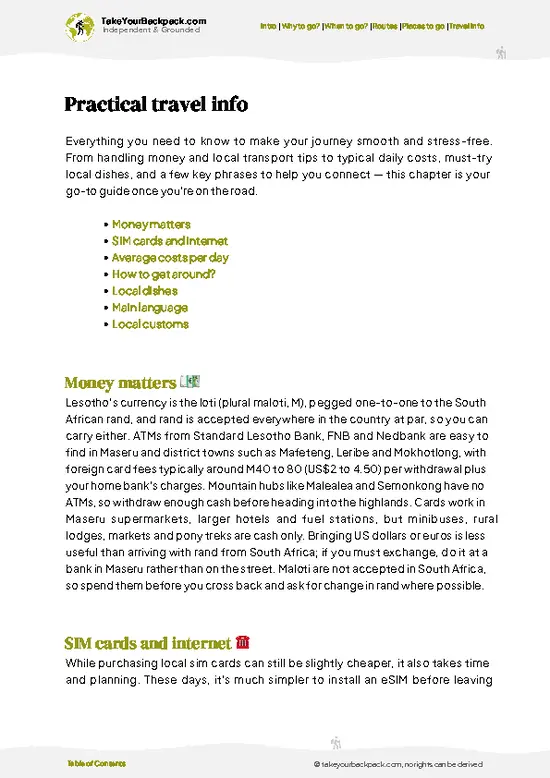
example page 0 from our offline Travel Guide for Lesotho
example page 1 from our offline Travel Guide for Lesotho
example page 2 from our offline Travel Guide for Lesotho
example page 3 from our offline Travel Guide for Lesotho
example page 4 from our offline Travel Guide for Lesotho
example page 5 from our offline Travel Guide for Lesotho
example page 6 from our offline Travel Guide for Lesotho
example page 7 from our offline Travel Guide for Lesotho
The digital guide (178 pages) contains:
42 highlights, ranked by travel appeal
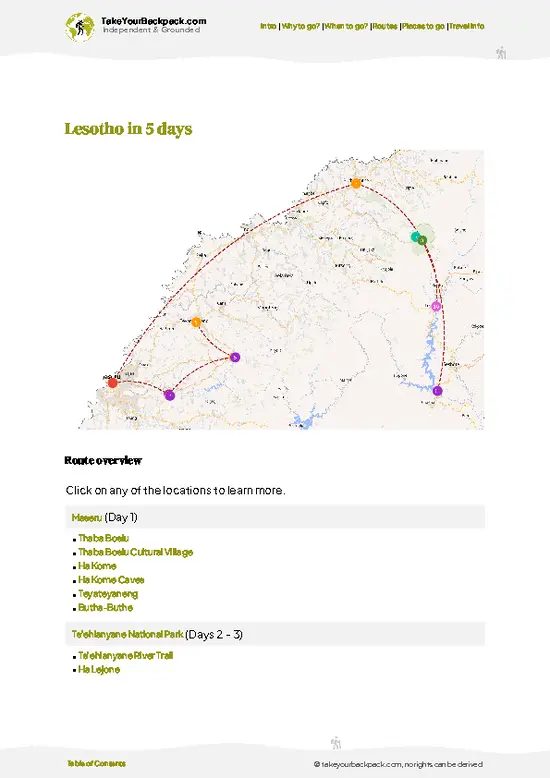
Optimized 2, 3 & 5-day travel routes
Cities, national parks, landmarks, beaches
How to get around
Offline-friendly for travel without Wi-Fi
👉 Click to see all 30+ guide features

📅 Plan smarter in minutes, not weeks
Month by month travel advice
Festivals & national holidays
Budget expectations

🗺️ Go to the right places, skip the overrated ones
Honest pros & cons of destinations
Top hikes, parks & viewpoints
Lesser-known places most travelers miss
Clear “worth it vs skip it” guidance

🛏️ Travel smoothly without rookie mistakes
Best areas to stay
Transport systems explained simply
Common scams & safety advice
SIM cards, money & practical tips

🌍 Understand the country, not just visit it
Culture & traditions
52 Essential phrases & customs
Festivals worth planning around
Traveler-friendly historical context
Insights that make places more meaningful

📱 Built for real travel conditions
Fully downloadable PDF
Works completely offline
Optimized for phone use
Useful in remote areas & buses
Everything in one place
Save weeks of stressful planning
Get instant access to your full guide. 30‑day money-back guarantee.
+ Add another guide for just US$7.80

By proceeding you agree to our terms.
Sent to your inbox immediately after payment • 100% Secure Checkout
Best Backpacking Travel Advisor 2025 tourism awardBest Backpacking
Travel Advisor
2025
What others say about Take Your Backpack Guides:
⭐⭐⭐⭐⭐
Fantastic, amazing amount of information!
⭐⭐⭐⭐⭐
My goodness this is amazing, it's what I've been looking for hats off too you!
⭐⭐⭐⭐⭐
I think this is absolutely BRILLIANT
⭐⭐⭐⭐
Very complete and informative. It's still missing places, but I gotta to commend you
⭐⭐⭐⭐⭐
This is truly amazing, thank you, can't wait to explore it with my kids!
⭐⭐⭐⭐⭐
Awesome resource, thank you!
⭐⭐⭐⭐⭐
This is amazing! Can't wait to explore the ones I haven't seen
⭐⭐⭐⭐
I love this! Well done, great idea.
⭐⭐⭐⭐⭐
Thanks for taking the time to make this gem!
⭐⭐⭐⭐⭐
This might be the best website I've ever seen.
⭐⭐⭐⭐⭐
Congratulations, and thank you so much for your work; it's incredibly valuable.
⭐⭐⭐⭐
In all seriousness I think you did a great job pointing out the important spots
⭐⭐⭐⭐⭐
10/10 very good
⭐⭐⭐⭐⭐
As someone who's only just starting to visit regularly this is awesome, thank you.
⭐⭐⭐⭐
Thank you very much! I'm going to visit my dad, it's going to be very useful!
⭐⭐⭐⭐⭐
This is really cool! We'll be travelling for the first time and this definitely come in handy.
⭐⭐⭐⭐⭐
You are now our minister of culture, congratulations 👨‍💼
⭐⭐⭐⭐⭐
Just wanted to tell you that this is a pearl! Going to follow your recommendations.
⭐⭐⭐⭐⭐
This is so cool. I'll definitely be using the resource for my travels soon.
⭐⭐⭐⭐⭐
This is very impressive! Good work.
⭐⭐⭐⭐⭐
This is an amazing and informative site. Very well done!

🛏️ Where to stay?Best areas and accommodation options

When you’re heading to the Liphofung Caves in Lesotho, you want to stay somewhere that feels safe and social, but also keeps you close to the action. The village of Teyateyaneng is your best bet. It’s a hub for backpackers and offers a genuine taste of local life. You’ll find friendly faces and a community vibe that makes it easy to connect with fellow travelers.

Another solid option is the town of Maseru, the capital. It’s a bit further from the caves, but it’s a bustling place with more amenities. You can find budget-friendly guesthouses and hostels that cater to backpackers. Plus, the social … read more 👉
When you’re heading to the Liphofung Caves in Lesotho, you want to stay somewhere that feels safe and social, but also keeps you close to the action. The village of Teyateyaneng is your best bet. It’s a hub for backpackers and offers a genuine taste of local life. You’ll find friendly faces and a community vibe that makes it easy to connect with fellow travelers.

Another solid option is the town of Maseru, the capital. It’s a bit further from the caves, but it’s a bustling place with more amenities. You can find budget-friendly guesthouses and hostels that cater to backpackers. Plus, the social scene is lively, making it a great spot to meet people before or after your cave adventure.

Don’t overlook the smaller lodges or homestays near the caves. They often provide a more intimate experience, and you might even score a local guide who can share stories about the caves that you won’t find in any guidebook. Just remember, the real magic lies in the connections you make and the stories you gather along the way.

👛 Costs (as of 3 September 2026)Typical daily expenses

Visiting the Liphofung Caves in Lesotho can be a rewarding experience, but it’s essential to know what you’re getting into financially.
  • Entrance Fee: Expect to pay around €5 to €10 ($5 to $11) per person. This fee grants you access to the caves and the surrounding area. It’s a small price for a glimpse into the ancient rock art and stunning formations.
  • Guided Tours: If you want a deeper understanding of the caves, consider a guided tour. Prices range from €15 to €30 ($16 to $33) per person. A knowledgeable guide can enhance your experience, sharing stories and insights that you might miss on your own.
  • Transportation: Getting to the caves can be tricky. If you’re coming from Maseru, budget around €30 to €50 ($33 to $55) for a taxi or shuttle. Public transport is cheaper but less reliable. Factor
read more 👉
Visiting the Liphofung Caves in Lesotho can be a rewarding experience, but it’s essential to know what you’re getting into financially.
  • Entrance Fee: Expect to pay around €5 to €10 ($5 to $11) per person. This fee grants you access to the caves and the surrounding area. It’s a small price for a glimpse into the ancient rock art and stunning formations.
  • Guided Tours: If you want a deeper understanding of the caves, consider a guided tour. Prices range from €15 to €30 ($16 to $33) per person. A knowledgeable guide can enhance your experience, sharing stories and insights that you might miss on your own.
  • Transportation: Getting to the caves can be tricky. If you’re coming from Maseru, budget around €30 to €50 ($33 to $55) for a taxi or shuttle. Public transport is cheaper but less reliable. Factor in time and comfort when making your choice.
  • Food and Drink: There are limited options nearby. Bring your own snacks or plan to spend about €5 to €15 ($5 to $16) on a simple meal at local eateries. Prices can vary, but don’t expect gourmet dining.
  • Accommodation: If you plan to stay overnight, budget around €20 to €50 ($22 to $55) for basic guesthouses or lodges. Options are limited, so booking in advance is wise, especially during peak seasons.

Understanding these costs helps you prepare for a visit that’s more than just a photo op. The real magic lies in the stories etched into the rocks and the serene beauty of the landscape.
⚠️ Prices can change and everyone travels differently, so take this as a rough guide. Hope it helps you plan your adventure!

FAQFrequently asked questions about Liphofung Caves

Liphofung Caves is a significant archaeological and cultural site in Lesotho known for its ancient San rock art and historical significance. The caves feature well-preserved paintings estimated to be thousands of years old, offering insight into the San people's way of life.
Visiting Liphofung Caves typically requires about 1 to 2 hours to explore the cave and view the rock art properly. Guided tours are available and recommended to fully understand the historical context and significance of the site.
To get to Liphofung Caves, travel from Maseru, the capital of Lesotho, by road for approximately 100 kilometers northeast. The site is accessible by car or local transport, with the last stretch involving a short walk from the parking area to the cave entrance.
⚠️ Things can change over time, so always validate details locally before you go.

Other Basotho landmarks near Liphofung Caves

Explore more nearby:

  • Katse Dam—engineering landmark, reservoir views, mountain water project| 65 km away
  • Senqu river source—mountain springs, high-altitude plateau, river origins| 77 km away
  • Ha Kome Caves—cliffside dwellings, mud-plastered walls, living heritage| 82 km away

💡 Not sure where to go next?
Create a personalized itinerary for Lesotho including Liphofung Caves and the places that fit your trip.

Generate my itinerary

👉 Discover all landmarks

Or checkout all Lesotho has to offer (think cities, towns, villages, national parks, hikes, beaches, festivals)
Country photo of Lesotho

We 💚 feedbackKey takeaways before you go

The Liphofung Caves? They’re a mixed bag, but the real magic lies in the stories etched into those walls. Expect crowds, especially on weekends, but don’t let that deter you. The surprise? The ancient rock art that whispers tales of the Basotho people. It’s hauntingly beautiful. Just a heads-up: the hike can be a slog, so bring water and good shoes. Embrace the vibe, soak in the history, and you’ll leave with a piece of Lesotho in your heart.

✍️ Help improve this page!
The information on this page is based on in-depth research, insights shared by experienced travelers, and feedback from the local travel community in Lesotho. While every effort is made to keep the information accurate and current, conditions can change — so if you spot anything incorrect or outdated, please get in touch.


🙋‍♂️ Give feedback

👋 Meet the founderWho’s Behind Take Your Backpack?

Johan, backpacker and founder of TakeYourBackpackHi, I’m Johan (Netherlands 🇳🇱), the creator of TakeYourBackpack. Over the past decade, I’ve backpacked through 80+ countries across six continents, gaining extensive experience with independent travel, long-term trips, and overland routes.

This site is built on a combination of firsthand travel experience and carefully curated insights from other backpackers. Many guides are based on places I’ve personally visited, while others bring together tips, observations, and practical advice shared by trusted travelers I’ve met along the way.

The goal is to provide realistic, experience-driven guidance — not generic itineraries — so you can explore destinations with better context, clearer expectations, and more confidence.

Get full Lesotho guide •
Instant download • 42 highlights • Full Offline guide