×

Lesotho🇱🇸 | landmarksSource of the Senqu RiverSpongy headwater bogs, high Maloti turf, pony trails, Orange River origin | things to do and best time to go

Explore Thaba BosiuExplore Ha Lejone

Backpacking in Source of the Senqu River
👀 For curious travelersunique site ranked #5
By Johan Kruseman 🇳🇱 | Updated October 22, 2026

Your boots sink an inch into spongy turf, and cold water seeps over the toes of your socks. Somewhere under the tussock a trickle is gurgling, and a herder’s whistle carries across the slope while his ponies shuffle past in the wind. This is the high Maloti of eastern Lesotho, where the Senqu starts as seeps and bogs rather than a single dramatic spring. There is no sign, no ticket booth and no railing, so expect a wet, windy, slightly anticlimactic patch of grass that only gets meaningful once you know this water ends up as the Orange River. The reward is solitude, thin air and big sky. Roads are rough and you need a guide or good navigation. Unlike the busy Mont-aux-Sources escarpment across the border, with its chain ladders and day-trippers, this source is quiet and unmarked.

Discover everything you want to know in the 📖 Lesotho Travel Guide.


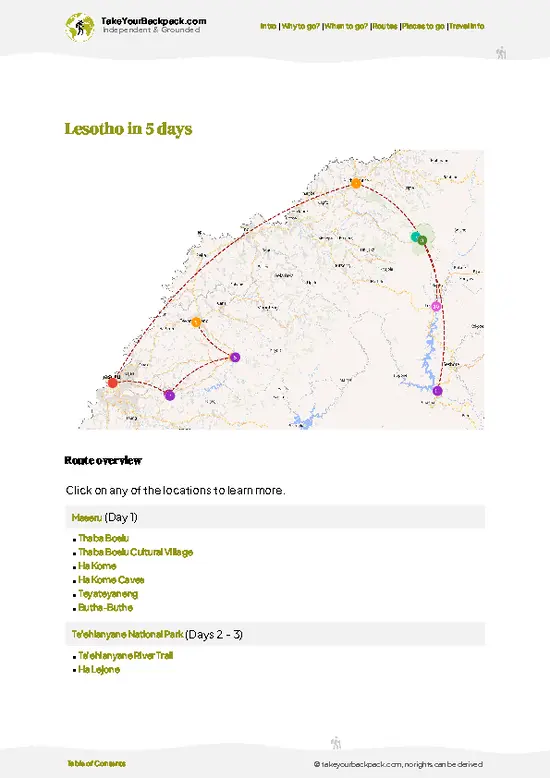
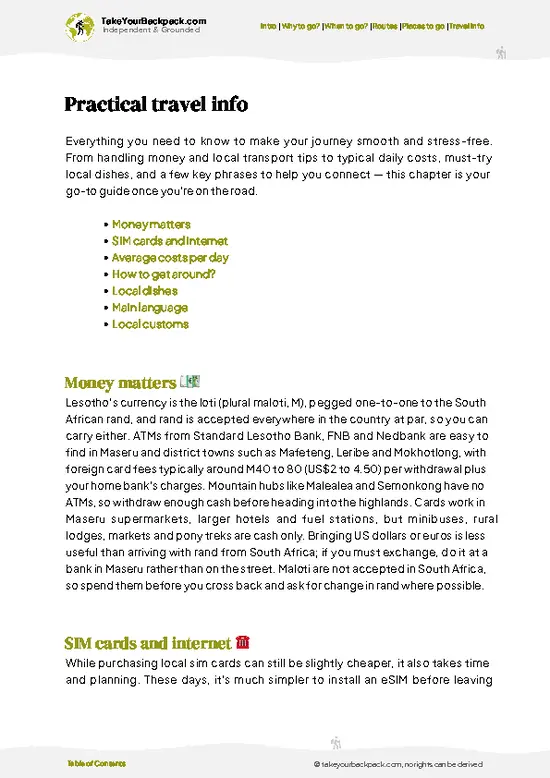
example page 0 from our offline Travel Guide for Lesotho
example page 1 from our offline Travel Guide for Lesotho
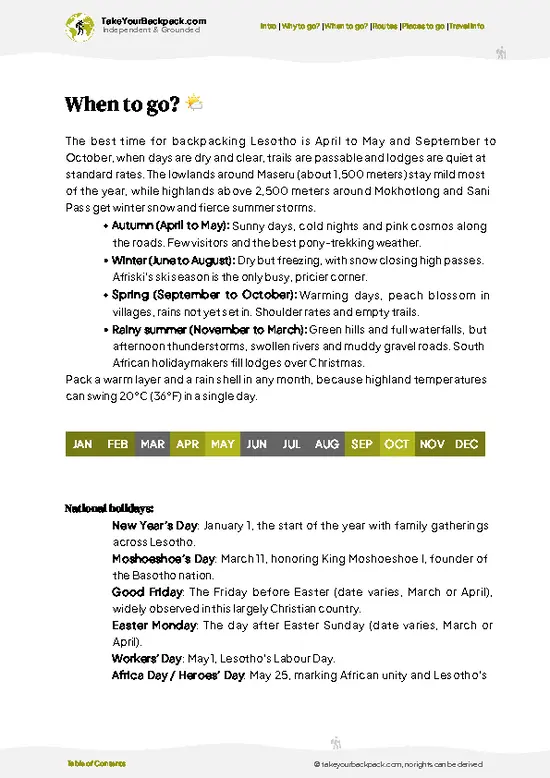
example page 2 from our offline Travel Guide for Lesotho
example page 3 from our offline Travel Guide for Lesotho
example page 4 from our offline Travel Guide for Lesotho
example page 5 from our offline Travel Guide for Lesotho
example page 6 from our offline Travel Guide for Lesotho
example page 7 from our offline Travel Guide for Lesotho
Loading the map 🌍
CLICK TO FILTER
cities
towns
villages
landmarks
national parks
hikes
attractions
festivals
regions
SHOW COUNTRY’S BESTSHOW ALL

✨ Why go?
Ranked #5 unique site in Lesotho
What sets this place apart

Source of the Senqu River is the kind of place you go for the idea as much as the view: standing where the water that eventually crosses South Africa and reaches the Atlantic first collects. If you like tracing rivers, it is a satisfying pin on your map, and the effort of reaching it is part of the point. Getting here means rough mountain tracks, high altitude and a guide who knows which bog is the right one, so you will feel like you earned it.

The second draw is the Maloti highlands themselves. Basotho herders in wool blankets and gumboots, stone huts, and almost no other hikers make this one of the most solitary stretches you can walk in southern Africa. The source also sits comfortably on a loop through Mokhotlong and the Sani Pass area, so you are not making a trip for a puddle alone. … read more 👉
Source of the Senqu River is the kind of place you go for the idea as much as the view: standing where the water that eventually crosses South Africa and reaches the Atlantic first collects. If you like tracing rivers, it is a satisfying pin on your map, and the effort of reaching it is part of the point. Getting here means rough mountain tracks, high altitude and a guide who knows which bog is the right one, so you will feel like you earned it.

The second draw is the Maloti highlands themselves. Basotho herders in wool blankets and gumboots, stone huts, and almost no other hikers make this one of the most solitary stretches you can walk in southern Africa. The source also sits comfortably on a loop through Mokhotlong and the Sani Pass area, so you are not making a trip for a puddle alone. Come prepared for snow in winter and sudden storms in summer.

💡 HighlightsWhat this place is best known for

  1. The headwater bogs and springs: the seeps in the high turf where the Senqu begins. They are quiet, cold and easy to walk past without a guide.
  2. Thabana Ntlenyana: the highest point in southern Africa, with a long, windy hike to a summit that looks out over endless ridgelines. The trek is demanding but not technical.
  3. Sani Pass: the famous switchback road climbing the escarpment between Lesotho and South Africa. The views get more dramatic with every hairpin, and the pub at the top is the highest in Africa.
  4. Mokhotlong: the dusty highland town where supplies, local buses and guides are found. It is a real working Basotho town rather than a tourist stop, and the market stalls and ponies tied outside shops are part of the scene.
  5. Afriski Mountain Resort: a small ski area on Mahlasela Pass that runs on
… read more 👉
  1. The headwater bogs and springs: the seeps in the high turf where the Senqu begins. They are quiet, cold and easy to walk past without a guide.
  2. Thabana Ntlenyana: the highest point in southern Africa, with a long, windy hike to a summit that looks out over endless ridgelines. The trek is demanding but not technical.
  3. Sani Pass: the famous switchback road climbing the escarpment between Lesotho and South Africa. The views get more dramatic with every hairpin, and the pub at the top is the highest in Africa.
  4. Mokhotlong: the dusty highland town where supplies, local buses and guides are found. It is a real working Basotho town rather than a tourist stop, and the market stalls and ponies tied outside shops are part of the scene.
  5. Afriski Mountain Resort: a small ski area on Mahlasela Pass that runs on artificial and natural snow in winter. In summer it offers mountain biking and a view across the escarpment.
  6. Pony trekking with Basotho herders: a slow way to cross the highlands on the sturdy Basotho ponies. You pass stone villages, kraals and streams that eventually feed the Senqu.
  7. Sehlabathebe National Park: a remote park of sandstone arches, pools and high grassland to the south, known for being almost empty of visitors.
Source of the Senqu River pairs well with Mokhotlong in a single day, since the town is where you arrange a guide and supplies before heading up into the highlands.
Spotted a mistake or missing something? Contact us.

Things to do near Source of the Senqu River

Ratings based on Tripadvisor reviews. When you book through this link, you support our work at no extra cost to you.

🌤️ When to go?Best time to visit Source of the Senqu River

  • Summer (November to February): Source of the Senqu River is most reachable now, with daytime highs around 15 to 20°C (59 to 68°F) at roughly 3,200 meters. Afternoon thunderstorms, hail and fog roll in fast, and the long daylight hours of about 14 hours give room for early starts. Roads turn to mud.
  • Autumn (March to May): Skies clear and highs drop to 8 to 15°C (46 to 59°F), with nights near freezing by May. Crowds are nearly zero, and trekking is pleasant.
  • Winter (June to August): Snow often blocks the Mokhotlong approach and the Sani Pass road. Highs hover around 0 to 7°C (32 to 45°F), nights fall to -10°C (14°F) or lower, and daylight shrinks to about 10 hours.
  • Spring (September to October): Snowmelt fades, winds are strong, and highs reach 10 to 16°C (50 to 61°F). Guesthouse prices stay flat
… read more 👉
  • Summer (November to February): Source of the Senqu River is most reachable now, with daytime highs around 15 to 20°C (59 to 68°F) at roughly 3,200 meters. Afternoon thunderstorms, hail and fog roll in fast, and the long daylight hours of about 14 hours give room for early starts. Roads turn to mud.
  • Autumn (March to May): Skies clear and highs drop to 8 to 15°C (46 to 59°F), with nights near freezing by May. Crowds are nearly zero, and trekking is pleasant.
  • Winter (June to August): Snow often blocks the Mokhotlong approach and the Sani Pass road. Highs hover around 0 to 7°C (32 to 45°F), nights fall to -10°C (14°F) or lower, and daylight shrinks to about 10 hours.
  • Spring (September to October): Snowmelt fades, winds are strong, and highs reach 10 to 16°C (50 to 61°F). Guesthouse prices stay flat year-round, with only 4x4 hire rising in the busy summer.
Check the forecast for Mokhotlong before leaving, and plan your summit-plateau day for the morning before storms build.


source: climatestotravel.comJANJanuary: fair for travelingFEBFebruary: fair for travelingMARMarch: good for travelingAPRApril: highly recommended for travelingMAYMay: highly recommended for travelingJUNJune: good for travelingJULJuly: good for travelingAUGAugust: good for travelingSEPSeptember: excellent for travelingOCTOctober: excellent for travelingNOVNovember: fair for travelingDECDecember: fair for traveling
when-to-go

✈️ The backpacker research shortcutLesotho Travel Guide

An offline-friendly backpacking guide with optimized travel routes, ranked highlights, transport advice, and the best areas to stay.
example page 0 from our offline Travel Guide for Lesotho
example page 1 from our offline Travel Guide for Lesotho
example page 2 from our offline Travel Guide for Lesotho
example page 3 from our offline Travel Guide for Lesotho
example page 4 from our offline Travel Guide for Lesotho
example page 5 from our offline Travel Guide for Lesotho
example page 6 from our offline Travel Guide for Lesotho
example page 7 from our offline Travel Guide for Lesotho
The digital guide (154 pages) contains:
✅ 35 highlights, ranked by travel appeal
✅ Optimized 2, 3 & 5-day travel routes
✅ Cities, national parks, landmarks, beaches
✅ How to get around
✅ Offline-friendly for travel without Wi-Fi
👉 Click to see all 30+ guide features

📅 Plan smarter in minutes, not weeks
✅ Month by month travel advice
✅ Festivals & national holidays
✅ Budget expectations

🗺️ Go to the right places, skip the overrated ones
✅ Honest pros & cons of destinations
✅ Top hikes, parks & viewpoints
✅ Lesser-known places most travelers miss
✅ Clear “worth it vs skip it” guidance

🛏️ Travel smoothly without rookie mistakes
✅ Best areas to stay
✅ Transport systems explained simply
✅ Common scams & safety advice
✅ SIM cards, money & practical tips

🌍 Understand the country, not just visit it
✅ Culture & traditions
✅ 52 Essential phrases & customs
✅ Festivals worth planning around
✅ Traveler-friendly historical context
✅ Insights that make places more meaningful

📱 Built for real travel conditions
✅ Fully downloadable PDF
✅ Works completely offline
✅ Optimized for phone use
✅ Useful in remote areas & buses
✅ Everything in one place
Stop searching, start planning
Get instant access to your full guide. 30‑day money-back guarantee.
+ Add another guide for just

By proceeding you agree to our terms.
Sent to your inbox immediately after payment • 100% Secure Checkout
Best Backpacking Travel Advisor 2025 tourism awardBest Backpacking
Travel Advisor
2025
What others say about Take Your Backpack Guides:
⭐⭐⭐⭐⭐
Fantastic, amazing amount of information!
⭐⭐⭐⭐⭐
My goodness this is amazing, it's what I've been looking for hats off too you!
⭐⭐⭐⭐⭐
I think this is absolutely BRILLIANT
⭐⭐⭐⭐
Very complete and informative. It's still missing places, but I gotta to commend you
⭐⭐⭐⭐⭐
This is truly amazing, thank you, can't wait to explore it with my kids!
⭐⭐⭐⭐⭐
Awesome resource, thank you!
⭐⭐⭐⭐⭐
This is amazing! Can't wait to explore the ones I haven't seen
⭐⭐⭐⭐
I love this! Well done, great idea.
⭐⭐⭐⭐⭐
Thanks for taking the time to make this gem!
⭐⭐⭐⭐⭐
This might be the best website I've ever seen.
⭐⭐⭐⭐⭐
Congratulations, and thank you so much for your work; it's incredibly valuable.
⭐⭐⭐⭐
In all seriousness I think you did a great job pointing out the important spots
⭐⭐⭐⭐⭐
10/10 very good
⭐⭐⭐⭐⭐
As someone who's only just starting to visit regularly this is awesome, thank you.
⭐⭐⭐⭐
Thank you very much! I'm going to visit my dad, it's going to be very useful!
⭐⭐⭐⭐⭐
This is really cool! We'll be travelling for the first time and this definitely come in handy.
⭐⭐⭐⭐⭐
You are now our minister of culture, congratulations 👨‍💼
⭐⭐⭐⭐⭐
Just wanted to tell you that this is a pearl! Going to follow your recommendations.
⭐⭐⭐⭐⭐
This is so cool. I'll definitely be using the resource for my travels soon.
⭐⭐⭐⭐⭐
This is very impressive! Good work.
⭐⭐⭐⭐⭐
This is an amazing and informative site. Very well done!

🛏️ Where to stay?Best areas and accommodation options

Mokhotlong is the best base for Source of the Senqu River, as it is the nearest real town and sits on the road toward the plateau. It has the cheapest beds, a few small shops, a market, ATMs that are not always working, and the fuel and supplies you need before heading up. Expect to meet local guides, pony trekkers and the occasional overlander. Evenings are quiet, so bring a book and a warm layer.

For a more social scene, Sani Top and the Sani Pass area on the Lesotho side draw more backpackers. Here you will find a high-altitude lodge with a bar and travelers arriving from South Africa on 4x4 … read more 👉
Mokhotlong is the best base for Source of the Senqu River, as it is the nearest real town and sits on the road toward the plateau. It has the cheapest beds, a few small shops, a market, ATMs that are not always working, and the fuel and supplies you need before heading up. Expect to meet local guides, pony trekkers and the occasional overlander. Evenings are quiet, so bring a book and a warm layer.

For a more social scene, Sani Top and the Sani Pass area on the Lesotho side draw more backpackers. Here you will find a high-altitude lodge with a bar and travelers arriving from South Africa on 4x4 day tours, so it is easy to split vehicle costs and swap trail info. It feels safe, but nights are bitterly cold.

The villages around Thaba-Tseka and Black Mountain are an option if you are crossing the country, offering simple homestays and pony-trekking lodges with communal meals. Rooms are basic, and you are expected to be self-sufficient with food and a sleeping bag.

Solo travelers should arrive before dark, since the roads are rough and unlit. Staying near other travelers makes arranging a guide and transport far easier.

👛 Costs (as of 22 October 2026)What things cost and how to budget

Source of the Senqu River costs roughly US$68 to 120 a day for a backpacker, with guide and vehicle hire being the big spending items. There is no entry fee, but you pay for getting there and for local help. Travelers pay in the Lesotho loti or South African rand, and prices below are converted to US dollars.
CategoryBudget RangeLocal Reality
EntryUS$0The site is open highland with no ticket office.
Accommodation (high season)US$15 to 30Basic guesthouse or dorm in Mokhotlong or near Sani Top.
Accommodation (low season)US$12 to 25Prices barely drop, though you can often haggle.
FoodUS$8 to 15Self-catering, plus simple local meals of pap and stew.
TransportUS$15 to 35Shared minibus to Mokhotlong, then a pricey hired 4x4 or lift to the trailhead.
Guide or horseUS$15 to 25A local guide is strongly advised
… read more 👉
Source of the Senqu River costs roughly US$68 to 120 a day for a backpacker, with guide and vehicle hire being the big spending items. There is no entry fee, but you pay for getting there and for local help. Travelers pay in the Lesotho loti or South African rand, and prices below are converted to US dollars.
CategoryBudget RangeLocal Reality
EntryUS$0The site is open highland with no ticket office.
Accommodation (high season)US$15 to 30Basic guesthouse or dorm in Mokhotlong or near Sani Top.
Accommodation (low season)US$12 to 25Prices barely drop, though you can often haggle.
FoodUS$8 to 15Self-catering, plus simple local meals of pap and stew.
TransportUS$15 to 35Shared minibus to Mokhotlong, then a pricey hired 4x4 or lift to the trailhead.
Guide or horseUS$15 to 25A local guide is strongly advised in fog and for route finding.
Total Daily BudgetUS$68 to 120Lower if you share vehicle and guide costs.
⚠️ Prices can change and everyone travels differently, so take this as a rough guide. Hope it helps you plan your adventure!

FAQFrequently asked questions about Source of the Senqu River

Source of the Senqu River is the spring on the high plateau of the Maloti Mountains, near the Sani Pass and Mokhotlong district, where the Senqu begins its run to become the Orange River. It lies at about 3,200 meters, among wetlands and open grassland. The area is wild, with few signs, and most visitors come to trek or to see the alpine bogs and birdlife.
Allow a full day if you are based in Mokhotlong, and two days if you are trekking in from the Sani Pass area. The hike itself takes about 4 to 8 hours depending on the start point, and fog can slow it down. Summer afternoons bring storms, so plan to finish early.
Most travelers head for Mokhotlong, reached by minibus from Maseru in roughly 7 to 9 hours, or come up Sani Pass by 4x4 from the South African side. From Mokhotlong you need a hired 4x4 or a guide for the final rough tracks, and the cost is about US$35 to 80 per vehicle. A local guide is recommended since the route is unmarked.
⚠️ Things can change over time, so always validate details locally before you go.

Other Basotho landmarks near Source of the Senqu River

Explore more nearby:

  • Katse Dam—185-meter arch wall, high mountain pass, turquoise reservoir, alpine botanical garden| 47 km away
  • Liphofung Caves—San eland paintings, ochre sandstone shelter, Moshoeshoe I link, rondavel stay| 93 km away
  • Ha Kome Caves—Lived-in cave houses, hand-plastered mud walls, sooty overhang, guided walk| 109 km away

💡 Not sure where to go next?
Create a personalized itinerary for Lesotho including Source of the Senqu River and the places that fit your trip.

Generate my itinerary

👉 Discover all landmarks

Or checkout all Lesotho has to offer (think cities, towns, villages, national parks, hikes, beaches, festivals)
Country photo of Lesotho

We 💚 feedbackWhat to keep in mind

Source of the Senqu River deserves two nights in the highlands, not a rushed hour at a bog. I would use the first day to adjust to the altitude and hire a local guide in Mokhotlong, then walk to the springs on day two. Bring a warm layer and rain shell even in summer, and keep a spare day in case the weather closes in.

✍️ Help improve this page!
The information on this page is based on in-depth research, insights shared by experienced travelers, and feedback from the local travel community in Lesotho. While every effort is made to keep the information accurate and current, conditions can change — so if you spot anything incorrect or outdated, please get in touch.


🙋‍♂️ Give feedback

👋 Meet the founderWho’s Behind Take Your Backpack?

Johan, backpacker and founder of TakeYourBackpackHi, I’m Johan (Netherlands 🇳🇱), the creator of TakeYourBackpack. Over the past 3 decades, I’ve backpacked through 90+ countries across six continents, gaining extensive experience with independent travel, long-term trips, and overland routes.

This site is built on a combination of firsthand travel experience and carefully curated insights from other backpackers. Many guides are based on places I’ve personally visited, while others bring together tips, observations, and practical advice shared by trusted travelers I’ve met along the way.

The goal is to provide realistic, experience-driven guidance — not generic itineraries — so you can explore destinations with better context, clearer expectations, and more confidence.