
×

Liberia🇱🇷 | regionsBomi Hillsironstone ridges, forested plateaus, rural settlements | things to do and best time to go

Explore Marshall WetlandsExplore Lofa River

Backpacking in Bomi Hills
👍 Recommendedregion ranked #3
By Johan Kruseman 🇳🇱 | Updated September 3, 2026

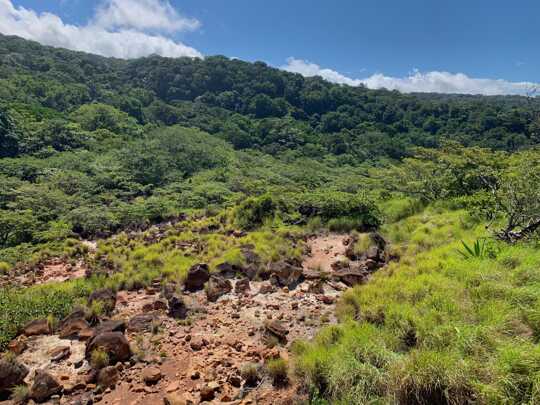
Your boots crunch over red laterite as a kid with a wheelbarrow barrels past, grinning, the air thick with the scent of charcoal and wet earth. Somewhere, a rooster crows—late, as usual. This is Bomi Hills, tucked in western Liberia, a couple of hours from Monrovia but a world away in pace and attitude. Bomi’s hills roll out like a green carpet, scarred by old iron mines and dotted with palm trees, with the occasional flash of a blue kingfisher over the Lofa River. For backpackers, it’s a region that trades luxury for raw, unfiltered experience. You’ll find waterfalls that haven’t been Instagrammed to death, villages where you’re the only foreigner for miles, and markets that run on laughter and haggling, not price tags. Transport is slow and sometimes baffling, but the cost is low and the welcome is real. Compared to the more trafficked Robertsport surf scene or the capital’s chaos, Bomi is quieter, less polished, and infinitely more personal.

Discover everything you want to know in the 📖 Liberia Travel Guide.


Get your Liberia guide
56 ranked highlights, routes & tips, works offline (232 pages)
Loading the map 🌍
CLICK TO FILTER
cities
towns
landmarks
national parks
hikes
beaches
attractions
festivals
regions
SHOW COUNTRY’S BESTSHOW ALL

✨ Why go?
Ranked #3 region in Liberia
What makes it a must-see region

Backpackers flock to the Bomi Hills in Liberia for a mix of nature and culture that feels like a well-kept secret. You get a variety of landscapes—from rolling hills to lush forests—without the hassle of constant relocation. This region is a playground for those who want to soak in the scenery while also diving into local life.

Transport here is surprisingly flexible. You can hop on a shared taxi or rent a bike to explore at your own pace. This means you can linger at a waterfall or pop into a village market without feeling rushed. The slower pace of travel allows you to connect with locals, taste authentic dishes, and even join in on community events.

The Bomi Hills offer a chance to experience Liberia’s rich heritage while enjoying the great outdoors. It’s not just about ticking boxes; … read more 👉
Backpackers flock to the Bomi Hills in Liberia for a mix of nature and culture that feels like a well-kept secret. You get a variety of landscapes—from rolling hills to lush forests—without the hassle of constant relocation. This region is a playground for those who want to soak in the scenery while also diving into local life.

Transport here is surprisingly flexible. You can hop on a shared taxi or rent a bike to explore at your own pace. This means you can linger at a waterfall or pop into a village market without feeling rushed. The slower pace of travel allows you to connect with locals, taste authentic dishes, and even join in on community events.

The Bomi Hills offer a chance to experience Liberia’s rich heritage while enjoying the great outdoors. It’s not just about ticking boxes; it’s about savoring the journey. Choose wisely, and you’ll find that the trade-offs you make here lead to high-value experiences that stick with you long after you leave.
Want to include Bomi Hills in your Liberia route?
Create a personalized Liberia itinerary that includes Bomi Hills and the places that fit your trip — based on your travel style, budget, and available time. Get your route in seconds.

Generate my trip

💡 HighlightsPlaces and moments you shouldn't skip

  • Tubmanburg town center & market — The real pulse of Bomi Hills: a compact, lively market where traders from surrounding hill villages sell fresh produce, smoked fish, palm oil and hand-made goods. Great for people-watching, bargaining with friendly vendors, and getting a sense of everyday life in the region.
  • Bomi Hills Forest Reserve — A patch of semi-evergreen forest that crowns the hills around Tubmanburg. Hike short, steep trails for shaded walks, native trees, and a chance to spot forest birds and butterflies that feel different from coastal Liberia.
  • Ridge viewpoints above Tubmanburg — Walk up any of the well-trodden ridge paths for wide, atmospheric views over valleys, coconut plains and the distant Atlantic haze on clear days. Sunrise and late-afternoon light make the slopes glow
read more 👉
  • Tubmanburg town center & market — The real pulse of Bomi Hills: a compact, lively market where traders from surrounding hill villages sell fresh produce, smoked fish, palm oil and hand-made goods. Great for people-watching, bargaining with friendly vendors, and getting a sense of everyday life in the region.
  • Bomi Hills Forest Reserve — A patch of semi-evergreen forest that crowns the hills around Tubmanburg. Hike short, steep trails for shaded walks, native trees, and a chance to spot forest birds and butterflies that feel different from coastal Liberia.
  • Ridge viewpoints above Tubmanburg — Walk up any of the well-trodden ridge paths for wide, atmospheric views over valleys, coconut plains and the distant Atlantic haze on clear days. Sunrise and late-afternoon light make the slopes glow — very Instagrammable without the crowds.
  • Mid-20th-century mining relics — Scattered, visitable remains of old mining camps, access tracks and earthworks tucked into the hills. They’re raw, photographic and historically revealing: you can still see how extraction shaped local settlement patterns (do stick to public paths and ask before wandering private sites).
  • Hillstream cascades (local waterfalls) — Small but pretty cascades hidden in side gullies of the hills; not grand tourist falls, but perfect for a cooling dip after a sweaty climb. Locals know the best pools — ask for a guide from Tubmanburg or a nearby village.
  • Artisanal gold-panning stretches — Downstream shallow runs where local panners work the riffles and gravels. It’s a hands-on cultural snapshot of rural livelihoods: you can watch (and sometimes try) simple panning techniques while learning about local geology and economy.
  • Village forest trails & birdwatching with a local guide — Short community-maintained trails threading small forest patches and farms. Guides will point out regional specials — forest birds, orchids, and useful medicinal plants — that you’d miss on your own. Quiet, rewarding, and supports villagers directly.
  • Traditional palm-wine tapping villages (hidden gem) — A down-to-earth cultural visit: watch the tapping, sample freshly fermented palm wine, and enjoy simple hospitality. These village stops are relaxed, authentic, and rarely on standard tourist routes.
  • Firefly gullies at dusk (hidden gem) — Certain small valleys in the hills light up with fireflies after dark. It’s a fleeting, magical local experience — best arranged through a villager who knows the exact spots and timing.
  • Blacksmith and craft workshops in hill settlements (hidden gem) — Small, family-run forges and craft stalls where locals make farm tools, woven baskets and wooden items. You’ll see traditional techniques unchanged by tourism, can buy inexpensive souvenirs, and directly support artisans.
Spotted a mistake or missing something? Contact us.

⌛️ 5 daysA smart one-week plan

Day 1: Monrovia
The journey kicks off in Monrovia, the bustling capital. Start by soaking in the local vibe at the markets. Grab a bite of jollof rice from a street vendor. The transport options here are varied, but the best move is to secure a shared taxi to Bomi Hills early the next day. This sets the pace for your adventure and gives you a taste of urban Liberia before heading into the hills.

Day 2: Bomi Hills
Arrive in Bomi Hills and settle into your accommodation. The roads here are rough, so expect a slower pace. Spend the day exploring the lush landscapes and local villages. Engage with the community; they’re welcoming and eager to share their stories. This is where you start to feel the rhythm of rural life. The transport options are limited, so plan your next moves carefully. … read more 👉
Day 1: Monrovia
The journey kicks off in Monrovia, the bustling capital. Start by soaking in the local vibe at the markets. Grab a bite of jollof rice from a street vendor. The transport options here are varied, but the best move is to secure a shared taxi to Bomi Hills early the next day. This sets the pace for your adventure and gives you a taste of urban Liberia before heading into the hills.

Day 2: Bomi Hills
Arrive in Bomi Hills and settle into your accommodation. The roads here are rough, so expect a slower pace. Spend the day exploring the lush landscapes and local villages. Engage with the community; they’re welcoming and eager to share their stories. This is where you start to feel the rhythm of rural life. The transport options are limited, so plan your next moves carefully.

Day 3: Tubmanburg
Head to Tubmanburg, the regional hub. The ride is bumpy but scenic, showcasing the region’s beauty. Once there, visit the local market and try some palm wine. This is a great spot to stock up on supplies for your next leg. The transport network here is more developed, allowing for easier connections to your next destination.

Day 4: Off-Path Reward: Kpatawee Waterfall
Take a detour to Kpatawee Waterfall. It’s a bit off the beaten path, but the reward is worth it. The sound of cascading water and the chance to swim in natural pools is rejuvenating. This adds a layer of adventure without straying too far from your route.

Day 5: Return to Monrovia
Wrap up your trip by heading back to Monrovia. Reflect on your experiences and maybe pick up some souvenirs. The return journey is smoother, and you’ll appreciate the contrast between the hills and the city.

The must-do day? Day 4 at Kpatawee Waterfall. It’s the highlight that encapsulates the spirit of Bomi Hills, blending adventure with local culture.
Turn your Bomi Hills visit into an Liberia adventure
Build a complete Liberia route with Bomi Hills, hidden gems, must-see destinations, and realistic travel times included.

Generate my trip

🌤️ When to go?Weather, crowds, and seasonal trade-offs


  • Topic: Weather – The dry season from November to April is your golden window. Expect minimal rain, which means trails stay firm and rivers don’t turn into impassable torrents. The wet season (May to October) can flood paths and turn your hike into a soggy slog.

  • Topic: Temperature – Daytime temps hover around 28-32°C (82-90°F) in the dry months, cooling off to a comfortable 22-25°C (72-77°F) at night. The wet season brings slightly cooler days but sticky humidity that can sap your energy fast.

  • Topic: Daylight Hours – Liberia sits near the equator, so daylight is steady year-round, roughly 12 hours. This means you can plan your hikes without worrying about losing light early, but always start early to beat the heat.

  • Topic: Crowds – Bomi Hills isn’t exactly a tourist hotspot, but the
read more 👉

  • Topic: Weather – The dry season from November to April is your golden window. Expect minimal rain, which means trails stay firm and rivers don’t turn into impassable torrents. The wet season (May to October) can flood paths and turn your hike into a soggy slog.

  • Topic: Temperature – Daytime temps hover around 28-32°C (82-90°F) in the dry months, cooling off to a comfortable 22-25°C (72-77°F) at night. The wet season brings slightly cooler days but sticky humidity that can sap your energy fast.

  • Topic: Daylight Hours – Liberia sits near the equator, so daylight is steady year-round, roughly 12 hours. This means you can plan your hikes without worrying about losing light early, but always start early to beat the heat.

  • Topic: Crowds – Bomi Hills isn’t exactly a tourist hotspot, but the dry season draws more local trekkers and weekend warriors. If you want near solitude, aim for the shoulder months of November or April.

  • Topic: Seasonal Activities – Dry season is prime for trekking, birdwatching, and river crossings. The wet season offers lush greenery and fewer people but comes with muddy trails and unpredictable weather.

  • Topic: Price Fluctuations – Expect higher prices for guides and lodging during the dry season when demand peaks. The wet season sees discounts but factor in the cost of potential delays or extra gear.


Pro-tip: Book your guides and accommodations early for the dry season to lock in rates and snag the best spots—locals know this and prices climb fast once the rains stop.


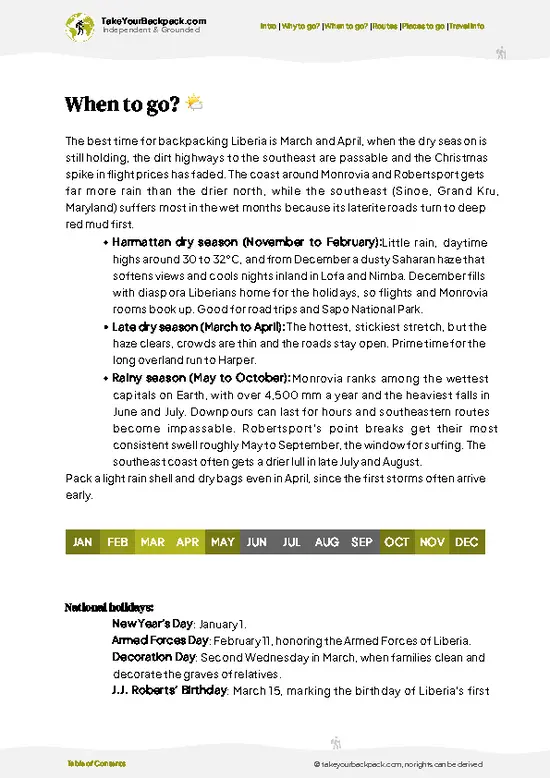
source: climatestotravel.comJANJanuary: excellent for travelingFEBFebruary: excellent for travelingMARMarch: excellent for travelingAPRApril: highly recommended for travelingMAYMay: fair for travelingJUNJune: fair for travelingJULJuly: fair for travelingAUGAugust: fair for travelingSEPSeptember: fair for travelingOCTOctober: fair for travelingNOVNovember: highly recommended for travelingDECDecember: excellent for traveling
when-to-go

✈️ The backpacker research shortcutLiberia Travel Guide

An offline-friendly backpacking guide with optimized travel routes, ranked highlights, transport advice, and the best areas to stay.
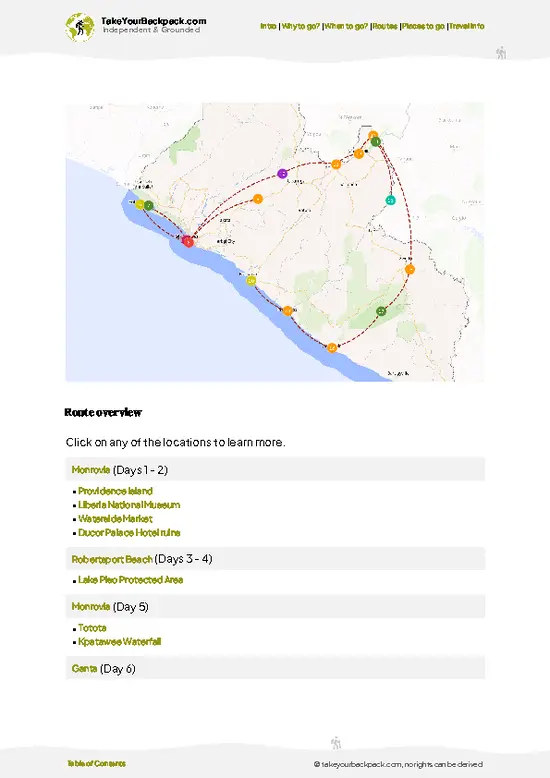
example page 0 from our offline Travel Guide for Liberia
example page 1 from our offline Travel Guide for Liberia
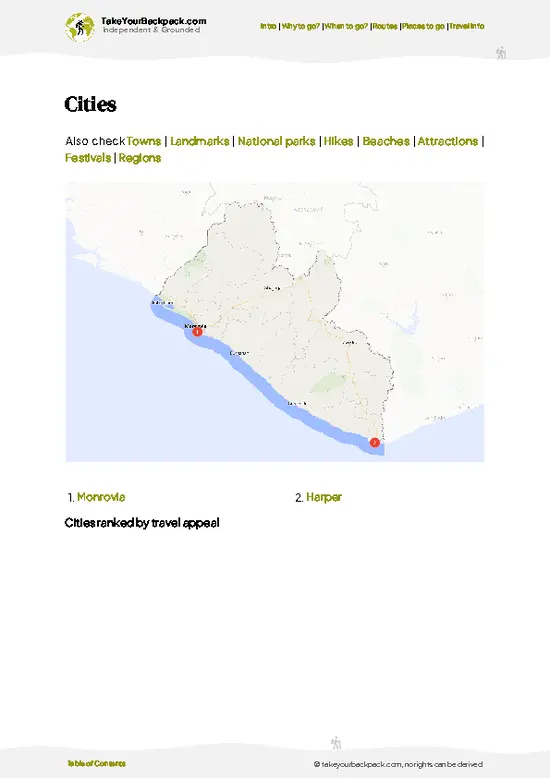
example page 2 from our offline Travel Guide for Liberia
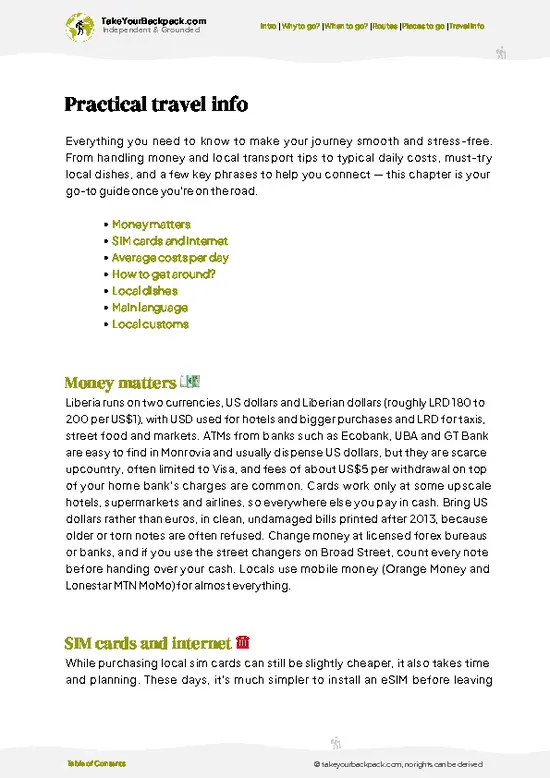
example page 3 from our offline Travel Guide for Liberia
example page 4 from our offline Travel Guide for Liberia
example page 5 from our offline Travel Guide for Liberia
example page 6 from our offline Travel Guide for Liberia
example page 7 from our offline Travel Guide for Liberia
The digital guide (232 pages) contains:
56 highlights, ranked by travel appeal
Optimized 5, 10 & 15-day travel routes
Cities, national parks, landmarks, beaches
How to get around
Offline-friendly for travel without Wi-Fi
👉 Click to see all 30+ guide features

📅 Plan smarter in minutes, not weeks
Month by month travel advice
Festivals & national holidays
Budget expectations

🗺️ Go to the right places, skip the overrated ones
Honest pros & cons of destinations
Top hikes, parks & viewpoints
Lesser-known places most travelers miss
Clear “worth it vs skip it” guidance

🛏️ Travel smoothly without rookie mistakes
Best areas to stay
Transport systems explained simply
Common scams & safety advice
SIM cards, money & practical tips

🌍 Understand the country, not just visit it
Culture & traditions
Local customs
Festivals worth planning around
Traveler-friendly historical context
Insights that make places more meaningful

📱 Built for real travel conditions
Fully downloadable PDF
Works completely offline
Optimized for phone use
Useful in remote areas & buses
Everything in one place
Save weeks of stressful planning
Get instant access to your full guide. 30‑day money-back guarantee.
+ Add another guide for just US$7.80

By proceeding you agree to our terms.
Sent to your inbox immediately after payment • 100% Secure Checkout
Best Backpacking Travel Advisor 2025 tourism awardBest Backpacking
Travel Advisor
2025
What others say about Take Your Backpack Guides:
⭐⭐⭐⭐⭐
Fantastic, amazing amount of information!
⭐⭐⭐⭐⭐
My goodness this is amazing, it's what I've been looking for hats off too you!
⭐⭐⭐⭐⭐
I think this is absolutely BRILLIANT
⭐⭐⭐⭐
Very complete and informative. It's still missing places, but I gotta to commend you
⭐⭐⭐⭐⭐
This is truly amazing, thank you, can't wait to explore it with my kids!
⭐⭐⭐⭐⭐
Awesome resource, thank you!
⭐⭐⭐⭐⭐
This is amazing! Can't wait to explore the ones I haven't seen
⭐⭐⭐⭐
I love this! Well done, great idea.
⭐⭐⭐⭐⭐
Thanks for taking the time to make this gem!
⭐⭐⭐⭐⭐
This might be the best website I've ever seen.
⭐⭐⭐⭐⭐
Congratulations, and thank you so much for your work; it's incredibly valuable.
⭐⭐⭐⭐
In all seriousness I think you did a great job pointing out the important spots
⭐⭐⭐⭐⭐
10/10 very good
⭐⭐⭐⭐⭐
As someone who's only just starting to visit regularly this is awesome, thank you.
⭐⭐⭐⭐
Thank you very much! I'm going to visit my dad, it's going to be very useful!
⭐⭐⭐⭐⭐
This is really cool! We'll be travelling for the first time and this definitely come in handy.
⭐⭐⭐⭐⭐
You are now our minister of culture, congratulations 👨‍💼
⭐⭐⭐⭐⭐
Just wanted to tell you that this is a pearl! Going to follow your recommendations.
⭐⭐⭐⭐⭐
This is so cool. I'll definitely be using the resource for my travels soon.
⭐⭐⭐⭐⭐
This is very impressive! Good work.
⭐⭐⭐⭐⭐
This is an amazing and informative site. Very well done!

🛏️ Where to stay?Choosing the right base

When you’re wandering through the Bomi Hills region of Liberia, your choice of where to stay can make all the difference.

Start in Bomi County, particularly around the town of Tubmanburg. It’s the main hub here, buzzing with local life. You’ll find friendly faces and a mix of travelers. The vibe is laid-back, making it easy to strike up conversations. Plus, the local markets are a feast for the senses—grab some fresh fruit or street food to fuel your adventures.

Next, consider Bopolu, a smaller town that offers a more intimate experience. It’s quieter, but that’s where the charm lies. You’ll … read more 👉
When you’re wandering through the Bomi Hills region of Liberia, your choice of where to stay can make all the difference.

Start in Bomi County, particularly around the town of Tubmanburg. It’s the main hub here, buzzing with local life. You’ll find friendly faces and a mix of travelers. The vibe is laid-back, making it easy to strike up conversations. Plus, the local markets are a feast for the senses—grab some fresh fruit or street food to fuel your adventures.

Next, consider Bopolu, a smaller town that offers a more intimate experience. It’s quieter, but that’s where the charm lies. You’ll connect with locals who are eager to share their stories. The surrounding nature is stunning, perfect for hiking and exploring.

If you’re feeling adventurous, head to Klay, a village that’s off the beaten path. It’s less frequented by tourists, giving you a chance to immerse yourself in authentic Liberian culture. The community is welcoming, and you might even find a local guide to show you the hidden spots.

Each of these areas offers a unique slice of life in Bomi Hills, balancing safety, social interaction, and budget-friendly options. Choose wisely, and you’ll leave with stories that last a lifetime.

🚌 Getting aroundHow to get around Bomi Hills

Bomi Hills is a realm where time feels fluid, and schedules are more like suggestions than rules. Picture this: dusty roads winding through lush greenery, with the occasional motorbike zipping by, carrying locals and goods alike. Here, the rhythm is dictated by the sun and the whims of the day rather than rigid timetables. You’ll find that getting around is an adventure in itself, a blend of spontaneity and necessity. Embrace the chaos, and you’ll discover that the journey is just as rewarding as the destination.


  • Motorbike Taxis — These are your best friends for quick hops. Expect to pay around $1-$3 for short distances. They’re fast, often weaving through traffic like a local, but hold on tight; comfort isn’t their strong suit. Most riders are available from dawn until dusk, but it’s best
read more 👉
Bomi Hills is a realm where time feels fluid, and schedules are more like suggestions than rules. Picture this: dusty roads winding through lush greenery, with the occasional motorbike zipping by, carrying locals and goods alike. Here, the rhythm is dictated by the sun and the whims of the day rather than rigid timetables. You’ll find that getting around is an adventure in itself, a blend of spontaneity and necessity. Embrace the chaos, and you’ll discover that the journey is just as rewarding as the destination.


  • Motorbike Taxis — These are your best friends for quick hops. Expect to pay around $1-$3 for short distances. They’re fast, often weaving through traffic like a local, but hold on tight; comfort isn’t their strong suit. Most riders are available from dawn until dusk, but it’s best to catch one before sunset.


  • Shared Taxis — A staple for budget travelers, these can be found bustling in towns. Fares typically range from $2-$5 depending on your destination. They operate on a loose schedule, filling up as they go, so patience is key. Expect a bit of a squeeze, but you’ll get to mingle with locals, which is half the fun.


  • Private Car Hire — If you’re looking for a bit more comfort, this is your go-to. Prices can vary widely, starting around $30 for a half-day. You’ll have the luxury of setting your own pace, but be prepared to negotiate. This option is perfect for day trips to explore the surrounding areas without the hassle of public transport.


  • Buses — While not the fastest option, they’re a budget-friendly way to cover longer distances. Fares are usually under $5, and they run on a more fixed schedule, but don’t expect them to leave until they’re full. Bring snacks and a good book; you might be in for a wait.


For a master tactical tip: always ask locals for the best times to travel. They know the ins and outs of when to catch a ride and when to avoid the rush. Timing your departures can save you hours and ensure you experience the region like a true insider.

🍲 FoodLocal Flavors for Backpackers

In the Bomi Hills, food is more than sustenance; it’s a celebration of culture. Dive into jollof rice, a vibrant dish bursting with spices, often served alongside grilled chicken or fish. The pepper soup here is a must-try, with its fiery kick that warms you from the inside out. Don’t miss the chance to savor fufu, a starchy staple made from cassava or plantains, perfect for scooping up savory stews.

For a true local experience, hit the markets. Vendors dish out steaming bowls of street food, where you can sample baked plantains or palm butter—a rich sauce that pairs beautifully with rice. Cafés are laid-back spots to sip on Liberian coffee, known for its robust flavor, while chatting with locals about their day.

Dining customs are relaxed but meaningful. Sharing food is common, so don’t … read more 👉
In the Bomi Hills, food is more than sustenance; it’s a celebration of culture. Dive into jollof rice, a vibrant dish bursting with spices, often served alongside grilled chicken or fish. The pepper soup here is a must-try, with its fiery kick that warms you from the inside out. Don’t miss the chance to savor fufu, a starchy staple made from cassava or plantains, perfect for scooping up savory stews.

For a true local experience, hit the markets. Vendors dish out steaming bowls of street food, where you can sample baked plantains or palm butter—a rich sauce that pairs beautifully with rice. Cafés are laid-back spots to sip on Liberian coffee, known for its robust flavor, while chatting with locals about their day.

Dining customs are relaxed but meaningful. Sharing food is common, so don’t be surprised if someone offers you a taste from their plate. It’s all about connection. Just remember, eating with your hands is the norm, especially with fufu. Embrace the mess; it’s part of the experience.

FAQFrequently asked questions about Bomi Hills

2 to 3 days are sufficient to explore Bomi Hills thoroughly. This allows time for hiking, visiting local villages, and enjoying the natural scenery. The terrain is moderately challenging, so plan accordingly for daylight hours.
You can get around Bomi Hills using motorbike taxis, which are the most common local transport. Walking is also feasible for short distances between villages and trails. Public minibusses are rare and unreliable in this area.
Bomi Hills is known for its lush tropical rainforest, rich biodiversity, and scenic hiking trails. It is also notable for its historical iron ore mining sites and traditional Liberian villages. The area attracts eco-tourists and adventure travelers.
⚠️ Things can change over time, so always validate details locally before you go.

Other Liberian regions near Bomi Hills

Explore more nearby:

  • Lofa River—broad riverbanks, rice paddies, remote crossings| 101 km away
  • St. John River—meandering waterways, fishing villages, mangrove swamps| 166 km away
  • Wologizi Mountain—rocky summits, grassy slopes, isolated trails| 190 km away

💡 Not sure where to go next?
Create a personalized itinerary for Liberia including Bomi Hills and the places that fit your trip.

Generate my itinerary

👉 Discover all regions

Or checkout all Liberia has to offer (think cities, towns, villages, national parks, hikes, beaches, festivals)
Country photo of Liberia

We 💚 feedbackIs it worth it?

Bomi Hills is a slice of Liberia that feels like a well-kept secret. The vibe? Laid-back and welcoming, with locals eager to share stories over palm wine. Don’t miss the stunning views from the hills; they’ll catch you off guard. Just a heads-up: the roads can be rough, so plan for a slower journey. Embrace the adventure, and you’ll find the real magic in the unexpected moments. Trust me, it’s worth every bump along the way.

✍️ Help improve this page!
The information on this page is based on in-depth research, insights shared by experienced travelers, and feedback from the local travel community in Liberia. While every effort is made to keep the information accurate and current, conditions can change — so if you spot anything incorrect or outdated, please get in touch.


🙋‍♂️ Give feedback

👋 Meet the founderWho’s Behind Take Your Backpack?

Johan, backpacker and founder of TakeYourBackpackHi, I’m Johan (Netherlands 🇳🇱), the creator of TakeYourBackpack. Over the past decade, I’ve backpacked through 80+ countries across six continents, gaining extensive experience with independent travel, long-term trips, and overland routes.

This site is built on a combination of firsthand travel experience and carefully curated insights from other backpackers. Many guides are based on places I’ve personally visited, while others bring together tips, observations, and practical advice shared by trusted travelers I’ve met along the way.

The goal is to provide realistic, experience-driven guidance — not generic itineraries — so you can explore destinations with better context, clearer expectations, and more confidence.

Get full Liberia guide •
Instant download • 56 highlights • Full Offline guide