
×

Liberia🇱🇷 | regionsSt. John RiverEdina settlement, Buchanan surf, estuary canoes, smoked-fish landings | things to do and best time to go

Explore Mount NimbaExplore Wologizi Mountain

Backpacking in St. John River
👌 Worth visitingregion ranked #4
By Johan Kruseman 🇳🇱 | Updated October 22, 2026

Years ago this stretch was an iron ore corridor, with trains of ore from the Nimba mountains rolling to the port at the river mouth. Then civil war shut it down. Today travelers find a quiet, unpolished coast with almost no other backpackers. St. John River reaches the Atlantic in Grand Bassa County, in the south of Liberia, beside the port town of Buchanan. The roads are rough and the electricity patchy, and nobody is selling you a tour. In return you get wide beaches with surf thudding at dusk, fishermen hauling nets as gulls shriek overhead, and wood smoke drifting over tin roofs. Mornings smell of salt and diesel, and the river is the color of strong tea. Nature is good but undeveloped, and history is thick. The payoff is slow, honest travel. The day ends with grilled barracuda eaten on a plastic chair, sand still between your toes.

Discover everything you want to know in the 📖 Liberia Travel Guide.


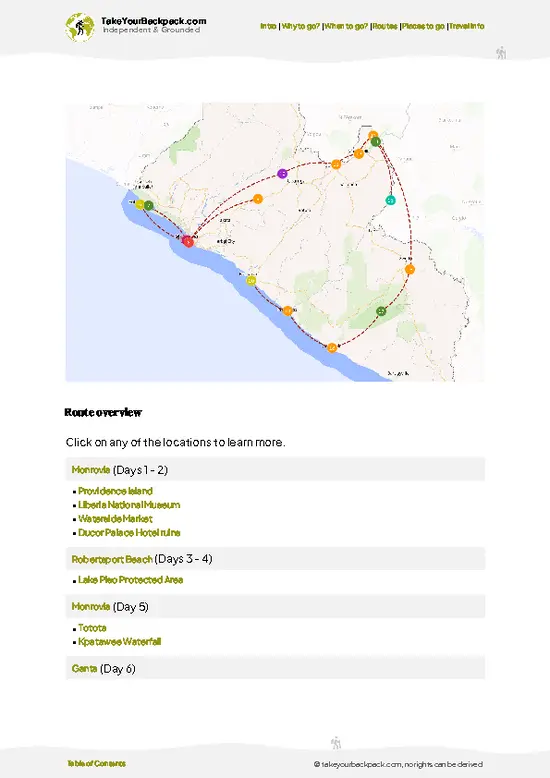
example page 0 from our offline Travel Guide for Liberia
example page 1 from our offline Travel Guide for Liberia
example page 2 from our offline Travel Guide for Liberia
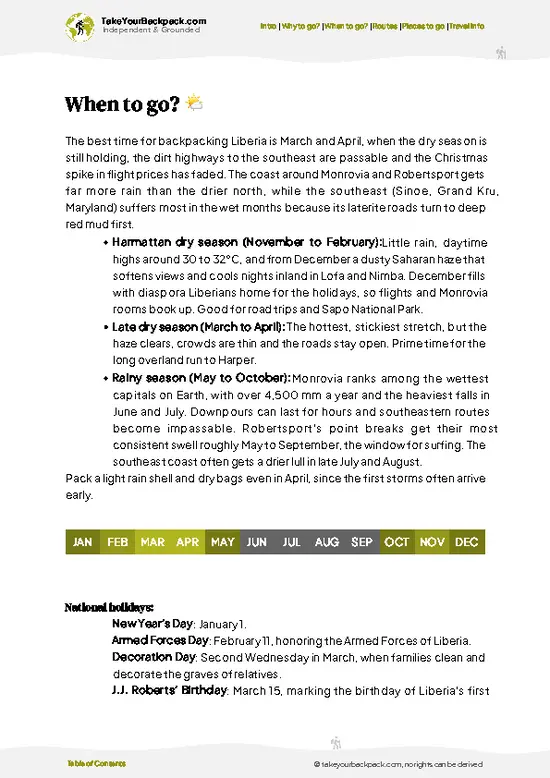
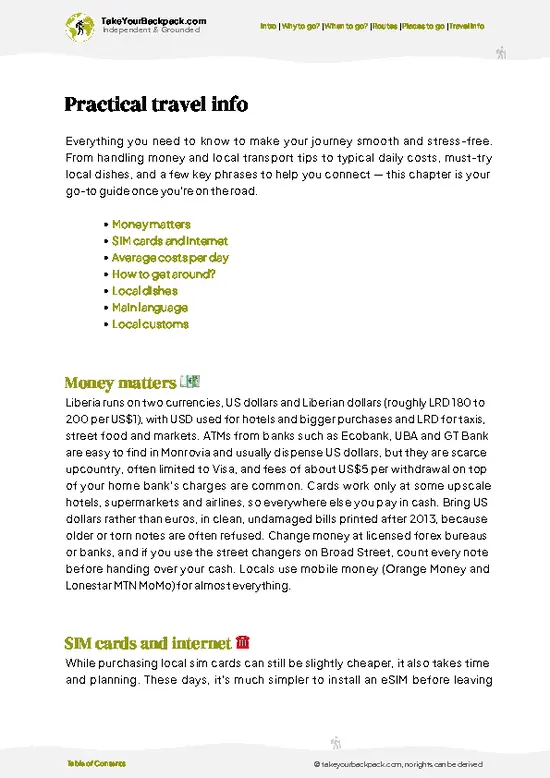
example page 3 from our offline Travel Guide for Liberia
example page 4 from our offline Travel Guide for Liberia
example page 5 from our offline Travel Guide for Liberia
example page 6 from our offline Travel Guide for Liberia
example page 7 from our offline Travel Guide for Liberia
Loading the map 🌍
CLICK TO FILTER
cities
towns
landmarks
national parks
hikes
beaches
attractions
festivals
regions
SHOW COUNTRY’S BESTSHOW ALL

✨ Why go?
Ranked #4 region in Liberia
Why St. John River should be on your travel list

St. John River gives you the Buchanan waterfront and the Edina settlement in one compact area, so you unpack once and still cover a lot. Estuary, surf beach, port and mangrove edge all sit close together, and local taxis and boats link them without a big logistics headache. History is the second draw. Edina, founded in the 1830s by freed Black Americans, sits across the water from Buchanan. The old ore-railway story adds an industrial chapter, and Bassa communities supply the living culture. You can spend a morning on the river, an afternoon on the sand and an evening in a town that mostly serves its own residents. Visitors are rare enough that conversations start easily, and a fish lunch with a local feels like a normal event. If you want slow travel with real texture and a low crowd count, … read more 👉
St. John River gives you the Buchanan waterfront and the Edina settlement in one compact area, so you unpack once and still cover a lot. Estuary, surf beach, port and mangrove edge all sit close together, and local taxis and boats link them without a big logistics headache. History is the second draw. Edina, founded in the 1830s by freed Black Americans, sits across the water from Buchanan. The old ore-railway story adds an industrial chapter, and Bassa communities supply the living culture. You can spend a morning on the river, an afternoon on the sand and an evening in a town that mostly serves its own residents. Visitors are rare enough that conversations start easily, and a fish lunch with a local feels like a normal event. If you want slow travel with real texture and a low crowd count, this is a sound choice for a few unhurried days.

💡 HighlightsDon't-miss highlights and experiences

  1. Edina historic settlement: Founded in the 1830s by freed Black Americans, this village faces Buchanan across the river mouth. Old settler-era layouts and quiet lanes tell the story of early Liberia.
  2. St. John River mouth: Tea-colored river water meets Atlantic swell here. Dugout canoes cross constantly, and the light at dawn is superb for photos.
  3. Buchanan Beach: Long, open sand with strong surf. Walk it early, when fishermen are launching and the air is cool.
  4. Port of Buchanan: Liberia’s second port in the iron ore era. Cranes and breakwaters give a view of working trade life from the outside.
  5. Buchanan central market: Cassava leaf, smoked fish, palm oil and secondhand clothes in tight stalls. Go mid-morning for the busiest stretch.
  6. Fanti Town fishing landing: Local favorite. Boats come in with the
… read more 👉
  1. Edina historic settlement: Founded in the 1830s by freed Black Americans, this village faces Buchanan across the river mouth. Old settler-era layouts and quiet lanes tell the story of early Liberia.
  2. St. John River mouth: Tea-colored river water meets Atlantic swell here. Dugout canoes cross constantly, and the light at dawn is superb for photos.
  3. Buchanan Beach: Long, open sand with strong surf. Walk it early, when fishermen are launching and the air is cool.
  4. Port of Buchanan: Liberia’s second port in the iron ore era. Cranes and breakwaters give a view of working trade life from the outside.
  5. Buchanan central market: Cassava leaf, smoked fish, palm oil and secondhand clothes in tight stalls. Go mid-morning for the busiest stretch.
  6. Fanti Town fishing landing: Local favorite. Boats come in with the catch, and women smoke and sell it on the spot. You can buy fish straight off the sand.
  7. Old LAMCO railway corridor: Rusted remnants of the line that carried ore from the Nimba mountains to the coast. Few travelers look for it, and it shows how big the operation once was.
  8. Mangrove and estuary edges: Lesser known. Hire a local paddler to glide through channels where egrets and kingfishers feed.
  9. Sunset along the Atlantic shore: Informal beach bars come alive with music and grilled fish. Locals gather here after work.
On one day, pair Edina with the St. John River mouth, since a canoe crossing links the two and the morning light suits both.
Spotted a mistake or missing something? Contact us.

⌛️ 5 daysSeeing the highlights in 5 days

Day 1: Buchanan: Start in town because everything else radiates from here. Wander the central market in the morning, then walk the waterfront and the port edge to learn the layout. Transport is mostly shared taxis and motorbikes, and they leave when full, so you plan around daylight rather than timetables. Finish at the beach when the breeze comes in.
Day 2: Fanti Town: Walk or take a short moto ride to the fishing landing at first light, when the catch arrives. Buy breakfast from the smokers, then rest through the heat. In the late afternoon, return to the beach and watch the surf. Keeping the day close to base respects the slow pace of the roads.
Day 3: Edina: Cross the river mouth by boat, which departs when passengers gather, so go early. Edina rewards a long walk, a talk with elders and … read more 👉
Day 1: Buchanan: Start in town because everything else radiates from here. Wander the central market in the morning, then walk the waterfront and the port edge to learn the layout. Transport is mostly shared taxis and motorbikes, and they leave when full, so you plan around daylight rather than timetables. Finish at the beach when the breeze comes in.
Day 2: Fanti Town: Walk or take a short moto ride to the fishing landing at first light, when the catch arrives. Buy breakfast from the smokers, then rest through the heat. In the late afternoon, return to the beach and watch the surf. Keeping the day close to base respects the slow pace of the roads.
Day 3: Edina: Cross the river mouth by boat, which departs when passengers gather, so go early. Edina rewards a long walk, a talk with elders and a look at the settler-era layout. Return before the afternoon swell builds and have dinner in town.
Day 4: Mangrove detour: Arrange a local paddler for the estuary channels. It adds birdlife and quiet water without any extra transfer, since you start from the same riverbank. Bring a hat and water, and plan to be back by lunch.
Day 5: River mouth and beach: Spend your last day at the river mouth at dawn, then follow the old railway corridor on foot, with a guide if you can find one. Finish on the Atlantic shore with grilled fish. If one day justifies the trip, make it Day 3 in Edina: history, water and conversation in a single unhurried day.

🌤️ When to go?Seasonal considerations and timing

  • Dry Season (November to April): Days run 29 to 34°C (84 to 93°F) with cooler nights near 22°C (72°F). Red laterite roads firm up, river crossings are passable and beach and river trips are easiest. Harmattan haze can dull the sky from December to February. Prices for rooms and shared taxis edge up, and crowds stay small.
  • Early Rains (May to June): Heavy afternoon downpours begin, temperatures hold at 25 to 31°C (77 to 88°F), and the landscape turns thick green. Road surfaces start to deteriorate.
  • Peak Rains (July to September): This is among the wettest stretches on the West African coast, with rain most days and 24 to 29°C (75 to 84°F). Roads can become impassable, and few travelers appear, so rooms are easy to get and sometimes cheaper.
  • Late Rains (October): Showers ease and mud begins to dry,
… read more 👉
  • Dry Season (November to April): Days run 29 to 34°C (84 to 93°F) with cooler nights near 22°C (72°F). Red laterite roads firm up, river crossings are passable and beach and river trips are easiest. Harmattan haze can dull the sky from December to February. Prices for rooms and shared taxis edge up, and crowds stay small.
  • Early Rains (May to June): Heavy afternoon downpours begin, temperatures hold at 25 to 31°C (77 to 88°F), and the landscape turns thick green. Road surfaces start to deteriorate.
  • Peak Rains (July to September): This is among the wettest stretches on the West African coast, with rain most days and 24 to 29°C (75 to 84°F). Roads can become impassable, and few travelers appear, so rooms are easy to get and sometimes cheaper.
  • Late Rains (October): Showers ease and mud begins to dry, with a quieter feel before the main season.
Plan to arrive in December or January, when the roads are firm and the heat is manageable.


source: climatestotravel.comJANJanuary: excellent for travelingFEBFebruary: excellent for travelingMARMarch: excellent for travelingAPRApril: highly recommended for travelingMAYMay: fair for travelingJUNJune: fair for travelingJULJuly: fair for travelingAUGAugust: fair for travelingSEPSeptember: fair for travelingOCTOctober: fair for travelingNOVNovember: highly recommended for travelingDECDecember: excellent for traveling
when-to-go

✈️ The backpacker research shortcutLiberia Travel Guide

An offline-friendly backpacking guide with optimized travel routes, ranked highlights, transport advice, and the best areas to stay.
example page 0 from our offline Travel Guide for Liberia
example page 1 from our offline Travel Guide for Liberia
example page 2 from our offline Travel Guide for Liberia
example page 3 from our offline Travel Guide for Liberia
example page 4 from our offline Travel Guide for Liberia
example page 5 from our offline Travel Guide for Liberia
example page 6 from our offline Travel Guide for Liberia
example page 7 from our offline Travel Guide for Liberia
The digital guide (211 pages) contains:
✅ 49 highlights, ranked by travel appeal
✅ Optimized 5, 10 & 15-day travel routes
✅ Cities, national parks, landmarks, beaches
✅ How to get around
✅ Offline-friendly for travel without Wi-Fi
👉 Click to see all 30+ guide features

📅 Plan smarter in minutes, not weeks
✅ Month by month travel advice
✅ Festivals & national holidays
✅ Budget expectations

🗺️ Go to the right places, skip the overrated ones
✅ Honest pros & cons of destinations
✅ Top hikes, parks & viewpoints
✅ Lesser-known places most travelers miss
✅ Clear “worth it vs skip it” guidance

🛏️ Travel smoothly without rookie mistakes
✅ Best areas to stay
✅ Transport systems explained simply
✅ Common scams & safety advice
✅ SIM cards, money & practical tips

🌍 Understand the country, not just visit it
✅ Culture & traditions
✅ Local customs
✅ Festivals worth planning around
✅ Traveler-friendly historical context
✅ Insights that make places more meaningful

📱 Built for real travel conditions
✅ Fully downloadable PDF
✅ Works completely offline
✅ Optimized for phone use
✅ Useful in remote areas & buses
✅ Everything in one place
Stop searching, start planning
Get instant access to your full guide. 30‑day money-back guarantee.
+ Add another guide for just

By proceeding you agree to our terms.
Sent to your inbox immediately after payment • 100% Secure Checkout
Best Backpacking Travel Advisor 2025 tourism awardBest Backpacking
Travel Advisor
2025
What others say about Take Your Backpack Guides:
⭐⭐⭐⭐⭐
Fantastic, amazing amount of information!
⭐⭐⭐⭐⭐
My goodness this is amazing, it's what I've been looking for hats off too you!
⭐⭐⭐⭐⭐
I think this is absolutely BRILLIANT
⭐⭐⭐⭐
Very complete and informative. It's still missing places, but I gotta to commend you
⭐⭐⭐⭐⭐
This is truly amazing, thank you, can't wait to explore it with my kids!
⭐⭐⭐⭐⭐
Awesome resource, thank you!
⭐⭐⭐⭐⭐
This is amazing! Can't wait to explore the ones I haven't seen
⭐⭐⭐⭐
I love this! Well done, great idea.
⭐⭐⭐⭐⭐
Thanks for taking the time to make this gem!
⭐⭐⭐⭐⭐
This might be the best website I've ever seen.
⭐⭐⭐⭐⭐
Congratulations, and thank you so much for your work; it's incredibly valuable.
⭐⭐⭐⭐
In all seriousness I think you did a great job pointing out the important spots
⭐⭐⭐⭐⭐
10/10 very good
⭐⭐⭐⭐⭐
As someone who's only just starting to visit regularly this is awesome, thank you.
⭐⭐⭐⭐
Thank you very much! I'm going to visit my dad, it's going to be very useful!
⭐⭐⭐⭐⭐
This is really cool! We'll be travelling for the first time and this definitely come in handy.
⭐⭐⭐⭐⭐
You are now our minister of culture, congratulations 👨‍💼
⭐⭐⭐⭐⭐
Just wanted to tell you that this is a pearl! Going to follow your recommendations.
⭐⭐⭐⭐⭐
This is so cool. I'll definitely be using the resource for my travels soon.
⭐⭐⭐⭐⭐
This is very impressive! Good work.
⭐⭐⭐⭐⭐
This is an amazing and informative site. Very well done!

🛏️ Where to stay?Where staying makes the most sense

The best base for backpackers around St. John River is the town of Buchanan, which sits at the river mouth and has the widest choice of budget rooms, guesthouses and beachside places in the area. It is the most social option, with a handful of travelers, aid workers and volunteers passing through, and evenings centered on beach bars where you can sit and swap stories. Rooms typically cost US$15 to 40 a night, with fans or air conditioning and generator-backed power as the main extras to look for.

Stay within walking distance of the waterfront if you want easy access to food stalls, money changers … read more 👉
The best base for backpackers around St. John River is the town of Buchanan, which sits at the river mouth and has the widest choice of budget rooms, guesthouses and beachside places in the area. It is the most social option, with a handful of travelers, aid workers and volunteers passing through, and evenings centered on beach bars where you can sit and swap stories. Rooms typically cost US$15 to 40 a night, with fans or air conditioning and generator-backed power as the main extras to look for.

Stay within walking distance of the waterfront if you want easy access to food stalls, money changers and transport, and to feel safe returning after dark. Lone travelers usually do best in central, well-lit streets, where neighbors and shopkeepers know the guesthouse owners and quickly notice newcomers.

For something quieter, look for simple guesthouses in the villages along the river and coast road. These suit those who want village life, early canoe rides and long evenings under the stars, though power can be patchy and you will eat what the household cooks. Book a first night ahead during the dry season, then ask around locally once you arrive. Monrovia is the fallback if you need more variety, but most travelers prefer the calm of the smaller coast towns.

🚌 Getting aroundHow to get from A to B

Shared taxis and motorbike taxis are the easiest way to move around St. John River, because they run whenever seats fill and go down roads no bus serves. Expect rough laterite tracks, so reliability depends on the weather: in the dry season most routes run daily, and in heavy rain some stop altogether.
  • Motorbike taxis: These are the quickest way through town and out to nearby villages, typically US$1 to 3 per ride. You sit behind a rider through red dust, the smell of woodsmoke and frying oil, and you get a view over the river mouth that a car window never gives.
  • Shared taxis: Battered sedans pack in four passengers across the back, and fares between nearby towns run about US$2 to 8. They leave once full, so waiting can take an hour. You pay in seat-sharing chatter and a window seat on palm-lined
… read more 👉
Shared taxis and motorbike taxis are the easiest way to move around St. John River, because they run whenever seats fill and go down roads no bus serves. Expect rough laterite tracks, so reliability depends on the weather: in the dry season most routes run daily, and in heavy rain some stop altogether.
  • Motorbike taxis: These are the quickest way through town and out to nearby villages, typically US$1 to 3 per ride. You sit behind a rider through red dust, the smell of woodsmoke and frying oil, and you get a view over the river mouth that a car window never gives.
  • Shared taxis: Battered sedans pack in four passengers across the back, and fares between nearby towns run about US$2 to 8. They leave once full, so waiting can take an hour. You pay in seat-sharing chatter and a window seat on palm-lined roads.
  • Minibuses and vans: These cover longer hauls along the coast and toward Buchanan or Monrovia, roughly US$5 to 12 for 2 to 4 hours in the dry season. Seats are tight and the speakers loud, but you roll past rubber plantations and market stops where you can buy a bag of roasted peanuts through the window.
  • Dugout canoes and small boats: Local paddlers and boatmen ferry people across the river and along the water, usually US$1 to 5 for a short crossing or negotiated for longer trips. The water is brown and slow, the air smells of mud and fish, and you slide past mangroves in near silence.
  • Walking: Central streets and the riverfront are easily walkable in the early morning before the heat builds. You hear roosters, radios and the market waking up, and pass people who often stop to talk.
Carry small US dollar bills or Liberian dollars for fares, start before 9 am so seats fill and you arrive in daylight, and always confirm the price before you climb on.

🍲 FoodWhat to Eat & Drink

Start with palm butter, a deep orange stew of pounded palm fruit with smoked fish or chicken, served over fluffy white rice. It smells earthy and a little smoky, and the first spoonful is rich and savory. Cassava leaf and potato greens arrive in similar bowls, heavy with hot pepper and dried fish, and fufu or dumboy comes alongside for scooping. Along the river and coast, fresh grilled fish, crab and shrimp are the real treats, often charred over coals and finished with a fiery pepper sauce.

For drinking, try ginger beer sold in recycled bottles, sweet palm wine tapped locally and cloudy with a faint sourness, and cold local lager at beach bars. Cane juice, the strong local spirit, is everywhere, but pour it slowly.

Backpackers eat best at market stalls, small cookshops and roadside grills, … read more 👉
Start with palm butter, a deep orange stew of pounded palm fruit with smoked fish or chicken, served over fluffy white rice. It smells earthy and a little smoky, and the first spoonful is rich and savory. Cassava leaf and potato greens arrive in similar bowls, heavy with hot pepper and dried fish, and fufu or dumboy comes alongside for scooping. Along the river and coast, fresh grilled fish, crab and shrimp are the real treats, often charred over coals and finished with a fiery pepper sauce.

For drinking, try ginger beer sold in recycled bottles, sweet palm wine tapped locally and cloudy with a faint sourness, and cold local lager at beach bars. Cane juice, the strong local spirit, is everywhere, but pour it slowly.

Backpackers eat best at market stalls, small cookshops and roadside grills, where a plate of rice and soup typically costs US$2 to 5. Street vendors sell fried plantain, roasted peanuts, cassava bread and sweet kala doughnuts in the morning.

Eat with your right hand when sharing a bowl, and greet people before ordering. Food is often cooked in batches, so go at lunchtime for the freshest pots, and expect plenty of pepper unless you ask for it mild.

FAQTraveler FAQ

Two to three days is enough for St. John River if you want the river mouth, the beaches and a canoe trip. Add a third day for village visits or walks along the coast. Roads slow everything, so allow extra time in the rainy season from May to October.
Around St. John River, motorbike taxis and shared taxis are the main options without a car. Short motorbike rides cost about US$1 to 3, while shared cars to nearby towns run roughly US$2 to 8 and leave when full. Canoes handle river crossings for US$1 to 5, and minibuses cover longer coastal routes in 2 to 4 hours.
St. John River is known for its river mouth setting near Buchanan, its coastal fishing communities and fresh seafood. Visitors also come for quiet beaches, mangrove-lined water and a slow, rural feel far from Monrovia. The dry season from November to April is the easiest time to see it, with temperatures around 29 to 34°C (84 to 93°F).
⚠️ Things can change over time, so always validate details locally before you go.

Other Liberian regions near St. John River

Explore more nearby:

  • Lofa River—broad riverbanks, rice paddies, remote crossings| 131 km away
  • Bomi Hills—ironstone ridges, forested plateaus, rural settlements| 133 km away
  • Wologizi Mountain—rocky summits, grassy slopes, isolated trails| 247 km away

💡 Not sure where to go next?
Create a personalized itinerary for Liberia including St. John River and the places that fit your trip.

Generate my itinerary

👉 Discover all regions

Or checkout all Liberia has to offer (think cities, towns, villages, national parks, hikes, beaches, festivals)
Country photo of Liberia

We 💚 feedbackKey takeaways before you go

St. John River suits three to four unhurried days. A single night wastes the Edina crossing, and a week stretches the thin options. I would stay four, book nothing ahead and carry small bills for boats and fish. Bring a headlamp, because the evening power cuts are a regular part of the schedule.

✍️ Help improve this page!
The information on this page is based on in-depth research, insights shared by experienced travelers, and feedback from the local travel community in Liberia. While every effort is made to keep the information accurate and current, conditions can change — so if you spot anything incorrect or outdated, please get in touch.


🙋‍♂️ Give feedback

👋 Meet the founderWho’s Behind Take Your Backpack?

Johan, backpacker and founder of TakeYourBackpackHi, I’m Johan (Netherlands 🇳🇱), the creator of TakeYourBackpack. Over the past 3 decades, I’ve backpacked through 90+ countries across six continents, gaining extensive experience with independent travel, long-term trips, and overland routes.

This site is built on a combination of firsthand travel experience and carefully curated insights from other backpackers. Many guides are based on places I’ve personally visited, while others bring together tips, observations, and practical advice shared by trusted travelers I’ve met along the way.

The goal is to provide realistic, experience-driven guidance — not generic itineraries — so you can explore destinations with better context, clearer expectations, and more confidence.