×

Liberia🇱🇷 | regionsLofa RiverRobertsport surf, canoe ferries, Lake Piso, Gola Forest | things to do and best time to go

Explore Bomi HillsExplore Mount Nimba

Backpacking in Lofa River
👀 For curious travelersregion ranked #5
By Johan Kruseman 🇳🇱 | Updated October 22, 2026

Not long ago, the Lofa River basin meant war-cut roads, rusting iron-ore rail and villages cut off for months. Today it means red laterite tracks, canoe crossings and forest that has grown back thick. Lofa River runs through the west of Liberia, toward the Sierra Leone border, and the lowland country around it is quiet and green. There are no hostels or tour desks. You hear weaver birds, frogs after dusk and motorbike engines, and you smell woodsmoke and wet earth. A shared taxi is slow and cramped but cheap. A hired motorbike saves hours and costs a bit more. A private 4x4 is the most comfortable and by far the priciest, so for most backpackers the bike gives the best return. Rain turns the tracks to soup, so carry cash in small bills and a dry bag.

Discover everything you want to know in the 📖 Liberia Travel Guide.


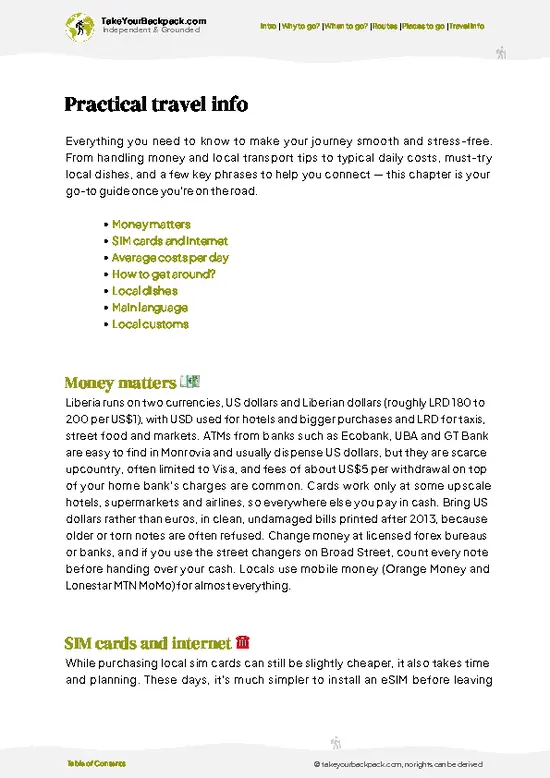
example page 0 from our offline Travel Guide for Liberia
example page 1 from our offline Travel Guide for Liberia
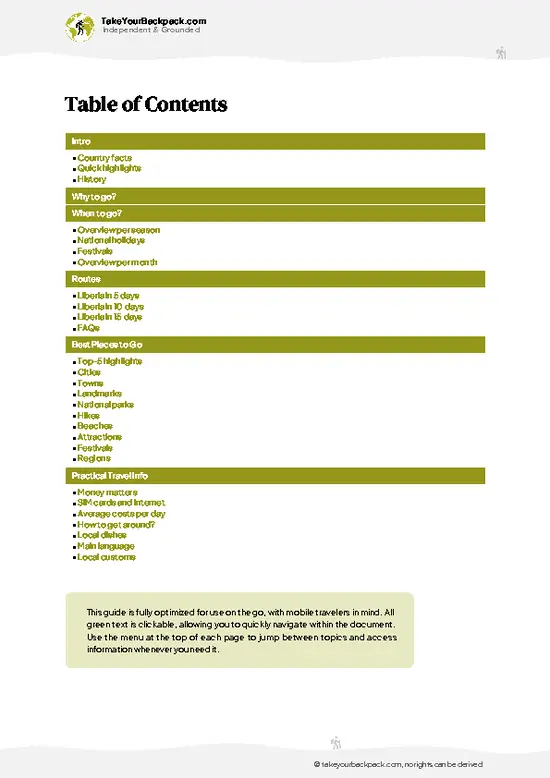
example page 2 from our offline Travel Guide for Liberia
example page 3 from our offline Travel Guide for Liberia
example page 4 from our offline Travel Guide for Liberia
example page 5 from our offline Travel Guide for Liberia
example page 6 from our offline Travel Guide for Liberia
example page 7 from our offline Travel Guide for Liberia
Loading the map 🌍
CLICK TO FILTER
cities
towns
landmarks
national parks
hikes
beaches
attractions
festivals
regions
SHOW COUNTRY’S BESTSHOW ALL

✨ Why go?
Ranked #5 region in Liberia
The unique appeal for travelers

Lofa River rewards backpackers who want forest and river life without other travelers in the frame. The basin sits close to Gola Forest National Park, so you can pair canopy walks with riverbank villages, where people still fish from dugout canoes and pound cassava at dawn. Few places in West Africa let you hear chimpanzee calls, and the odds are better here than on the coast. Then there is the coast itself. Robertsport and its surf point lie within reach, which means you can trade mud for salt water and a cold drink without crossing the country. Moving between them is slow, and that suits the region. Bush taxis and motorbikes go where buses do not, you stop when a village invites you to, and the days stretch out. If you like Gola Forest mornings and Robertsport afternoons, this is the stretch to do it.

💡 HighlightsEssential experiences to have while visiting Lofa River

  1. Robertsport and Cassava Point: the surf spot most travelers come for, with a long left break, a handful of local surfers and beach shacks. Boards can be rented on site.
  2. Gola Forest National Park: one of the last large stretches of Upper Guinean rainforest in Liberia, shared with Sierra Leone. Guided walks may turn up forest elephants' traces, monkeys and hornbills.
  3. Lake Piso: a big brackish lagoon behind Robertsport, where fishermen paddle out at dawn. Boat rides weave between mangroves and sandbars.
  4. Lofa River crossings: handmade canoe ferries and pole boats still carry people and goods over the river. Standing in one with a goat and a sack of rice is part of the trip.
  5. Bopolu: an old Gbarpolu town with historical weight as a former center of regional trade. The market is small, loud and good
… read more 👉
  1. Robertsport and Cassava Point: the surf spot most travelers come for, with a long left break, a handful of local surfers and beach shacks. Boards can be rented on site.
  2. Gola Forest National Park: one of the last large stretches of Upper Guinean rainforest in Liberia, shared with Sierra Leone. Guided walks may turn up forest elephants' traces, monkeys and hornbills.
  3. Lake Piso: a big brackish lagoon behind Robertsport, where fishermen paddle out at dawn. Boat rides weave between mangroves and sandbars.
  4. Lofa River crossings: handmade canoe ferries and pole boats still carry people and goods over the river. Standing in one with a goat and a sack of rice is part of the trip.
  5. Bopolu: an old Gbarpolu town with historical weight as a former center of regional trade. The market is small, loud and good for local snacks.
  6. Tubmanburg and the Bomi Hills: a former iron-ore mining area, now rusting and overgrown, with old rail lines and scarred hillsides. It is a quiet, strange place to wander.
  7. Village fishing at Mano River mouth: a lesser-known stretch where fishermen smoke catch on racks. Visitors are welcome if they ask first.
  8. Robertsport market: stalls selling smoked fish, palm oil and pepper soup. A locals' stop, not a tourist one.
  9. Fisherman beaches near Robertsport: quiet stretches north of the surf break where you can swim away from crowds.
Of everything around Lofa River, the village canoe crossings and the Robertsport market cost the least, since you pay only a small fare or a few coins for a snack.
Spotted a mistake or missing something? Contact us.

Things to do near Lofa River

Ratings based on Tripadvisor reviews. When you book through this link, you support our work at no extra cost to you.

⌛️ 5 daysSeeing the highlights in 5 days

Day 1: Robertsport
A slow arrival morning, since shared taxis fill up before they leave and the road decides the schedule. Settle in near the surf point, watch the break from the sand and eat at the market. Starting on the coast gives you a base with food, power and a bed before the forest legs.
Day 2: Lake Piso: Hire a boat at dawn when the water is flat. The lagoon is calm in the early hours and the light on the mangroves is soft. Return by midday, because afternoon heat makes the sandy paths heavy going.
Day 3: Bopolu: Head inland by bush taxi or motorbike. The road is the real transport system here, and it sets your pace: one long push in the morning, then rest. Bopolu has a market and enough roof space to sleep. Walk the town and talk to the elders, who often know the river's history.
Day … read more 👉
Day 1: Robertsport
A slow arrival morning, since shared taxis fill up before they leave and the road decides the schedule. Settle in near the surf point, watch the break from the sand and eat at the market. Starting on the coast gives you a base with food, power and a bed before the forest legs.
Day 2: Lake Piso: Hire a boat at dawn when the water is flat. The lagoon is calm in the early hours and the light on the mangroves is soft. Return by midday, because afternoon heat makes the sandy paths heavy going.
Day 3: Bopolu: Head inland by bush taxi or motorbike. The road is the real transport system here, and it sets your pace: one long push in the morning, then rest. Bopolu has a market and enough roof space to sleep. Walk the town and talk to the elders, who often know the river's history.
Day 4: Lofa River: Cross by canoe and spend the day in a riverside village. This day is slow by design, because the crossings and the walks along the bank take the hours. Detour: loop out toward Gola Forest National Park for a guided walk if your guide is free. It adds the best wildlife chance of the trip without changing the route back.
Day 5: Tubmanburg: Return via the old Bomi Hills mining area. The rusted rail and empty hillsides make a thoughtful end, and the road back to Monrovia is easier from here.
If you only get one day, make it Day 4 on the river. Nothing else gives the sounds, the crossing and the village hospitality in one go.

🌤️ When to go?Choosing the right time of year

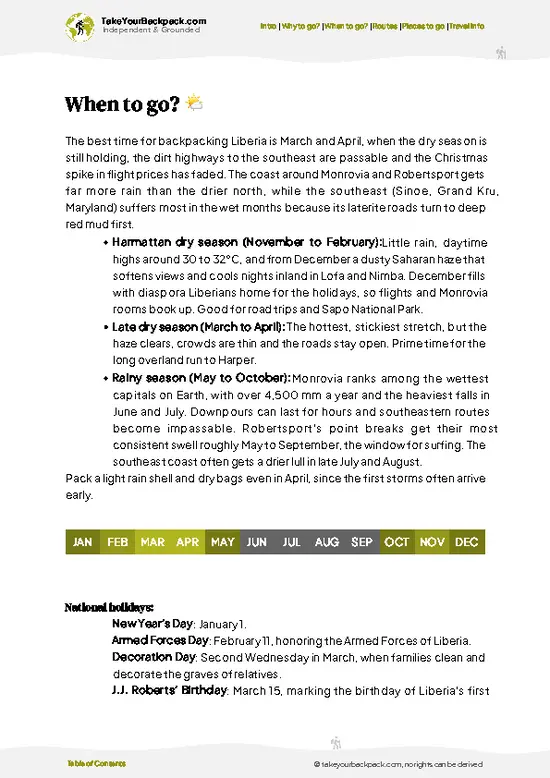
The dry months of November to April are the window for Lofa River, with daytime highs of 30 to 34°C (86 to 93°F) and roads that stay passable. Plan around these patterns.
  • Peak Dry Season (December to February): Skies are clear and nights cool to 20 to 23°C (68 to 73°F). Harmattan haze from the Sahara can dull the views and dust coats the laterite roads. Daylight is steady at around 12 hours. Prices for rides and rooms are at their highest, though still modest.
  • Late Dry Season (March to April): Heat builds to 34°C (93°F) and humidity creeps up, with the first thunderstorms arriving in April. Trails are still firm and river levels low.
  • Rainy Season (May to October): Expect 25 to 30°C (77 to 86°F) and torrential downpours, heaviest in July and August. Tracks turn to red mud, bridges can flood and
… read more 👉
The dry months of November to April are the window for Lofa River, with daytime highs of 30 to 34°C (86 to 93°F) and roads that stay passable. Plan around these patterns.
  • Peak Dry Season (December to February): Skies are clear and nights cool to 20 to 23°C (68 to 73°F). Harmattan haze from the Sahara can dull the views and dust coats the laterite roads. Daylight is steady at around 12 hours. Prices for rides and rooms are at their highest, though still modest.
  • Late Dry Season (March to April): Heat builds to 34°C (93°F) and humidity creeps up, with the first thunderstorms arriving in April. Trails are still firm and river levels low.
  • Rainy Season (May to October): Expect 25 to 30°C (77 to 86°F) and torrential downpours, heaviest in July and August. Tracks turn to red mud, bridges can flood and some villages become unreachable. Fares rise when drivers struggle through the mud.
  • Short Break (late July to August): Rain eases slightly, but mud remains.
Book transport early in January, when travelers cluster around the same dry weeks.


source: climatestotravel.comJANJanuary: excellent for travelingFEBFebruary: excellent for travelingMARMarch: excellent for travelingAPRApril: excellent for travelingMAYMay: fair for travelingJUNJune: below average for travelingJULJuly: below average for travelingAUGAugust: below average for travelingSEPSeptember: fair for travelingOCTOctober: fair for travelingNOVNovember: highly recommended for travelingDECDecember: excellent for traveling
when-to-go

✈️ The backpacker research shortcutLiberia Travel Guide

An offline-friendly backpacking guide with optimized travel routes, ranked highlights, transport advice, and the best areas to stay.
example page 0 from our offline Travel Guide for Liberia
example page 1 from our offline Travel Guide for Liberia
example page 2 from our offline Travel Guide for Liberia
example page 3 from our offline Travel Guide for Liberia
example page 4 from our offline Travel Guide for Liberia
example page 5 from our offline Travel Guide for Liberia
example page 6 from our offline Travel Guide for Liberia
example page 7 from our offline Travel Guide for Liberia
The digital guide (211 pages) contains:
✅ 49 highlights, ranked by travel appeal
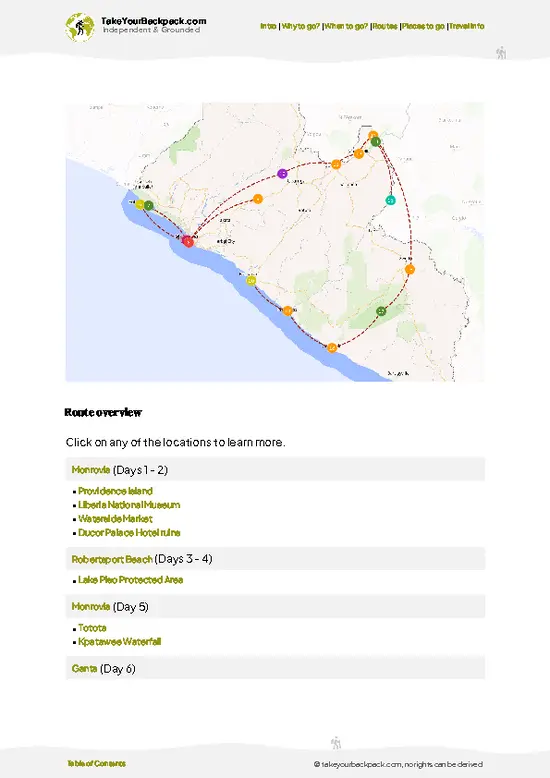
✅ Optimized 5, 10 & 15-day travel routes
✅ Cities, national parks, landmarks, beaches
✅ How to get around
✅ Offline-friendly for travel without Wi-Fi
👉 Click to see all 30+ guide features

📅 Plan smarter in minutes, not weeks
✅ Month by month travel advice
✅ Festivals & national holidays
✅ Budget expectations

🗺️ Go to the right places, skip the overrated ones
✅ Honest pros & cons of destinations
✅ Top hikes, parks & viewpoints
✅ Lesser-known places most travelers miss
✅ Clear “worth it vs skip it” guidance

🛏️ Travel smoothly without rookie mistakes
✅ Best areas to stay
✅ Transport systems explained simply
✅ Common scams & safety advice
✅ SIM cards, money & practical tips

🌍 Understand the country, not just visit it
✅ Culture & traditions
✅ Local customs
✅ Festivals worth planning around
✅ Traveler-friendly historical context
✅ Insights that make places more meaningful

📱 Built for real travel conditions
✅ Fully downloadable PDF
✅ Works completely offline
✅ Optimized for phone use
✅ Useful in remote areas & buses
✅ Everything in one place
Stop searching, start planning
Get instant access to your full guide. 30‑day money-back guarantee.
+ Add another guide for just

By proceeding you agree to our terms.
Sent to your inbox immediately after payment • 100% Secure Checkout
Best Backpacking Travel Advisor 2025 tourism awardBest Backpacking
Travel Advisor
2025
What others say about Take Your Backpack Guides:
⭐⭐⭐⭐⭐
Fantastic, amazing amount of information!
⭐⭐⭐⭐⭐
My goodness this is amazing, it's what I've been looking for hats off too you!
⭐⭐⭐⭐⭐
I think this is absolutely BRILLIANT
⭐⭐⭐⭐
Very complete and informative. It's still missing places, but I gotta to commend you
⭐⭐⭐⭐⭐
This is truly amazing, thank you, can't wait to explore it with my kids!
⭐⭐⭐⭐⭐
Awesome resource, thank you!
⭐⭐⭐⭐⭐
This is amazing! Can't wait to explore the ones I haven't seen
⭐⭐⭐⭐
I love this! Well done, great idea.
⭐⭐⭐⭐⭐
Thanks for taking the time to make this gem!
⭐⭐⭐⭐⭐
This might be the best website I've ever seen.
⭐⭐⭐⭐⭐
Congratulations, and thank you so much for your work; it's incredibly valuable.
⭐⭐⭐⭐
In all seriousness I think you did a great job pointing out the important spots
⭐⭐⭐⭐⭐
10/10 very good
⭐⭐⭐⭐⭐
As someone who's only just starting to visit regularly this is awesome, thank you.
⭐⭐⭐⭐
Thank you very much! I'm going to visit my dad, it's going to be very useful!
⭐⭐⭐⭐⭐
This is really cool! We'll be travelling for the first time and this definitely come in handy.
⭐⭐⭐⭐⭐
You are now our minister of culture, congratulations 👨‍💼
⭐⭐⭐⭐⭐
Just wanted to tell you that this is a pearl! Going to follow your recommendations.
⭐⭐⭐⭐⭐
This is so cool. I'll definitely be using the resource for my travels soon.
⭐⭐⭐⭐⭐
This is very impressive! Good work.
⭐⭐⭐⭐⭐
This is an amazing and informative site. Very well done!

🛏️ Where to stay?Where staying makes the most sense

The best base around Lofa River is the nearest district town, Voinjama, with Zorzor and Foya as the other practical bases. Voinjama has the most guesthouses, a daily market and the easiest onward transport, with rooms around US$15 to 40. Evenings revolve around roadside bars and cookshops where locals and aid workers mix, so solo travelers meet people quickly.

Zorzor is smaller and calmer, a sensible stop on the road between Gbarnga and the far north. Rooms are basic, usually US$10 to 25, and the town is safe to walk after dark if you stay on the main street. Foya, near the Sierra Leone and Guinea … read more 👉
The best base around Lofa River is the nearest district town, Voinjama, with Zorzor and Foya as the other practical bases. Voinjama has the most guesthouses, a daily market and the easiest onward transport, with rooms around US$15 to 40. Evenings revolve around roadside bars and cookshops where locals and aid workers mix, so solo travelers meet people quickly.

Zorzor is smaller and calmer, a sensible stop on the road between Gbarnga and the far north. Rooms are basic, usually US$10 to 25, and the town is safe to walk after dark if you stay on the main street. Foya, near the Sierra Leone and Guinea borders, suits those heading across or into the forest. It is more remote, with fewer rooms and patchy power, so bring a headlamp and cash.

In villages along the river, staying with a host family or in a community guesthouse is common if you ask the town chief or local contact first. Expect a mat or simple bed, bucket washing and shared meals. Generators run for a few hours in the evening, so charge devices when you can. Lofa County is quiet and friendly, but tourist infrastructure is thin, so arrive before dusk.

🚌 Getting aroundHow to get around Lofa River

From the dusty roadside motor park in the nearest town, a shared motorbike taxi or a few minutes on foot gets you to the river bank and the main market in about 10 to 15 minutes, for roughly US$1 to 2 by bike. Most backpackers reach Lofa River by shared taxi or minibus from Monrovia, then rely on motorbikes and their own feet for the final stretch. It works, but timing is loose, since vehicles leave when full and the roads decide the rest.
  • Shared taxi or minibus: The sensible backbone of any trip. Expect US$15 to 25 from Monrovia and a day on the road, with red dust through the windows in dry months and mud in wet ones. Seats are tight and the engine rattles, but nothing else gives you as much distance for as little money.
  • Motorbike taxi (okada): The best choice for short hops between villages
… read more 👉
From the dusty roadside motor park in the nearest town, a shared motorbike taxi or a few minutes on foot gets you to the river bank and the main market in about 10 to 15 minutes, for roughly US$1 to 2 by bike. Most backpackers reach Lofa River by shared taxi or minibus from Monrovia, then rely on motorbikes and their own feet for the final stretch. It works, but timing is loose, since vehicles leave when full and the roads decide the rest.
  • Shared taxi or minibus: The sensible backbone of any trip. Expect US$15 to 25 from Monrovia and a day on the road, with red dust through the windows in dry months and mud in wet ones. Seats are tight and the engine rattles, but nothing else gives you as much distance for as little money.
  • Motorbike taxi (okada): The best choice for short hops between villages and farm tracks at US$1 to 5 a ride. You feel the heat, the smell of woodsmoke and the ruts directly. Fast and flexible, though bumpy and exposed, so pack your bag in plastic in the rainy season.
  • Hired 4x4 with driver: Costs US$100 to 180 a day, shared among several people. It is the most comfortable option on washed-out tracks and the only dependable one in heavy rain. Split the fare and it becomes good value.
  • Walking and canoe: Local canoes cross the river for about US$0.50 to 2. Walking between nearby villages along forest paths, with birdsong overhead and damp earth underfoot, costs nothing and rarely takes more than an hour or two.
Start before 7 am, since vehicles fill early, and carry small bills for every leg.

🍲 FoodLocal Flavors for Backpackers

Eating around Lofa River means rice in some form, almost always with a soup or sauce. Look for palm butter, a rich, orange, nutty stew with chicken or smoked fish, and cassava leaf, dark green, peppery and slow-cooked until deeply savory. Fufu or dumboy, pounded cassava, is rolled into balls and swallowed rather than chewed. Bush meat appears in some kitchens, but you can skip it. Pepper soup is thin, fiery and fragrant with smoke and scotch bonnet.

Backpackers eat at cookshops and market stalls, where women ladle from steaming pots for US$1.50 to 4 a plate. Grab fried cassava, plantain, bean balls or grilled fish from roadside fires for snacks. Mornings bring hot bread with spicy egg or sardines and sweet tea. Fresh pineapple, oranges and bananas are cheap in season.

To drink, try palm … read more 👉
Eating around Lofa River means rice in some form, almost always with a soup or sauce. Look for palm butter, a rich, orange, nutty stew with chicken or smoked fish, and cassava leaf, dark green, peppery and slow-cooked until deeply savory. Fufu or dumboy, pounded cassava, is rolled into balls and swallowed rather than chewed. Bush meat appears in some kitchens, but you can skip it. Pepper soup is thin, fiery and fragrant with smoke and scotch bonnet.

Backpackers eat at cookshops and market stalls, where women ladle from steaming pots for US$1.50 to 4 a plate. Grab fried cassava, plantain, bean balls or grilled fish from roadside fires for snacks. Mornings bring hot bread with spicy egg or sardines and sweet tea. Fresh pineapple, oranges and bananas are cheap in season.

To drink, try palm wine, milky, lightly fizzy and sour-sweet, tapped fresh in the morning. Cane juice, the strong spirit local people call “CJ,” is potent and best sipped in small amounts. Bottled water and Club or Monrovia beer are widely available.

Eat with your right hand and wait for elders to start. Politely accept a shared bowl, and expect meals to take time, since everything is cooked to order.

FAQFrequently asked questions about Lofa River

Three to five days covers Lofa River comfortably, especially if you are traveling overland. Allow a full day each way from Monrovia, then spend two or three days around Voinjama, Zorzor and river villages. In the rainy season, add a buffer day for delays.
Getting around Lofa River without a car relies on shared taxis for towns, motorbike taxis for short hops and canoes for crossings. Monrovia to Voinjama costs roughly US$15 to 25 and takes most of a day. Motorbike rides cost US$1 to 5, and you can hire a driver with a 4x4 for US$100 to 180 a day.
Lofa River is known for the forested hills of Lofa County in northwestern Liberia, with villages, farmland and rivers that run toward the Sierra Leone and Guinea borders. The area is home to Kpelle, Lorma and Mandingo communities, with strong market traditions. Visitors come for community life, birdwatching and quiet trails, and the best access is during the dry season from November to April.
⚠️ Things can change over time, so always validate details locally before you go.

Other Liberian regions near Lofa River

Explore more nearby:

  • Bomi Hills—ironstone ridges, forested plateaus, rural settlements| 42 km away
  • St. John River—meandering waterways, fishing villages, mangrove swamps| 131 km away
  • Wologizi Mountain—rocky summits, grassy slopes, isolated trails| 215 km away

💡 Not sure where to go next?
Create a personalized itinerary for Liberia including Lofa River and the places that fit your trip.

Generate my itinerary

👉 Discover all regions

Or checkout all Liberia has to offer (think cities, towns, villages, national parks, hikes, beaches, festivals)
Country photo of Liberia

We 💚 feedbackWhat to keep in mind

Lofa River pairs best with Robertsport, so do the forest and river first and finish with surf and a cold drink. I would bring a headlamp, cash in small bills and a spare day, because the roads decide your schedule more than you do. Skip tight connections.

✍️ Help improve this page!
The information on this page is based on in-depth research, insights shared by experienced travelers, and feedback from the local travel community in Liberia. While every effort is made to keep the information accurate and current, conditions can change — so if you spot anything incorrect or outdated, please get in touch.


🙋‍♂️ Give feedback

👋 Meet the founderWho’s Behind Take Your Backpack?

Johan, backpacker and founder of TakeYourBackpackHi, I’m Johan (Netherlands 🇳🇱), the creator of TakeYourBackpack. Over the past 3 decades, I’ve backpacked through 90+ countries across six continents, gaining extensive experience with independent travel, long-term trips, and overland routes.

This site is built on a combination of firsthand travel experience and carefully curated insights from other backpackers. Many guides are based on places I’ve personally visited, while others bring together tips, observations, and practical advice shared by trusted travelers I’ve met along the way.

The goal is to provide realistic, experience-driven guidance — not generic itineraries — so you can explore destinations with better context, clearer expectations, and more confidence.