AccessibilityTraveling through Libya’s villages is not a walk in the park. The infrastructure can be hit or miss, so expect some rough patches. Roads may be unpaved or poorly maintained, especially in more remote areas. Public transport is limited, and renting a vehicle is often your best bet. However, be prepared for long drives between villages. I recommend aiming for three to five villages to balance exploration with the inevitable travel time. This way, you can soak in the local culture without feeling rushed.
Seasonal VariationTiming is everything. Libya’s climate can be extreme, with scorching summers that can drain your energy and dampen your experience. Spring and fall are your best friends here. The weather is milder, making it easier to wander through the villages and engage …
read more 👉 AccessibilityTraveling through Libya’s villages is not a walk in the park. The infrastructure can be hit or miss, so expect some rough patches. Roads may be unpaved or poorly maintained, especially in more remote areas. Public transport is limited, and renting a vehicle is often your best bet. However, be prepared for long drives between villages. I recommend aiming for three to five villages to balance exploration with the inevitable travel time. This way, you can soak in the local culture without feeling rushed.
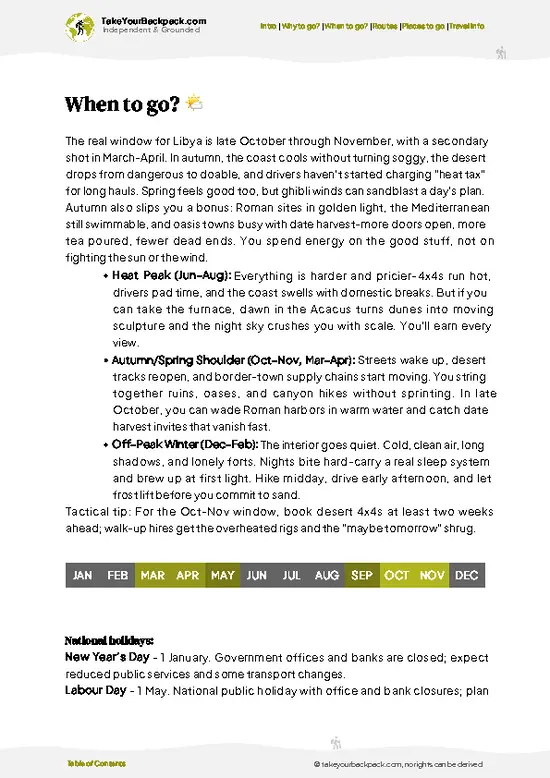
Seasonal VariationTiming is everything. Libya’s climate can be extreme, with scorching summers that can drain your energy and dampen your experience. Spring and fall are your best friends here. The weather is milder, making it easier to wander through the villages and engage with locals. However, keep in mind that some villages may have limited services during the off-peak season. You might find fewer accommodations or dining options, which can lead to unexpected challenges. Plan your visits around local festivals or markets for a richer experience, but be aware that these events can also draw larger crowds, impacting your ability to connect with the community.
AuthenticityAuthenticity is the name of the game. Many villages still hold onto their traditions, but that doesn’t mean they’re all tourist-friendly. Some places might be wary of outsiders, so approach with respect and an open mind. Engaging with locals can lead to unforgettable experiences, but it’s essential to be culturally sensitive. Dress modestly and learn a few basic Arabic phrases; it goes a long way in breaking the ice. However, don’t expect every village to have the same level of hospitality. Some may be more welcoming than others, and that’s part of the adventure.
Pacing Between Rural StopsPacing is crucial. You’ll want to spend enough time in each village to absorb its essence, but don’t overstay your welcome. A couple of days in each spot is usually sufficient. This allows you to explore, engage, and recharge before moving on. However, be mindful of the distances between villages. Some may require a full day of travel, so factor that into your plans. If you rush, you’ll miss the nuances that make each place special.
Safety & Cultural ConsiderationsSafety is paramount. While many areas are generally safe, it’s wise to stay updated on local conditions. Some regions may have political sensitivities, so do your homework before heading out. Always respect local customs and be aware of your surroundings. Traveling in a group can enhance safety and enrich your experience, as shared stories often lead to deeper connections.
In summary, the best way to enjoy Libya’s villages is to embrace the unpredictability. Each village has its own rhythm, and your journey will be shaped by the people you meet and the experiences you share. By planning wisely, respecting local cultures, and pacing yourself, you’ll not only preserve your energy and budget but also unlock the true essence of this fascinating country.
v2.webp)
 Best Backpacking
.jpg) Hi, I’m Johan (Netherlands 🇳🇱), the creator of TakeYourBackpack. Over the past decade, I’ve backpacked through 80+ countries across six continents, gaining extensive experience with independent travel, long-term trips, and overland routes.
Hi, I’m Johan (Netherlands 🇳🇱), the creator of TakeYourBackpack. Over the past decade, I’ve backpacked through 80+ countries across six continents, gaining extensive experience with independent travel, long-term trips, and overland routes.